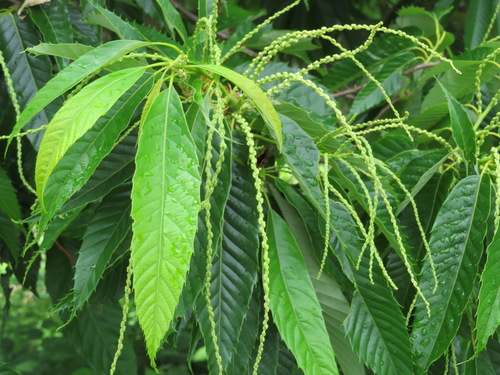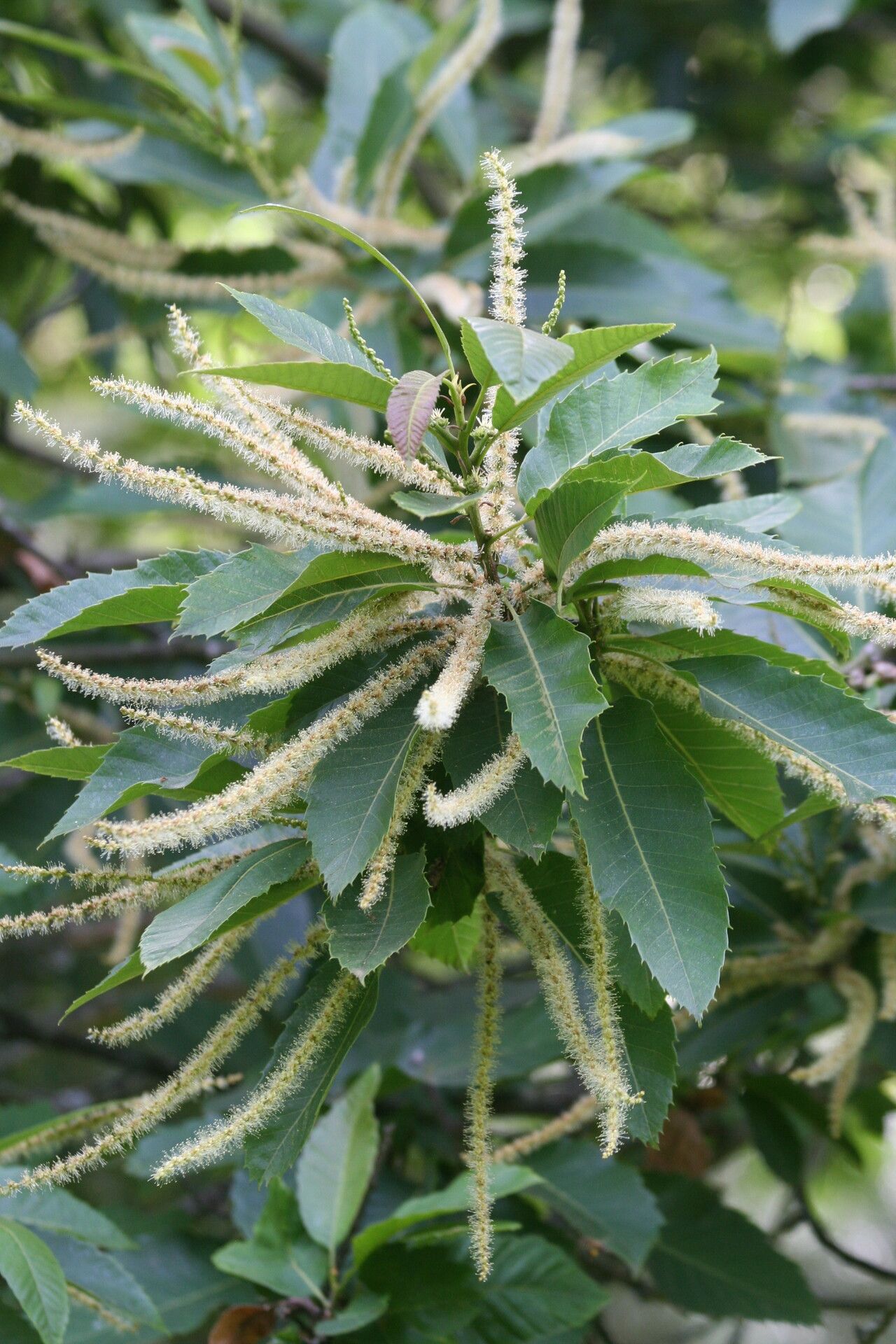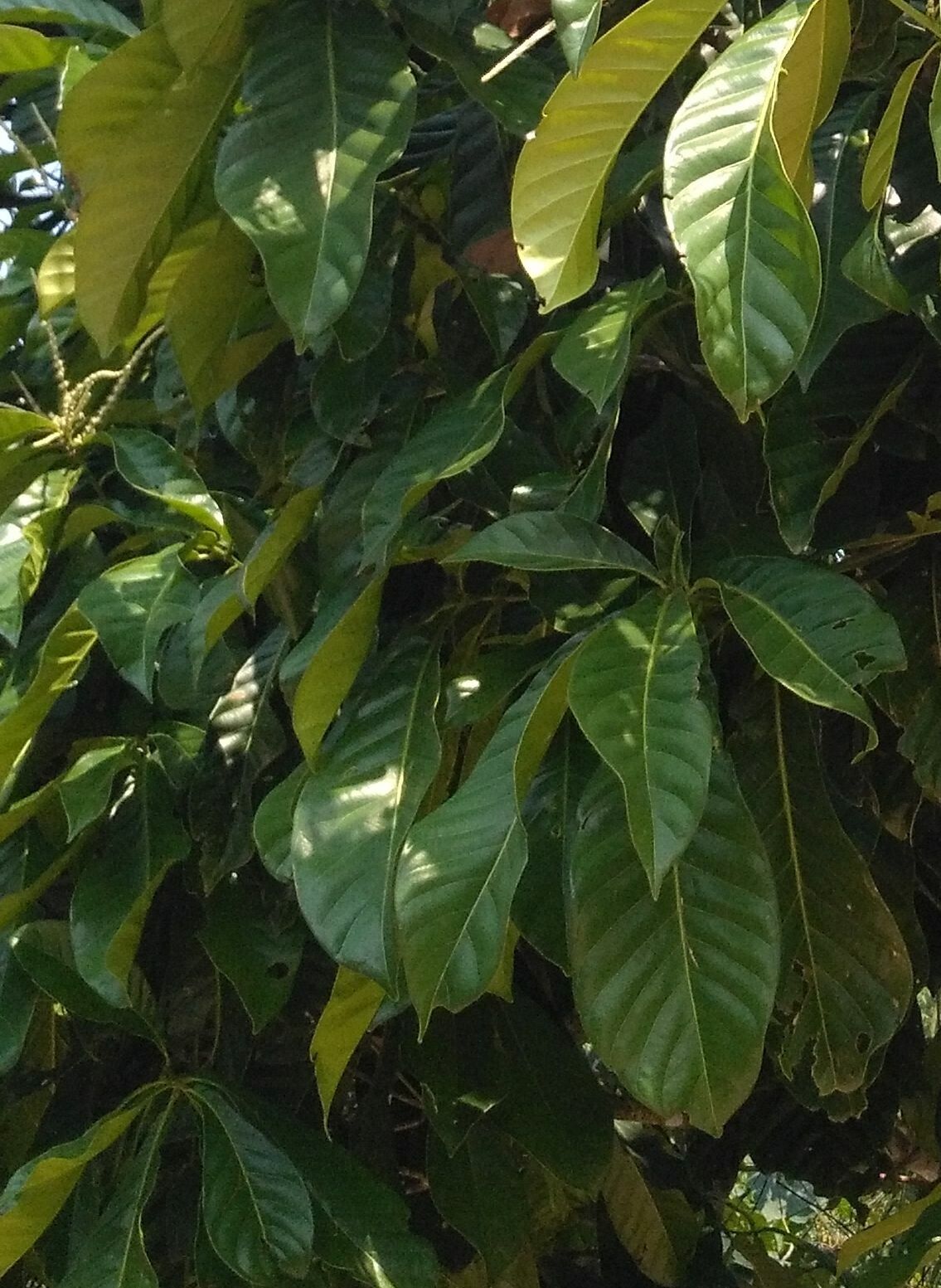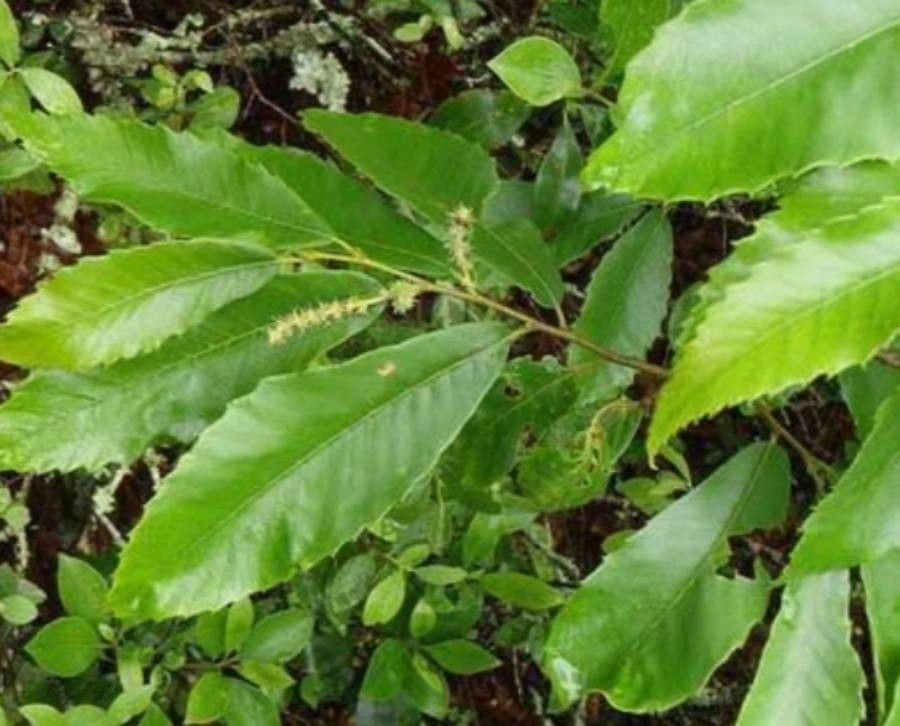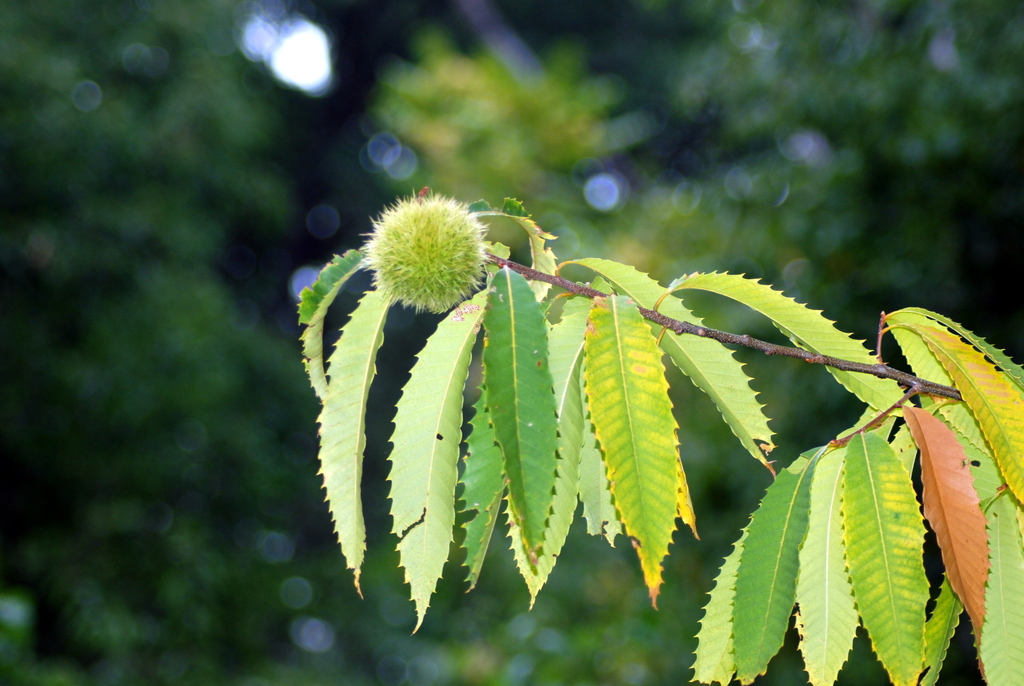
Castanea dentata, commonly known as the American chestnut, is a large deciduous tree native to the eastern United States. It can grow up to 100 feet tall and has a broad, spreading crown. The leaves are long and narrow with serrated edges, turning from dark green in the summer to yellow in the fall. Once one of the most important trees in eastern North America, the American chestnut was valued for its timber and abundant nuts. However, in the early 20th century, an invasive fungal disease called chestnut blight devastated its populations. Despite this setback, efforts are underway to restore American chestnuts through breeding programs that incorporate blight-resistant genes from other chestnut species. The goal is to re-establish healthy populations of this iconic tree in our forests. Beyond its economic importance as a source of timber and food for wildlife (including humans), the American chestnut plays a crucial ecological role by providing habitat for numerous bird and mammal species. Its nuts were also a significant food source for indigenous peoples living in the regions where the tree naturally grew. Despite its current status as a threatened species due to the chestnut blight fungus (Cryphonectria parasitica), Castanea dentata remains an iconic symbol of America's natural heritage.
American chestnut has strong disease resistance and is generally not susceptible to disease. As for care, this plant is fairly low-maintenance. When grown outdoors it needs only minimal watering, and larger plants typically do not require pruning. Smaller plants, however, should be pruned after they have finished blooming. American chestnut is suitable for anyone with outdoor space, such as a garden or deck, and does not demand extensive care experience.
How to keep Castanea Dentata.
Light
American chestnut does best with plentiful sunlight, which promotes healthy growth. Native to a brightly lit habitat, it can also tolerate moderate light levels. However, both too little and too much light may impede its development, causing reduced vigor or sunscorch, respectively.
Water
The American chestnut grows best in regions with moderate moisture levels and needs to be watered every one to two weeks to prevent oversaturation. As a deciduous plant, its water requirements change with the seasons. It benefits from the increased rainfall in spring and autumn, which supports its growth cycles.
Humidity
This plant needs special care because it loves high humidity levels of 60-80% or more. The best way to achieve this is by placing a humidifier near the plant. Daily misting is also essential! Make sure the room has good ventilation.
Temperature
The American chestnut needs a minimum temperature of 41 ℉ (5 ℃) to survive, but it can endure temperatures up to 90 ℉ (32 ℃). During the growing season, the preferred temperature range is 60 to 80 ℉ (16 to 27 ℃). In spring and summer, give the plant afternoon shade to avoid overheating, especially in warmer areas. In fall and winter, shield the plant from strong winds and frost by wrapping it in protective fabric or burlap.
Fertilizer
Fertilize your American chestnut in early spring to encourage healthy growth. Regular feeding improves its overall health, leading to vigorous growth, increased tolerance of harsh conditions, and enhanced resistance to pests and disease. Keep to a defined fertilization schedule for your American chestnut to achieve vibrant, deeply colored foliage and a lush appearance.
Pruning
To promote the health and resilience of American chestnut trees, it is best to prune them in early spring before new growth begins. Important techniques include removing dead branches, thinning the canopy to improve airflow, and shaping young trees. These practices help prevent blight and enhance the overall health of the trees. Be sure to use clean, sharp tools to make precise cuts, minimizing damage and ensuring a strong, attractive appearance.
Botanical profile.
- Plant Type
- Tree
- Life Cycle
- Perennial
- Genus
- Castanea
- Family
- Fagaceae
- Hardiness Zone
- 5-8
- Mature Height
- 15.24 m to 22.86 m
- Mature Spread
- 14.94 m to 22.56 m
- Leaf Color
- Green, Yellow
- Leaf Type
- Deciduous
- Flower Color
- Yellow
- Flower Size
- 15.24 cm to 20.32 cm
- Bloom Time
- Early summer, Mid summer
- Planting Time
- Autumn
- Harvest Time
- Mid summer
Other names.
Reader questions.
What should I do if I give the American chestnut tree too much or too little water?
An overwatered American chestnut may exhibit yellowing, wilting leaves and a generally dull and unhealthy appearance, often accompanied by mushy stems. When these signs start to show, it is advisable to adjust your watering schedule as needed. Furthermore, wilting can also indicate under-watering, with leaves becoming crispy and dry as opposed to soft and wilted in overwatered cases. When the soil is dry and regular watering is insufficient, a thorough watering is necessary. However, even with enough water, the damaged root system may cause the plant to continue appearing dry and with yellow leaves for a few days. Once the plant returns to normal, the yellowing of leaves will cease. For indoor American chestnut plants, it is always important to check moisture levels and avoid overwatering. Look for signs of black spots, and if present, allow the soil in the pot to dry out by refraining from watering for a few days. Overwatering can lead to root rot, so if you observe discolored and slimy roots, consider transferring the plant to a different pot. It is crucial to prevent root rot by avoiding excessively soggy soil. When planting the American chestnut outdoors, ensure that the soil is adequately moist. If you find the soil to be too dry when you check with your fingers, it might indicate under-watering, thus requiring appropriate watering to help the plant recover.
Why is it important to put fertilizer on my American chestnut plant?
If you have an American chestnut, it is important to fertilize regularly for overall health and resilience. Nutrients help with growth, resistance to adversity, and warding off pests and diseases. To maintain the beautiful foliage, establish a consistent fertilization schedule tailored to your specific American chestnut. This will result in vibrant leaves and an appealing appearance.
What are the sunlight requirements for the American chestnut?
The American chestnut requires full sun, which is characterized by more than 6 hours of sunlight daily, but it can also thrive under partial sun, receiving about 3 to 6 hours of sunlight. Ensuring the right balance of light and shade is crucial for the plant's happiness, emphasizing the importance of observing how sunlight moves through your garden to find the optimal spot for your plants.
What are the essential care requirements for an American chestnut tree?
The American chestnut (Castanea dentata) thrives in temperatures ranging from 41°F (5°C) to 90°F (32°C), with an ideal growing season temperature between 60°F to 80°F (16°C to 27°C). To ensure its health, provide afternoon shade during spring and summer to prevent overheating, particularly in warmer areas. During fall and winter, protect the tree from harsh winds and frost by using a protective fabric or burlap. Although the American chestnut is cold-resistant, if winter temperatures are expected to drop below -25°C, wrap the trunk and branches with non-woven fabric or cloth to protect against the cold. It's also advisable to water the plant abundantly before the first freeze of autumn to maintain soil moisture through the winter.
How much should I water my American chestnut tree?
The American chestnut prefers deep and infrequent watering. If it's planted in a pot, make sure to soak it in a gallon of water each time. Potted plants have limited water storage, so the soil can dry out quickly. In colder regions, water the chestnut every 3 to 5 days. Water it in the morning when the soil is dry, whether it's planted indoors or outdoors. To know if watering is needed, check the soil. If the top 2-3 inches are dry, it's time for a full watering. During hot days, check the moisture daily as the pot soil can dry out quickly. For garden planting, irrigation is also necessary. In hot climates, water once a week, but only when the top 2 to 3 inches of soil are dry. Consider the amount of rainfall and avoid overwatering to prevent root rot. American chestnuts usually grow in spring and fall. When planted outdoors, adding a 3 to 4-inch layer of mulch can help conserve water. Sandy soil drains faster, so water more frequently. Clay soil, on the other hand, requires less watering. Marking watering dates on a calendar can help you stay on track. If the leaves start drooping, it may be a sign that the plant needs water.
When should I fertilize my American chestnut tree?
To ensure healthy growth, it's recommended to fertilize your American chestnut for the first time in late winter or early spring. This provides the necessary nutrients for when the weather warms up. If you live in a warm climate region, it's beneficial to provide an additional fertilizer feeding in early fall. This helps the chestnut tree by adding nutrients for the following growing season and making it more resilient to winter cold. Fertilizing earlier will allow new branches to grow and withstand the cold winter.
What essentials should be considered for the growth of an American chestnut?
American chestnuts flourish with an abundance of sunlight, beneficial for their healthy development. Originally from well-lit habitats, they can also adapt to moderately lit environments. However, too little or too much light can be detrimental, leading to issues like weakened vitality or sunscorch. In conditions where natural light is insufficient, especially during winter or in darker indoor spaces, artificial lighting can be essential. Suitable artificial lights, such as LED lights, need to provide 30-50W/sq ft for full sun plants, 20-30W/sq ft for partial sun plants, and 10-20W/sq ft for full shade plants. The light source should be placed 12-36 inches above the plant and provided for 8-12 hours per day to mimic natural sunlight conditions.
How should I care for an American chestnut tree in low temperatures?
The American chestnut is cold-tolerant and performs best when temperatures stay above 5°C (41°F). For winters, ensure the temperature doesn't drop below -20°C (-4°F). If temperatures fall below -25°C (-13°F), the tree might not show immediate distress, but in spring, the branches can become brittle, dry, and fail to produce new shoots. To combat this, prune away any dead branches that didn't produce new leaves come spring.
How much water should I give my American chestnut tree?
The American chestnut typically requires about a gallon of water on a regular schedule. For potted plants, water them deeply until water drips from the bottom of the pot. Then, wait for the soil to dry before watering again. You can use a water calculator or moisture meter to track the amount of water you've given your plant each week. During the flowering period, provide plenty of water but allow the moisture to evaporate to prevent root rot. If the American chestnut is planted outdoors with sufficient rainfall, it may not need additional watering. When the American chestnut is young or newly planted, ensure it receives 1-2 inches of rain per week. As it grows, it can rely solely on rainfall. However, if the weather is excessively hot or there is no rainfall for 2-3 weeks, consider giving the American chestnut a thorough watering during the cooler part of the day to prevent heat damage. Additional watering will be necessary during prolonged dry spells.
When is it not a good idea to fertilize my American chestnut tree?
There are specific periods during the year when you should avoid fertilizing your American chestnut. One of these times is in the early and mid-winter months when the tree is dormant and does not require any nutrients. It is also not recommended to fertilize during late spring and throughout the summer. These seasons tend to have hotter and drier weather, which can have a detrimental effect on the tree if fertilized. To prevent any problems, it is best to follow a fertilization schedule that only involves feeding in early spring and early fall.
What are the symptoms of inadequate light exposure in American chestnut?
When American chestnut does not receive sufficient sunlight, it may show several symptoms. New leaves might grow smaller, or the plant could exhibit leggy or sparse growth, characterized by elongated spaces between leaves or stems leading to a weakened appearance. There might be an accelerated leaf drop as the plant tries to conserve resources, and growth could stall completely. Light-deficient plants often develop lighter-colored or chlorotic leaves. Excessive sunlight can cause chlorosis, where leaves turn yellow, or sunscald, leading to pale, bleached areas on the plant tissue. Other signs include leaf curling, wilting, and leaf scorching, indicating too much direct exposure.
What steps should be taken to protect an American chestnut tree from high temperatures?
During the summer, it's crucial to ensure the American chestnut's environment does not exceed 32°C (90°F). Exposure to temperatures over 35°C (95°F) can lead to lighter leaf color, dry and withered leaf tips, and an increased risk of sunburn for the plant. To mitigate these effects, trim away sunburned and dried parts, move the plant to a shaded area or use a shade cloth to protect it from midday and afternoon sun. Additionally, watering the plant in the morning and evening will help keep the soil moist and reduce stress on the tree.