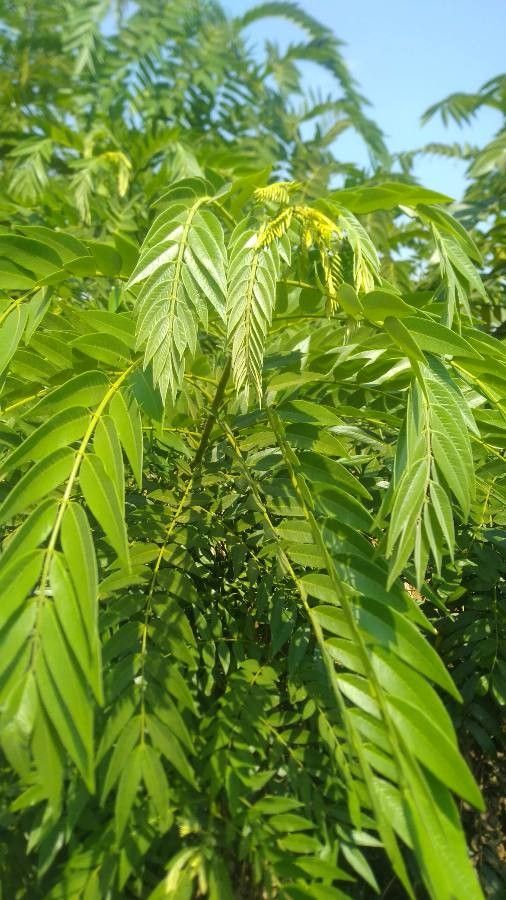
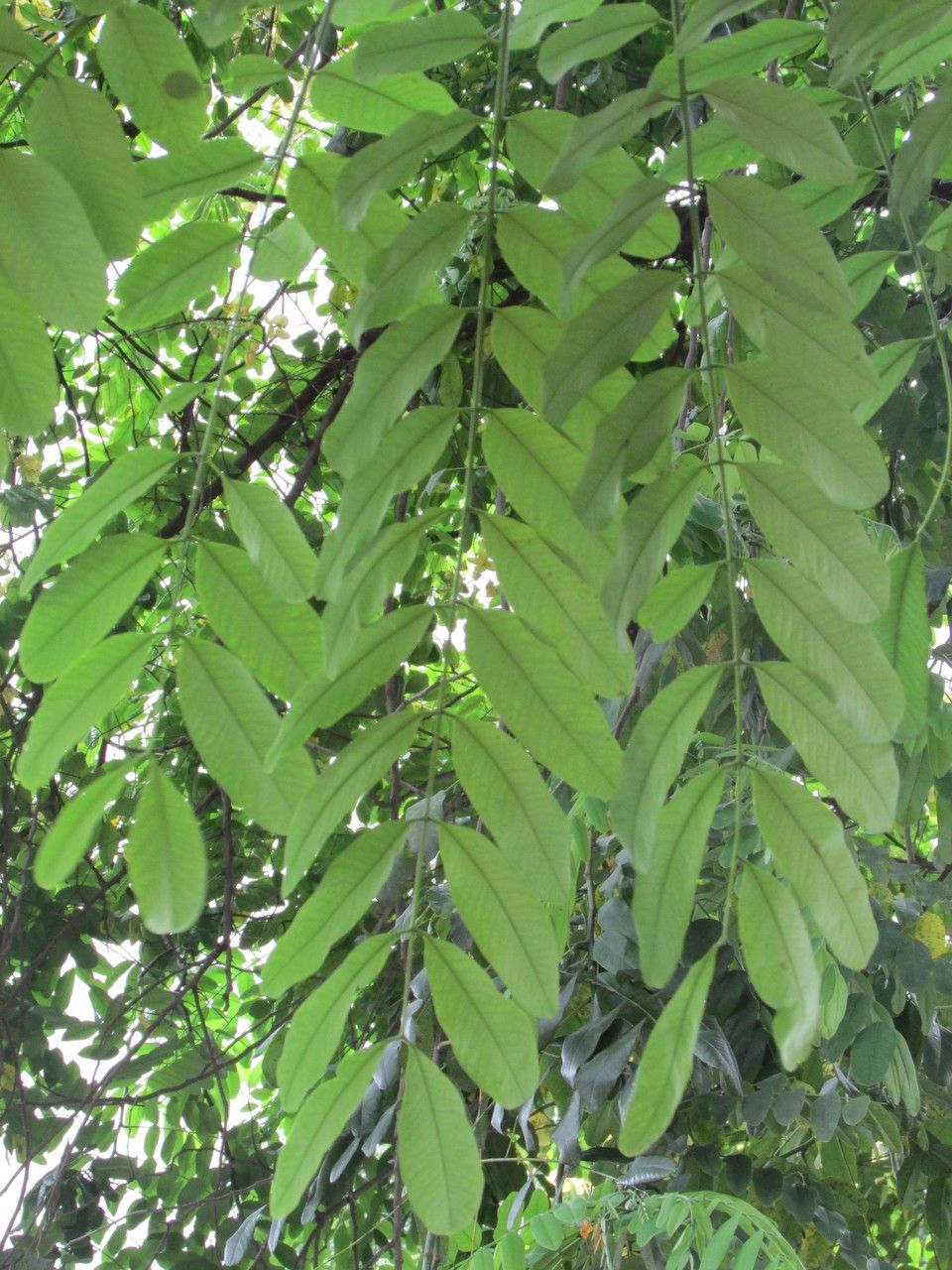
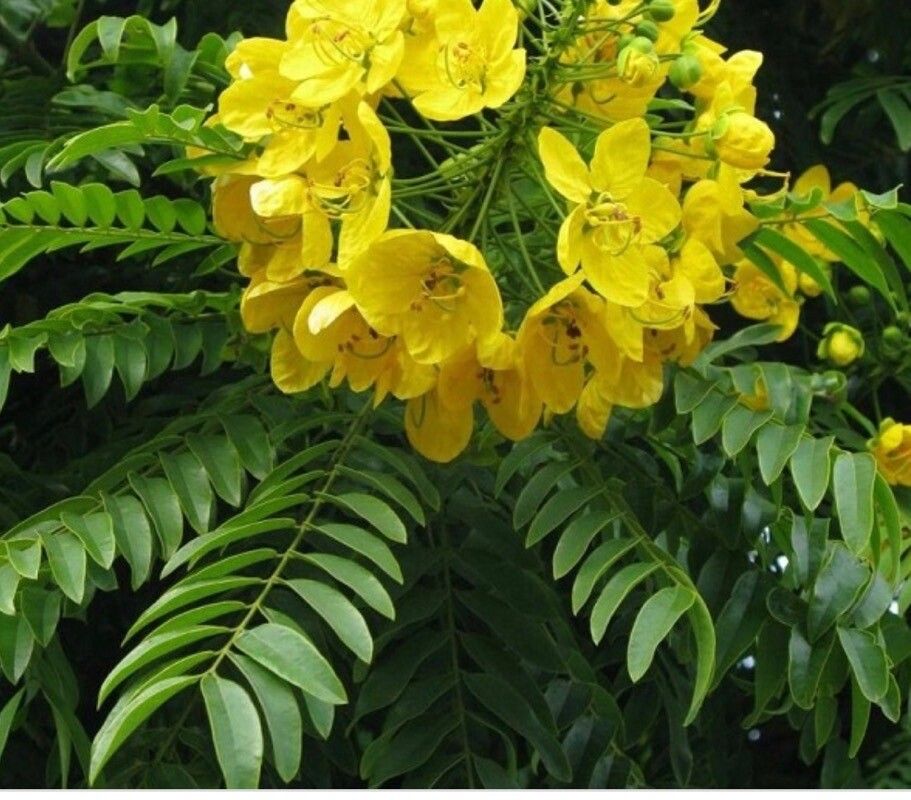
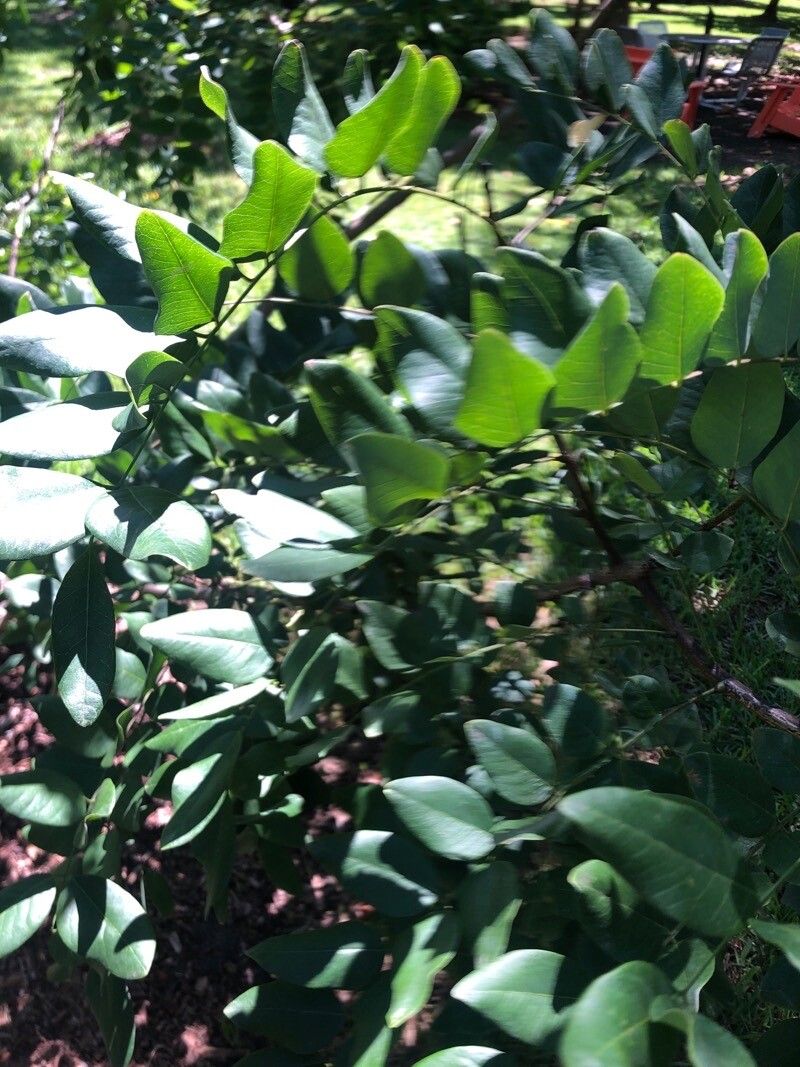
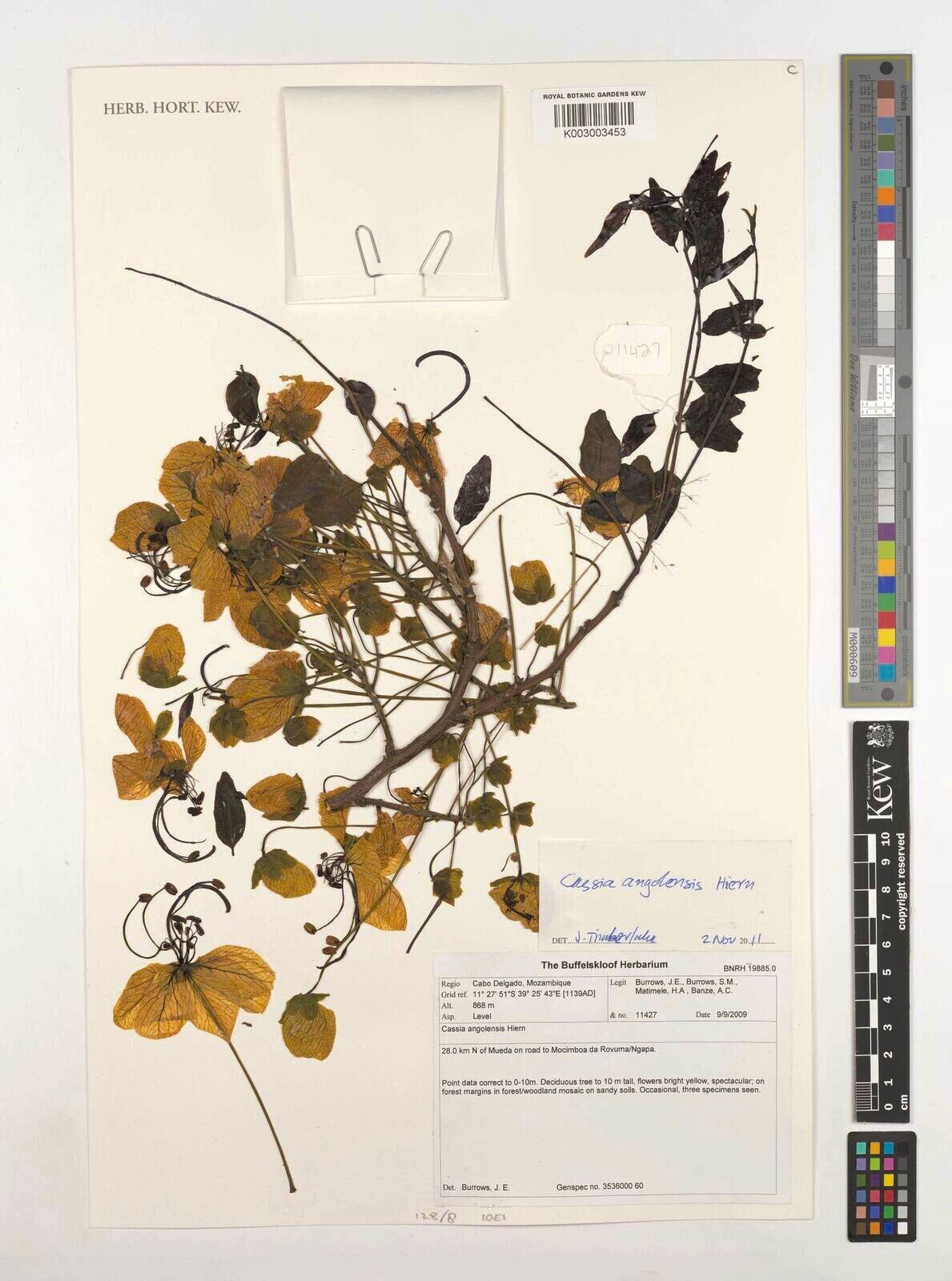
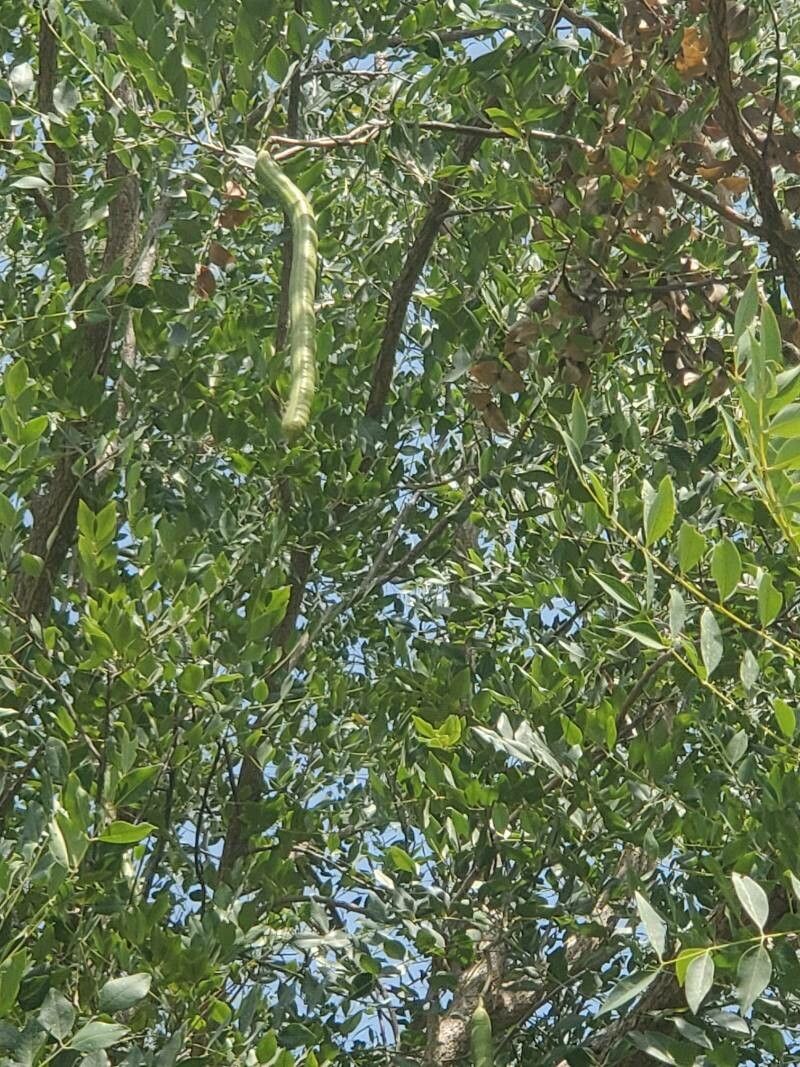
Cassia leptophylla, commonly known as the Brazilian Cassia or the Golden Shower Tree, is a flowering plant native to Brazil and a member of the Fabaceae family. This deciduous tree can grow up to 10 meters tall and is characterized by its smooth gray bark and pinnate leaves, which are composed of 3-6 pairs of lance-shaped, glossy green leaflets.
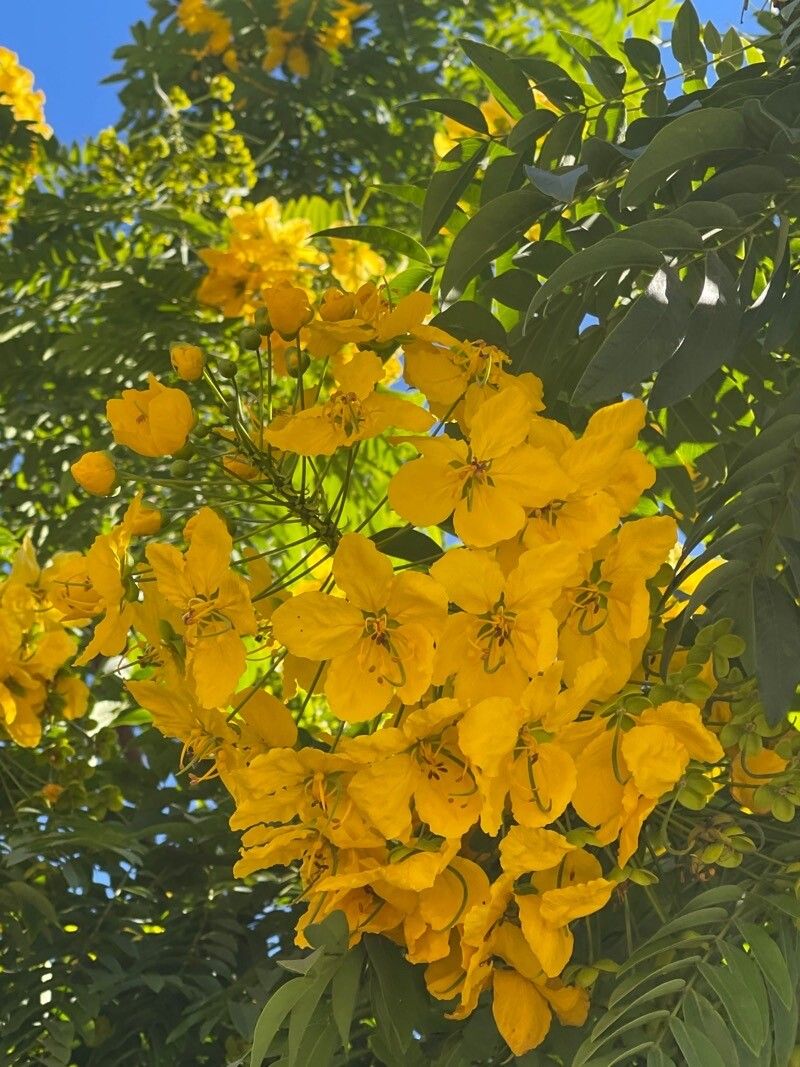
The Golden Shower Tree spectacularly blooms in late winter or early spring, producing clusters of bright yellow flowers that hang gracefully from its branches. Each flower has five petals and measures about 4-5 cm in diameter. These blooms emit a sweet fragrance that attracts bees, butterflies, and other pollinators.
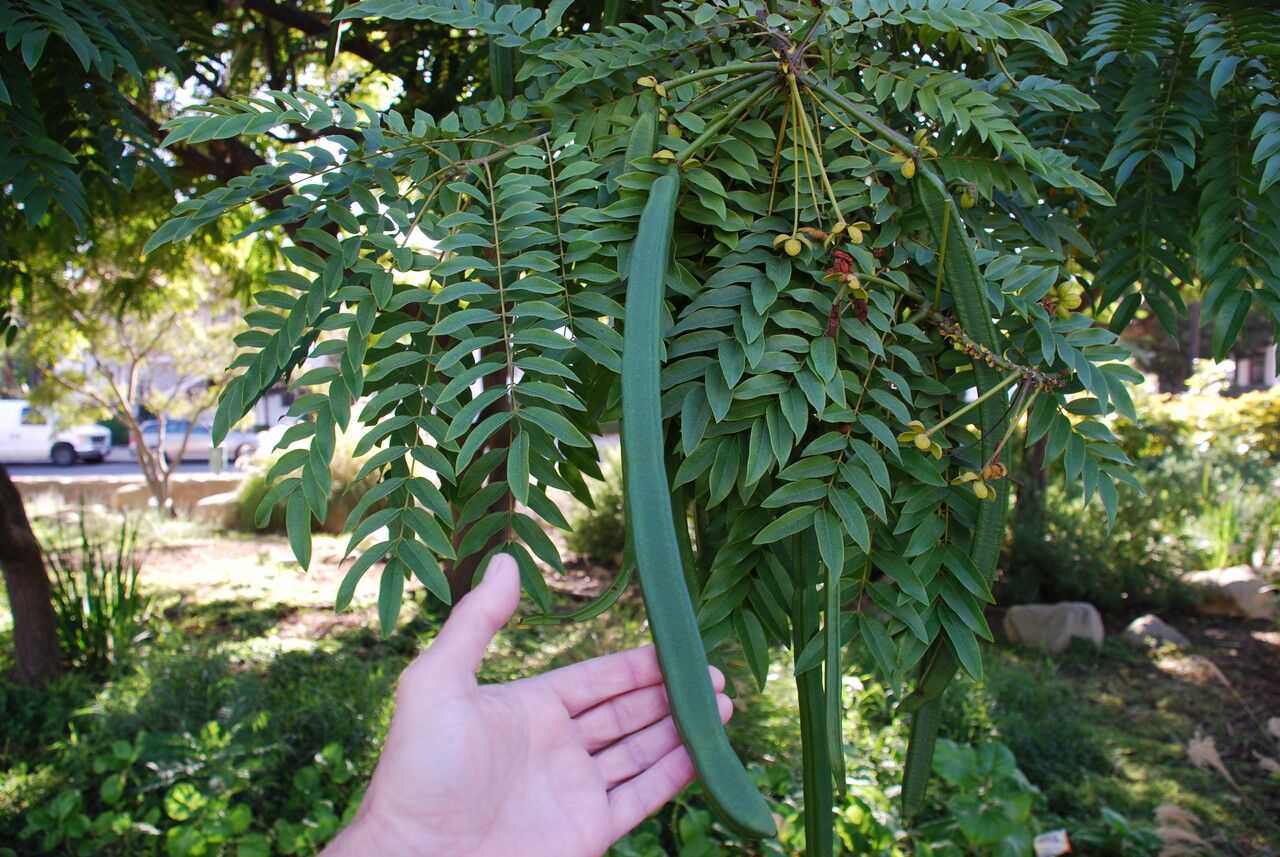
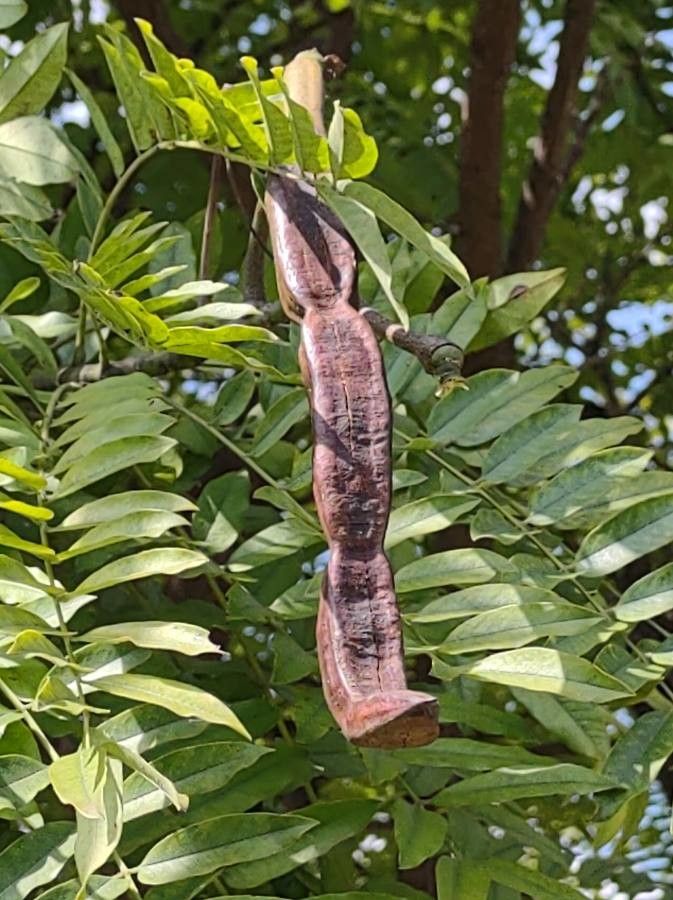
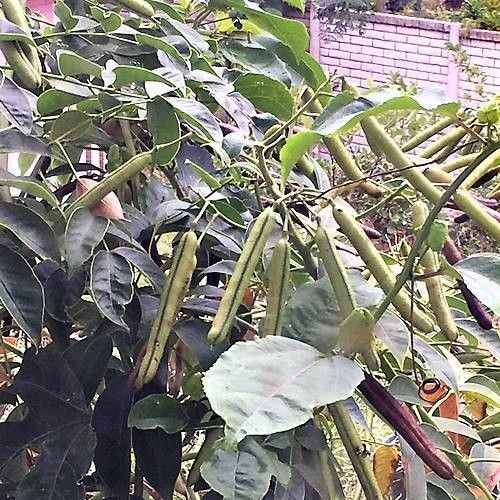
The fruit of Cassia leptophylla is an elongated pod containing several seeds. As the pods mature, they turn brown and eventually split open to release the seeds.
This plant thrives in full sun but can also tolerate partial shade. It prefers well-drained soils but can survive in poor soils as long as they are not waterlogged.
Cassia leptophylla has several medicinal uses, such as treating skin diseases, fever, coughs, and colds, due to the antibacterial properties found in its bark extracts.
Overall, this plant is highly valued as an ornamental tree due to its beautiful yellow flowers, making it a popular choice for landscaping around homes and public spaces like parks. During hot weather, it provides much-needed shade and enhances the environment with its vibrant yellow blooms during the flowering season. This makes it one of Brazil's most sought-after trees for ornamental purposes.
The Gold medallion tree has good resistance to disease and is generally not susceptible to illnesses. Regarding care, this plant is relatively low-maintenance. When planted outdoors it needs little watering, and larger specimens typically do not require pruning; however, smaller plants should be pruned after they have finished blooming. The Gold medallion tree is suitable for anyone with an outdoor space, such as a garden or a deck, and does not demand extensive plant-care experience.
How to keep Cassia Leptophylla.
Light
Gold medallion tree comes from open habitats like sunny meadows and forest edges that supply plenty of light. It performs best in Full Sun but can also withstand Partial Sun, adapting well to a range of sunlight conditions.
Water
The Gold Medallion tree is highly drought-tolerant and thrives in arid conditions with minimal watering, typically every 1-2 weeks. It can adapt to different humidity levels, and as a deciduous plant, its water needs may decrease during dormancy.
Temperature
The gold medallion tree comes from tropical areas, where the climate is usually warm and humid. Consequently, it is suited to high temperatures and humidity. It is sensitive to abrupt temperature shifts and prefers a consistent thermal environment, so avoiding indoor temperature fluctuations is important. It generally cannot tolerate cold and needs warmer conditions to grow. If the surrounding temperature falls too low, the plant may stop growing or even die.
Fertilizer
The best time to fertilize a Gold medallion tree is in early spring as it breaks dormancy. Doing so supports overall growth and the development of flowers. Fertilizing improves the foliage, stems, and branches and encourages flowers that are large, vibrant, and long-lasting. It also helps move nutrients from the roots to the flowers and boosts the plant's health and resistance to disease.
Pruning
The gold medallion tree, known for its beautiful yellow flowers, thrives when pruned from early to late winter. Key pruning techniques include removing damaged branches, improving airflow, and maintaining the tree's shape. These practices promote healthy growth and vibrant blooms in the spring, reduce the risk of disease, and help develop a strong, attractive canopy.
Pot & Repot
Repot the gold medallion tree every 2 to 3 years in a large, sturdy container, ideally during late winter or early spring. Use a quality potting mix that ensures good drainage. After repotting, water the tree sparingly until new growth appears. This helps promote strong root establishment and prevents rot.
Botanical profile.
- Plant Type
- Tree
- Life Cycle
- Perennial
- Genus
- Cassia
- Family
- Fabaceae
- Hardiness Zone
- 10-12
- Mature Height
- 6.1 m to 7.62 m
- Mature Spread
- 9.14 m
- Leaf Color
- Dark Green, Forest Green
- Leaf Type
- Evergreen
- Flower Color
- Gold, Yellow
- Flower Size
- 3.05 cm to 5.08 cm
- Bloom Time
- Summer
- Planting Time
- Summer, Autumn
- Harvest Time
- Late summer, Early fall, Mid fall
- Native Area
- Brazil
Other names.