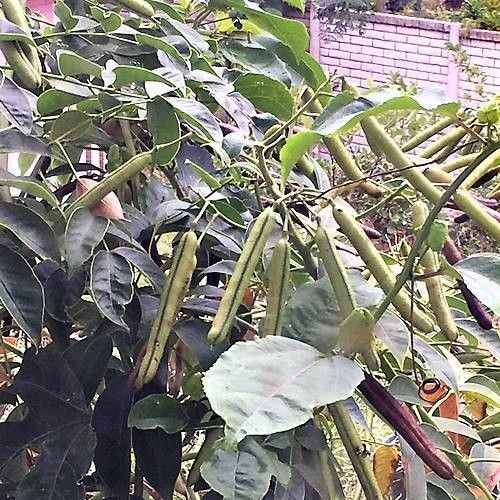
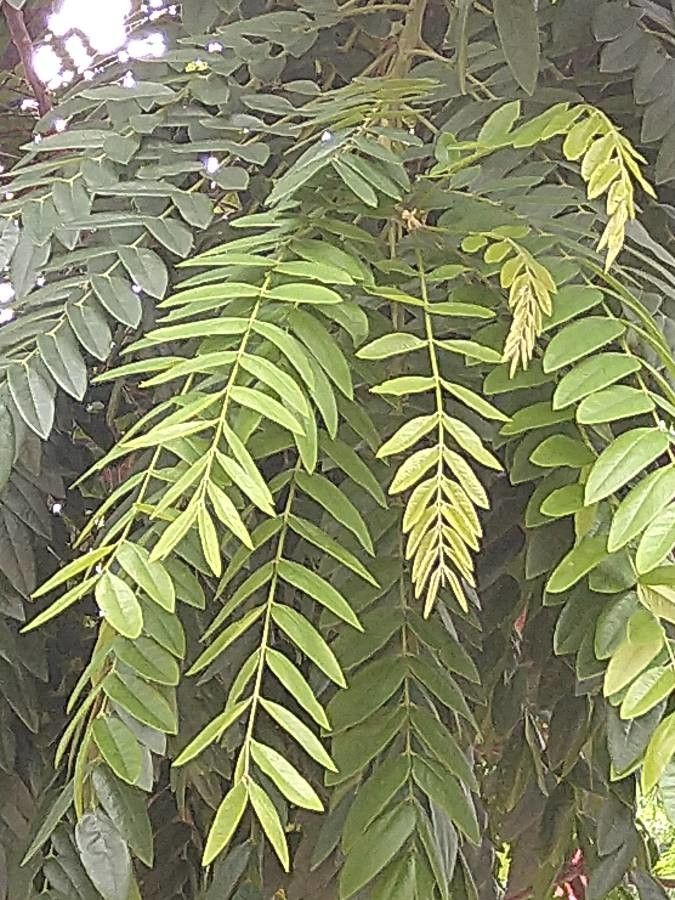
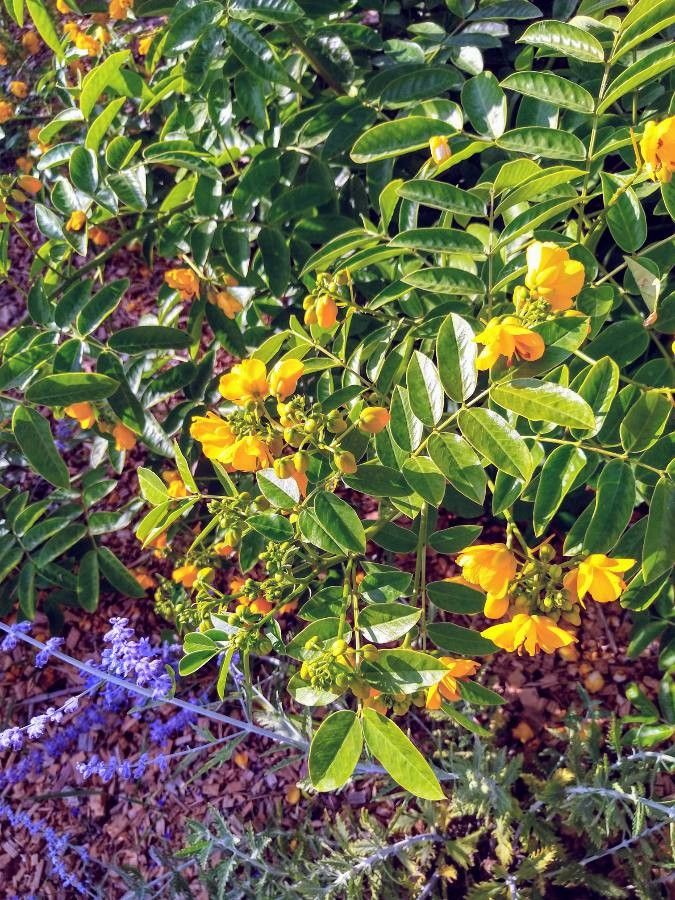
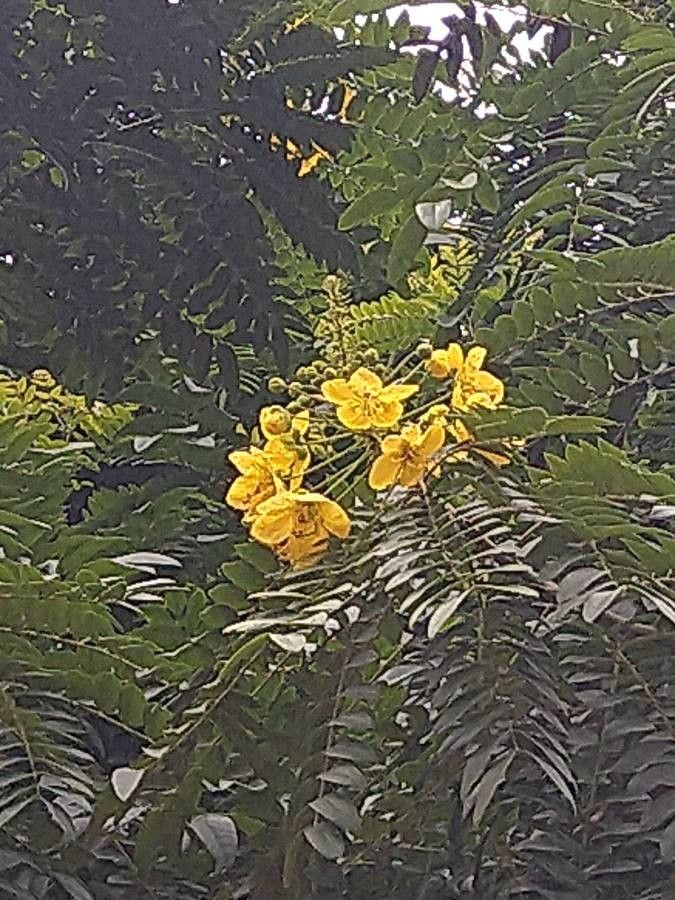
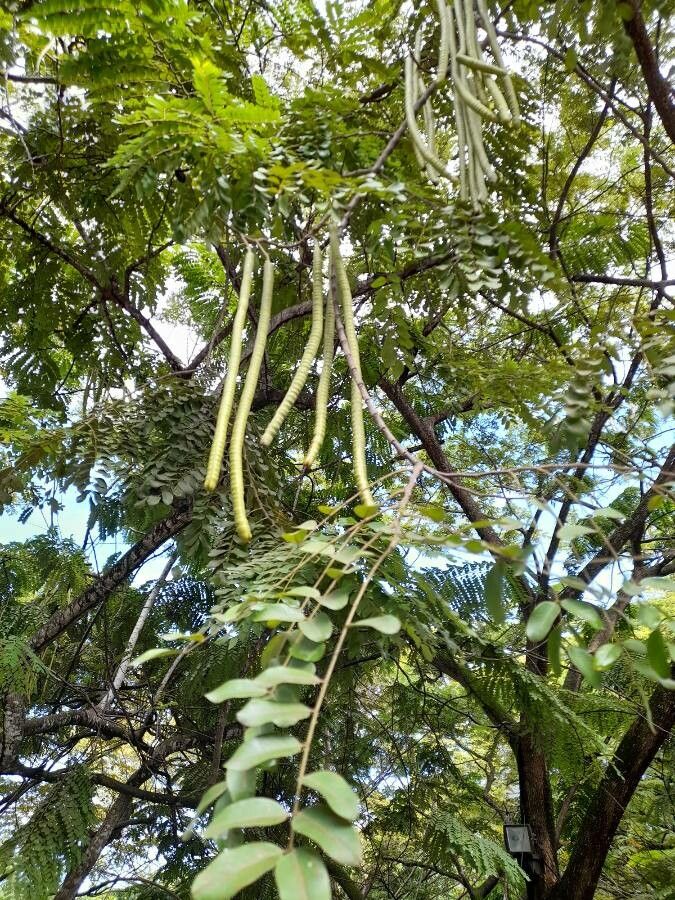
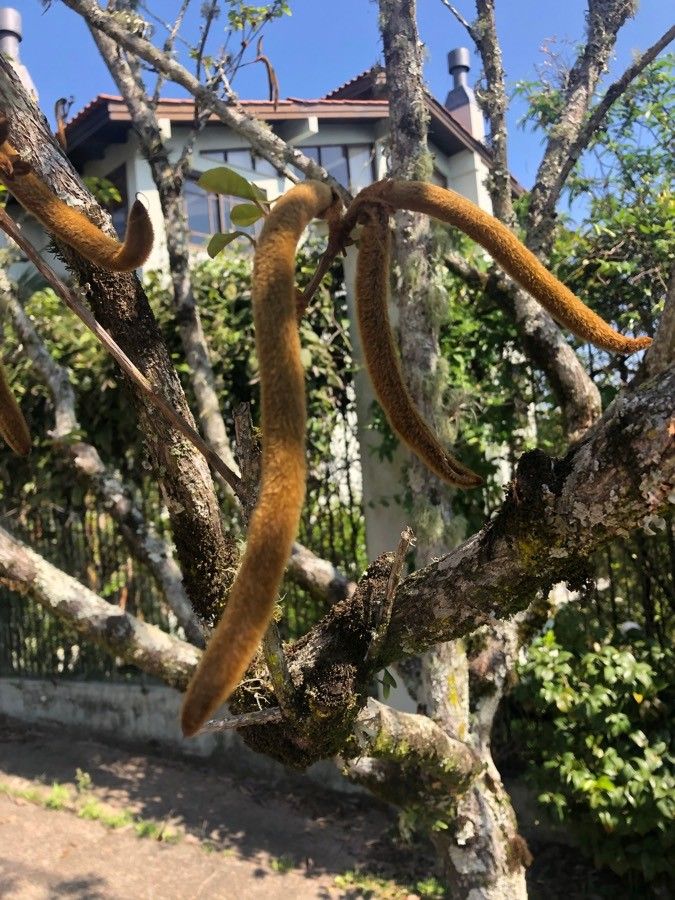
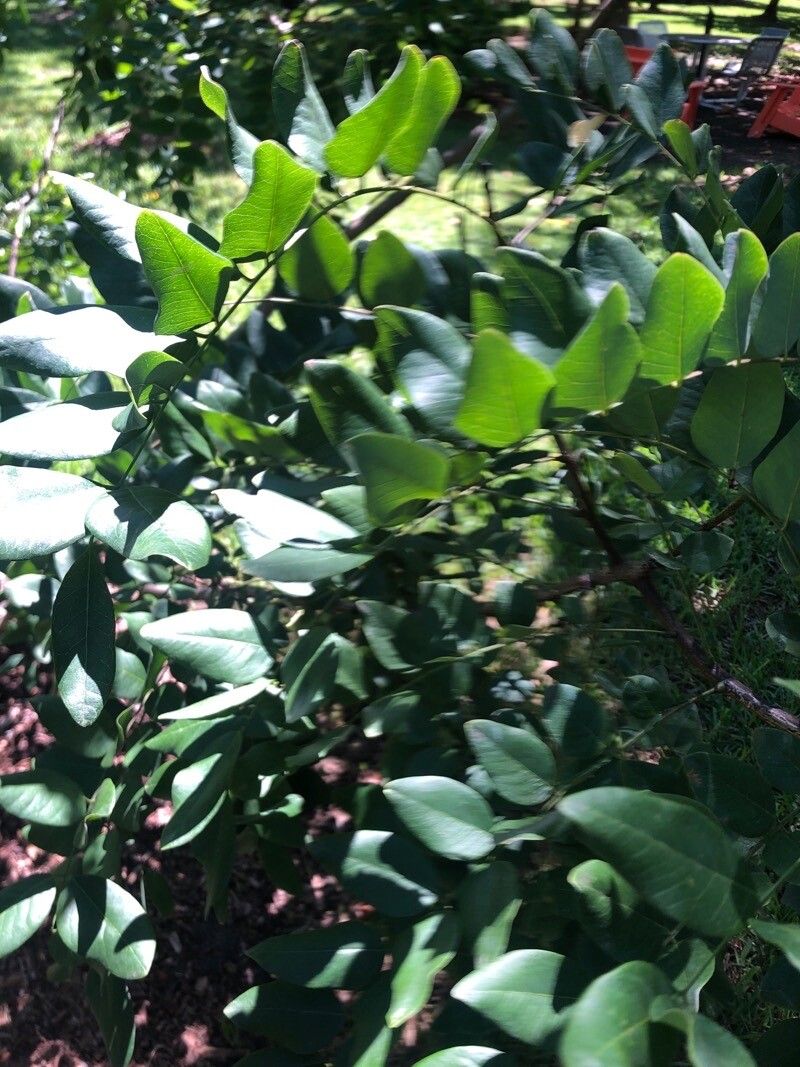
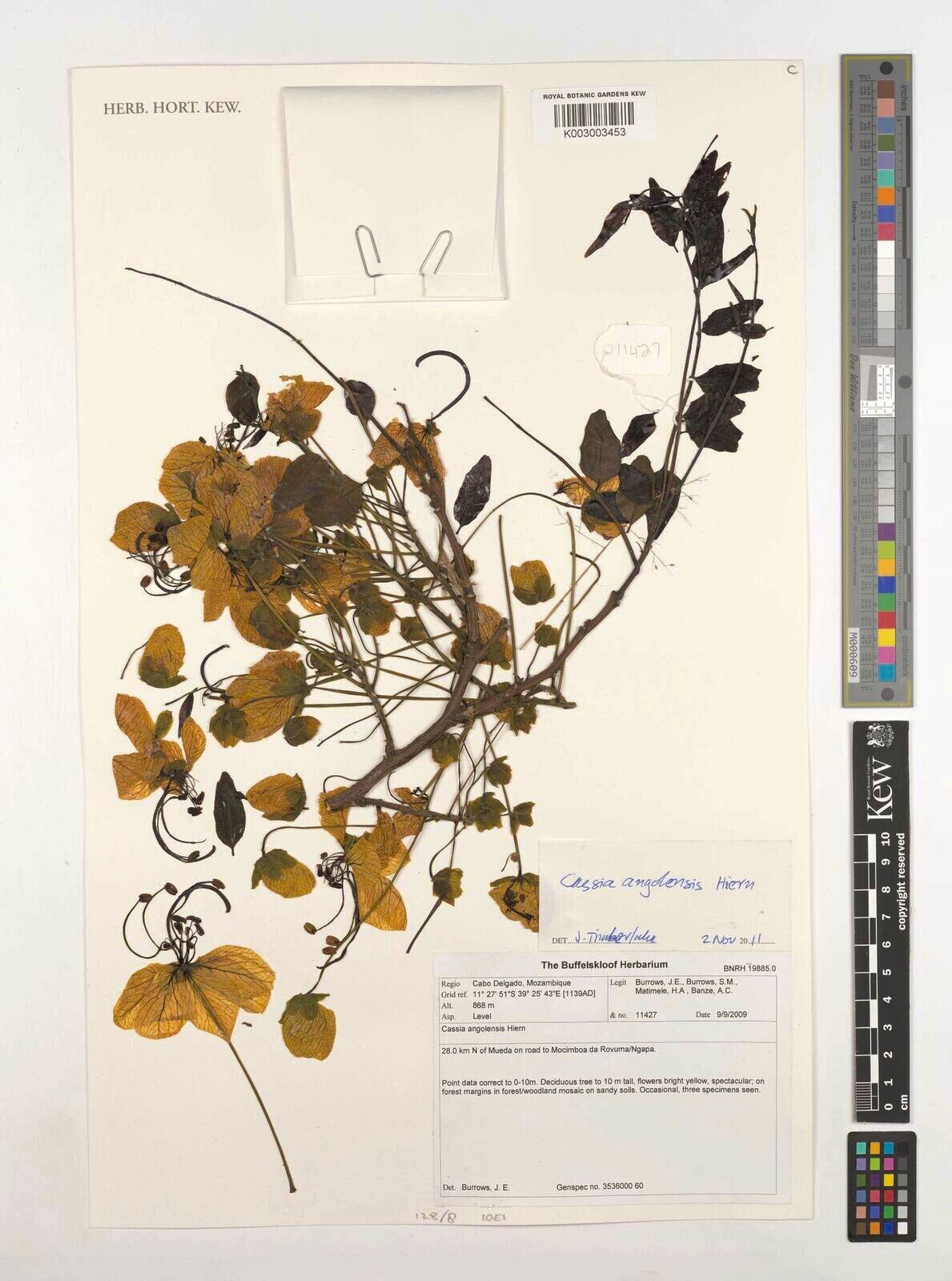
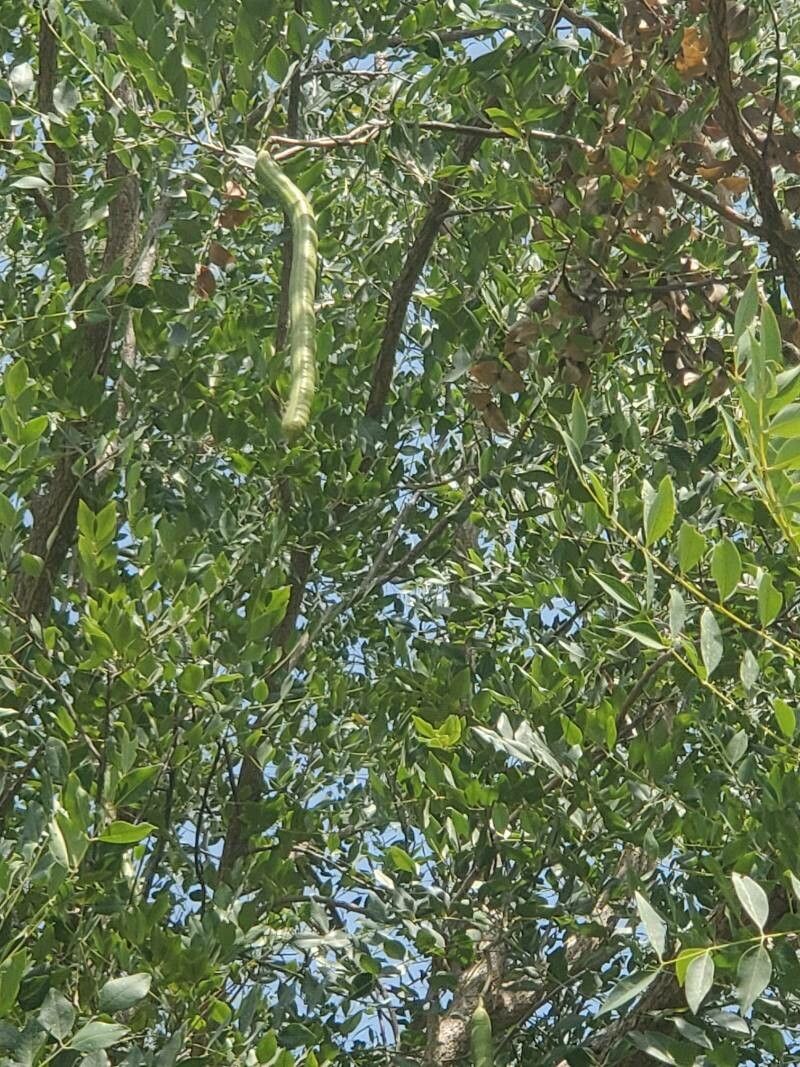
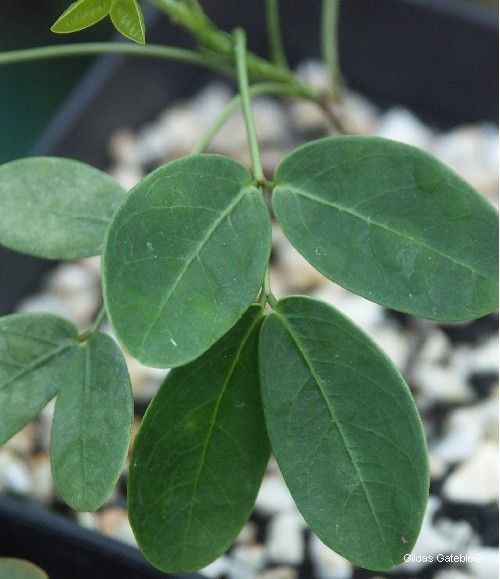
Cassia abbreviata, also known as Senna abbreviata or Breyleaf Senna, is a flowering plant that belongs to the Fabaceae family. Native to Africa, it is found in regions such as South Africa, Zimbabwe, and Mozambique.
This plant can grow up to 6 meters tall and has a spreading canopy that can reach up to 8 meters in diameter. It features distinctive yellow flowers that bloom in clusters during the spring and summer months. The leaves are compound, with small leaflets arranged alternately along the stem.
Cassia abbreviata is commonly used for medicinal purposes due to its laxative properties, which are attributed to its high concentration of anthraquinones. Traditionally, the bark has been used to treat constipation, hemorrhoids, and skin diseases such as eczema and psoriasis.
In addition to its medicinal uses, Cassia abbreviata serves various ecological functions, such as providing food for wildlife. For instance, birds like parrots feed on its seeds.
Overall, Cassia abbreviata is an important plant species due to its ecological significance and traditional medicinal uses, making it an integral part of African culture.
Long-tail Cassia is resistant to disease and is generally not susceptible to illnesses. In terms of care, this plant is fairly low-maintenance. When grown outdoors it needs little watering, and larger specimens typically do not require pruning. However, smaller plants should be pruned after they finish blooming. Long-tail Cassiat is suitable for anyone with outdoor space, such as a garden or deck, and does not demand much care experience.
How to keep Cassia Abbreviata.
Light
Long-tail Cassia is native to open habitats, such as sunny meadows and forest edges, which provide abundant light. It flourishes in Full Sun but can also tolerate Partial Sun, adapting well to various sunlight conditions.
Humidity
This plant prefers dry conditions, so don't mist it. However, watering it less often can also thrive in higher humidity.
Temperature
Long-tail Cassia does best in temperatures of 68 to 100.4 °F (20 to 38℃). Native to warmer areas, the plant can tolerate seasonal temperature fluctuations, but keeping the heat consistent supports optimum growth.
Fertilizer
The best time to fertilize a Long-tail Cassia is in early spring as it breaks dormancy. This encourages overall growth and supports flowering. Fertilization improves the foliage, stems, and branches, and promotes flowers that are large, vibrant, and long-lasting. It helps transport nutrients from the roots to the flowers and enhances the plant's health and resistance to disease.
Botanical profile.
- Plant Type
- Tree
- Life Cycle
- Perennial
- Genus
- Cassia
- Family
- Fabaceae
- Hardiness Zone
- 9-11
- Mature Height
- 3.05 m to 7.92 m
- Mature Spread
- 2.13 m to 4.88 m
- Leaf Color
- Green, Dark Green
- Leaf Type
- Deciduous
- Flower Size
- 2.03 cm to 3.05 cm
- Bloom Time
- Summer, Early fall
- Planting Time
- Spring, Summer, Autumn
- Harvest Time
- Fall, Early winter
Other names.