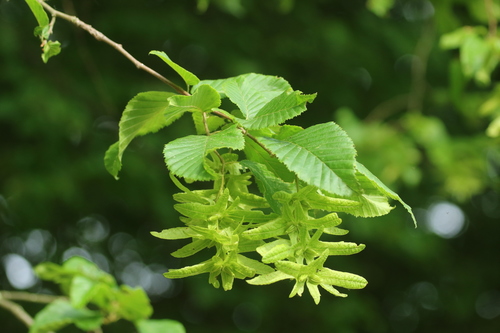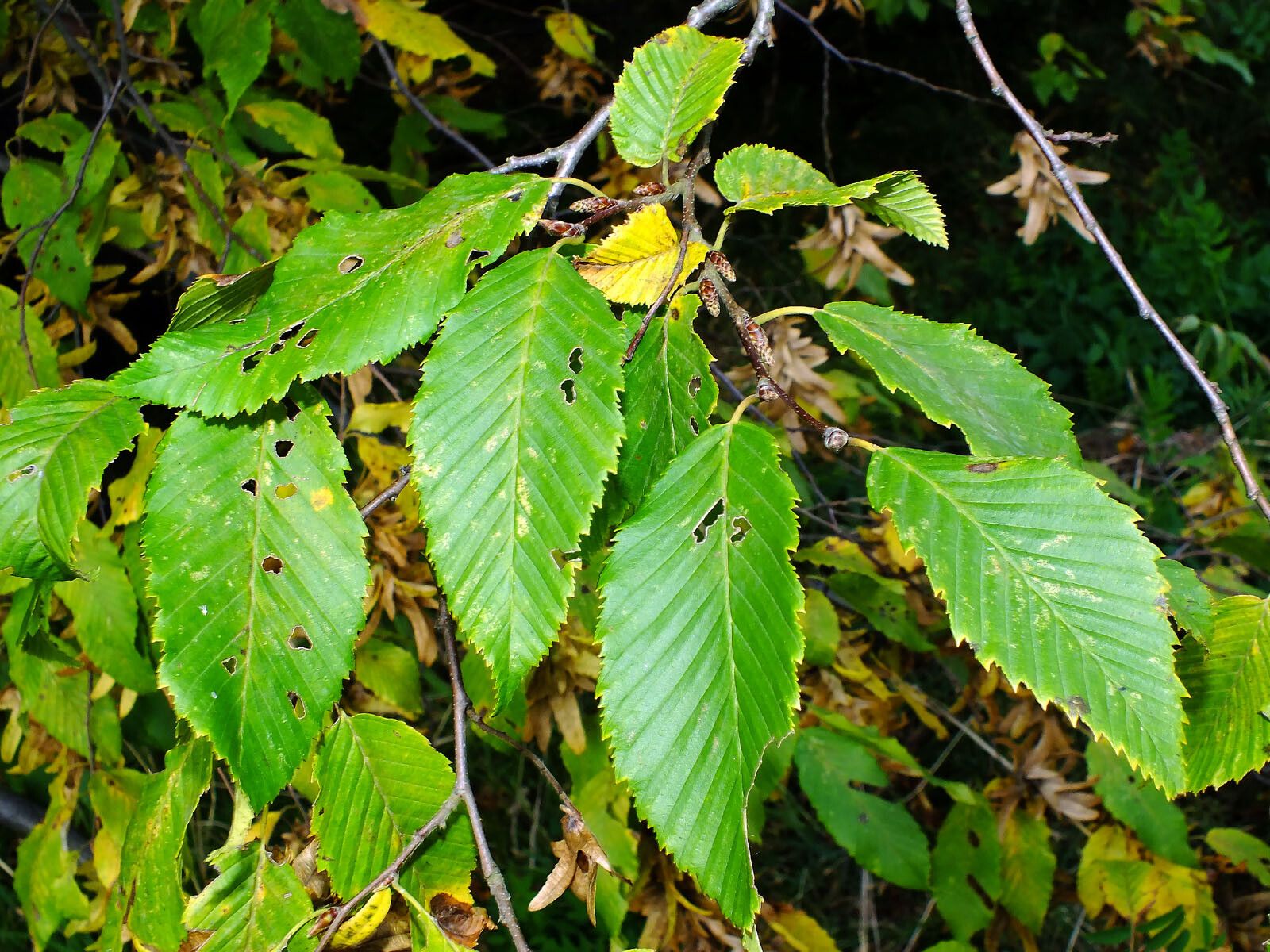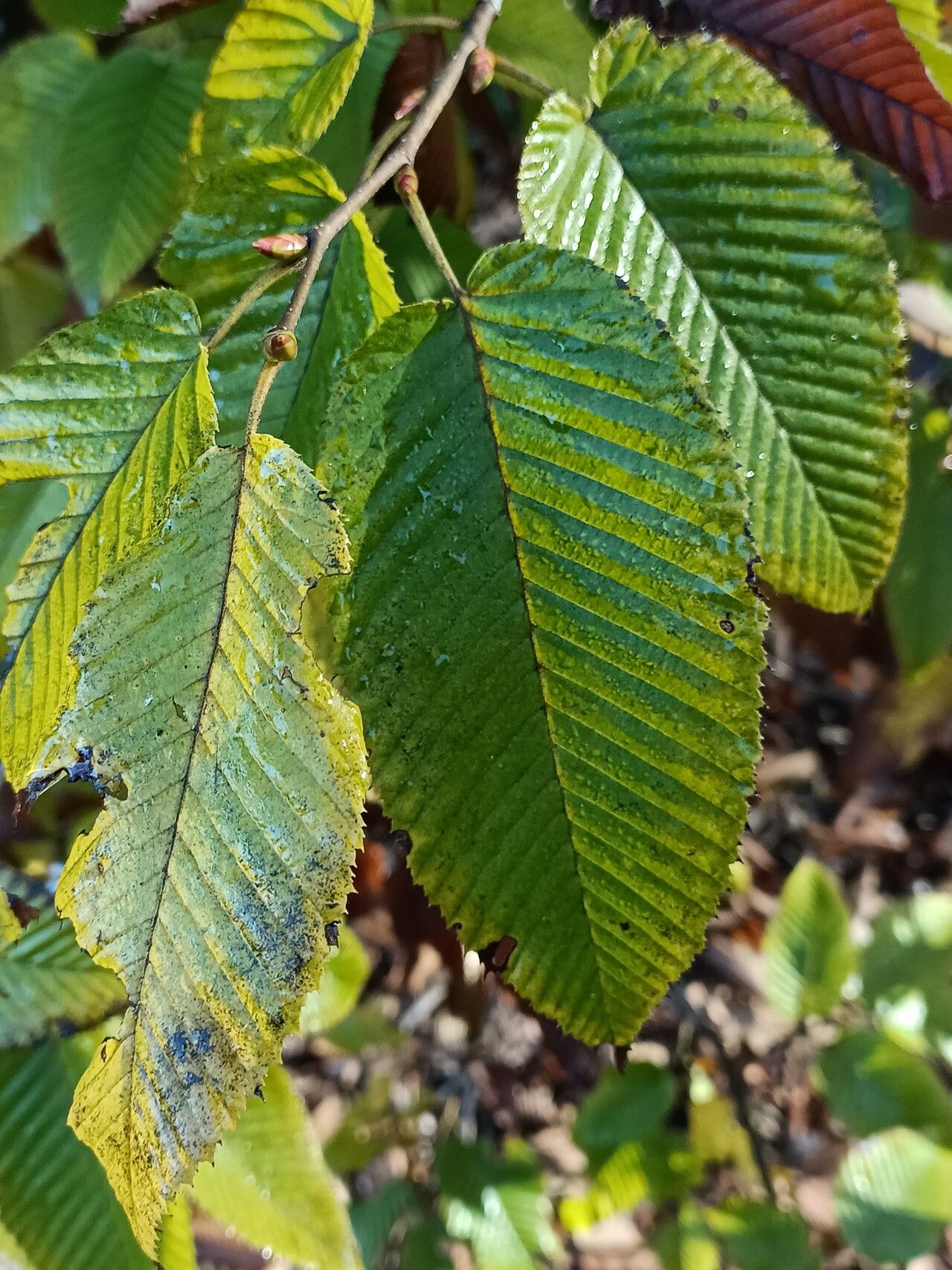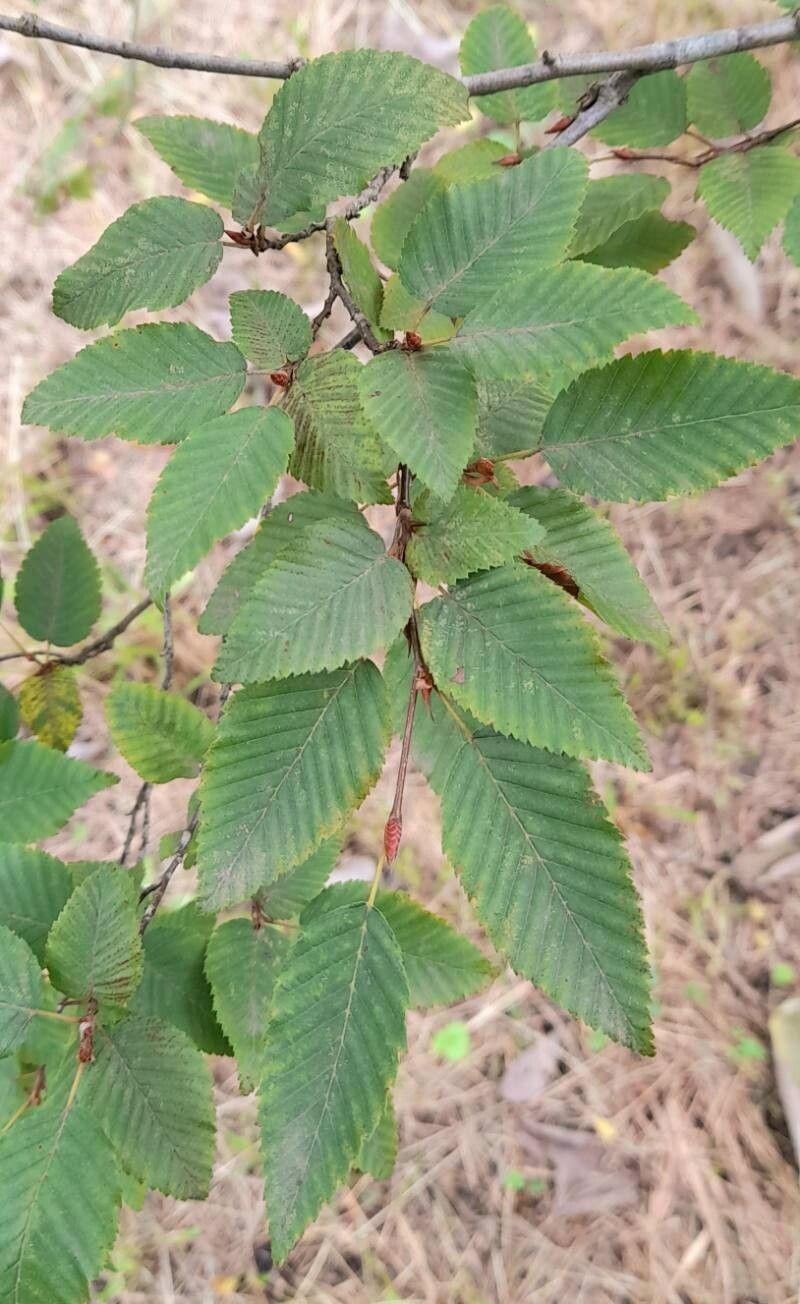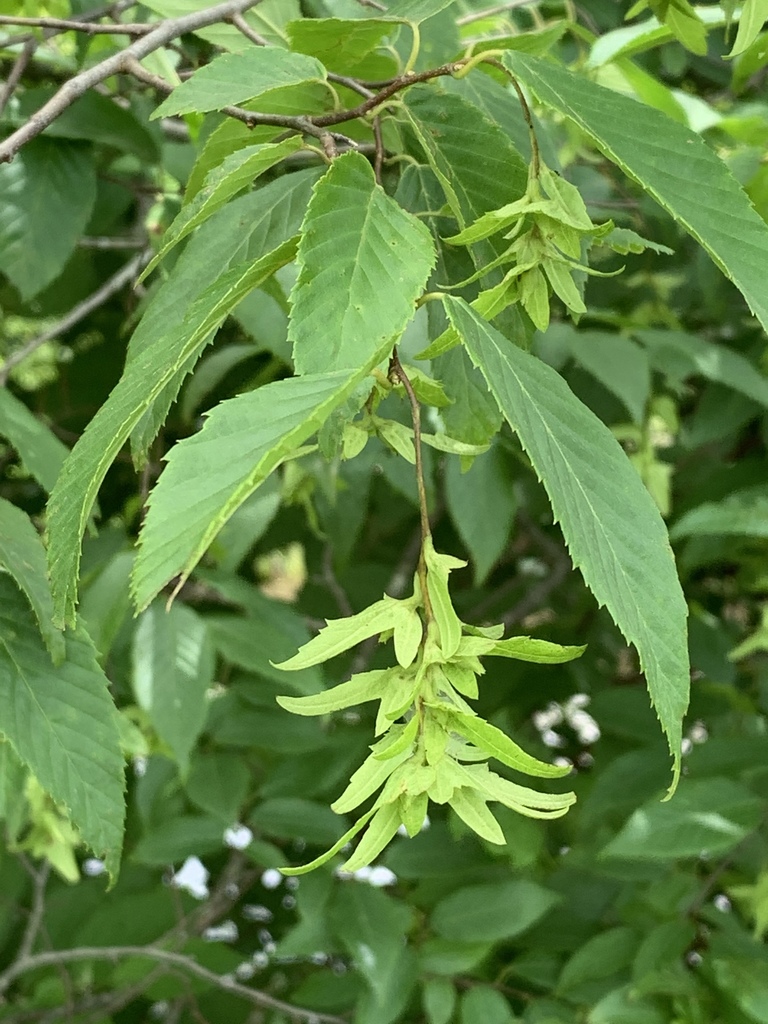
Carpinus caroliniana, commonly known as American hornbeam or musclewood, is a deciduous tree native to eastern North America. It typically reaches a height of 20 to 30 feet and boasts a rounded crown with smooth, gray bark that resembles flexed muscles. The dark green leaves, which have serrated edges, transform into a beautiful yellow-orange hue in the fall.
In the spring, the tree produces small green flowers, which later give way to tiny, nut-like fruits in the fall. American hornbeam is often chosen as an ornamental tree due to its attractive bark and foliage, as well as its shade tolerance and adaptability to various soil types. Additionally, it provides food for wildlife such as birds and squirrels.
American hornbeam has good disease resistance and is generally not prone to diseases. Regarding care, this plant is relatively low-maintenance. When planted outdoors it needs minimal watering, and larger plants typically do not require pruning. Smaller plants, however, should be pruned after they have finished blooming. American hornbeam is suitable for anyone with an outdoor space, such as a garden or a deck, and does not require much care experience.
How to keep Carpinus Caroliniana.
Light
The American hornbeam prefers moderate sun but can withstand full shade or intense sunlight. Native to areas with filtered sunlight, insufficient light may slow its growth, whereas excess light can scorch the leaves. Its tolerance for sunlight changes at different stages of growth.
Water
The American hornbeam thrives in humid environments and needs consistent soil moisture. Ideally, it should be watered every 1-2 weeks. While it has moderate drought tolerance, it is primarily grown outdoors. Mulching is beneficial as it helps retain moisture, mimicking its natural woodland habitat, and supports its adaptability to different climate zones.
Temperature
The american hornbeam's natural habitat indicates it needs a temperate climate, preferring temperatures from 32 to 95 ℉ (0 to 35 ℃). In summer the plant tolerates temperatures above 80 ℉ (27 ℃), while in winter it can endure temperatures as low as -30 ℉ (-34 ℃).
Fertilizer
Fertilize your American hornbeam in early spring to encourage healthy growth. Regular feeding boosts overall health, leading to vigorous growth, increased toughness in harsh conditions, and enhanced resistance to diseases and pests. Keep to a specific fertilization schedule for your American hornbeam to maintain vibrant foliage with deep color and a lush look.
Pruning
The American hornbeam is characterized by its smooth gray bark and elliptical-shaped leaves. To maintain its health, it's best to prune this tree in early spring. Focus on removing dead branches and thinning out crowded areas to enhance air circulation. Be careful to avoid heavy pruning, as this can stress the plant. Pruning at the right time encourages healthy growth and boosts the tree's structural integrity and aesthetic appeal.
Toxicity
Although severe reactions are not common, hornbeam is reported to cause skin irritation. However, this is likely to occur in sensitive individuals.
Further reading →
The toxicity and danger assessments provided are for reference only. We do not assure their accuracy, so it's crucial not to depend on them. Seek professional advice when necessary for accurate guidance.
Botanical profile.
- Plant Type
- Tree
- Life Cycle
- Perennial
- Genus
- Carpinus
- Family
- Betulaceae
- Hardiness Zone
- 3-9
- Mature Height
- 6.1 m to 9.14 m
- Mature Spread
- 6.1 m to 9.14 m
- Leaf Color
- Green, Yellow, Orange, Red
- Leaf Type
- Deciduous
- Flower Color
- Green, Yellow, Red, Brown, Gold
- Flower Size
- 2.54 cm to 5.08 cm
- Bloom Time
- Mid spring, Late spring, Early summer
- Planting Time
- Spring, Autumn
- Harvest Time
- Mid summer, Late summer
- Native Area
- North America
Other names.
Reader questions.
How should I water my American hornbeam?
To promote excellent root development, consider placing a garden hose at the base of your plant. Be careful not to directly spray the leaves, especially if they are outdoors in direct sunlight, as they may need more water. Using bubblers or soaker hoses can help moisten the roots effectively. When adding or removing plants, utilize soaker hoses to reach the entire garden or bed and encourage deeper rooting. After watering, drain any excess water and allow the soil to dry before watering again. To prevent diseases, water at ground level instead of spraying the entire bush. Regardless of whether the plant is in a pot or in the ground, remember that the American hornbeam prefers deep watering rather than light sprinkling.
Why is it necessary to add fertilizer to my American hornbeam?
No matter what type of American hornbeam you have, regular fertilization is key to ensuring its overall health. Providing proper nutrients promotes stronger growth, increased resilience to challenging conditions, and better defense against diseases and pests. The foliage of your American hornbeam is especially appealing, so it's important to maintain it. This involves following a specific fertilization schedule to encourage vibrant, colorful leaves and an overall lush appearance.
What are the sunlight requirements for plants?
Plants have varying sunlight requirements to thrive. Partial sun plants need about 3-6 hours of sunlight daily, while those that require full sun or full shade need more than 6 hours of sunlight. It's essential to observe how sunlight moves through your garden, finding spots that offer the right balance of light and shade. This ensures your plants get the optimal conditions they need for growth, keeping them happy and healthy.
What temperature is best for American hornbeam?
The American hornbeam thrives in temperatures ranging from 65 to 80℉ (18 to 27℃). During the primary growing phase, the highest tolerable temperature is 95℉ (35℃), while the lowest tolerable temperature is 15℉ (-10℃). This species can tolerate low temperatures and survive freezing winters. The ideal temperature range is 65 to 80℉ (18 to 27℃), with the highest range being 85 to 95℉ (30 to 35℃), and the lowest range being -5 to 15℉ (-20 to -10℃) or below.
What do I do if I give the American hornbeam tree too much or too little water?
An overwatered American hornbeam can display several signs of distress. The leaves may turn yellow, drop off, and wilt, and the plant itself may appear dull and unhealthy, with mushy stems. Adjusting your watering schedule can help alleviate these issues, as wilting can also occur from under watering. In this case, the leaves will become crispy and dry, while overwatered leaves will appear soft and wilted. To properly care for your hornbeam, check the soil moisture and, if dry, provide a thorough watering. However, even with adequate watering, the damaged root system may cause the plant to continue to have dry, yellow leaves for a few days. Monitor the moisture levels closely, especially when growing the hornbeam indoors, to avoid overwatering and the development of black spots. If root rot does occur, consider transferring the plant to a new pot, particularly if you observe discolored and slimy roots. Preventing root rot by avoiding soggy soil is crucial. When planting the hornbeam outdoors, ensure the soil is adequately moist by digging a little deeper. If your fingers indicate dry soil, it may be a sign of underwatering, so providing adequate watering is necessary for the plant's recovery.
When should I put fertilizer on my American hornbeam tree?
To ensure healthy growth, it is recommended to fertilize your American hornbeam for the first time in late winter or early spring. This provides the necessary nutrients for the tree to thrive once the weather warms up. In warm climate regions, it is also beneficial to give the tree an extra fertilizer feeding in early fall. This not only adds nutrients to the soil for the upcoming growing season, but also helps the tree withstand the winter cold without foliage damage. Fertilizing earlier will allow the new branches to grow sufficiently to endure the cold winter.
How does the American hornbeam adapt to different sunlight exposures?
The American hornbeam is quite adaptable, thriving under moderate sun exposure and tolerating both full shade and intense sunlight. Originating from environments where it receives filtered solar radiation, this plant shows diverse sunlight tolerance across its different growing stages. However, it's important to note that light limitations might slow its growth, whereas excessive sunlight can lead to leaf scorching.
Do I need to change the temperature for American hornbeam when it is growing in different stages?
Studies have found that American hornbeam may experience stunted growth when exposed to prolonged periods of high temperatures, particularly during the growth of side buds and main shoots. To promote healthy growth after germination or transplantation, it is recommended to maintain consistent and cooler temperatures at around 65℉ (18℃).
How often do I need to water my American hornbeam?
The American hornbeam prefers deep and infrequent watering, especially when planted in pots. Since pots have limited water storage capacity, the soil tends to dry out faster. In cold regions, watering is needed every 3 to 5 days. It is best to water the plant early in the morning when the soil is dry, whether indoors or outdoors. You can also check if watering is necessary by examining the soil. If the top 2-3 inches of soil are dry, it's time to give the plant a thorough watering. In hot weather, it may be necessary to monitor moisture levels daily as the pot soil can dry out quickly. For garden plants, irrigation is also required. In hot climates, watering once a week is sufficient, but it's important to only water when the top 2-3 inches of soil are dry. Don't add water if the plant has received ample rainfall to avoid root rot. American hornbeam mainly grows in spring and fall. To conserve water, add a 3 to 4-inch layer of mulch around outdoor plants. Sandy soil drains faster, so more frequent watering is necessary. Clay soil, on the other hand, requires less frequent watering, with 2-3 days between watering to allow the plant to dry and prevent root rot. It may be helpful to mark the watering dates on a calendar and look out for drooping leaves, which could indicate delayed watering.
When is the best time to not use fertilizer on my American hornbeam?
There are specific periods throughout the year when you should avoid fertilizing your American hornbeam. The first occurrence happens in the early and mid-winter months when the tree is in its dormant state and does not require any nutrients. Similarly, it is not advisable to fertilize the tree in late spring and throughout the summer due to the hotter and drier weather conditions. These conditions can have a negative impact on the tree if fertilized. To prevent any issues, it is recommended to follow a fertilization schedule that involves feeding only in early spring and early fall.
What artificial lighting requirements do indoor plants have?
Indoor plants need adequate lighting to grow optimally, especially when natural sunlight is insufficient. During winter or in spaces that receive little sunlight, artificial lights become crucial. LED lights are popular for indoor plants because they can be adjusted to provide specific light wavelengths needed by plants. Full sun plants should have 30-50W/sq ft, partial sun plants 20-30W/sq ft, and full shade plants 10-20W/sq ft of artificial light. The light source should be placed 12-36 inches above the plant to mimic natural sunlight, ensuring the plants receive 8-12 hours of light per day.
How can I make sure American hornbeam stays warm during cold seasons?
American hornbeam is suitable for planting in the ground in areas where temperatures do not drop below 15℉ (-10℃) during winter. However, if planted in pots or containers, the roots must be protected from the cold. This can be done by wrapping the container in a blanket or bringing it indoors to ensure full protection from the elements.