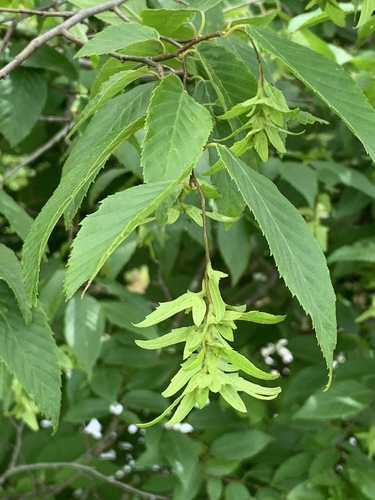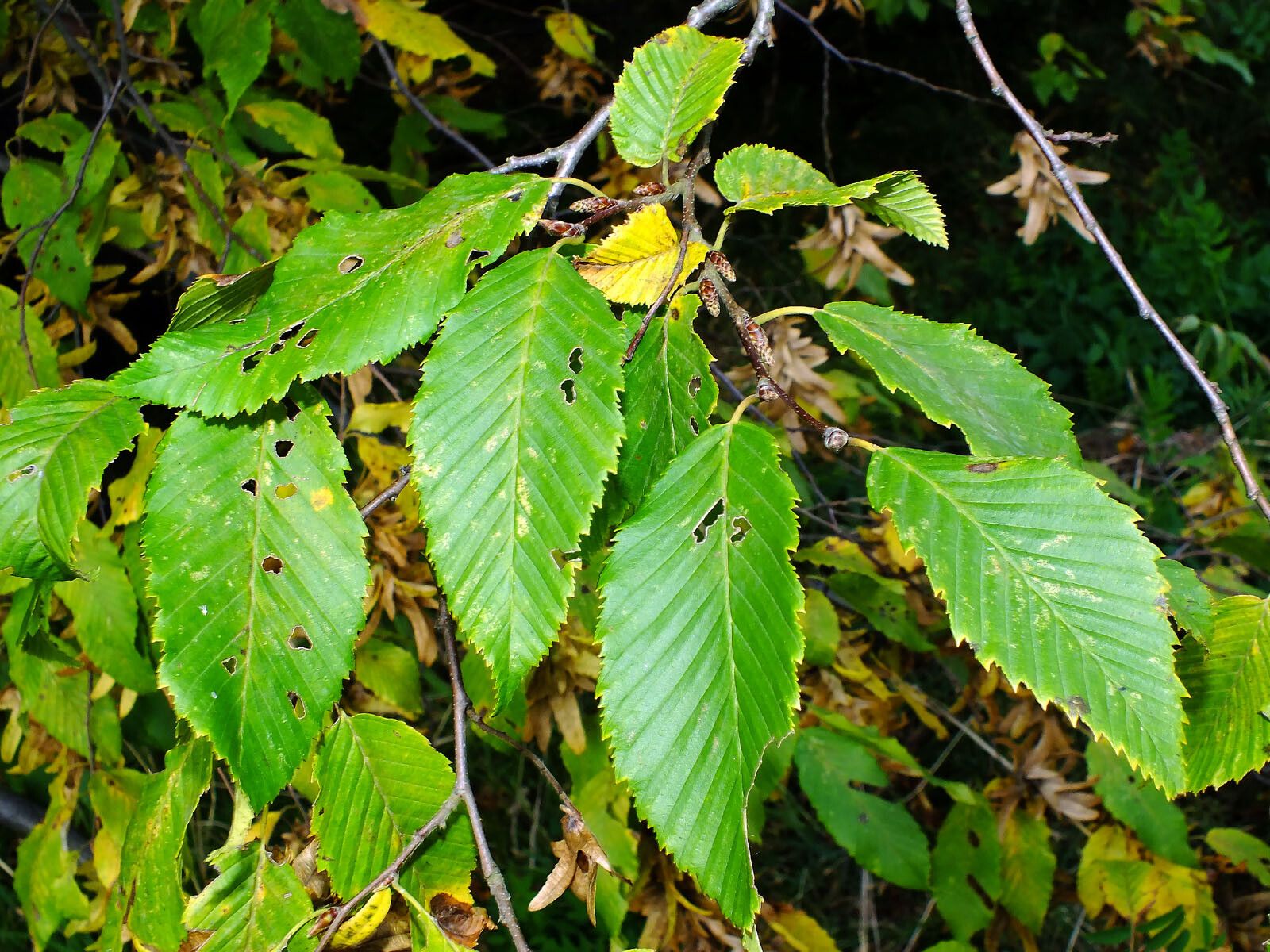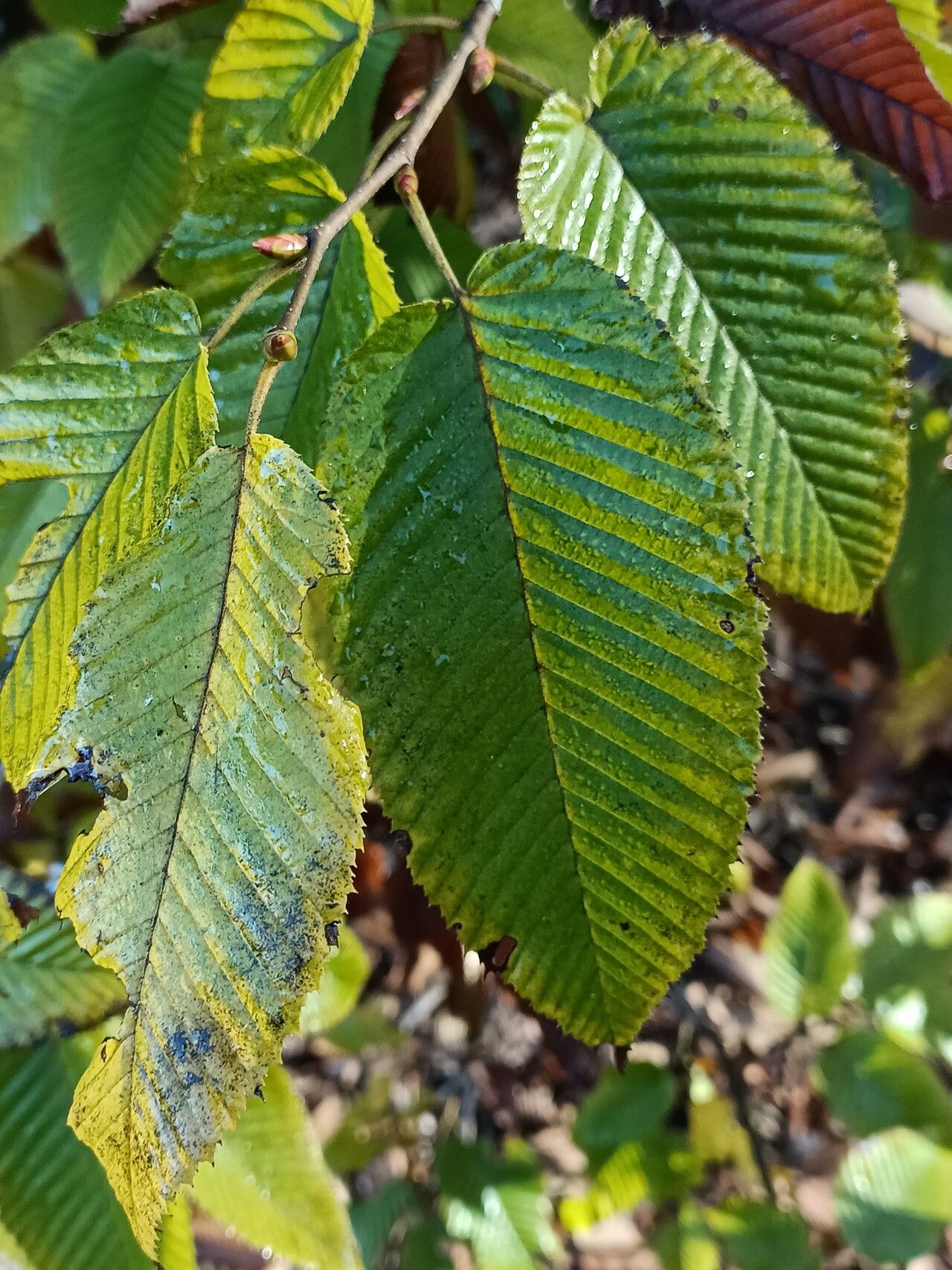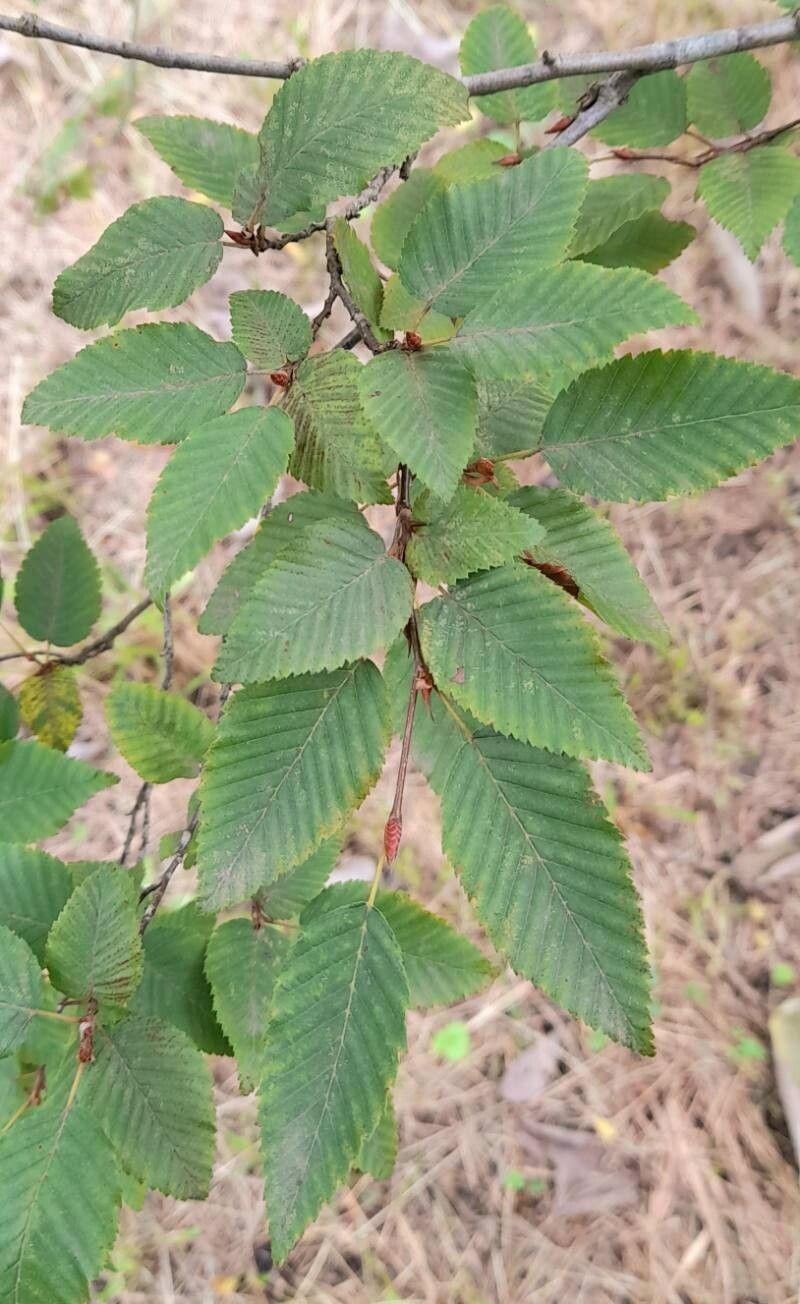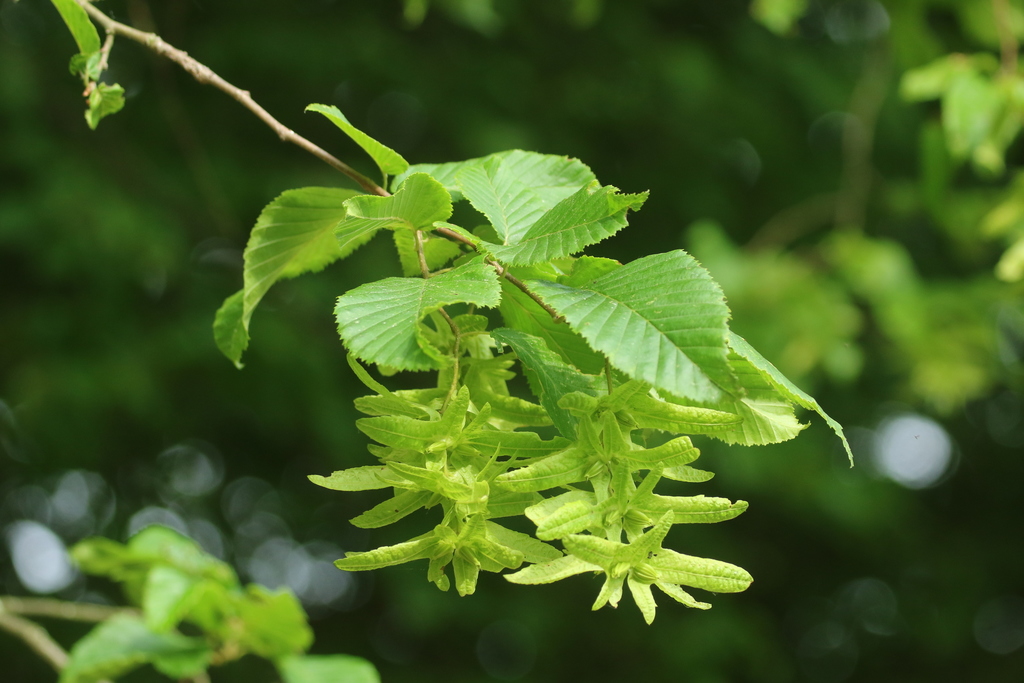
Carpinus betulus, commonly known as the European hornbeam, is a deciduous tree native to Europe and parts of Asia. It typically reaches a height of 15-25 meters and features a dense, rounded crown. When young, the bark is smooth and gray, but it becomes deeply furrowed with age. The leaves are oval-shaped with serrated edges and turn yellow in the fall.
In the spring, the European hornbeam produces small green flowers, which are followed by winged nutlets in the fall. The tree prefers moist, well-drained soils but can tolerate some drought once established. Due to its attractive foliage and shape, it is often used as an ornamental plant.
Beyond its aesthetic value, Carpinus betulus has several practical uses. Its hard wood, which can be easily carved or turned on a lathe, is commonly used for firewood and furniture making.
During the medieval era and even in modern Europe, this tree has been a popular choice for gardens using the technique of pleaching. Pleaching is a form of topiary gardening that creates a shaded wall by interweaving the branches of trees. Over time, these branches grow together, forming a natural graft. FUN FACT · FROM THE LIBRARY
Overall, Carpinus betulus is an attractive deciduous tree that offers both aesthetic appeal and practical benefits, making it popular among gardeners and woodworkers alike.
Common hornbeam is resistant to disease and typically not susceptible to illnesses. As for maintenance, this plant is fairly low-maintenance. When grown outdoors it needs only minimal watering, and larger specimens generally do not require pruning. Smaller plants, however, should be pruned after they finish blooming. Common hornbeam is well suited to anyone with outdoor space—such as a garden or deck—and does not demand extensive care experience.
How to keep Carpinus Betulus.
Light
The common hornbeam does best when it receives steady daylight for most of the day. It can tolerate reduced light levels, even situations similar to full shade. Native to sunny habitats, its growth and health are strongly affected by how much sunlight it receives. However, too much light or insufficient light can stress the plant.
Water
The common hornbeam thrives in temperate regions and prefers moderate moisture and consistent humidity. It is also resilient to drought. Generally, it needs watering every three weeks, although its water requirements decrease during the dormant winter months.
Temperature
Common hornbeam is native to temperate regions. It does best in temperatures of 41 to 90 °F (5 to 32 °C). During hotter months, consider providing shade to keep it within its preferred temperature range and to prevent stress.
Fertilizer
To encourage healthy development, fertilize your Common hornbeam in early spring. Regular feeding improves overall health, producing vigorous growth, greater tolerance of adverse conditions, and enhanced resistance to pests and diseases. Keep a defined fertilization schedule for your Common hornbeam to maintain lively foliage with rich color and a full, lush appearance.
Pruning
The common hornbeam is a deciduous tree known for its dense foliage and attractive bark. Pruning is an essential task for maintaining its health and appearance; it involves removing dead wood, thinning the branches to allow light to penetrate, and shaping the tree for aesthetic purposes. The ideal time to prune is in early spring, as this helps enhance air circulation, reduce the risk of disease, and promote vigorous growth. For the best results, make sure to use clean and sharp tools.
Botanical profile.
- Plant Type
- Tree
- Life Cycle
- Perennial
- Genus
- Carpinus
- Family
- Betulaceae
- Hardiness Zone
- 5-7
- Mature Height
- 12.19 m to 18.29 m
- Mature Spread
- 9.14 m to 11.89 m
- Leaf Color
- Green, Yellow, Orange
- Leaf Type
- Deciduous
- Flower Color
- Yellow, Green
- Flower Size
- 3.81 cm
- Bloom Time
- Mid spring, Late spring
- Planting Time
- Spring, Autumn
- Harvest Time
- Mid summer
- Native Area
- Tajikistan, Turkey, Sweden, Austria, Czech Republic, Slovakia, Montenegro, Bulgaria, Armenia, Poland, Greece, Croatia, Slovenia, Belarus, Ukraine, Serbia, Russia, Lithuania, Hungary, Germany, Italy, Switzerland, Denmark, France, Iran, Albania, Azerbaijan, United Kingdom, Romania, Belgium, Netherlands
Other names.
Reader questions.
How frequently should I water my Common hornbeam?
The Common hornbeam requires deep and infrequent watering. If you have them planted in pots, make sure to soak them in a gallon of water each time. Potted plants have limited water storage, so the soil tends to dry out faster. In cold regions, water every 3 to 5 days. Water in the morning when the soil is dry, indoors or outdoors. You can also check the soil to determine if watering is needed. When the top 2-3 inches of soil are dry, it's time to give the plant a full watering. On hot days, check the moisture daily as the heat can quickly dry out the soil in the pot. For garden plants, irrigation is necessary. In hot climates, water once a week when you notice that about 2 to 3 inches of soil have become too dry, either indoors or outdoors. Consider the amount of rainfall on the plant and avoid adding extra water to prevent root rot. If there is ample rainfall, additional watering may not be necessary. Common hornbeam typically grows in spring and fall. Outdoors, add a 3 to 4-inch layer of mulch to conserve more water. Sandy soil drains faster, so plants grown in this type of soil will require more frequent watering. On the other hand, clay soil retains moisture better, so water less frequently, allowing 2-3 days for the plant to dry out to avoid root rot. To keep track of watering, mark the date on a calendar and pay attention to any drooping leaves, as this may indicate that watering is overdue.
When is it not a good time to fertilize my Common hornbeam?
There are specific times throughout the year when it is best not to fertilize your Common hornbeam. One such time is in the early and mid-winter months when the plant is dormant and does not require additional nutrients. It is also not advisable to fertilize during late spring and all of summer, as the weather tends to be hotter and drier. These conditions can have a negative impact on the plant if it is fertilized during this time. To avoid any issues, it is recommended to stick to a fertilization schedule of early spring and early fall.
What are the sunlight requirements for Common hornbeam?
The Common hornbeam requires full sun, which means it thrives in conditions where it can receive above 6 hours of sunlight daily. It can also tolerate partial sun and full shade, which refers to about 3-6 hours of sunlight. The key to its happiness is observing how sunlight moves through your garden and finding spots that offer a good balance of light and shade.
What is the native climate for common hornbeam?
Common hornbeam is native to regions that have a temperate climate. It thrives in temperatures ranging from 41 to 90 °F (5 to 32 °C). During the warmer months, it's advisable to provide shading for the plant to maintain its preferred temperature range and prevent stress. This species is notably cold-tolerant and does not require additional measures for frost protection in winter. Nonetheless, it is advisable to water the plant generously before the first autumn freeze to ensure the soil remains moist and enters a frozen state in winter, which helps prevent drought and water scarcity during winter and early spring.
How should I water my Common hornbeam tree?
To promote excellent root development, consider using a garden hose at the base of the plant instead of directly spraying the leaves. If the leaves are exposed to direct sunlight outdoors, they will require more watering. You can also moisten the roots by using bubblers specifically designed for each plant. When adding or removing plants, consider using soaker hoses that cover the entire garden bed to ensure deep root growth. After watering, make sure to drain any excess water and wait for the soil to dry before watering again. It's important to water at ground level to prevent diseases. On a sunny day, it may be beneficial to spray the entire bush with water. Whether the plant is in a pot or in the ground, keep in mind that Common hornbeam prefers deep watering rather than light sprinkling.
How can I provide nutrients to my Common hornbeam plant?
To fertilize your Common hornbeam, you have two options: using granular fertilizer or liquid fertilizer. If you choose the granular fertilizer, simply sprinkle it on the soil at the right time. The nutrients in the granules will slowly be released into the soil over time. It's a good idea to lightly water your Common hornbeam before applying the fertilizer. Alternatively, you can use liquid fertilizer by mixing it with water and pouring it around the base of the tree. However, this method is less commonly used. Before fertilizing, it may be helpful to perform a soil test to determine if any adjustments to the pH are needed.
How does sunlight affect the health and growth of Common hornbeam?
Sunlight plays a critical role in the health and growth of the Common hornbeam. Originating from environments rich in sunlight, its well-being is significantly influenced by exposure to light. Consistent daylight exposure for most of the day is essential, though the tree can tolerate lower light conditions, even full shade. However, both excessive and poor light can stress the plant, affecting its growth.
How does common hornbeam react to low temperatures?
The common hornbeam exhibits extreme cold tolerance. It is able to withstand winter temperatures above -25°C without significant adverse effects. However, if the temperature dips below this level, there may not be any noticeable changes to the plant during winter itself, but in spring, the branches could become brittle and dry, and no new shoots may emerge. In case this happens, it is recommended to prune away any dead branches that have failed to produce new leaves as part of the spring care routine.
What should I do if I give too much water or not enough water to a Common hornbeam?
If a Common hornbeam is overwatered, its leaves may turn yellow, drop off, and wilt. The plant may look dull and unhealthy, with mushy stems. In these cases, it's best to adjust your watering schedule. Wilting can also indicate under watering, characterized by crispy and dry leaves. When the soil is dry and watering alone isn't enough, give the plant a thorough watering. Although enough water will help the Common hornbeam recover, it will still have dry and yellow leaves for a few days due to root damage. Once it returns to normal, the yellowing of leaves will stop. When keeping the Common hornbeam indoors, always check the moisture levels in the pot and avoid overwatering. Look out for black spots, as this may indicate root rot. If present, allow the soil to dry out by withholding water for a few days. Root rot should be prevented by ensuring the soil doesn't become too soggy. Additionally, when planting the Common hornbeam outdoors, make sure to dig deeper into the soil. If the soil feels dry when you check with your fingers, it may be a sign of underwatering, in which case adequate watering is necessary for the plant's recovery.
What will happen if I use too much fertilizer on my Common hornbeam plant?
Feeding a Common hornbeam carries the risk of overfertilization. This risk increases if you feed the plant at the wrong time of year, feed it too frequently, or fail to water the soil beforehand. Overfertilization can cause browning leaves and hinder the plant's growth. Conversely, excessive fertilizer can lead to excessive and weak new growth, which may break easily and affect the overall shape and structure of the Common hornbeam.
What artificial lighting requirements do indoor Common hornbeam plants have?
For indoor Common hornbeam plants, adequate lighting is crucial, especially when natural sunlight is insufficient. Artificial lights, such as LEDs that can be customized to specific wavelengths needed by the plant, are recommended. Full sun plants require 30-50W/sq ft, partial sun plants need 20-30W/sq ft, and full shade plants 10-20W/sq ft of artificial light. The light source should be positioned 12-36 inches above the plant, mimicking natural sunlight. Most plants will benefit from 8-12 hours of artificial light per day to ensure optimal growth.
What should I do if common hornbeam experiences high temperatures?
Common hornbeam is less tolerant of high temperatures. Exposure to temperatures above 32°C can lead to significant leaf drop, and in severe cases, the entire plant could wither and die. To combat this, it is advisable to trim away the sunburned and dried-up parts of the plant. Moving the plant to a shaded location, or using a shade cloth to protect it from the direct midday and afternoon sun, can also be beneficial. Additionally, keeping the soil moist by watering the plant in the morning and evening can help mitigate the stress caused by high temperatures.