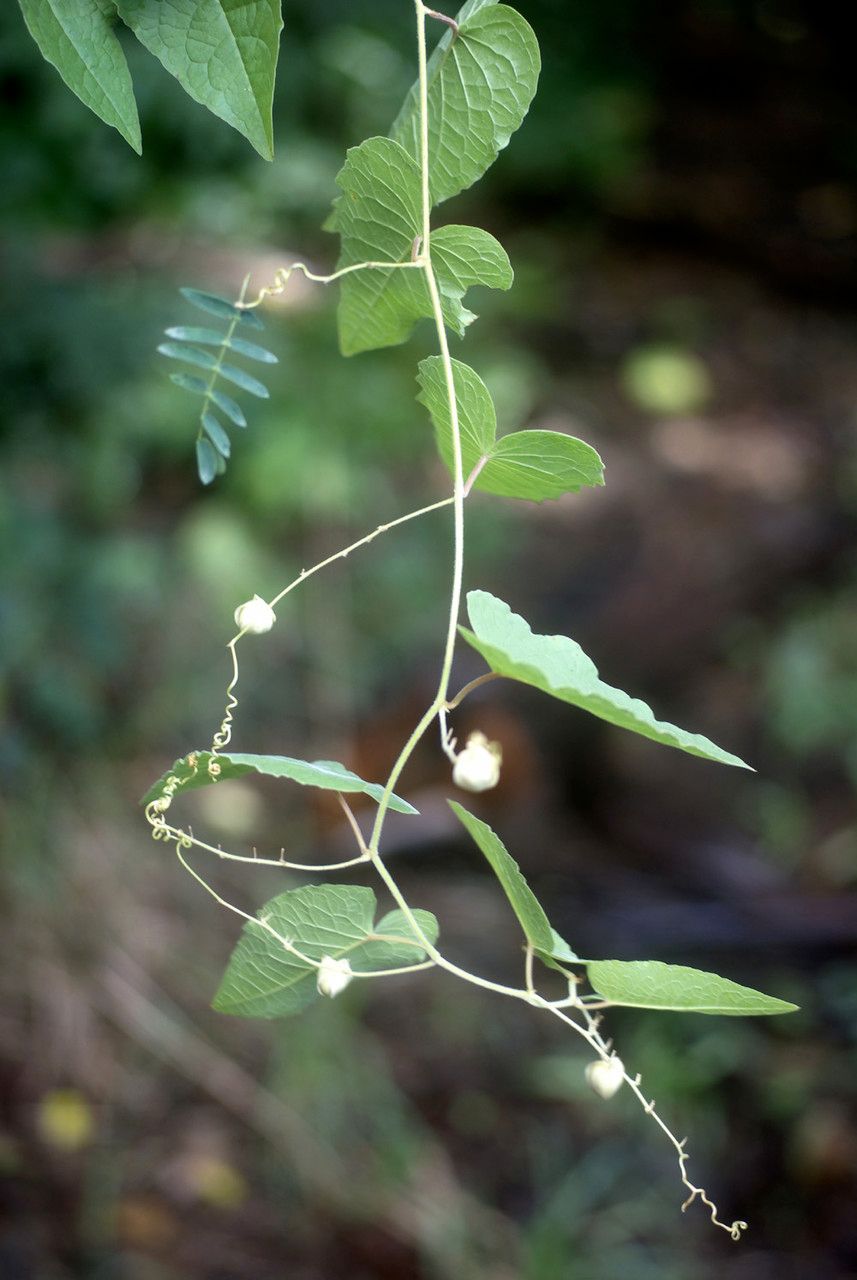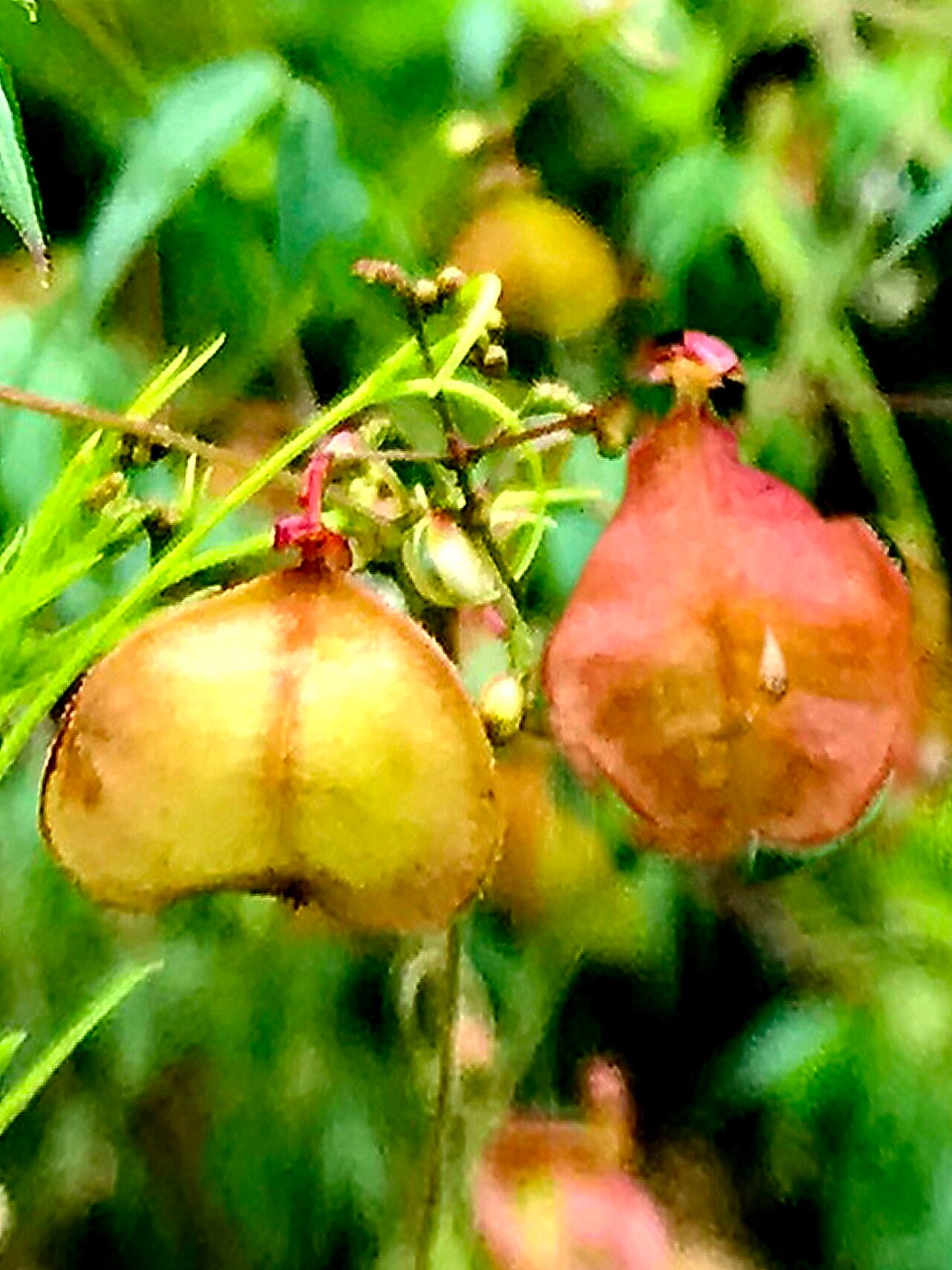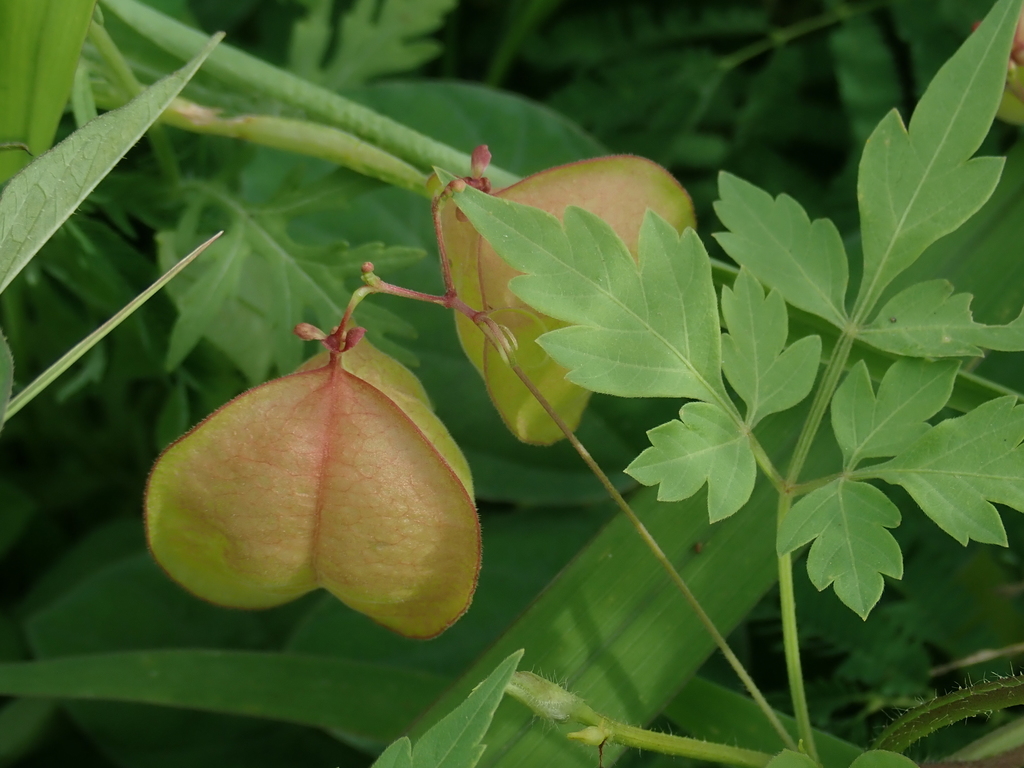
Cardiospermum halicacabum, commonly known as balloon vine or love in a puff, is a climbing plant that belongs to the soapberry family. Native to tropical and subtropical regions, you can find it in Africa, Asia, Australia, and the Americas. One of its most distinctive features is its heart-shaped seeds, which are enclosed in inflated, papery capsules resembling balloons.
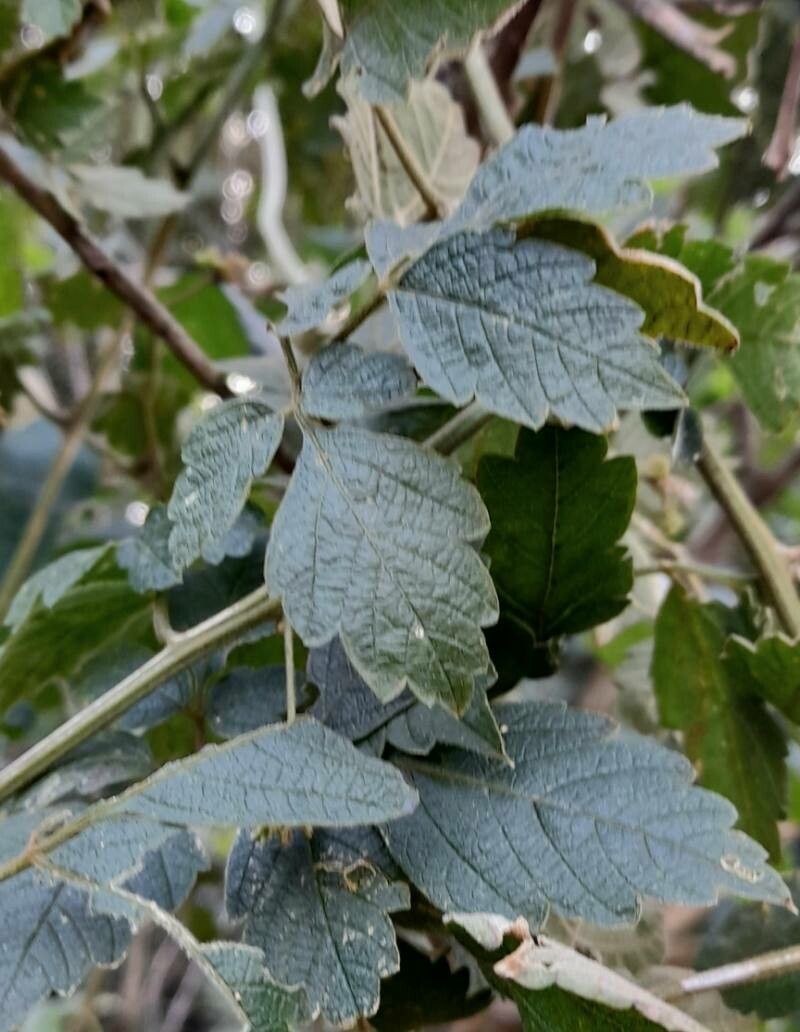
The leaves of Cardiospermum halicacabum are compound, consisting of three ovate or lanceolate leaflets. The small white flowers, each with five star-shaped petals, bloom from summer to fall.
This plant has been used for medicinal purposes for centuries by various cultures worldwide. It's believed to possess anti-inflammatory properties and has been employed in treating skin conditions such as eczema and psoriasis.
In addition to its medicinal uses, Cardiospermum halicacabum is popular as an ornamental plant due to its attractive foliage and unique seed pods. However, its ability to spread rapidly through self-seeding means it can become invasive if not properly managed.
Overall, Cardiospermum halicacabum is a captivating climbing plant with medicinal benefits and aesthetic appeal when grown under controlled conditions.
Lesser Balloon Vine has strong resistance to disease and is generally not highly susceptible to illnesses. Still, it can be affected by pests and diseases present in its environment, though such infections are typically mild. Regarding maintenance, this plant has moderate care requirements. It should be pruned regularly to preserve an attractive appearance and healthy growth. Applying fertilizer can also encourage flowering. Lesser Balloon Vine is appropriate for anyone with outdoor space, like a garden or patio, and does not demand extensive care experience. It may need more attention if grown indoors.
How to keep Cardiospermum Halicacabum.
Light
Lesser Balloon Vine does best when it receives full sun during its growing season. Originating in environments with plentiful sunlight, it has adapted to take advantage of these conditions for vigorous growth. Harmful effects can occur if sunlight is greatly reduced or significantly increased.
Water
Lesser Balloon Vine flourishes in tropical climates, where it prefers regular moisture and high humidity. It needs consistent watering, typically weekly, and benefits from rainwater during its growing season. Although it adapts well to brief dry spells, it continues to grow healthily with proper hydration.
Humidity
This plant will thrive in moderate humidity, which is probably the level in your home. However, misting it a few times a week can be very beneficial. Make sure the room has good ventilation.
Temperature
Native to nature's greenhouse conditions, the lesser Balloon Vine flourishes at temperatures between 68 and 100.4 °F (20 to 38 ℃). To keep it blossoming year-round, recreate its native environment by varying temperatures seasonally to mirror its natural habitat.
Fertilizer
The best time to fertilize a Lesser Balloon Vine is in early spring, as it comes out of dormancy and starts active growth. Fertilization supplies essential nutrients for healthy development. Although the Lesser Balloon Vine has relatively low fertilizer needs, applying fertilizer once a year can improve its survival and encourage better, longer-lasting flowers.
Pot & Repot
To promote optimal growth for your lesser Balloon Vine, repot it every 2-3 years during the spring. Choose a medium-sized pot to allow room for root expansion, and place the plant in indirect sunlight. Regular watering after repotting will aid in the vine's recovery and help it remain healthy and thriving.
Botanical profile.
- Plant Type
- Herb
- Life Cycle
- Perennial, Annual, Biennial
- Genus
- Cardiospermum
- Family
- Sapindaceae
- Hardiness Zone
- 8-11
- Mature Height
- 0.91 m to 4.88 m
- Mature Spread
- 2.13 m
- Leaf Color
- Green
- Leaf Type
- Evergreen, Deciduous
- Flower Color
- White
- Flower Size
- 0.51 cm to 0.51 cm
- Bloom Time
- Late spring, Summer
- Planting Time
- Spring, Summer
- Harvest Time
- Mid summer, Late summer, Early fall
- Native Area
- Burkina Faso, Somalia, Egypt, India, Angola, Mexico, Guatemala, Namibia, Rwanda, Pakistan, Eritrea, Nigeria, Yemen, Guinea-Bissau, Niger, Jamaica, Zimbabwe, Benin, Uruguay, Mali, Paraguay, Sierra Leone, Argentina, Cameroon, Liberia, Mozambique, Venezuela, Brazil, Oman, Ghana, Ethiopia, Suriname, Botswana, Congo, Central African Republic, Saudi Arabia, Malawi, Chile, Honduras, Peru, Zambia, Sudan, Bangladesh, Guinea, Panama, Chad, Colombia, Bahamas, Bolivia, Togo, Guyana, Senegal, Eswatini, Nicaragua, Ecuador, Costa Rica, Côte d'Ivoire, Gambia, Congo (DRC)
Other names.
Reader questions.
How should I water my Lesser Balloon Vine?
When watering the Lesser Balloon Vine, it is best to use filtered water at room temperature. Tap water should be avoided because it can contain harmful particles. The water should be at room temperature or slightly warmer because the plant is used to a warm environment and cold water can be harmful. Instead of overhead watering, simply apply the filtered room temperature water to the soil until it is completely soaked. This helps moisten the roots and allows them to spread through the soil to collect nutrients.
Why is it necessary to fertilize my Lesser Balloon Vine?
The main structure of the Lesser Balloon Vine is made up of its leaves. Proper fertilization is crucial to maintain the appearance and function of these leaves. Fertilization also has benefits below the soil, such as promoting the growth of new roots and maintaining the existing ones. This not only keeps the plant healthy in the present but also improves its ability to absorb nutrients from the soil in the future.
What are the sunlight requirements for Lesser Balloon Vine?
Lesser Balloon Vine requires full sun, meaning it needs above 6 hours of sunlight daily. It's important to observe the movement of sunlight through your garden to select spots that offer a balance of light and shade, ensuring the plants' well-being. This species thrives under full exposure during its growing period, adapted to environments with significant sun exposure for vigorous growth. Insufficient or excessive sunlight can adversely affect its health.
What is the ideal temperature range for Lesser Balloon Vine to thrive?
The Lesser Balloon Vine, scientifically known as Cardiospermum halicacabum, flourishes in temperatures ranging from 68 to 100.4 °F (20 to 38 °C). To encourage year-round growth, it's important to simulate the plant's native environment by seasonally adjusting the temperature to reflect its natural habitat. Despite its moderate cold tolerance, special precautions should be taken when temperatures are forecasted to drop below 0°C, including wrapping the plant in materials like plastic film or fabric for protection. This protection should be removed once temperatures rise again.
What should I do if I give my Lesser Balloon Vine too much or too little water?
Both overwatering and underwatering can harm your Lesser Balloon Vine, but overwatering is more common. When this species gets excessive water, its stems and leaves may wilt and turn yellow. Overwatering for a long time can also result in diseases like root rot, mold, and mildew, which can kill your plant. Lesser Balloon Vines are usually more tolerant to drought, so underwatering is less likely, but it's still possible. In case of underwatering, the leaves may become brittle and brown. Paying attention to signs of overwatering is crucial. Some diseases caused by overwatering, such as root rot, may become unfixable if you wait too long. Reduce your watering schedule and assess the soil's quality if you notice early signs of overwatering. Replace poorly draining soil with a loose, well-draining potting mix. If you see signs of underwatering, increase your watering frequency until the signs subside.
When should I fertilize my Lesser Balloon Vine plant?
If you choose to grow your Lesser Balloon Vine outdoors every year, it will start to produce new growth in early spring. This is the signal that it's time to start fertilizing for the year. Usually, a single application of fertilizer is enough for a Lesser Balloon Vine to thrive in the spring. However, if you want to maximize its growth, you can fertilize it multiple times during the spring and early summer. If you decide to do this, you can feed your plant approximately once every month to a month and a half.
How should you use artificial lighting for indoor Lesser Balloon Vine plants?
For indoor Lesser Balloon Vine plants, adequate lighting is crucial, especially when natural sunlight is lacking. Artificial lights, like LED lights, can provide the specific wavelengths of light needed. Full sun plants require 30-50W per square foot of artificial light, partial sun plants need 20-30W, and full shade plants need 10-20W. The artificial light source should be placed 12-36 inches above the plant to mimic natural sunlight and be kept on for 8-12 hours per day to simulate natural daylight hours accurately.
How does Lesser Balloon Vine react to low temperatures, and what are the recommended solutions?
Lesser Balloon Vine possesses a moderate tolerance for low temperatures, ideally thriving above 20°C and needing to be kept above 0°C during the winter. If temperatures fall below -10°C, the plant's leaves may droop; they can recover from mild exposure, but severe cold might cause leaves to wilt and fall off. To protect the plant from cold damage, trim off the frost-damaged parts and, to prevent future occurrences, wrap the plant with non-woven fabric or cloth and erect a wind barrier for additional protection.
How often should I water my Lesser Balloon Vine? -> How often do I need to water my Lesser Balloon Vine?
If your Lesser Balloon Vine is in a pot, the most precise way to determine if it needs water is by checking the soil. Stick your finger into the soil and if the top two to three inches are dry, it's time to water it. If you have your Lesser Balloon Vine planted outdoors, you can use a similar method to test the soil. Again, if the top few inches have dried out, it's time to water it. Typically, during spring and early fall, you'll need to water this plant about once a week using this method. However, in extremely hot weather, you may need to increase watering to about twice a week or more. That being said, mature and well-established Lesser Balloon Vines can withstand drought well.
When should I not put fertilizer on my Lesser Balloon Vine?
During the late fall and winter, your Lesser Balloon Vine will go dormant and stop producing new growth. It's best to avoid fertilizing it during this time. If you do decide to fertilize in the spring and summer, gradually reduce the amount of fertilizer as summer approaches because the plant's growth rate will also slow down. In general, it's not a good idea to fertilize your Lesser Balloon Vine when the weather is unusually hot or the soil is very dry. Fertilizing in these conditions can stress the plant and cause it to die earlier than it should.
What are the symptoms of inadequate lighting in Lesser Balloon Vine?
In conditions of poor lighting, Lesser Balloon Vine may exhibit symptoms such as smaller new leaves, leggy or sparse growth, faster leaf drop, slower or halted growth, lighter-colored new leaves, chlorosis (yellowing leaves), sunscald, leaf curling, wilting, and leaf scorching. These symptoms indicate either insufficient sunlight or overexposure, impacting the plant's ability to photosynthesize and maintain overall health.
How should I care for Lesser Balloon Vine in high temperatures?
During the summer, it's crucial to ensure the Lesser Balloon Vine is not exposed to temperatures above 38°C. Exceeding 43°C can cause the leaves to lighten in color, tips to dry and wither, curling of leaves, and increased susceptibility to sunburn. To mitigate these issues, trim away any sunburned or dried parts. Relocate the plant to a shaded area during the intense midday and afternoon sun or use a shade cloth. Additionally, water the plant in the early morning and evening to maintain soil moisture.