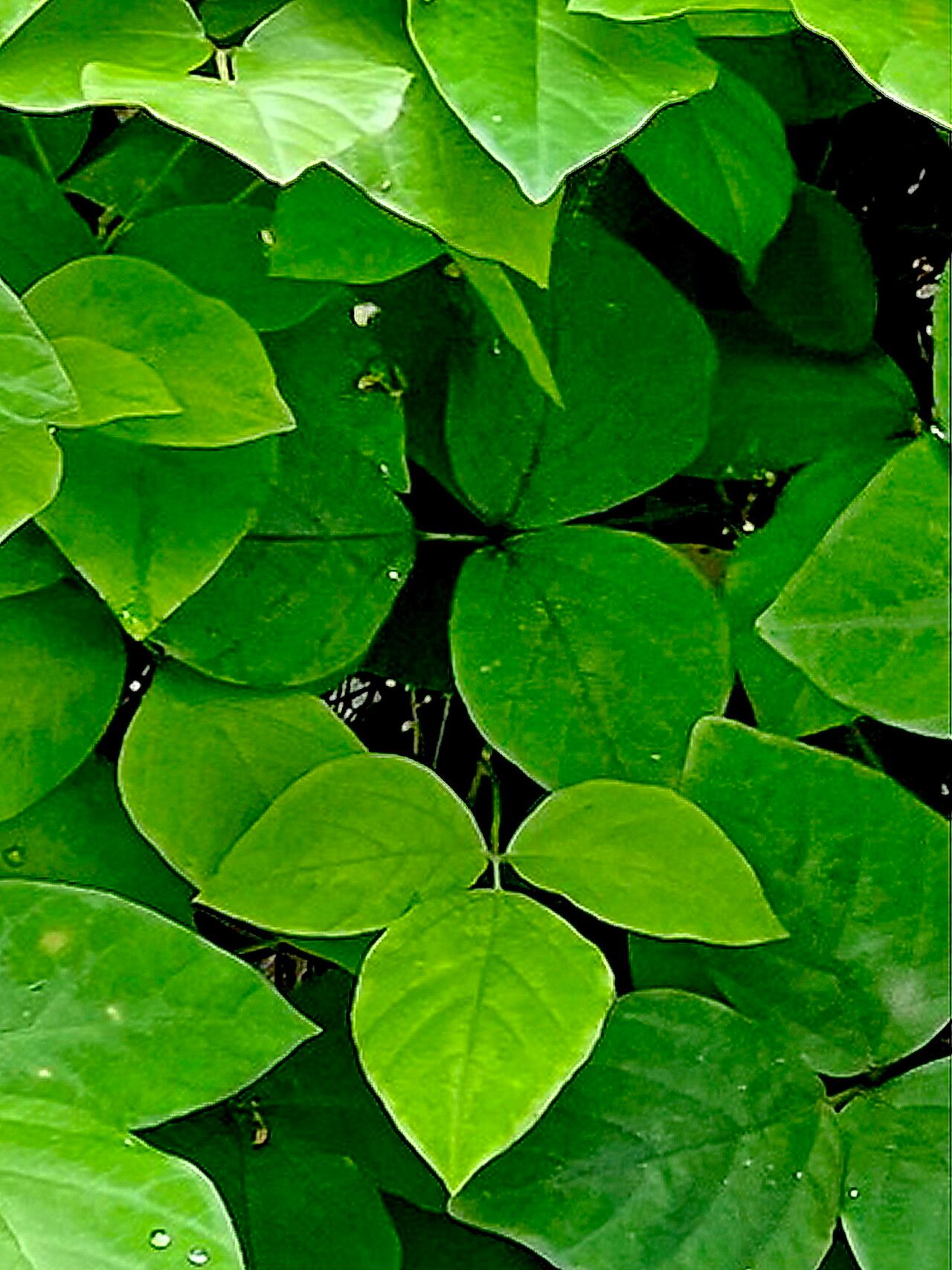
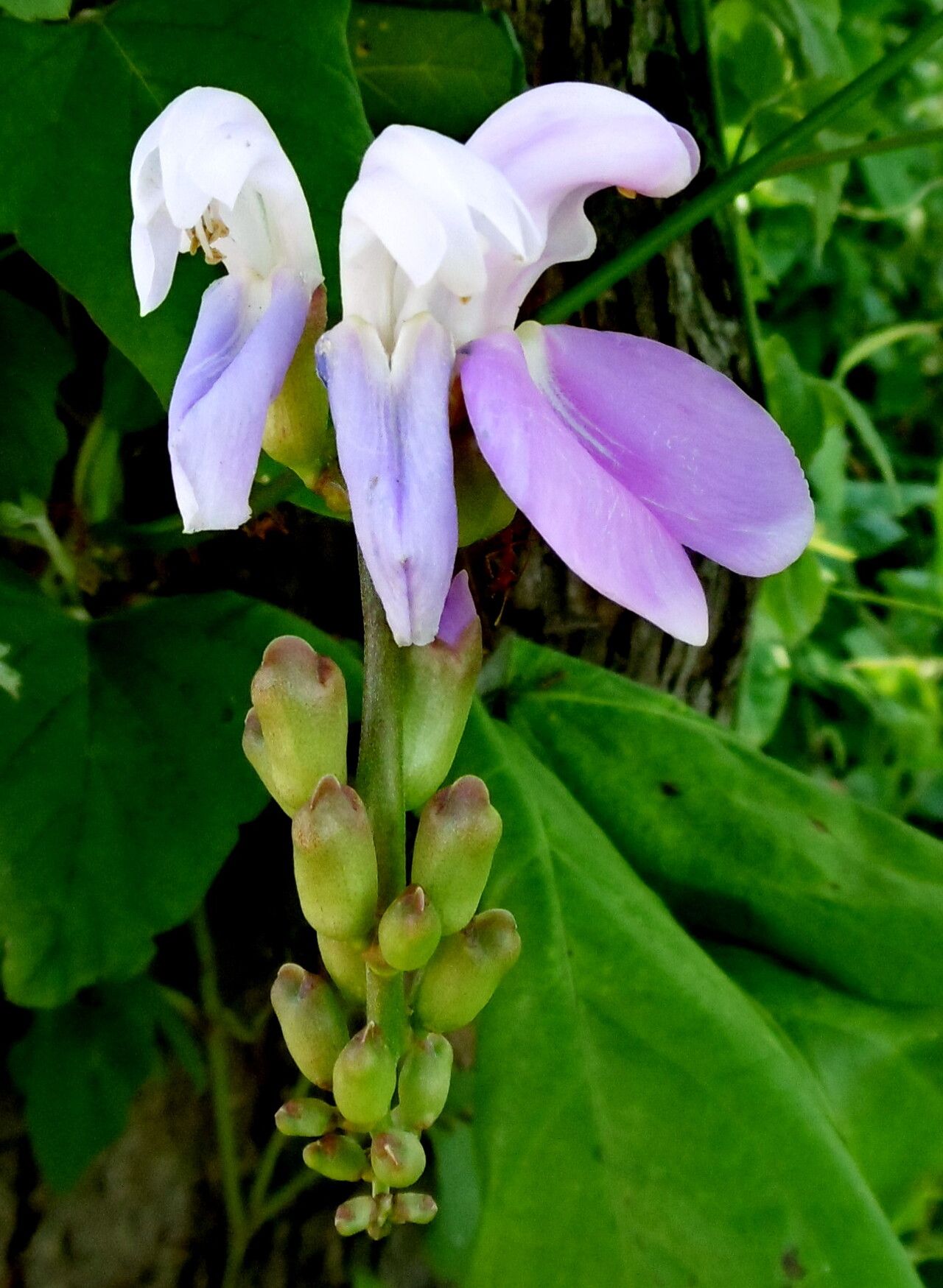
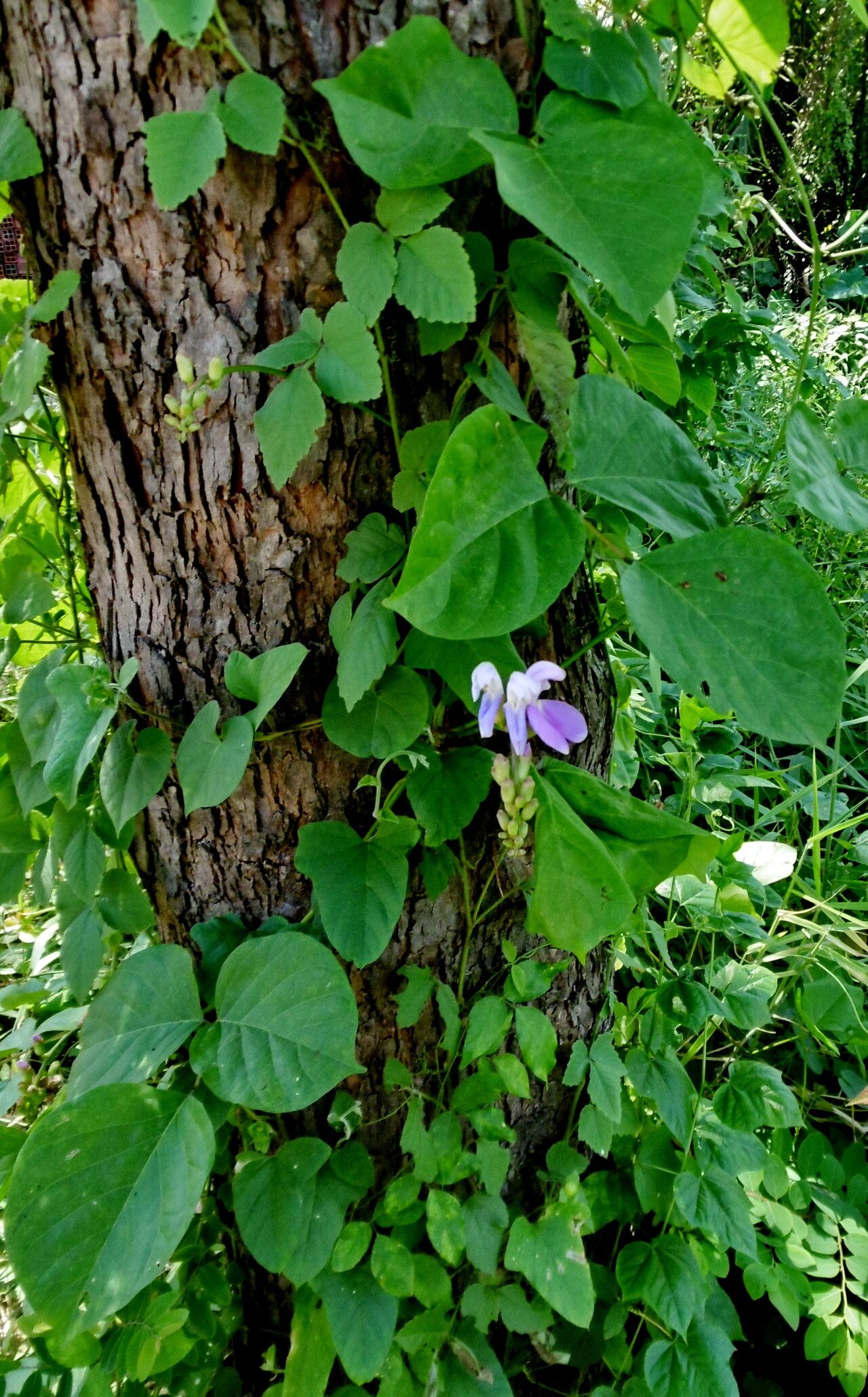
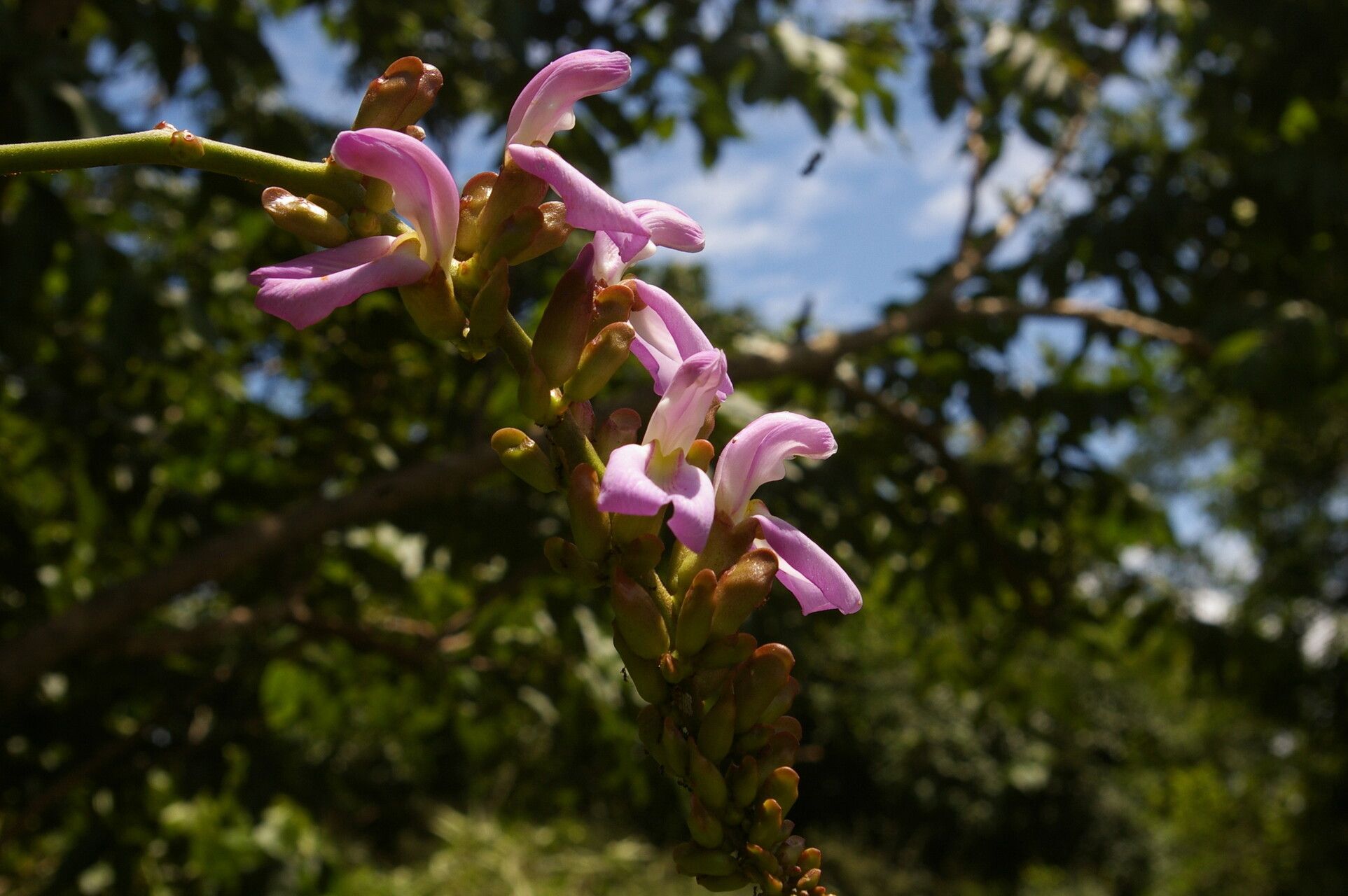
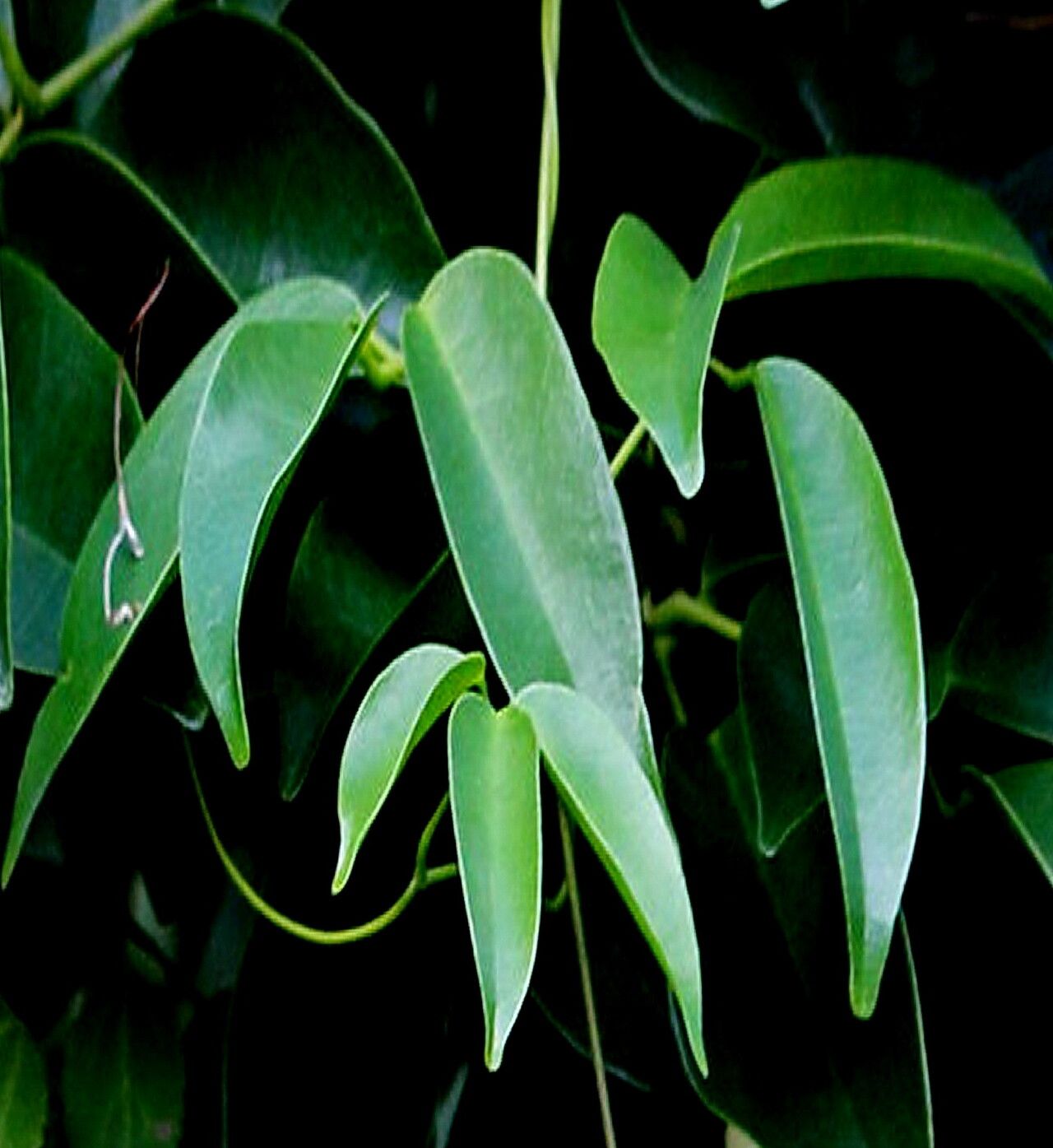
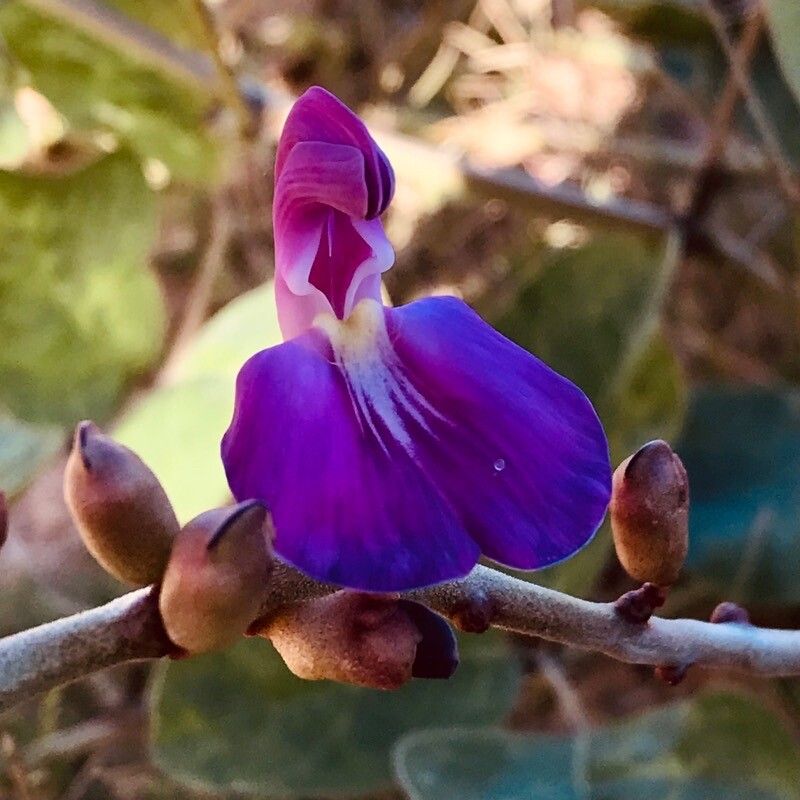
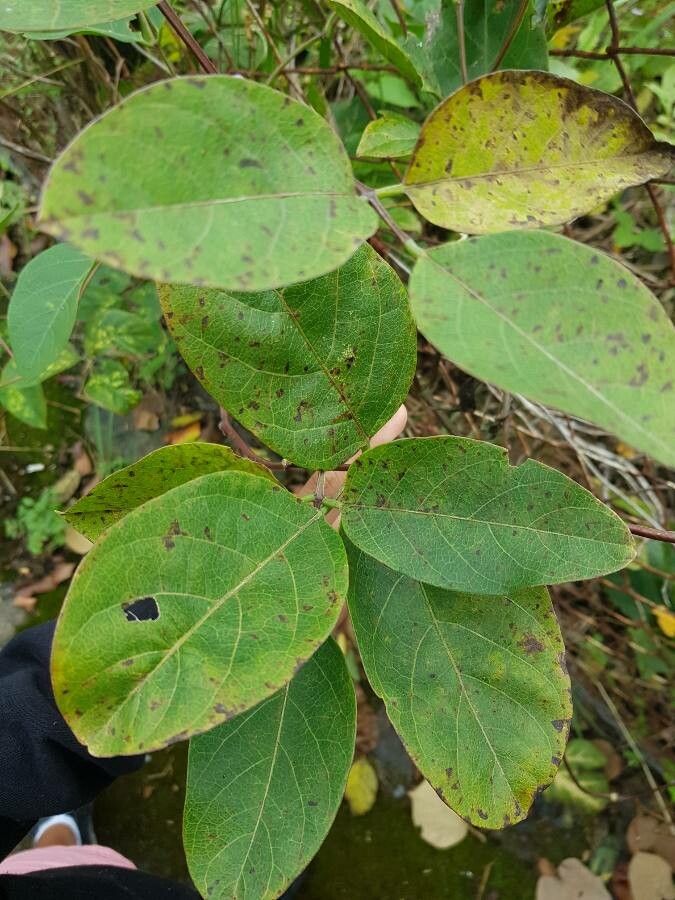
Canavalia cathartica, commonly known as maunaloa in the Hawaiian language, is a species of flowering plant in the legume family, Fabaceae. The Hawaiian name translates as long mountain. In English it may also be known as poisonous sea bean, ground jack bean, horse bean, silky sea bean or wild bean. It has a Paleotropical distribution, occurring throughout tropical regions in Asia, Africa, Australia, and many Pacific Islands, and extending just into subtropical areas. It is not native to Hawaii, and is an invasive species there.
Maunaloa displays good resistance to disease and is generally not susceptible to illnesses. However, it can be vulnerable to pests and diseases present in its environment. These infections are typically not serious. For care, this plant requires moderate maintenance. It should be pruned regularly to keep a neat appearance and encourage healthy growth. Fertilizing can also aid in promoting blooms. Maunaloa is suitable for anyone with an outdoor area, such as a garden or patio, and does not demand extensive care experience. It may need more attention when cultivated indoors.
How to keep Canavalia Cathartica.
Light
Maunaloa is a sun-loving perennial herbaceous plant that comes from open habitats and commonly thrives in meadows and grasslands. It prefers full sun but can also tolerate partial sun.
Temperature
Maunaloa comes from tropical areas, where the weather is usually warm and humid. Therefore it is adapted to high temperatures and humidity. It does not tolerate sudden temperature changes and prefers a steady temperature, so avoiding indoor temperature fluctuations is important. It generally cannot withstand cold and needs warmer conditions to grow. If the surrounding temperature falls too low, the plant may stop growing or even die.
Fertilizer
Proper feeding is essential for Maunaloa's vigor and appearance. Fertilize Maunaloa in the summer and repeat the application monthly throughout the season. Nutrients support growth and sustain the plant's parts. Fertilization improves Maunaloa's flowering, helping it produce the best blooms.
Pruning
Maunaloa is a tropical vine known for its large leaves and fragrant flowers. To keep it in shape, promote flowering, and remove any dead branches, be sure to prune it in early spring. Concentrate on trimming overgrown areas to improve air circulation. Always use clean, sharp tools to prevent disease, which will enhance the plant's health and ornamental appeal.
Botanical profile.
- Plant Type
- Vine, Herb
- Life Cycle
- Perennial
- Genus
- Canavalia
- Family
- Fabaceae
- Hardiness Zone
- 10-12
- Mature Height
- 3.05 m to 10.06 m
- Mature Spread
- 2.13 m to 4.88 m
- Leaf Color
- Dark Green, Forest Green
- Leaf Type
- Evergreen
- Flower Color
- Pink, Purple
- Flower Size
- 2.03 cm to 4.06 cm
- Bloom Time
- Summer, Early fall, Mid fall
- Planting Time
- Summer
- Harvest Time
- Late summer, Fall, Early winter
- Native Area
- Sri Lanka, India, Malaysia, Philippines, Bangladesh, Laos, Fiji, Kenya, Tanzania, China, Indonesia, Cambodia, Vietnam, Myanmar, Japan, Singapore, Thailand
Other names.