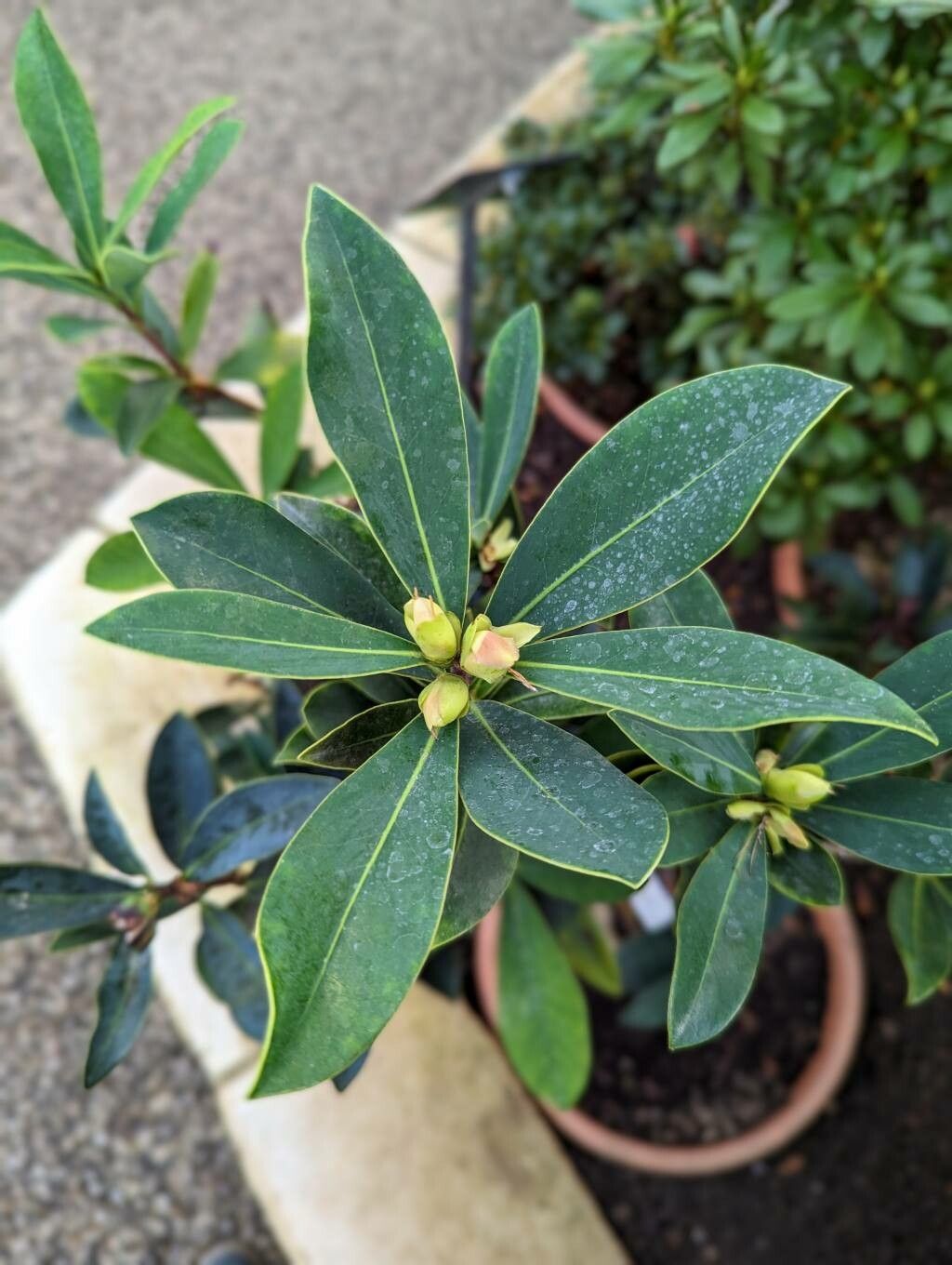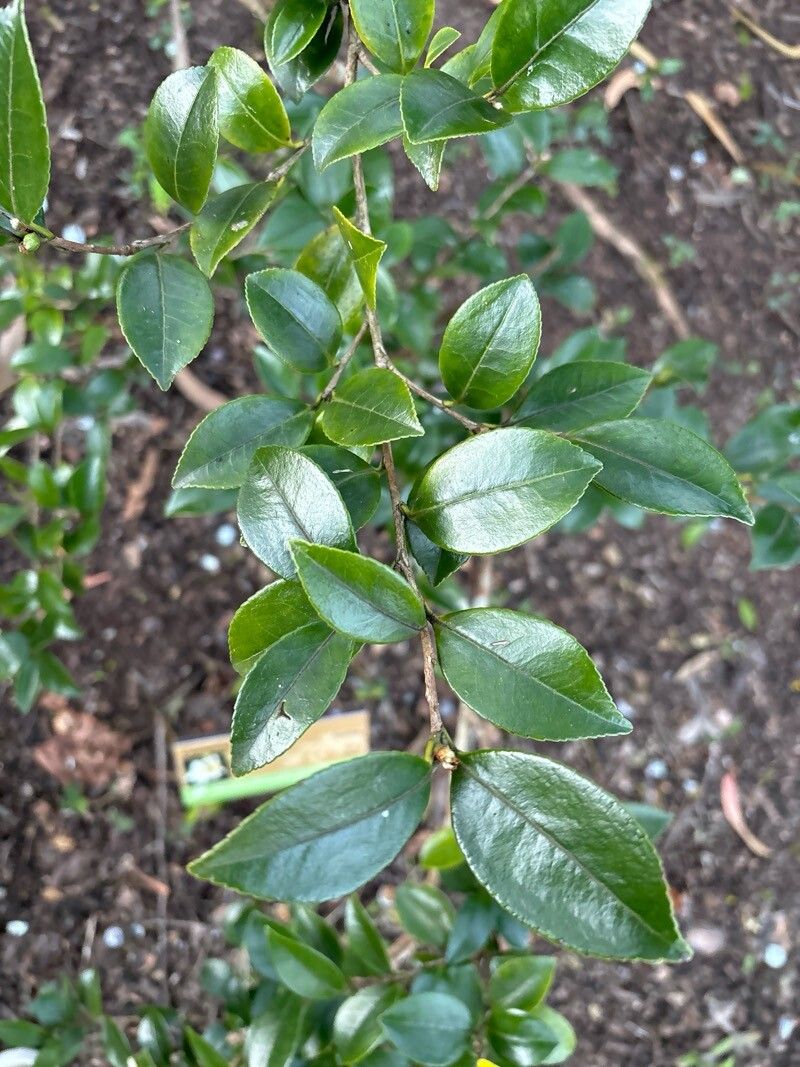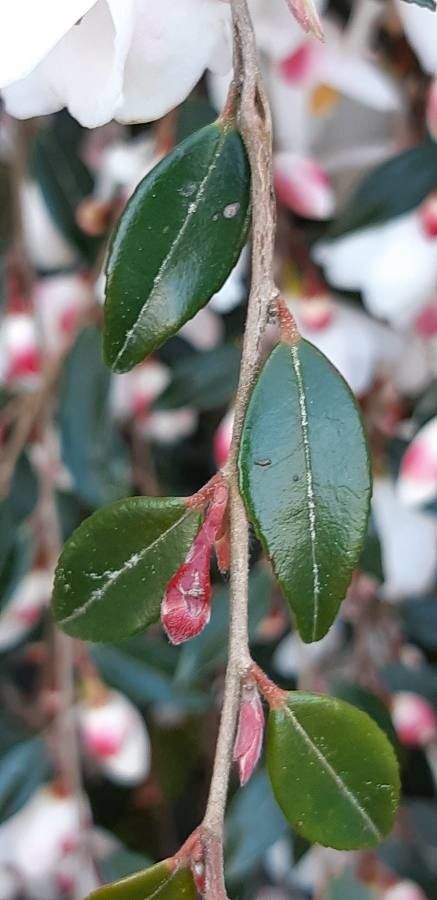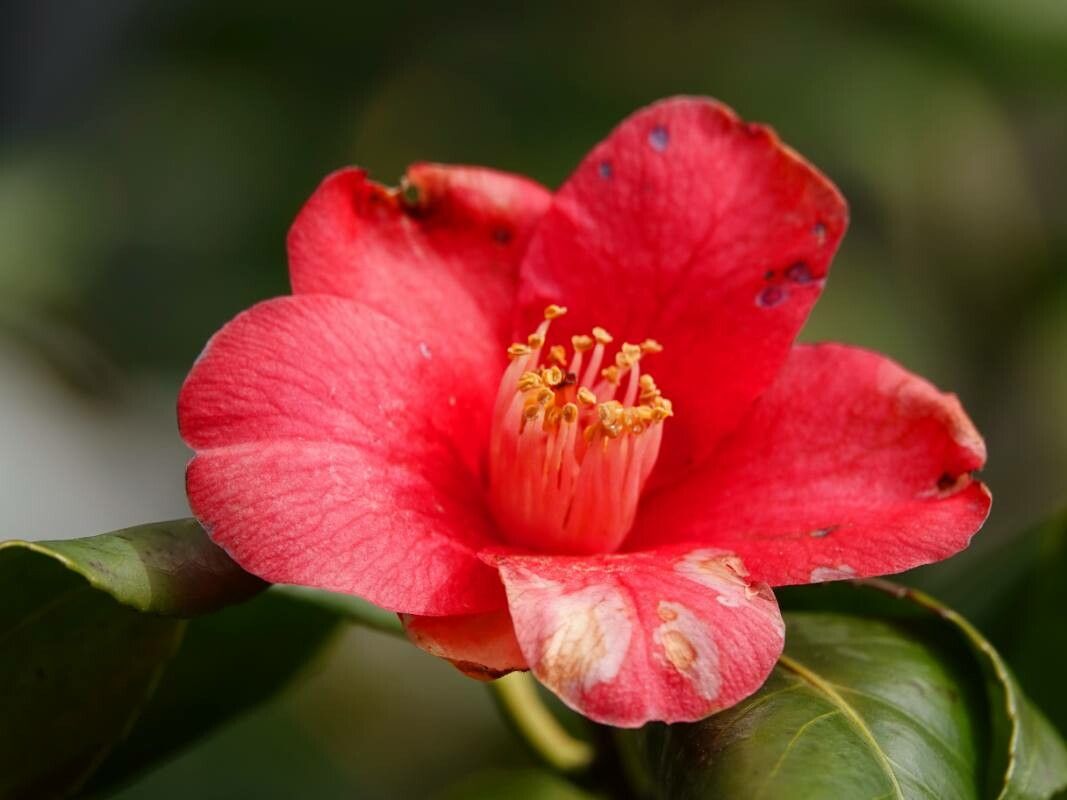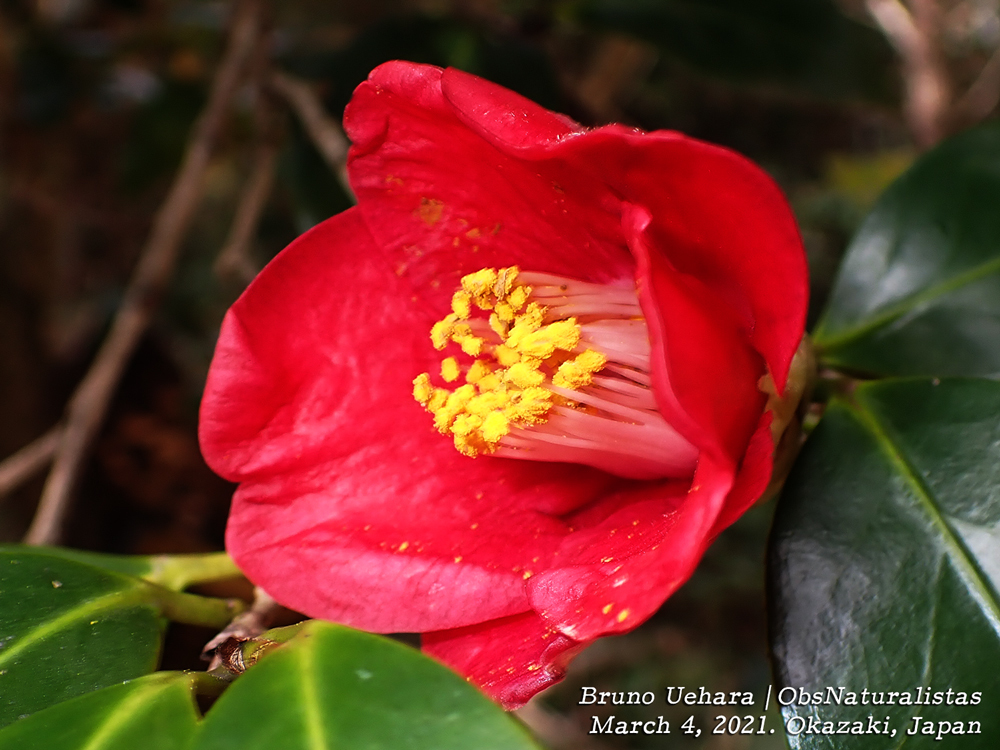
Camellia japonica, commonly known as the Japanese camellia, is a flowering plant native to Japan, China, and Korea. It belongs to the Theaceae family. This plant typically reaches a height of 6 to 12 feet and features glossy, dark green leaves that are about 3 to 4 inches long. The Japanese camellia is renowned for its large, showy flowers, which can span up to 5 inches in diameter and come in a variety of colors, ranging from white to pink to red.
This plant thrives in acidic soil with good drainage and does well in partial shade or filtered sunlight. It usually blooms in late winter or early spring, depending on the climate zone in which it is grown.
Camellia japonica has been cultivated for centuries, both for its ornamental beauty and its use in tea production. Its leaves are used to make green tea, while its seeds are processed to produce tea oil.
The camellia blooms quietly in the courtyard while it is still chilly in early spring. Unlike other flowers, the camellia does not wither all at once. Instead, its petals fall gradually, one by one, until the flower's life comes to an end. Is this how people seek their ideal companion? Perhaps this is why the camellia symbolizes ideal love. FUN FACT · FROM THE LIBRARY
Once established, the plant requires minimal maintenance but may be vulnerable to pests such as scale insects or spider mites if not properly cared for.
Overall, Camellia japonica is a stunning addition to any garden or landscape, offering beautiful flowers and evergreen foliage that provide year-round interest.
Common camellia: The Latin name "Camellia" is derived from the name of the Moravian botanist Joseph Kamel, also known as "Camellus." This plant is the most widespread species of Camellia, which is why it is referred to as the common camellia.
Common camellia has fairly strong disease resistance and typically does not suffer from many illnesses. Still, if it is grown in poor conditions it can become more vulnerable to disease. It also faces few insect pest problems. For care, it has moderate needs. It requires ample sunlight, since inadequate light can make it more disease-prone and produce weak, sparse growth. Because it is commonly kept indoors, it may need to be relocated regularly to a bright spot. It does not need frequent watering. In general, Common camellia is appropriate for most people, although it is best for those who can provide good light.
How to keep Camellia Japonica.
Light
The common camellia favors consistent, but not overpowering, sunlight. Although it can tolerate a range of light conditions — from deep shade to strong sun — it grows best with moderate sun exposure similar to its native habitat. Both too much sunlight and too little can impair its vitality.
Water
Originating from Japan's humid forests, the Japanese camellia flourishes in consistently humid conditions and demonstrates moderate drought tolerance. It should be watered every 1-2 weeks, ensuring that the soil remains moist but not waterlogged. Although typically grown as an ornamental outdoor shrub in temperate climates, the Japanese camellia also adapts well to being cultivated in containers, which helps prevent root rot.
Humidity
This plant will thrive in moderate humidity, which is probably the level in your home. However, misting it a few times a week can be very beneficial. Make sure the room has good ventilation.
Temperature
The common camellia prefers temperatures of 59 to 95 ℉ (15 to 35 ℃). It originates from temperate, humid regions and does best in temperatures between 50 and 80 ℉ (10 and 27 ℃). In winter it can endure short spells of below‑freezing temperatures, but prolonged exposure to freezing conditions can injure the plant.
Fertilizer
Timing is key when fertilizing Common camellia. Apply fertilizer in early spring and continue monthly until early summer. Fertilizer encourages beautiful blooms and supplies energy during both dormant and active growth phases.
Pruning
The Japanese camellia is known for its glossy leaves and vibrant blooms. To keep it healthy, it needs careful pruning in late spring, after it has finished flowering. Trim away any dead or weak branches to improve air circulation and shape the plant. However, avoid making heavy cuts, as this can stress the plant. By pruning at the right time and using gentle techniques, you can promote healthier growth and enhance blooms in future seasons.
Pot & Repot
When repotting Common camellia, choose a pot 1-2 inches (2.5–5.1 cm) larger with ample drainage. Use a well-draining potting mix. Repot in spring or fall, ensuring that the root ball is slightly lower than the rim of the flower pot. Water thoroughly after repotting and place in a warm spot with indirect sunlight.
Botanical profile.
- Plant Type
- Shrub
- Life Cycle
- Perennial
- Genus
- Camellia
- Family
- Theaceae
- Hardiness Zone
- 8-10
- Mature Height
- 1.52 m to 14.94 m
- Mature Spread
- 1.83 m to 3.05 m
- Leaf Color
- Green
- Leaf Type
- Evergreen
- Flower Color
- Red, Pink, White
- Flower Size
- 3.05 cm to 10.16 cm
- Bloom Time
- Early spring, Mid fall, Late fall, Winter
- Planting Time
- Spring, Autumn
- Harvest Time
- Mid summer
- Native Area
- South Korea, Japan, China
Other names.
Reader questions.
When Should I Water My Japanese Camellia?
Proper watering is crucial for the health and growth of your Japanese Camellia (Camellia japonica). To determine the best time to water, check the soil's dryness by inserting your finger about an inch deep; if it feels dry, it's time to water. Additionally, observe the plant's leaves for signs of watering needs, such as a loss of glossiness, curling edges, or a yellowish hue. Slow growth or a lack of flowering can also indicate insufficient watering. It's important to be mindful of both over-watering, which can lead to root rot, and under-watering, which can weaken the plant. Recognizing these signs will help you water your Japanese Camellia appropriately, while considering the potential for disease or insect damage that may cause similar symptoms.
Why should I put fertilizer on my Japanese camellia plant?
Fertilizing a Japanese camellia is important for several reasons. One of the main benefits is that it helps the camellia produce beautiful blooms. To achieve excellent flowers in the spring, it is recommended to fertilize the camellia in early spring. Additionally, fertilizer provides the camellia with extra energy that it can store in the ground during its dormant growth phases. By providing the camellia with additional nutrients during fall planting or late spring, it will have more energy available for active growth once it resumes.
What are the sunlight requirements for Japanese Camellia?
Japanese Camellia (Camellia japonica) thrives under moderate sunlight conditions, ideally receiving about 3-6 hours of sunlight daily, termed as partial sun. It can also tolerate full sun or full shade conditions, which translates to more than 6 hours of sunlight. However, it's crucial to observe how sunlight moves through your garden to find the perfect balance of light and shade, ensuring the plant's happiness. The essential insight here is that while the plant can adapt to varying light conditions, from significant shade to intense sunlight, its best growth is observed under conditions that mimic its native habitat, without exposing it to extremes of light.
What is the preferred temperature range for Japanese Camellia, and how does it cope with temperature variations?
Japanese camellia (Camellia japonica) prefers a temperature range of 59 to 95°F (15 to 35°C) and is native to temperate and humid climates, thriving best between 50 and 80°F (10 and 27°C). It can tolerate short periods of below-freezing temperatures during winter, but prolonged exposure to freezing temperatures can damage the plant. When temperatures are above its tolerable growing temperature minimum, no additional measures are generally required. However, if the temperature is expected to drop below this minimum, temporary cold protection measures, like wrapping the plant with plastic film, fabric, or other materials, are necessary. These protective measures should be removed once the temperature rises again to avoid any potential damage.
How Should I Water My Japanese Camellia?
To properly water a Japanese Camellia, it's important to focus on its need for well-draining soil and sensitivity to excessive water. Techniques such as bottom-watering, which involves inverting the pot into water, allow the plant to absorb moisture directly through its drainage holes, preventing over-saturation. When using a watering can, aim for even coverage across the soil's surface until water escapes through the drainage hole, then let any excess water drain away. It's crucial to water at the base of the plant to ensure the roots receive adequate moisture while avoiding the plant's foliage to reduce the risk of fungal diseases. A moisture meter can be a helpful tool in maintaining consistent soil moisture levels. Avoid extremes in watering to prevent conditions such as root rot.
What is the ideal time to fertilize my Japanese camellia plant?
Timing is important for fertilizing Japanese camellia. If you use fertilizer too early when the camellia is still dormant, it will not be effective and will be washed away by rainwater, causing waste and pollution. The first application of fertilizer should be done in early spring, followed by monthly fertilizing until early summer.
How do you use artificial lighting for Japanese Camellia indoors?
When natural sunlight isn't sufficient, especially during winter or in less sunny spaces, artificial lighting becomes imperative for the Japanese Camellia’s growth. LED lights are recommended due to their ability to be customized for the plant's specific needs. Full sun plants require 30-50W/sq ft, partial sun plants need 20-30W/sq ft, and full shade plants benefit from 10-20W/sq ft of artificial light. Position the light source 12-36 inches above the plant to simulate natural sunlight, and ensure it receives 8-12 hours of light daily to promote healthy growth.
How should Japanese Camellia be cared for in low temperature conditions?
Japanese camellia shows moderate tolerance to low temperatures and performs best when the temperature is above its suitable growth temperature minimum. During winter, it's important to keep it above its tolerable growing temperature minimum to avoid damage. If the temperature falls below its growth limit temperature, the leaves may droop and, in severe cases, wilt and fall off. To care for the plant in low temperatures, trim off any frost-damaged parts. Before encountering low temperatures again, wrap the plant with non-woven fabric or cloth and construct a wind barrier to protect it from cold winds.
How Much Water Does Japanese Camellia Really Need?
The watering needs of a Japanese Camellia vary based on several factors, including the plant's size, the pot size, and the root depth. Generally, a mature plant in a medium-sized pot may need about 1 liter of water per session, ensuring deep watering that encourages root growth. The goal is to keep the soil moist but not waterlogged, adjusting the amount of water based on the soil's current moisture level. Signs of adequate hydration include glossy leaves, firm stems, and abundant flowering. Beware of overwatering and underwatering, as both can lead to issues such as yellowing leaves, root rot, and reduced flowering. To promote healthy growth, use well-draining soil and adjust your watering schedule to keep the soil slightly moist, especially during the plant's winter dormant period.
When is the best time to not fertilize my Japanese camellia?
To ensure optimal growth and blooming of your Japanese camellia, it is important to be mindful of the type and timing of fertilizer application. Excessive nitrogen in the fertilizer can result in abundant foliage but fewer blooms, so it is recommended to choose a fertilizer with a lower nitrogen content compared to other nutrients. It is best to avoid fertilizing the plant after early autumn, as this can promote excessive growth right before winter. Additionally, refrain from fertilizing during hot and dry periods, as dry soil hampers the effective delivery of nutrients and stimulates growth that may require more water than available. Ideally, fertilize the Japanese camellia earlier in the season when temperatures are cooler. Lastly, bear in mind that Japanese camellias can absorb fertilizer from neighboring plants or lawns, so exercise caution to avoid inadvertently giving your tree or shrub a double dose of fertilizer.
What are the symptoms of insufficient light for Japanese Camellia?
Insufficient light can lead to several symptoms in Japanese Camellia, including a lack of or adverse effects on future flowering and fruiting, faster leaf drop as the plant conserves resources, delayed growth or halted leaf production, chlorosis (yellowing leaves due to chlorophyll breakdown), sunscald with damaged plant tissue, leaf curling as a defense mechanism against excessive sunlight, wilting from increased water loss, and leaf scorching characterized by brown, crispy leaf edges.
What steps should be taken to protect Japanese Camellia from high temperatures?
During summer, it is crucial to keep Japanese camellia below its suitable growth temperature maximum. Exceeding its tolerable growing temperature maximum can cause the leaves to lighten in color, tips to dry and wither, leaves to curl, and increase susceptibility to sunburn. To protect the plant from high temperatures, trim away sunburned and dried-up parts. Move the plant to a location shaded from midday and afternoon sun, or use a shade cloth for protection. Additionally, watering the plant in the morning and evening helps keep the soil moist and supports the plant's health in high temperatures.