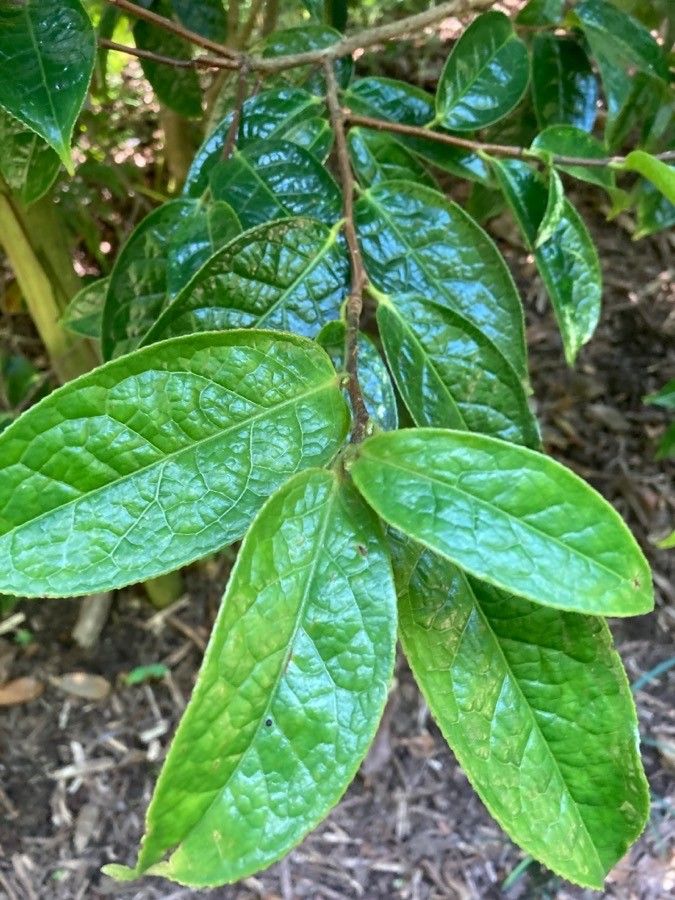
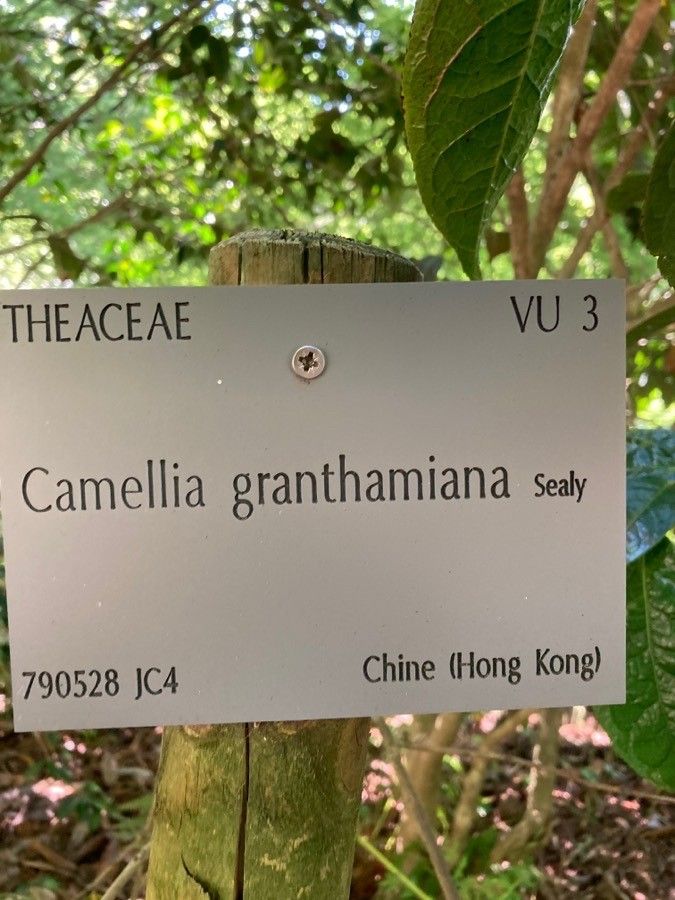
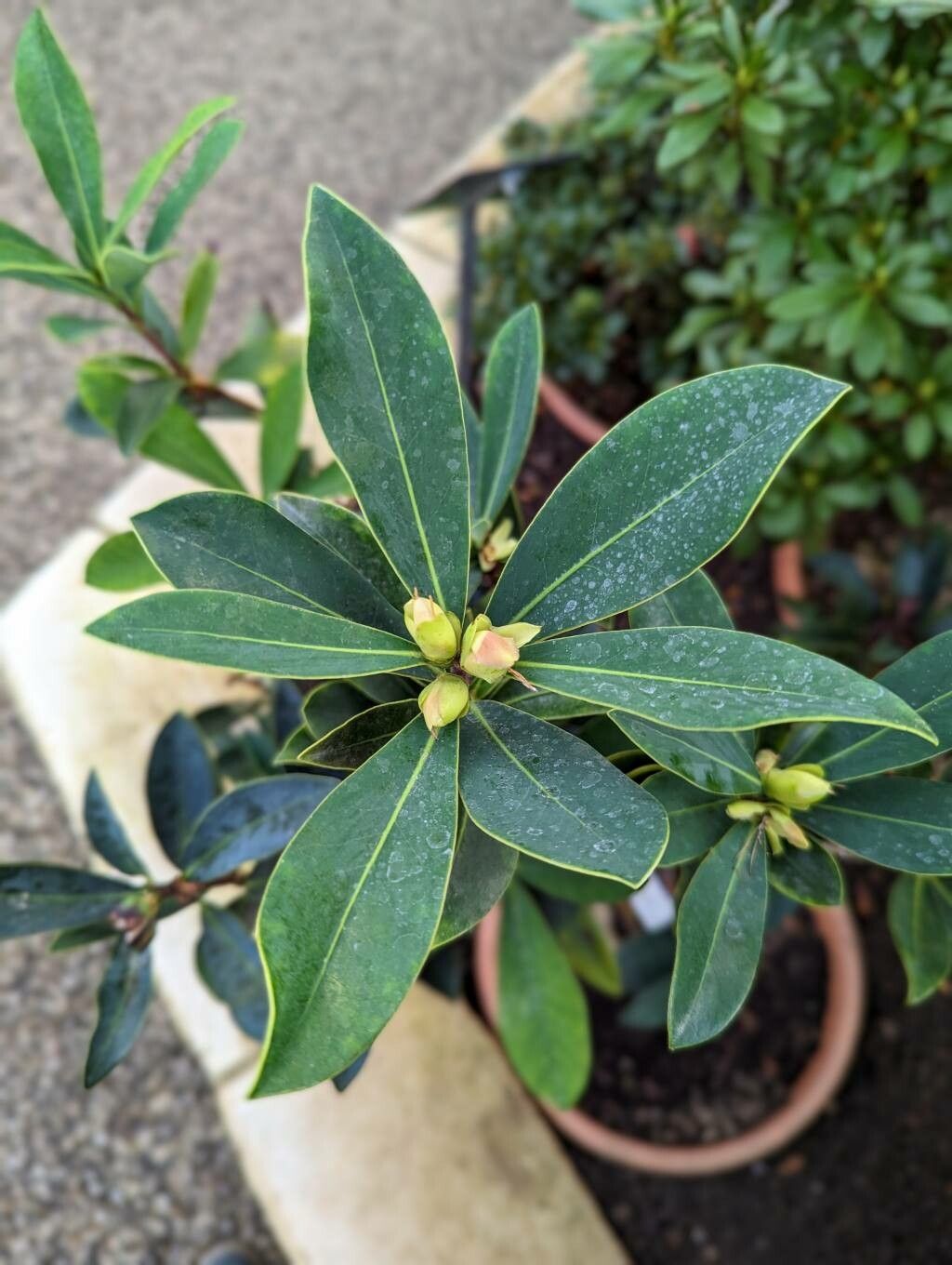
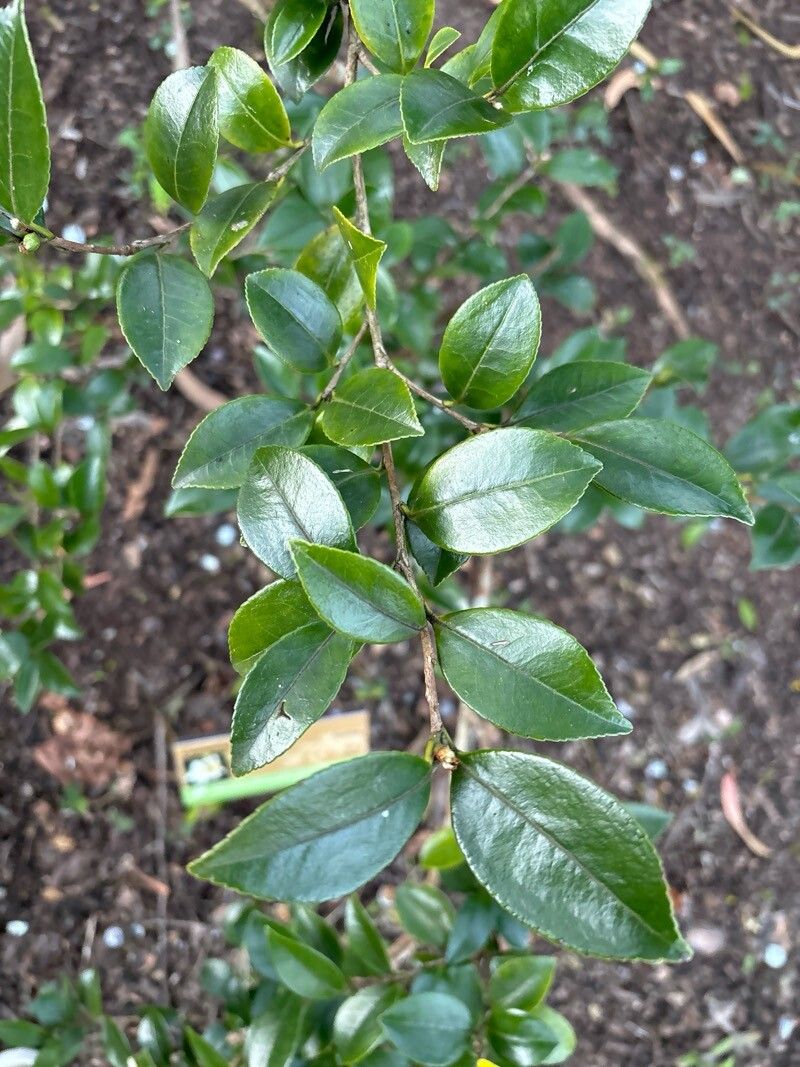
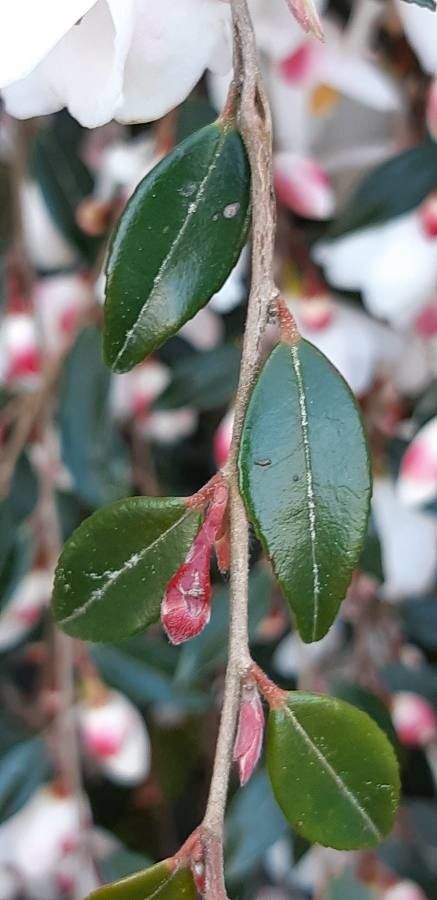
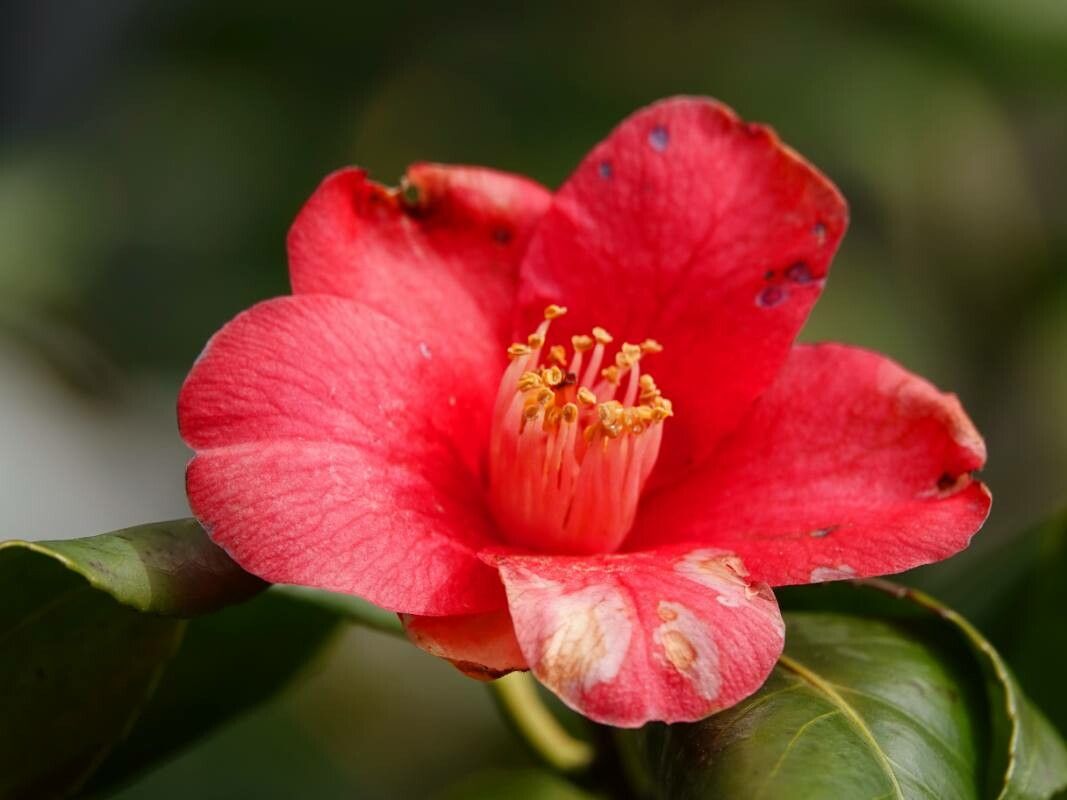
Camellia granthamiana (Chinese: 葛量洪茶; Jyutping: got3 loeng4 hung4 caa4; lit. 'Grantham tea'), or Grantham's camellia, is a rare, endangered species of Camellia, which was first discovered in Hong Kong in 1955. The distribution of the species is limited in both Hong Kong and Mainland China. Only one individual of the species was found at that time when it was discovered. A few more wild populations were found in Ma On Shan and also in Guangdong(including Shenzhen). It was first discovered in the ravine of Tai Mo Shan in 1955 by AFCD. It was named in honour of the then Governor of Hong Kong, Sir Alexander Grantham.Tai Mo Shan Montane Scrub Forest in the upper Shing Mun Valley was assigned as a Sites of Special Scientific Interest (SSSI) in 1975 as the forest supports this rare species and other species, Camellia waldenae, Amentotaxus argotaenia and many species of orchids. In Hong Kong, it is a protected species under Forestry Regulations Cap. 96A.
Poached egg camellia is resistant to disease and typically does not tend to get sick. Regarding care, this plant is fairly low-maintenance. When grown outdoors it needs only light watering, and larger specimens usually do not require pruning. Smaller plants, however, should be pruned after they finish blooming. Poached egg camellia is suitable for anyone with an outdoor area, such as a garden or a deck, and does not demand much gardening experience.
How to keep Camellia Granthamiana.
Light
Poached egg camellia grows best with a generous amount of sunlight, though it can still do well with moderate sun exposure. It comes from habitats where light was plentiful. Both excessive sunlight and insufficient light can impede its growth and harm its health.
Water
The Poached Egg Camellia flourishes in the high humidity typical of tropical rainforests. To maintain its health, it should be watered every 1 to 2 weeks, ensuring a balanced watering routine. As an evergreen plant, it retains its foliage throughout the year and requires regular watering, even during its dormant periods.
Temperature
Poached egg camellia is fairly adaptable to temperature, able to tolerate higher heat and wide temperature fluctuations. In hot conditions, attention should be paid to watering and providing suitable shade to avoid sunburn. Conversely, it has relatively poor cold tolerance; although it can endure some chill, overly cold conditions may cause frost damage.
Fertilizer
The timing of fertilizing Poached egg camellia is important. Apply fertilizer in early spring and keep doing so monthly until early summer. Fertilizer promotes attractive blooms and gives the plant energy during both dormant and active growth stages.
Pruning
The Poached Egg Camellia produces large white blooms with yellow centers. It benefits from pruning between early and late winter. To promote air circulation and improve its vigor, remove dead branches and thin out overcrowded areas. This will enhance flowering in the next season and improve the plant's overall health and appearance.
Pot & Repot
Repot potted poached egg camellias every spring. During repotting, you can prune the branches and leaves to promote healthy growth and maintain the plant's shape.
Botanical profile.
- Plant Type
- Tree
- Life Cycle
- Perennial
- Genus
- Camellia
- Family
- Theaceae
- Hardiness Zone
- 6-10
- Mature Height
- 7.92 m
- Mature Spread
- 1.22 m to 1.83 m
- Leaf Color
- Dark Green
- Leaf Type
- Evergreen
- Flower Color
- White
- Flower Size
- 10.16 cm to 11.43 cm
- Bloom Time
- Mid winter, Late winter, Early spring
- Planting Time
- Spring, Autumn
- Harvest Time
- Mid summer, Late summer, Early fall, Mid fall
- Native Area
- China
Other names.
Reader questions.
What are the sunlight requirements for Poached egg camellia?
Poached egg camellia requires generous amounts of sunlight to thrive, ideally in environments with abundant sunlight similar to its native habitat. However, it can still grow under moderate sun coverage. It's important to provide the plant with more than 6 hours of sunlight for full sun conditions and about 3-6 hours of sunlight for partial sun conditions. Observing how sunlight moves through your garden and selecting spots that offer the right balance of light and shade will support the plant's health and growth.
How can artificial lighting be used to support Poached egg camellia?
When natural sunlight is insufficient, especially during winter or in less sunny spaces, artificial lighting can be a crucial solution for the growth of indoor Poached egg camellia plants. Using the right type of light, like LED, which can provide specific wavelengths, is essential. Full sun plants need 30-50W/sq ft, partial sun plants require 20-30W/sq ft, and full shade plants need 10-20W/sq ft of artificial light. The light source should be placed 12-36 inches above the plant to mimic natural sunlight conditions and should be kept on for 8-12 hours per day to simulate the length of natural daylight hours.
What are the symptoms of inadequate sunlight in Poached egg camellia?
When Poached egg camellia does not receive enough sunlight, it may exhibit several symptoms indicating light deficiency. These include smaller new leaves, leggy or sparse growth, faster leaf drop, halted growth, lighter-colored new leaves, and conditions like chlorosis, sunscald, leaf curling, wilting, and leaf scorching. Each of these symptoms suggests the plant is struggling with its current light conditions, either due to overexposure or insufficient sunlight.
What solutions can address sunlight deficiencies for Poached egg camellia?
To address sunlight deficiencies for Poached egg camellia, gradual adjustments and optimal positioning can be effective. Indoors, moving plants to sunnier locations by the week until they receive at least 6 hours of direct sunlight, using south-facing windows, and considering artificial lighting are viable strategies. Outdoors, gradually relocating plants to sunnier spots and avoiding abrupt exposure to intense light can prevent sunburn. Reducing obstructions like pruning trees or transplanting smaller plants during their dormant period to areas with ample sunlight and good drainage can significantly improve light access.