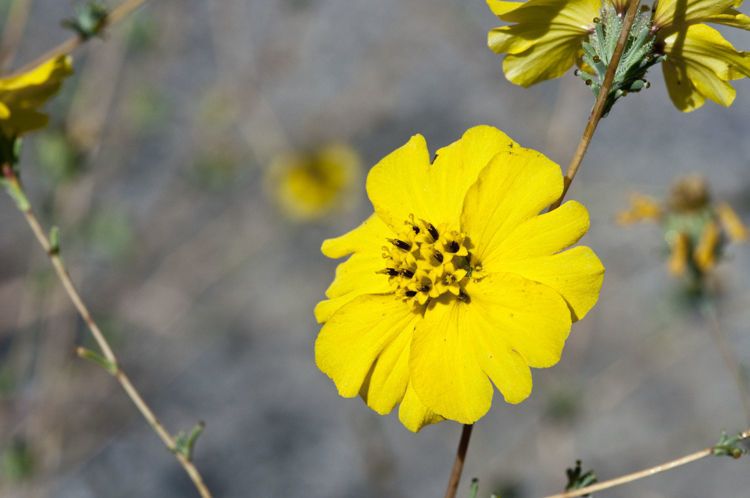
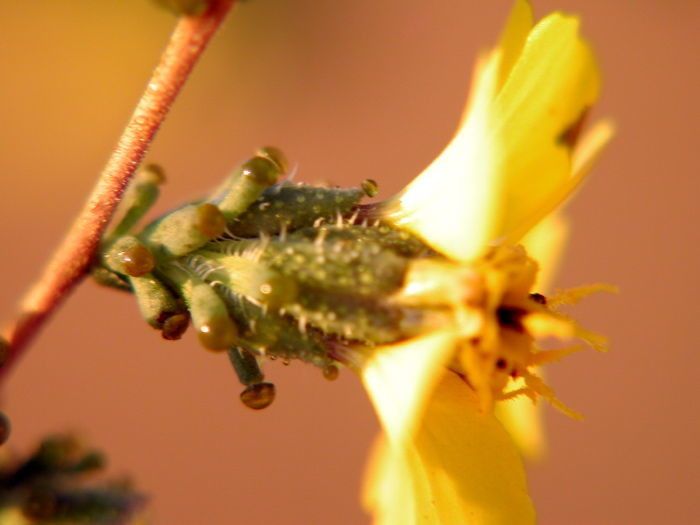
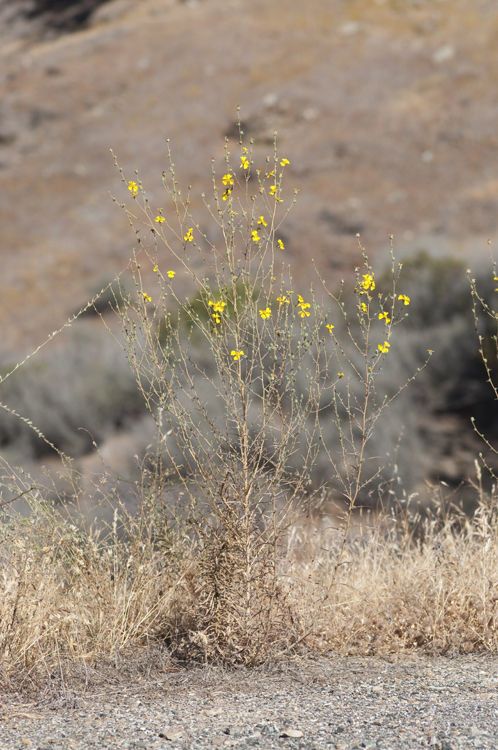
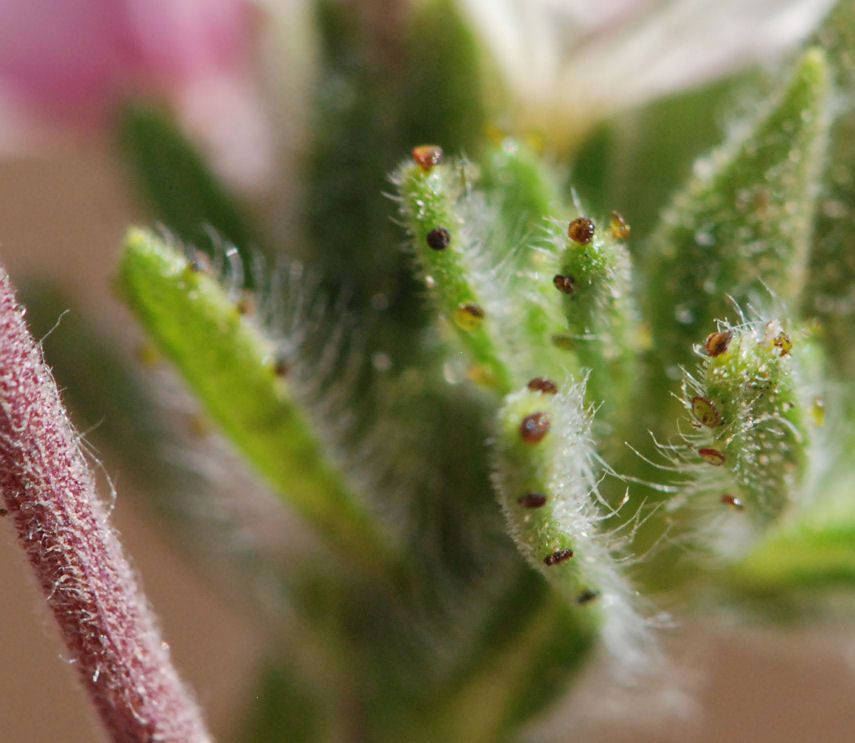
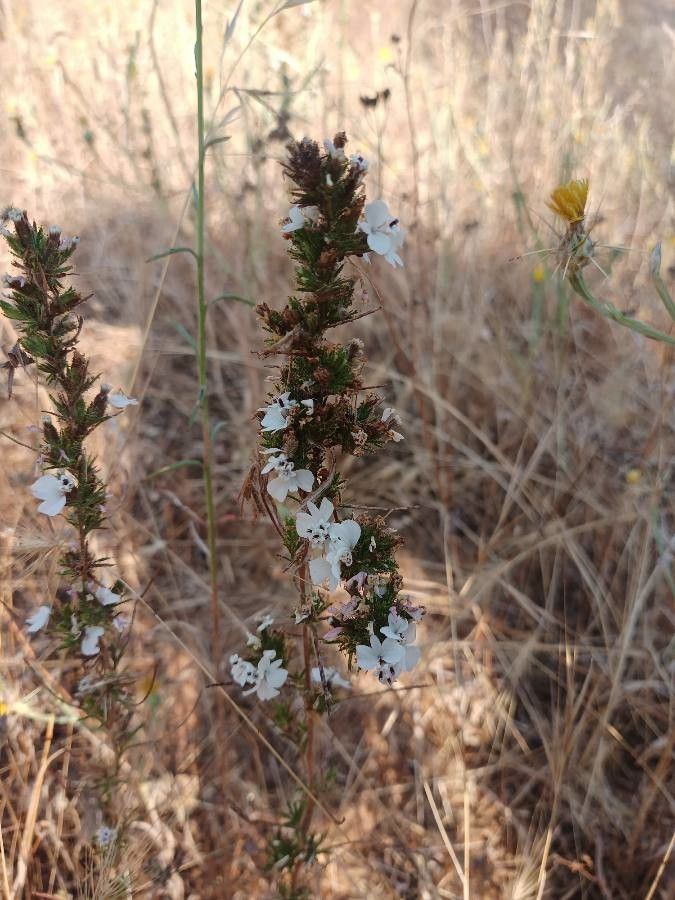
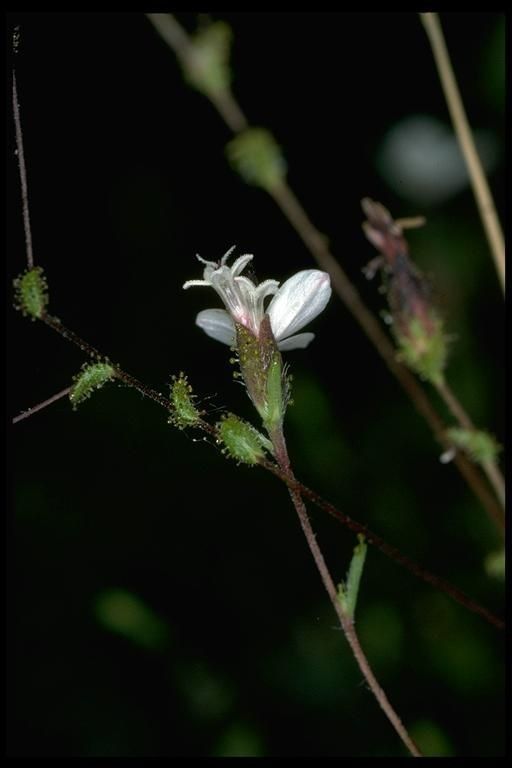
Calycadenia truncata is a species of flowering plant in the family Asteraceae known by the common name Oregon western rosinweed. It is native to western North America. Calycadenia truncata is an annual herb producing an erect, reddish stem, reaching up to 120 centimetres (47 inches) in height. The leaves are linear (long and very narrow) and up to 10 cm (4 in) long. Blooming from June to October, the inflorescence bears one or more flower heads about 2.5 cm (1 in) at separate nodes, surrounded by short bracts tipped with resin glands. The hairy flower heads have a center of many purple-tipped disc florets as well a few yellow ray florets 6–13 millimetres (1⁄4–1⁄2 in) in length. The fruit is an achene.It is native to southwestern Oregon and northern and central California. It is found in the Cascades, the Coast Ranges, and the foothills of the Sierra Nevada as far south as Monterey and Tulare Counties. It thrives on dry and sunny grassy slopes.
Oregon western rosinweed is fairly disease-resistant and generally does not suffer from many illnesses. However, it can be vulnerable to pests and diseases present in its surroundings; these problems are typically mild. For care, the plant needs a moderate level of maintenance. It should be pruned regularly to keep a neat appearance and encourage healthy growth. Fertilizing can also help stimulate flowering. Oregon western rosinweed is well suited to people with outdoor spaces like a garden or patio and does not demand extensive horticultural experience. It may need more attention when grown indoors.
How to keep Calycadenia Truncata.
Light
The Oregon western rosinweed is native to well-lit, open habitats where it flourishes in unobstructed sunlight. It is capable of managing in semi-shaded environments, but for the best growth, it desires full sun exposure. Renowned for its affinity for sunlight, this plant grows both annually and biennially.
Water
Oregon western rosinweed displays a moderate tolerance to drought, thriving even with sporadic rainfall. It should be watered twice a week to maintain lightly moist soil, and it benefits from well-draining conditions. During the growing season, it requires more water to support its vigorous growth and flowering.
Fertilizer
The growth of healthy leaves in Oregon western rosinweed can be aided by the regular application of mild fertilizers. During the summer season, Oregon western rosinweed should be fertilized about every month. Nitrogen, which is essential for leaf growth, can be supplemented from nitrogen-rich materials to help Oregon western rosinweed flourish.
Pruning
Oregon western rosinweed features bright yellow flowers and resinous foliage. To encourage robust blooms and maintain its shape, prune it from early to late spring. Regularly trim dead branches and remove spent flowers to promote health and vitality, ensuring it remains a vigorous addition to your garden.
Botanical profile.
- Plant Type
- Herb
- Life Cycle
- Annual
- Genus
- Calycadenia
- Family
- Asteraceae
- Mature Height
- 0.3 m to 1.83 m
- Leaf Type
- Deciduous
Other names.