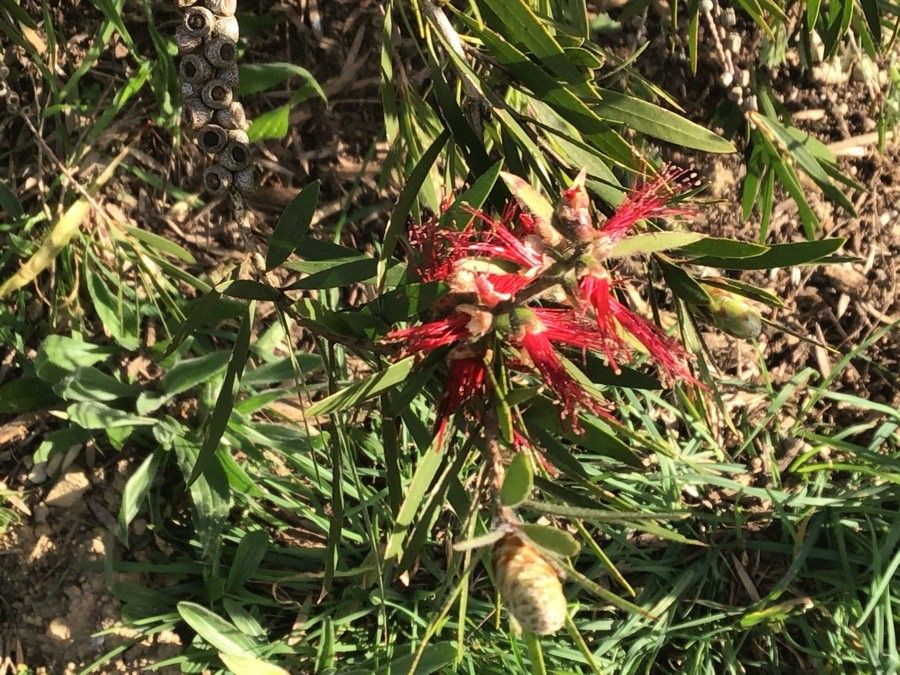
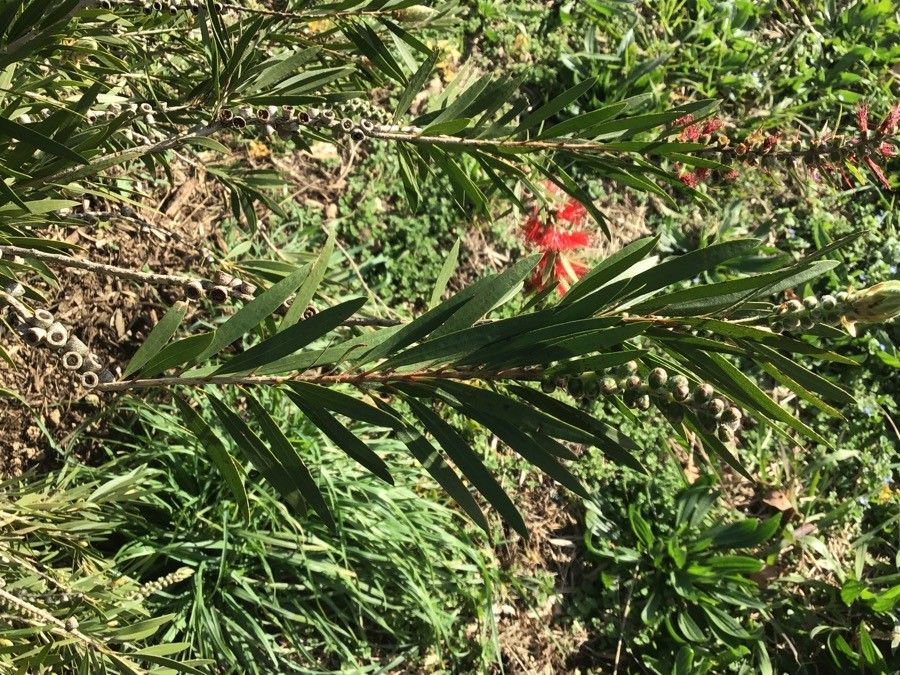
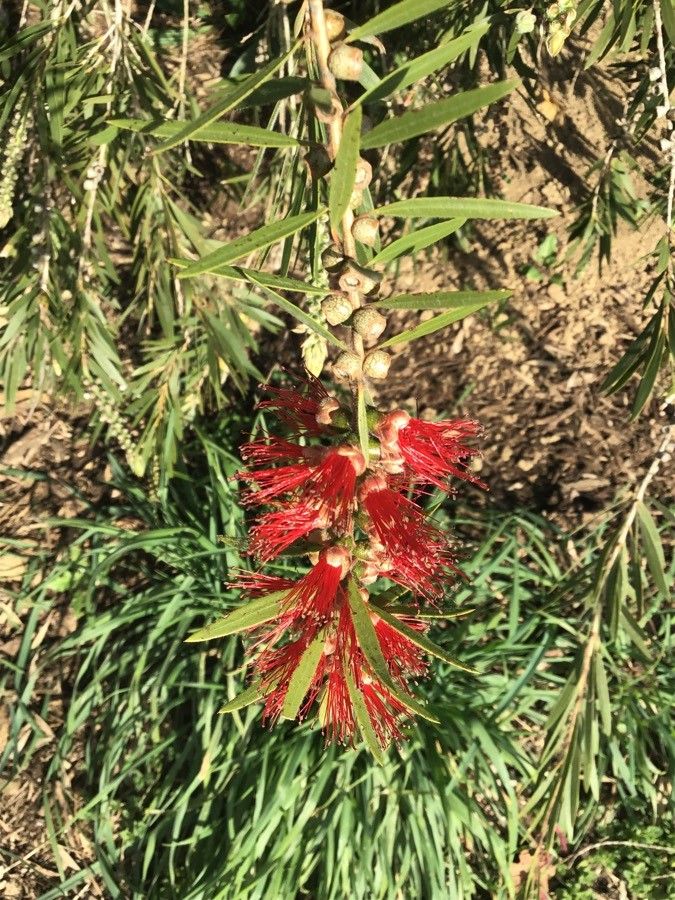
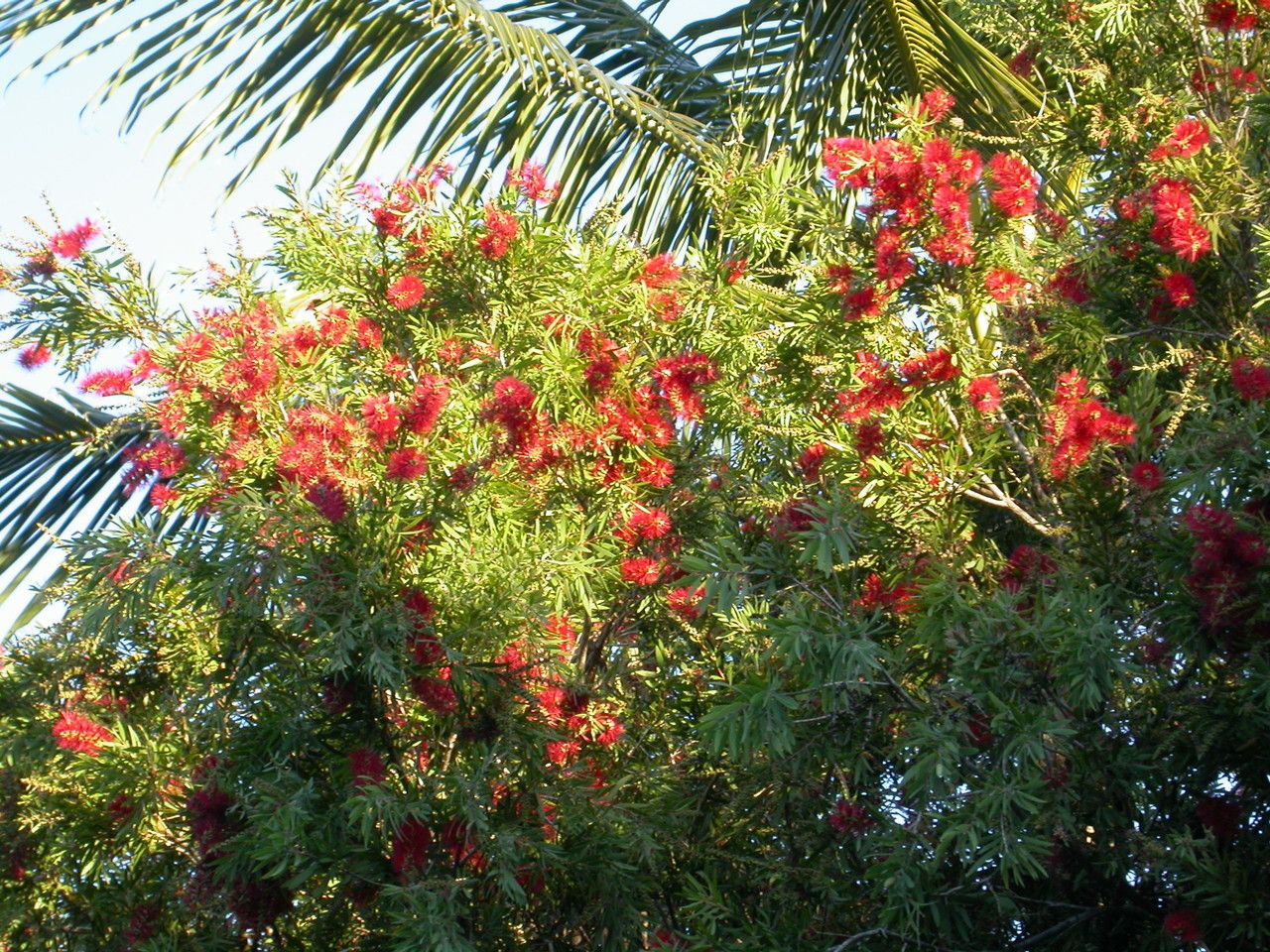
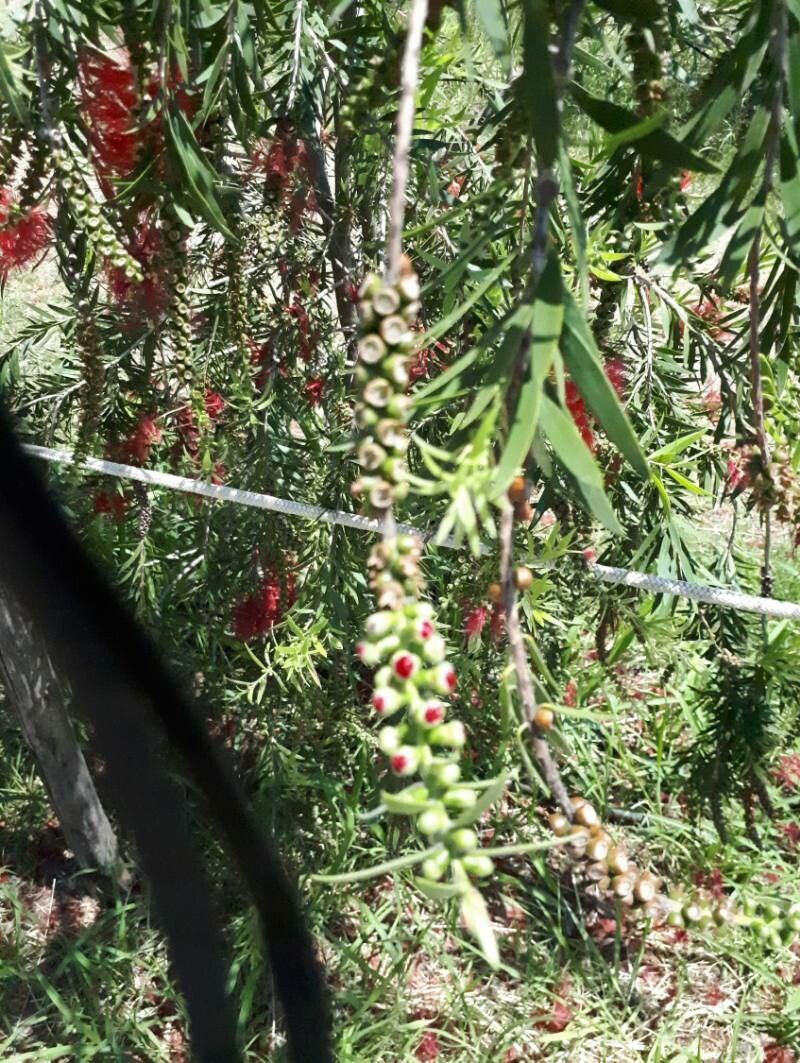
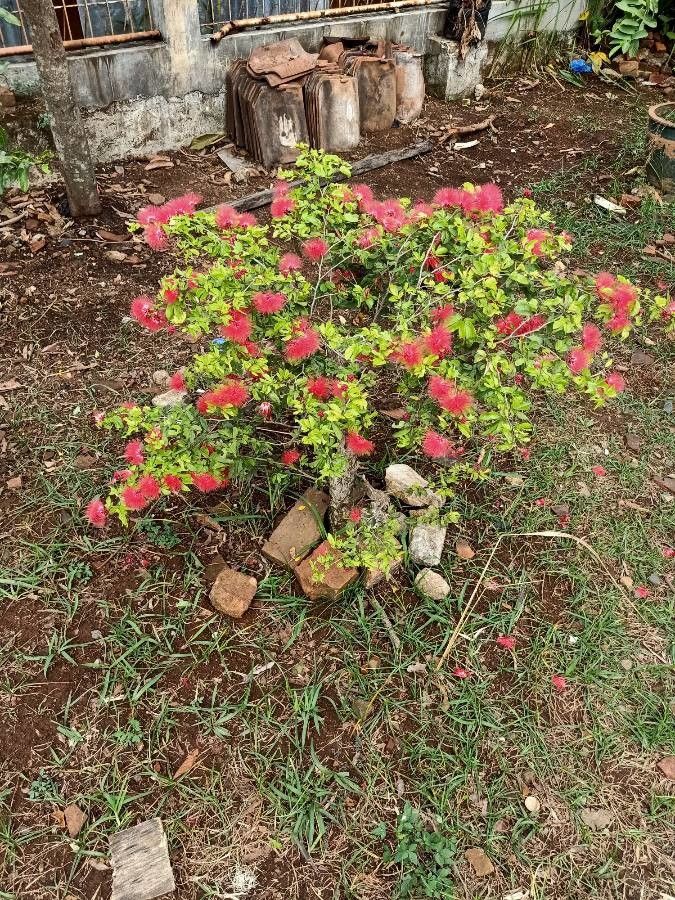
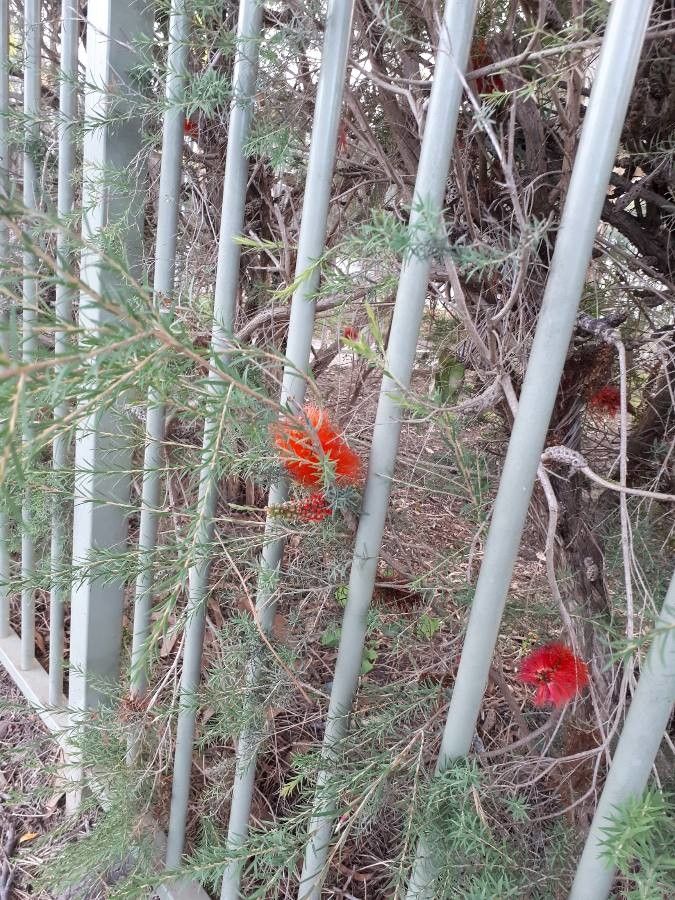
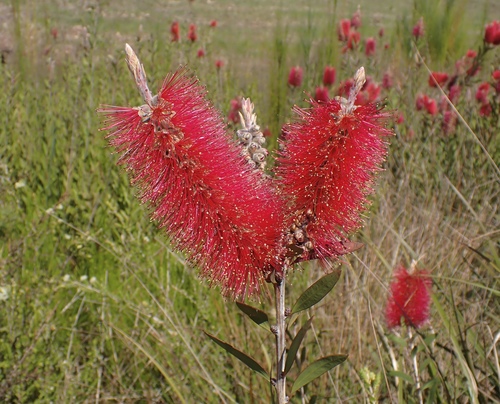
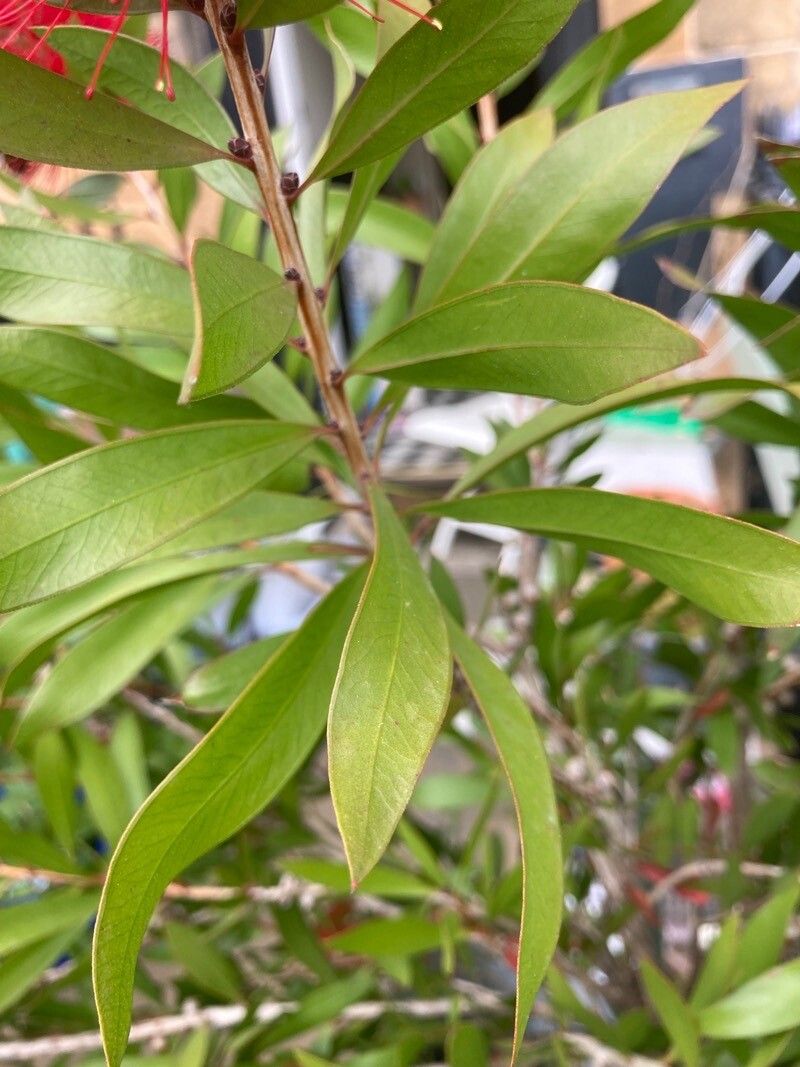
Callistemon viminalis, commonly known as Weeping Bottlebrush, is a striking species of flowering plant in the Myrtaceae family. Native to Australia, it thrives in diverse habitats including forests, woodlands, and heathlands. This plant can grow up to 10 meters tall and has a distinctive weeping habit with narrow leaves that can reach up to 15 cm in length. The flowers appear in bright red or pink cylindrical spikes from spring through summer, attracting birds such as honeyeaters with their nectar-rich blooms.
Weeping Bottlebrush is a favored ornamental plant due to its appealing flowers and foliage, drought tolerance, low maintenance requirements, and its ability to attract wildlife to gardens. It can be cultivated in both full sun and partial shade, provided it is planted in well-drained soil.
Indigenous Australians have also utilized the plant for medicinal purposes, leveraging its antibacterial properties to treat various ailments such as coughs, colds, and skin infections.
Overall, Callistemon viminalis is not only an attractive ornamental shrub that adds vibrant color to gardens but also supports wildlife habitats by attracting nectar-feeding birds, both in its natural environment and when planted by humans.
Weeping bottlebrush is resistant to disease and typically does not suffer from illnesses. Regarding care, this plant is fairly low-maintenance. When grown outdoors it needs only minimal watering, and larger plants usually do not require pruning. Smaller plants, however, should be pruned after they have finished blooming. Weeping bottlebrusht is appropriate for anyone with an outdoor area, such as a garden or deck, and does not need extensive care experience.
How to keep Callistemon Viminalis.
Light
The weeping bottlebrush thrives on plentiful sun in its daily cycle, resulting in noticeable growth and glossy flowers. It can, however, tolerate sites where sunlight is not consistent. Its main habitat is in places with abundant light. Excessive shade or a lack of sun can impede its growth or produce sparse blooms.
Water
Native to Australia, the weeping bottlebrush thrives in moist soils and prefers consistent moisture without being waterlogged. Once established, it can tolerate moderate drought conditions. For optimal health, water it every two weeks. Typically grown outdoors, the weeping bottlebrush benefits from natural rainfall, which boosts its growth during peak seasons.
Temperature
Weeping bottlebrush can naturally prosper in temperatures from 41 to 95 °F (5 to 35 ℃). Although it can tolerate cooler conditions, it does best in warm climates. In colder months, consider relocating it to a warmer location to keep the temperature suitable.
Fertilizer
Timing is essential when fertilizing Weeping bottlebrush. Apply fertilizer in early spring and continue monthly until early summer. Fertilizer promotes attractive blooms and provides energy during both dormant periods and active growth.
Pruning
The weeping bottlebrush is known for its arching branches and striking red flowers. To care for this plant, start by pruning in early to late winter. Begin by removing any dead or diseased wood and then thin out crowded branches. A light trimming after flowering can enhance bloom production. Regular maintenance will improve air circulation and sunlight exposure, promoting healthy growth.
Pot & Repot
Repot the weeping bottlebrush every 2-3 years in early spring. Use a slightly larger pot with well-draining soil and plenty of drainage holes. After repotting, ensure consistent watering and provide bright, indirect light to support recovery and encourage growth.
Botanical profile.
- Plant Type
- Tree, Shrub
- Life Cycle
- Perennial
- Genus
- Callistemon
- Family
- Myrtaceae
- Hardiness Zone
- 5-10
- Mature Height
- 7.92 m to 10.06 m
- Mature Spread
- 2.13 m to 3.96 m
- Leaf Color
- Green, Silver
- Leaf Type
- Evergreen
- Flower Color
- Red
- Flower Size
- 7.62 cm to 10.16 cm
- Bloom Time
- All year round
- Planting Time
- Spring, Autumn
- Harvest Time
- All year round
- Native Area
- Australia
Other names.
Reader questions.
How should I water my Weeping bottlebrush plant?
To water your Weeping bottlebrush, you can use any common watering tool such as watering cans, hoses, or even cups. The water should be applied directly to the soil, making sure to evenly moisten all areas to provide water to the entire root system. Using filtered water is recommended to avoid harmful particles often found in tap water. It is also best to use water that is at or slightly above room temperature, as extremely hot or cold water can shock the plant. However, the Weeping bottlebrush is generally adaptable and responds well to any water given to it.
Why should I put fertilizer on my Weeping bottlebrush plant?
Fertilizing a Weeping bottlebrush is crucial for several reasons. Firstly, it helps the plant produce beautiful blooms. To achieve this, it is best to fertilize the plant in early spring, ensuring excellent flowers during that season. Additionally, fertilizer provides the Weeping bottlebrush with ample energy that it can store in the ground during its dormant growth phases. Supplying extra nutrients during the fall planting process or late spring helps the plant store more energy to use once active growth resumes.
What are the sunlight requirements for Weeping Bottlebrush?
Weeping Bottlebrush requires abundant sunlight to thrive, showcasing noticeable growth and lustrous flowers under ideal conditions. The plant prefers being situated in full sun, which translates to over 6 hours of sunlight daily, but can also handle partial sun, meaning about 3-6 hours of sunlight. It's essential to observe your garden's sunlight pattern to choose the best spots that offer a balance of light and shade to ensure the plants' optimal growth. However, excessive shading or a complete lack of sun might lead to hindered growth or sparse blossoms.
What temperature conditions are ideal for Weeping Bottlebrush?
Weeping Bottlebrush thrives in environments with temperatures ranging between 41 to 95 °F (5 to 35 °C). It possesses strong cold resistance, able to tolerate cooler conditions well, but it performs best in warmer climates. During colder seasons, it's advisable to move the plant to a warmer spot to ensure it remains within its ideal temperature range. Special frost protection measures are generally not necessary. However, if temperatures are expected to drop below -25°C, it's important to protect the plant by wrapping its trunk and branches with non-woven fabric or cloth. Additionally, abundantly watering the plant before the first freeze in autumn helps maintain soil moisture and prevents drought and water scarcity during winter and early spring.
What should I do if I give too much or too little water to my Weeping bottlebrush?
When it comes to outdoor plants, especially new ones or seedlings, they can easily lack water. It's important to remember to water enough for the first few months when the plant is small or newly planted. Once the roots are established, a Weeping bottlebrush can usually rely on rain for moisture. If you have a Weeping bottlebrush planted in a pot, overwatering is more likely to happen. If you accidentally overwater your plant, you should act promptly to fix the situation. First, stop watering the plant right away to minimize the effects of overwatering. Then, remove the Weeping bottlebrush from its pot to check its roots. If the roots are not affected by root rot, you can put the plant back in the pot. However, if you notice signs of root rot, trim the affected roots and consider using a fungicide. Finally, repot the Weeping bottlebrush in well-draining soil. On the other hand, if you underwater your Weeping bottlebrush, you can easily fix the issue by watering it more frequently. Look out for droopy leaves, dryness, and leaf loss, as these are signs of underwatering. Once you water the plant sufficiently, the leaves will regain their fullness. It's important to correct your watering frequency as soon as you notice underwatering.
When should I put fertilizer on my Weeping bottlebrush plant?
Proper timing is vital for fertilizing Weeping bottlebrush. Applying fertilizer too early, when the plant is still dormant, is ineffective and can be washed away by rainwater, resulting in waste and pollution. To ensure effective fertilization, the first application should be in early spring, followed by monthly applications until early summer.
How can artificial lighting be used for Weeping Bottlebrush?
When natural sunlight is insufficient for Weeping Bottlebrush, especially during winter or in less sunny indoor spaces, artificial lighting can be a crucial solution. LED lights are recommended due to their ability to be customized to the specific light wavelengths needed by the plants. Full sun plants should receive 30-50W/sq ft of artificial light, partial sun plants need 20-30W/sq ft, and full shade plants require 10-20W/sq ft. Position the light source 12-36 inches above the plant to mimic natural sunlight conditions and ensure the plant gets 8-12 hours of light per day for optimal growth.
How does low temperature affect Weeping Bottlebrush, and what are the solutions?
Weeping Bottlebrush is cold-tolerant and fares best when temperatures stay above 5°C. When winter temperature drops but stays above -20°C, the plant generally remains unscathed. However, temperatures falling below -25°C may not show immediate adverse effects during winter, but by spring, the branches might become brittle, dry, and fail to produce new shoots. In such cases, the solution involves pruning away any dead branches that have failed to generate new leaves, rejuvenating the plant for new growth.
How frequently should I give water to my Weeping bottlebrush?
If your area gets enough rainfall, most outdoor plants can grow naturally without any additional watering. However, if your area lacks rainfall, you will need to water your plants every 2 weeks during the spring and fall. In the summer, you will need to water them more frequently. In the winter, when plants grow slower and require less water, you should water them sparingly, or not at all. If your Weeping bottlebrush is young or newly planted, it will need more frequent watering to help it establish and grow. For potted plants, there are two main ways to determine how often to water your Weeping bottlebrush. One way is to follow a predetermined watering schedule, such as once every week or every other week. However, this may not always work as it doesn't take into account the specific conditions of your growing environment. Another approach is to monitor the moisture level of the soil. It's generally best to wait until the top two to four inches of soil, about ⅓ to ½ depth of the pots, have dried out completely before watering again. Keep in mind that during the summer, when the plant's water needs are highest, a predetermined schedule may not be sufficient.
When is the best time to not fertilize my Weeping bottlebrush?
To help Weeping bottlebrush thrive and produce more blooms, it's important to be mindful of fertilizing practices. Avoid using excessive nitrogen-rich fertilizers, as this can result in an abundance of leaves but few blooms. Look for a fertilizer with a lower nitrogen content compared to other nutrients. Additionally, it's best not to fertilize after the early autumn, as this can cause excess growth just before winter, which may be detrimental to the tree. Similarly, avoid fertilizing during hot and dry periods, as dry soil doesn't distribute fertilizer as effectively as moist soil. Fertilizing during such times can also stimulate growth that requires more water, which may not be readily available. Instead, opt to fertilize during the earlier part of the season when temperatures are cooler. Lastly, keep in mind that Weeping bottlebrush can absorb fertilizer from nearby plants or lawns, so take care not to inadvertently give the tree a double-dose of fertilizer.
What are the symptoms of insufficient light for Weeping Bottlebrush?
Weeping Bottlebrush may display several symptoms when exposed to suboptimal lighting conditions, such as smaller new leaves, leggy or sparse growth, faster leaf drop, halted or no new growth, lighter-colored new leaves, chlorosis, sunscald, leaf curling, wilting, and leaf scorching. Each of these symptoms indicates that the plant isn't receiving enough light, experiencing excessive sunlight, or having difficulty in photosynthesis and maintaining adequate hydration.
How does high temperature affect Weeping Bottlebrush, and what are the solutions?
During the summer, it is important to keep Weeping Bottlebrush below 35°C to prevent heat stress. Exposing the plant to temperatures exceeding 41°C can lead to lighter leaf colors, dry and withered tips, and an increased susceptibility to sunburn. To mitigate these effects, you should trim away any sunburned or dried-up parts. Moving the plant to a shadier location or using a shade cloth to protect it from midday and afternoon sun can also be beneficial. Additionally, watering the plant in the morning and evening helps maintain soil moisture and protect against the heat.