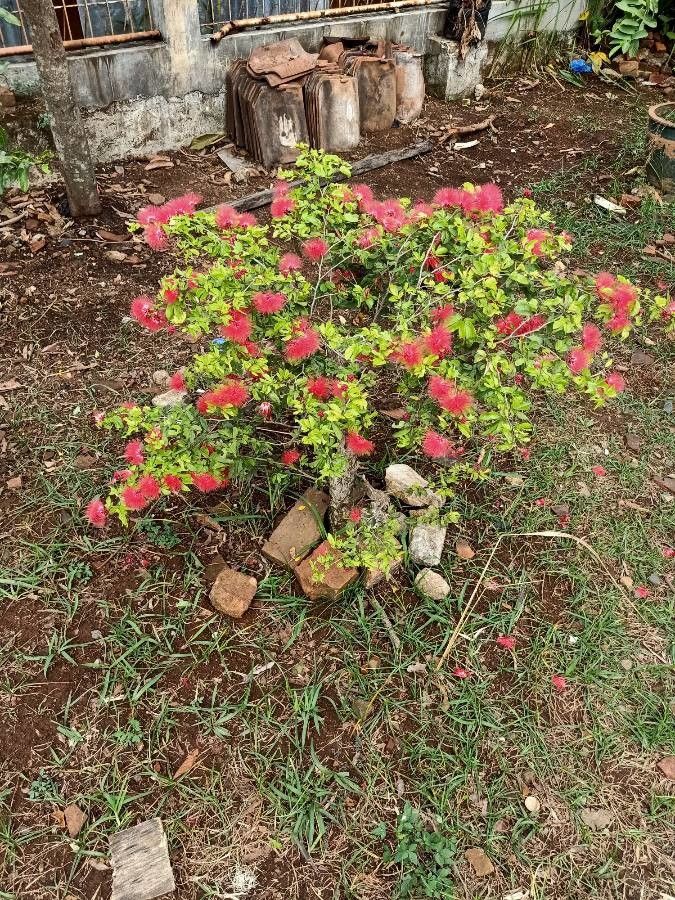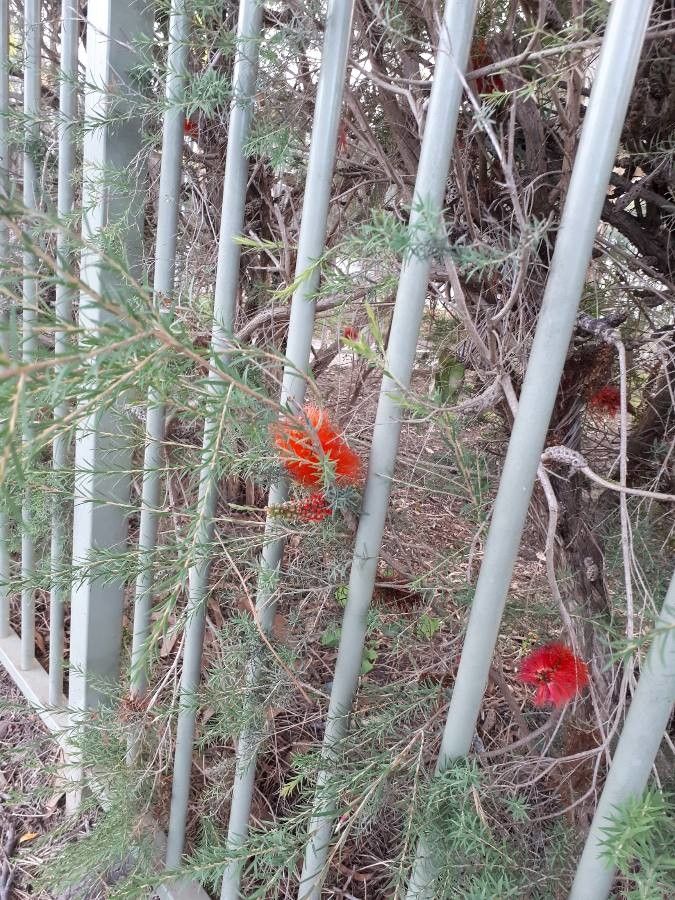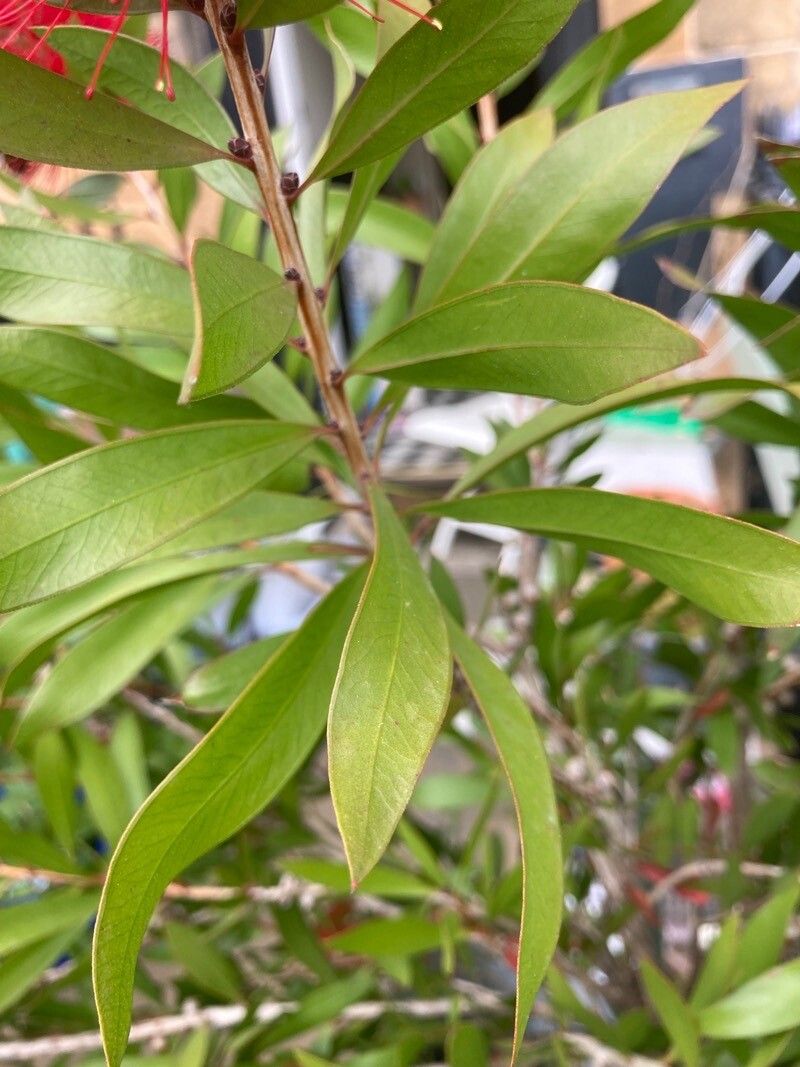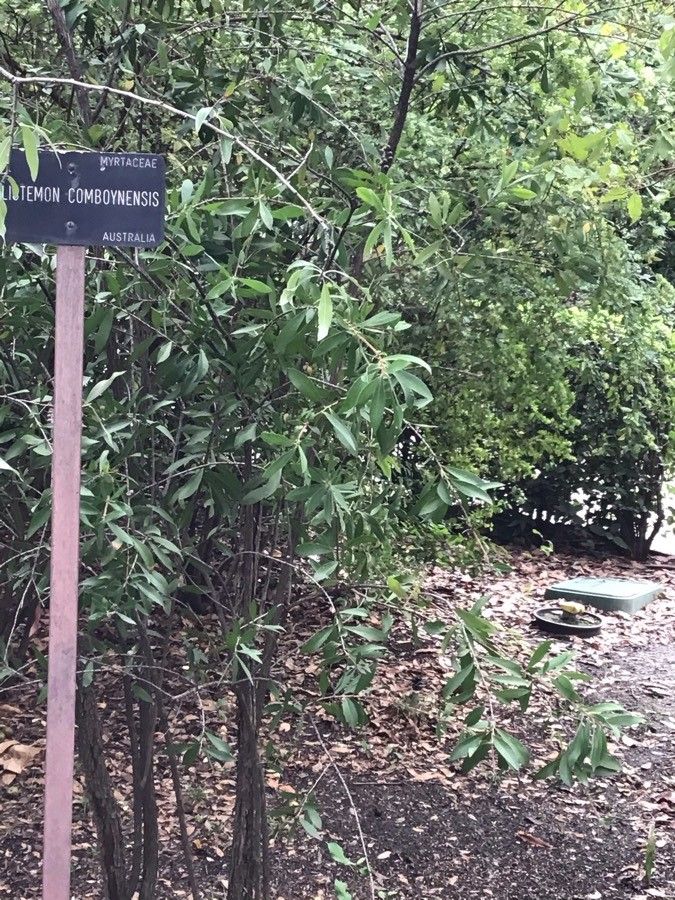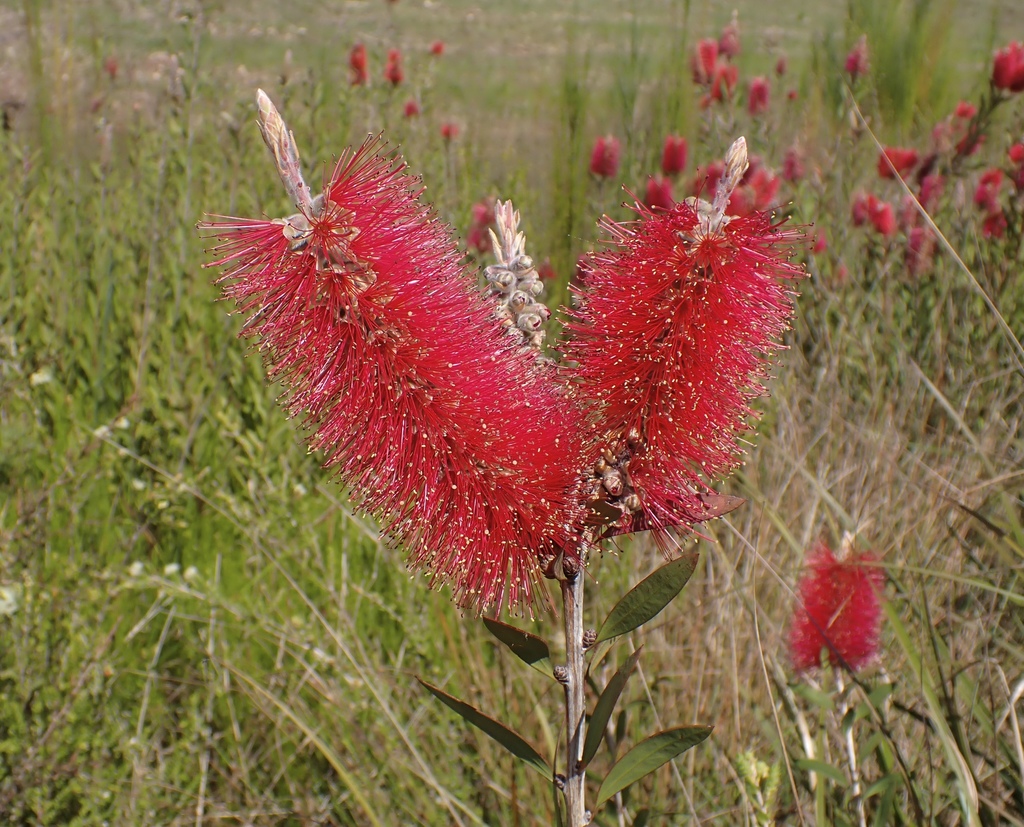
Callistemon citrinus, commonly known as the Lemon Bottlebrush, is a flowering plant native to Australia. Belonging to the Myrtaceae family, it is renowned for its distinctive bottlebrush-shaped flowers that bloom in vibrant shades of red, pink, or white. The plant typically grows up to 3 meters tall and features narrow leaves approximately 10 cm long. The Lemon Bottlebrush thrives in both full sun and partial shade and prefers well-drained soil. While it can withstand drought conditions, regular watering during the growing season is essential for optimal growth. The plant's nectar-rich flowers attract birds such as hummingbirds and honeyeaters, making it an excellent addition to any garden or landscape design. Traditionally, indigenous Australians have used the leaves of the Lemon Bottlebrush for their medicinal properties to treat coughs, colds, and other respiratory ailments. Overall, Callistemon citrinus is an attractive ornamental plant with unique flowers that bring color to any garden while also offering medicinal benefits.
The crimson bottlebrush is a plant with flowers that are quite distinct from most others. The blossoms resemble bottle-washing brushes, with silky soft hairs that grow outward. The plant's vibrant red color is why it's called the crimson bottlebrush.
Crimson bottlebrush has strong resistance to disease and is generally not susceptible to disease. In terms of care, this plant is fairly low-maintenance. When grown outdoors it needs only minimal watering, and larger specimens typically do not need pruning. Smaller plants, however, should be pruned after they finish blooming. Crimson bottlebrush is suitable for anyone with an outdoor area, such as a garden or deck, and does not require much gardening experience.
How to keep Callistemon Citrinus.
Light
The crimson bottlebrush thrives with ample sunlight for best growth, though it can tolerate slightly lower light levels. Its native habitat favors abundant sun exposure. Adequate light encourages healthier growth, while too little leads to reduced development. Conversely, excessive light can be damaging.
Water
The crimson bottlebrush, native to Australia's moist soils, thrives in subtropical conditions. This evergreen plant has a moderate tolerance for drought and typically needs watering every one to two weeks, allowing the soil to dry slightly in between. Its ability to retain moisture year-round makes it well-suited for outdoor growth, where it can benefit from natural rainfall.
Temperature
Crimson bottlebrush prefers a warm, temperate growing environment with temperatures between 68 to 100 ℉ (20 to 38 ℃). It tolerates high heat in summer but favors cooler conditions in winter. In hotter areas, planting or keeping crimson bottlebrush in partial shade is recommended to prevent heat stress.
Fertilizer
Timing is important when fertilizing Crimson bottlebrush. Apply fertilizer in early spring and then monthly through early summer. Fertilizer encourages attractive blooms and supplies energy during both dormant and active growth periods.
Pruning
The crimson bottlebrush is known for its striking red blooms. To maintain its shape and promote flowering, it requires light pruning after late spring. Be sure to remove any dead branches and avoid cutting into the old wood, since the crimson bottlebrush blooms on new growth. Proper pruning not only enhances the plant's appearance but also improves air circulation and sunlight penetration.
Pot & Repot
When you repot a Crimson bottlebrush, choose a pot 1–2 inches (2.5–5.1 cm) larger that has ample drainage. Use a well-draining potting mix. Repot in spring or fall, making sure the root ball sits slightly lower than the rim of the flower pot. Water thoroughly after repotting and place the plant in a warm spot with indirect sunlight.
Toxicity
While bottlebrush plants are not known to be extremely toxic, make sure they stay out of reach of young children and pets as even non-toxic plants can cause vomiting if ingested. They do not cause any skin irritations.
Further reading →
The toxicity and danger assessments provided are for reference only. We do not assure their accuracy, so it's crucial not to depend on them. Seek professional advice when necessary for accurate guidance.
Botanical profile.
- Plant Type
- Shrub
- Life Cycle
- Perennial
- Genus
- Callistemon
- Family
- Myrtaceae
- Hardiness Zone
- 9-11
- Mature Height
- 0.91 m to 4.88 m
- Mature Spread
- 2.44 m
- Leaf Color
- Green
- Leaf Type
- Evergreen
- Flower Color
- Red
- Flower Size
- 0.51 cm to 0.51 cm
- Bloom Time
- Late spring, Early summer, Mid summer
- Planting Time
- Spring, Autumn
- Harvest Time
- Early summer, Mid summer
- Native Area
- Australia
Other names.
Reader questions.
When should I water my Crimson Bottlebrush?
Knowing when to water the Crimson Bottlebrush is vital for its health and growth. Check the soil dryness; the plant needs water if the top 1 to 2 inches of soil feel dry. Leaf condition is also a key indicator; wilted or lackluster leaves suggest the need for watering. The pre-flowering stage is critical for water, as insufficient water can lead to bud drop. In warm temperatures and during high sunlight exposure, the plant's water requirement increases. Avoid watering too early when the soil is moist to prevent risks like root rot, and avoid watering too late to prevent dehydration risks. Understanding these signs will help manage watering effectively, supporting the plant's growth and flowering.
Why should I put fertilizer on my Crimson bottlebrush plant?
Fertilizing a Crimson bottlebrush is important for several reasons. Firstly, it helps the plant produce beautiful blooms. To ensure excellent flowers in spring, it is best to fertilize in early spring. Additionally, fertilizer provides the plant with energy that can be stored during dormant growth phases. By providing extra nutrients during fall planting or late spring, the plant can store more energy to use when active growth resumes.
What are the sunlight requirements for the Crimson Bottlebrush?
The Crimson Bottlebrush, or Callistemon citrinus, thrives in environments that replicate its natural habitat, which means it values abundant sunshine. To grow optimally, it requires full sun, defined as more than 6 hours of sunlight per day, though it can also manage in partial sun, which is about 3-6 hours of sunlight. It's essential to observe how sunlight moves through your garden to find spots that ensure the right balance of light and shade, promoting your plants' health and happiness.
What is the ideal growing environment for Crimson Bottlebrush?
Crimson bottlebrush, known botanically as Callistemon citrinus, thrives in warm and temperate environments with temperatures ranging from 68 to 100°F (20 to 38°C). It can adjust well to high temperatures during the summer months but prefers cooler temperatures in winter. For those in hotter areas, it's recommended to plant or keep the crimson bottlebrush in partial shade to prevent heat stress. Although the plant has some tolerance to cold, protective measures should be taken when temperatures are expected to drop below its tolerable growing minimum, such as wrapping the plant with plastic film, fabric, or other materials for cold protection, which should be removed once temperatures rise.
How should I water my Crimson Bottlebrush?
Watering the Crimson Bottlebrush correctly involves several considerations to ensure optimal hydration without waterlogging. A bottom-watering method is effective, allowing water absorption from a tray or saucer. If using a watering can, choose one with a narrow spout to direct water to the base, minimizing foliage wetness. Utilizing a moisture meter can guide when the plant needs water by checking soil moisture levels. Excess water on the foliage should be avoided to reduce fungal disease risks. Overwatering can be as harmful as under-watering, so ensure good drainage. Adjust watering frequency based on climate, pot size, and soil type. Regular soil moisture checks are recommended for appropriate watering.
When should I fertilize my Crimson bottlebrush for the best results?
To effectively fertilize Crimson bottlebrush, timing is key. Applying fertilizer while the plant is still dormant will lead to ineffective use and potential pollution as the fertilizer will be washed away by rainwater. Begin fertilizing in early spring and continue once a month until early summer.
How does artificial lighting support Crimson Bottlebrush growth indoors?
When natural sunlight isn't sufficient, especially during winter or in less sunny spaces, artificial lighting becomes critical for the growth of indoor Crimson Bottlebrush plants. Optimal artificial lighting involves choosing the right type of light, like LED, which can be customized to provide specific light wavelengths needed by plants. Full sun plants require 30-50W/sq ft, partial sun plants need 20-30W/sq ft, and full shade plants should get 10-20W/sq ft of artificial light. The light source should be placed 12-36 inches above the plant, mimicking natural sunlight, and provided for 8-12 hours per day to ensure healthy growth.
How does Crimson Bottlebrush react to low temperatures?
Crimson bottlebrush exhibits a moderate tolerance to low temperatures and shows optimal growth when the temperature remains above its suitable growth minimum. In winter, ensuring the temperature stays above its tolerable growing minimum is important to avoid stress on the plant. Exposure to temperatures below its growth limit can cause leaves to droop; they may recover in mild cases but can wilt and fall off in severe scenarios. To protect the plant from low temperatures, one can trim off frost-damaged parts, wrap the plant with non-woven fabric or cloth, and erect a wind barrier to shield it from cold winds.
How much water does the Crimson Bottlebrush really need?
The Crimson Bottlebrush's water needs are influenced by its native habitat, requiring deep but infrequent watering to mimic natural rainfall patterns. The amount varies depending on factors like pot size, root depth, and plant size. Generally, a mature plant might need about 4 to 6 liters per session. Look for signs of proper hydration, such as vibrant, glossy foliage and abundant flowering. Overwatering leads to problems like root rot, while insufficient watering results in stunted growth and reduced vitality. Checking soil moisture and using organic mulch can help maintain optimal moisture levels.
When is it not a good idea to add fertilizer to my Crimson bottlebrush plant?
To promote the blooming of Crimson bottlebrush, it is important to avoid using a fertilizer with excessive nitrogen. Excessive nitrogen can result in an abundance of leaves but fewer blooms. Instead, opt for a fertilizer that has a lower level of nitrogen compared to other nutrients. It is also crucial to avoid fertilizing the tree/shrub during the late autumn season as it can lead to excessive growth right before winter. Additionally, refrain from fertilizing during hot and dry periods as dry soil does not adequately deliver the fertilizer, and this can stimulate growth that requires more water, which may not be available. Therefore, it is best to apply fertilizer earlier in the season when the temperatures are cooler. Lastly, it is worth noting that Crimson bottlebrush has the ability to absorb nearby fertilizers that have been applied to other plants or lawns. Hence, be cautious to prevent inadvertently over-fertilizing the tree/shrub by giving it a double dose of fertilizer.
What are the symptoms of light deficiency or overexposure in Crimson Bottlebrush?
Crimson Bottlebrush may show various symptoms when facing light deficiency or overexposure. Insufficient light can cause smaller new leaves, leggy growth, premature leaf drop, halted growth, paler new leaves, and reduced overall health. On the contrary, excessive light can lead to chlorosis (yellowing leaves), sunscald, leaf curling, wilting, and leaf scorching, indicating damage or stress from too much sunlight. These symptoms highlight the plant's need for optimal lighting conditions, whether grown outdoors or indoors.
What should be done if Crimson Bottlebrush experiences high temperatures?
During the hotter summer months, it's crucial to keep the Crimson bottlebrush below its suitable growth temperature maximum. Exceeding its tolerable growing temperature max can result in lighter leaf colors, dry and withered leaf tips, leaf curling, and increased susceptibility to sunburn. To mitigate these effects, trim away the sunburned and dried-up parts of the plant. Moving the plant to a shaded area during the midday and afternoon or using a shade cloth can help, as well as watering the plant in the morning and evening to maintain soil moisture.