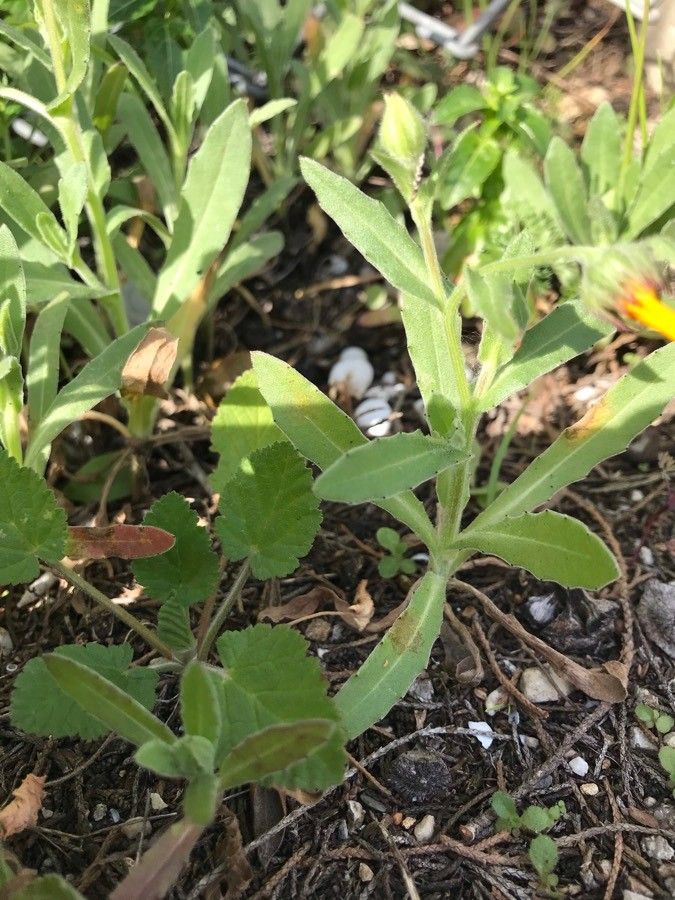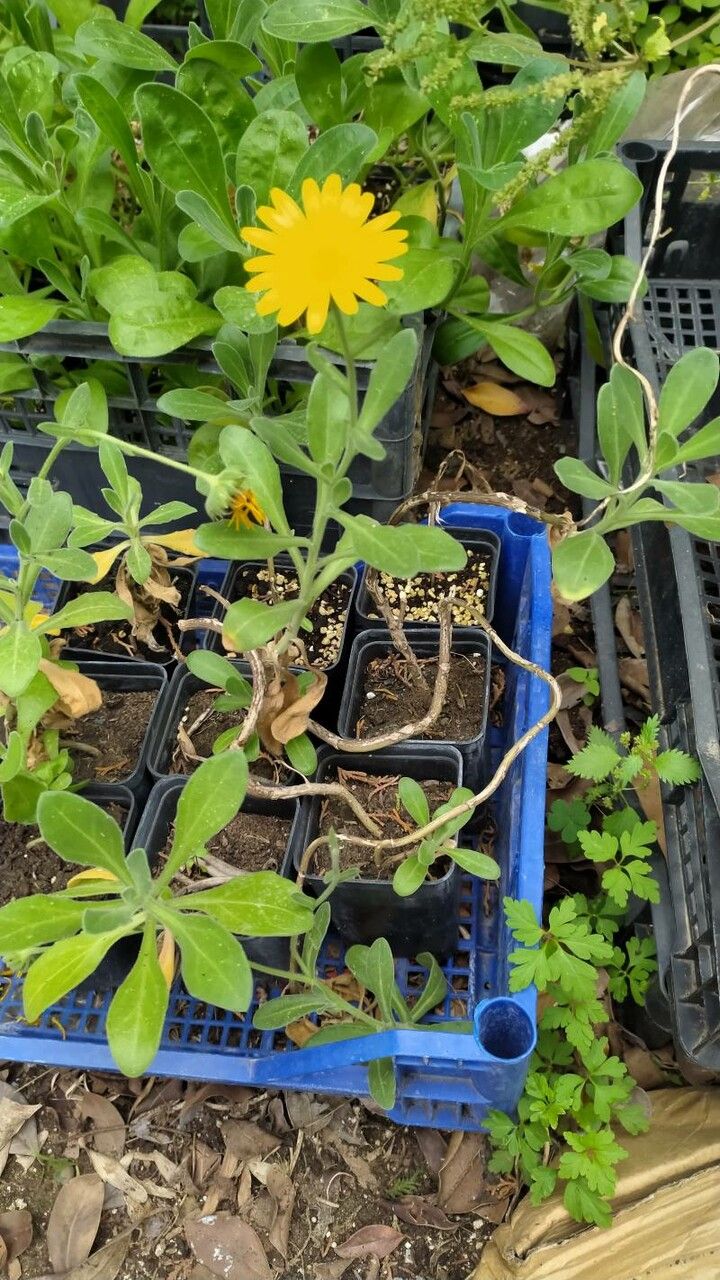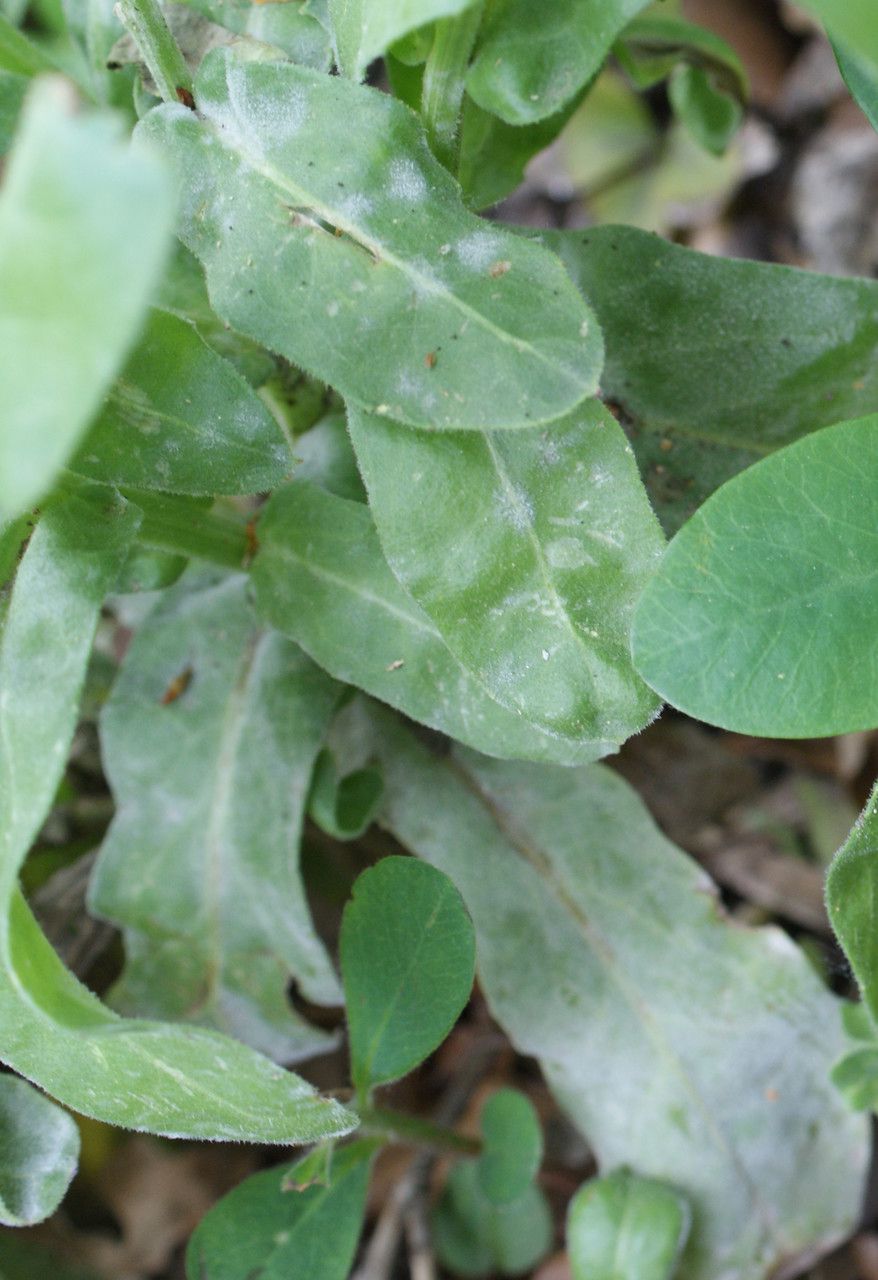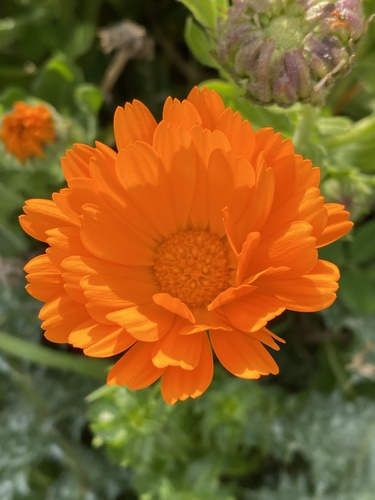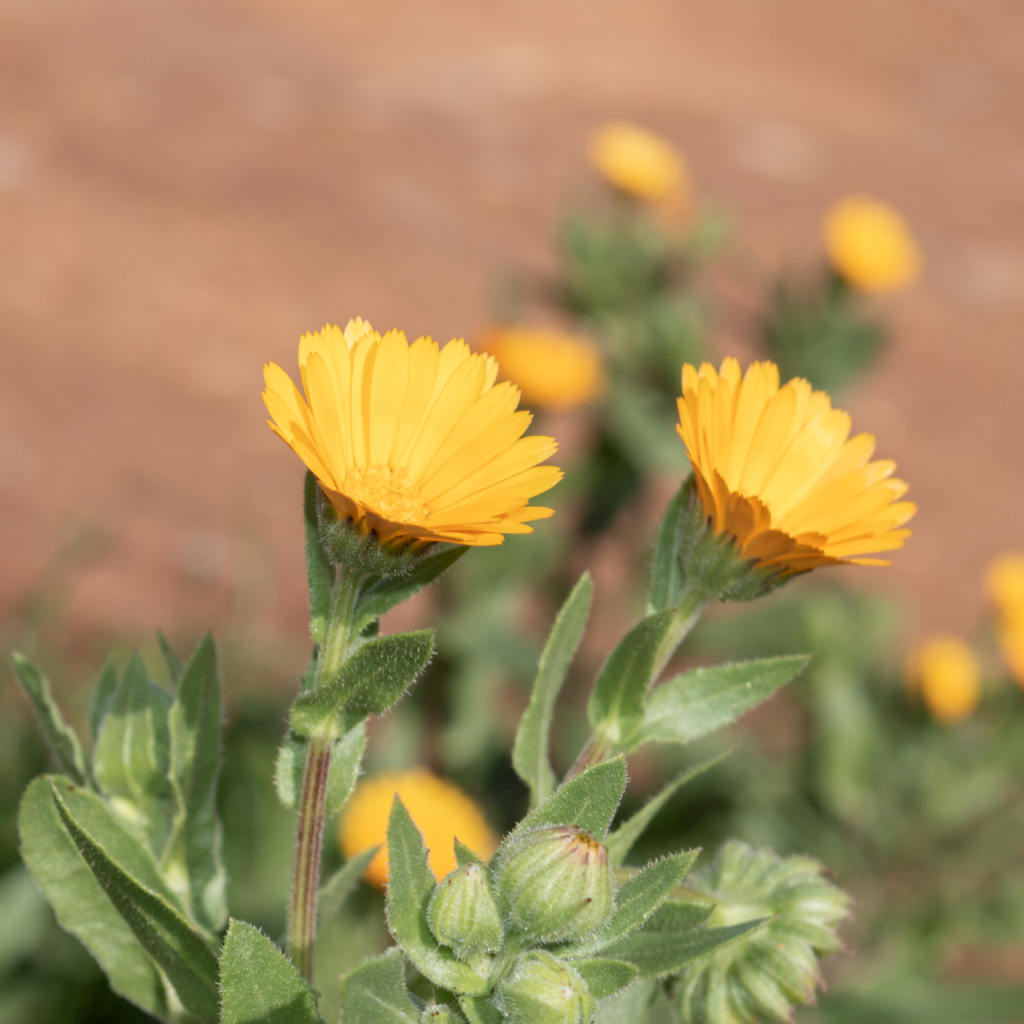
Calendula arvensis, commonly known as field marigold, is a species of flowering plant belonging to the daisy family. Native to Europe and Asia, it has been introduced to various other parts of the world. The plant typically reaches up to 50 cm in height and features hairy stems with alternate leaves that are oblong or lanceolate in shape.
The flowers of Calendula arvensis are bright yellow or orange and have a distinctive aroma. They bloom from May to September, attracting bees, butterflies, and other pollinators.
Field marigold is often used for medicinal purposes due to its anti-inflammatory properties. It can be applied topically as a salve for skin irritations such as eczema or acne, or consumed as an herbal tea to aid with digestive issues.
Calendula arvensis thrives in well-drained soil under full sun but can tolerate some shade. It is easy to grow from seed and capable of self-seeding if left undisturbed.
Overall, Calendula arvensis is a beautiful flowering plant with numerous medicinal benefits, making it an excellent addition to any garden or herbal medicine cabinet.
Field marigold is fairly disease-resistant and normally does not suffer from many illnesses. However, it can be vulnerable to pests and diseases present in its surroundings. These infections are typically minor. In terms of care, the plant requires moderate maintenance. Regular pruning is necessary to keep a neat appearance and support healthy growth. Fertilizing can also help encourage flowering. Field marigold is suitable for anyone with outdoor space, such as a garden or patio, and does not demand extensive care experience. It may need more attention when grown indoors.
How to keep Calendula Arvensis.
Light
The field marigold does best in a spot where it gets full sun for most of the day. Its roots in open fields and plains point to this requirement. It needs that sunlight at every stage of growth. Too much shade can slow its development, although it can tolerate a shortage of light if necessary.
Water
Native to the Mediterranean region, the field marigold flourishes in areas with moderate rainfall and needs consistent weekly watering. Although it is usually cultivated outdoors, it grows best during the rainy season, which aligns with its natural requirement for regular moisture. This adaptability allows it to thrive in its native habitat's balanced moisture conditions.
Temperature
Field marigold originates in areas where temperatures range from 68 to 95 °F (20 to 35 °C). It shows adaptation to a wide range of temperatures, making it suitable for different climates. Adjust the ambient temperature as needed to meet the plant's needs across seasons.
Fertilizer
When Field marigold has opened most of its flowers to full size, resume fertilizing. Around the time the blooms are at their peak, apply fertilizer every three to four weeks, as weather allows. Then, once Field marigold begins producing fewer new blooms, stop fertilizing; there's no need to feed it when it can no longer produce more blooms.
Pruning
Field marigold is known for its bright, daisy-like flowers and aromatic leaves. To encourage new growth, prune the plant in early to late spring, and be sure to regularly trim any spent flowers. Avoid heavy pruning after mid-summer, as it can increase stress during the winter months. Proper pruning not only enhances air circulation but also reduces the risk of disease and promotes healthy, vibrant growth.
Botanical profile.
- Plant Type
- Herb
- Life Cycle
- Annual, Biennial
- Genus
- Calendula
- Family
- Asteraceae
- Hardiness Zone
- 5-9
- Mature Height
- 10 cm to 49 cm
- Mature Spread
- 20 cm to 40 cm
- Leaf Color
- Green
- Leaf Type
- Semi-evergreen
- Flower Color
- Yellow, Orange
- Flower Size
- 4.06 cm
- Bloom Time
- Mid spring, Late spring, Early summer
- Planting Time
- Spring, Summer
- Harvest Time
- Early summer, Mid summer
- Native Area
- Libya, Egypt, India, Turkey, Sweden, Austria, United Arab Emirates, Slovakia, Montenegro, Pakistan, Croatia, Slovenia, Morocco, Yemen, Russia, Iraq, Germany, Oman, Romania, Qatar, Moldova, Portugal, Netherlands, Saudi Arabia, France, Tajikistan, Tunisia, Cyprus, Bulgaria, Poland, Armenia, Greece, Ukraine, Serbia, Chad, Lebanon, Afghanistan, Syria, Italy, Spain, Switzerland, Iran, Albania, Azerbaijan, United Kingdom, Hungary, Kuwait, Algeria, Turkmenistan
Other names.
Reader questions.
How should I water my Field marigold plant?
Field marigold can be watered using a garden hose, watering can, or any common watering tool. They are not picky about the type of water they receive, whether it is rainwater, tap water, or filtered water. However, it is best to avoid watering them from overhead to prevent damage to the leaves and flowers, as well as the risk of disease. For optimal watering, a drip irrigation system can be set up to provide even and direct water to the soil. When watering a Field marigold in a container, you can use a cup, watering can, or tap to water directly into the soil.
Why is it important to add fertilizer to my Field marigold plant?
Different plants require nutrients to grow, but some can obtain the necessary nutrients without additional fertilizers. Field marigold, like other plants, relies on nutrients for growth and internal processes. The main nutrients that plants use, such as nitrogen, phosphorus, and potassium, contribute to different essential functions. In the case of foliage, nitrogen is the most important nutrient. Field marigold faces challenges in obtaining enough nitrogen from the soil, which is why gardeners often choose to supplement by providing nitrogen-rich sources to the plant.
What are the sunlight requirements for Field Marigold?
Field Marigold requires full sun exposure to thrive, meaning it should receive more than 6 hours of sunlight daily. However, it can also tolerate partial sun, which is about 3-6 hours of sunlight per day. It's essential to observe how sunlight moves through your garden to ensure your plants receive the right balance of light and shade, promoting their optimal growth and wellbeing.
What is the optimal temperature range for growing Field Marigold?
Field Marigold (Calendula arvensis) thrives in temperature ranges from 68 to 95 °F (20 to 35 °C). This wide range suggests the plant's adaptability to various climates, making it versatile for different growing conditions. Adapting the surrounding heat to meet the plant's needs in changing seasons can help maintain its health and growth.
What should I do if I give too much or too little water to my Field marigold?
To prevent underwatering, simply water your Field marigold more regularly when you notice it lacks moisture. Overwatering can be more serious, potentially causing diseases and death in the plant. To avoid this, choose a sunny location with well-draining soil. If you overwater your potted Field marigold, consider repotting it into a container with better drainage and loose soil.
When should I fertilize my Field marigold for the best results?
Field marigold typically thrives, but to give it a boost during active growth, apply fertilizer approximately once a month. Only fertilize Field marigold in the spring and summer months when it is most active and in need of nutrients. During the fall and winter, when the plant is less active, refrain from fertilizing as it does not require as many nutrients during this time. Look for signs of new growth to determine when to start fertilizing. Whether grown outside or in a container indoors, the fertilization schedule remains the same. However, if your Field marigold is in a container, you may not need to fertilize for the first one to two months. Container potting soil already contains sufficient nutrients, so wait until your plant has been in the same soil for a while before starting to fertilize.
Why is sunlight important for Field Marigold, and how can artificial lighting be used?
Sunlight is crucial for the Field Marigold's growth at all stages, as it originates from open fields and plains where it's exposed to the sun for most of the day. In conditions of insufficient natural sunlight, especially during winter or in less sunny spaces, artificial lighting can be a valuable alternative. Indoor plants can benefit from artificial lights, such as LED lights, to provide the necessary wavelengths for optimal growth. For full sun plants, 30-50W/sq ft is needed; partial sun plants require 20-30W/sq ft, and full shade plants need 10-20W/sq ft. The light should be placed 12-36 inches above the plant, mimicking natural sunlight conditions for about 8-12 hours per day.
What are the cold resistance capabilities of Field Marigold?
Field Marigold possesses strong cold resistance, generally eliminating the need for special frost protection measures during winter. However, in conditions where winter temperatures are anticipated to drop below -25°C, it becomes crucial to provide cold protection. This can be accomplished by covering the plant with soil, straw, or similar materials. Additionally, it is advised to water the plant abundantly before the first freeze in autumn to ensure the soil retains moisture and enters a frozen state, aiding in drought and water scarcity prevention during winter and early spring.
How much water does my Field marigold need?
To keep your Field marigold healthy, you need to water it regularly. In the spring, water it once a week. As the weather gets warmer, increase watering to two or three times a week. However, be careful not to overwater, as that can harm your plant. Regardless of how often you water, make sure the soil is moist but not soaked. If your Field marigold is in a pot, you'll need to water it more frequently. Potted soil can dry out faster than ground soil, so water it a few times per week instead of just once.
When is the best time to not add fertilizer to my Field marigold?
To ensure the health of your Field marigold, refrain from fertilizing it if it is unhealthy due to disease or insect pests. Additionally, avoid fertilizing dehydrated plants as it can exacerbate the issue. Only fertilize plants that are in good health. When watering, take care not to splash fertilizer onto the leaves or stem, as this can cause burned spots. Unless you are using a specialized fertilizer meant for foliage application, avoid direct contact between the plant and the fertilizer.
What are the symptoms of light deficiency in Field Marigold?
Field Marigold may show several symptoms when there's insufficient light, including smaller new leaves, leggy or sparse growth, faster leaf drop, and slower or stopped new growth. Leaves may also develop lighter colors or irregular patterns, indicating light deficiency. Additionally, excessive sunlight can lead to chlorosis (leaves turning yellow), sunscald (damaged leaves or stems), leaf curling as a defense mechanism, wilting due to water loss, and leaf scorching with brown, dry edges.
How does low temperature affect Field Marigold and what are the solutions?
Field Marigold is cold-tolerant, performing best when the temperature stays above 20°C and should remain above 0°C during winter. Exposure to temperatures below -25°C doesn't show immediate noticeable changes; however, there might be a decrease in sprouting or even complete failure to sprout during spring. In spring, it's recommended to remove any parts of the plant that failed to sprout as a solution to this issue.