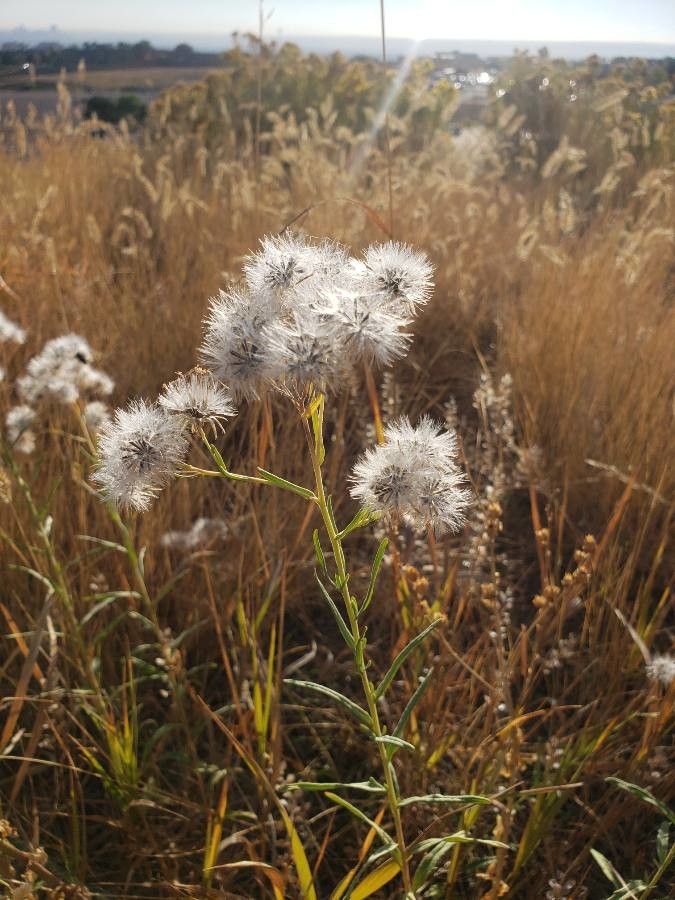
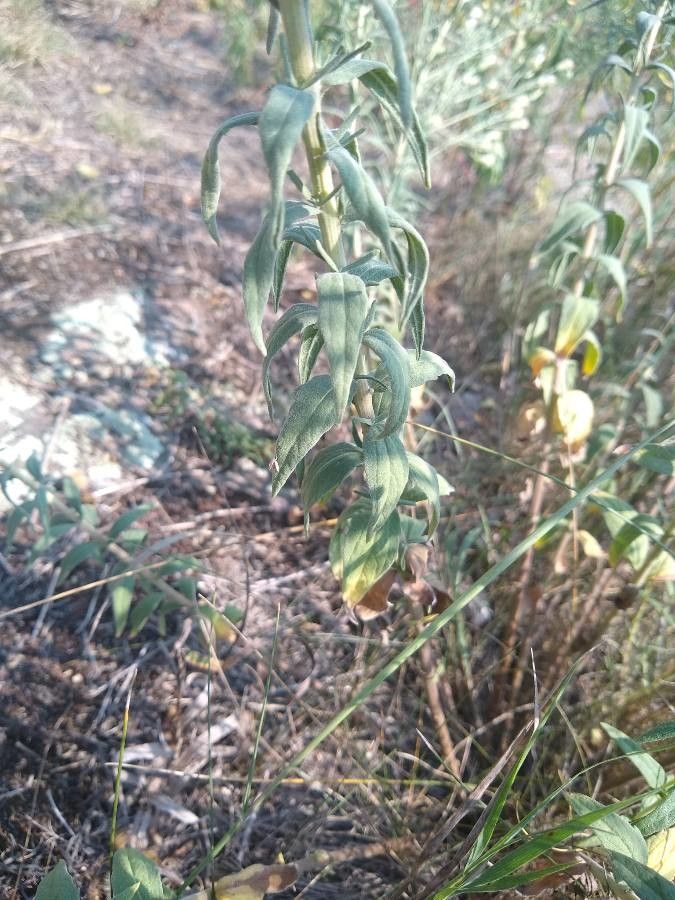
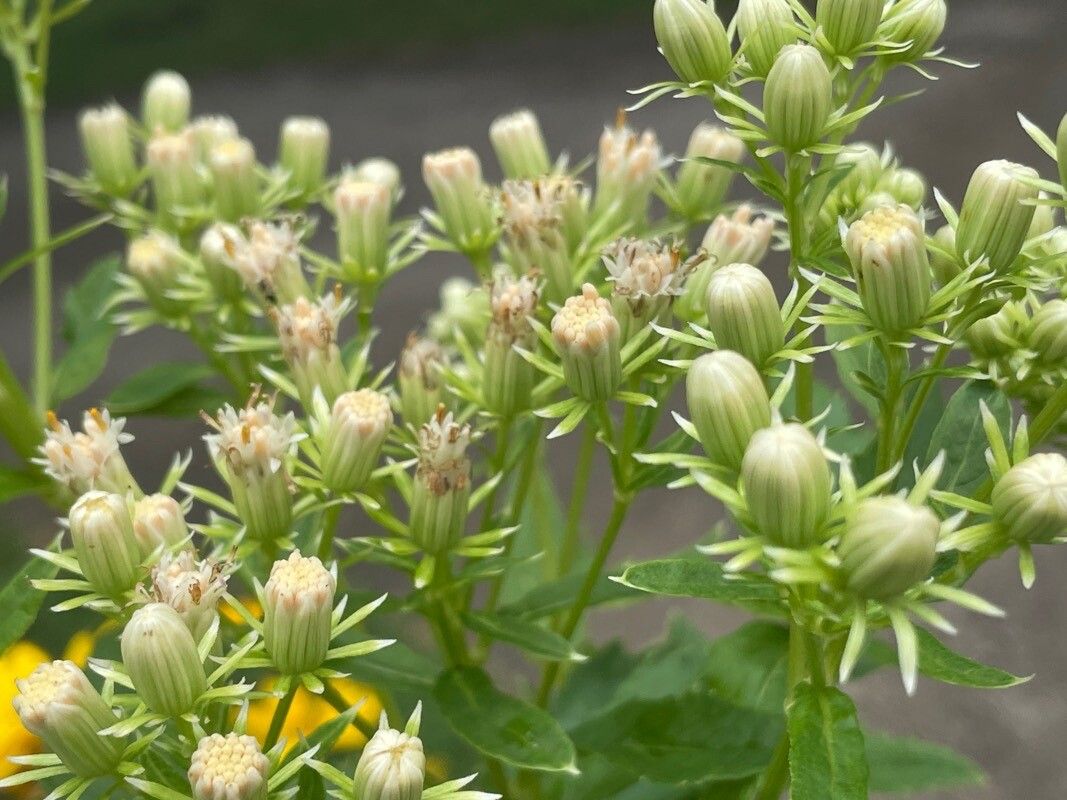
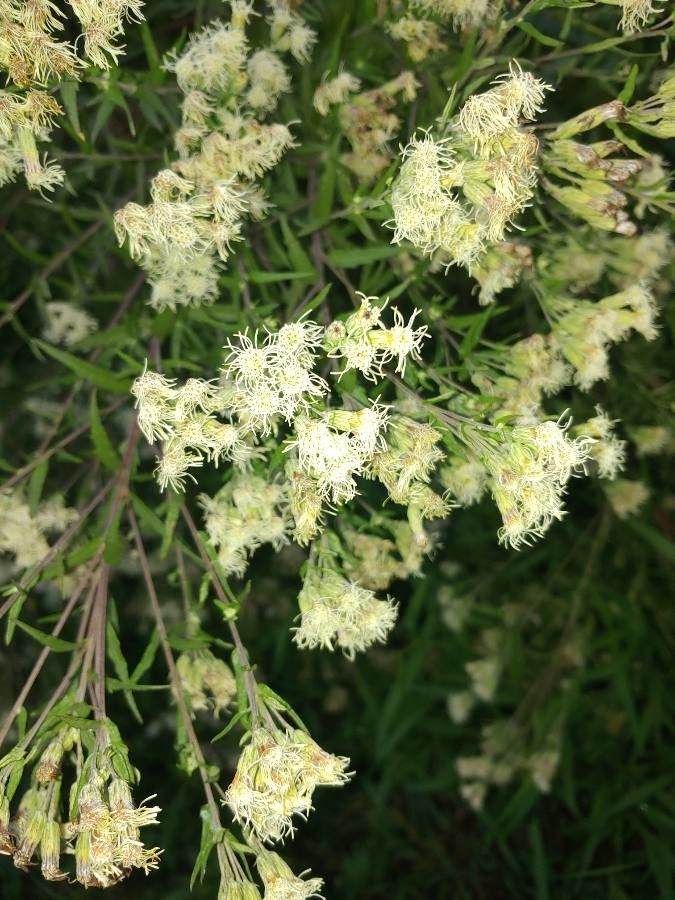
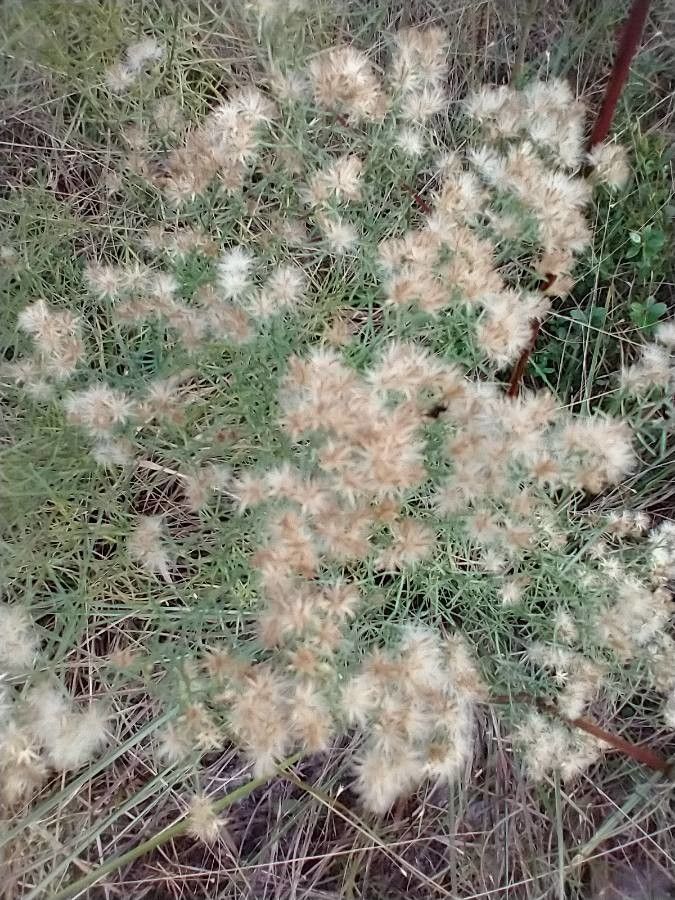
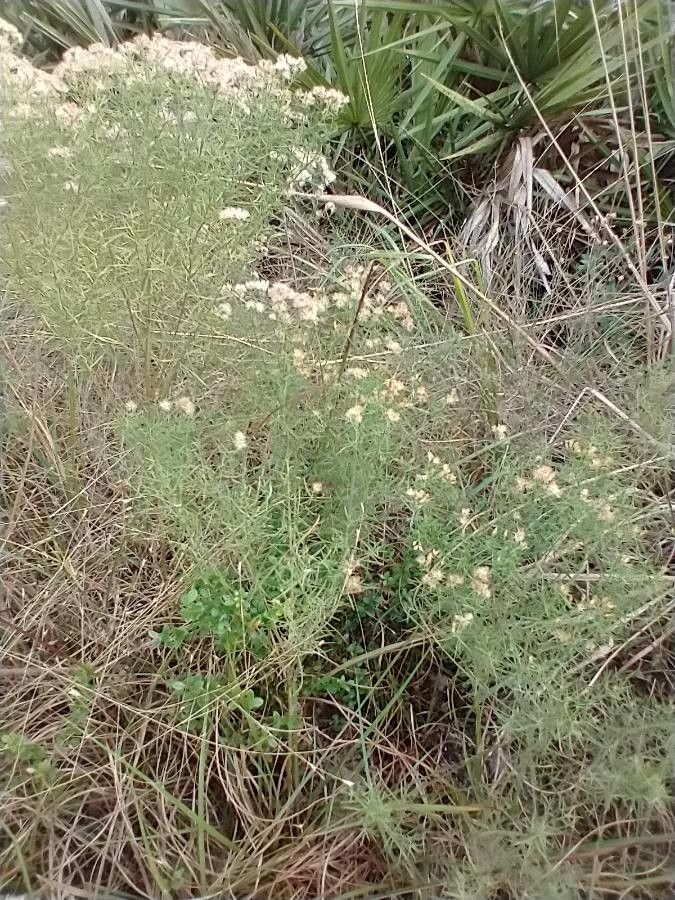
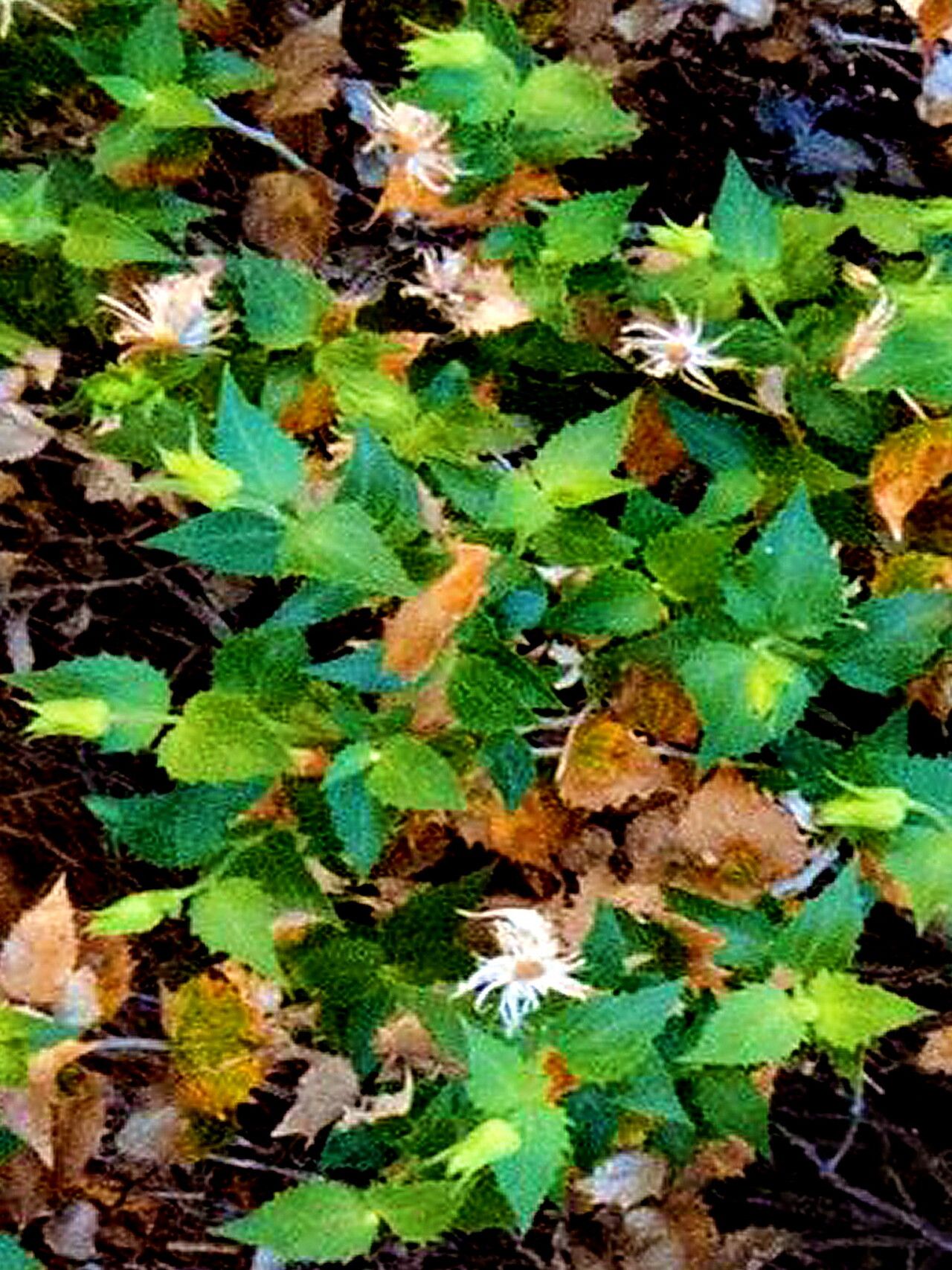
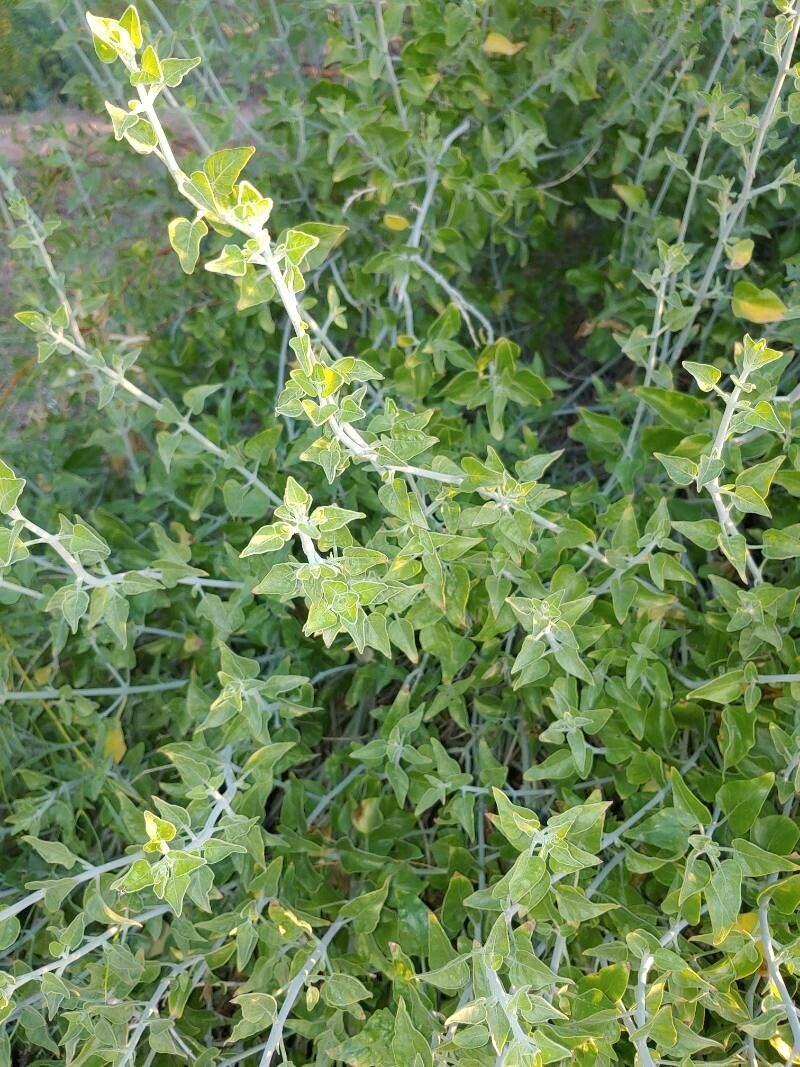
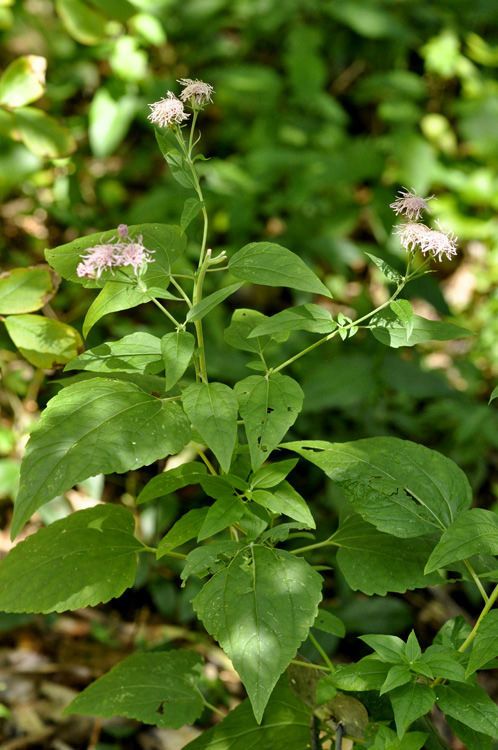
Brickellia eupatorioides, or false boneset, is a North American species of flowering plants in the family Asteraceae. It is widespread in Mexico from Chihuahua to Oaxaca, and in all regions of the contiguous United States except New England, New York, and the West Coast.Brickellia eupatorioides is a perennial up to 200 cm (80 inches) tall, growing from a woody base. It produces many small flower heads with yellow, lavender, or maroon disc florets but no ray florets. VarietiesBrickellia eupatorioides var. chlorolepis (Wooton & Standley) B. L. Turner - Mexico, southwestern USA Brickellia eupatorioides var. corymbulosa (Torr. & A.Gray) Shinners - Great Plains, Mississippi Valley Brickellia eupatorioides var. eupatorioides - eastern USA Brickellia eupatorioides var. floridana (R.W.Long) B.L.Turner - southern Florida Brickellia eupatorioides var. gracillima (A.Gray) B.L.Turner - Ark., Mo., Okla., Tex. Brickellia eupatorioides var. texana (Shinners) Shinners - Ark., Kans., Mo., Okla., Tex
False boneset has strong disease resistance and is usually not prone to illnesses. However, it can be vulnerable to pests and diseases present in its environment. These infections are typically mild. Care for this plant is moderate. It should be pruned regularly to preserve a good appearance and support healthy growth. Fertilizing can also help encourage flowering. False boneset is appropriate for someone with outdoor space, such as a garden or patio, and does not require much experience in plant care. It may need more attention if grown indoors.
How to keep Brickellia Eupatorioides.
Light
False boneset does best when it receives full sun for most of the day, although it can adjust to locations where sunlight is broken by intermittent shade. This preference for sun is important to its health and development, since its natural habitats are generally open and sunny. Both too little and too much sun can stunt its growth or cause wilting.
Water
False boneset thrives in moderate moisture conditions, preferring regular weekly watering to prevent root over-saturation. Although it is usually grown outdoors, it needs more water during its active growth phases to develop lush foliage and a robust stature, reflecting its natural habitat.
Temperature
False boneset naturally occurs in habitats with temperatures ranging from 41 to 95 °F (5 to 35 ℃). It grows best within that range. During seasonal temperature changes, slowly acclimating the plant is beneficial for its health.
Fertilizer
A single fertilizer application in spring is typically enough for False boneset, though multiple feedings can enhance growth. Fertilize every month to six weeks. Fertilization improves the appearance and function of the leaves, helping preserve even color and a healthy texture. It also encourages root development and nutrient absorption for long-term plant health.
Pruning
False boneset is a tall, bushy plant with small, daisy-like flowers. To keep it healthy, prune it from early to late spring by removing dead stems and thinning out crowded areas to improve air circulation. Cutting back about one-third of the plant encourages denser foliage, reduces the risk of disease, and enhances both flowering and overall vitality.
Botanical profile.
- Plant Type
- Herb, Shrub
- Life Cycle
- Perennial
- Genus
- Brickellia
- Family
- Asteraceae
- Hardiness Zone
- 5-9
- Mature Height
- 0.3 m to 1.22 m
- Mature Spread
- 30 cm
- Leaf Color
- Green, Dark Green
- Leaf Type
- Deciduous
- Flower Color
- White
- Flower Size
- 2.54 cm
- Bloom Time
- Mid summer, Late summer, Early fall
- Planting Time
- Spring
- Harvest Time
- Early fall, Mid fall
Other names.
Reader questions.
How should I water my False boneset plant?
When you water the False boneset, it's best to use filtered water at room temperature. Tap water may have harmful particles, so filtering it is important. The plant prefers warm water because it originates from a warm environment and cold water can be a shock. It's also advised to avoid overhead watering to prevent issues with the foliage. Instead, you should thoroughly soak the soil with the filtered, room temperature water. This helps the roots absorb nutrients and continue to spread through the soil.
What are the sunlight requirements for False boneset?
False boneset thrives best in full sunlight, requiring more than 6 hours of sunlight a day, although it can adapt to partial sun conditions, receiving about 3-6 hours of sunlight. It's crucial to observe the movement of sunlight through your garden to find spots that offer a mix of light and shade, ensuring the plants' vigorous growth and health. In regions where natural sunlight is insufficient, especially during winter or in less sunny areas, artificial lighting can be a beneficial substitute. LED lights are recommended for their ability to mimic natural sunlight, with full sun plants needing 30-50W/sq ft, partial sun plants 20-30W/sq ft, and full shade plants 10-20W/sq ft of artificial light. The light source should be placed 12-36 inches above the plant, and most plants will require 8-12 hours of light per day.
What is the ideal temperature range for False boneset?
False boneset is indigenous to environments where temperatures vary from 41 to 95 °F (5 to 35 °C), thriving best within this range. The plant benefits from gradual acclimatization during seasonal temperature shifts, indicating its strong cold resistance. Therefore, special frost protection measures are usually not essential during winter. However, it's important to provide cold protection if temperatures are expected to drop below -25°C, by covering the plant with soil or straw and watering abundantly before the first freeze in autumn. This maintains soil moisture and prevents drought and water scarcity during winter and early spring.
What should I do if I give my False boneset plant too much water or too little water?
Both overwatering and underwatering can harm the health of your False boneset, but overwatering is more common. Too much water can cause wilting, yellowing of stems and leaves, and can lead to diseases like root rot, mold, and mildew, which could kill the plant. Underwatering is less likely because the False boneset can tolerate drought, but it can still happen, resulting in brittle, brown leaves. It's important to be aware of the signs of overwatering and take action quickly. Some diseases caused by overwatering may become irreversible if not addressed promptly. If you notice early signs of overwatering, reduce watering immediately and check the soil drainage. If the soil drains poorly, replace it with a loose, well-draining potting mix. Conversely, if you see signs of underwatering, increase watering until the plant recovers.
What are the symptoms of inadequate lighting for False boneset?
Inadequate lighting can lead to several issues for False boneset, including smaller new leaves, leggy or sparse growth, faster leaf drop, slower or halted growth, lighter-colored new leaves, chlorosis, sunscald, leaf curling, wilting, and leaf scorching. These symptoms indicate either insufficient sunlight, which can lead to a reduction in chlorophyll and essential nutrients, or excessive sunlight, causing physical damage to the plant's tissues and affecting its overall health.
How does False boneset react to low temperatures?
False boneset is cold-tolerant, performing optimally when temperatures remain above 5°C. Despite its cold resistance, it's crucial to keep it above -20°C during winter. Temperatures falling below -25°C might not show immediate effects, but could lead to a decrease in sprouting or even a failure to sprout come spring. The solution for any parts that have failed to sprout by spring is simply to remove them.
How often do I need to water my False boneset plant?
If your False boneset plant is in a pot, the most accurate way to determine if it needs water is to stick your finger into the soil. If the top two to three inches of soil are dry, it's time to water it. If you're growing the False boneset outdoors in the ground, you can use a similar method to test the soil. Once you find that the top few inches of soil have dried out, it's time to water. In the spring and early fall, following this method will usually mean watering the plant about once a week. During extremely hot weather, you may need to increase watering to twice a week or more. However, mature and well-established False boneset plants have the impressive ability to tolerate drought.
How can I address lighting issues for my False boneset?
Addressing lighting issues for False boneset involves ensuring the plant receives adequate sunlight or artificial light. For indoor plants, gradually moving them to sunnier locations or using artificial light sources like professional plant grow lights or keeping a lamp on for at least 8 hours daily can help. Outdoor plants should be moved to optimal sunlight spots gradually to avoid sunburn, with the adaptation process taking about a week. Minimizing obstructions such as pruning trees or transplanting smaller plants during their dormant period to areas with better sunlight and drainage can significantly improve light exposure. It's important to remember that while affected parts may not recover, new growth will be healthy with improved lighting conditions.
How should I care for False boneset during high temperatures?
During the summer, it is important to ensure that False boneset’s exposure to temperatures does not exceed 35°C. When temperatures rise above 38°C, the plant's leaves may discolor, becoming lighter and prone to curling, sunburn, and in severe cases, the entire plant may wilt and dry out. To mitigate these effects, trim away the sunburned and dry parts. Relocating the plant to a shaded area or using a shade cloth during the midday and afternoon sun can provide protection. Additionally, keeping the soil moist by watering in the morning and evening is beneficial.
How much water does my False boneset plant need?
To properly water your False boneset, don't hesitate to give it a generous amount of water. Make sure the top few inches of soil are dry before watering. It's best to water thoroughly, ensuring the soil is completely soaked. You should add enough water that it flows through the drainage holes at the bottom of the pot. If you don't see any excess water draining, it means you haven't watered enough. However, be cautious not to let water accumulate in the soil, as it can harm the plant. Conversely, if water isn't draining properly, it may be due to poorly draining soil, which is harmful to the plant's health. If the plant is outdoors, 1 inch of rainfall per week should be enough.
How often should I water my False boneset as it grows?
The water needs of the False boneset can vary depending on its growth stages. When the plant is in its early years or has recently been transplanted, it requires more water than usual. During these stages, the False boneset focuses on developing new roots that will support future growth. These roots need extra moisture to thrive. As the plant matures over a few seasons, its water requirements decrease. However, during the bloom period, when the flowers are developing, the False boneset may require additional water to support this process.
How do I water my False boneset in different seasons?
The False boneset plant has different water needs depending on the season. During the hottest months of the year, especially in the height of summer, it will require more water. You may need to water it more than once per week, depending on how quickly the soil dries out. However, in winter, the plant enters a dormant phase and requires much less water. You may not need to water it at all during the winter months. If you do choose to water it during winter, make sure to do so no more than once per month. Overwatering during this time can increase the risk of disease for your False boneset.