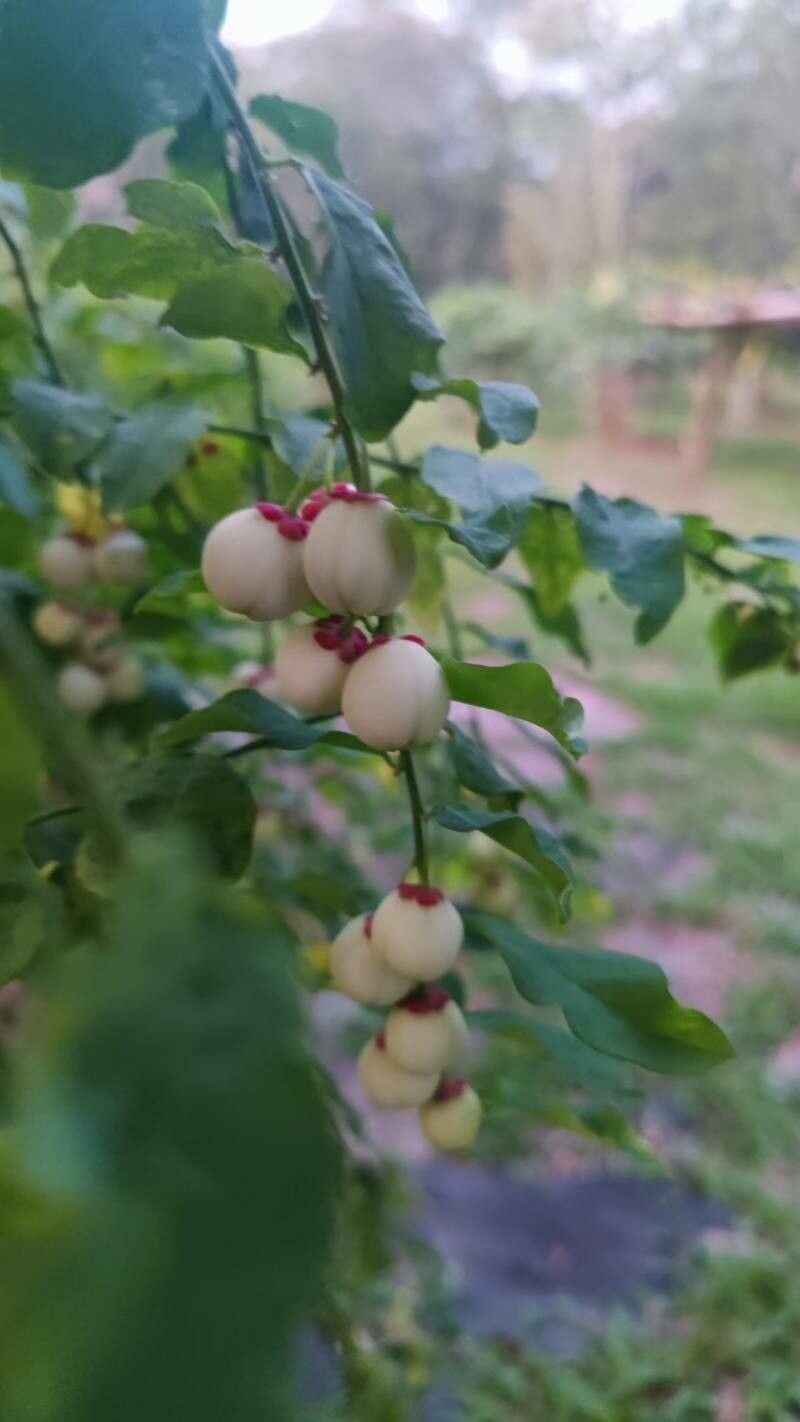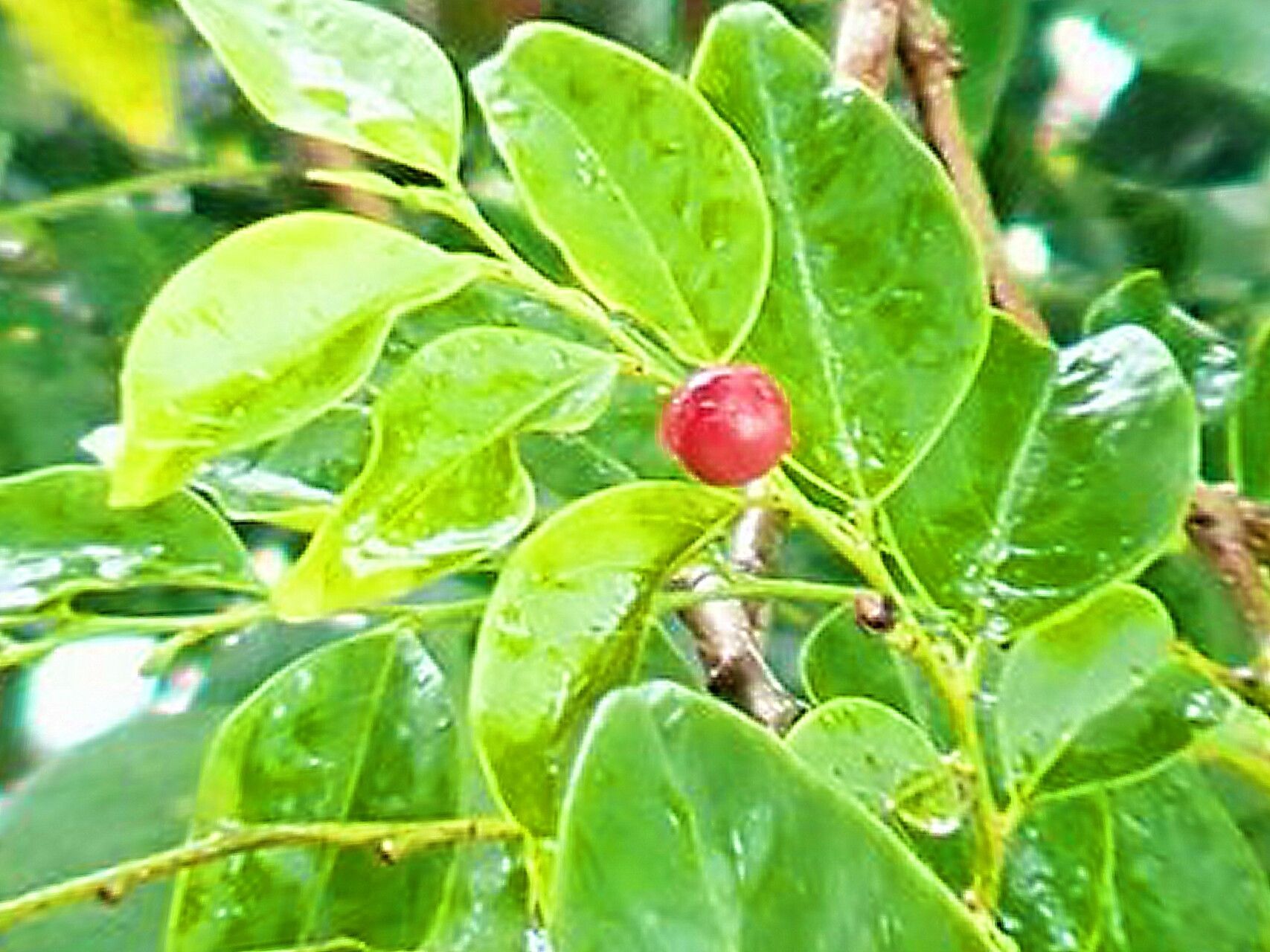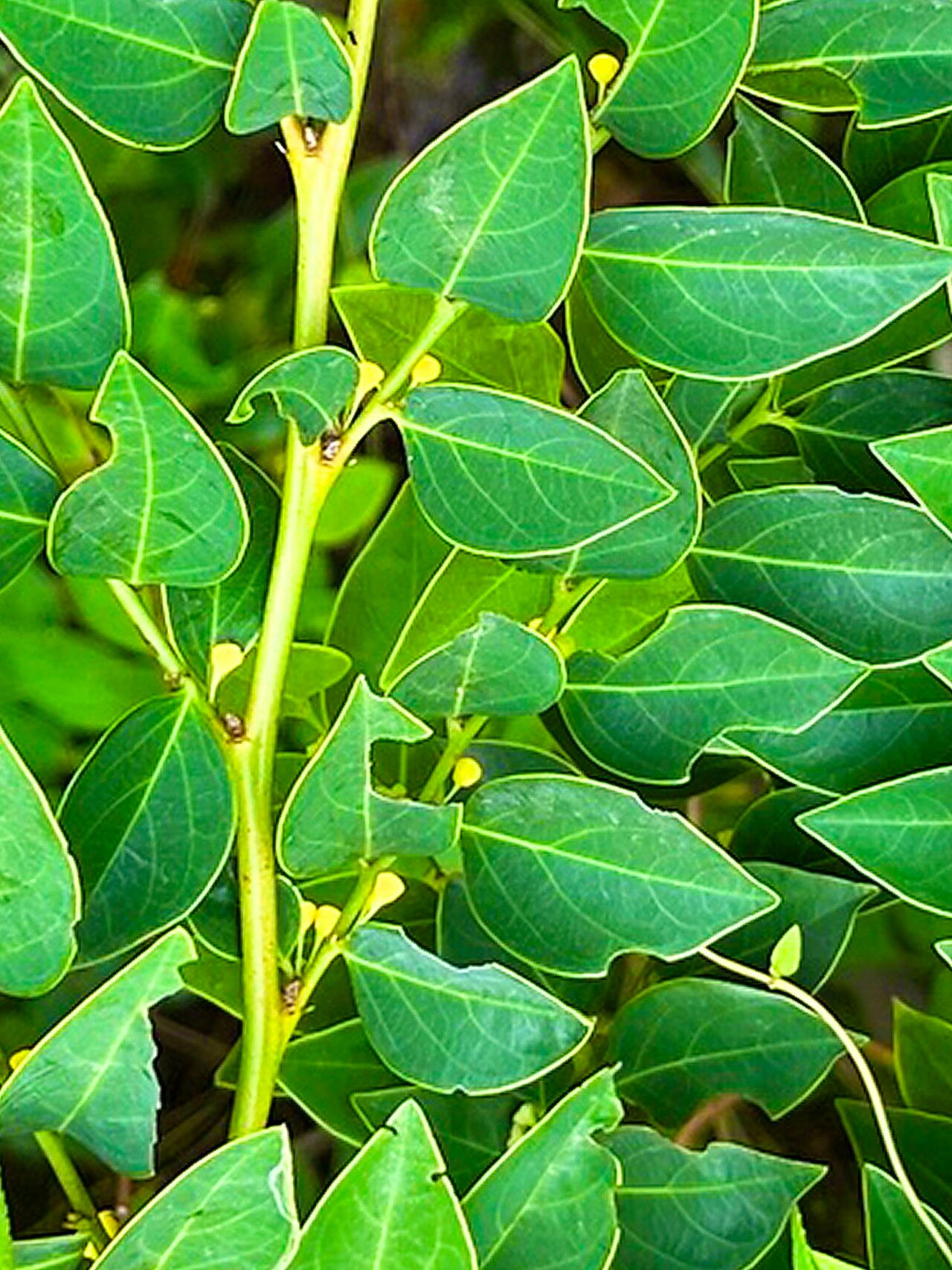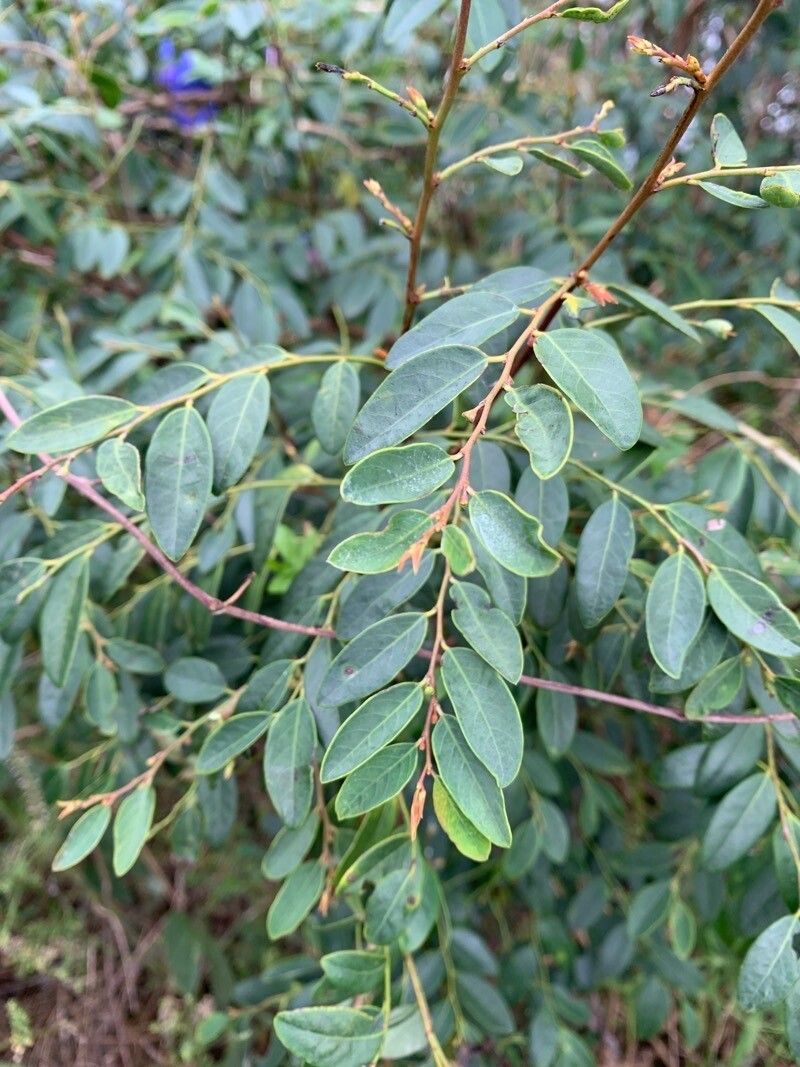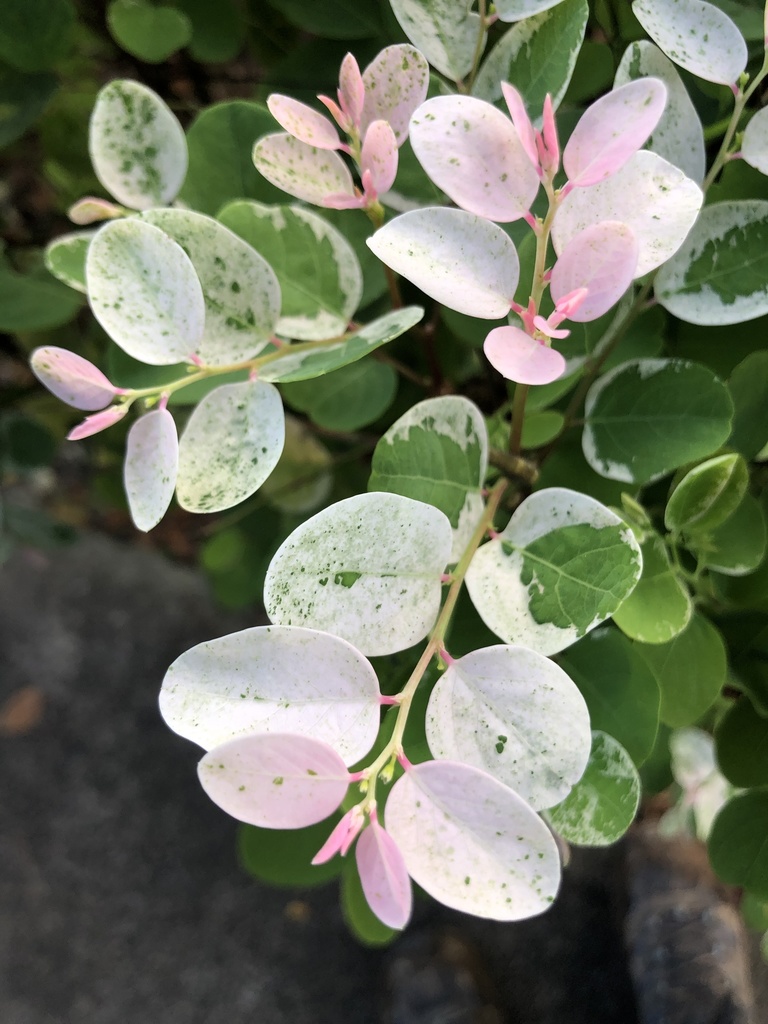
Breynia disticha, commonly known as Snowbush or Hawaiian Snowbush, is a tropical evergreen shrub belonging to the Phyllanthaceae family. Native to Southeast Asia and the Pacific Islands, it is widely cultivated as an ornamental plant in tropical and subtropical regions worldwide.
This shrub typically has a compact growth habit, with slender stems reaching heights of 3 to 6 feet. Its small, oval-shaped leaves are arranged in pairs along the stem and feature pointed tips. The foliage of Breynia disticha varies in color, ranging from green to pinkish-red or variegated shades of green and white.
Although the Snowbush produces small, inconspicuous flowers, they add an interesting texture to its foliage. These flowers appear on short spikes at the base of the leaves throughout the summer.
Breynia disticha serves as a host plant for the breynia caterpillar, also known as the snowbush spanworm. This caterpillar eventually transforms into the white-tipped black moth. Unlike most moths that are active at night, this particular moth is active during the day. FUN FACT · FROM THE LIBRARY
Breynia disticha prefers well-drained soil and regular watering, although it can tolerate periods of drought once established. It thrives best in partial shade or filtered sunlight but can also grow under full sun exposure if provided with adequate moisture.
Snowbushes are popular ornamental plants used in landscaping due to their attractive foliage, which adds a splash of color to gardens and indoor spaces such as offices and homes. They also make excellent container plants for patios, balconies, and decks. Their compact size and ease of maintenance make them ideal houseplants for beginners.
Snowbush, also known as Foliage-flower or Leaf-flower, is a popular plant within the species Breynia disticha. It is renowned for its striking and beautiful foliage. As the leaves and stems age, their colors gradually transform into soft shades of pastel pink and white, giving the shrub a snow-covered appearance. The foliage can display a variety of colors, creating the illusion of flowers, which is why it is often referred to as a foliage-flower or leaf-flower.
Snowbush has strong disease resistance and is generally not susceptible to illnesses. As for care, this plant is fairly low-maintenance. When grown outdoors it needs minimal watering, and larger specimens typically do not require pruning. Smaller plants, however, should be pruned after they have finished blooming. Snowbush is suitable for anyone with outdoor space, such as a garden or a deck, and does not demand much gardening experience.
How to keep Breynia Disticha.
Light
Snowbush does best with ample light throughout the day, though it can tolerate periods of reduced light. Coming from open environments, sun exposure supports healthy development and growth. Both excessive sunlight and insufficient light can impair its prolific growth and the vibrancy of its leaves.
Water
Snowbush, native to the humid Pacific Islands, thrives in consistently moist conditions without being waterlogged. To support its evergreen foliage, water it weekly. Indoors, where humidity levels can fluctuate, it's important to maintain regular hydration to ensure lush growth all year round.
Temperature
Snowbush is native to climates with warm temperatures, requiring a range of 68 to 100 °F (20 to 38 °C). It flourishes when temperatures do not vary dramatically, with steady warmth being optimal. Seasonally it can tolerate mild chill; however, adjustments should be considered if the temperature drops too low.
Fertilizer
The best time to fertilize a Snowbush is in early spring, as it breaks dormancy. This stimulates overall growth and supports flower development. Fertilizing improves foliage, stems, and branches, and encourages flowers that are large, vivid, and long-lasting. It also helps transport nutrients from the roots to the blooms and strengthens the plant's health and resistance to disease.
Pruning
The Snowbush, known for its variegated foliage, requires regular pruning during its dormant period, which is from early to late winter. Concentrate on removing any dead or overgrown branches to improve its shape and growth. This will also enhance air circulation and encourage its vibrant appearance. Be sure to use sharp, clean tools to avoid causing any damage to the plant.
Pot & Repot
Repot your snowbush every 2 to 3 years, preferably in the spring. Use a container that is 2 to 3 inches larger in diameter than the current one. After repotting, place the plant in bright, indirect light and keep the soil evenly moist to encourage recovery and promote healthy growth.
Botanical profile.
- Plant Type
- Shrub
- Life Cycle
- Perennial
- Genus
- Breynia
- Family
- Phyllanthaceae
- Hardiness Zone
- 9-11
- Mature Height
- 1.22 m to 2.44 m
- Mature Spread
- 0.91 m to 1.22 m
- Leaf Color
- Red, Variegated, Green, Pink, Purple
- Leaf Type
- Evergreen
- Flower Color
- White, Pink
- Flower Size
- 2.54 cm
- Bloom Time
- Late spring, Early summer, Mid summer
- Planting Time
- Spring, Autumn
- Harvest Time
- Summer
- Native Area
- Vanuatu
Other names.
Reader questions.
How should I water my Snowbush plant?
Your Snowbush is not picky about how you water it. You can use any common watering tool, like watering cans, hoses, or even cups. Make sure to water directly on the soil and evenly moisten all areas to ensure the entire root system gets enough water. It's best to use filtered water to avoid harmful particles, and water that is at or slightly above room temperature to prevent shocking the Snowbush. However, the Snowbush generally responds well to any type of water.
Why should I put plant food on my Snowbush?
Snowbush requires regular fertilization because its showy leaves need a lot of energy to grow and stay healthy. However, the challenge is that Snowbush also needs energy to support the growth of its stems, branches, roots, and other important structures. If you don't fertilize, two things are likely to happen. First, the leaves will lose their color and texture, making the plant look unhealthy and unattractive. Second, the overall growth of the Snowbush will slow down, and the weak growth could easily break.
What are the sunlight requirements for Snowbush plants?
Snowbush plants thrive under conditions of full sun, which means they require more than 6 hours of sunlight daily, but they can also tolerate partial sun, amounting to about 3-6 hours of sunlight. It's essential to observe how sunlight moves through your garden to find the ideal spots that offer a perfect balance of light and shade, ensuring the plants'well-being. This careful placement supports their healthy development and growth, contributing to their vibrant leaf colors and overall vigor.
What is the optimal climate for Snowbush?
Snowbush is native to warm climates and thrives in temperatures ranging from 68 to 100°F (20 to 38°C). It prefers consistent heat without drastic fluctuations. While it can tolerate mild chills seasonally, it is extremely heat-loving, and cold temperatures can harm the plant. Therefore, during autumn, it's recommended to bring outdoor-grown Snowbush indoors, placing it near a bright window but at a distance from heaters to ensure it maintains a temperature above 20°C during winter. Temperatures near 0°C are detrimental to the plant's health.
What do I do if I give my Snowbush plant too much water or too little water?
Outdoor plants, especially newly planted ones or seedlings, are susceptible to lack of watering. It's important to keep watering them consistently for a few months while they're small or recently planted. As the roots become established, Snowbush can rely on rain most of the time. When Snowbush is planted in pots, overwatering is more likely. If you accidentally overwater your Snowbush, take immediate steps to fix the situation. Stop watering the plant to minimize the impact of overwatering. Remove the Snowbush from its pot to check the roots. If there's no root rot, you can put the plant back in the pot. Trim any affected roots and consider using a fungicide. Repot the Snowbush in well-draining soil. If you underwater the Snowbush, increase the frequency of watering. The leaves will droop, dry out, and fall off, but they'll recover once given sufficient water. Adjust your watering schedule promptly when underwatering occurs.
When should I fertilize my Snowbush to get the best results?
Snowbush plants can benefit from occasional feedings, so there is no need to establish a regular feeding schedule when planting them. One simple way to fertilize your Snowbush is to apply fertilizer whenever you water it sporadically. Additionally, during the growing season, your Snowbush will require an adequate amount of water. You can feed the plant once every two to three weeks, consistently throughout the period when it is producing new growth.
How does artificial lighting benefit indoor Snowbush plants, and what are the recommendations for its use?
Indoor Snowbush plants require adequate lighting for optimal growth, especially when natural sunlight is insufficient, such as in winter or in less sunny indoor locations. Artificial lighting, like LED lights, serves as an essential solution for these conditions. These lights can be customized to provide the specific wavelengths needed by the plants, supporting their faster and healthier growth. Recommendations include using 30-50W/sq ft of artificial light for full sun plants, 20-30W/sq ft for partial sun plants, and 10-20W/sq ft for full shade plants. The light source should be placed 12-36 inches above the plant and kept on for 8-12 hours per day to mimic the natural daylight hours.
How does low temperature affect Snowbush and what are the solutions?
Snowbush is not tolerant of low temperatures and shows optimal growth when the temperature is above 20°C. In winter, the temperature should be kept above 0°C to avoid damage. Exposure to temperatures below -5°C may cause the leaves to lighten in color and, following frost damage, turn brown or black while the plant may exhibit wilting and drooping. The solution involves trimming off the frost-damaged parts and moving the plant indoors to a warm environment for protection against cold. It should be placed near a south-facing window for ample sunlight, ensuring it's not near heaters or air conditioning vents to avoid air dryness.
How frequently should I water my Snowbush?
For most outdoor plants, normal rainfall is sufficient for growth. However, if your area lacks rainfall, you'll need to water your plants every 2 weeks during spring and fall. In summer, you'll need to water them more frequently, while in winter, when growth is slower, water sparingly or not at all. If your Snowbush is young or newly planted, it needs more frequent watering to help it establish and grow. In the case of potted plants like Snowbush, there are two main approaches to determining watering frequency. One option is to follow a predetermined schedule, such as watering once a week or once every other week. However, this method may not consider the specific conditions of your Snowbush's environment. Another option is to assess soil moisture and water accordingly. Wait until the top two to four inches of soil have completely dried out before watering again. Keep in mind that during summer, the plant's water needs are highest, so the predetermined schedule may not be sufficient.
When is it not a good time to fertilize my Snowbush plant?
For most of the year, it's okay to fertilize your Snowbush regularly. This is especially true during the growing season of spring, summer, and early fall. However, it's important to avoid fertilizing this plant during the winter. During this time, the Snowbush enters a dormant growth phase where it either doesn't grow at all or only grows a little bit. Because of this lack of active growth, the plant uses less energy overall and doesn't require fertilization.
What are the primary symptoms of light deficiency in Snowbush plants?
Light deficiency in Snowbush plants can lead to several noticeable symptoms, including smaller new leaves, leggy or sparse growth, faster leaf drop, slower or no new growth, lighter-colored new leaves, chlorosis (leaves losing their green color and turning yellow), sunscald (damage from intense sunlight exposure), leaf curling, wilting, and leaf scorching. These symptoms indicate a plant struggling with inadequate sunlight, affecting its ability to photosynthesize, maintain its structural integrity, and overall health.
How does high temperature affect Snowbush and what are the solutions?
During summer, it is crucial to keep the Snowbush below 38°C as temperatures exceeding 43°C can lighten the color of the leaves and increase susceptibility to sunburn. To address this, trim away sunburned and dried-up parts and move the plant to a shaded location during the midday and afternoon sun. It's also beneficial to water the plant in the morning and evening to maintain soil moisture.