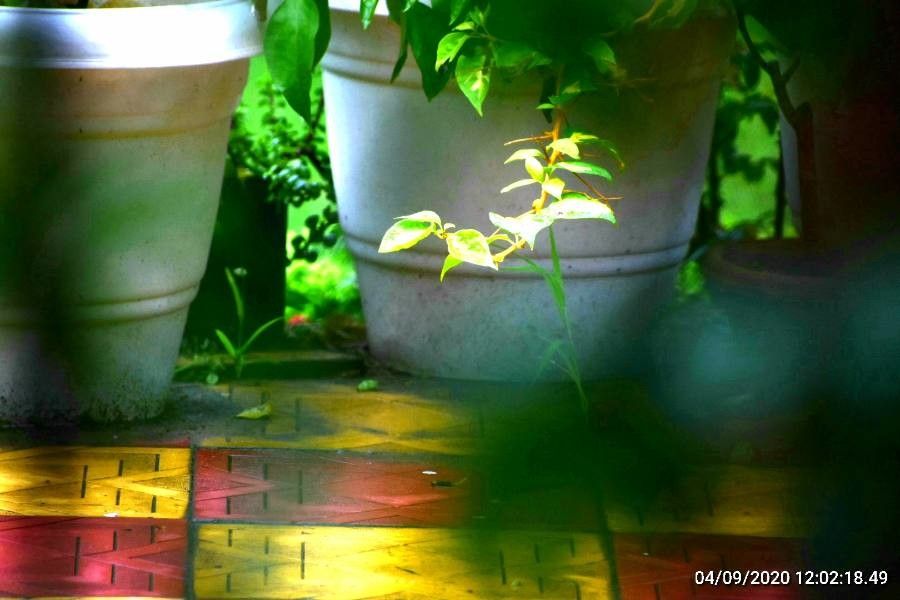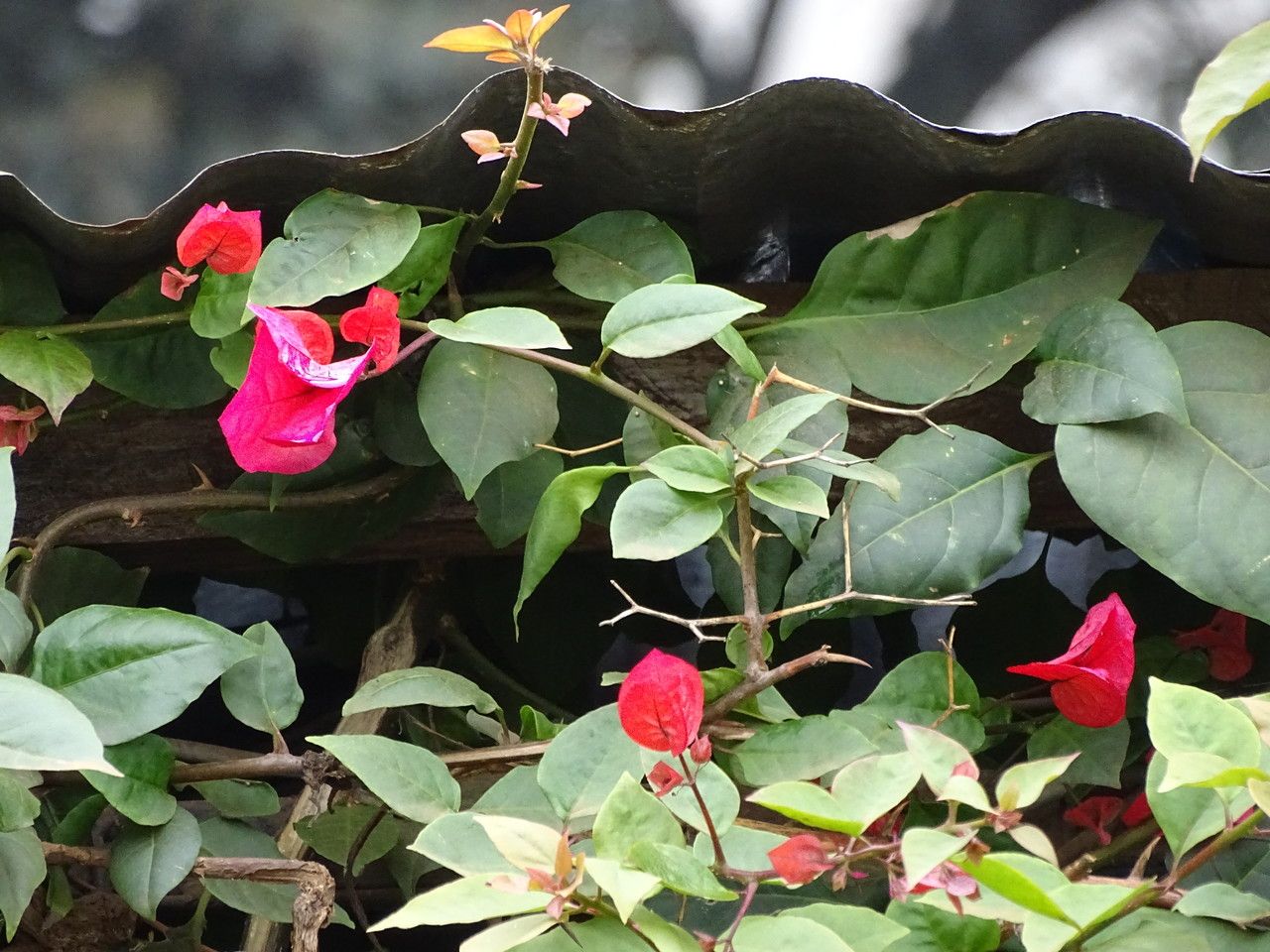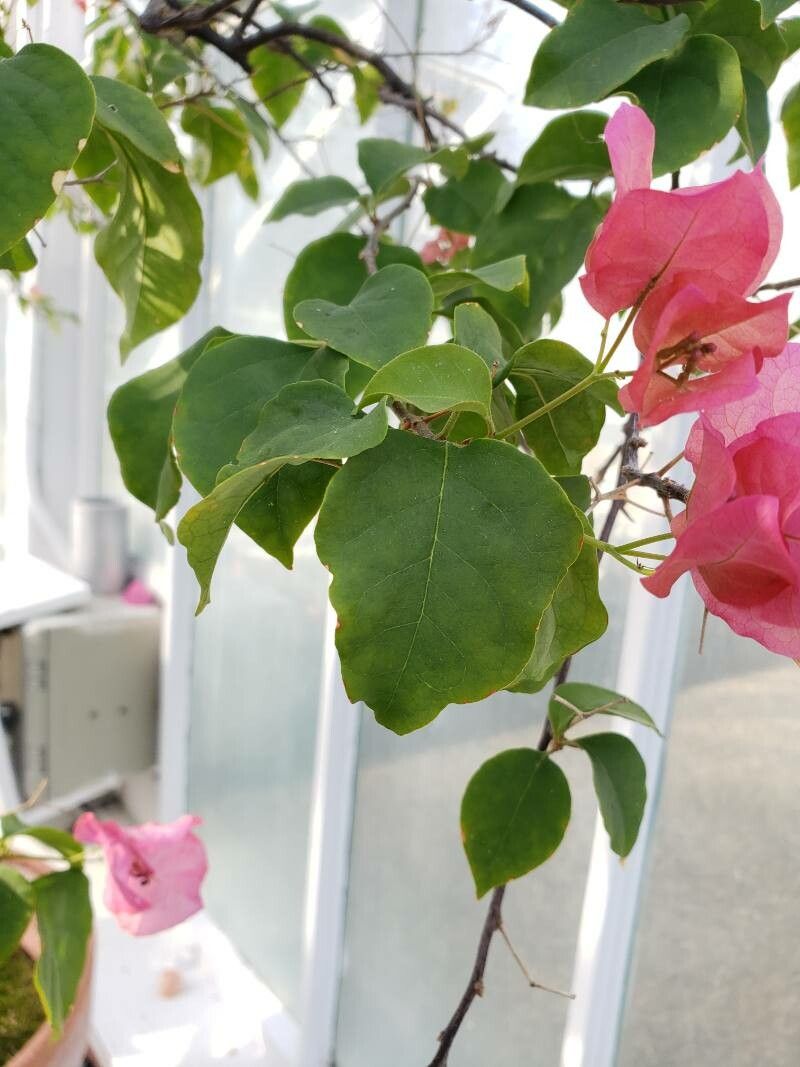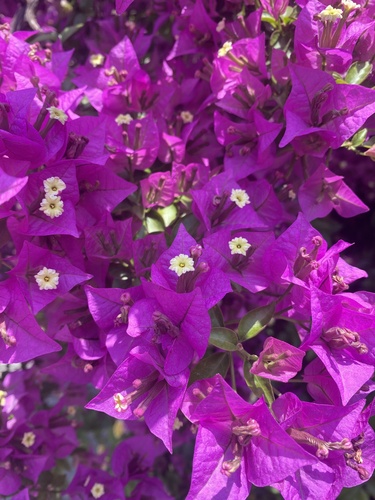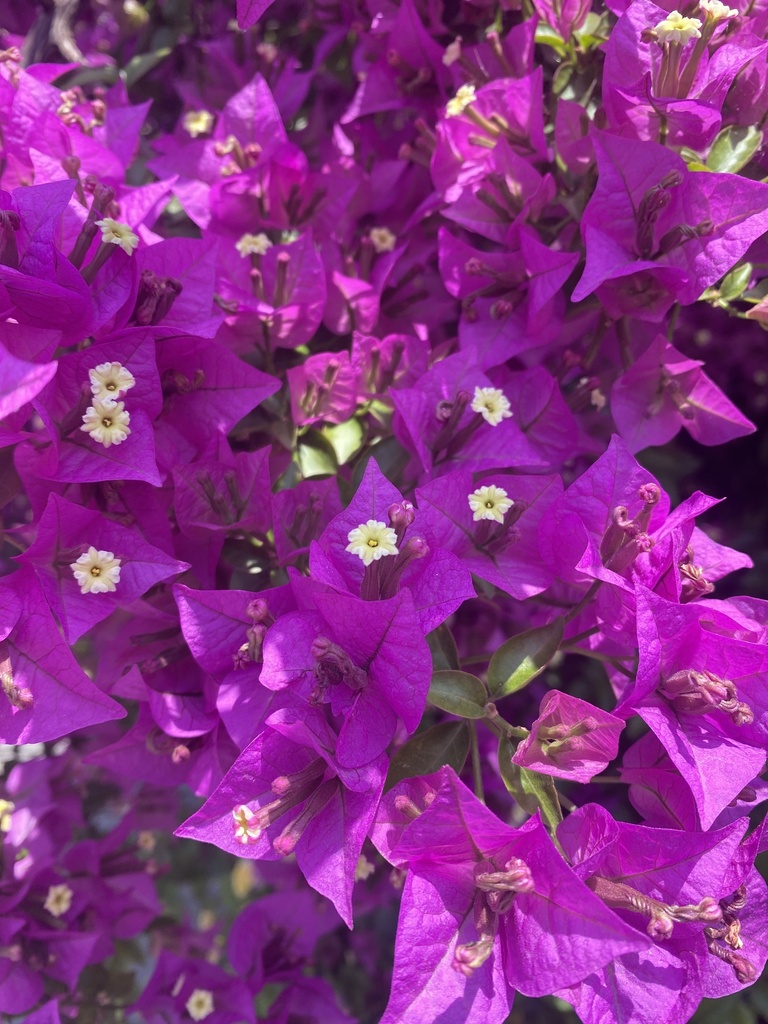
Bougainvillea glabra is a flowering plant native to South America, now widely cultivated in tropical and subtropical regions worldwide. This woody vine can grow up to 30 feet in length and produces vibrant, papery flowers in shades of pink, purple, red, orange, or white. It features thorny branches and leaves that are either green or variegated with white or yellow markings.
Bougainvillea glabra thrives in full sun and well-drained soil. Although it is drought-tolerant once established, regular watering during the growing season is necessary for optimal growth. The plant can be propagated through stem cuttings or layering.
Besides its ornamental value as a garden plant or potted specimen for patios and balconies, Bougainvillea glabra possesses medicinal properties attributed to the anti-inflammatory compounds found in its leaves. Additionally, its flowers are used as natural dyes for textiles.
Paperflowers have distinct and unique flower patterns, making them excellent choices for bonsai plants. Their blossoms are typically a vibrant purplish-red, which adds a bright and dazzling touch to any setting. In Brazil, it is common for women to adorn their hair with these beautiful flowers. FUN FACT · FROM THE LIBRARY
Overall, Bougainvillea glabra is an attractive flowering vine that brings color and interest to any landscape. Its minimal care requirements make it an ideal choice for gardeners of all experience levels.
The Paperflower is aptly named because it resembles an artificial flower. Its small white blossoms are surrounded by vibrant, paper-like bracts, giving the plant a unique texture and appearance. This distinctive characteristic is why it is known as the paperflower.
Paperflower is fairly disease-resistant and typically not vulnerable to illnesses. Still, if grown in poor conditions it can become more prone to disease. It also encounters only a small number of insect pests. Carewise, this plant has moderate needs. It should receive ample sunlight; with inadequate light it can become more disease-prone and develop spindly growth. Because it is frequently kept indoors, it may need to be relocated to a bright spot on a regular basis. It does not need to be watered often. All in all, Paperflower is appropriate for most people, though it performs best with those who can provide strong light.
How to keep Bougainvillea Glabra.
Light
Paperflower does best in bright light. Because they come from habitats with high exposure to sunlight, they grow healthy and vibrant when given ample sun. They can, however, tolerate somewhat lower light levels. Too little or too much light can disrupt their growth.
Water
Paperflower is well-suited to arid environments due to its high drought tolerance. It should be watered every 1-2 weeks and prefers well-draining soil, which aids in its efficient water storage strategies. Best grown outdoors, paperflower is distinguished by its vibrant bracts and sprawling growth habit.
Humidity
This plant will thrive in moderate humidity, which is probably the level in your home. However, misting it a few times a week can be very beneficial. Make sure the room has good ventilation.
Temperature
The native growing environment for paperflower requires a preferred temperature range of 20 to 38℃ (68 to 100℉). In winter, temperatures should be adjusted to about 10 to 16℃ (50 to 61℉) to ensure proper growth.
Fertilizer
The best time to fertilize a Paperflower is in early spring as it breaks dormancy. This promotes overall growth and the development of flowers. Fertilizing improves the foliage, stems, and branches, and encourages flowers that are large, colorful, and long-lasting. It helps transport nutrients from the roots to the blooms and enhances the plant’s health and its resistance to disease.
Pruning
To ensure your paperflower thrives, it's important to prune it properly, preferably in early spring. Start by removing any dead stems to improve air circulation and shape the plant. Make sure to cut at healthy nodes. Regular pruning not only boosts flowering but also keeps the plant's growth attractive and prevents it from becoming unruly.
Pot & Repot
When repotting Paperflower, select a pot 1-2 inches (2.5–5.1 cm) larger with good drainage. Use a well-draining potting mix. Repot in spring or fall, making sure the root ball is positioned slightly lower than the rim of the flower pot. Water thoroughly after repotting and place in a warm spot with indirect sunlight.
Toxicity
Although your bougainvillea is generally thought to be benign, some components could be harmful to your health. The leaves are typically thought to be non-toxic. With some people, bougainvillea sap is known to produce skin issues resembling poison oak or poison ivy, and it may have negative side effects if consumed.
Further reading →
The toxicity and danger assessments provided are for reference only. We do not assure their accuracy, so it's crucial not to depend on them. Seek professional advice when necessary for accurate guidance.
Botanical profile.
- Plant Type
- Shrub, Vine
- Life Cycle
- Perennial
- Genus
- Bougainvillea
- Family
- Nyctaginaceae
- Hardiness Zone
- 9-11
- Mature Height
- 3.05 m to 4.88 m
- Mature Spread
- 0.91 m to 4.88 m
- Leaf Color
- Green
- Leaf Type
- Evergreen
- Flower Color
- Purple
- Flower Size
- 0.51 cm
- Bloom Time
- All year round
- Planting Time
- Spring, Autumn
- Harvest Time
- All year round
- Native Area
- Brazil, Peru
Other names.
Reader questions.
How should I water my Paperflower plant?
Your Paperflower is not very particular about how you water it. You have a variety of options for watering this plant, including watering cans, hoses, and even cups. Regardless of the watering tool you choose, it's best to water the plant directly onto the soil. Make sure to evenly moisten all areas of the soil to provide water to the entire root system. Using filtered water is advisable since tap water may contain harmful particles. It's also recommended to use water that is at or slightly above room temperature, as extremely cold or hot water can shock the Paperflower. However, the Paperflower generally responds well to any type of water you use.
Why is it important to put fertilizer on my Paperflower?
Fertilization plays a crucial role in promoting the overall health and well-being of a Paperflower. By providing the necessary energy and nutrients, it encourages the development of lush foliage as well as strong stems and branches. Additionally, fertilization is particularly beneficial for the flowers of a Paperflower, which are highly prized by gardeners. When properly fertilized, these flowers become larger, more vibrant, and longer-lasting. The reason for this lies in the ability of the right fertilizer to facilitate the transfer of fuel from the roots to the flowers, ensuring they receive proper nourishment. Moreover, adequate fertilization helps maintain the plant's overall health, thereby enhancing its ability to withstand diseases.
What are the sunlight requirements for Paperflower (Bougainvillea glabra)?
The Paperflower requires a significant amount of sunlight to thrive, doing best in conditions of full sun, which equates to over 6 hours of sunlight per day. It can also tolerate partial sun, meaning about 3-6 hours of sunlight daily. It's essential to observe the movement of sunlight through your garden to find spots that offer a balance of light and shade, ensuring your plants prosper. The Paperflower's natural habitat exposes it to abundant sunlight, enabling it to flourish when it receives plenty of light. However, it can survive in slightly less light as well, though too little or too much light can disrupt its growth.
What is the ideal temperature range for growing Paperflower?
The ideal temperature range for growing Paperflower (Bougainvillea glabra) is between 20 to 38°C (68 to 100°F). However, during the winter months, the plant should be adjusted to cooler temperatures of about 10 to 16°C (50 to 61°F) for proper growth. Paperflower is a heat-loving plant and is not tolerant of cold temperatures, requiring care to ensure it remains in conditions above 20°C, especially during winter. When temperatures approach 0°C, it becomes detrimental to the plant's health. Thus, in autumn, it's recommended to bring outdoor-grown Paperflower indoors, placing it near a bright window but away from direct heat sources to maintain optimal growth conditions.
What should I do if I give my Paperflower too much water or not enough water?
Outdoor plants, especially newly planted ones or seedlings, can be at risk of not being watered enough. It's important to remember to water them consistently for a few months when they are young or recently planted. Once the roots are established, Paperflower plants can rely on rain for most of their water needs. When Paperflower plants are in pots, overwatering is more likely to happen. If you accidentally overwater your Paperflower, it's important to take immediate action. Stop watering the plant right away to minimize the impact of the overwatering. Then, remove the Paperflower from its pot to check the roots. If there are no signs of root rot, you can return the plant to its container. However, if you notice any root rot, carefully trim away the affected roots and consider applying a fungicide to prevent further damage. Finally, repot the Paperflower in well-draining soil. On the other hand, underwatering is a simpler problem to fix. If you notice drooping, drying out, and falling off of leaves, it means the plant is underwatered. Simply water the plant more frequently, and you'll see the leaves regain their fullness quickly. Make sure to adjust your watering schedule as soon as you notice signs of underwatering.
When should I fertilize my Paperflower plant?
Fertilizing a Paperflower is most beneficial during early spring when it is coming out of dormancy and getting ready to bloom. This provides the plant with the energy it needs for growth and flower development. However, it is also helpful to fertilize again in the fall, although a smaller amount is sufficient. Some gardeners prefer to fertilize the Paperflower during planting, but it is not always necessary.
What solutions can I apply if my Paperflower does not receive sufficient sunlight?
For indoor Paperflowers, gradually move your plant to a sunnier location each week until it gets at least 6 hours of direct sunlight daily. Utilizing a south-facing window and keeping curtains open during the day maximizes sunlight exposure. In cases where the plant is large or not easily movable, consider supplementing with artificial light, such as keeping a desk or ceiling lamp on for at least 8 hours daily, or invest in professional plant grow lights. For outdoor plants, find the optimal sunlight spot and move your plants progressively to avoid sunburn. Reducing obstructions, such as pruning branches that block sunlight, and transplanting smaller plants during their dormant period to areas with better sunlight and drainage are recommended for plants grown in the ground.
How should Paperflower be cared for in low temperatures?
In low temperatures, Paperflower prefers to be kept in an environment above 20°C and must be protected from temperatures dropping below 0°C. If temperatures fall below -5°C, the leaves may lighten in color, and after frost damage, they can turn brown or black, exhibiting symptoms such as wilting and drooping. To care for Paperflower in low temperatures, trim off the frost-damaged parts and immediately relocate the plant to a warm indoor setting. Place it near a south-facing window to ensure it receives sufficient sunlight. It is also important to avoid placing the plant near heaters or air conditioning vents to prevent the air from becoming excessively dry.
How much water does my Paperflower need?
When it comes to watering outdoor plants, most of them can rely on rainfall to grow naturally. However, if your area doesn't get much rain, you'll need to water them every two weeks in spring and fall, and more often in summer. In winter, when plants need less water, you can water them less frequently or not at all. But if you have young or newly planted Paperflowers, you should water them more often to help them establish and grow into more adaptable and drought-tolerant plants. For potted Paperflowers, you have two options for determining how often to water them. One way is to follow a predetermined watering schedule, either once a week or once every other week. However, this may not always be the best approach as it doesn't consider the specific growing conditions of your Paperflowers. Another option is to water based on the moisture level of the soil. It's generally recommended to wait until the top two to four inches of soil, about ⅓ to ½ depth of the pots, have dried out completely before watering again. Keep in mind that during summer, when the plant's water needs are highest, a predetermined watering schedule may not be sufficient.
When should I not put fertilizer on my Paperflower plant?
During the winter, just like many other plants, you do not need to fertilize your Paperflower. This is because the plant goes into a dormant phase during this time and doesn't require much energy from the soil to grow. Fertilizing it during winter increases the chances of overfertilization, which can have negative effects. The best times to feed your Paperflower are in early spring and fall. This means that during most of the spring and summer, the plant does not need fertilizer. It's also a good idea to avoid feeding it if the plant is experiencing extremely hot or dry conditions.
What are the symptoms of insufficient sunlight for Paperflower?
Symptoms of insufficient sunlight in Paperflower include faster leaf drop, leggy or sparse growth, potential impacts on flowering and fruiting, and the development of lighter-colored or yellow (chlorotic) new leaves. Other signs include sunscald, which results in pale or necrotic areas on plant tissues, and leaf curling as a defense mechanism against excessive sunlight. Additionally, wilting can occur from overexposure, leading to increased water loss, and leaf scorching manifests as brown, dry edges on leaves due to excessive light. It's crucial to adjust the plant's light exposure to mitigate these symptoms.
What steps should be taken if Paperflower experiences high temperatures?
During summer, Paperflower should ideally be kept in temperatures below 38°C to prevent heat stress. If the temperature exceeds 43°C, the plant's leaves may become lighter in color and more susceptible to sunburn. In cases of high temperature exposure, trim away any sunburned or dried parts of the plant. Relocate the Paperflower to a shaded location, particularly shielding it from the midday and afternoon sun. Additionally, water the plant in the morning and evening to ensure the soil remains moist, which will help the plant to cope with the heat.