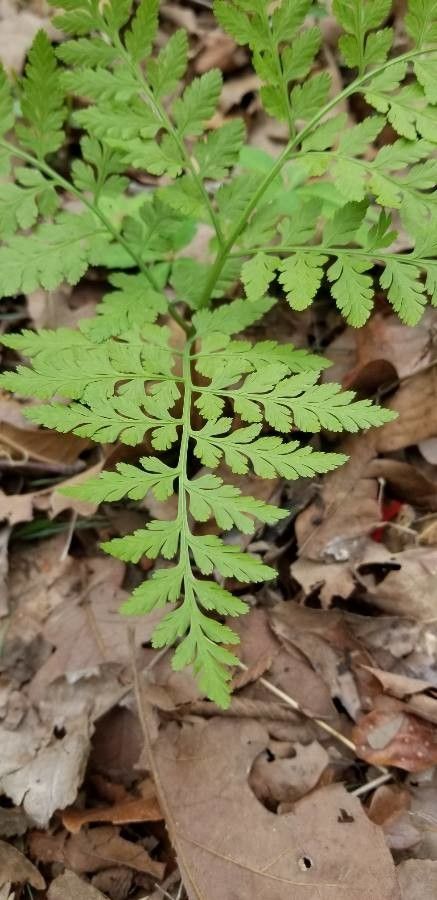
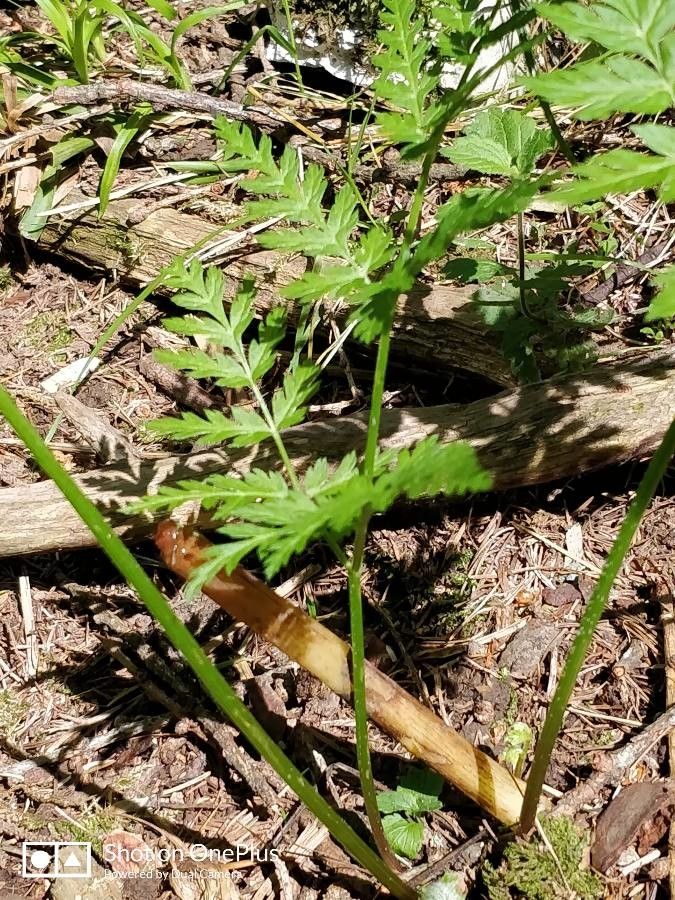
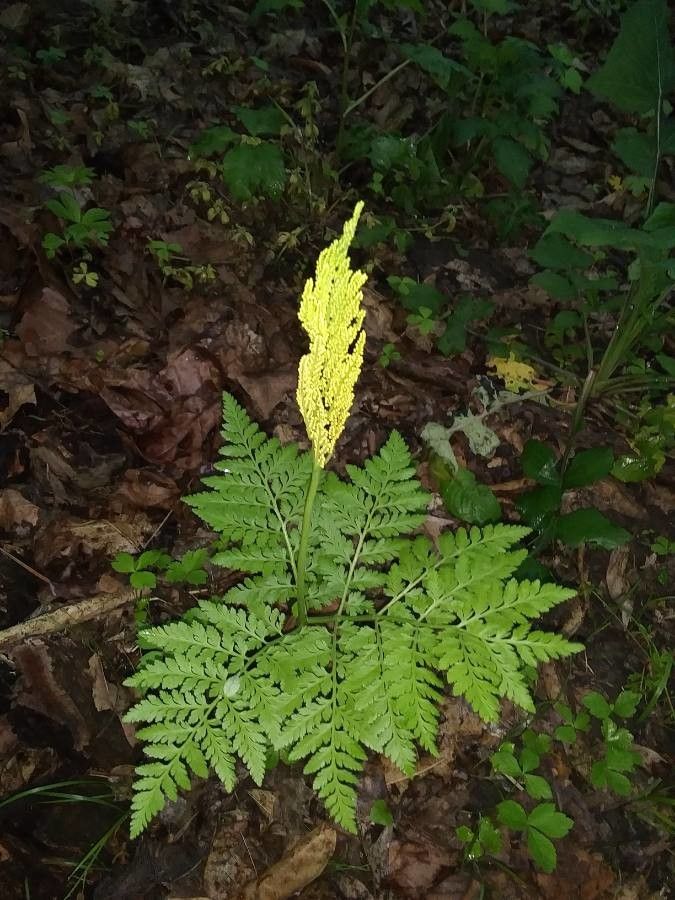
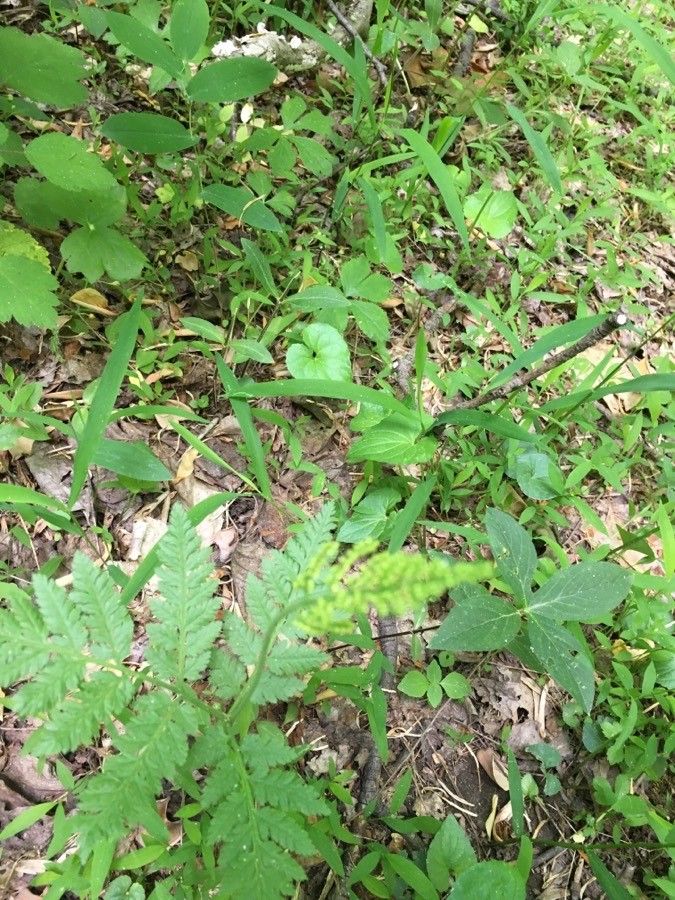
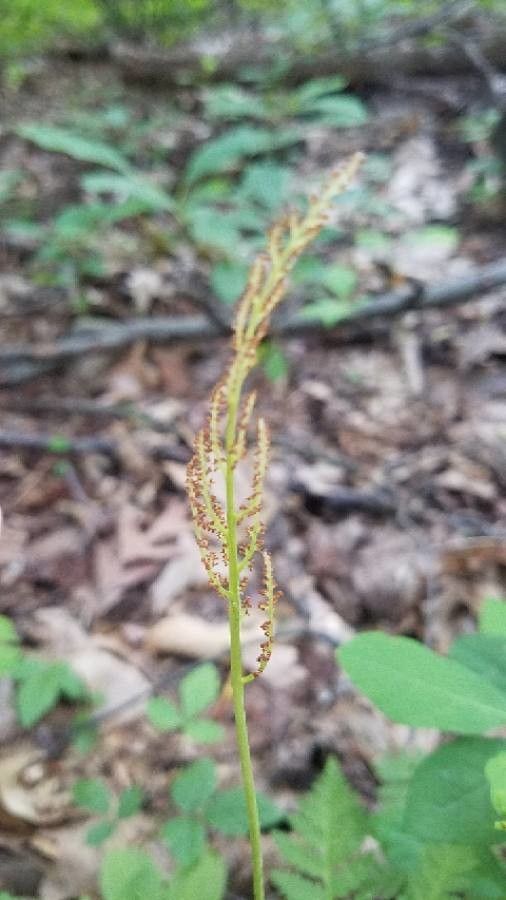
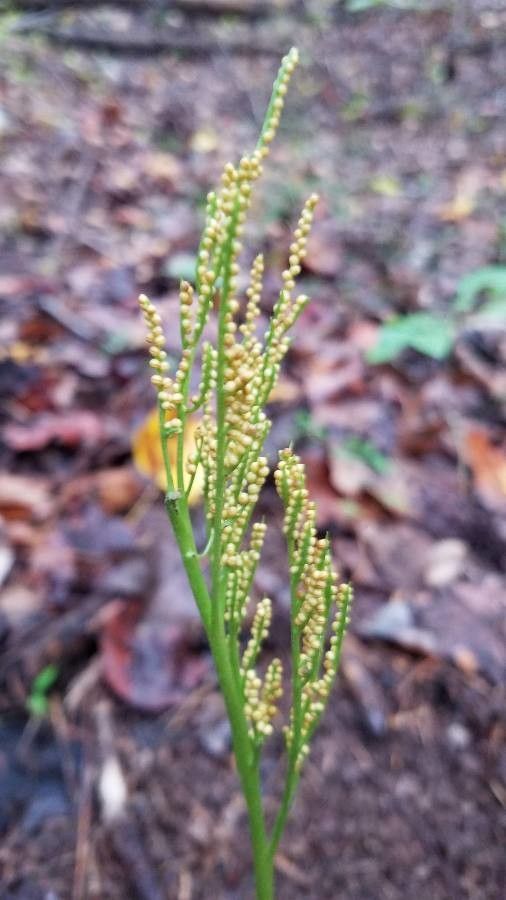
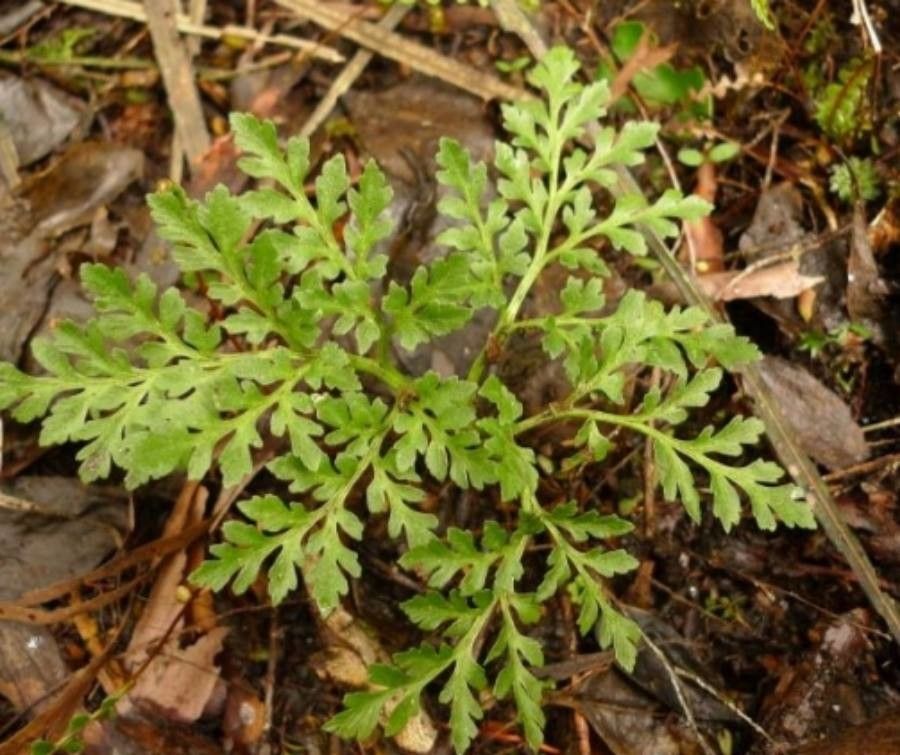
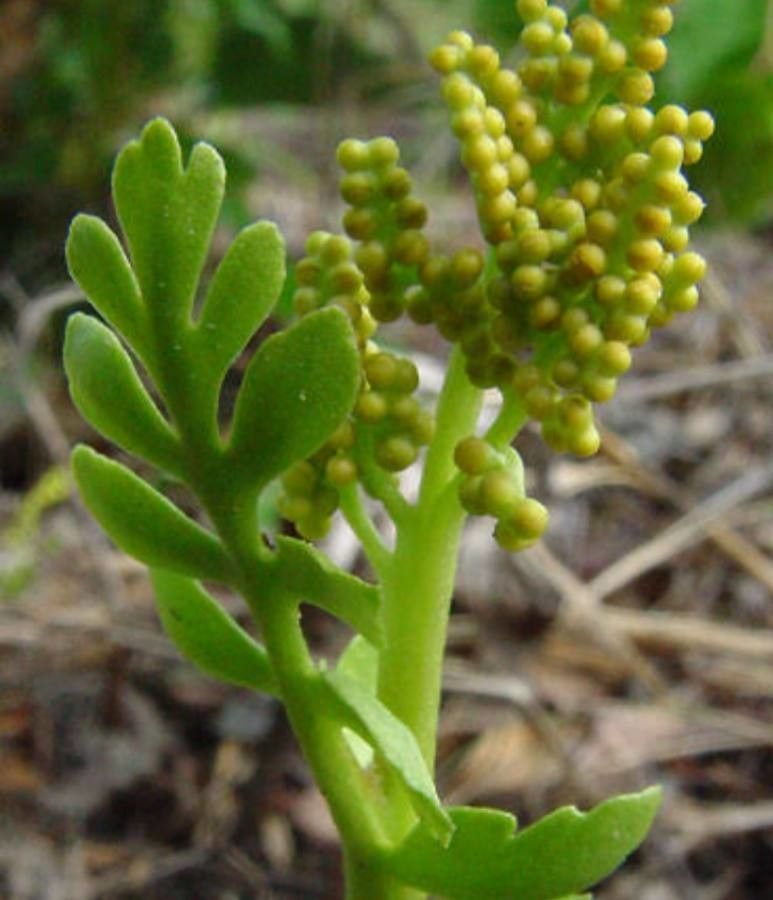
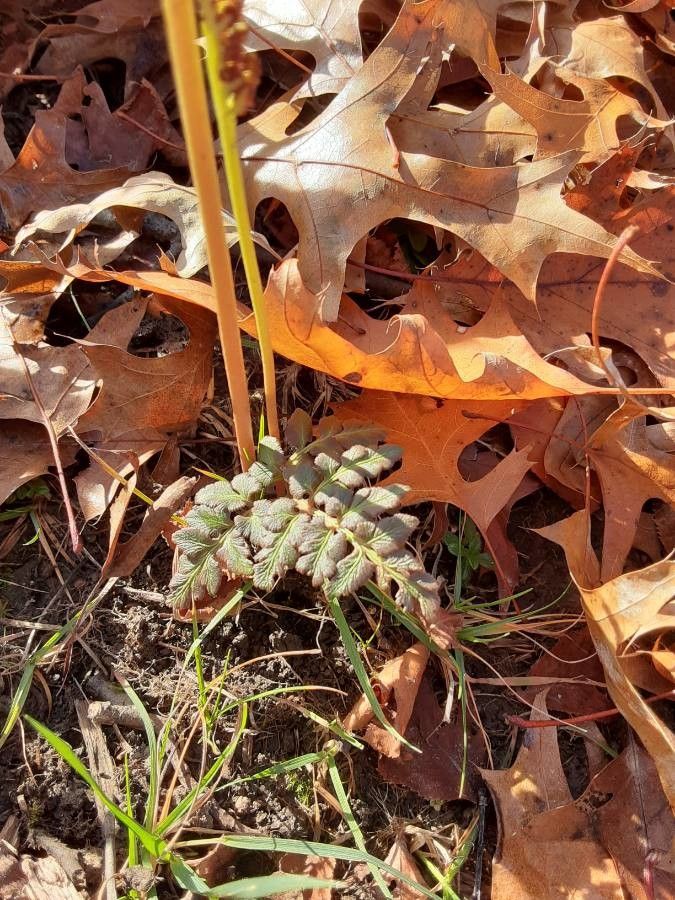
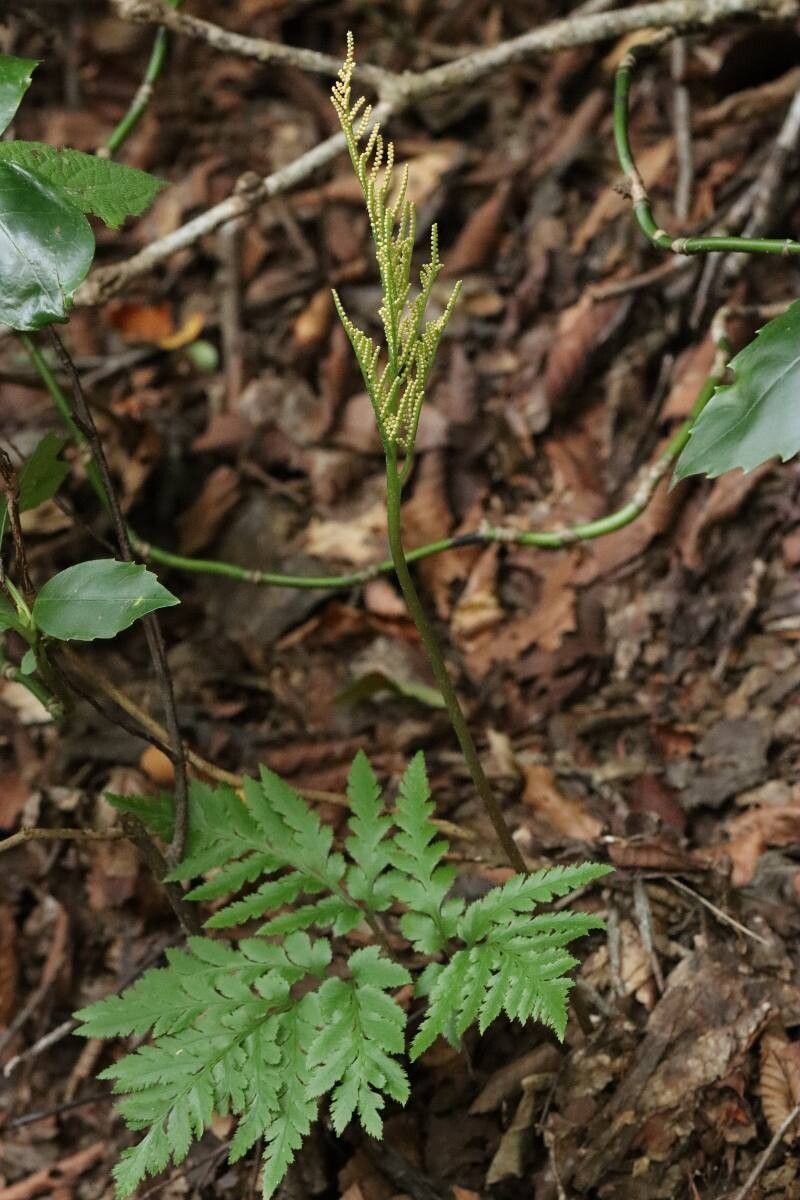
Botrychium virginianum, commonly known as the rattlesnake fern, is a species of fern native to North America. It belongs to the family Ophioglossaceae and thrives in a variety of habitats, including forests, meadows, and wetlands. The plant is notable for its unique fronds, which resemble a snake's tongue or a rattlesnake's tail. Typically, the fronds of the rattlesnake fern range from 10 to 30 cm in length and are divided into several segments, giving them their distinctive, snake-like appearance. The fern reproduces via spores, which are produced on separate, fertile fronds that emerge from the plant's base. Rattlesnake ferns prefer moist, well-drained soils and are commonly found in shaded areas such as under trees or along stream banks. They play a crucial role in their ecosystems by providing habitat for small animals, including insects and amphibians. Historically, Native American tribes utilized the rattlesnake fern for medicinal purposes, believing it had healing properties for various ailments, including snake bites, which is how it got its common name. Today, the fern is primarily appreciated as an ornamental plant due to its unique appearance. Overall, Botrychium virginianum is an intriguing species with distinctive features that make it stand out in its habitat. Its role in offering habitat for small animals underscores its importance in many ecosystems across North America.
Rattlesnake fern typically resists disease well and encounters relatively few insect pests. It is considered difficult to care for because it needs a consistently moist environment and frequent watering. However, its roots are susceptible to rot if overwatered or if the environment lacks proper ventilation. Rattlesnake fern is best suited to people with some growing experience, as most individuals can keep it alive for a certain amount of time. Nevertheless, it may struggle to thrive, and its leaves can dry out and become less healthy over time.
How to keep Botrychium Virginianum.
Light
Rattlesnake fern comes from habitats such as forest understories or rocky areas that provide natural shade. It prefers Full Shade but can tolerate Partial Sun.
Temperature
Rattlesnake fern does well in forest thickets. It is very sensitive to temperature and humidity, and high heat, dry conditions, and strong sunlight can all stress the plant. In summer it needs adequate shading and a humid environment. Generally it does not require special care in winter, but an extended winter drought can still be fatal.
Botanical profile.
- Plant Type
- Fern
- Life Cycle
- Perennial
- Genus
- Botrychium
- Family
- Ophioglossaceae
- Hardiness Zone
- 3-8
- Mature Height
- 15 cm to 46 cm
- Mature Spread
- 20 cm to 40 cm
- Leaf Color
- Dark Green
- Leaf Type
- Deciduous
- Planting Time
- Spring
Other names.