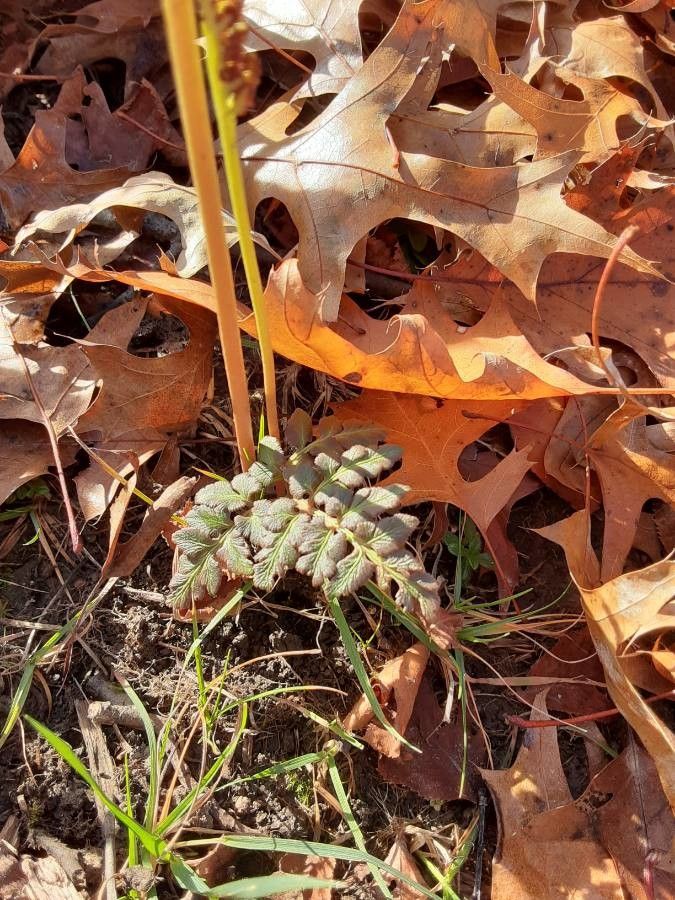
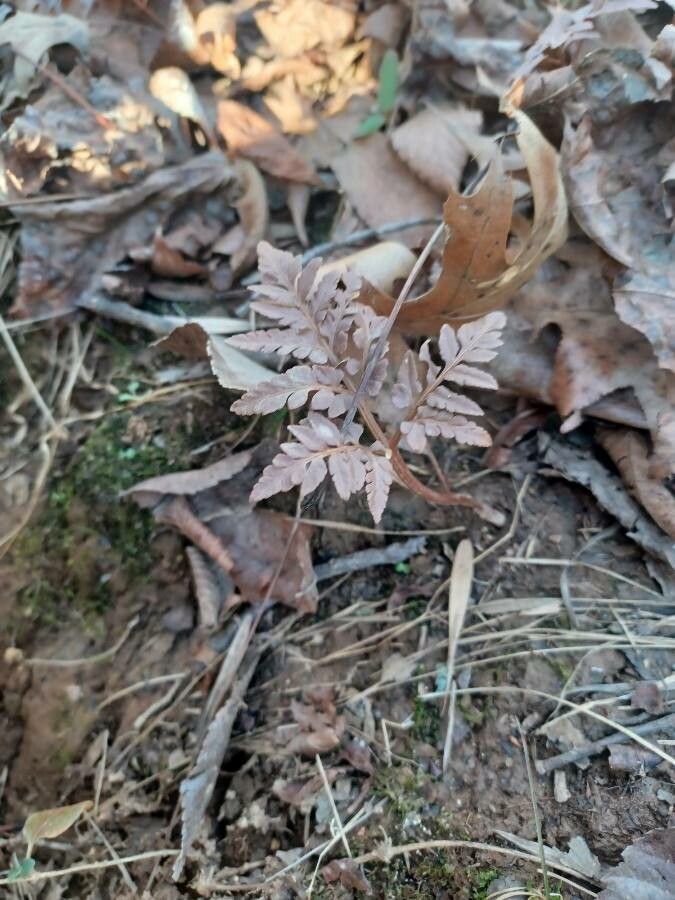
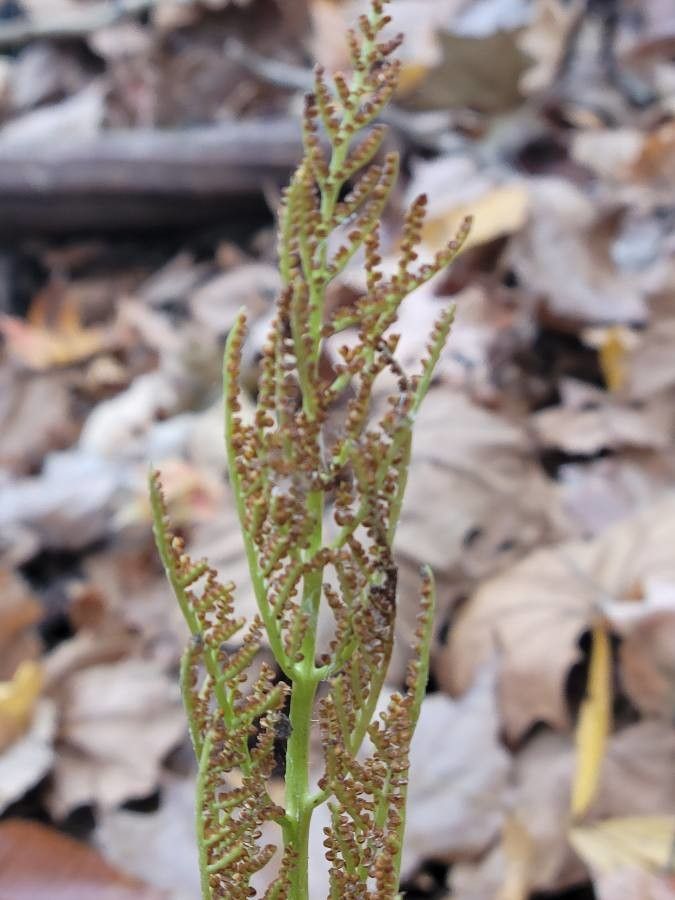
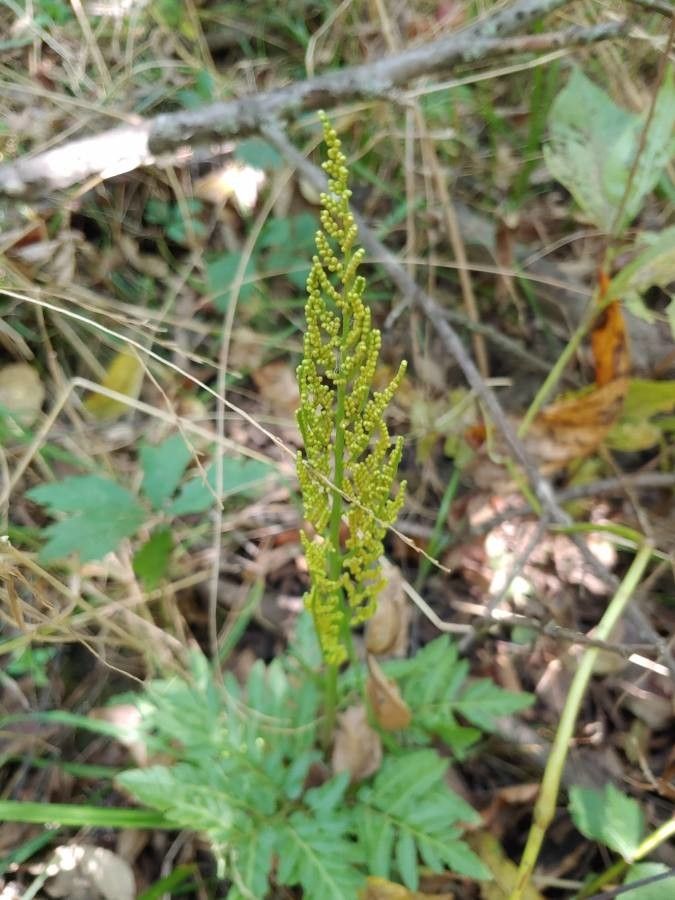
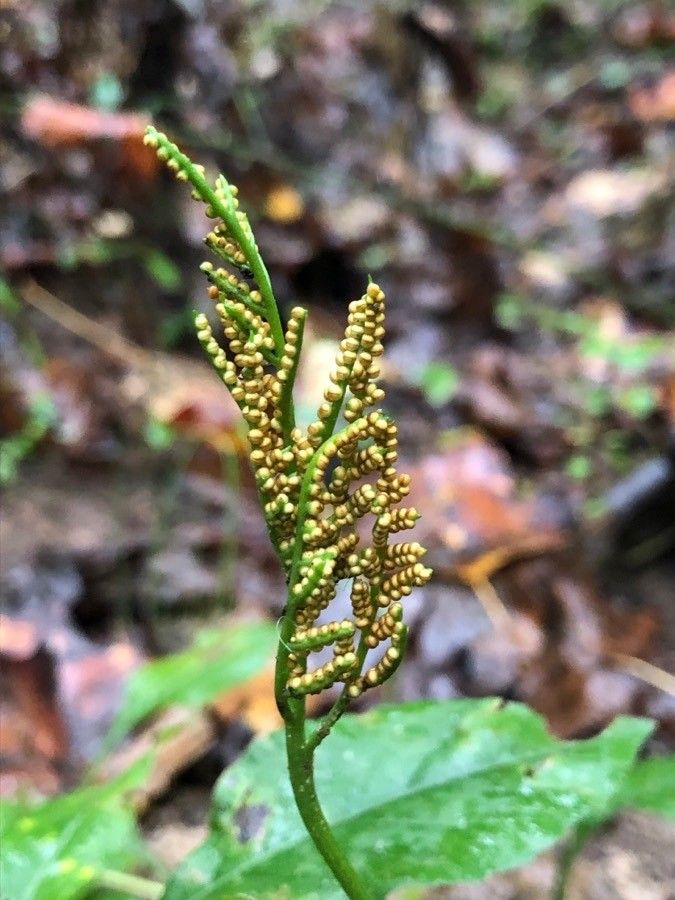
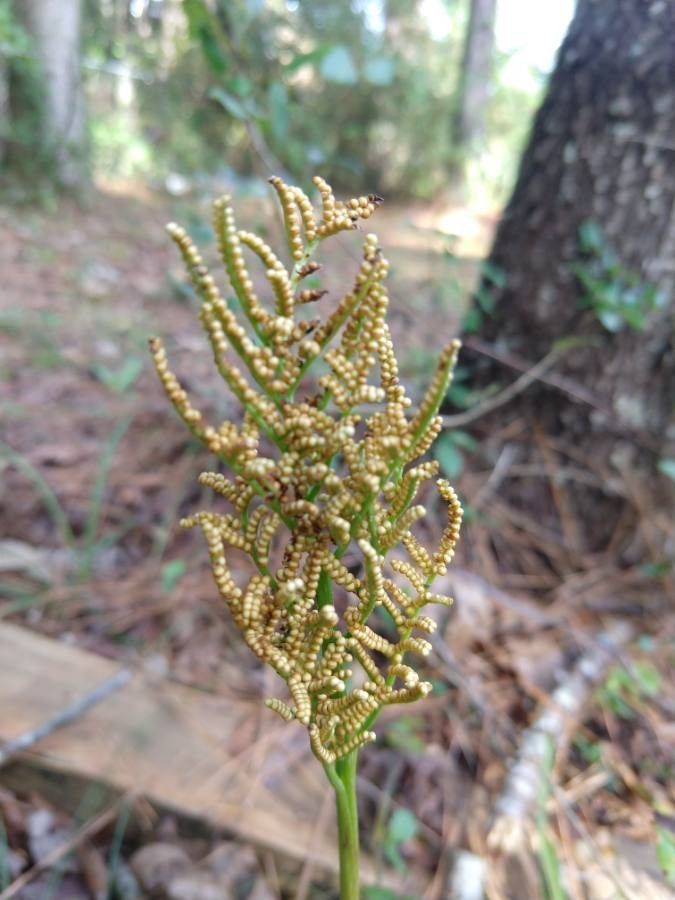
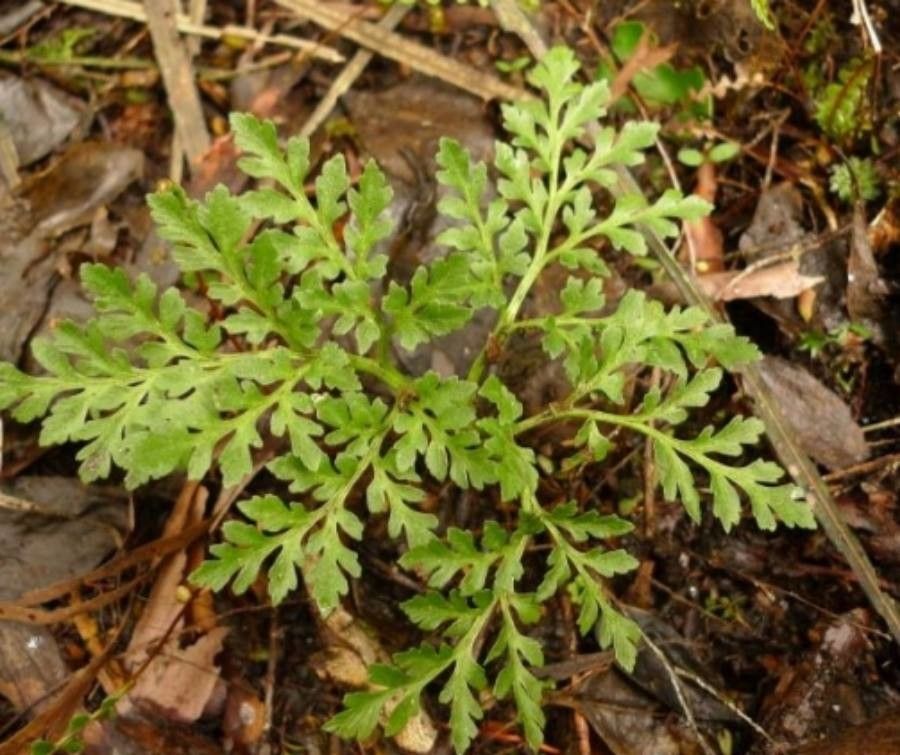
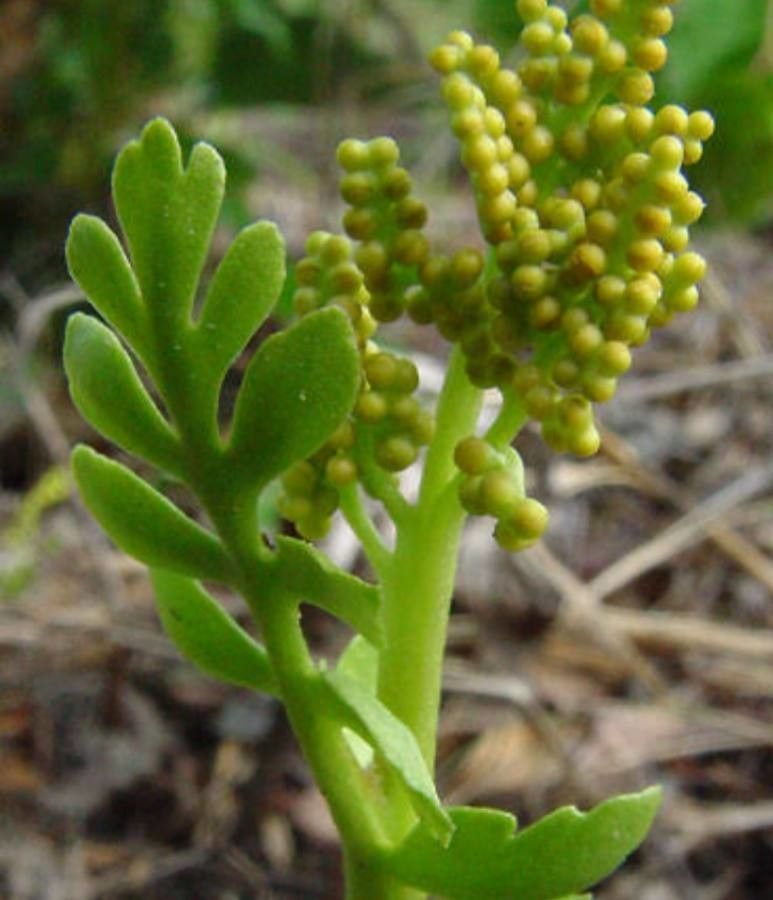
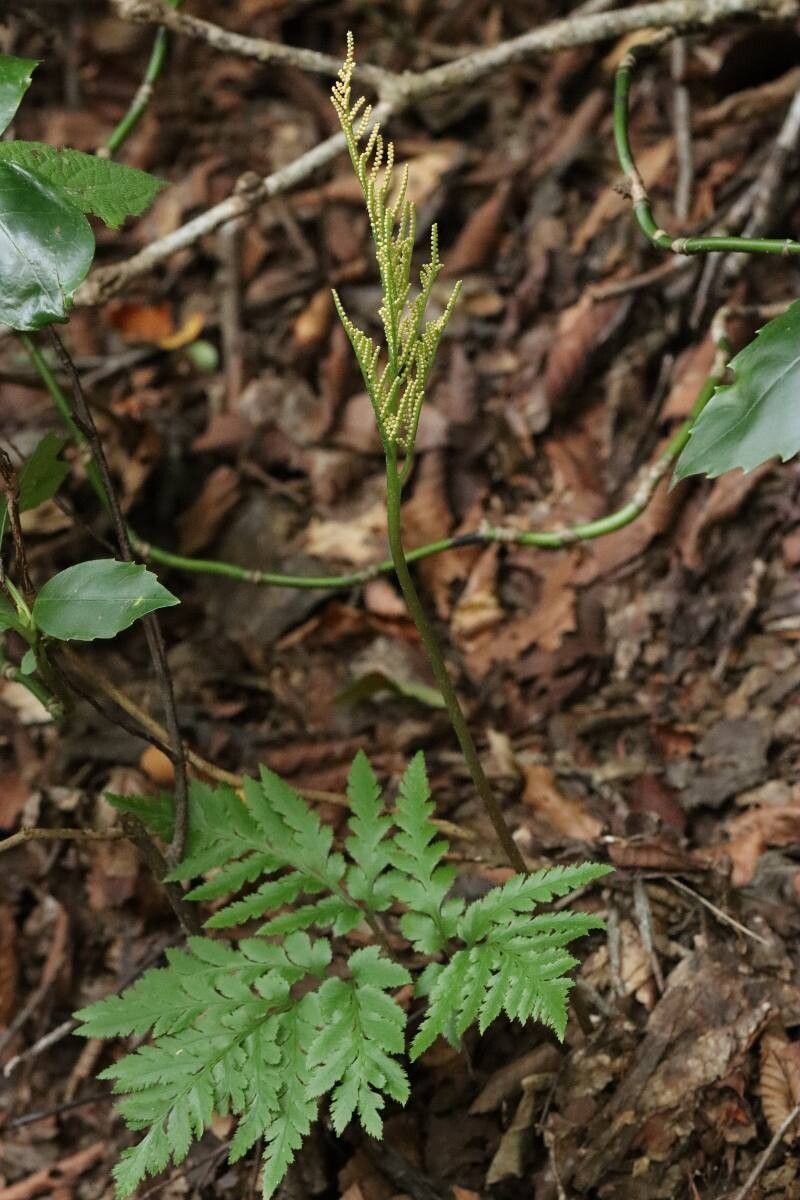
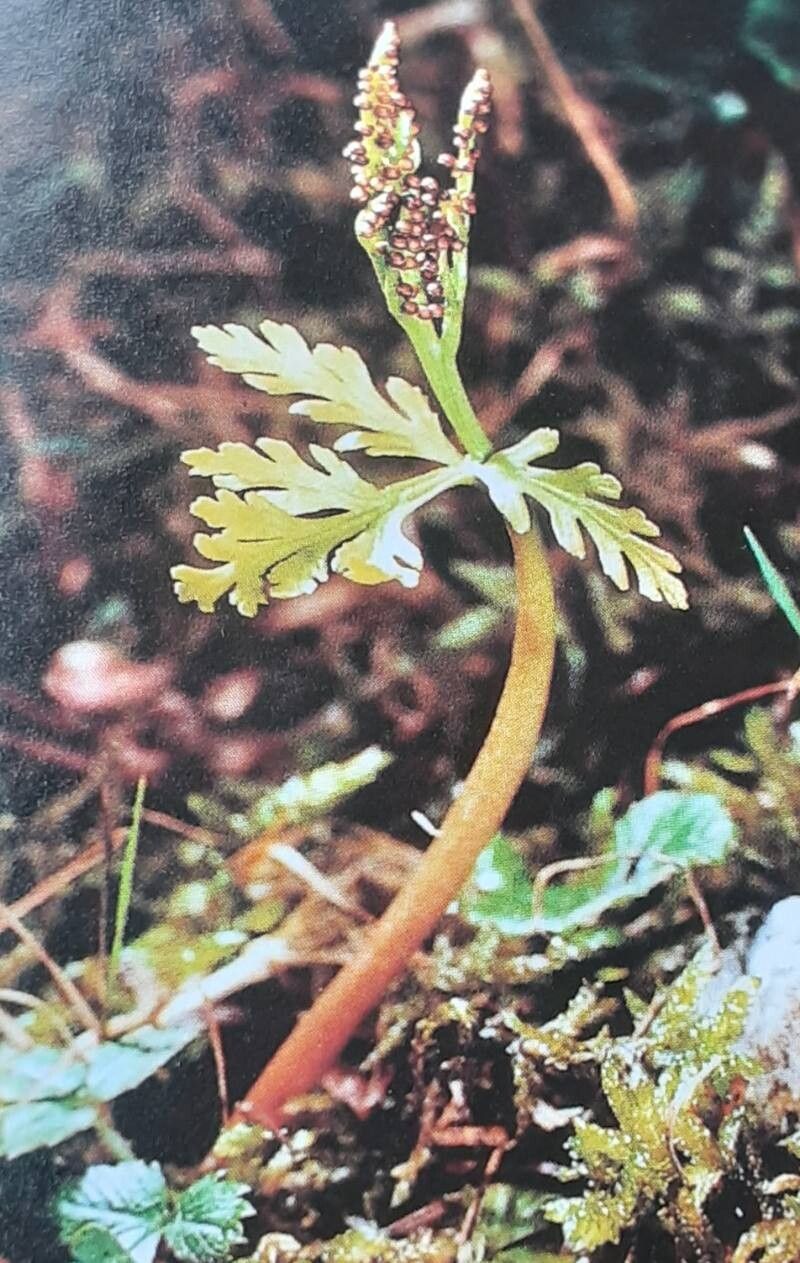
Botrychium dissectum, commonly known as the cut-leaved grape fern, is a species of fern belonging to the family Ophioglossaceae. Native to North America, this fern can be found in diverse habitats, including moist woods, meadows, and rocky slopes.
The plant features a distinctive appearance with its fronds growing in clusters from an underground rhizome. These fronds are typically 10-30 cm long and are intricately divided into several segments, which are further subdivided into smaller leaflets, giving the plant a delicate look.
The cut-leaved grape fern reproduces through spores that develop on the underside of its fronds. Historically, Native Americans have used this plant for medicinal purposes, such as treating fever and stomach ailments.
Due to habitat loss caused by human activities like logging and development, the cut-leaved grape fern is considered rare in some areas. As a result, conservation efforts are underway to protect this species from further decline.
Overall, Botrychium dissectum is a remarkable plant with unique characteristics that distinguish it from other ferns in North America.
Cut-Leaf Grape Fern is fairly disease-resistant and usually not prone to illnesses. That said, it can be vulnerable to pests and diseases present in its environment. These problems are typically mild. As for care, the plant requires moderate maintenance. It should be pruned regularly to keep a neat appearance and encourage healthy growth. Fertilizing can also help stimulate flowering. Cut-Leaf Grape Fern is well suited for anyone with outdoor space, such as a garden or patio, and does not demand extensive caregiving experience. It may need extra attention when grown indoors.
How to keep Botrychium Dissectum.
Light
Cut-Leaf Grape Fern grows best in places receiving a moderate amount of sunlight and can also survive in more shaded areas. Its natural growing habitat is usually in locations with dappled sunlight. Too much light or too little light can impede its growth and overall health.
Temperature
Cut-Leaf Grape Fern is native to environments where temperatures range from 32 to 95 °F (0 to 35 ℃). These locations are typically moderate in temperature. In colder or hotter seasons, make sure Cut-Leaf Grape Fern is not exposed to extreme temperatures for its health and growth.
Fertilizer
Usually one fertilizer application in spring is enough for Cut-Leaf Grape Fern, but repeated feedings can help maximize growth. Feed every month to six weeks. Fertilization improves the leaves' appearance and function, encouraging even color and a healthy texture. It also promotes root development and nutrient uptake for the plant's long-term health.
Botanical profile.
- Plant Type
- Herb
- Life Cycle
- Perennial
- Genus
- Botrychium
- Family
- Ophioglossaceae
- Hardiness Zone
- 3-9
- Mature Height
- 15 cm to 40 cm
- Mature Spread
- 15 cm to 25 cm
- Leaf Color
- Orange
- Leaf Type
- Evergreen
- Planting Time
- Spring
- Native Area
- Jamaica
Other names.