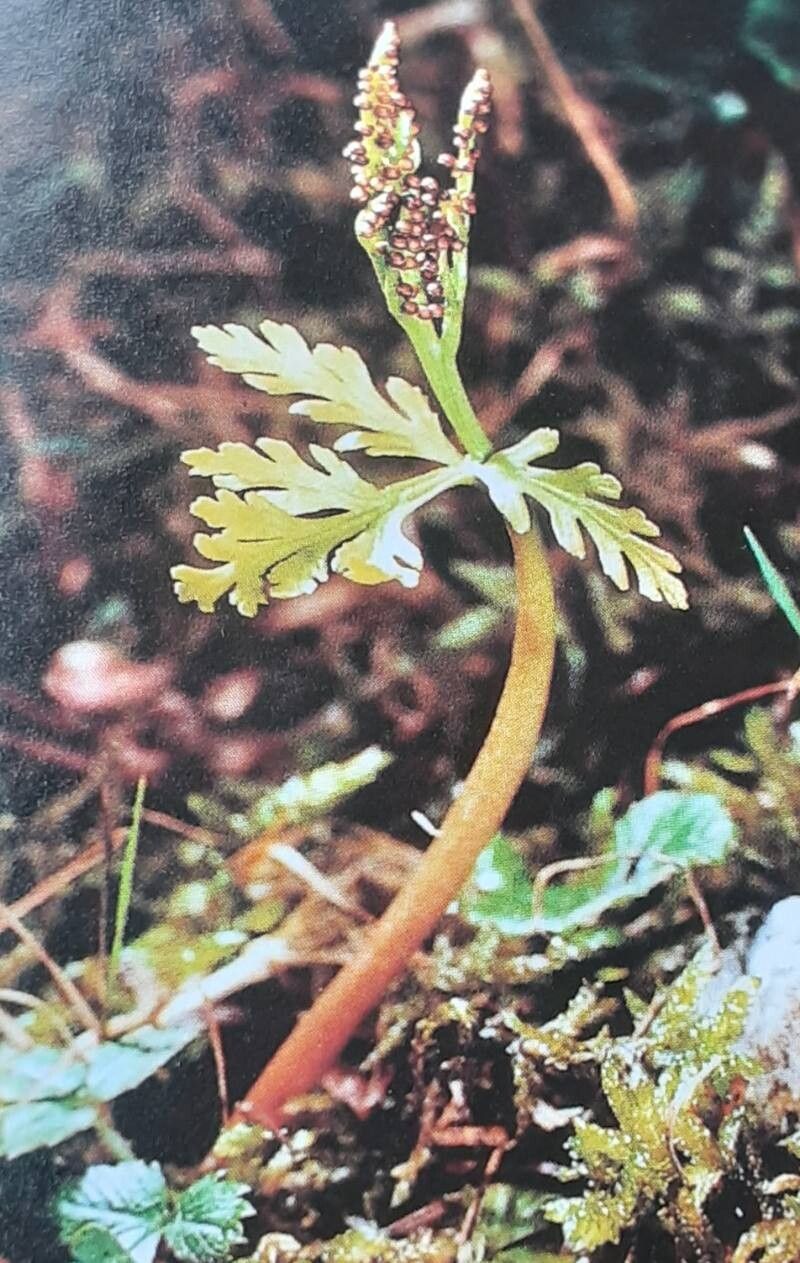
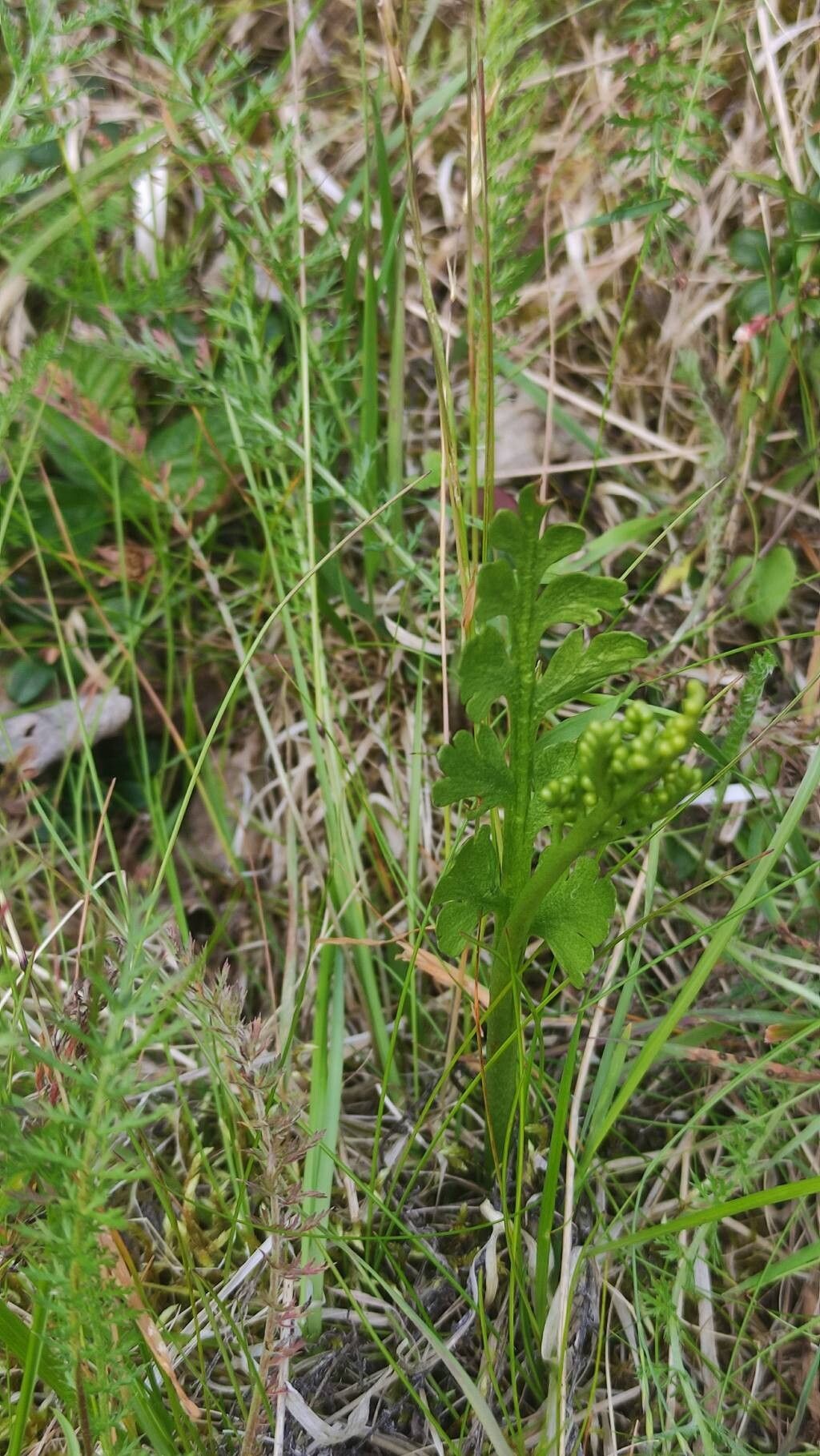
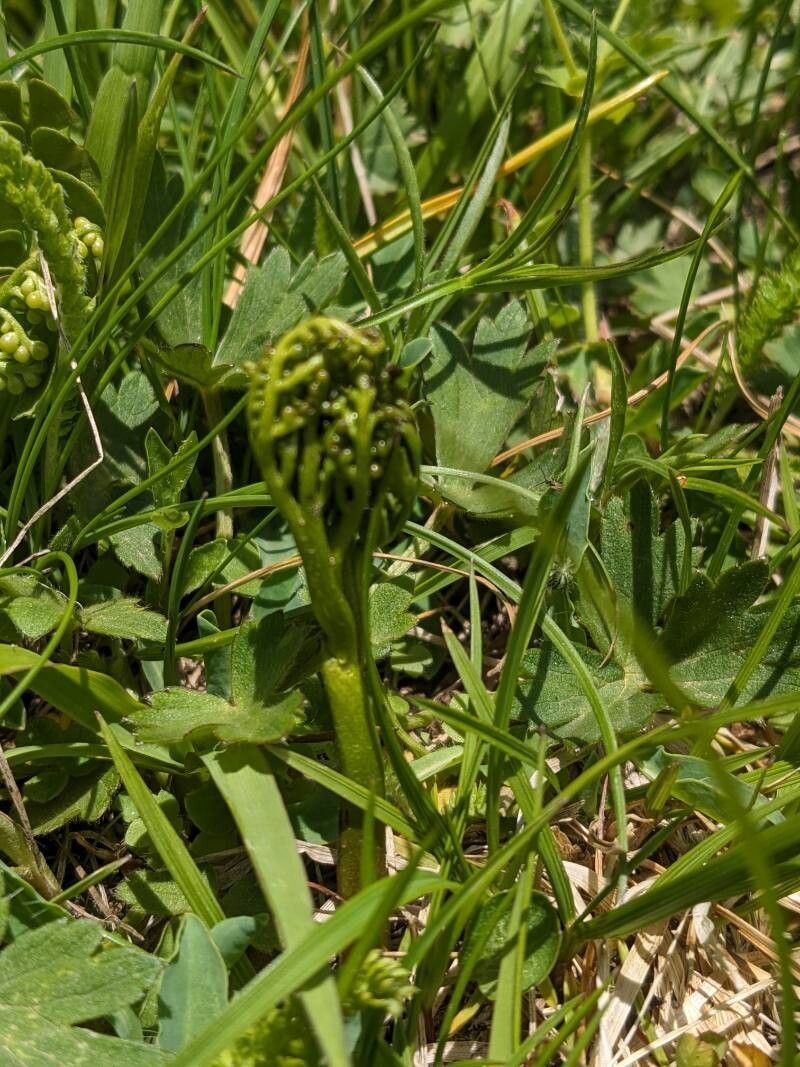
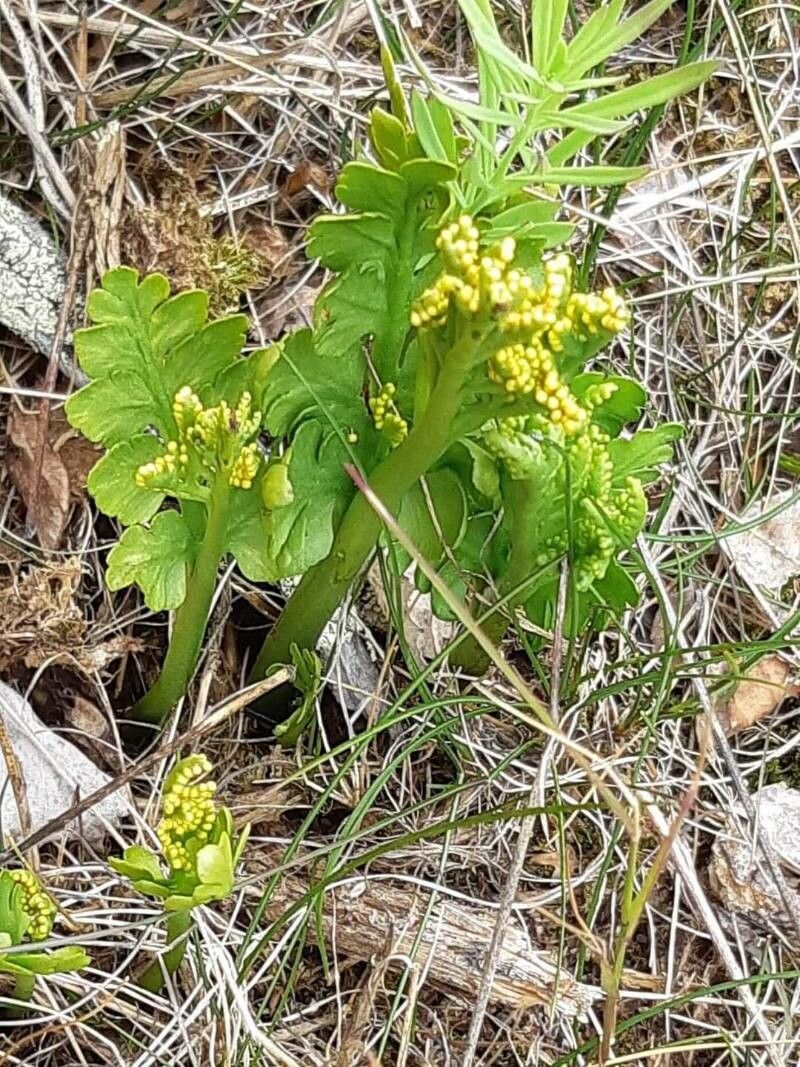
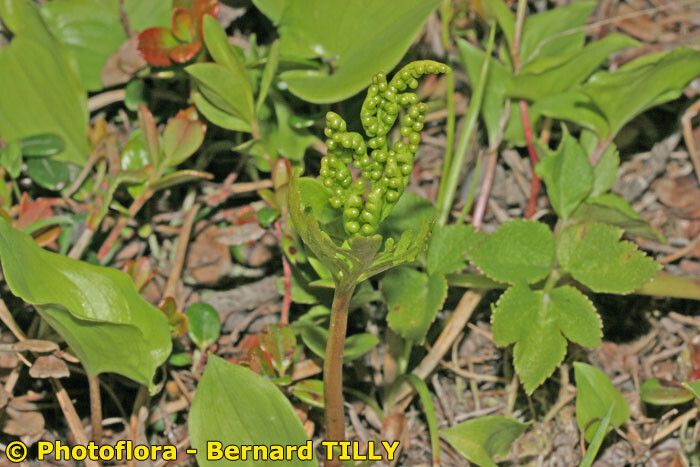
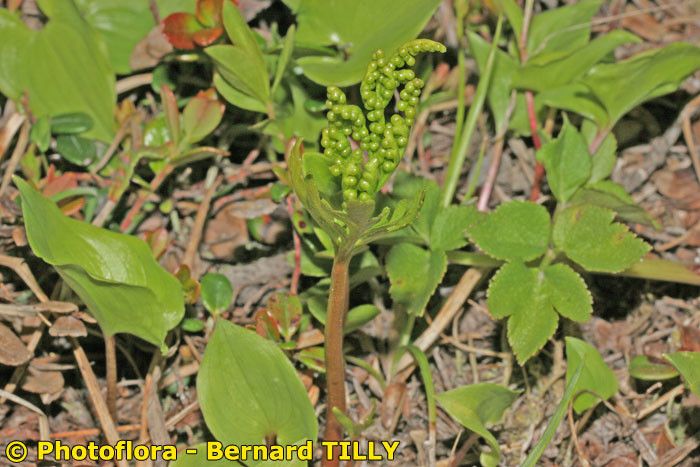
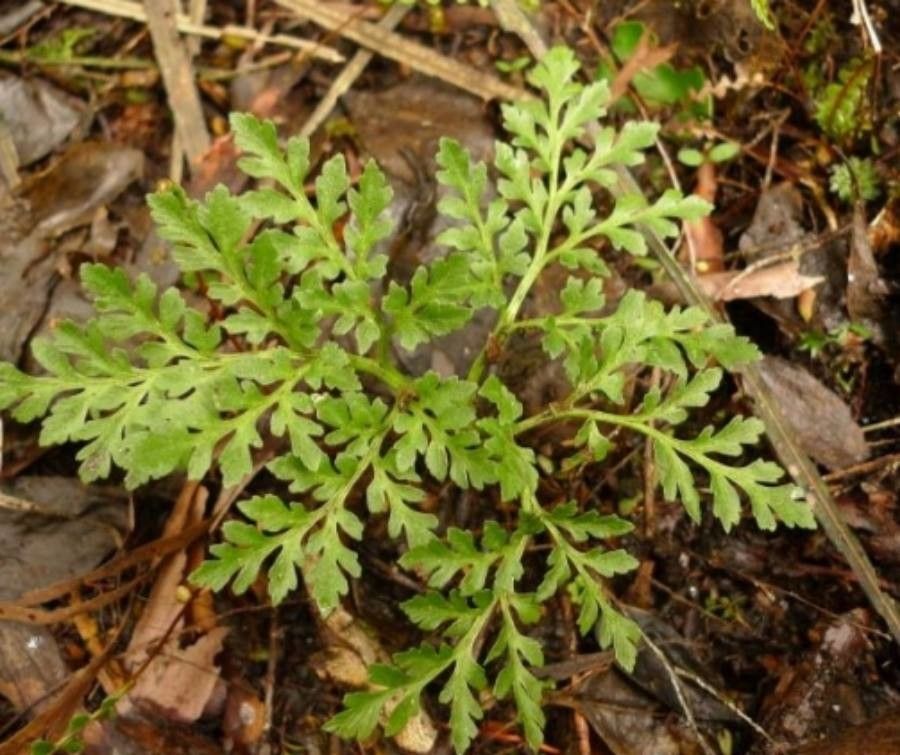
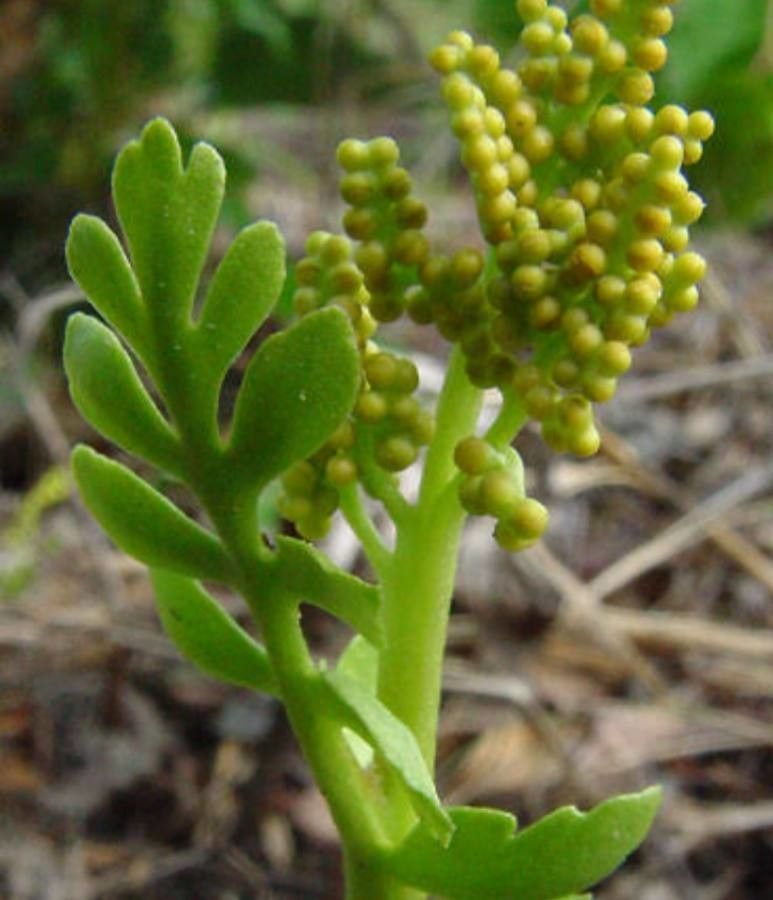
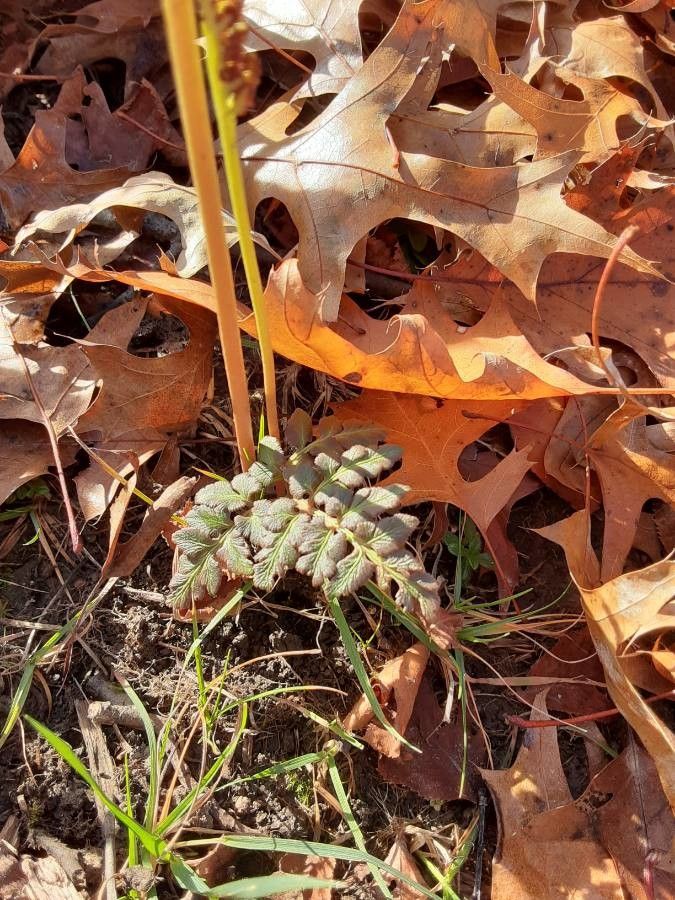
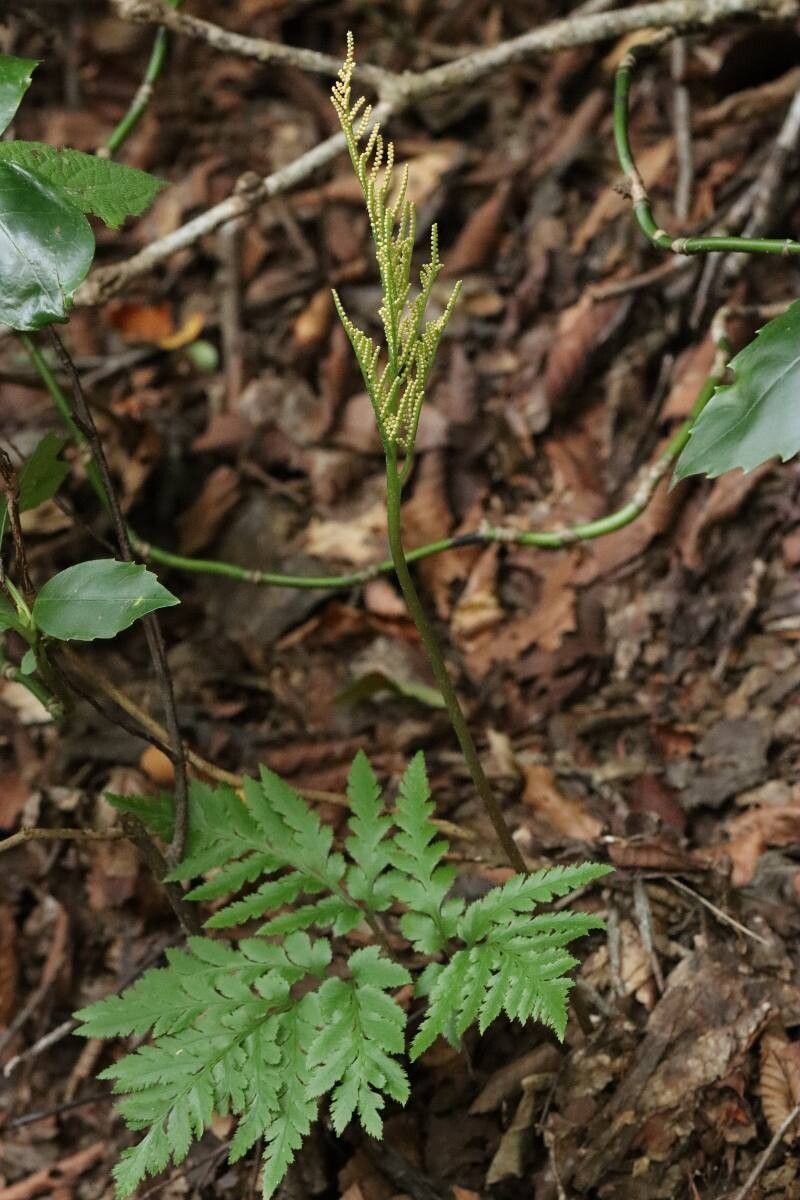
Botrychium lanceolatum, commonly known as the lance-leaved moonwort, is a small fern in the family Ophioglossaceae. Native to North America, it can be found in diverse habitats, including forests, meadows, and wetlands. This plant has a distinctive appearance, with fronds growing in clusters from an underground rhizome. The fronds, typically 5-20 cm long, are divided into two parts: a sterile, blade-like base and a fertile, spike-like top that bears spores. The lance-leaved moonwort is unique because it lacks true roots or leaves, unlike most other plants. Instead, it relies on its underground rhizome for nutrient absorption and uses photosynthesis to produce energy. Historically, Native American tribes have used this fern for medicinal purposes, treating ailments such as fever, coughs, colds, and sore throats. Despite being relatively common in some areas of North America, where it grows naturally or has been introduced, Botrychium lanceolatum faces threats from habitat loss due to human activities such as logging and agricultural development. These activities can lead to its decline if not properly managed.
Chamomile grape-fern is fairly disease-resistant and generally not susceptible to illnesses. However, it can still be affected by pests and diseases present in its environment, although such issues are typically mild. As for care, the plant requires a moderate level of maintenance. It should be pruned regularly to preserve its appearance and support healthy growth. Fertilizing can also help encourage flowering. This plant is well suited to anyone with outdoor space like a garden or patio and does not demand extensive plant-care experience. When grown indoors, it may need more attentive care.
How to keep Botrychium Lanceolatum.
Light
Chamomile grape-fern naturally occurs in places like forest understories or rocky areas, where it is subject to natural shade. It prefers partial sun but can tolerate both full sun and full shade, demonstrating that it is versatile and hardy.
Temperature
Chamomile grape-fern can tolerate a wide range of temperatures, though its distribution may still be restricted by different combinations of moisture and heat. It performs best in warm summer conditions with sufficient rainfall or irrigation. Extended periods of cloudy, rainy weather or prolonged high temperatures raise the risk of Chamomile grape-fern dying. In winter, adequate protection from cold can increase the plant's survival rate.
Fertilizer
One fertilizer application in spring is generally sufficient for Chamomile grape-fern, though multiple feedings can maximize growth. Feed it every one to one and a half months. Fertilization improves the leaves' appearance and function, helping maintain uniform color and a healthy texture. It also encourages root development and better nutrient uptake for the plant's long-term health.
Pruning
The distinctive lanceleaf grapefern requires very little pruning. To keep the plant healthy and disease-free, remove any dead or damaged fronds in early spring. Avoid cutting any live leaves, as this can weaken the plant. Be sure to use clean, sharp tools to maintain the plant's vigor and prevent infection.
Botanical profile.
- Plant Type
- Herb
- Life Cycle
- Perennial
- Genus
- Botrychium
- Family
- Ophioglossaceae
- Hardiness Zone
- 3-8
- Mature Height
- 3 cm to 25 cm
- Mature Spread
- 5 cm to 10 cm
- Leaf Color
- Dark Green, Forest Green
- Leaf Type
- Deciduous
- Bloom Time
- Spring, Summer
- Planting Time
- Spring, Summer, Autumn
- Native Area
- Sweden, Austria, Czech Republic, Slovakia, Montenegro, Poland, Croatia, Slovenia, Belarus, Ukraine, Russia, Lithuania, Norway, Hungary, Germany, Italy, Spain, Switzerland, Denmark, Netherlands, Estonia, Finland, Albania, Romania, Latvia, France
Other names.