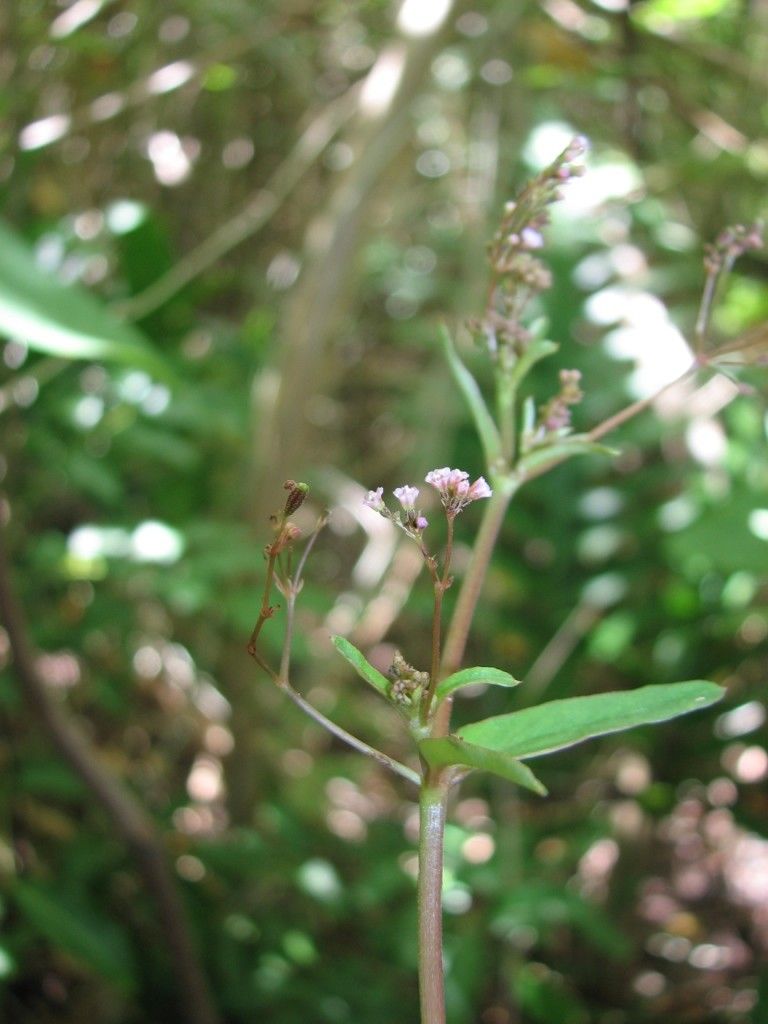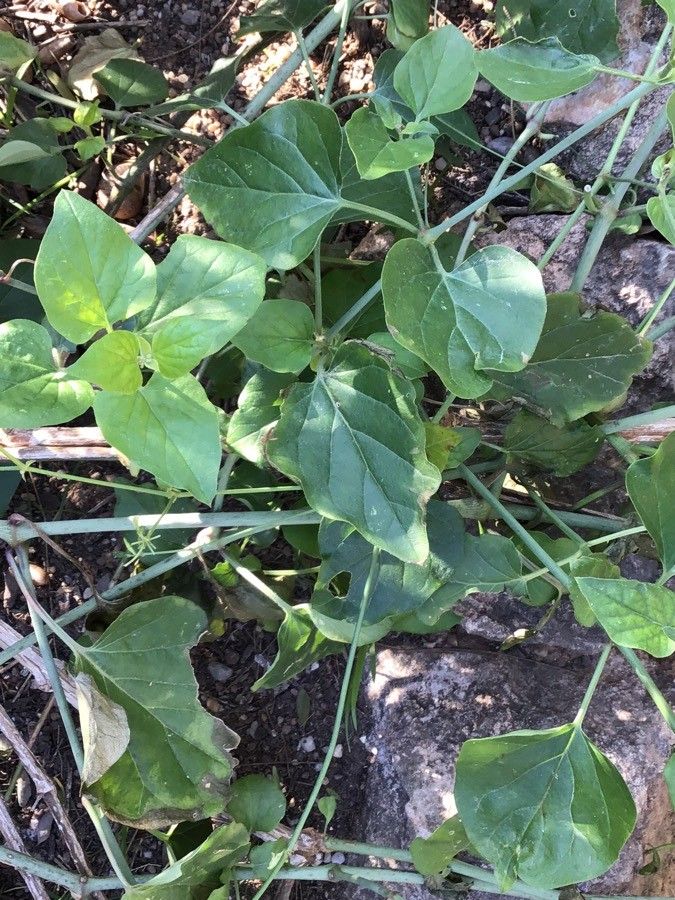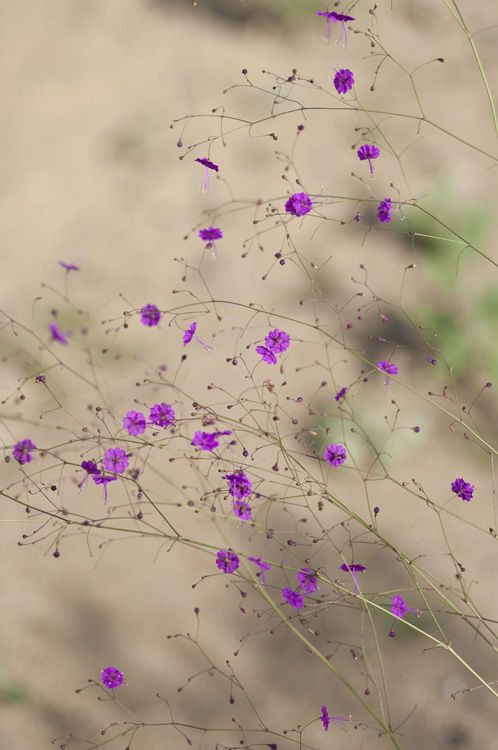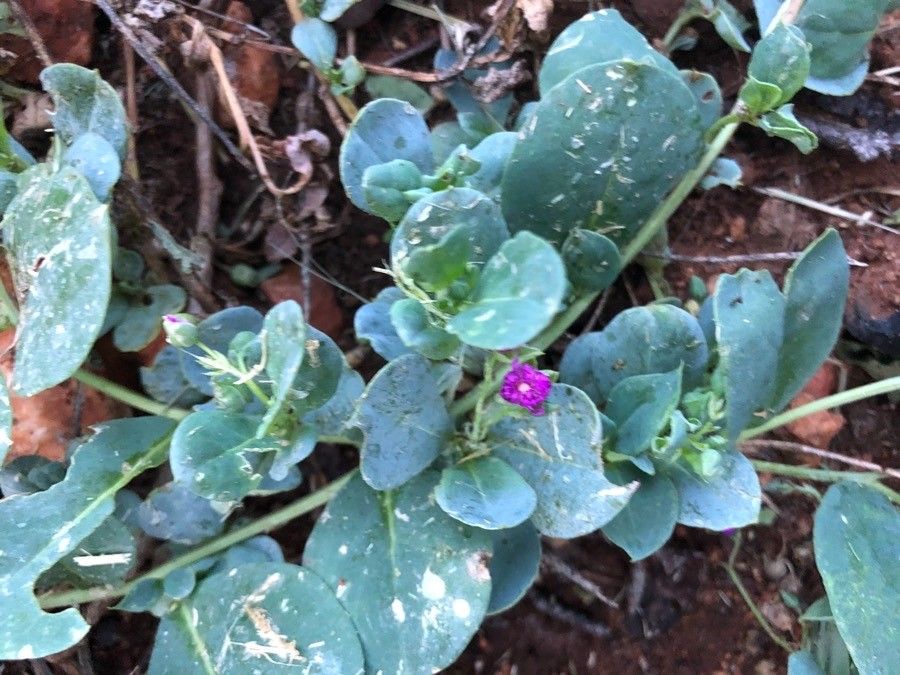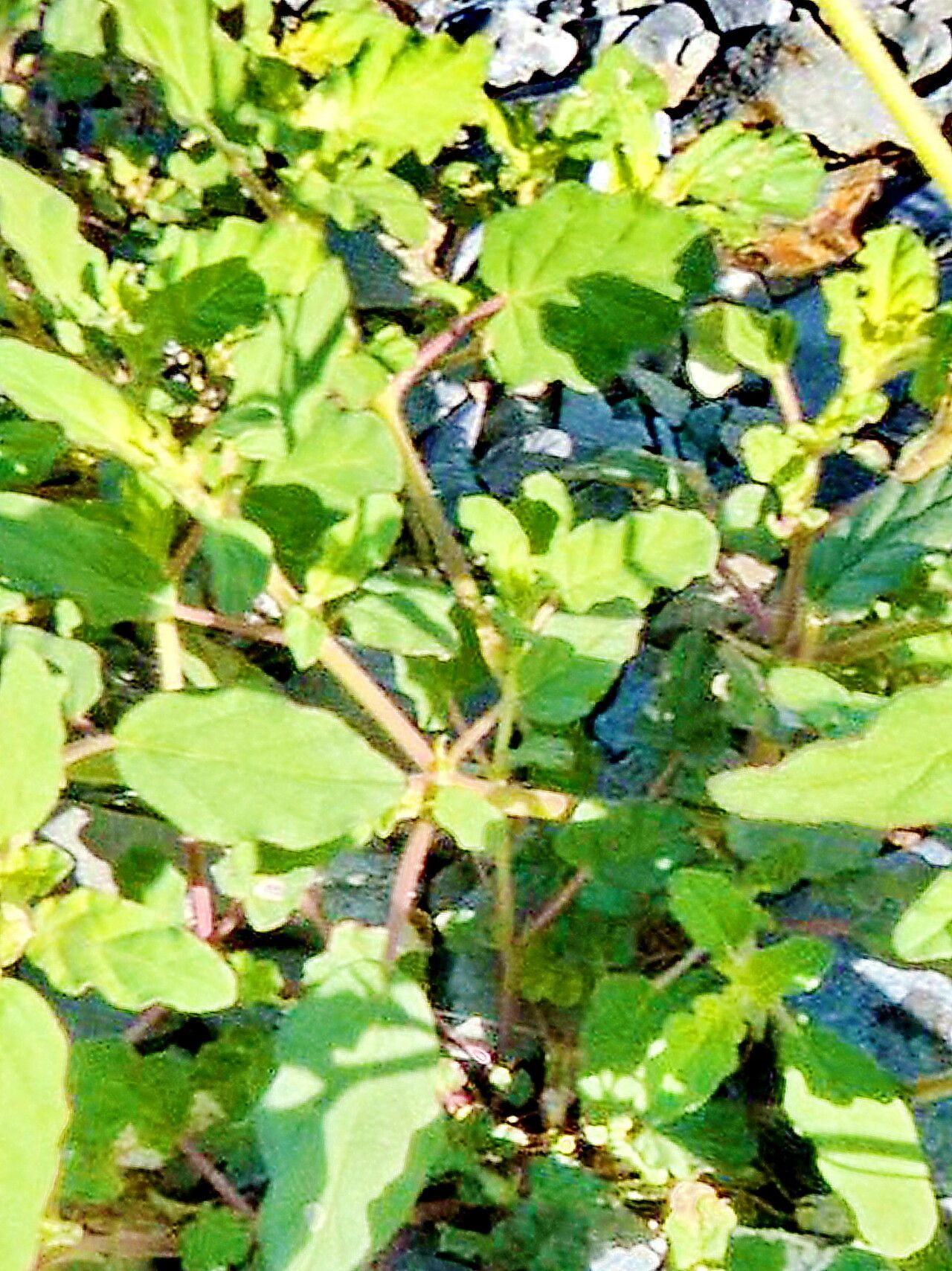
Boerhavia wrightii is a species of flowering plant in the four o'clock family known by the common name largebract spiderling. It is native to the deserts of the southwestern United States and northern Mexico, where it grows amongst desert shrubs. This is an annual herb producing a slender, spidery erect stem to about 70 centimeters in maximum length. The leaves are lance-shaped to oblong with rippled edges and roughly pointed ends. Most of the leaves grow near the base of the plant. The inflorescences appear at the ends of the slim stem branches. They bear a few pale pink flowers, each just a few millimeters long, with adjacent reddish or pinkish bracts.
Largebract spiderling is fairly disease-resistant and typically does not suffer from illnesses. However, it can be vulnerable to pests and diseases present in its environment. Such infections are generally mild. In terms of care, the plant needs moderate maintenance. Regular pruning is required to keep a good appearance and support healthy growth. Applying fertilizer can also encourage flowering. Largebract spiderling is well suited for anyone with outdoor space, like a garden or patio, and does not demand extensive care experience. It may need more attention when cultivated indoors.
How to keep Boerhavia Wrightii.
Light
Largebract spiderling is a sun-loving, perennial herbaceous plant that originates from open habitats and often thrives in meadows and grasslands. It prefers full sun but can also tolerate partial sun conditions.
Temperature
Largebract spiderling is well adapted to temperature, able to tolerate high heat and considerable temperature fluctuations. In hot conditions, attention should be paid to watering and providing proper shade to prevent sunburn. However, Largebract spiderling is relatively intolerant of low temperatures. While it can endure some cold, overly low temperatures can cause frost damage.
Fertilizer
One fertilizer application in spring is generally enough for Largebract spiderling, but repeated feedings can optimize growth. Feed every month to six weeks. Fertilizing improves the leaves’ appearance and function, helping maintain even color and a healthy texture. It also promotes root development and nutrient uptake for the plant’s long-term health.
Botanical profile.
- Plant Type
- Herb
- Life Cycle
- Perennial
- Genus
- Boerhavia
- Family
- Nyctaginaceae
- Hardiness Zone
- 9-11
- Mature Height
- 20 cm to 40 cm
- Mature Spread
- 30 cm to 61 cm
- Leaf Color
- Green, Light Green
- Leaf Type
- Deciduous
- Flower Color
- Pink
- Flower Size
- 0.20 cm to 0.25 cm
- Bloom Time
- Summer, Early fall, Mid fall
- Planting Time
- Spring, Summer, Autumn
- Harvest Time
- Late summer, Fall, Early winter
- Native Area
- Mexico