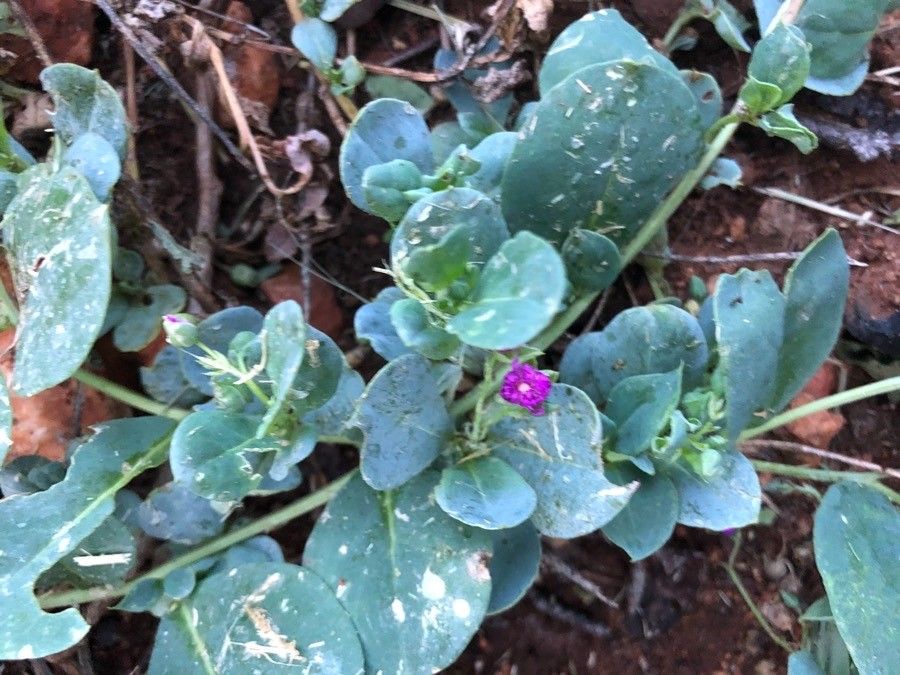
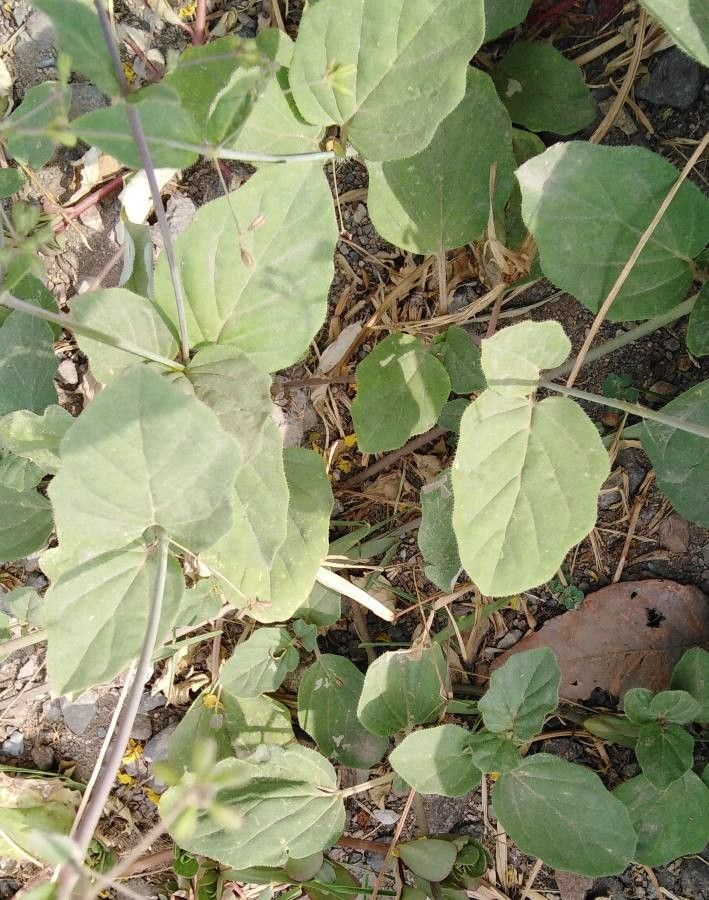
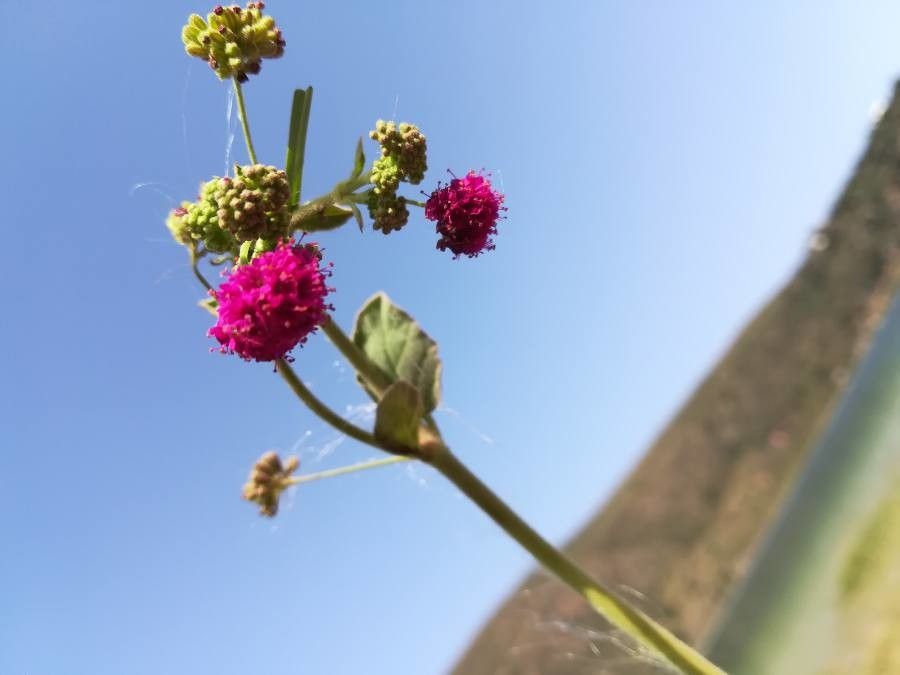
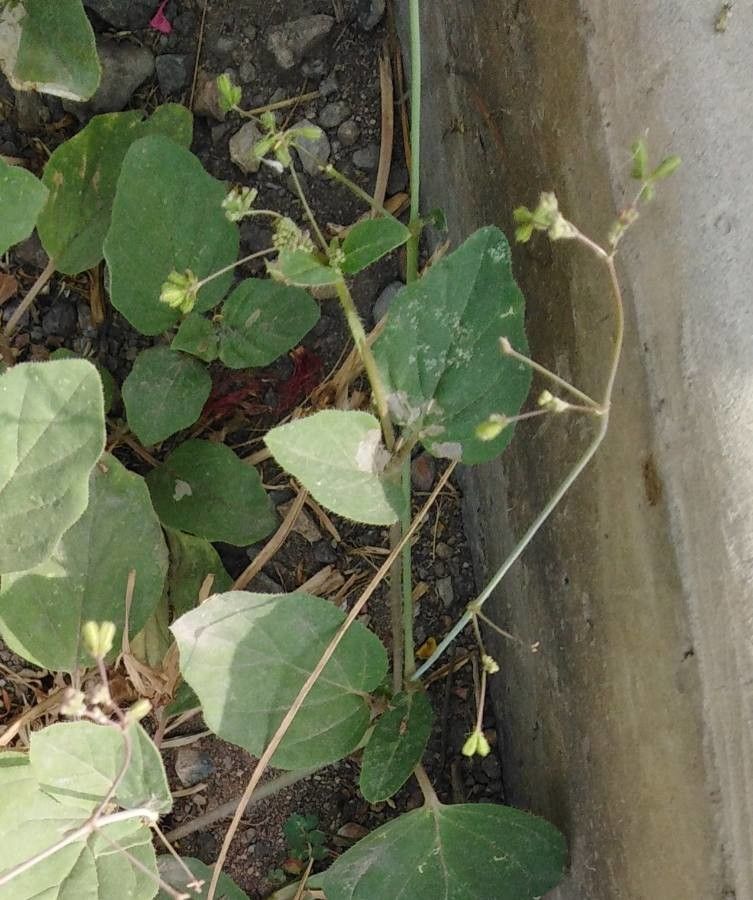
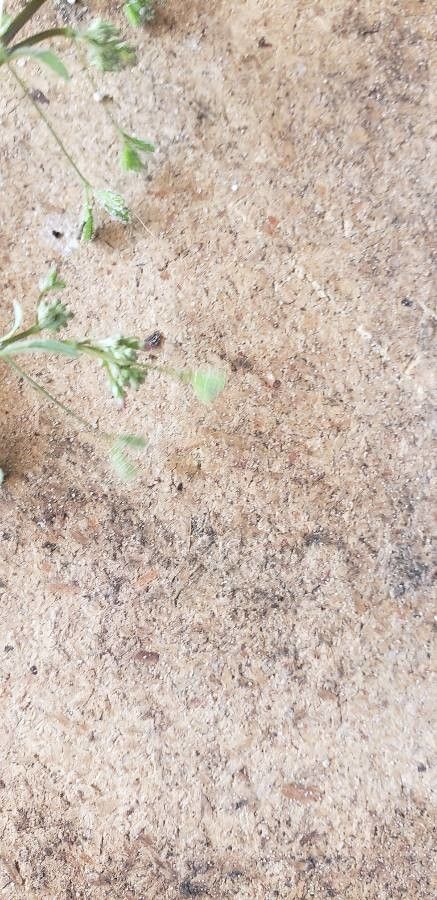
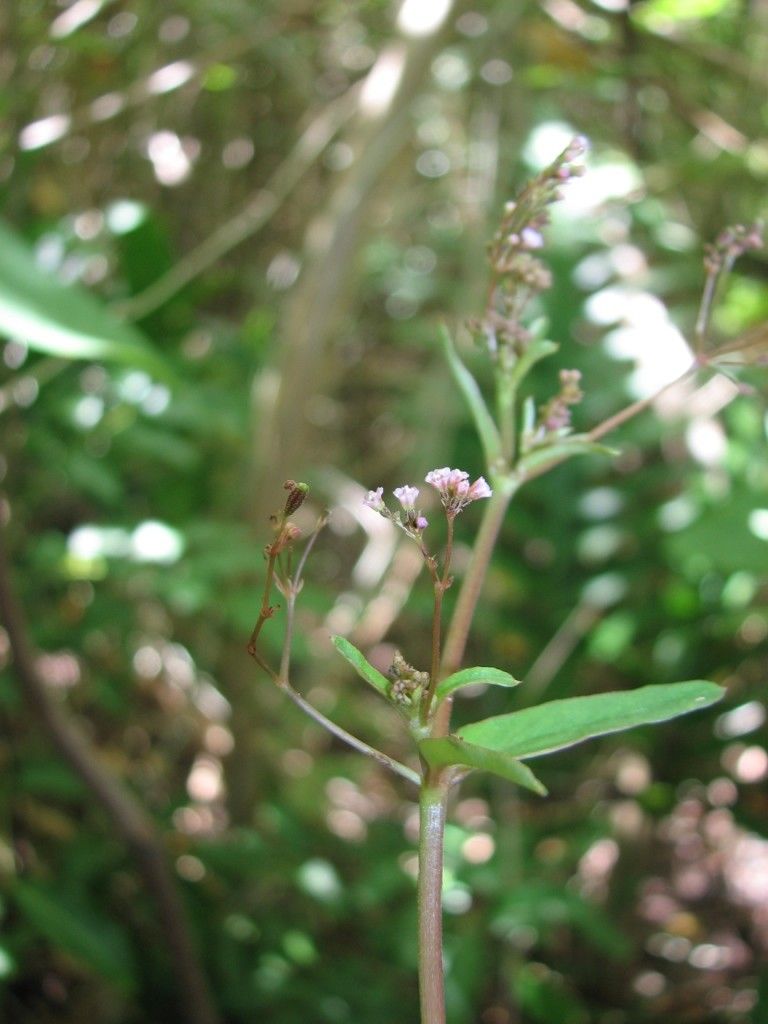
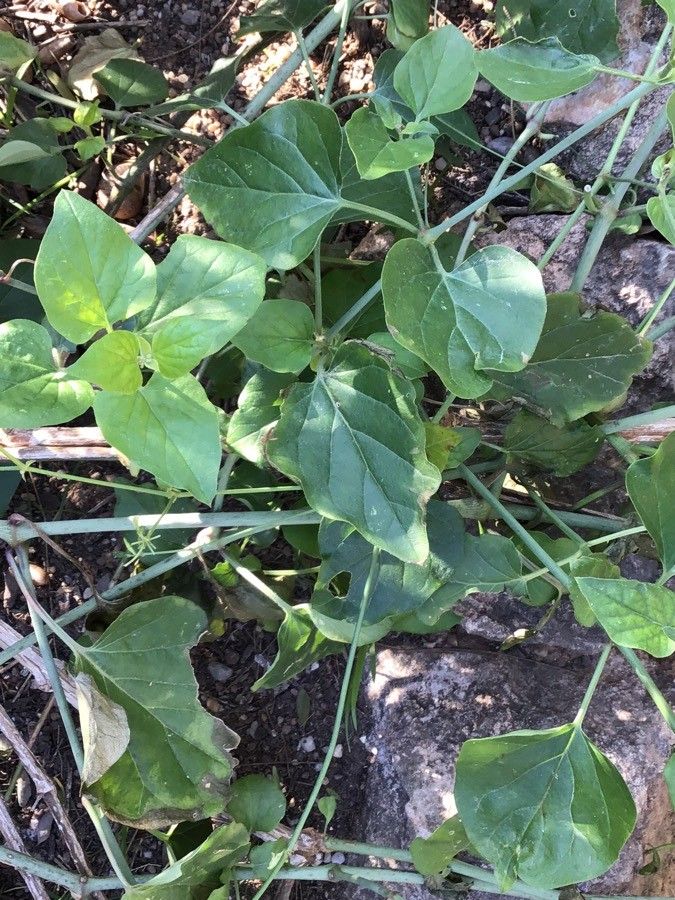
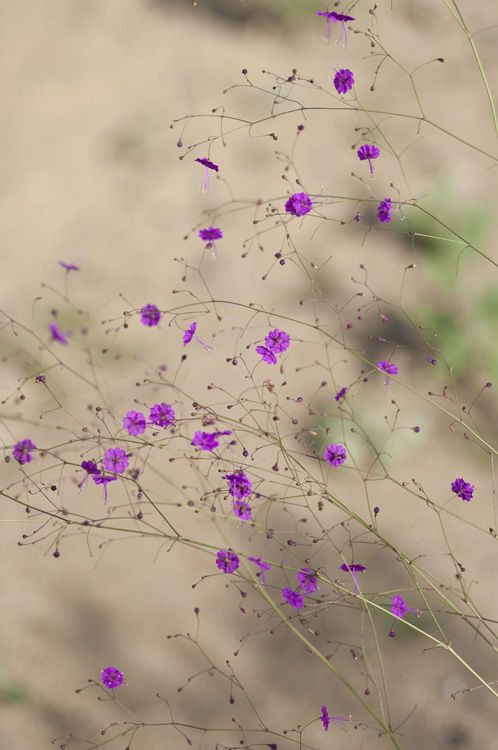
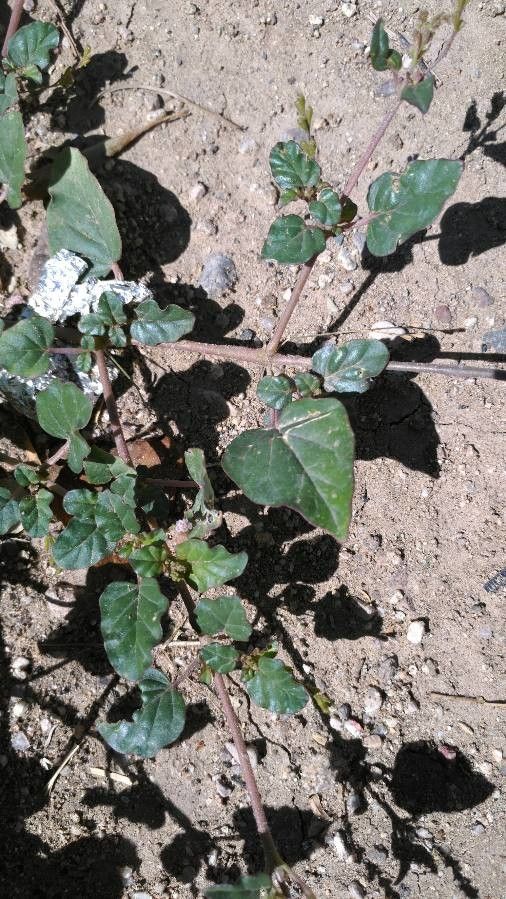
Boerhavia coccinea is a species of flowering plant in the four o'clock family which is known by many common names, including scarlet spiderling, red boerhavia, and in Spanish, hierba del cancer and hierba de la hormiga. This is a widespread plant, whose native range is not certain, but probably includes the southwestern United States and parts of Mexico. It is present across the southeastern United States, where it may be naturalized. It is also present in Africa, Asia, Australia, and South America. It is present on many Pacific islands, including the Hawaiian Islands, where it is an invasive species and a noxious weed. This plant grows in a wide variety of habitats, including disturbed areas as a common roadside weed. It is a low-lying, sprawling perennial herb producing reaching stems which can exceed a meter in length. The stems are somewhat hairy and sticky with glands. The generally oval-shaped leaves are held on short petioles. They are wavy along the edges and may have reddish margins. The inflorescence is a small head of tiny frilly flowers, each just a few millimeters long. The flowers are often bright scarlet to red-violet in color but can be shades of pink, yellow, or white.
Scarlet spiderling has strong disease resistance and is usually not prone to illnesses. Nevertheless, it can be vulnerable to pests and diseases present in its surroundings. These infections are typically not severe. In terms of care, this plant requires moderate maintenance. It should be pruned regularly to preserve a good appearance and encourage healthy growth. Fertilizing can also help stimulate flowering. Scarlet spiderling is suitable for anyone with an outdoor area, such as a garden or patio, and does not demand extensive care experience. It may need more attention when grown indoors.
How to keep Boerhavia Coccinea.
Light
Scarlet spiderling requires abundant light to grow vigorously, although it can tolerate a slight decrease in light. Originating from bright habitats, the plant’s health may suffer with insufficient light, resulting in stunted growth. Conversely, excessively intense light can cause harm.
Water
Scarlet spiderling, which originates from arid regions, is drought-tolerant and needs weekly watering to maintain its water balance. In cultivation, it thrives outdoors in full sunlight and enters dormancy during dry spells to conserve its resources until conditions improve.
Temperature
The scarlet spiderling comes from regions with temperatures between 68 and 95 °F (20 to 35 ℃). It grows best within that range but can tolerate small fluctuations. Seasonal temperature changes should be made only when necessary to mimic its native environment.
Fertilizer
Usually one fertilizer application in spring is enough for Scarlet spiderling, though repeated feedings can boost growth. Apply fertilizer every month to a month and a half. Fertilizing improves the leaves' appearance and function, helping maintain even color and a healthy texture. It also promotes root development and nutrient uptake, supporting long-term plant health.
Botanical profile.
- Plant Type
- Herb
- Life Cycle
- Perennial
- Genus
- Boerhavia
- Family
- Nyctaginaceae
- Hardiness Zone
- 9
- Mature Height
- 91 cm
- Mature Spread
- 2.13 m
- Leaf Color
- Green, Dark Green
- Leaf Type
- Evergreen
- Flower Color
- Pink
- Flower Size
- 1.27 cm
- Bloom Time
- Early summer, Mid summer
- Planting Time
- Autumn, Winter, Spring
- Harvest Time
- Mid summer, Late summer
- Native Area
- Burkina Faso, Somalia, Egypt, Belize, Mexico, Guatemala, Namibia, Eritrea, Dominican Republic, Nigeria, Yemen, Kenya, Uganda, Tanzania, Zimbabwe, Niger, Mali, Jamaica, Guinea-Bissau, Cuba, Sierra Leone, Haiti, Liberia, Mozambique, Venezuela, Brazil, Oman, Ghana, Ethiopia, Botswana, Central African Republic, Saudi Arabia, Malawi, Honduras, Peru, South Africa, Zambia, Sudan, Mauritania, Guinea, Panama, Chad, Colombia, Bahamas, Bolivia, Togo, El Salvador, Senegal, Eswatini, Nicaragua, Ecuador, Costa Rica, Côte d'Ivoire, Gambia
Other names.
Reader questions.
How should I water my Scarlet spiderling?
To properly water the Scarlet spiderling, use filtered water at room temperature or slightly warmer. Tap water may have harmful particles, so filtered water is preferred. The plant is accustomed to a warm environment, so avoid using cold water to prevent shock. It's also best to avoid overhead watering, as it can cause problems with the foliage. Instead, gently pour the filtered room temperature water onto the soil until it is fully soaked. This helps keep the plant's roots moist and allows them to spread and gather the necessary nutrients.
What are the sun requirements for Scarlet spiderling?
Scarlet spiderling requires full or partial sunlight to thrive. Full sun exposure means the plant should receive above 6 hours of direct sunlight daily, while partial sun signifies about 3-6 hours of sunlight each day. It's important to observe how sunlight moves through your garden to pick the best spots that provide a balance of light and shade, ensuring the plant's optimal growth and wellbeing.
What is the native temperature range for Scarlet spiderling?
Scarlet spiderling is indigenous to regions where the temperature hovers between 68 to 95 °F (20 to 35 °C), where it thrives optimally. While it can adapt to minor variations, seasonal temperature adjustments should ideally mimic its native habitat conditions. This plant possesses a degree of cold tolerance, not necessitating special care for temperatures above 0°C. However, if temperatures are forecasted to plunge below freezing, temporary protective actions, such as encasing the plant in plastic film, fabric, or alternative materials, are advised until the cold spell subsides.
What should I do if I give my Scarlet spider plant too much water or too little water?
When caring for your Scarlet spiderling, both overwatering and underwatering can harm its health. However, overwatering is a more common issue. If the plant receives too much water, its stems and leaves may wilt and turn yellow. Overwatering for a long period can also cause diseases like root rot, mold, and mildew, which can be fatal for the plant. Underwatering is less likely to occur because the Scarlet spiderling is somewhat drought-tolerant. However, it is still possible, and in such cases, the leaves may become brittle and brown. It is important to be aware of the signs of overwatering and address them promptly. Some diseases, like root rot, may be irreversible if left unattended for too long. If you notice initial signs of overwatering, reduce your watering immediately. Additionally, check the quality of the soil and replace it with a loose, well-draining potting mix if it drains poorly. On the other hand, if you see signs of underwatering, simply increase your watering frequency until the signs improve.
How essential is light for the growth of Scarlet spiderling?
Light is crucial for the healthy growth of Scarlet spiderling, a plant that originates from bright, sunlit habitats. Adequate exposure to light is necessary for its vigorous growth, though it can tolerate partial shade to some extent. However, insufficient light may stunt the plant's growth, while too much direct sunlight can also cause harm. In scenarios where natural light is lacking, especially indoors or during winter, artificial lighting can play a pivotal role in promoting growth. It's advisable to select the right type of artificial light and adjust both the light intensity and exposure duration to meet the plant's needs.
How does Scarlet spiderling react to low temperatures?
Scarlet spiderling exhibits a moderate resilience to cooler temperatures, preferring conditions above 20°C for ideal growth. In winter, maintaining the temperature above freezing is crucial for its well-being. Exposure to temperatures below -5°C may lead to drooping leaves. While the plant might recover from mild frost damage, severe cold can cause leaves to wilt permanently and drop. To mitigate frost damage, it's recommended to prune frost-affected parts. Before anticipated cold weather, wrapping the plant with non-woven fabric or cloth and erecting a windbreak can help shield it from chilly winds.
How often should I water my Scarlet spider plant?
If your Scarlet spiderling plant is in a pot, you can determine if it needs water by sticking your finger into the soil. If the top two to three inches are dry, it's time to water it. The same method can be used if you grow the plant outdoors in the ground. During spring and early fall, watering once per week is usually sufficient. In very hot weather, you may need to water it twice or more per week. However, mature Scarlet spiderlings are quite resilient and can withstand drought.
What are the importance and effects of artificial lighting on Scarlet spiderling?
Artificial lighting is significant for Scarlet spiderling's growth, especially when natural sunlight is insufficient. It's crucial for indoor plants or during less sunny seasons like winter. LED lights are often recommended due to their ability to provide specific wavelengths needed by plants. For optimal growth, the intensity of artificial light required varies depending on whether the plant needs full sun (30-50W/sq ft), partial sun (20-30W/sq ft), or full shade (10-20W/sq ft). The light source should be placed 12-36 inches above the plant, mimicking natural sunlight conditions, and should be kept on for 8-12 hours daily to support the plant's natural growth cycle.
How does Scarlet spiderling handle high temperatures?
In the summer months, it's important to ensure that Scarlet spiderling's exposure to heat is moderated, ideally keeping the environment below 35°C. When temperatures soar beyond 38°C, the plant may exhibit stress symptoms such as lighter leaf color, drying and curling of leaf tips, and an increased risk of sunburn. Addressing heat stress involves trimming away sunburnt and dehydrated parts of the plant. Relocating it to a shaded spot or employing shade cloth to protect against the harsh sun can be beneficial. Additionally, watering the plant during cooler times of the day, such as morning and evening, helps maintain soil moisture and supports plant health.
How much water does my Scarlet spider baby need?
To properly water your Scarlet spiderling, it's important to be generous with the amount of water you give. Wait until the top two to three inches of soil are dry, and then give the plant a thorough watering. Make sure to soak the soil completely, allowing excess water to flow out of the drainage holes at the bottom of the pot. If you don't see any excess water draining, it's likely that you didn't provide enough water. However, be careful not to let the water accumulate in the soil, as this can harm the plant. Additionally, if the water isn't draining properly, it could be a sign of poorly draining soil, which is not good for the health of the plant. In outdoor settings, one inch of rain per week should be enough.
What are the symptoms of inadequate lighting on Scarlet spiderling?
When Scarlet spiderling is exposed to inadequate lighting, it may exhibit several symptoms indicating light deficiency. These symptoms include smaller than usual new leaves, leggy or sparse growth, premature leaf drop, halted new growth, lighter-colored new leaves, chlorosis (yellowing of the leaves), sunscald, leaf curling, wilting, and leaf scorching. Each of these symptoms reflects the plant's struggle to adapt to insufficient light conditions, impacting its overall health and growth.
How do I water my Scarlet spiderling as it grows?
The water requirements of the Scarlet spiderling vary depending on its growth stages. In the first few years of its life or after being moved to a new growing location, it requires more water. During these stages, the Scarlet spiderling focuses on developing new roots to support its future growth, and these roots perform best with slightly more moisture. However, as the plant matures, it will need less water. Additionally, during the bloom period, the flower development consumes a significant amount of moisture, so you may need to provide extra water during this time for your Scarlet spiderling.