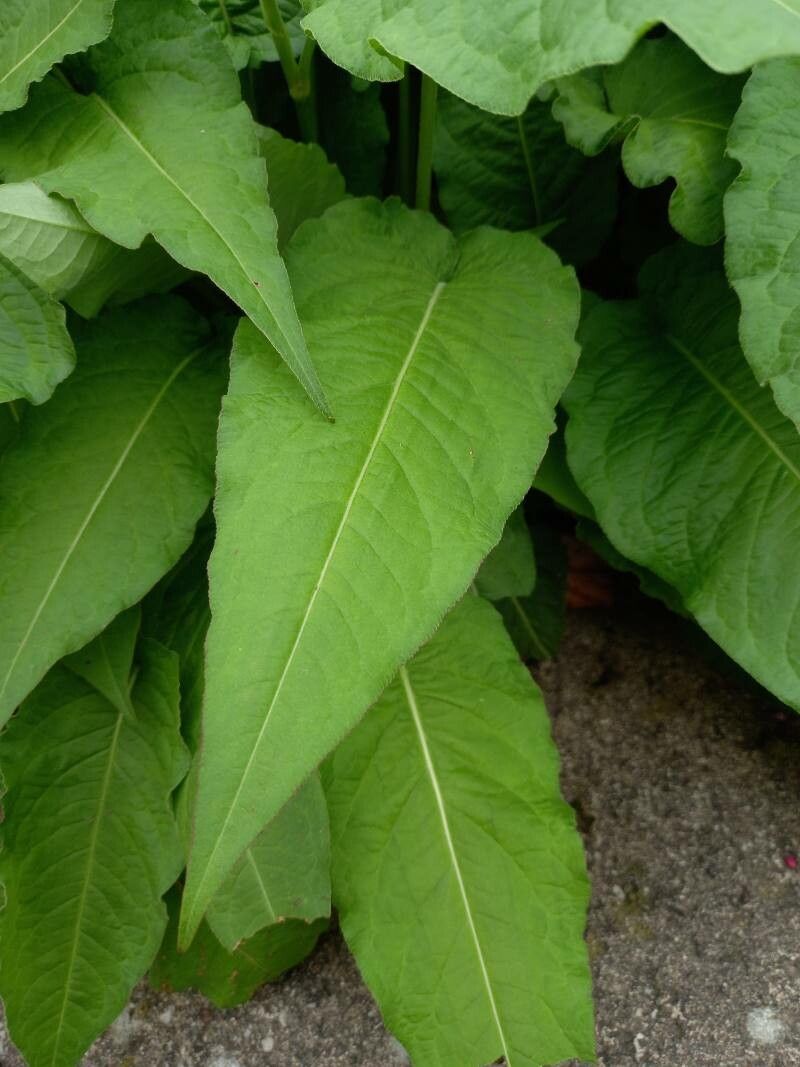
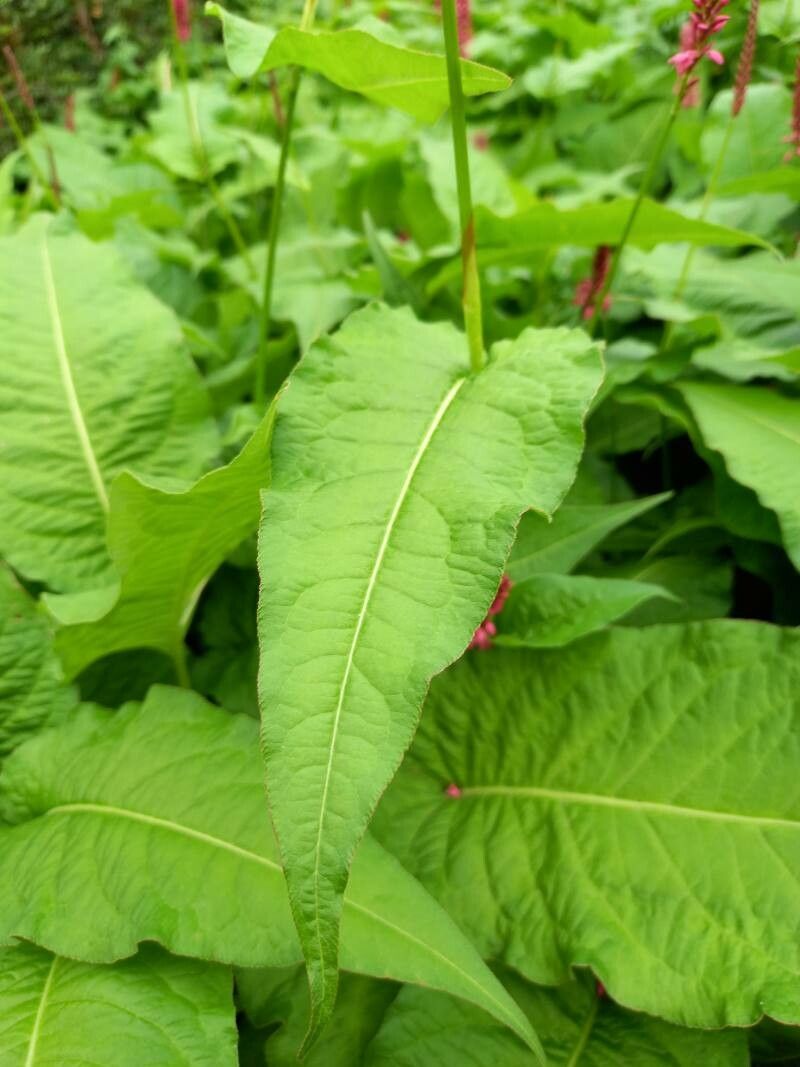
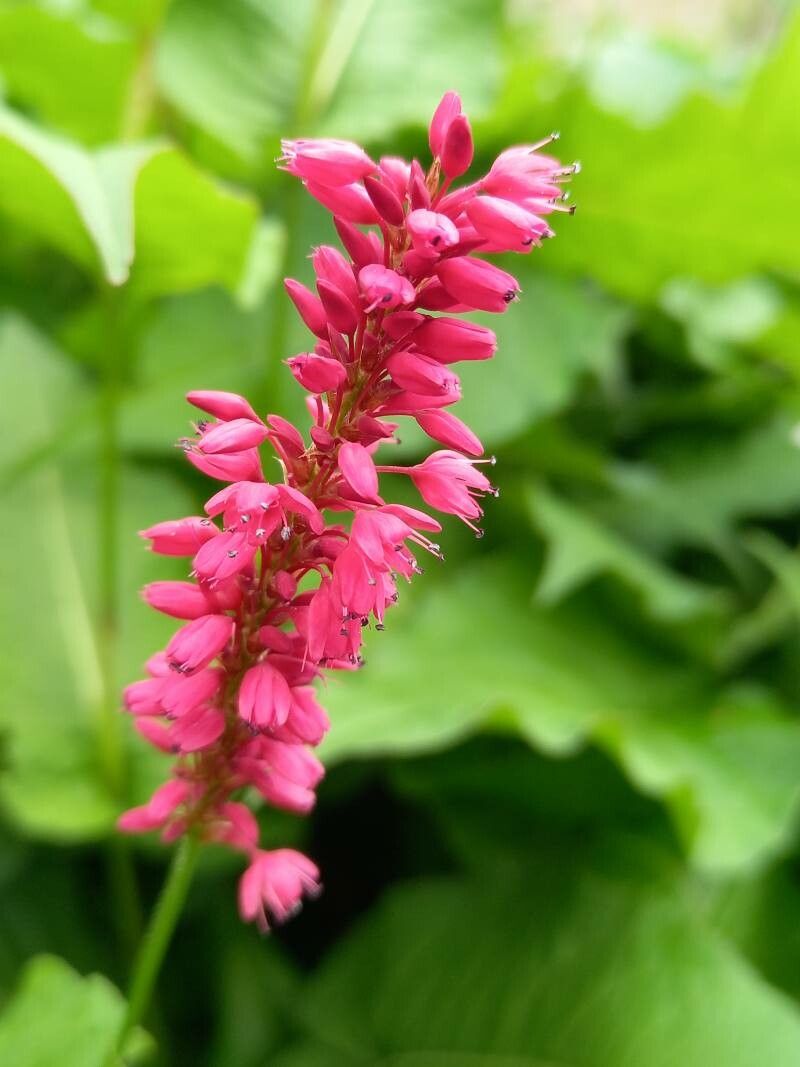
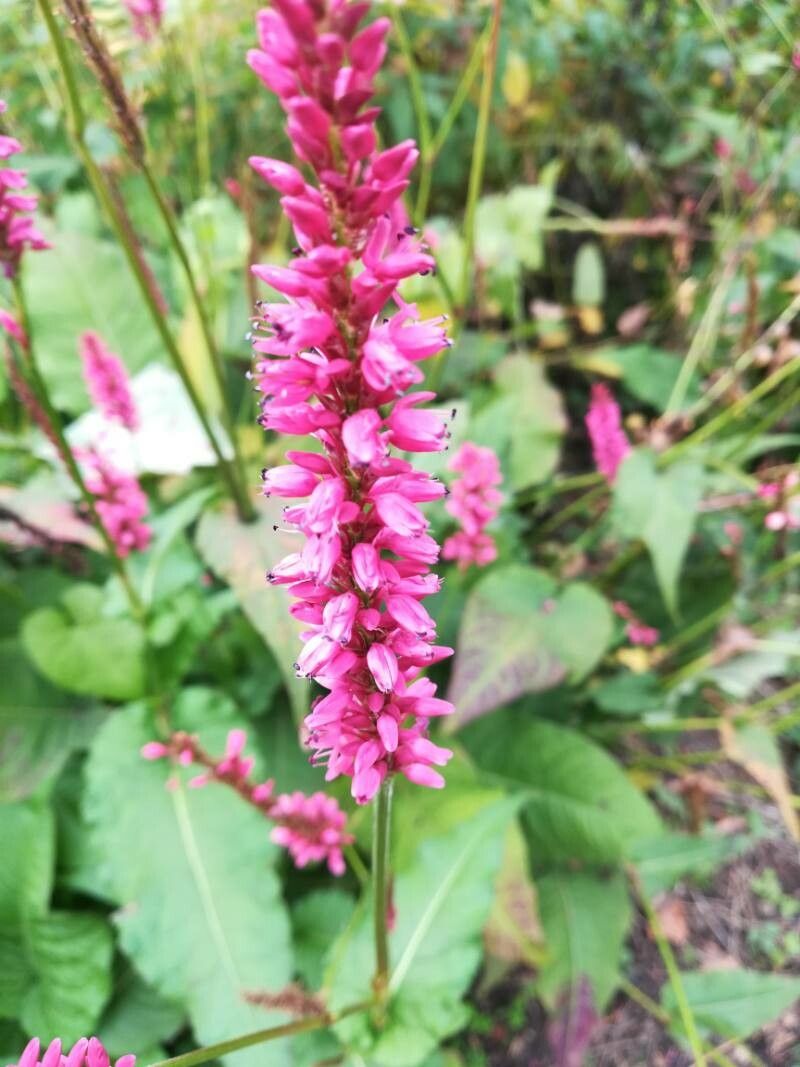
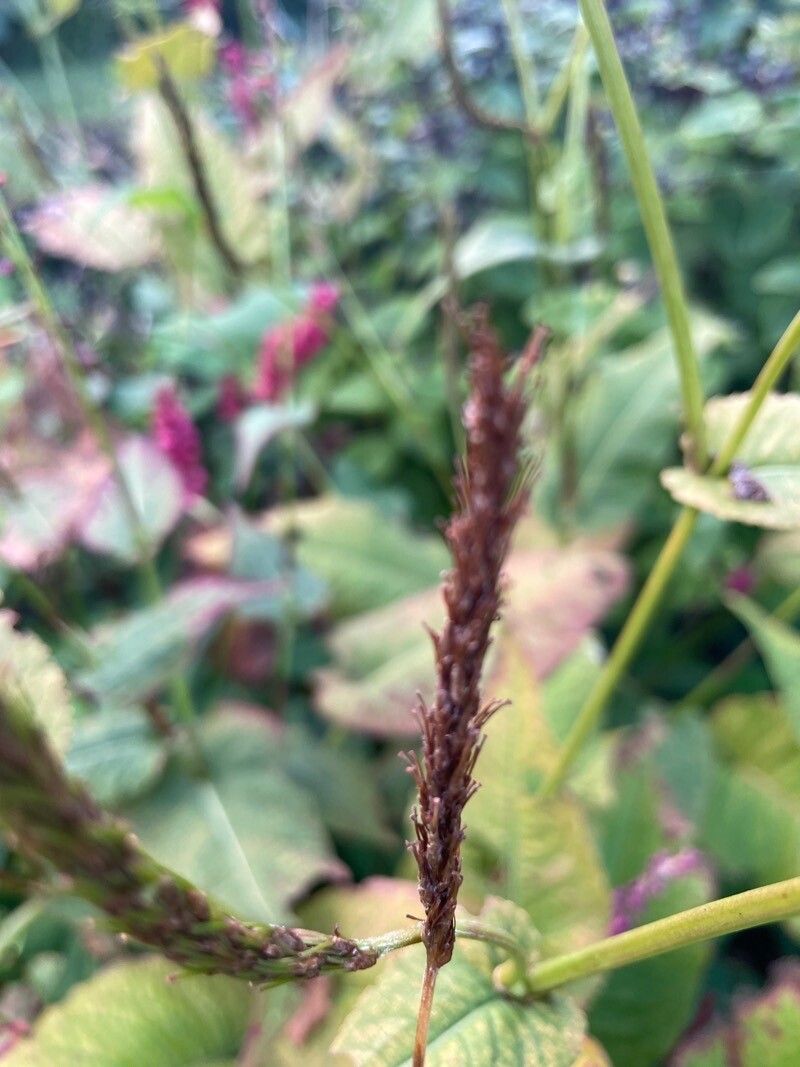
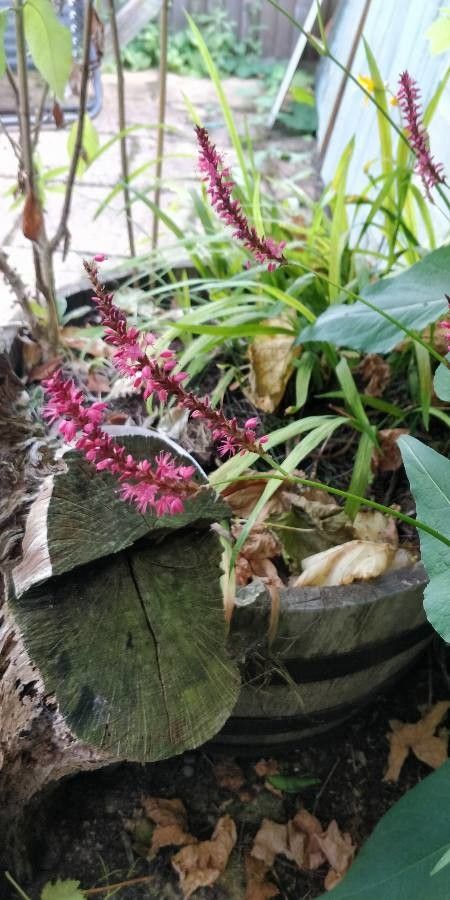
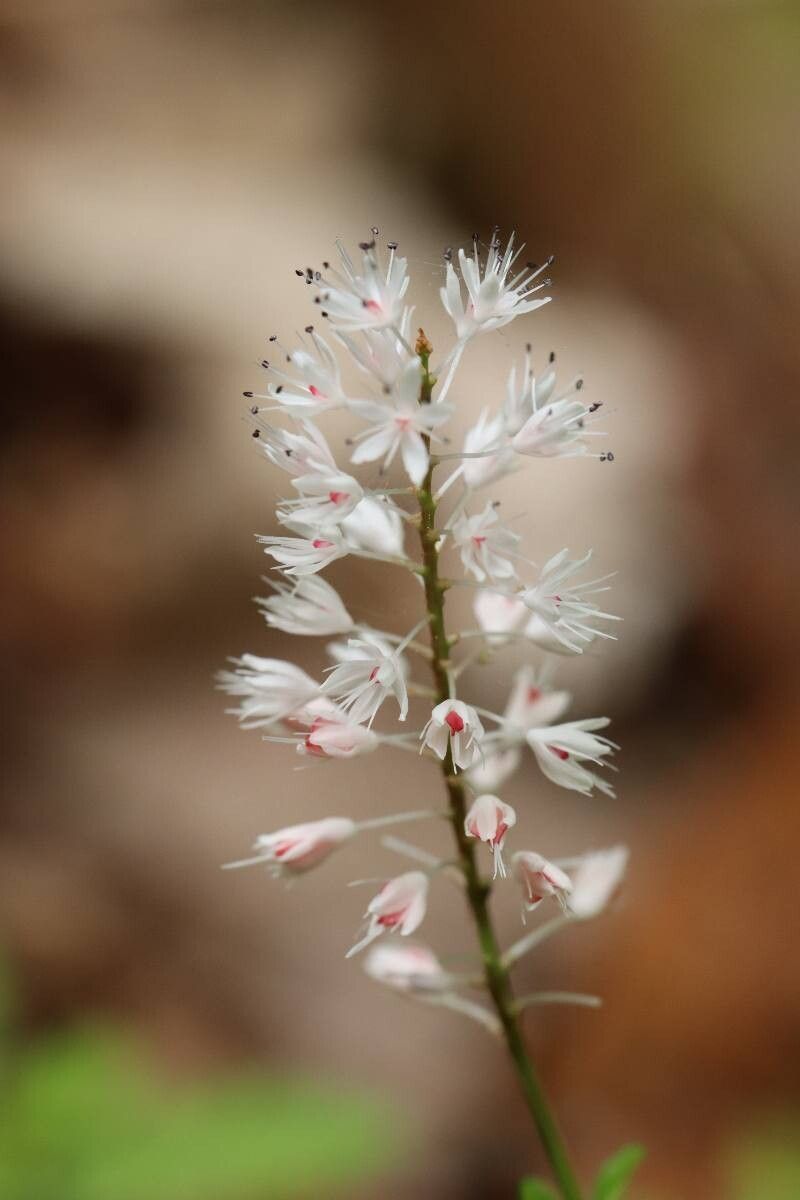
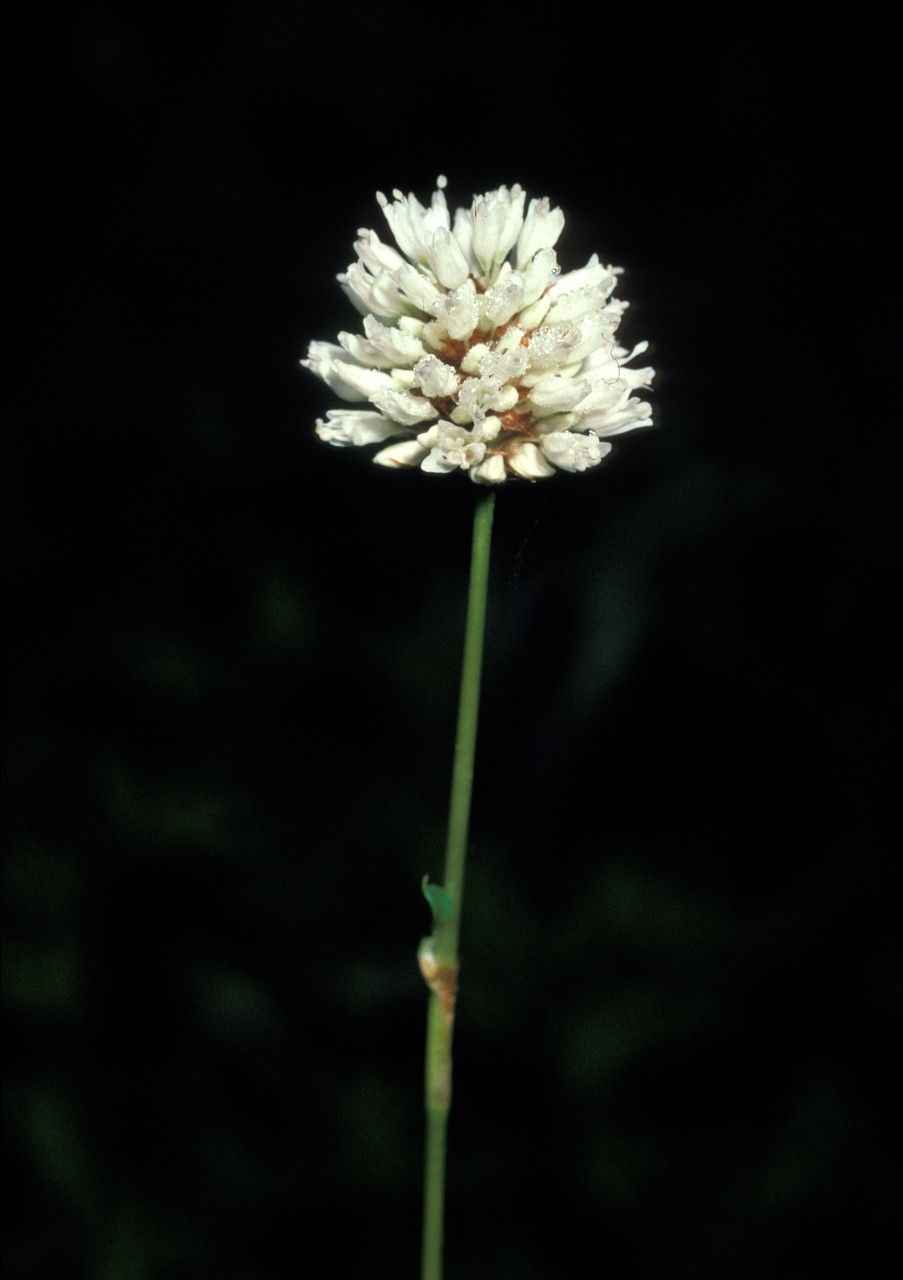
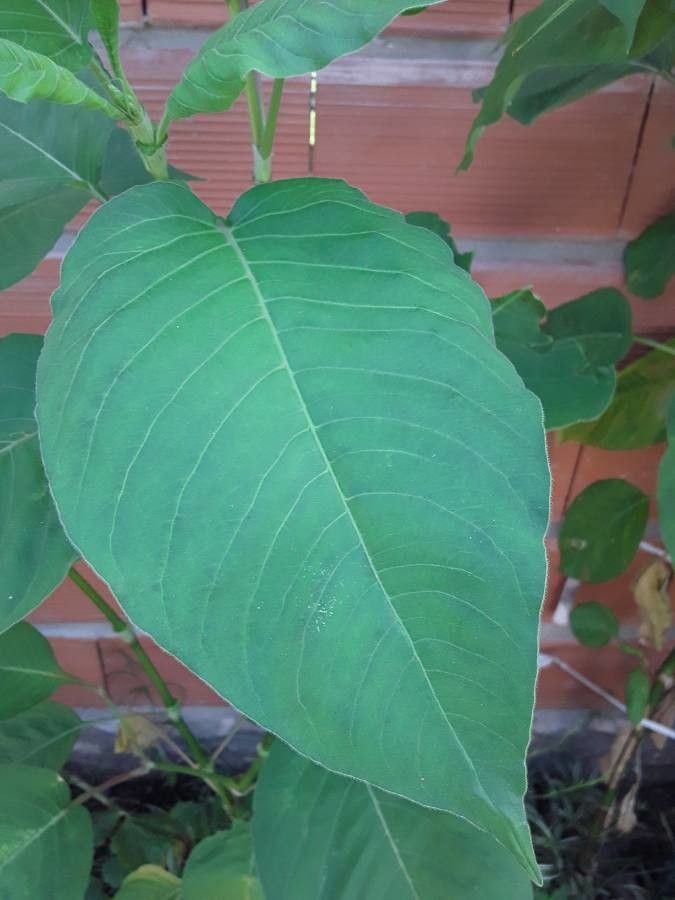
Bistorta amplexicaulis (synonym Persicaria amplexicaulis), the red bistort or mountain fleece, is a species of flowering plant in the buckwheat family Polygonaceae, native to China, the Himalayas, and Pakistan. It is a damp-loving herbaceous perennial growing to 1.2 m (4 ft) tall and wide, with heart-shaped pointed leaves, downy beneath, and narrow spikes of rose-red or white flowers in summer.Numerous cultivars have been developed for garden use, including 'Firetail'.
Red bistort has strong disease resistance and is usually not vulnerable to disease. However, it can be affected by pests and illnesses present in its environment. These infections are generally mild. In terms of care, this plant needs moderate maintenance. It should be trimmed regularly to maintain an attractive appearance and encourage healthy growth. Applying fertilizer can also help stimulate flowering. Red bistort is appropriate for anyone with outdoor space, such as a garden or patio, and does not require extensive care experience. It may demand more attention when grown indoors.
How to keep Bistorta Amplexicaulis.
Light
Red bistort does best with ample sunlight but can tolerate light shade. Its light requirements change during its life cycle, especially in the bud and flower phases when it needs abundant sun. It naturally occurs in sun-drenched habitats. Excessive sun can impede its growth, while insufficient light leads to poor flowering.
Water
Red bistort thrives in mountainous habitats and prefers moderate moisture, though it can tolerate short periods of dryness. To keep it properly hydrated without causing waterlogging, it should be watered weekly. As a herbaceous perennial, red bistort grows best outdoors, where natural rainfall helps support its growth cycles.
Temperature
Red bistort grows well in many environments but especially prefers temperatures of 41 to 89.6 °F (5 to 32 ℃). During different seasons, the gardener must carefully monitor and adjust the temperature to keep it within this range for optimal growth.
Fertilizer
The best time to fertilize Red bistort is in early spring, as it comes out of dormancy and starts active growth. Fertilizing supplies essential nutrients for healthy development. Although Red bistort has fairly low fertilizer requirements, an annual application can boost its survival and encourage improved, longer-lasting flowers.
Pruning
Red bistort is characterized by its tall, spiky flowers and broad leaves. To maintain its health and appearance, prune it from early to late spring. Cut back faded blooms and thin out old stems to promote better air circulation. Additionally, remove any damaged foliage to encourage healthy growth. These steps will help keep the red bistort tidy and vigorous, enhancing its ornamental value.
Botanical profile.
- Plant Type
- Herb
- Life Cycle
- Perennial
- Genus
- Bistorta
- Family
- Polygonaceae
- Hardiness Zone
- 4-8
- Mature Height
- 1.22 m
- Mature Spread
- 1.22 m
- Leaf Color
- Green
- Leaf Type
- Deciduous
- Flower Color
- Pink, Red
- Flower Size
- 0.51 cm to 1.02 cm
- Bloom Time
- Late spring, Early summer, Mid summer
- Planting Time
- Spring
- Harvest Time
- Mid summer
- Native Area
- Nepal, Afghanistan, India, Bhutan, Pakistan, China
Other names.
Reader questions.
How should I water my Red bistort plant?
To properly water the Red bistort, it is recommended to use filtered water at room temperature or slightly warmer. This is because tap water may contain harmful particles for the plant's health. The Red bistort originates from a warm environment, so cold water can be a shock to its system. It is best to avoid overhead watering as it can lead to foliage issues. Instead, it is advisable to apply filtered room temperature water directly to the soil until it is fully soaked. Soaking the soil benefits the plant by moisturizing the roots and supporting their spread and nutrient absorption.
Why is it necessary to add fertilizer to my Red bistort plant?
Fertilization is important for the Red bistort for a few reasons. It provides key nutrients that help the plant grow above and below ground. While Red bistort's fertilization needs are generally low, annual fertilization can be beneficial. It helps keep the plant alive and promotes better, longer-lasting flowers. So, for those who want their Red bistort to thrive, keeping up with annual fertilization is recommended.
What are the sunlight requirements for Red Bistort?
Red Bistort needs generous amounts of sunlight to flourish, particularly during its budding and flowering stages. It can tolerate slightly shaded areas but thrives in locations with abundant sunlight. Although overexposure to sunlight can hamper its growth, insufficient sunlight can lead to poor blooming. It's important to ensure that Red Bistort gets the right balance of sunlight throughout its various growth stages.
What temperature range is ideal for growing Red bistort?
Red bistort thrives in temperatures ranging from 41 to 89.6 °F (5 to 32 °C). To promote optimal growth, it's important for gardeners to monitor and adjust environmental temperatures to stay within this range throughout the various seasons. Red bistort possesses strong cold resistance, making special frost protection measures unnecessary for most winter conditions. However, in exceptionally cold winters where temperatures may fall below -30°C, providing cold protection by covering the plant with soil or straw is advisable. Additionally, watering the plant abundantly before the first freeze in autumn helps keep the soil moist and protects the plant from drought and water scarcity during winter and early spring.
What can I do if I give my Red bistort plant too much water or too little water?
Overwatering is a more common issue for Red bistort than underwatering. When Red bistort receives too much water, its stems and leaves may wilt and turn yellow. This prolonged overwatering can also lead to diseases like root rot, mold, and mildew, which can kill the plant. Underwatering is less common but still possible, causing the leaves to become brittle and brown. It's essential to spot signs of overwatering early to prevent irreversible damage. Reduce watering immediately if you notice early signs and check the soil's drainage. If it drains poorly, replace it with a well-draining potting mix. On the other hand, if there are signs of underwatering, water more regularly until the signs go away.
When should I fertilize my Red bistort for the best results?
The best time to fertilize a Red bistort is in late winter to early spring when the plant is coming out of dormancy and starting to grow. Fertilizing at this time will promote healthy growth and give the plant a good start for the season. Although it is generally preferred to fertilize in spring, it is also acceptable to fertilize in the fall. However, it is not recommended to fertilize in summer or winter.
What should I do if natural sunlight is not enough for my indoor Red Bistort?
For indoor plants like Red Bistort, when natural sunlight is insufficient, especially during winter or in less sunny spaces, artificial lighting is a beneficial solution. LEDs are recommended due to their ability to be customized for the specific light wavelengths plants need. The general guidance is 30-50W/sq ft for full sun plants, 20-30W/sq ft for partial sun, and 10-20W/sq ft for full shade. Adjust the light source to be 12-36 inches above the plant and provide 8-12 hours of light per day to mimic natural daylight conditions.
How does Red bistort respond to low temperatures, and what measures should be taken?
Red bistort is notably cold-tolerant and performs best when temperatures remain above 5°C. In winter, the plant should ideally not be exposed to temperatures below -25°C. Exposure to temperatures dropping below -30°C might not show immediate damage during winter, but could lead to reduced sprouting or a complete absence of sprouting come spring. As a solution, any parts of the plant that have failed to sprout by spring should be removed to encourage new growth.
How much should I water my Red bistort?
If your Red bistort plant is in a pot, the best way to check if it needs water is to stick your finger into the soil. If the top two to three inches of soil are dry, it's time to water it. For Red bistort plants growing outdoors in the ground, you can also use this method to test the soil. When the top few inches of soil are dry, it's time to water them. In the spring and early fall, watering once a week is usually enough. However, during extremely hot weather, you may need to water them two or more times per week. It's important to note that mature, well-established Red bistort plants can handle drought quite well.
When is the best time to not fertilize my Red bistort?
Avoid fertilizing your Red bistort except during the late winter and early spring. This plant only requires one feeding per year. If you continue fertilizing throughout spring, summer, and fall, you may overfertilize and face complications. The only exception is if you missed fertilizing in spring, then it is acceptable to fertilize it in the fall. Additionally, there is no need to fertilize this plant during the winter when it is in a dormant growth phase and does not produce new growth. It is not advisable to fertilize it during most of the winter.
What are the symptoms of light deficiency in Red Bistort?
Symptoms of light deficiency in Red Bistort include smaller new leaves, leggy or sparse growth, faster leaf drop, no new growth or slower growth, lighter-colored new leaves, chlorosis, sunscald, leaf curling, wilting, and leaf scorching. These symptoms indicate the plant is not receiving adequate sunlight, affecting its chlorophyll production, nutrient absorption, and overall health. It's crucial to address these symptoms promptly to ensure the well-being of your Red Bistort.
How does Red bistort react to high temperatures, and what are the solutions?
In the summer, it's crucial to ensure that the temperature around Red bistort does not exceed 32°C. If temperatures rise above 35°C, the plant's leaves may start to lighten in color, curl, become prone to sunburn, and in extreme cases, the entire plant might wilt and dry out. To mitigate these issues, sunburned and dried-up parts of the plant should be trimmed away. The plant should be moved to a shaded area or covered with a shade cloth to protect it from the midday and afternoon sun. It's also recommended to water the plant in the morning and evening to maintain soil moisture.