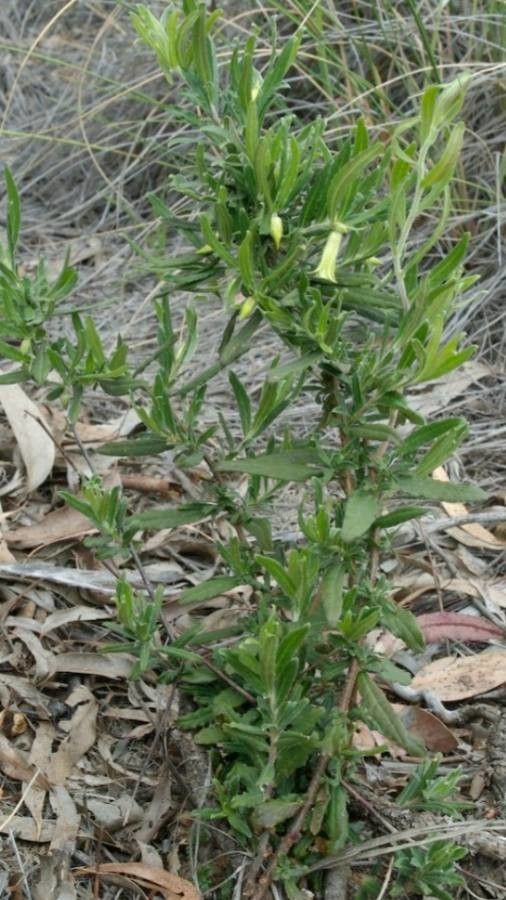
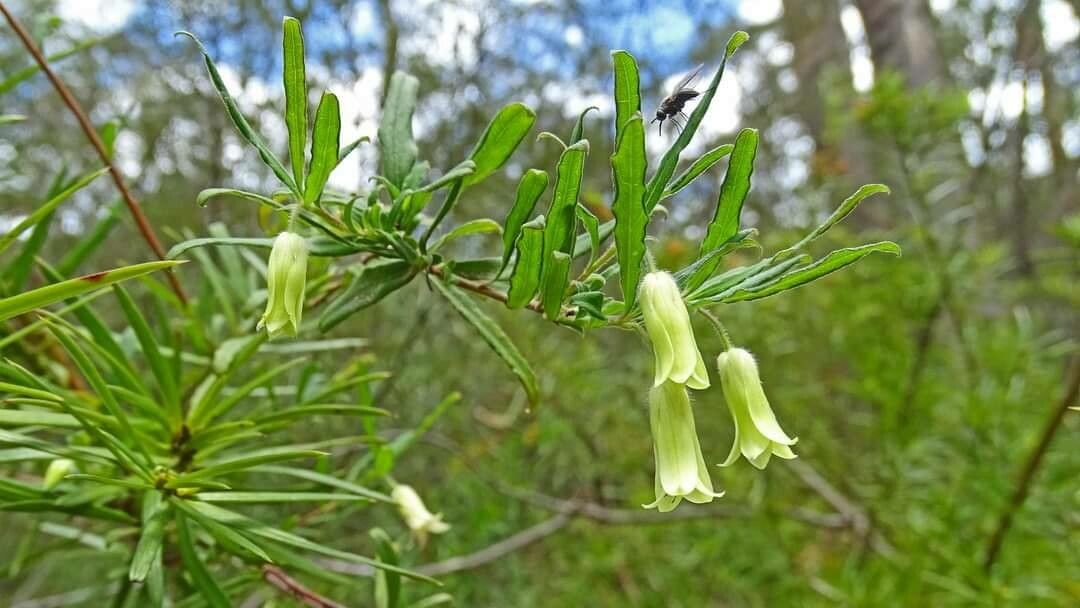
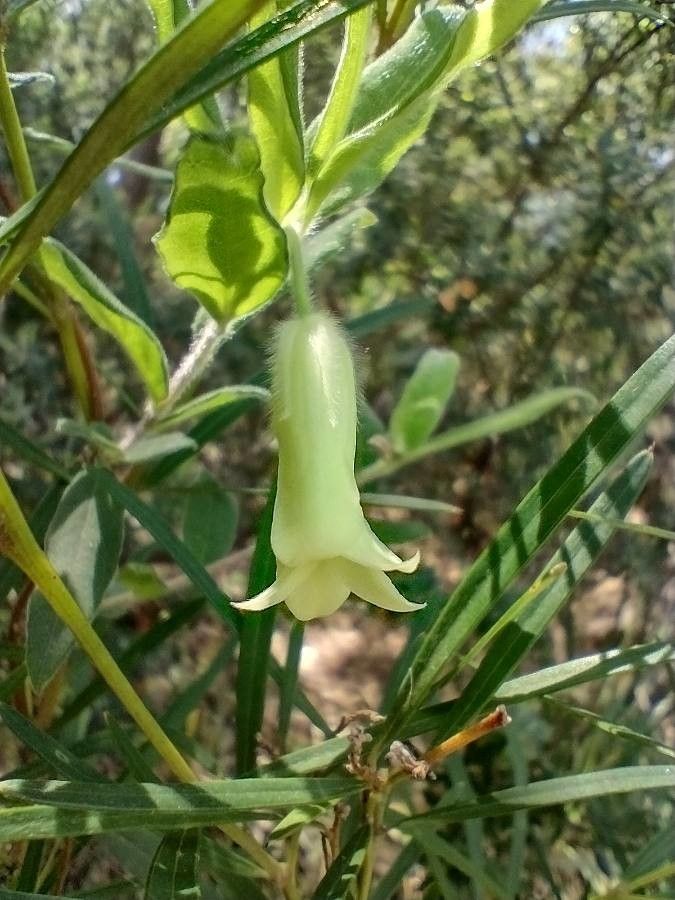
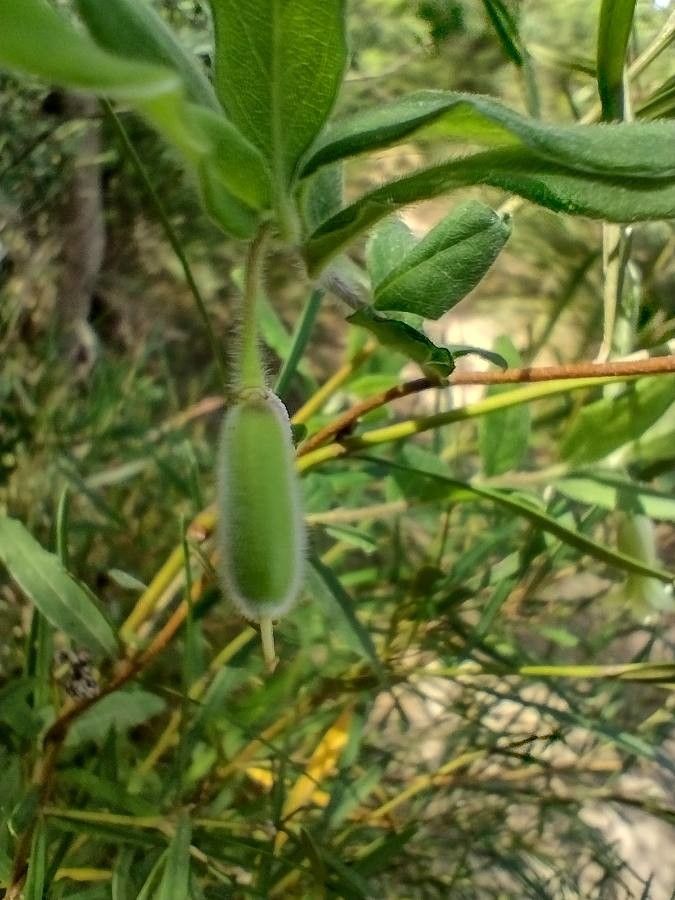
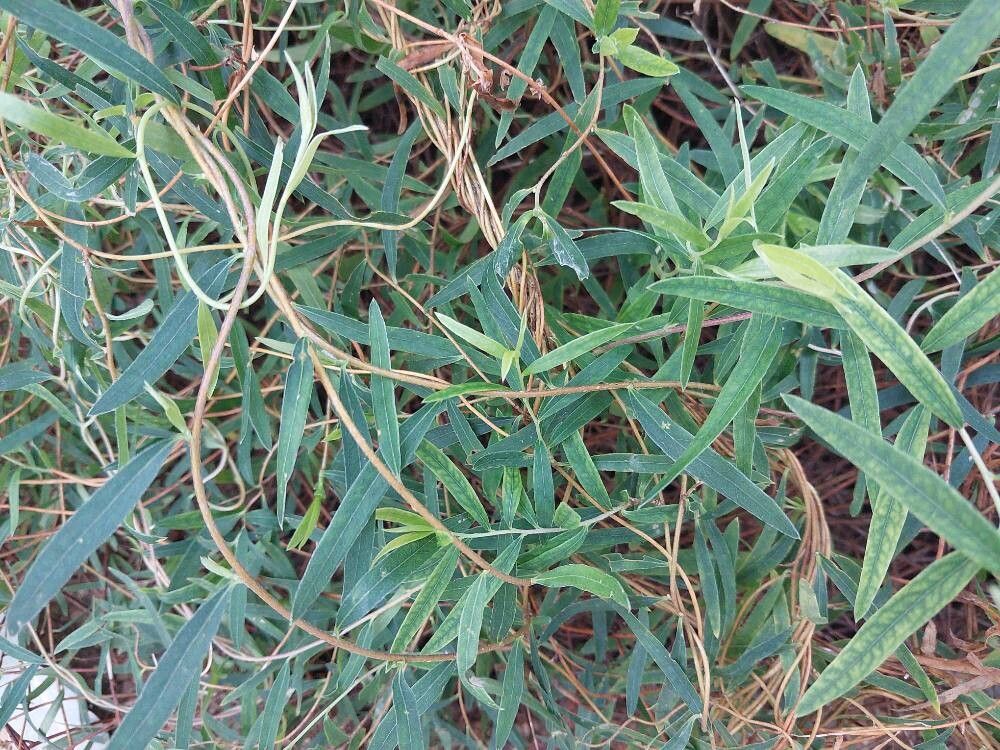
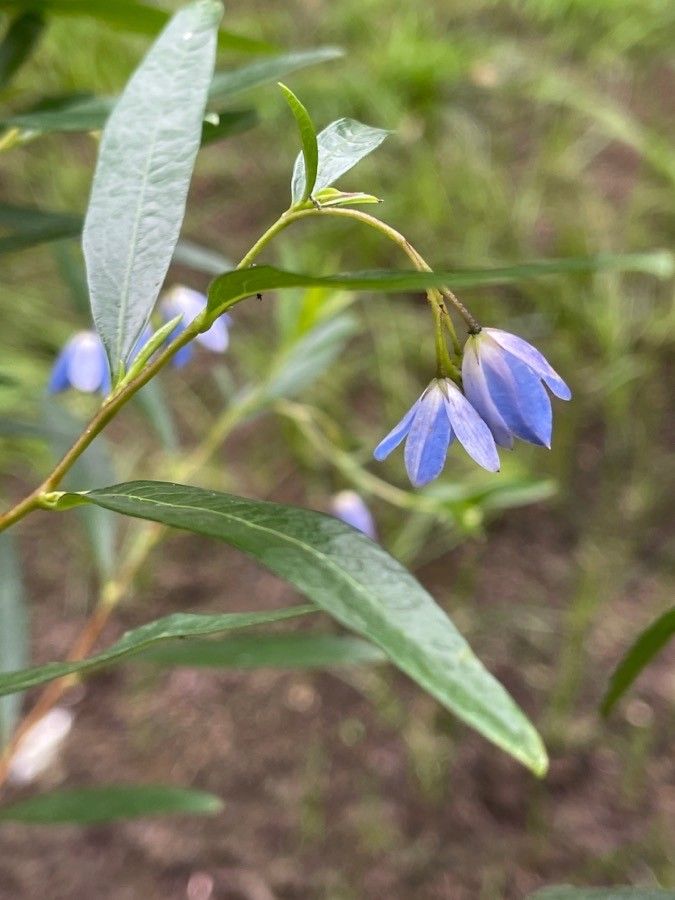
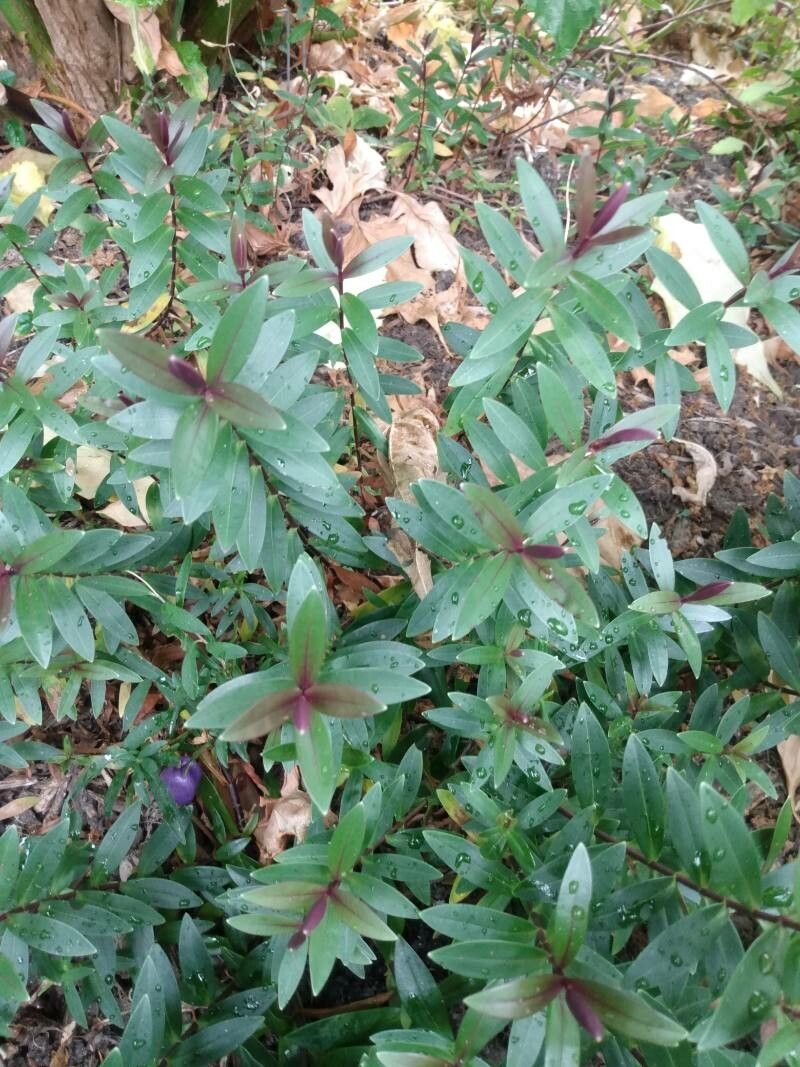
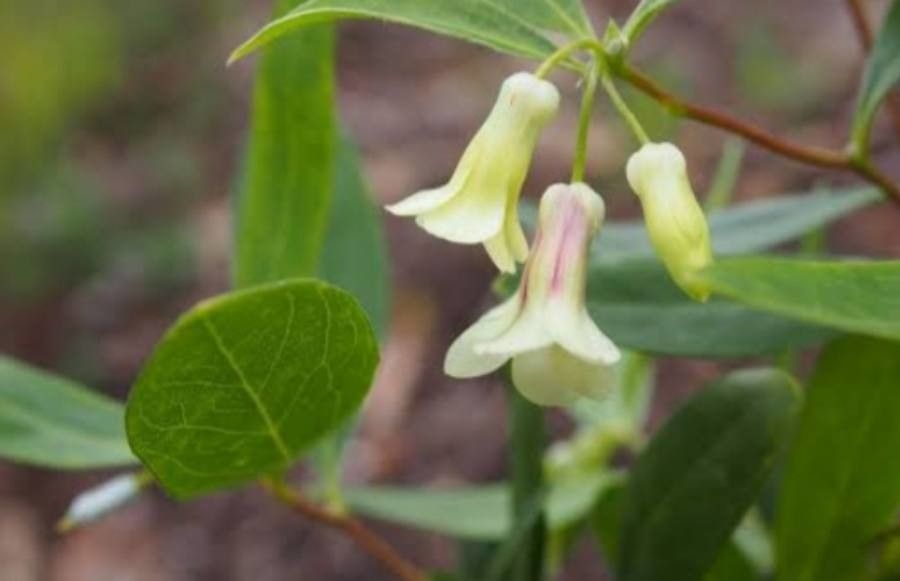
Billardiera scandens, commonly known as apple berry or apple dumpling, is a small shrub or twining plant of the Pittosporaceae family which occurs in forests in the coastal and tableland areas of all states and territories in Australia, apart from the Northern Territory and Western Australia. It has a silky touch and appearance that becomes more brittle as the dense growth matures. The inflorescence consists of single or paired yellow flowers, pink-tinged yellow sepals and bright yellow petals and is attached to a hairy drooping peduncle. The summer flush produces fruit of oblong berries up to 30 mm long, initially green in colour and covered in fine hair - somewhat akin to a tiny kiwifruit in appearance.
Apple berry demonstrates strong resistance to disease and is typically not susceptible to illnesses. Regarding care, this plant is fairly low-maintenance. When grown outdoors it needs little watering, and larger specimens usually do not require pruning. Smaller plants, however, should be pruned after they finish blooming. Apple berryt is appropriate for anyone with an outdoor area, such as a garden or deck, and does not call for extensive care experience.
How to keep Billardiera Scandens.
Light
Apple berry naturally occurs in habitats like forest understories or rocky areas, where it is subject to natural shade. It prefers partial sun but can tolerate both full sun and full shade, illustrating its hardy and adaptable nature.
Temperature
Apple berry is highly adaptable to a range of climate conditions, enduring both very hot summers and very cold winters. Nonetheless, it has an optimal temperature range for growth. If temperatures become too high, the plant can experience heat and humidity stress that may cause it to die. In areas where temperatures approach the lower limit of its cold tolerance, it is necessary to provide insulation to protect the plant.
Fertilizer
The apple berry plant needs sufficient nutrients to achieve optimal fruit production. Fertilize in early spring to encourage new growth and blossom development. Regular feeding helps the plant remain healthy, produce more flavorful fruit, and prevents nutrient-deficiency problems like yellow leaves and reduced fruit production.
Pruning
The apple berry is a climbing shrub known for its attractive bell-shaped flowers and edible fruits. To promote growth and maintain its shape, prune the plant in early spring by removing dead wood and thinning the vines. Be sure to sanitize your tools to prevent disease, and make clean cuts to facilitate quick healing.
Botanical profile.
- Plant Type
- Vine
- Life Cycle
- Perennial
- Genus
- Billardiera
- Family
- Pittosporaceae
- Hardiness Zone
- 8-11
- Mature Height
- 2.13 m to 3.96 m
- Mature Spread
- 0.91 m to 2.13 m
- Leaf Color
- Dark Green
- Leaf Type
- Evergreen
- Flower Size
- 1.02 cm to 2.03 cm
- Bloom Time
- Late spring, Early summer, Mid summer
- Planting Time
- Spring, Summer, Autumn
- Harvest Time
- Late summer, Early fall, Mid fall
Other names.