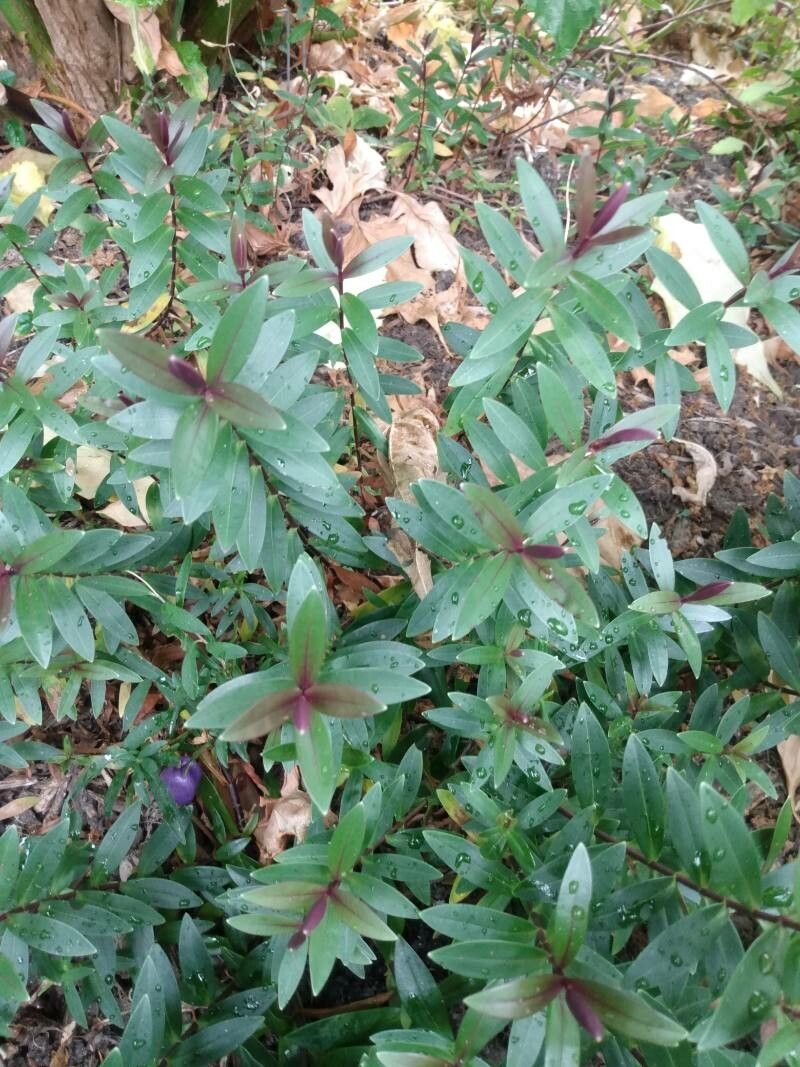
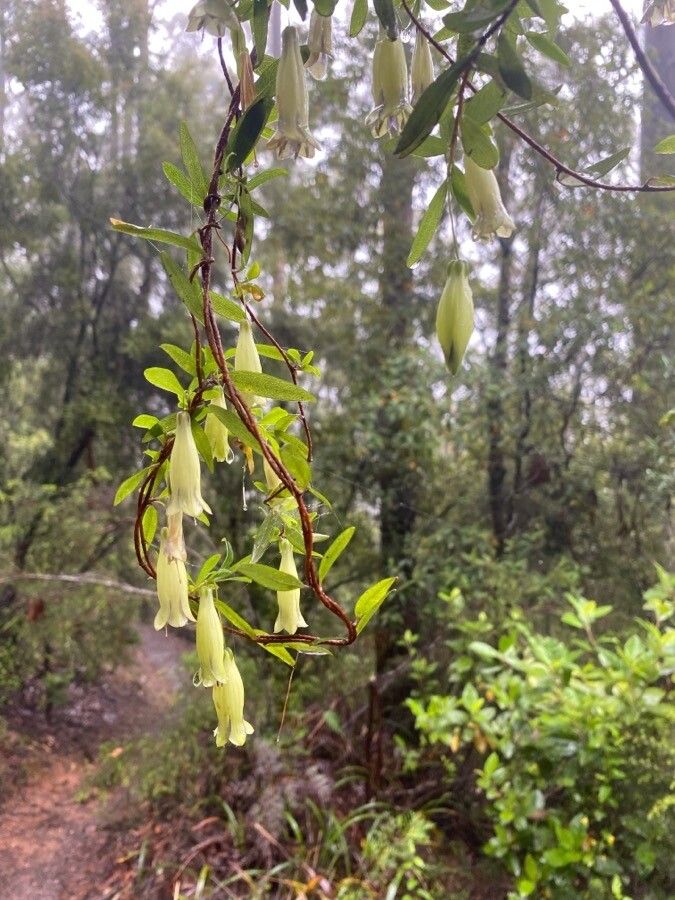
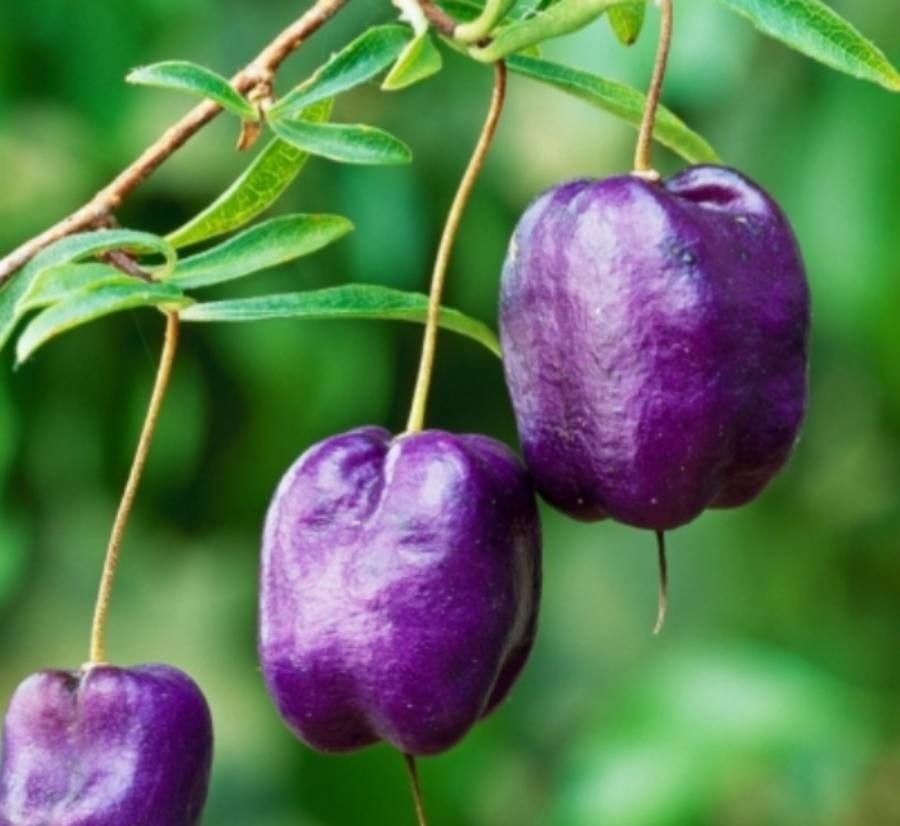
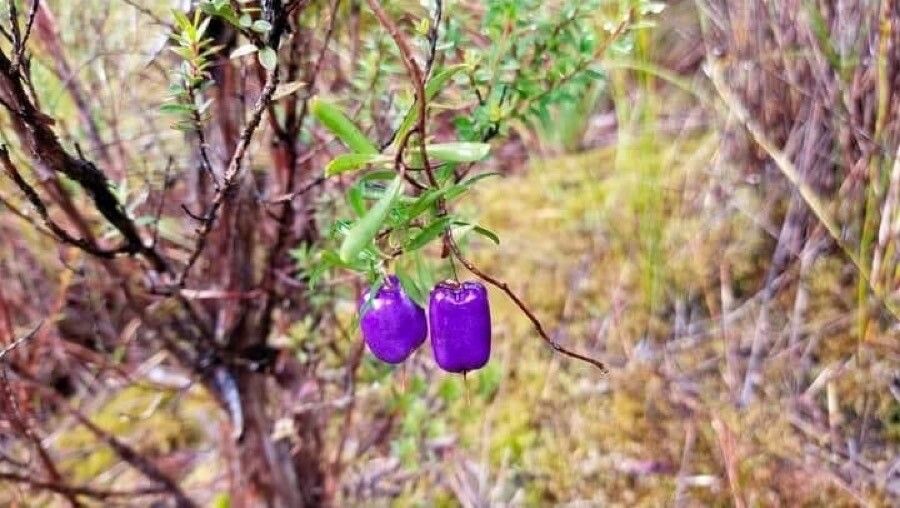
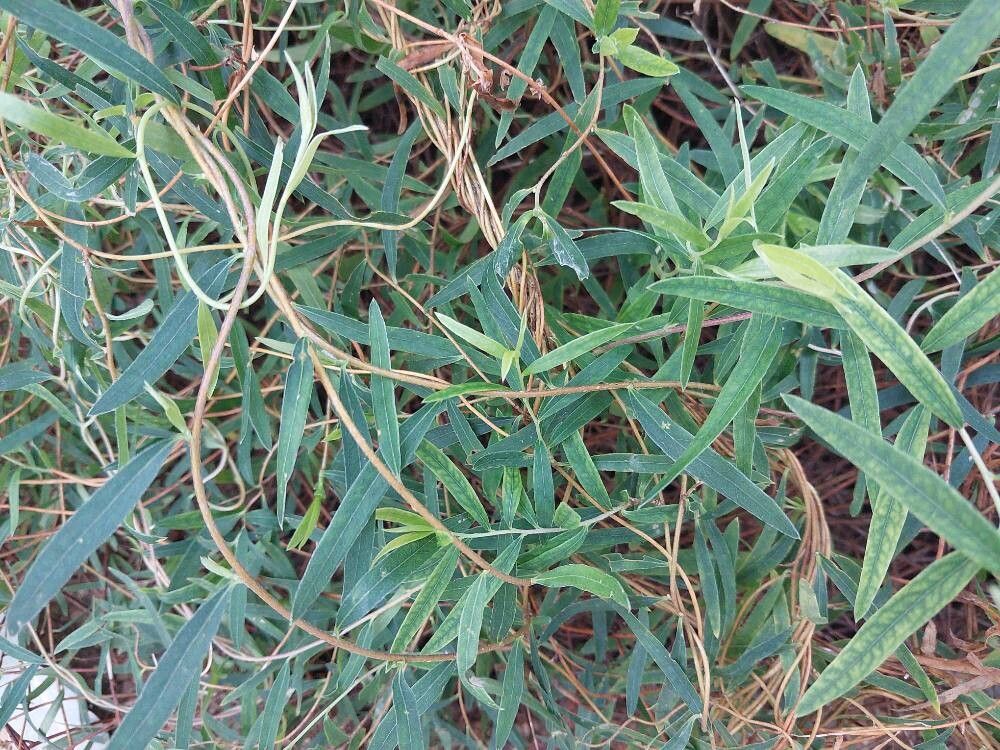
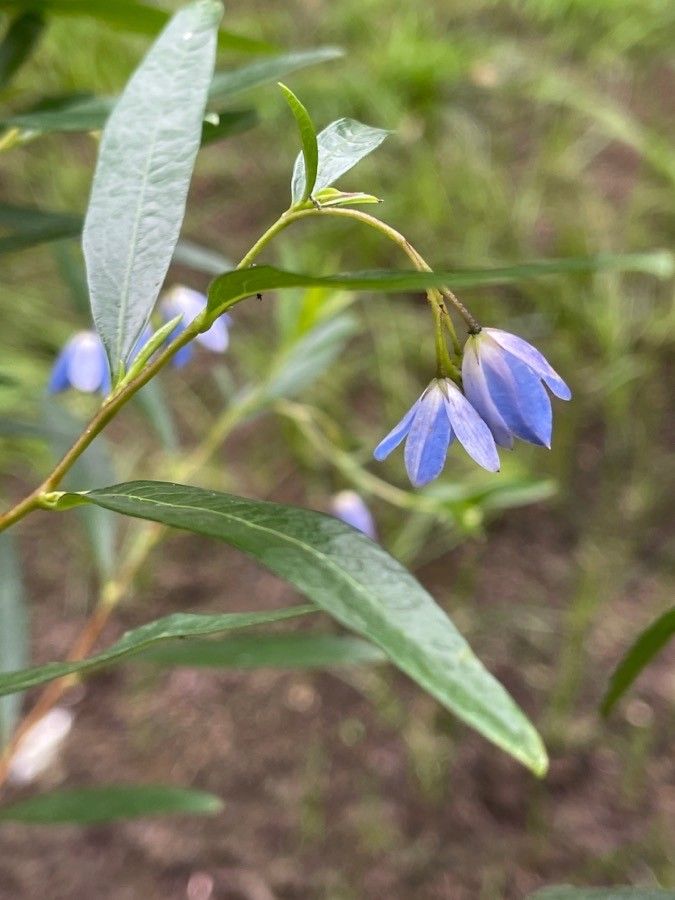
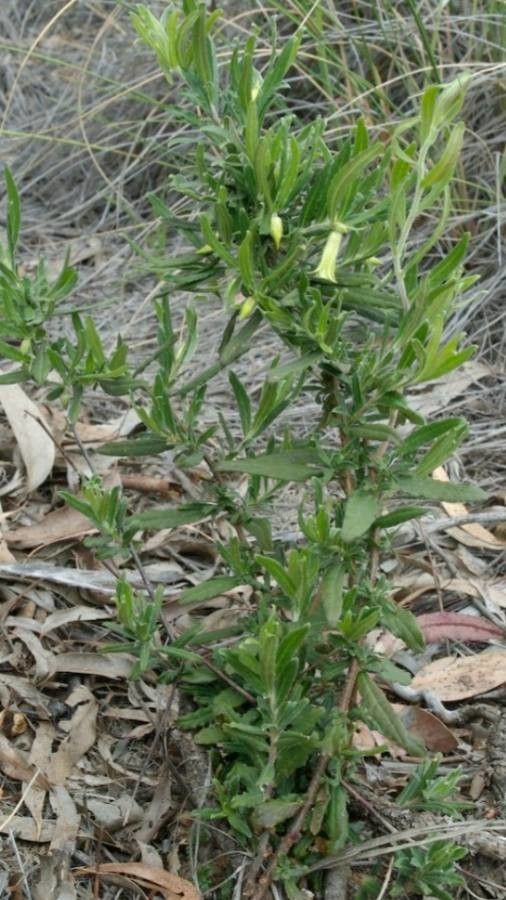
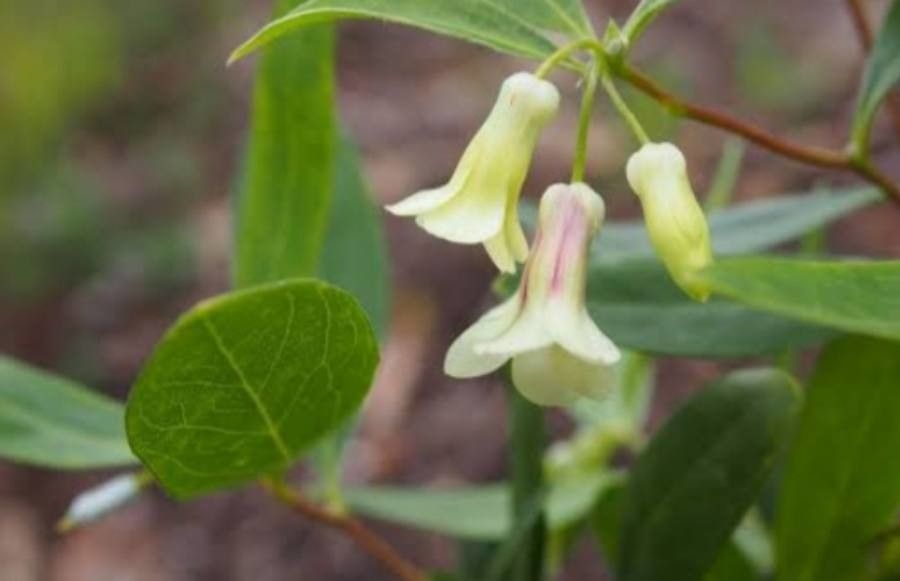
Billardiera longiflora, the purple apple-berry, is a small Australian vine found in cool, moist forests from southern New South Wales to Tasmania, where it is native. It was described by French botanist Jacques Labillardière in 1805. The slender leafed vine has greenish-yellow flowers and shiny purple fruit. The fruit is edible. It is classified within the family Pittosporaceae and the genus Billardiera.
Climbing blueberry is resistant to disease and is generally not prone to illnesses. In terms of care, this plant is fairly low-maintenance. When grown outdoors it needs minimal watering, and larger plants usually do not require pruning. Smaller plants, however, should be pruned after they have bloomed. Climbing blueberryt is suitable for anyone with an outdoor area, such as a garden or deck, and does not need a lot of care experience.
How to keep Billardiera Longiflora.
Light
Climbing blueberry is native to habitats like forest understories and rocky areas, where it grows in natural shade. It prefers partial sun but can tolerate full sun or full shade, showing its versatile, hardy nature.
Water
Originating from temperate regions, the climbing blueberry plant thrives in conditions of moderate soil moisture and can tolerate short periods of dryness. It requires watering only once every three weeks, aligning with its low-maintenance needs. Usually cultivated outdoors, the climbing blueberry easily adapts to seasonal rainfall, making it an excellent choice for water-conserving gardens.
Temperature
Climbing blueberry is highly adaptable to a variety of climate conditions, from scorching summers to freezing winters. Still, it has a preferred temperature range for healthy growth. If temperatures rise too much, the plant can suffer heat and humidity stress, which may kill it. In areas where temperatures near the lower limit of its cold tolerance, providing insulation is important to protect the plant.
Fertilizer
Timing is critical for fertilizing climbing blueberry. Fertilize in early spring and continue monthly until early summer. The fertilizer encourages attractive blooms and provides energy during both dormant and active growth stages.
Pruning
The climbing blueberry plant is characterized by its slender stems and vibrant blue berries. To encourage healthy growth and abundant flowering, prune the plant in early spring. This helps shape the plant and thin out crowded areas, improving air circulation. Regular pruning also maintains the plant's size and enhances its appearance, ensuring vigorous and productive growth cycles.
Botanical profile.
- Plant Type
- Vine
- Life Cycle
- Perennial
- Genus
- Billardiera
- Family
- Pittosporaceae
- Hardiness Zone
- 8-11
- Mature Height
- 2.44 m
- Mature Spread
- 1.52 m
- Leaf Color
- Green, Blue
- Leaf Type
- Evergreen
- Flower Color
- Yellow, Cream
- Flower Size
- 2.03 cm to 3.05 cm
- Bloom Time
- Summer
- Planting Time
- Spring, Summer, Autumn
- Harvest Time
- Fall
Reader questions.
What are the sunlight requirements for plants?
Plants have varying sunlight requirements to thrive. Partial sun refers to about 3-6 hours of sunlight per day, while full sun means the plant should receive over 6 hours of sunlight daily. It's important to observe how sunlight moves through your garden throughout the day and choose locations that offer the right balance of light and shade to ensure your plants grow healthily.
What are the essentials for growing Climbing blueberry?
Climbing blueberry, with its botanical name Billardiera longiflora, is native to forest understories and rocky areas, thriving in partial sun to full shade conditions. This makes it a versatile perennial herbaceous plant. For indoor plants lacking natural sunlight, especially during winter or in less sunny spaces, artificial lighting becomes crucial. LED lights are recommended as they can be adjusted to provide specific light wavelengths needed by plants. For optimal growth, full sun plants require 30-50W/sq ft, partial sun plants need 20-30W/sq ft, and full shade plants should have 10-20W/sq ft of artificial light. The light source should be placed 12-36 inches above the plant for 8-12 hours daily to mimic natural sunlight.
What are common symptoms of light deficiency in climbing blueberry plants?
When Climbing blueberry plants do not receive sufficient light, they may exhibit several symptoms indicating a need for more sunlight or artificial light. Such symptoms include the development of smaller leaves, leggy or sparse growth, faster leaf drop, slower or halted new growth, and lighter-colored or irregularly colored new leaves. Chlorosis, or the yellowing of leaves due to a lack of chlorophyll, can occur alongside sunscald, which is damage from excessive light exposure, resulting in pale or necrotic spots on the plant tissue. Leaf curling, wilting, and leaf scorching are also common stress responses to inadequate lighting conditions.
What are the solutions for Climbing blueberry plants facing light deficiency?
To address light deficiency in Climbing blueberry plants, a gradual adaptation to increasing light intensities is recommended. For indoor plants, gradually moving them to sunnier spots each week until they receive the appropriate 3-6 hours of direct sunlight daily can be beneficial. If moving the plant is not feasible, supplementing with artificial light, such as desk or ceiling lamps for at least 8 hours a day or investing in professional grow lights, can provide the necessary light exposure. Outdoors, plants should similarly be moved gradually to sunnier locations to prevent sunburn. Reducing obstructions like pruning trees or transplanting the plant during its dormant period can also enhance sunlight access. It's important to note that parts of the plant already damaged by insufficient light may not recover, but new growth should be healthy with improved light conditions.