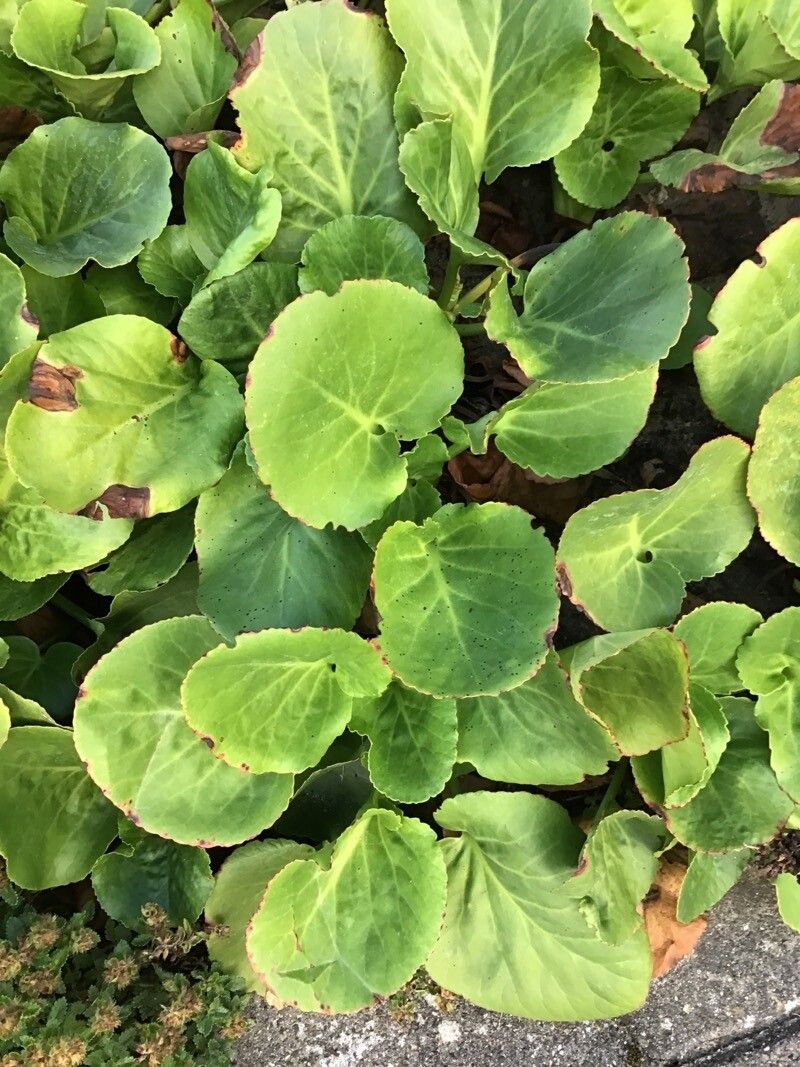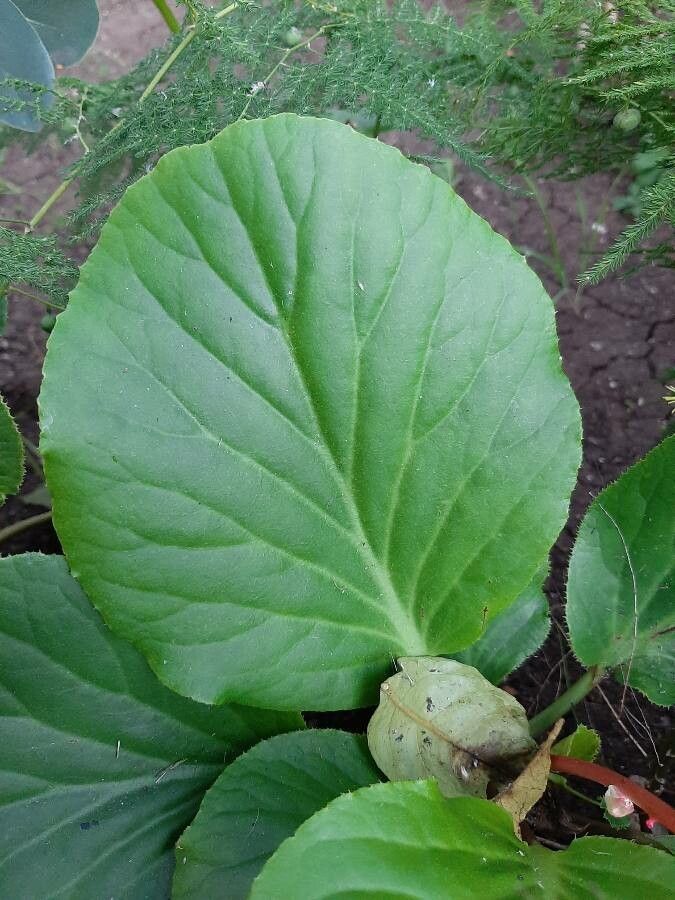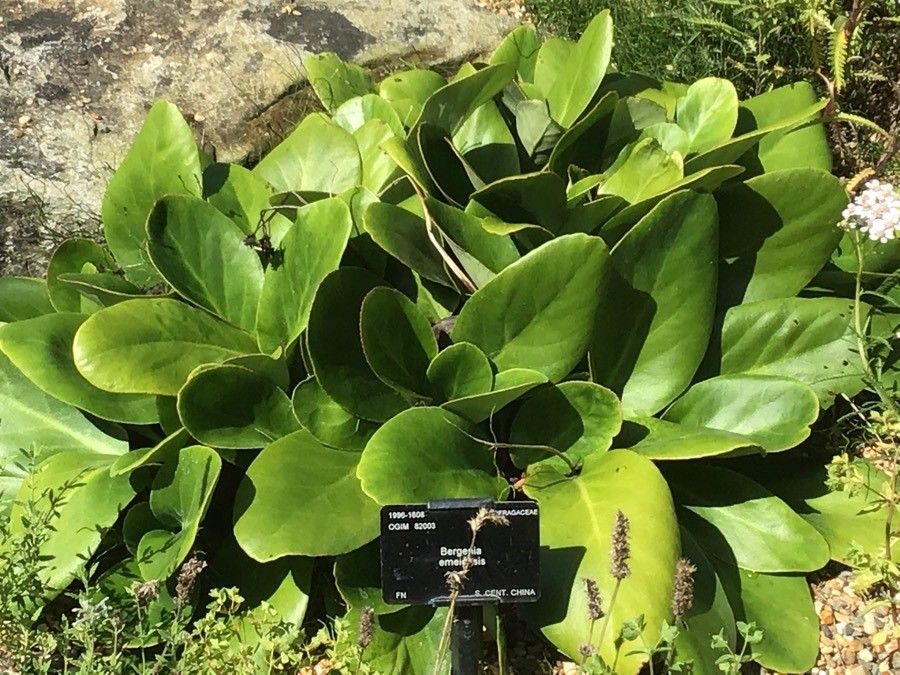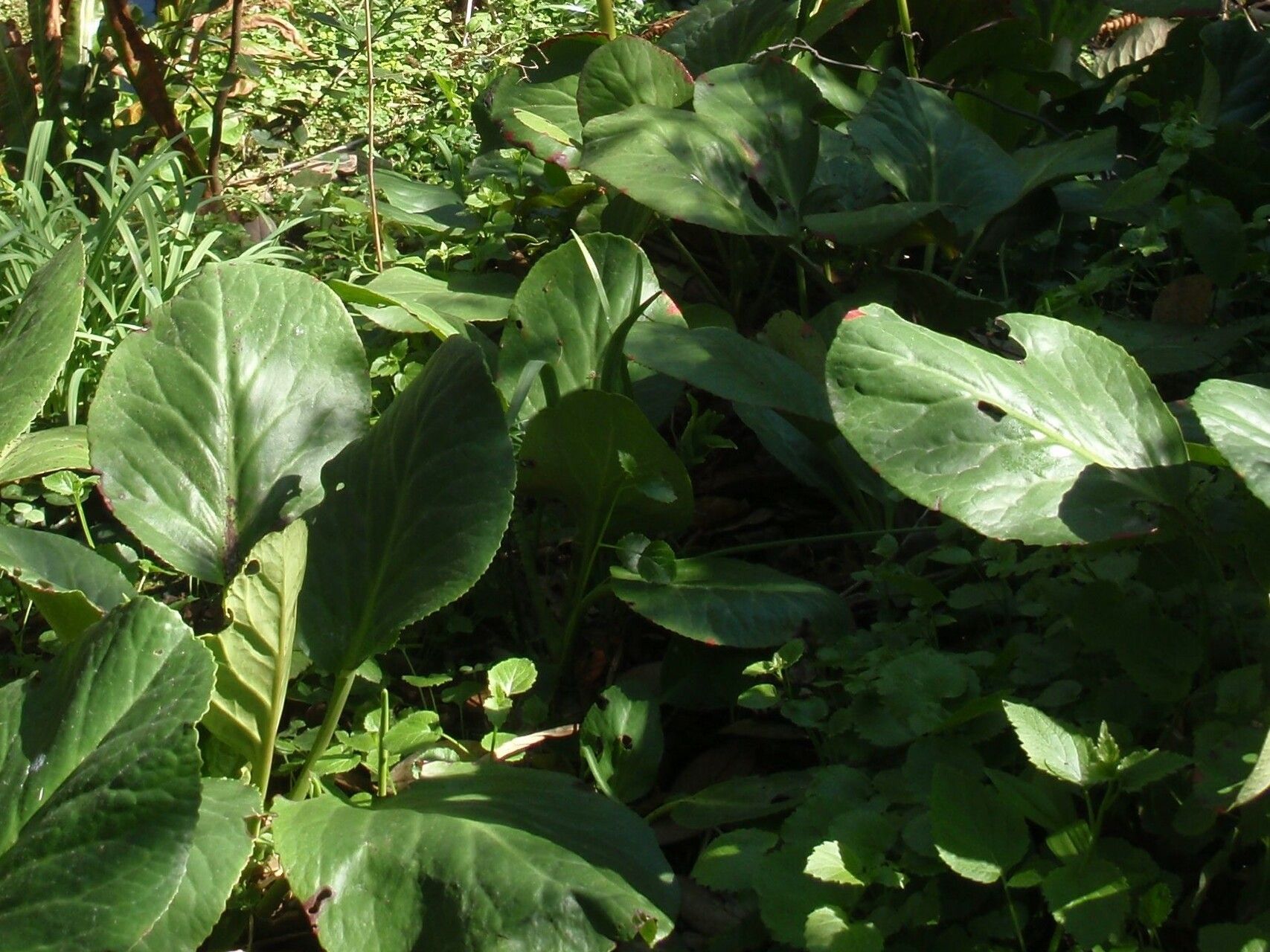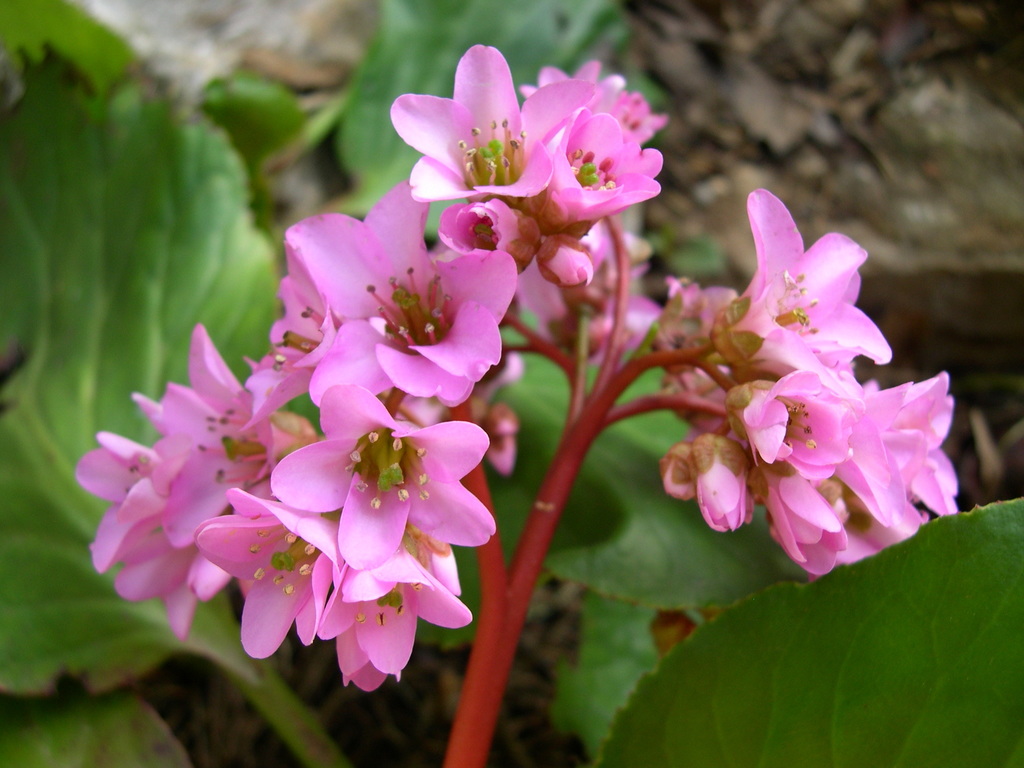
Bergenia crassifolia, commonly known as Siberian Bergenia or Heart-Leaved Bergenia, is a perennial herbaceous plant belonging to the Saxifragaceae family. Native to Siberia and other parts of Asia, it has been widely cultivated in gardens around the world as an ornamental plant. This plant features large, glossy, heart-shaped leaves that can grow up to 30 cm in length. These evergreen leaves turn a striking reddish-bronze in the winter. The flowers of Bergenia crassifolia are pink or magenta, bell-shaped, and cluster atop a thick stem. Bergenia crassifolia prefers moist, well-drained soil but can tolerate dry conditions once established. It thrives in partial shade but can also endure full sun exposure. Traditionally, the plant has been used for its anti-inflammatory properties by healers for centuries. Extracts from Bergenia crassifolia have also been found to possess antioxidant properties, potentially offering protection against cellular damage caused by free radicals. In summary, Bergenia crassifolia is not only an attractive ornamental plant but also boasts medicinal benefits, making it a popular choice among gardeners worldwide.
Heartleaf bergenia, scientifically known as Bergenia crassifolia, is also referred to by its botanical name Bergenia cordifolia. The term 'cordifolia' in its name means 'heart-shaped,' highlighting the plant's large, thick leaves. The common name, heartleaf bergenia, is inspired by this distinct and appealing feature of the plant: its heart-shaped leaves.
Heartleaf bergenia shows strong resistance to diseases and is generally not very susceptible to them. Still, it can be affected by pests and diseases present in its environment. Such infections are typically mild. Regarding maintenance, this plant needs a moderate level of care. It should be pruned on a regular basis to preserve an attractive look and support healthy growth. Applying fertilizer can also aid in encouraging blooms. Heartleaf bergenia is well suited for anyone who has outdoor space, like a garden or patio, and does not demand extensive gardening experience. It may need extra attention if cultivated indoors.
How to keep Bergenia Crassifolia.
Light
Heartleaf bergenia prefers a balance of sun and shade during the day, showing its ability to cope with different light levels. Native to areas where overhead foliage produces dappled light, it can tolerate full shade and endure substantial sunlight. Too much exposure can burn the leaves, while too little light may inhibit its growth.
Water
Heartleaf bergenia is well-suited to rocky terrains and requires minimal watering because of its waxy, moisture-retentive leaves. Although it benefits from a weekly watering routine, this plant keeps its foliage year-round. To ensure its health, especially when grown outdoors, maintaining consistent soil moisture is important. Heartleaf bergenia can beautifully enhance the landscape of your garden.
Humidity
This plant needs special care because it loves high humidity levels of 60-80% or more. The best way to achieve this is by placing a humidifier near the plant. Daily misting is also essential! Make sure the room has good ventilation.
Temperature
Heartleaf bergenia is native to climates with temperatures from 32 to 90 °F (0 to 32 ℃). It prefers cooler temperatures but can tolerate warmer environments up to 90 °F (32 ℃). Seasonal adjustments may be required in extreme cold.
Fertilizer
Early spring, as the Heartleaf bergenia comes out of dormancy and starts active growth, is the best time to fertilize it. Fertilization supplies essential nutrients needed for healthy development. While Heartleaf bergenia has fairly low fertilizer requirements, applying fertilizer annually can improve its survival and encourage better, longer-lasting flowers.
Pruning
Heartleaf bergenia is known for its appealing evergreen leaves and clusters of pink flowers. To keep the plant healthy and looking its best, prune it in early spring or late winter. During pruning, remove any dead foliage, trim off spent flowers, and thin out any crowded areas. This will improve air circulation, enhance blooming, maintain the plant's shape, and support vigorous growth. As a result, you’ll enjoy a robust display throughout the year.
Toxicity
Bergenia is toxic to dogs, but has not demonstrated toxicity to cats or people.
Further reading →
The toxicity and danger assessments provided are for reference only. We do not assure their accuracy, so it's crucial not to depend on them. Seek professional advice when necessary for accurate guidance.
Botanical profile.
- Plant Type
- Herb
- Life Cycle
- Perennial
- Genus
- Bergenia
- Family
- Saxifragaceae
- Hardiness Zone
- 3-7
- Mature Height
- 15 cm to 31 cm
- Mature Spread
- 30 cm to 61 cm
- Leaf Color
- Green, Red
- Leaf Type
- Evergreen
- Flower Color
- Pink
- Flower Size
- 0.51 cm to 0.51 cm
- Bloom Time
- Mid spring, Late spring
- Planting Time
- Spring
- Harvest Time
- Early summer, Mid summer
- Native Area
- Russia, Kazakhstan, Mongolia, Koppen, China
Other names.
Reader questions.
How should I water my Heartleaf bergenia to make sure it's well taken care of?
To properly water the Heartleaf bergenia, it's best to use filtered water at room temperature. Tap water may have harmful particles that can negatively impact the plant's health. Since the Heartleaf bergenia is acclimated to warm environments, it's important to avoid using cold water, which can be a shock to its system. Furthermore, overhead watering should be avoided as it can lead to issues with the foliage. Instead, slowly and thoroughly apply your filtered room temperature water directly to the soil until it is fully saturated. This will provide the plant with adequate moisture to nourish the roots and support their growth and nutrient absorption.
Why should I put fertilizer on my Heartleaf bergenia plant?
Fertilization is important for the Heartleaf bergenia for various reasons. It provides essential nutrients that promote growth both above and below the ground. Although the fertilization needs of a Heartleaf bergenia are generally low, it can still benefit greatly from annual fertilization. This practice not only helps the plant survive but also enhances flower production and longevity. Therefore, if you want your Heartleaf bergenia to look its best, make sure to fertilize it annually.
What are the sunlight requirements for Heartleaf Bergenia?
Heartleaf Bergenia thrives in a range of light conditions, benefiting from a mix of sun and shade throughout the day. This plant is quite adaptable, capable of growing in full shade while also tolerating generous sun exposure. However, it's essential to avoid overexposure to prevent scorched leaves, and ensure it receives enough light to avoid stunted growth. The ideal scenario involves about 3-6 hours of sunlight per day for partial sun, with more than 6 hours for plants in full sun or full shade. Observing how sunlight moves through your garden and choosing the right spots is critical for the happiness of your plants.
What is the ideal climate for Heartleaf Bergenia?
Heartleaf bergenia, also known by its botanical name Bergenia crassifolia, thrives in climates where temperatures range between 32 to 90°F (0 to 32°C). It is well-adapted to cooler environments but can also withstand warmer conditions up to 90°F (32°C). Although it is highly tolerant of cold temperatures and does not require special frost protection, it is important to water the plant generously before the first freeze in autumn to maintain moist soil throughout the winter and early spring, aiding in drought prevention.
What should I do if I give my Heartleaf bergenia too much or too little water?
Overwatering is a more common problem for Heartleaf bergenia. It can cause wilting, yellowing leaves, and lead to diseases like root rot, mold, and mildew. Underwatering is less common, but leaves may become brittle and brown when it occurs. It's important to notice and address signs of overwatering early, as some diseases may be irreversible if not corrected promptly. Reduce watering immediately if signs of overwatering are observed and consider replacing poorly draining soil. In contrast, if signs of underwatering are noticed, simply water the plant more regularly until the signs improve.
When should I put fertilizer on my Heartleaf bergenia?
The best time to fertilize a Heartleaf bergenia is in late winter to early spring. This is when the plant is transitioning from dormancy to active growth. Fertilizing at this time promotes healthy growth and a strong start to the season. While early spring is generally the most beneficial, fertilizing in the fall is also acceptable. However, it is not recommended to fertilize the plant during summer or winter.
How do you use artificial lighting for indoor Heartleaf Bergenia plants?
When natural sunlight is insufficient for indoor Heartleaf Bergenia plants, especially during winter or in less sunny spaces, artificial lighting can be a vital solution. The right type of artificial light, like LED lights, can be customized to provide the specific wavelengths needed by plants. The amount of light varies by plant need: full sun plants require 30-50W/sq ft, partial sun plants need 20-30W/sq ft, and full shade plants need 10-20W/sq ft. Placement should be 12-36 inches above the plant, mimicking natural sunlight, and most plants benefit from 8-12 hours of light per day.
How does low temperature affect Heartleaf Bergenia?
Heartleaf bergenia is notably robust against cold, capable of enduring temperatures down to -35°C. However, if temperatures fall below this threshold, the plant might not show immediate distress during the winter, but there could be a noticeable decline in sprouting, or it might not sprout at all come springtime. The recommended solution for such scenarios is to patiently wait until spring and then remove any parts of the plant that have failed to sprout.
How frequently should I water my Heartleaf bergenia?
If your Heartleaf bergenia is in a pot, the best way to determine if it needs water is to stick your finger in the soil. If the top two to three inches of soil are dry, it's time to water it. If you're growing it outdoors, you can use a similar method to test the soil. When the top few inches of soil have dried out, it's time to water. Typically, during spring and early fall, watering once a week is enough. However, during extremely hot weather, you may need to water twice a week or even more. It's worth noting that mature, well-established Heartleaf bergenias have a remarkable ability to tolerate dry conditions.
When is it best not to add fertilizer to my Heartleaf bergenia?
To properly care for your Heartleaf bergenia, it is important to fertilize it only during specific times of the year. Late winter and early spring are the ideal periods for fertilizing this plant, as its low fertilization needs can be satisfied with just one annual feeding. Overfertilization and its associated issues can be easily avoided by refraining from fertilizing during spring, summer, and fall, unless you neglected to fertilize in the spring, in which case it is acceptable to fertilize in the fall. Additionally, fertilizing during the winter is unnecessary, as the plant enters a dormant growth phase and does not produce new growth during this time.
What are the symptoms of light deficiency in Heartleaf Bergenia?
Symptoms of light deficiency in Heartleaf Bergenia include smaller new leaves, leggy or sparse growth, faster leaf drop, slower or no new growth, and lighter-colored new leaves. Conditions like chlorosis, sunscald, leaf curling, wilting, and leaf scorching also indicate issues with sunlight exposure, either too much or too little. These symptoms vary but all point towards the importance of optimizing light conditions to ensure the health and vitality of the plant.
What should I do if Heartleaf Bergenia is exposed to high temperatures?
Heartleaf bergenia is sensitive to high temperatures. Growth may cease, and the plant becomes susceptible to rot if temperatures exceed 32°C. To mitigate damage, sunburned or dried-up parts should be trimmed. Relocating the plant to a shaded area or using a shade cloth can protect it from intense afternoon heat. Ensuring the soil remains moist through watering in the morning and evening is also crucial under high-temperature conditions.