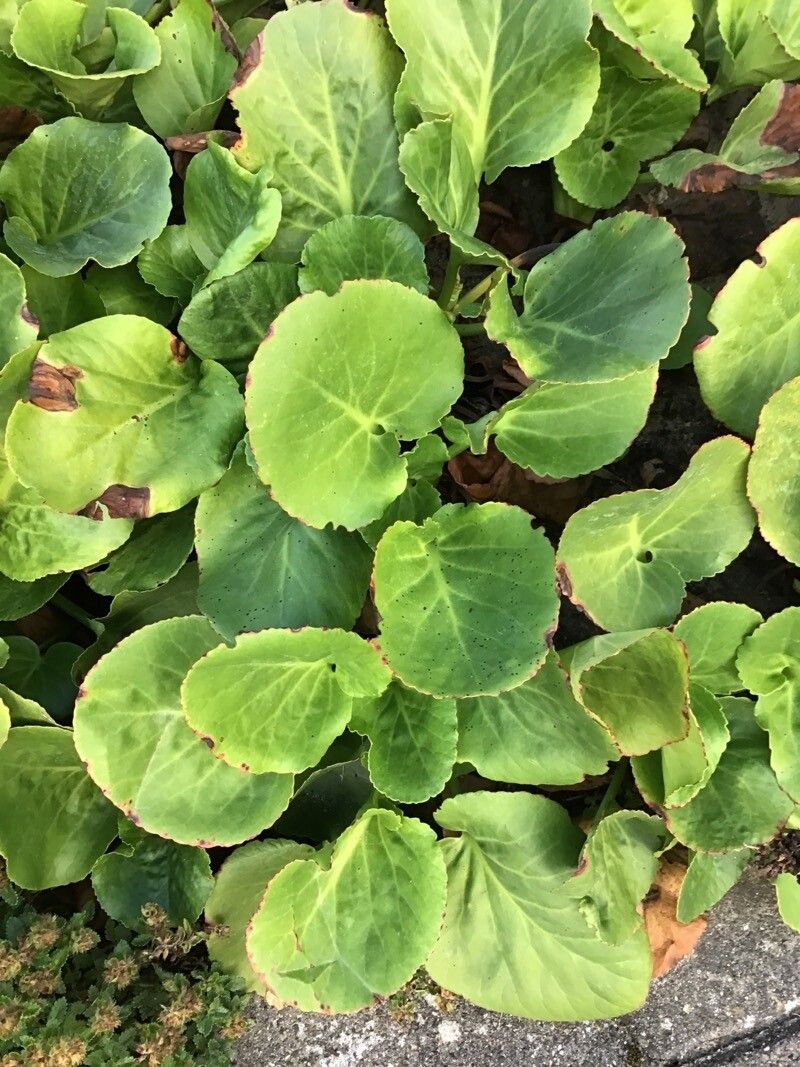
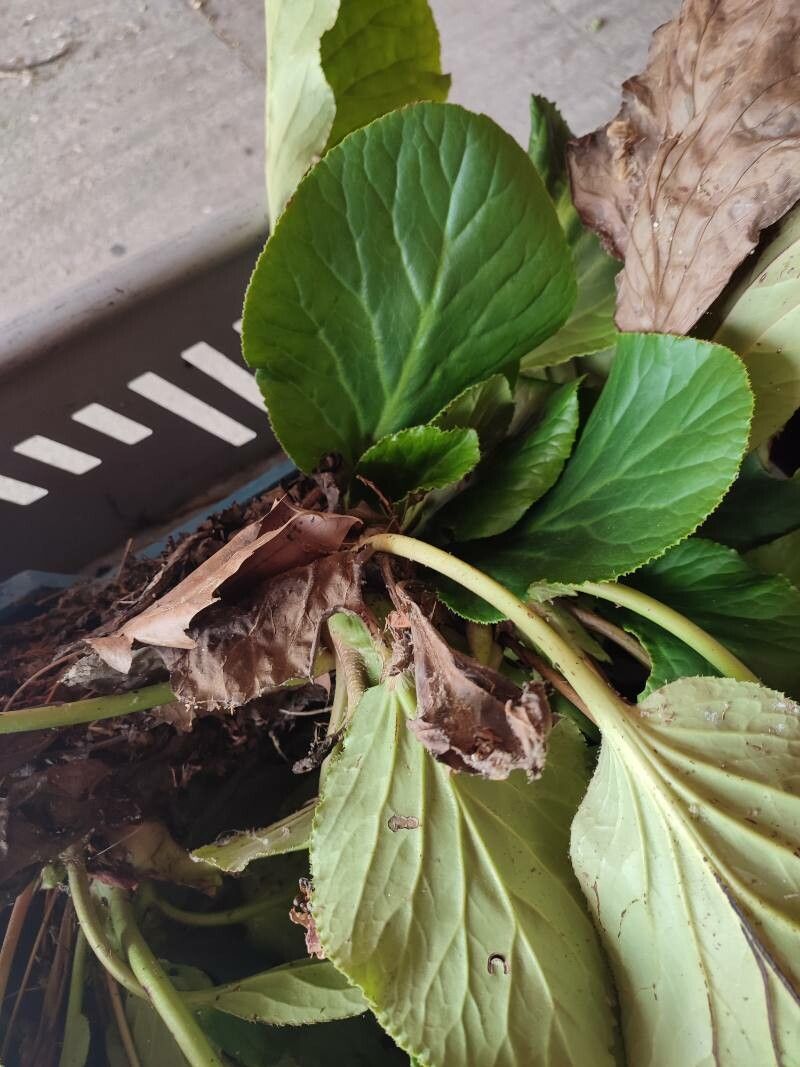
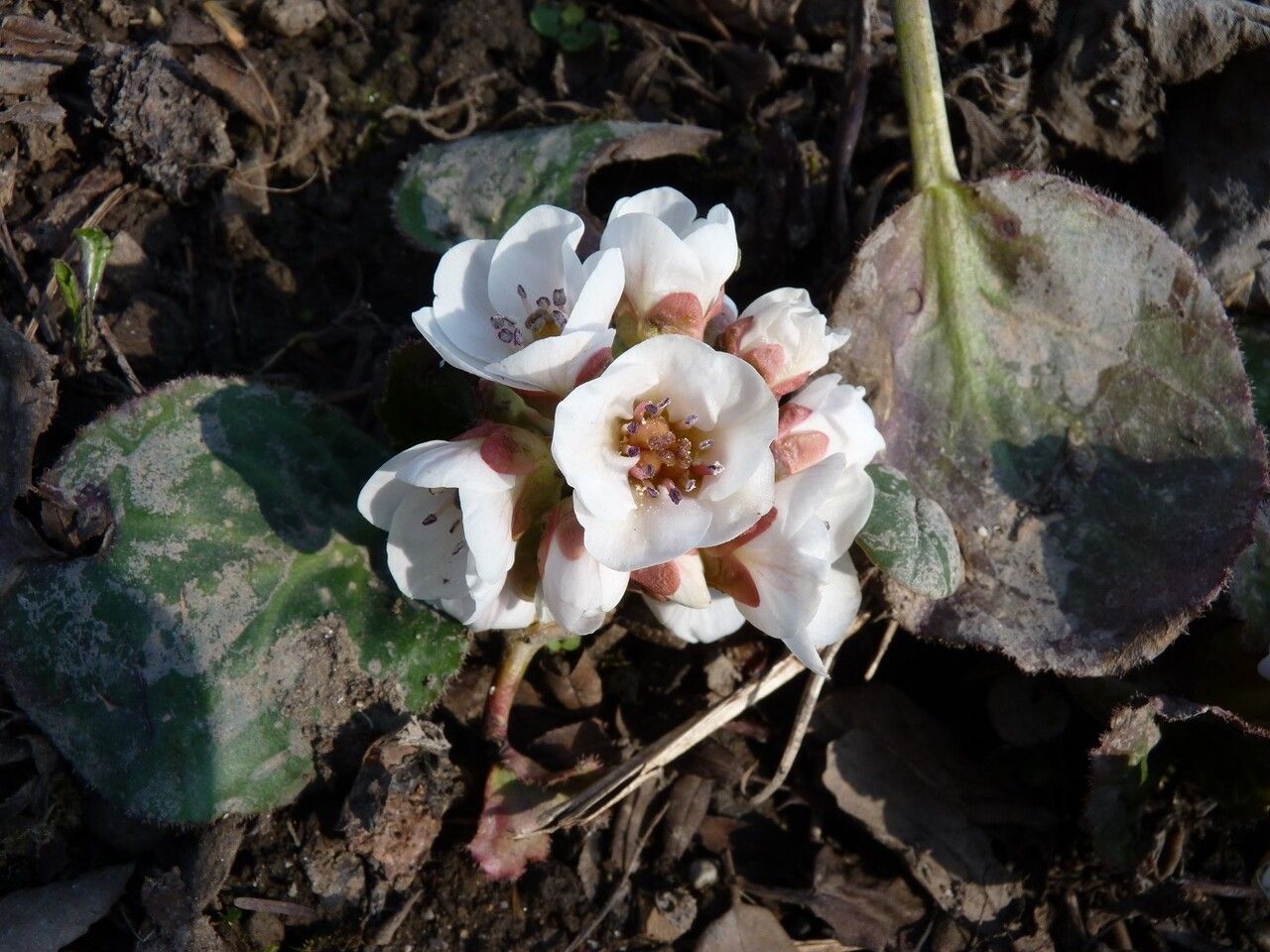
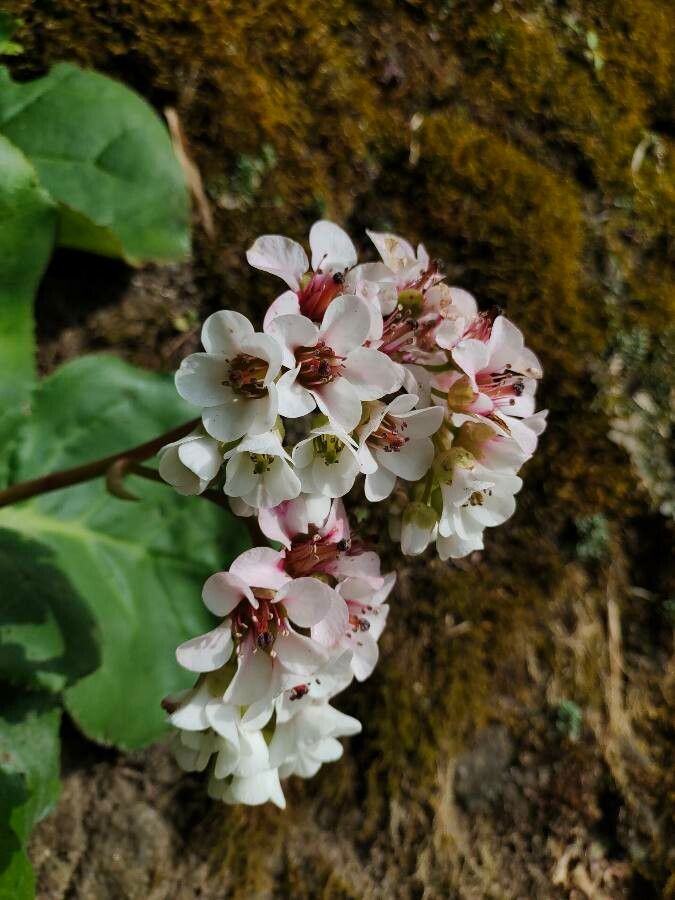
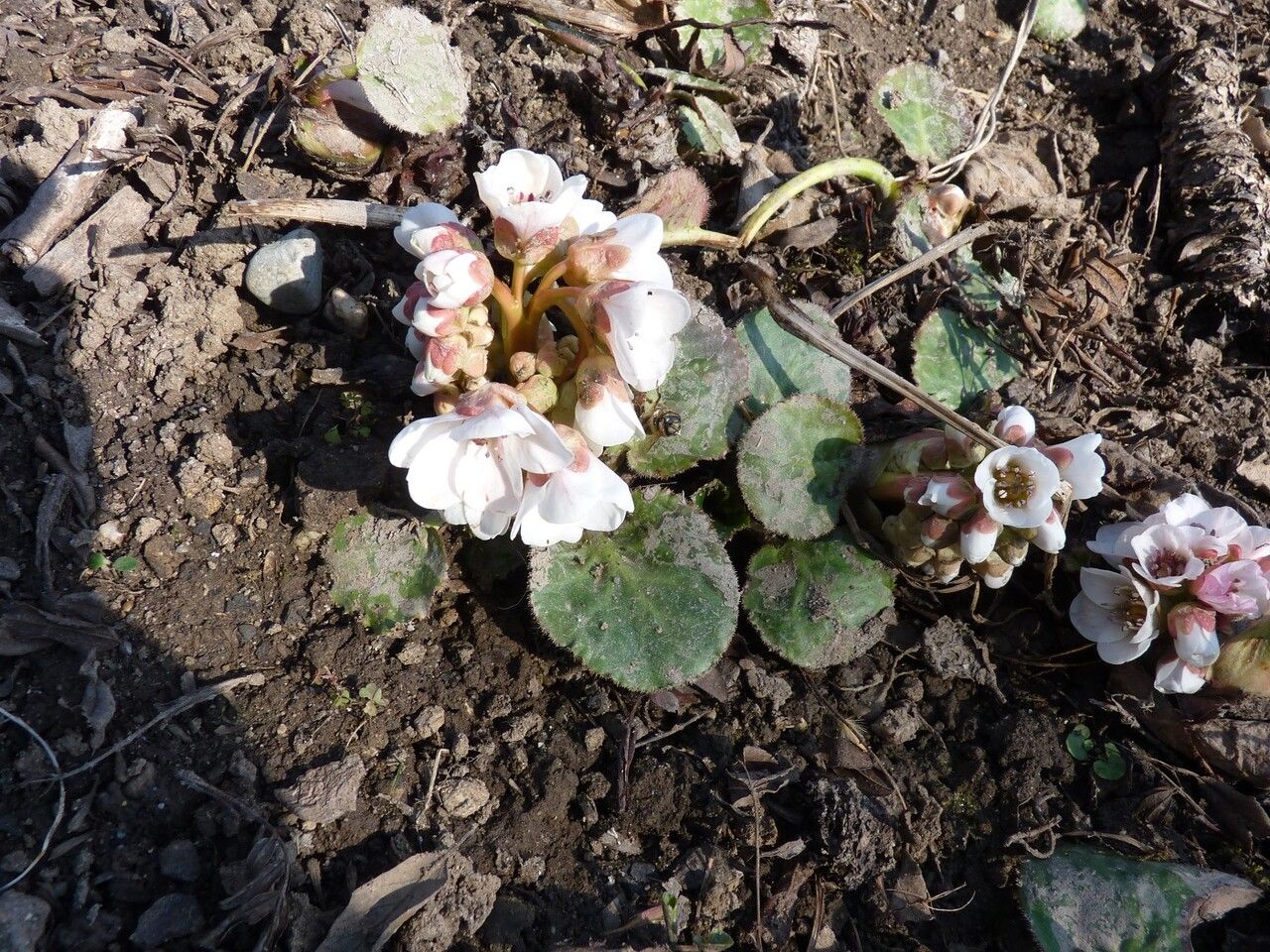
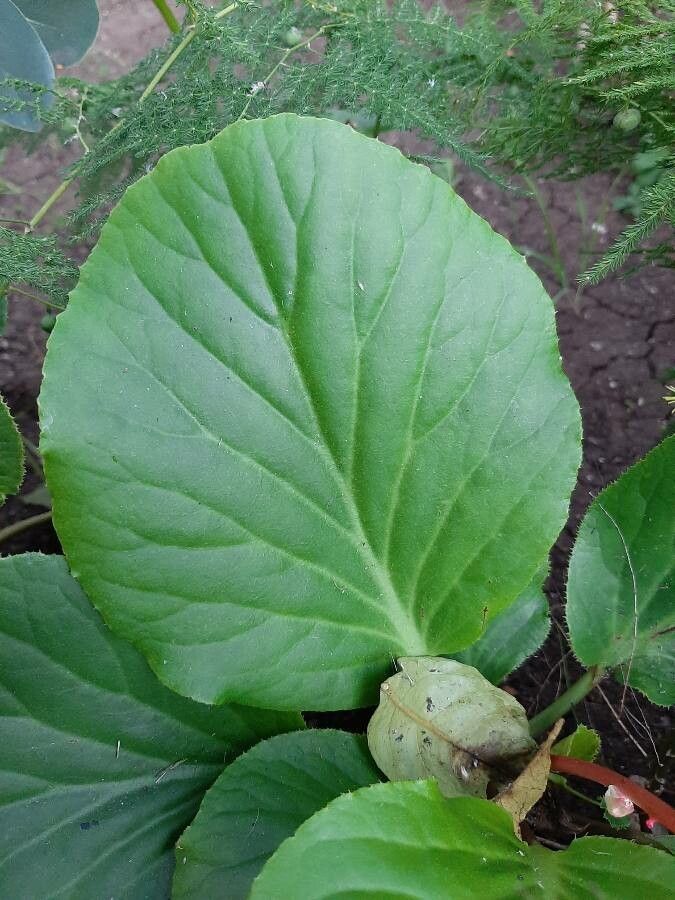
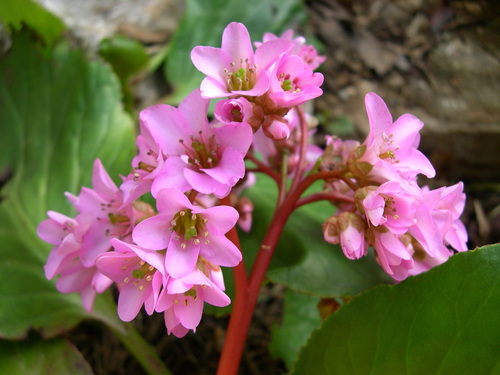
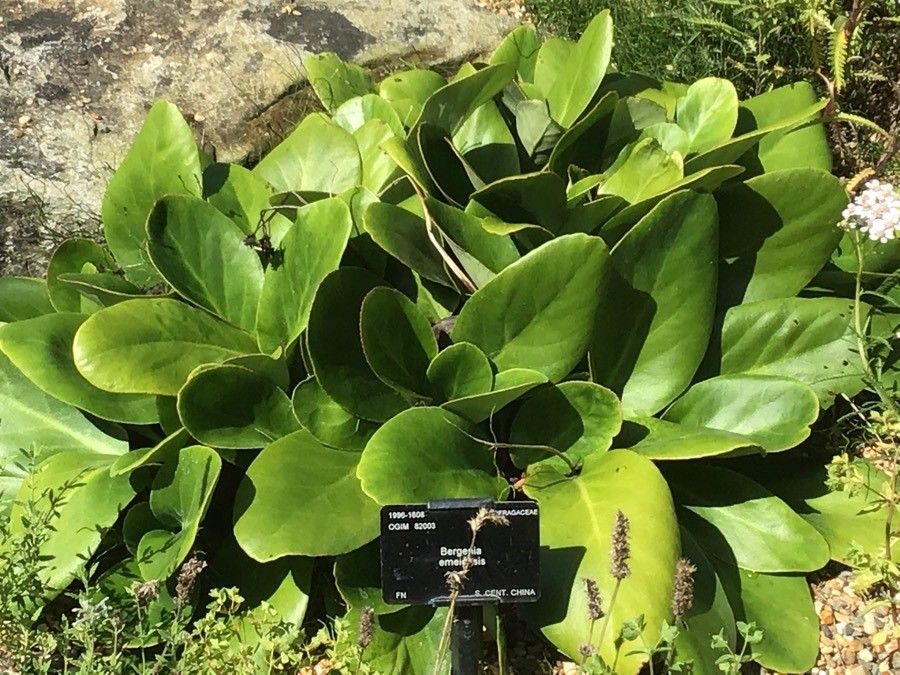
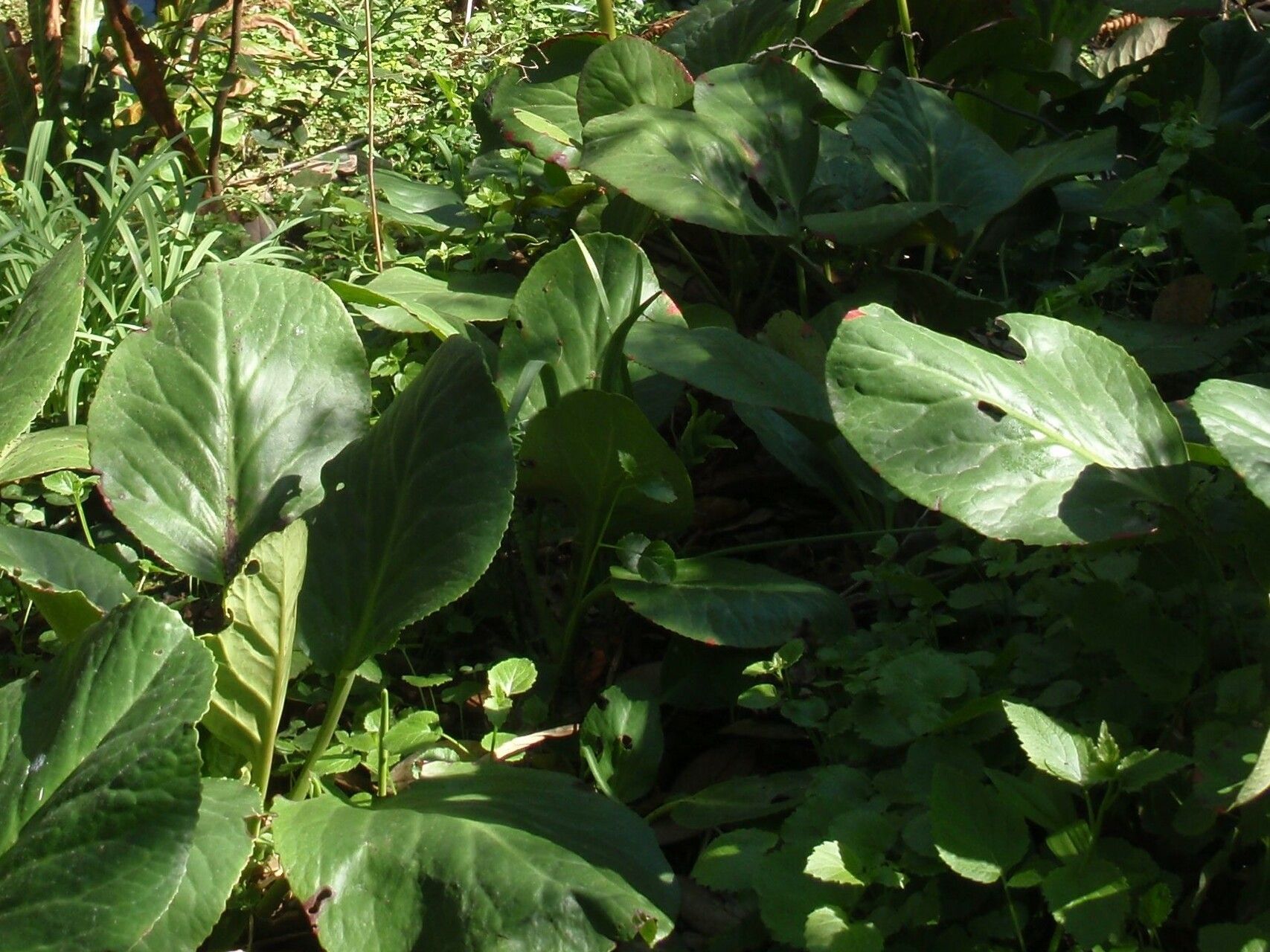
Bergenia ciliata (fringed elephant's ears, winter begonia, hairy bergenia, Hindi & Sanskrit : Pashanbheda, पाषाणभेद) is a plant species in the genus Bergenia, deciduous in USDA Zones 5 to 7, but usually remain semi-evergreen south of Zone 7. It is found in Northern India in Uttarakhand (Chamoli and other districts of Uttarakhand) and Himachal Pradesh (in district Shimla). This flower is related to the famous Phool Dei Festival (https://www.tourmyindia.com/states/uttarakhand/phool-dei-festival.html) celebrated in Uttarakhand. It is commonly known in India as Pathar phor buti. Also found in mountain areas of West Bengal, like Kalimpong, and Darjeeling. Afghanistan, south Tibet, Northern Nepal, Bhutan (Haa and Mongar districts).
Bergenin, catechin, gallic acid, gallicin, catechin-7-O-glucoside and β-sitosterol can be found in B. ciliata. It is known for its use in Ayurveda and other medicinal properties. It is mainly found on rocks and it grows in the month of February and March. It is a highly cited medicinal plant in the Himalayan state of Sikkim located in Northeastern India. The plant is harvested from the wild for use as a medicine and sometimes also for food.
Bergenia ciliata is generally resistant to diseases and not highly susceptible to them. However, it can be vulnerable to pests and illnesses present in its environment. These problems are usually not serious. In terms of care, the plant requires moderate maintenance. It should be pruned regularly to keep a neat appearance and promote healthy growth. Fertilizing can also encourage flowering. Bergenia ciliata is well suited for anyone with outdoor space, such as a garden or patio, and does not demand extensive care experience. It may need more attention if grown indoors.
How to keep Bergenia Ciliata.
Light
Bergenia ciliata occurs naturally in places like forest understories and rocky sites, where it receives natural shade. It prefers partial sun but can tolerate full sun or full shade, showing its versatile and hardy nature.
Water
Bergenia ciliata thrives in conditions with balanced moisture and typically needs watering every 1-2 weeks. Native to regions with moderate rainfall, it has an average tolerance for drought. Being a deciduous plant, Bergenia ciliata sheds its leaves during dormancy, which significantly reduces its water needs.
Temperature
Their native habitat ranges from -35-115°F(-37-46°C). Bergenia plants will likely grow well in either hot or cold weather, provided they get adequate light and moisture. Humidity is also not a problem. However, harsh winter temperatures in colder climates may cause extensive damage to your bergenia.
Fertilizer
Feed Bergenia ciliata mainly in early spring as the flower buds are forming. The proper fertilizer promotes better blooms and helps Bergenia ciliata produce attractive flowers. Applying fertilizer in early spring supports strong flowering during the season and supplies energy for dormant growth phases.
Pruning
The Bergenia ciliata plant features broad, leathery leaves and flowers that range in color from pink to white. To encourage healthy growth and improve air circulation, it is best to prune in early spring. Regular pruning not only enhances blooming but also helps prevent disease and maintains a compact shape. When pruning, always use clean, sharp tools to ensure precise cuts.
Toxicity
Bergenia is toxic to dogs, but has not demonstrated toxicity to cats or people.
Further reading →
The toxicity and danger assessments provided are for reference only. We do not assure their accuracy, so it's crucial not to depend on them. Seek professional advice when necessary for accurate guidance.
Botanical profile.
- Plant Type
- Herb
- Life Cycle
- Perennial
- Genus
- Bergenia
- Family
- Saxifragaceae
- Hardiness Zone
- 4-9
- Mature Height
- 30 cm
- Mature Spread
- 46 cm
- Leaf Color
- Red, Green
- Leaf Type
- Evergreen, Semi-evergreen
- Flower Color
- Pink
- Flower Size
- 2.03 cm to 3.05 cm
- Bloom Time
- Early spring, Mid spring
- Planting Time
- Spring, Autumn
- Harvest Time
- Late spring, Early summer
- Native Area
- Nepal, India, Myanmar, Bhutan, Pakistan
Other names.
Reader questions.
What are the sun requirements for Bergenia ciliata?
Bergenia ciliata thrives in conditions where it can receive either full sun, which is above 6 hours of sunlight a day, or partial sun, amounting to about 3-6 hours of sunlight a day. It's important to observe the movement of sunlight through your garden carefully, allowing you to select locations that provide an ideal balance of light and shade. This consideration will help ensure your Bergenia ciliata plants are happy and healthy.
What is the botanical name of Bergenia ciliata?
The botanical name of Bergenia ciliata is indeed Bergenia ciliata itself. This name helps distinguish it scientifically from other plants and specifies its unique genus and species within the plant kingdom.