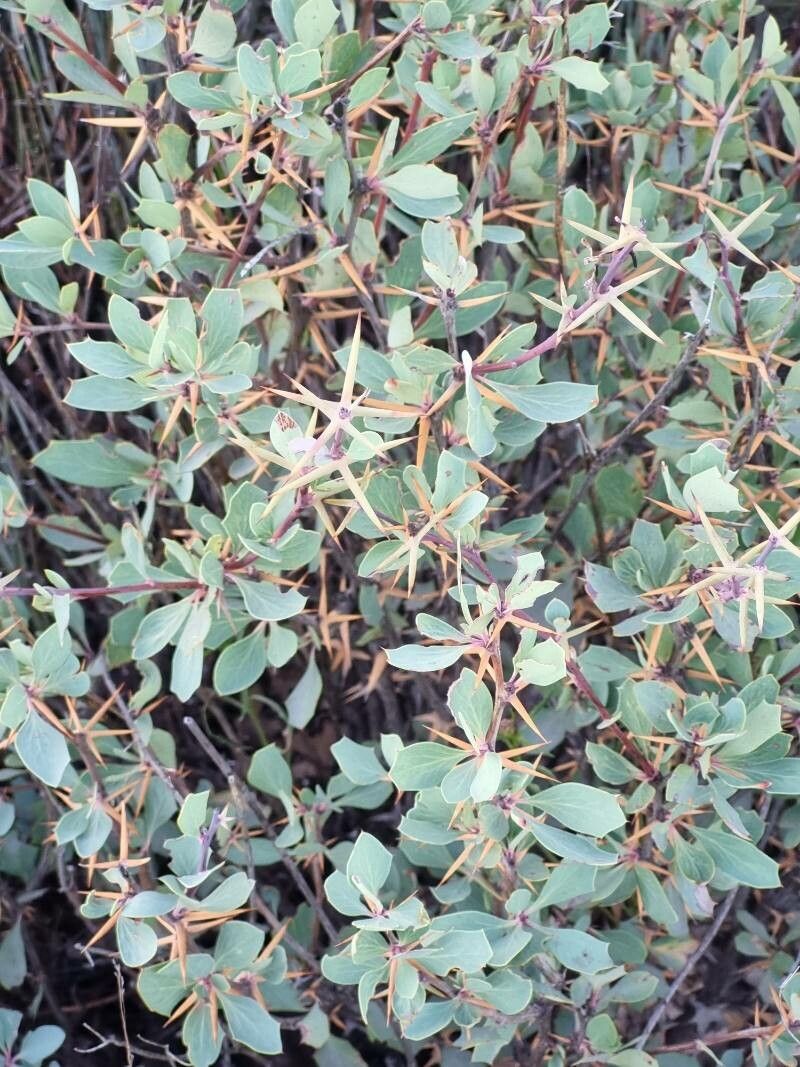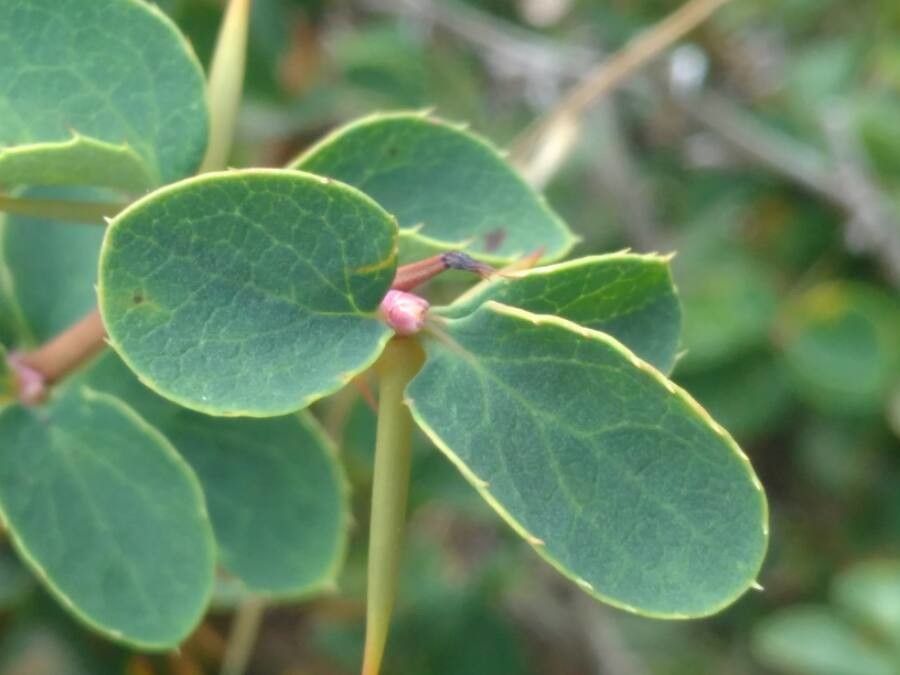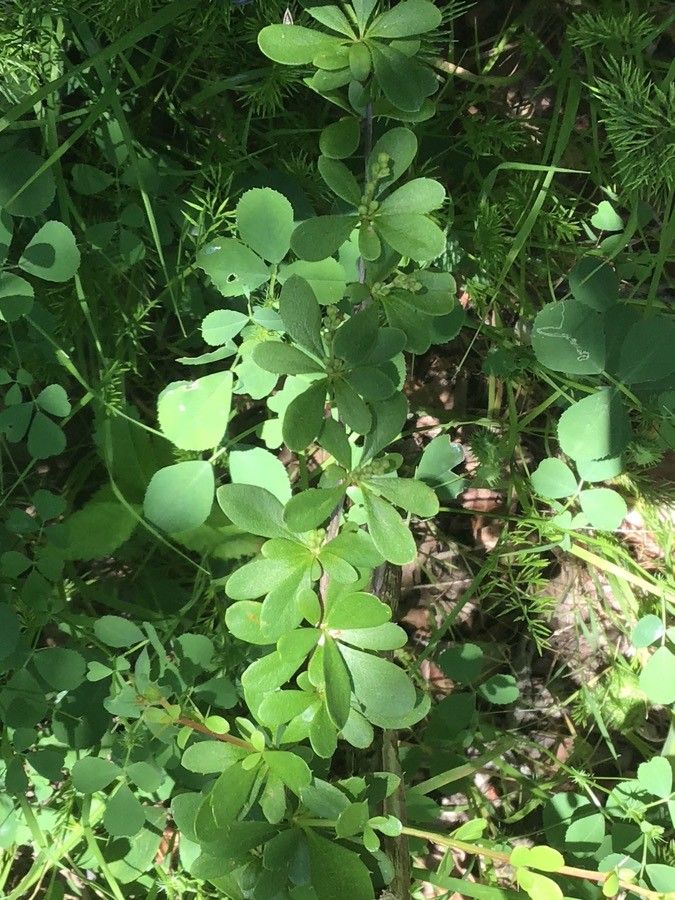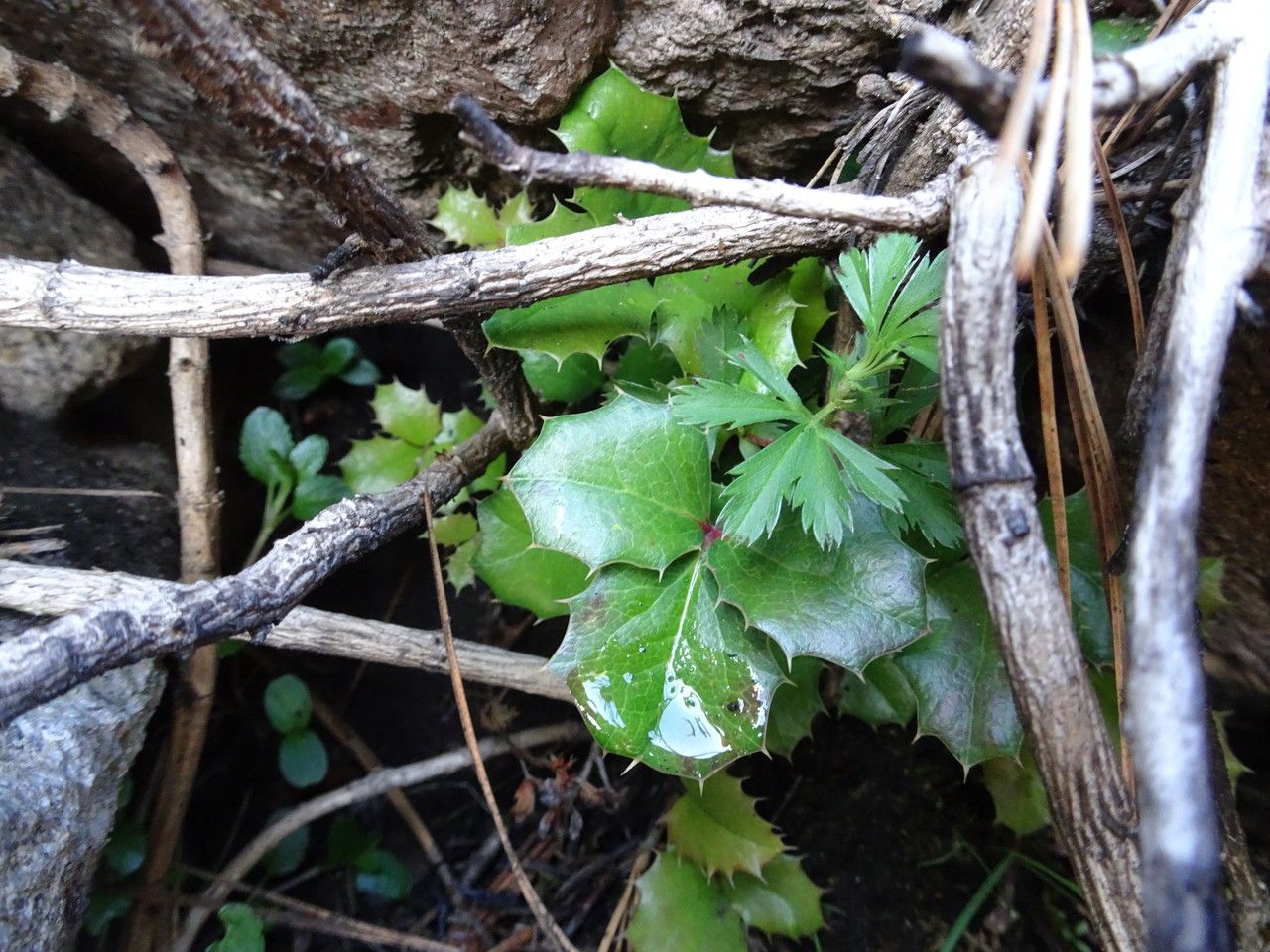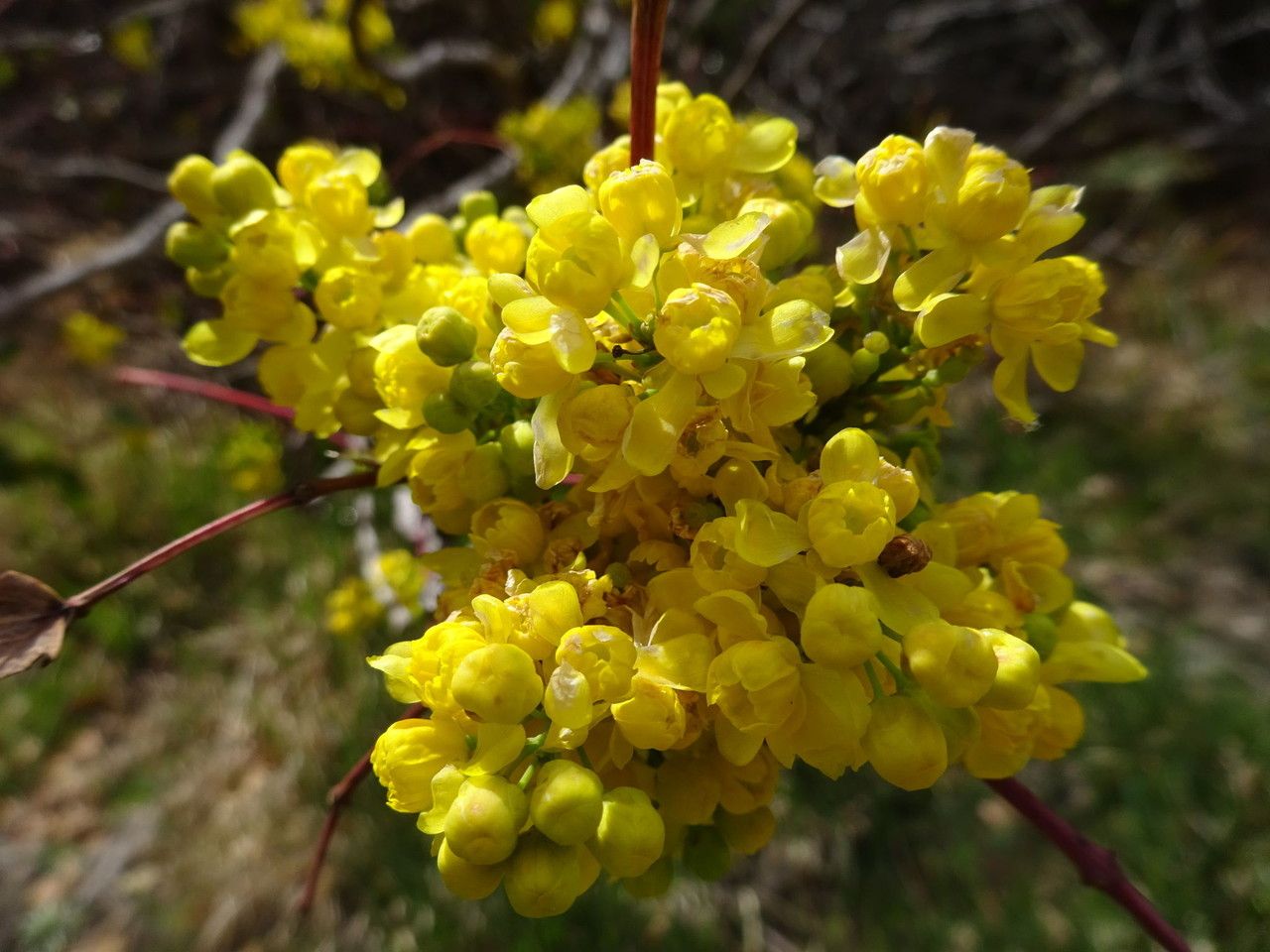
Berberis wilcoxii is a shrub native to Arizona, New Mexico and Sonora. It is up to 2 m tall, with pinnately compound leaves of 5-7 leaflets, densely clustered racemes and ovoid berries up to 10 mm long. It is generally found in rocky canyons in mountainous areas at an elevation of 1700–2500 m.The compound leaves place this species in the group sometimes segregated as the genus Mahonia.
How to keep Berberis Wilcoxii.
Water
Water Wilcox's barberry only when the topsoil becomes dry during its first growing season, and avoid watering it daily. Once the plant is established, it becomes drought-resistant and requires watering only during extended dry periods. To effectively water the root system, use a hose with a gentle stream.
Pruning
Wilcox's barberry is a resilient shrub known for its sharp spines and vibrant yellow flowers. To keep it healthy, prune it in early spring by cutting away dead branches and thinning out crowded areas. This process improves air circulation, encourages healthier growth, and helps maintain the shrub's shape. Be sure to use sharp, clean tools for pruning.
Botanical profile.
- Plant Type
- Shrub
- Life Cycle
- Perennial
- Genus
- Berberis
- Family
- Berberidaceae
Other names.
Reader questions.
What are the sunlight requirements for Wilcox's barberry (Berberis wilcoxii)?
Wilcox's barberry (Berberis wilcoxii) thrives under specific sunlight conditions. For full sun exposure, it requires above 6 hours of sunlight daily. Alternatively, it can also grow in partial sun, which means about 3-6 hours of sunlight. It's important to observe the sunlight movement through your garden to find spots that offer the ideal balance of light and shade. This careful consideration will ensure your plants' well-being and happiness.
What is Wilcox's barberry?
Wilcox's barberry, scientifically known as Berberis wilcoxii, is a plant species recognized by its unique botanical name. Detailed information about its essentials, including characteristics and any additional attributes, along with symptoms related to or caused by the plant, was not provided.