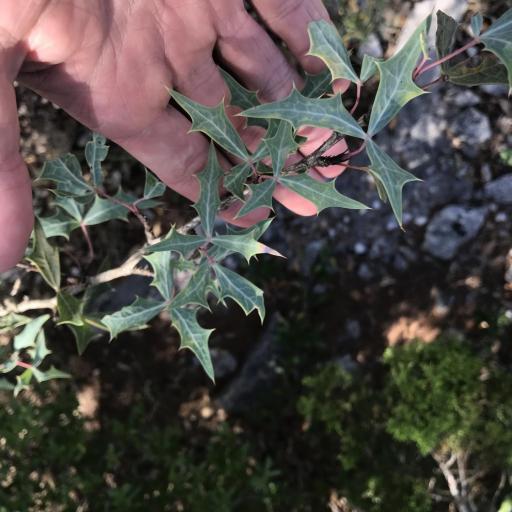
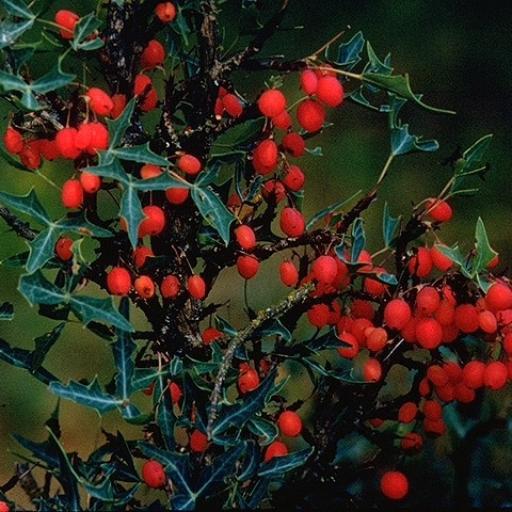
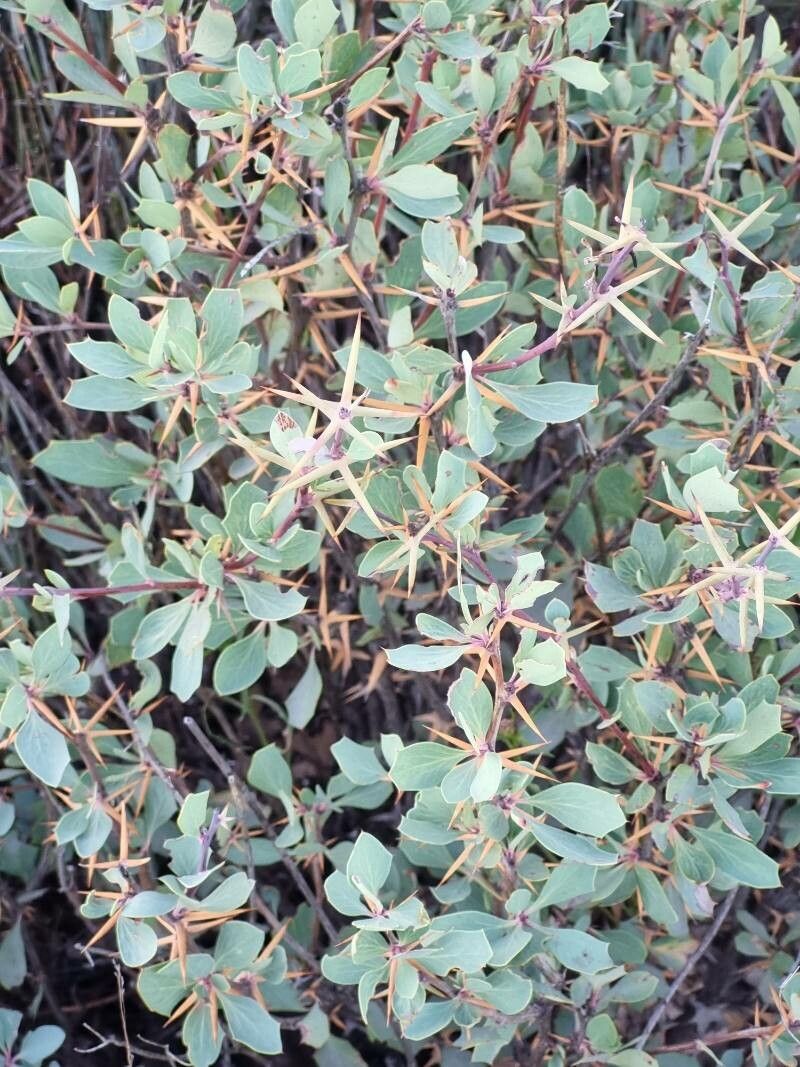
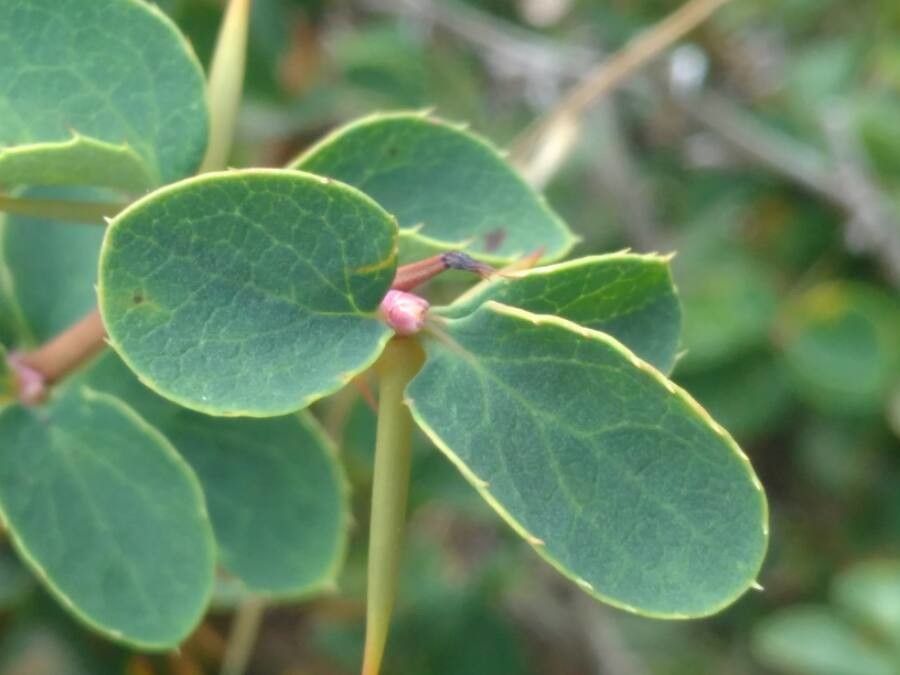
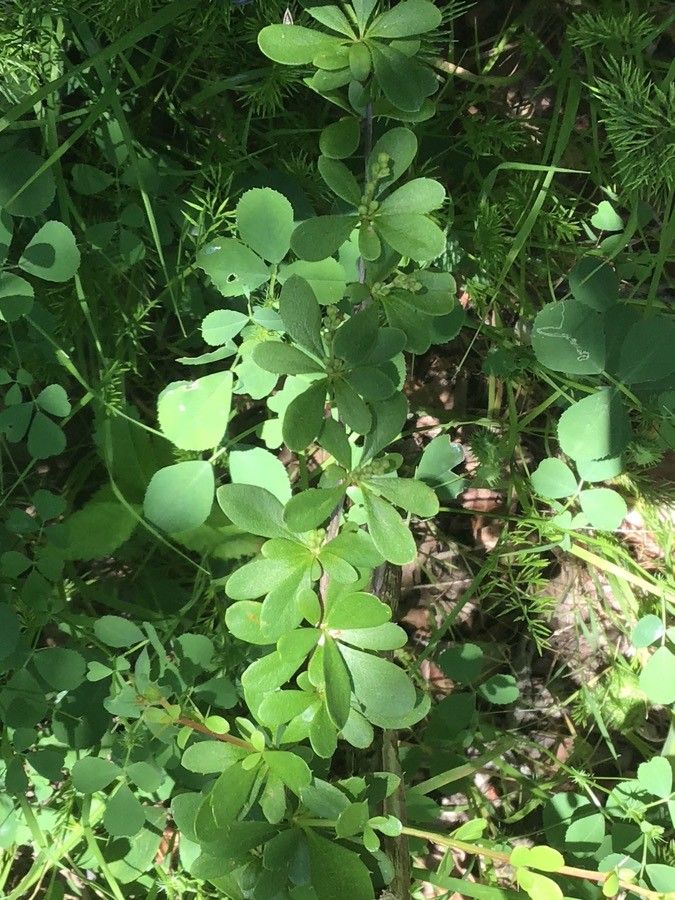
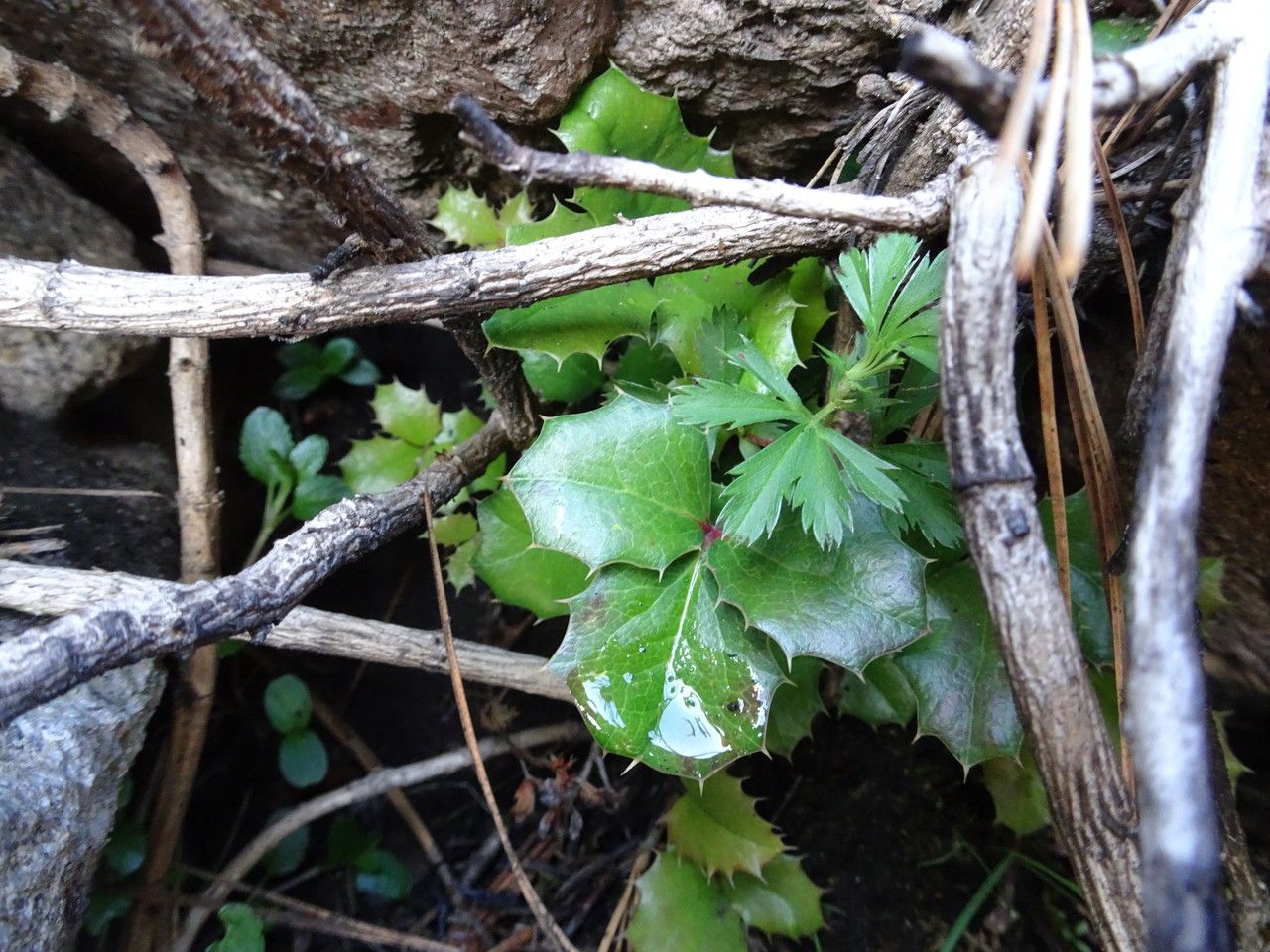
Mahonia trifoliolata is a species of flowering plant in the family Berberidaceae, in southwestern North America. Common names include agarita, agrito, algerita, currant-of-Texas, wild currant, and chaparral berry. The name Agarita comes from the Spanish verb agarrar, which means "to grab". The ending "-ita" is often added to little things, so agarita means "grabs a little". This was probably said because the bush is a bit scratchy but does not have significant spines. Typical characteristics are grey-green to blue-grey leaves, yellow flowers in February to April and the red berries appearing in May. The most important harvest organ are the berries, though the roots and seeds can also be used.
How to keep Berberis Trifoliolata.
Light
Agarita grows best when it receives ample sunlight for most of the day. Its health and development are improved by substantial sun exposure. It can, however, tolerate conditions with reduced sunlight. Both excessive and insufficient sunlight can harm the plant’s well-being.
Water
Agarita is well-suited for arid environments because it has a high tolerance for drought. It only needs to be watered every two weeks. As an evergreen plant, it keeps its leaves throughout the year and requires less water than plants that lose their leaves seasonally, known as deciduous plants. When grown outdoors, agarita benefits from natural rainfall, which helps meet its minimal water requirements.
Temperature
Agarita originates from temperate regions and prefers a temperature range of 59 to 95 °F (15 to 35 °C). In hotter or colder seasons, plant-care routines should be adjusted to optimize its growth.
Fertilizer
The Agarita plant needs adequate nutrients to achieve optimal fruit production. Fertilize in early spring to promote new growth and bloom development. Regular feeding keeps the plant healthy, encourages more delicious fruit, and prevents nutrient deficiency problems like yellow leaves and poor fruit production.
Pruning
To keep agarita healthy and beautiful, it's important to prune it carefully in late spring, right after it finishes flowering. This helps promote new growth and maintain its shape. Make sure to remove any dead wood and thin out crowded branches to improve air circulation. Regular pruning not only controls the size of the plant but also encourages denser foliage, enhancing its natural beauty.
Botanical profile.
- Plant Type
- Shrub
- Life Cycle
- Perennial
- Genus
- Berberis
- Family
- Berberidaceae
- Hardiness Zone
- 7-10
- Mature Height
- 0.61 m to 1.83 m
- Mature Spread
- 0.91 m to 1.52 m
- Leaf Color
- Green, Blue, Bronze
- Leaf Type
- Evergreen
- Flower Color
- Yellow
- Flower Size
- 1.27 cm
- Bloom Time
- Spring
- Planting Time
- Spring, Summer, Autumn
- Harvest Time
- Late spring, Early summer, Mid summer
Other names.