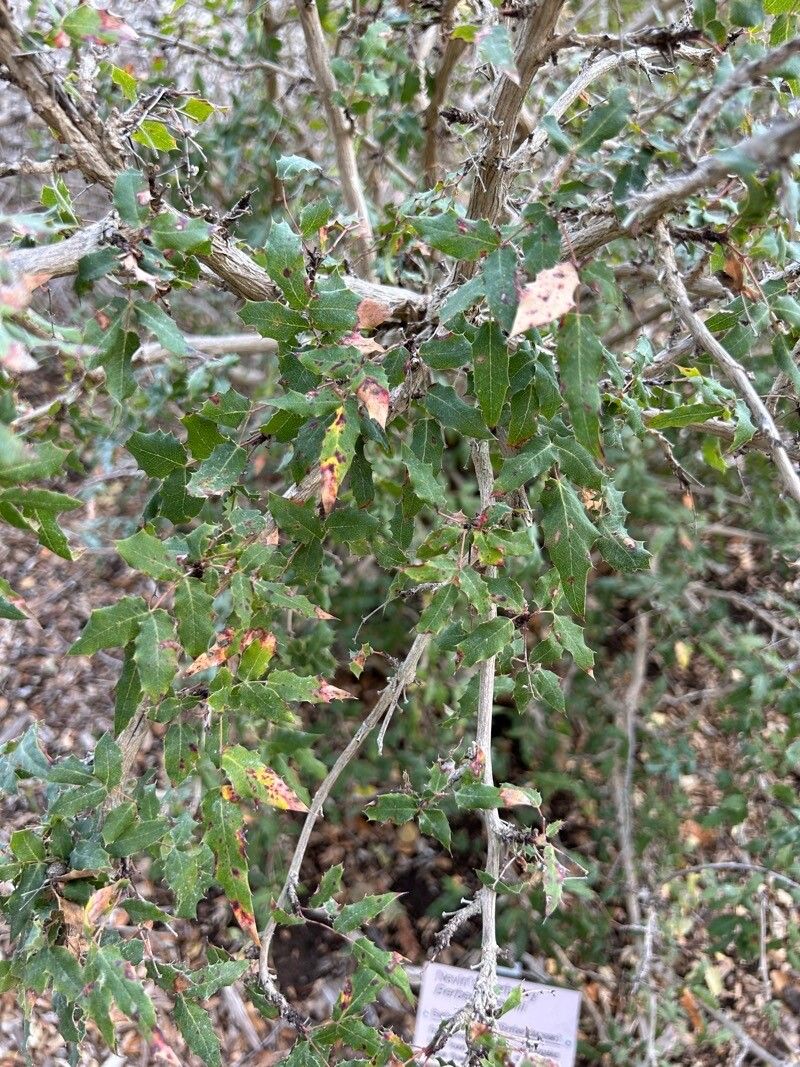
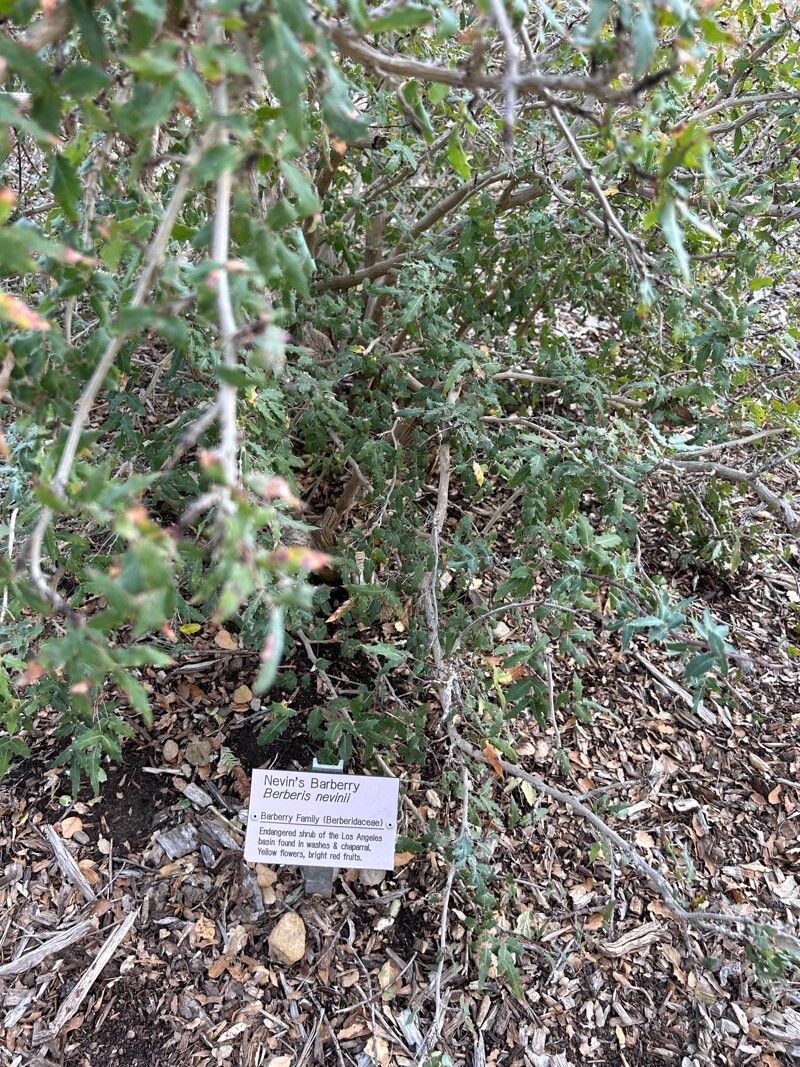
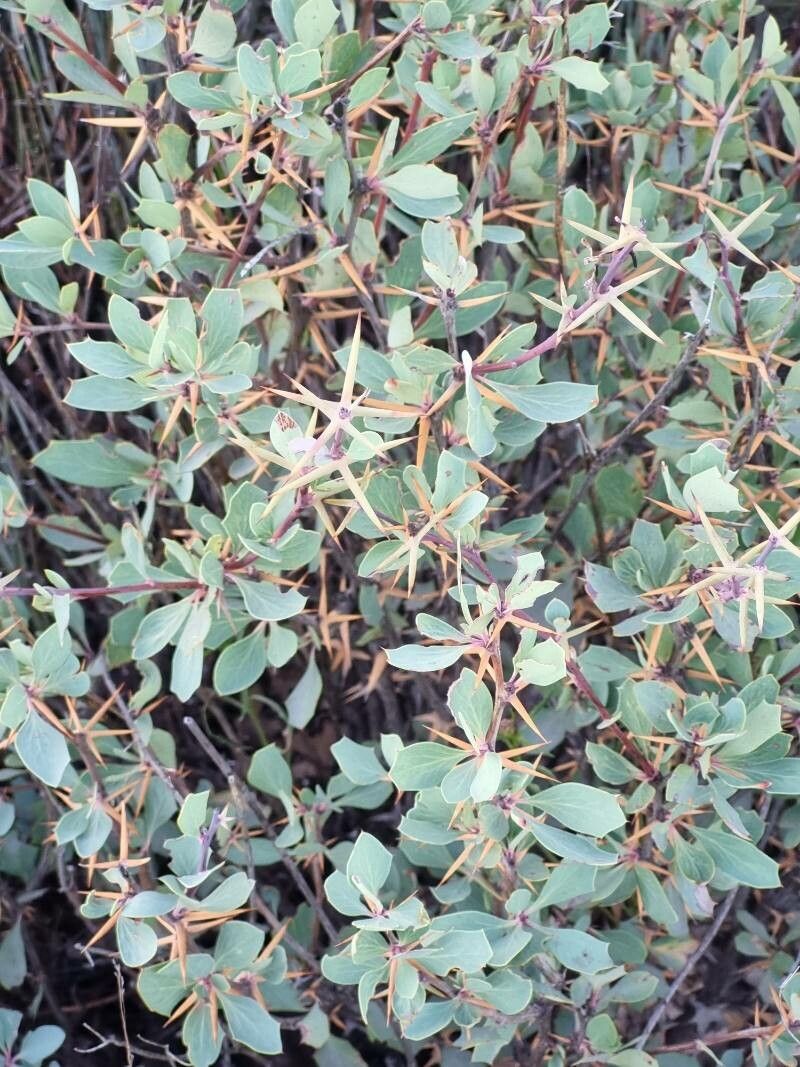
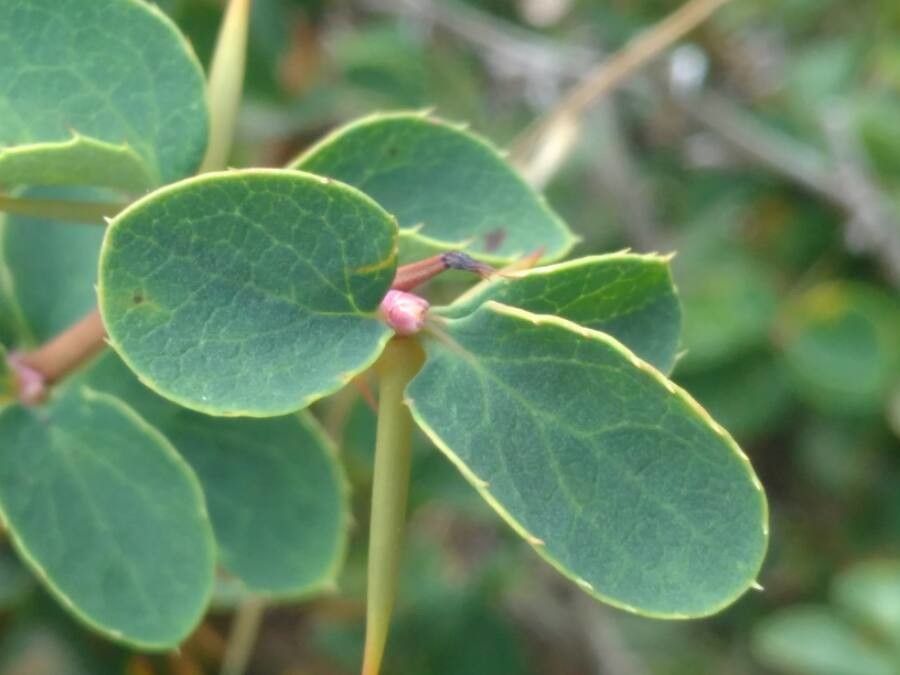
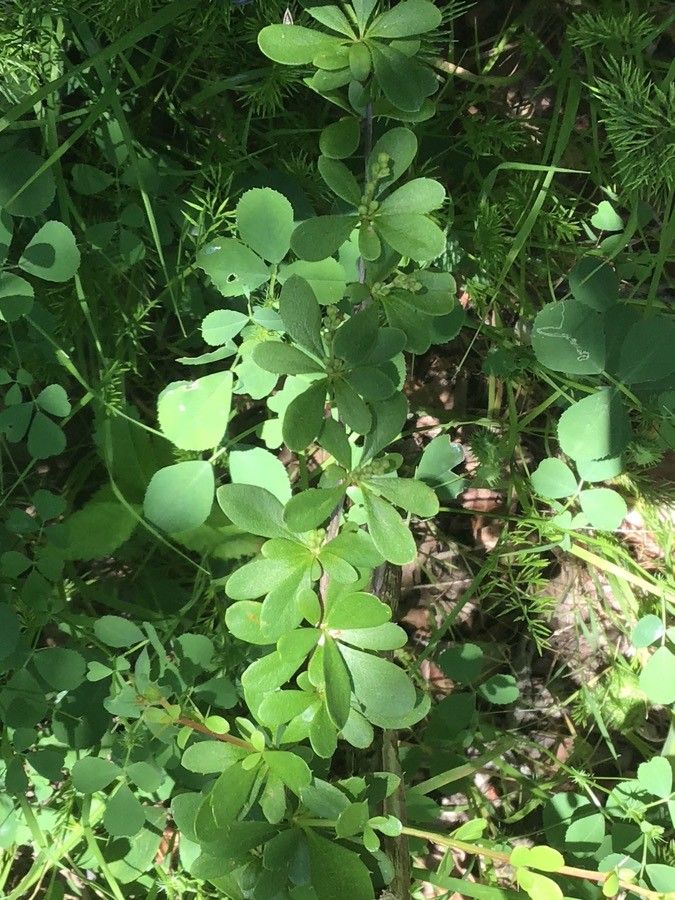
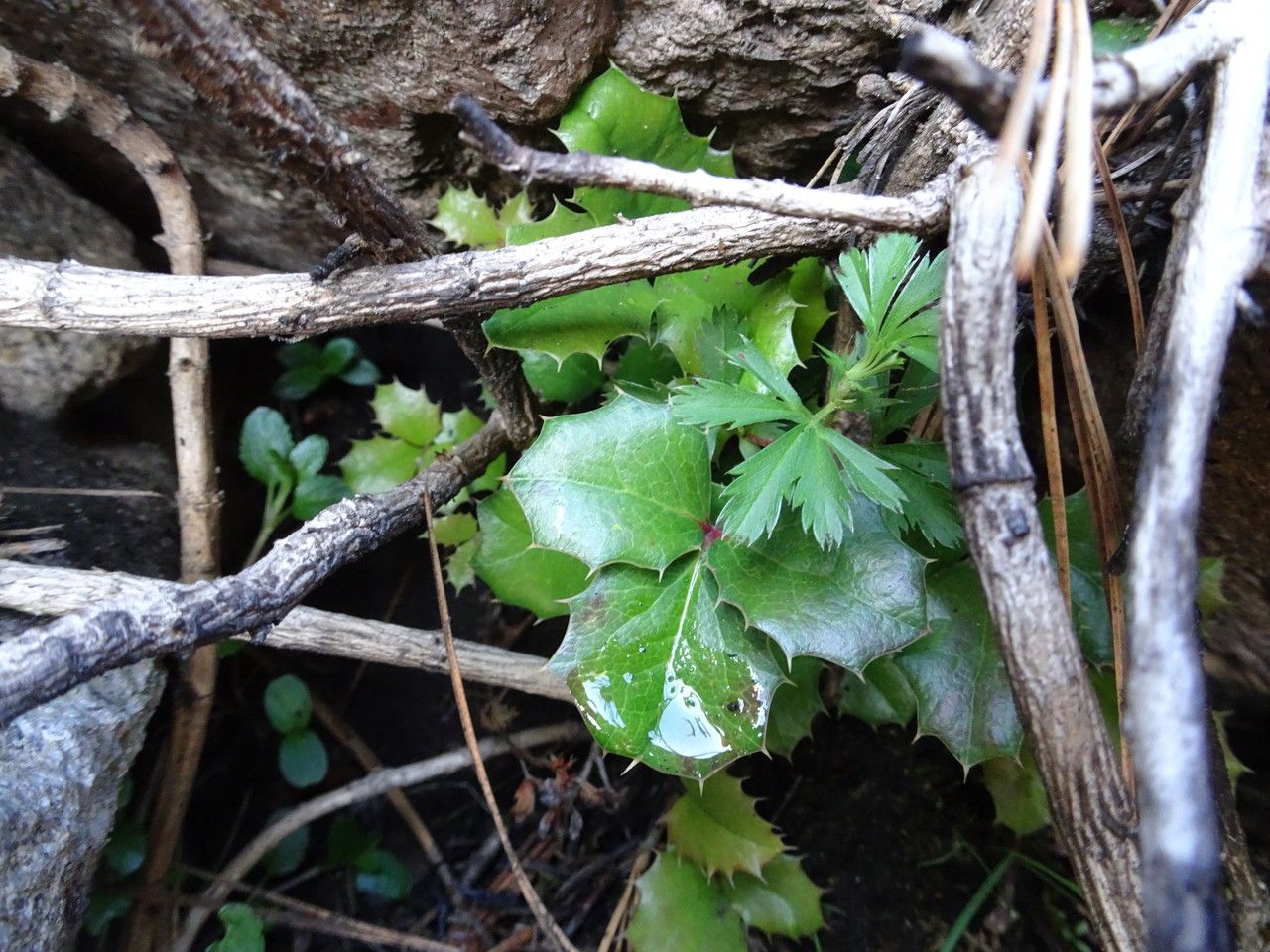
Berberis nevinii, known by the common name Nevin's barberry, is a species of flowering shrub in the barberry family.
Nevin's barberry is resistant to disease and is generally not prone to illnesses. Regarding care, this plant is fairly low-maintenance. When grown outdoors it needs little watering, and larger plants typically do not require pruning. Smaller plants, however, should be pruned after they finish blooming. Nevin's barberry is suitable for anyone with outdoor space, such as a garden or deck, and does not demand much prior care experience.
How to keep Berberis Nevinii.
Light
Nevin's barberry is native to open habitats, such as sunny meadows and forest margins, which provide abundant light. It performs best in Full Sun but can also tolerate Partial Sun, adapting well to a range of sunlight conditions.
Water
Nevin's barberry, native to arid regions, thrives with minimal moisture due to its high drought tolerance. It requires watering only every 2-3 weeks and benefits from well-draining soil that replicates the drainage properties of its natural habitat. This makes it an excellent choice for xeric landscapes.
Temperature
Nevin's barberry shows strong temperature adaptability, tolerating high heat and wide temperature fluctuations. In hot conditions, care should be taken with watering and providing suitable shade to avoid sunburn. On the other hand, it is less tolerant of cold; although it can handle some chill, very low temperatures may cause frost damage.
Fertilizer
Timing is important when fertilizing Nevin's barberry. Apply fertilizer in early spring and continue monthly until early summer. Fertilizer encourages lovely blooms and supplies energy during both dormant and active growth phases.
Pruning
To help Nevin's barberry thrive, it's best to prune the plant between early and late winter. During this time, remove any dead branches and thin out dense areas to improve airflow. However, avoid heavy pruning if you're only maintaining the plant's shape. Pruning before new growth appears promotes strong health and vibrant blooms, and it also helps prevent pest infestations.
Botanical profile.
- Plant Type
- Shrub
- Life Cycle
- Perennial
- Genus
- Berberis
- Family
- Berberidaceae
- Hardiness Zone
- 7-9
- Mature Height
- 1.83 m to 3.66 m
- Mature Spread
- 0.91 m to 2.13 m
- Leaf Color
- Dark Green, Olive Drab
- Leaf Type
- Evergreen
- Flower Color
- Yellow
- Flower Size
- 1.02 cm to 1.52 cm
- Bloom Time
- Early spring, Mid spring
- Planting Time
- Spring, Autumn
- Harvest Time
- Summer
Other names.