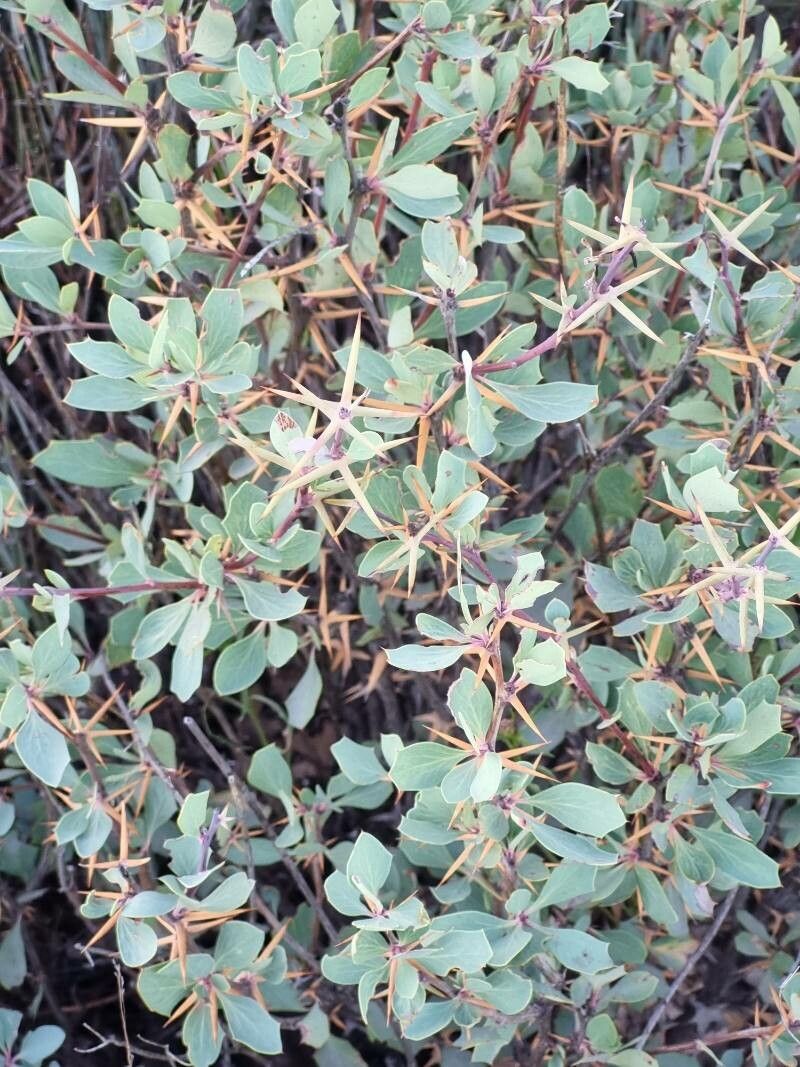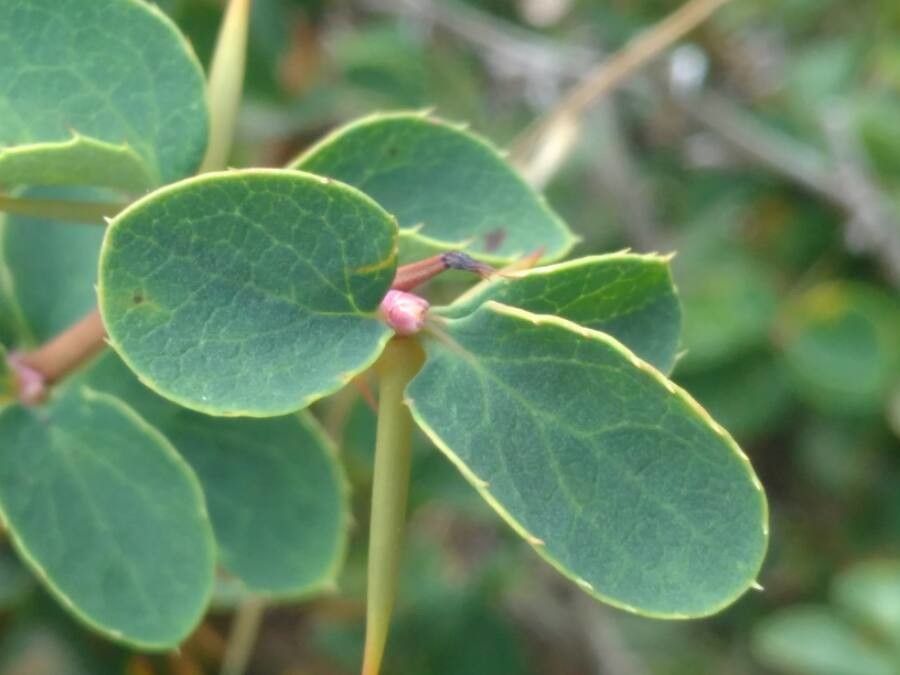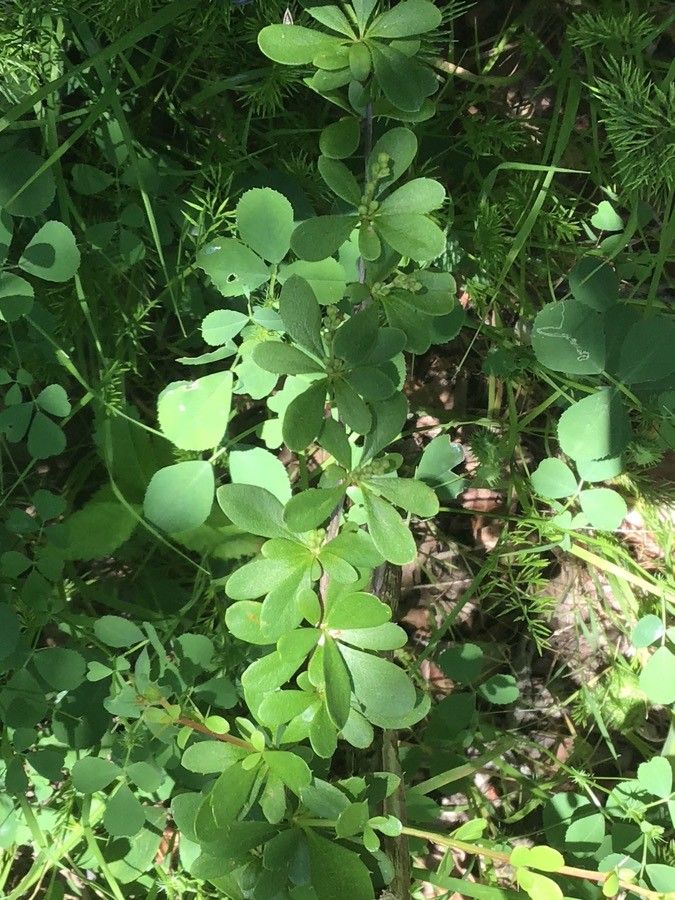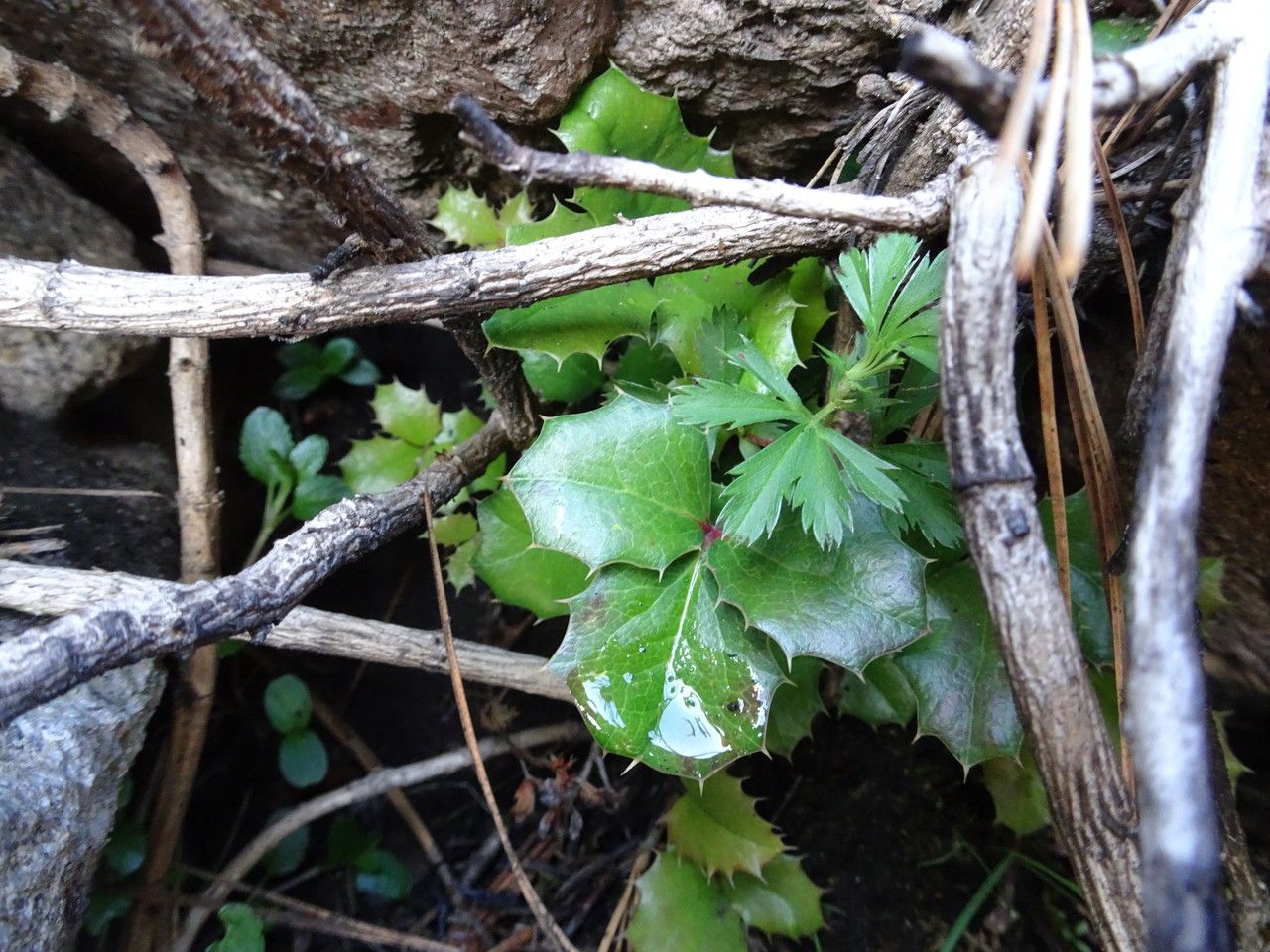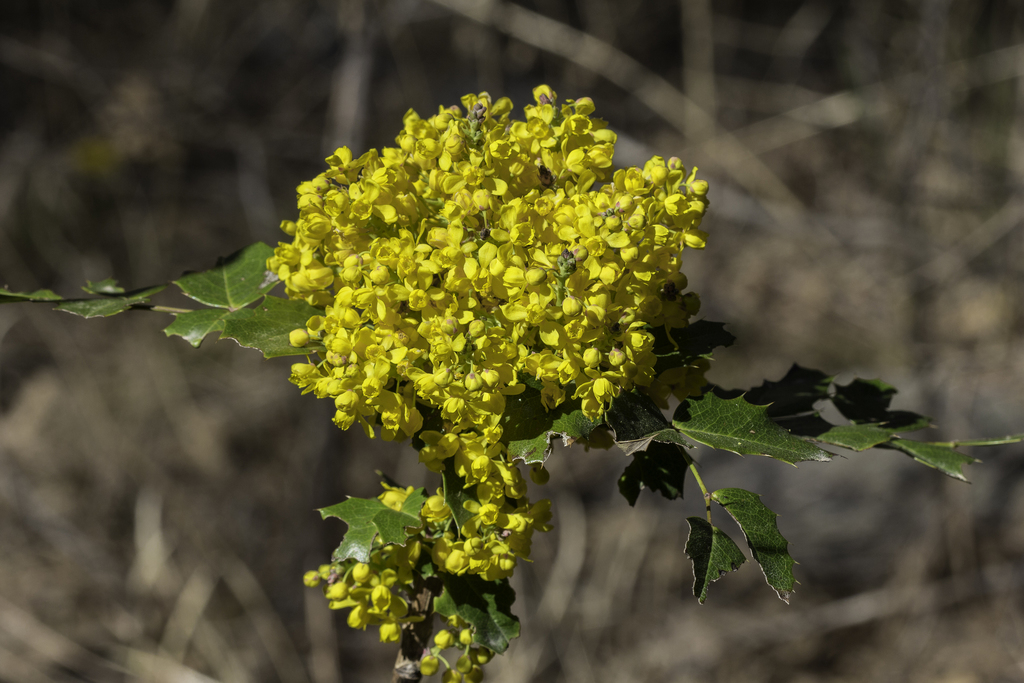
Mahonia aquifolium, the Oregon grape or holly-leaved barberry, is a species of flowering plant in the family Berberidaceae, native to western North America. It is an evergreen shrub growing 1–3 meters (3–10 feet) tall and 1.5 m (5 ft) wide, with pinnate leaves consisting of spiny leaflets, and dense clusters of yellow flowers in early spring, followed by dark bluish-black berries.The berries are included in the diet of some aboriginal peoples of the Pacific Northwest, and the species is recognized as the state flower of Oregon.
The Oregon grape has no relation to actual grapes. Its name derives from the clusters of purple berries that resemble grapes in both color and their dusty appearance.
Oregon grape is well resistant to disease and is typically not prone to illnesses. In terms of care, this plant is fairly low maintenance. When planted outdoors it needs minimal watering, and larger plants usually do not require pruning. Smaller plants, however, should be pruned after they have finished blooming. Oregon grape is suitable for anyone with an outdoor area, such as a garden or deck, and does not demand much gardening experience.
How to keep Berberis Aquifolium.
Light
Oregon grape prefers a mix of sun and shade. It tolerates a fair amount of sunlight but also does well in places that are shaded for most of the day. It occurs in a variety of habitats with different lighting conditions. Too much or too little light can affect its health and vibrancy.
Water
The Oregon grape is native to the forests of the Pacific Northwest, where it thrives in conditions of moderate moisture and can withstand short periods of drought. For optimal growth, it should be watered every one to two weeks, and planted in well-draining soil to prevent root rot. While it is typically grown outdoors, the Oregon grape is known for its resilience and adaptability to the rainfall patterns of its natural habitat.
Temperature
Oregon grape originates in the Pacific Northwest and tolerates a broad temperature range from 50 ℉ (10 ℃) to 90 ℉ (32 ℃). In cooler regions the plant can grow in partial shade, while in warmer regions it prefers full sun. In winter, Oregon grape can endure temperatures as low as 10 ℉ (-12 ℃), but it may need protection in places with extended frost or snow.
Fertilizer
Fertilize your Oregon grape in early spring to encourage healthy growth. Regular feeding boosts overall health, resulting in vigorous growth, greater tolerance of harsh conditions, and improved resistance to pests and diseases. Stick to a consistent fertilization schedule to keep the foliage vibrant, richly colored, and lush in appearance.
Pruning
Pruning Oregon grape is beneficial, especially when it's used as a hedge, as it can boost the plant's vigor. It is best to prune in the spring to help maintain the plant's shape and improve air circulation, which reduces the risk of humidity-related diseases. Be sure not to cut more than one-third of the canopy. Make cuts at an angle away from the buds, and always remember to disinfect your tools and wear gloves for protection.
Pot & Repot
When repotting Oregon grape, select a pot 1-2 inches (2.5–5.1 cm) larger with ample drainage. Use a well-draining potting mix. Repot in spring or fall, making sure the root ball sits slightly lower than the rim of the flower pot. Water thoroughly after repotting and place it in a warm spot with indirect sunlight.
Toxicity
Berberis Aquifolium is mildly toxic for animals and can hurt them if ingested in long term. Infected animals can have symptoms like skin irritation, diarrhea, seizures, lethargy and vomiting.
Further reading →
The toxicity and danger assessments provided are for reference only. We do not assure their accuracy, so it's crucial not to depend on them. Seek professional advice when necessary for accurate guidance.
Botanical profile.
- Plant Type
- Shrub
- Life Cycle
- Perennial
- Genus
- Berberis
- Family
- Berberidaceae
- Hardiness Zone
- 6-8
- Mature Height
- 91 cm
- Mature Spread
- 1.52 m
- Leaf Color
- Green
- Leaf Type
- Evergreen
- Flower Color
- Yellow
- Flower Size
- 0.51 cm to 1.02 cm
- Bloom Time
- Mid spring, Late spring
- Planting Time
- Autumn, Winter, Spring
- Harvest Time
- Mid summer
Other names.
Reader questions.
How should I water my Oregon grape plant?
Your Oregon grape is not very particular about how you water it. You can use any common watering tool, such as a watering can, hose, or even a cup, to moisten the soil. Regardless of the tool you choose, it's important to water the soil directly. This way, you can ensure that all parts of the root system receive the water they need, without any areas being left dry. Using filtered water is recommended, as tap water may contain harmful particles. It's also best to use water that is at or slightly above room temperature, as cold or hot water can be a bit of a shock to the plant. However, the Oregon grape generally tolerates any kind of water you provide it with.
Why should I put fertilizer on my Oregon grape plant?
No matter the type of Oregon grape you own, regular fertilization will benefit the plant's overall health. Proper nutrients lead to stronger growth and increased resilience to difficult conditions, as well as improved resistance to diseases and pests. Preserving the attractive foliage of your Oregon grape is essential, so it is important to establish and follow a specific fertilization schedule. This will encourage the development of deeply colored leaves and a visually appealing appearance.
What are the sunlight requirements for Oregon grape?
Oregon grape thrives in both partially sunlit areas, requiring about 3-6 hours of sunlight a day, and in full sun or full shade areas, which means it needs more than 6 hours of sunlight daily. It's essential to observe the movement of sunlight in your garden to ensure your Oregon grape is planted in a spot that provides an ideal balance of light and shade, promoting its health and growth.
What is the native habitat of Oregon grape and what temperatures can it tolerate?
Oregon grape, or Berberis aquifolium, is native to the Pacific Northwest. It can tolerate a wide range of temperatures, from as low as 50 °F (10 °C) to as high as 90 °F (32 °C). In cooler climates, Oregon grape thrives in partially shaded areas, whereas in warmer environments, it prefers full sunlight. During the winter months, it can withstand temperatures down to 10 °F (-12 °C). Despite its strong cold resistance, if winter temperatures are expected to drop below -25°C, some cold protection measures, such as wrapping the trunk and branches with non-woven fabric or cloth, may be necessary. It's also recommended to water the plant abundantly before the first freeze in autumn to ensure the soil is moist and enters a frozen state, which helps prevent drought and water scarcity during winter and early spring.
What should I do if I give my Oregon grape too much or too little water?
Watering is important for outdoor plants, especially new ones. It's crucial to keep watering enough for a few months until the roots are established. Once they are, rain will usually be enough. When Oregon grapes are planted in pots, overwatering is more likely. If you accidentally overwater your Oregon grape, stop watering it immediately. Take it out of the pot to check the roots. If there's no root rot, you can put it back in. If there is, trim the affected roots and consider using a fungicide. Repot it in good-draining soil. If you underwater your Oregon grape, water it more frequently. Underwatering is easy to fix - the leaves will droop and dry out, but they will recover after sufficient watering. Adjust your watering schedule as soon as you notice underwatering.
When should I fertilize my Oregon grape plant?
To ensure healthy growth, you should fertilize your Oregon grape for the first time in late winter or early spring. This will provide the necessary nutrients for strong growth when the weather warms up. In warm climate regions, it is recommended to fertilize again in early fall. This adds nutrients that will be used in the next growing season and helps the plant withstand winter without damage to its foliage. Fertilizing earlier in fall will allow new branches to have enough time to grow and be resistant to the cold winter.
How important is the balance of sun and shade for Oregon grape?
The balance of sun and shade is crucial for the healthy growth and vibrancy of Oregon grape. It appreciates a mix of sun and shade, thriving in diverse habitats with various lighting conditions. Too much or too little sunlight can adversely affect its growth. For indoor Oregon grapes that lack natural light, especially during winter or in less sunny areas, artificial lighting can provide a solution. Using the right type and amount of artificial light promotes healthier growth. Full sun plants typically need 30-50W/sq ft of light, partial sun plants need 20-30W/sq ft, and full shade plants require 10-20W/sq ft.
How does low temperature affect Oregon grape, and what are the solutions?
Oregon grape is quite cold-tolerant, thriving best when temperatures are above 10°C and generally should be kept above -15°C during winter. However, when temperatures fall below -25°C, there might not be noticeable changes during winter, but the branches can become brittle and dry in spring, potentially leading to a lack of new shoot emergence. To counteract these effects, dead branches that have failed to produce new leaves in the spring should be pruned away.
How many times should I water my Oregon grape plant?
Most outdoor plants can thrive with natural rainfall. However, if your area doesn't receive enough rain, you should water your plants every 2 weeks in the spring and fall. In the summer, you'll need to water more frequently. During the slower growth period of winter, water sparingly or not at all. If you have a young or newly planted Oregon grape, water it more often to help it establish and grow into a drought-tolerant plant. For potted plants, there are two ways to determine watering frequency. One option is to follow a set schedule, watering once a week or every other week. However, this may not consider the specific growing conditions of your Oregon grape. Another approach is to assess the soil moisture. Wait until the top two to four inches of soil in the pot have completely dried out before watering again. This method allows for better adaptation to the plant's water needs, especially during the high-demand summer season.
When is not a good time to add fertilizer to my Oregon grape plant?
You should avoid fertilizing your Oregon grape during certain times of the year. The first is in early and mid-winter when the plant is dormant and does not need to be fed. It is also not recommended to fertilize during late spring and summer when the weather is hotter and drier. These conditions can negatively affect the plant's response to fertilization. To prevent any problems, it is best to stick to a fertilization schedule that includes feeding in early spring and early fall.
What are the symptoms of light deficiency in Oregon grape?
Symptoms of light deficiency in Oregon grape include smaller new leaves, leggy or sparse growth, faster leaf drop, slower or no new growth, lighter-colored new leaves, chlorosis, sunscald, leaf curling, wilting, and leaf scorching. These symptoms vary from the effects of too little to too much light exposure, indicating insufficient chlorophyll and essential nutrient intake or damage from intense sunlight exposure.
How does high temperature affect Oregon grape, and what preventive measures can be taken?
In the summer, it's crucial to ensure that Oregon grape remains below 32°C to prevent heat stress. When the temperature exceeds 35°C, the plant's leaves may lighten in color, and their tips might become dry and withered. Additionally, the plant becomes more susceptible to sunburn. To mitigate these issues, sunburned and dried-up parts of the plant should be trimmed away. Relocating the plant to a shaded area or using a shade cloth to shield it from the midday and afternoon sun can also be beneficial. Moreover, watering the plant in the morning and evening can help keep the soil moist, further protecting the plant from high temperature stress.