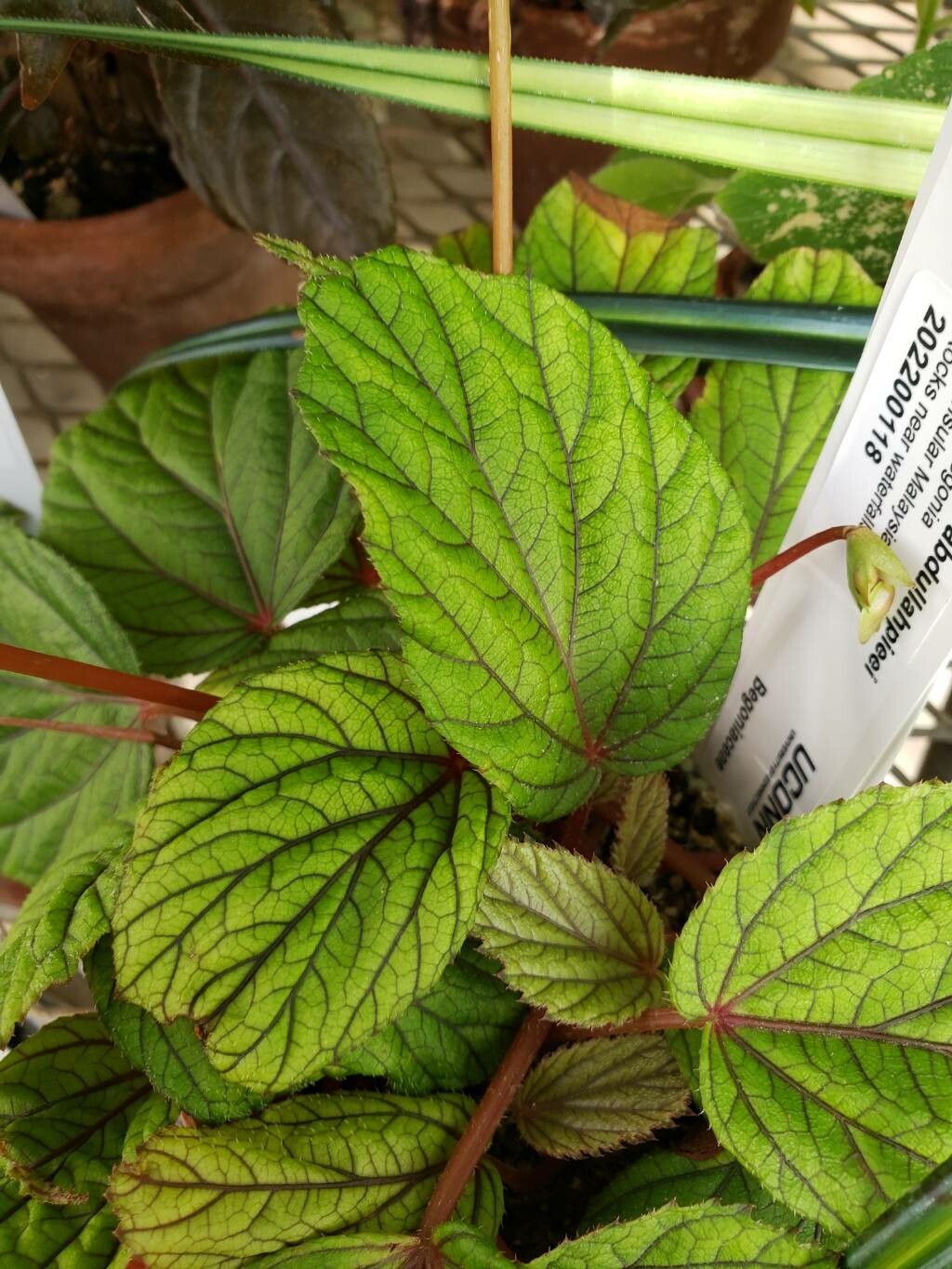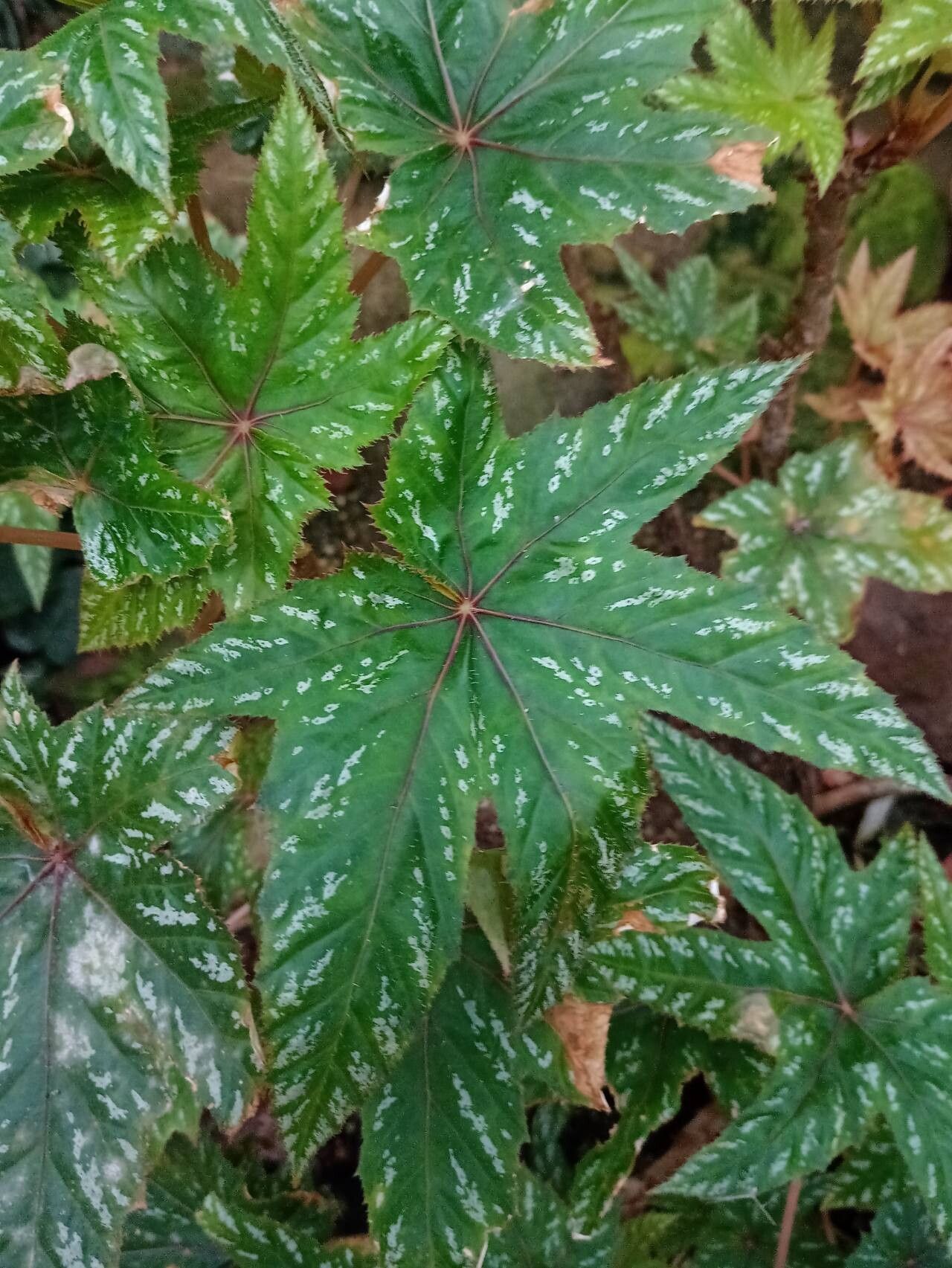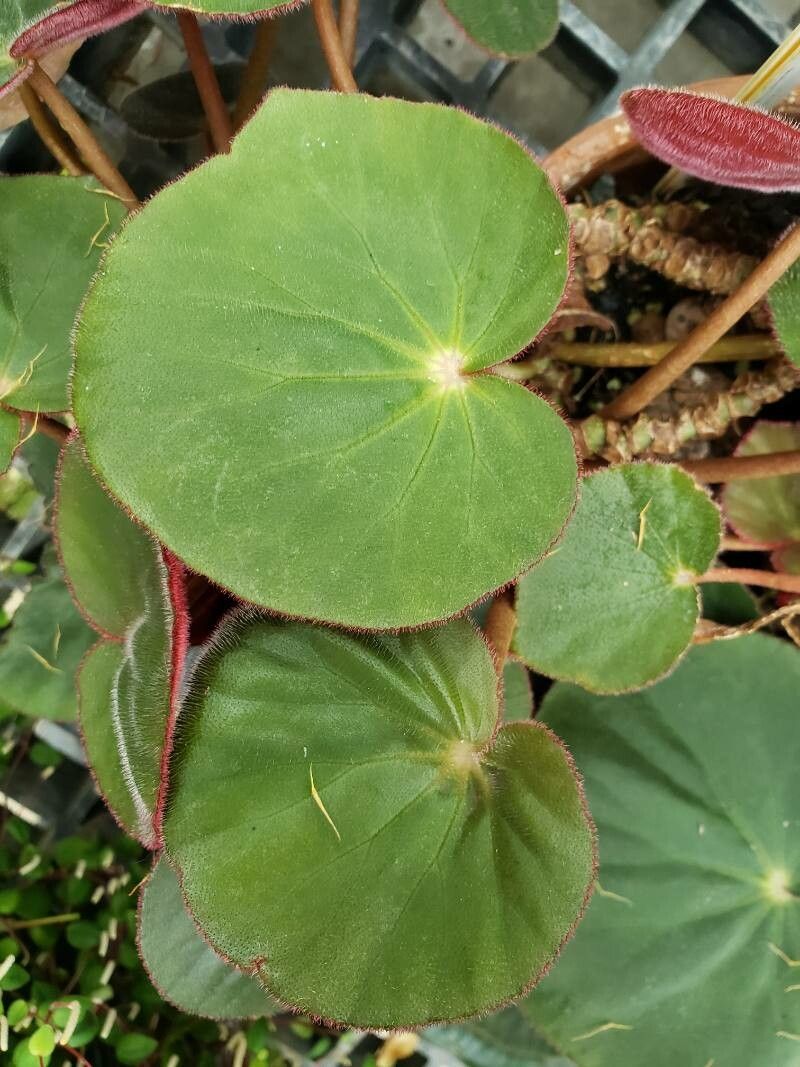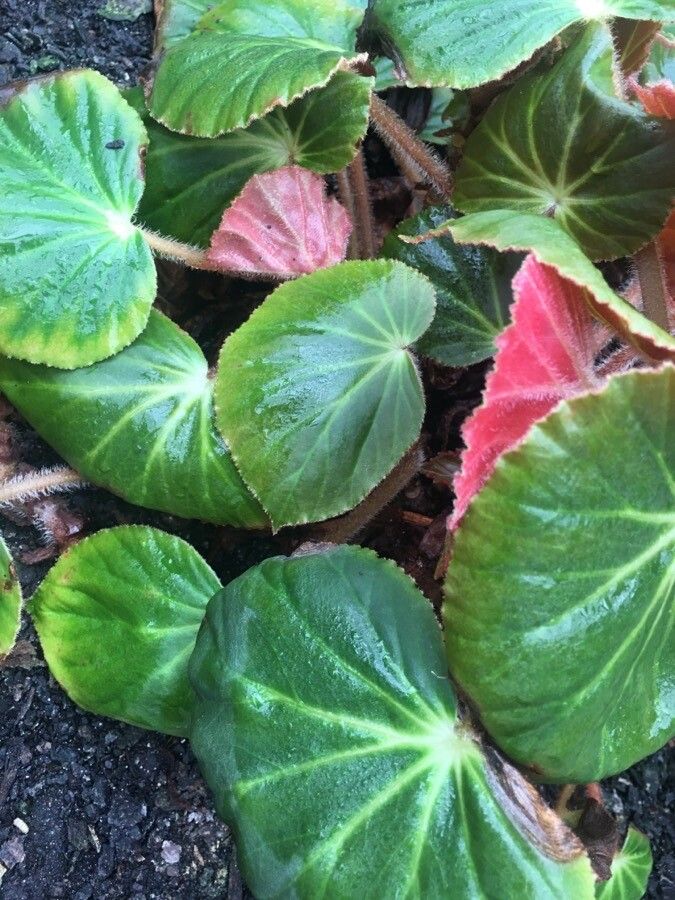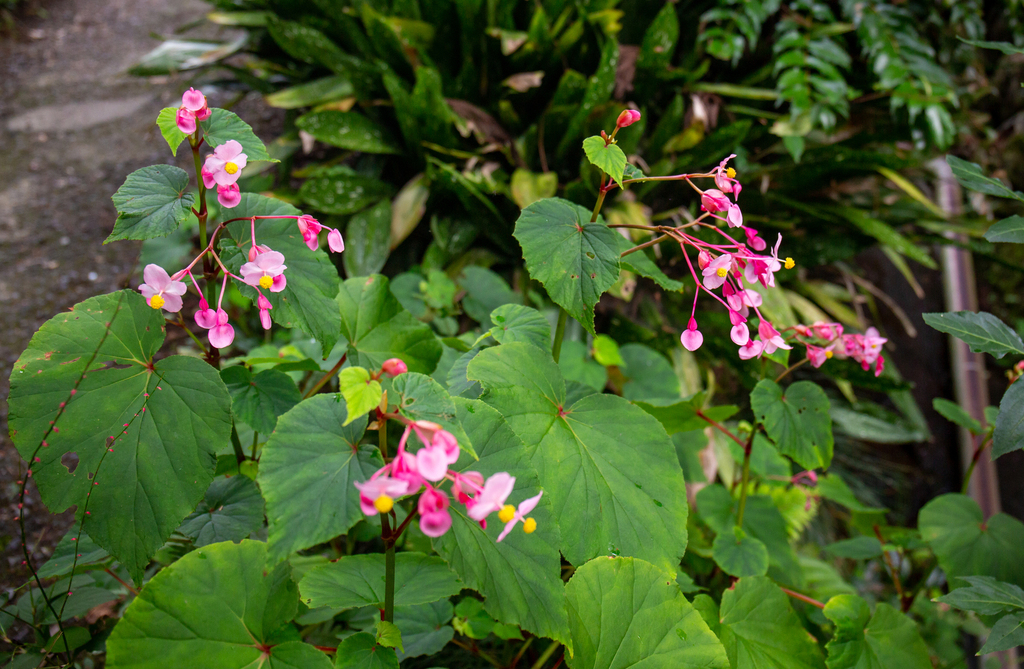
Begonia grandis, the hardy begonia, is a species of flowering plant in the family Begoniaceae. This herbaceous perennial has alternate, simple leaves on arching stems. The flowers are pink or white, borne in dichotomously branching cymes from late summer through fall in USDA U.S. Hardiness Zone 7. As the common name "hardy begonia" implies, it is winter hardy in some temperate regions. It can overwinter well in hardiness zone 9a in southwestern Japan as tuberous roots or bulbils (bulbils are formed in axils). Above-ground parts of this plant eventually die as temperature lowers. However, it is generally regarded as hardy to zones 6–7. The varietIes Begonia grandis subsp. evansiana and Begonia grandis subsp. evansiana var. alba have gained the Royal Horticultural Society's Award of Garden Merit.
Hardy begonia is fairly resistant to disease and is usually not prone to problems. However, it can be vulnerable to leaf spots when light and ventilation are inadequate and watering is excessive. The plant is rated easy to care for, as it mainly requires regular watering and not much else. Hardy begonia is a good choice for people who don't have some time and energy to devote to regular maintenance.
How to keep Begonia Grandis.
Light
The hardy begonia performs best in spots with moderate sunlight but can also tolerate areas of full shade. Its native habitat reflected this preference, featuring dappled light filtered through a canopy. Excessive sun can stress the plant, while too little light produces weak growth.
Water
The hardy begonia is native to the humid, shaded regions of East Asia and thrives in environments where moisture levels are consistent. Although it can withstand short periods of dryness, it is important to water it weekly to support healthy foliage and flowering. As an herbaceous perennial, this plant benefits from mulching, which helps retain soil moisture and reduces the need for frequent watering.
Humidity
This plant will thrive in moderate humidity, which is probably the level in your home. However, misting it a few times a week can be very beneficial. Make sure the room has good ventilation.
Temperature
Hardy begonia originates from temperate regions and does best in temperatures between 50 and 95 ℉ (10 to 35 ℃). It prefers cooler conditions during the growing season, roughly 65 to 75 ℉ (18 to 24 ℃), but can withstand temperatures as low as 50 ℉ (10 ℃) in autumn. In winter it tolerates temperatures close to freezing, though it should be shielded from hard freezes with a layer of mulch.
Fertilizer
A single fertilizer application in spring is typically enough for Hardy begonia, though additional feedings can optimize growth. Feed every four to six weeks. Fertilizing improves the leaves' appearance and function, encouraging even color and a healthy texture. It also promotes root growth and nutrient uptake, supporting the plant's long-term health.
Pruning
The hardy begonia is known for its heart-shaped leaves and pink flowers. To encourage healthy growth, it is best to prune from early to late spring. This helps remove dead stems and maintain the plant's shape. Be careful not to prune heavily while the plant is flowering, as this can cause stress. Pruning correctly not only enhances the begonia's appearance but also improves air circulation, which helps reduce the risk of disease.
Pot & Repot
Repot hardy begonia in early spring. Choose a pot that is wider than it is deep and has good drainage. Fill it with a loamy, well-draining potting mix amended with compost. Carefully remove old soil from the bulb and set it at a depth equal to the bulb’s height. Water well after repotting and position the pot in a sunny spot. Do not overwater, as this can cause the bulb to rot.
Botanical profile.
- Plant Type
- Herb
- Life Cycle
- Perennial
- Genus
- Begonia
- Family
- Begoniaceae
- Hardiness Zone
- 6-9
- Mature Height
- 30 cm to 61 cm
- Mature Spread
- 46 cm to 61 cm
- Leaf Color
- Green, Red
- Leaf Type
- Deciduous
- Flower Color
- Pink, White
- Flower Size
- 2.54 cm
- Bloom Time
- Mid summer
- Planting Time
- Spring, Autumn
- Harvest Time
- Mid summer, Late summer
Other names.
Reader questions.
What should I do if I give too much or too little water to my Hardy begonia?
To determine if you have watering issues with your plant, carefully observe it. Overwatering can cause the leaves to turn yellow with yellow-brown patches at the tips. In severe cases, the leaves may droop and curl due to root rot. If you have a Hardy begonia indoors, be cautious as it cannot tolerate standing water. If you notice signs of overwatering, such as standing water or leaf changes, stop watering and allow the soil to dry out for 3-5 days. If root rot is present, act quickly by removing the plant from its pot or the ground, washing off the roots, removing any dead roots, and replanting in fresh soil. Underwatering is also an issue for the Hardy begonia and can be identified by curled, lifeless leaves, yellowing from the bottom, and browning edges. To address underwatering, increase the frequency of watering and consider increasing humidity or changing the plant's location for optimal moisture retention.
Why should I put fertilizer on my Hardy begonia?
The main structure of the Hardy begonia is made up of its leaves. Fertilization plays a crucial role in maintaining the appearance and function of these leaves. It ensures that the leaves retain a consistent color and a healthy texture. Additionally, fertilization benefits the plant below the soil's surface by promoting the growth of new roots and maintaining existing ones. This not only keeps the plant healthy in the present but also enhances its ability to absorb nutrients from the soil in the future.
What are the sunlight requirements for Hardy begonia?
Hardy begonia requires moderate sunlight exposure but can also thrive in complete shade, mimicking its ancestral habitat characterized by dappled sunlight. It is advised to observe the movement of sunlight through your garden to find spots that offer a mix of light and shade, ensuring the plant's happiness. The plant is categorized into 'Partial sun', needing about 3-6 hours of sunlight, and 'Full shade', which is less than 3 hours of sunlight daily. However, both too much and too little sunlight can have adverse effects on the plant.
What temperatures are ideal for growing Hardy Begonia?
Hardy begonia, botanically known as Begonia grandis, thrives in temperate regions, ideally growing in temperatures between 50 to 95°F (10 to 35°C). During its growing season, the plant prefers cooler conditions, ranging from 65 to 75°F (18 to 24°C). As autumn approaches, it can tolerate temperatures as low as 50°F (10°C), and during winter, it is capable of handling temperatures near freezing. However, it should be protected from hard freezes by applying a layer of mulch.
How often do I need to water my Hardy begonia?
To water your plant effectively, here are some guidelines for different seasons and factors to consider. In spring, it's generally recommended to water the plant once a week. However, during summer, you should increase the watering frequency compared to spring, and in winter, decrease it. Remember that the timing might vary based on factors like humidity, temperature, and soil type. To determine the right watering frequency for your Hardy begonia, you can use your finger or a Soil Moisture Meter to check the soil condition more often. Aim to keep the soil moist but not soggy. Water the plant when the top 1.5-2 inches of soil have dried out. Continuously test the soil to establish a watering schedule. Keep in mind that potted plants are more prone to overwatering. Ensure you use a pot with proper drainage holes and well-draining soil. Also, make sure there's no excess water in the plant tray before watering. If your Hardy begonia is planted in the ground, rainfall will help it grow better. Ideally, it needs about 1 inch of rain per week. If rainfall is insufficient, additional watering once a week may be necessary. Humidity is another factor to consider. While the plant can grow in normal room humidity, higher humidity around 40 to 60 percent is preferred. More humidity means the soil stays moist for longer. For indoor plants, you can increase humidity by placing a small humidifier nearby. For outdoor plants, misting the plant throughout the day can help.
When should I fertilize my Hardy begonia for best results?
If you grow your Hardy begonia outdoors each year, it will start to grow new leaves in early spring. This is a sign that it's time to start fertilizing. A single application of fertilizer in spring should be enough, but if you want to maximize growth, you can fertilize multiple times from spring to early summer. In this case, feed your Hardy begonia about once every month to a month and a half.
How can artificial lighting supplement natural sunlight for Hardy begonia?
For indoor Hardy begonia plants where natural sunlight is insufficient, especially during winter or in less sunny spaces, artificial lighting can be a vital solution. LED lights, being customizable for specific wavelengths, are recommended. The intensity of artificial light should vary depending on the plant's needs: full sun plants require 30-50W/sq ft, partial sun plants need 20-30W/sq ft, and full shade plants need 10-20W/sq ft. The light source should be placed 12-36 inches above the plant, mimicking the length of natural daylight, usually 8-12 hours per day, for optimal growth.
Does Hardy Begonia require special frost protection measures?
Hardy begonia showcases strong cold resistance and generally does not require special frost protection measures throughout the winter. Nevertheless, if winter temperatures are anticipated to plummet below -25°C, taking steps to protect the plant is crucial. This protection can be provided by covering the plant with soil or straw. To prepare for the first freeze in autumn, it’s recommended to water the plant copiously, ensuring the soil remains moist and enters a frozen state, thus preventing drought and water scarcity during winter and early spring.
How should I go about watering my Hardy begonia correctly?
Here are simplified instructions on how to water your Hardy begonia: 1. If you have an indoor pot, take it to your kitchen sink and use the faucet to add water to the container. Hold the pot and stop watering when you see water running through the drainage holes. Don't do this during winter or in cold climates, as the cold temperature can harm the roots. 2. If your tap water contains high levels of fluorine, chlorine, or salts, consider using rainwater or lake water instead. 3. You can also water your Hardy begonia by using a watering can, hose, or any other tool you prefer. They will respond well to overhead watering or watering directly into the soil. 4. For begonias planted in the ground, aim the hose at the roots and water for at least 10 minutes when there is not enough rainfall. Tips: - Hardy begonias prefer soft, acidic water. If you have hard water, use a home water filter or let tap water sit out for 24 hours to allow minerals and salts to dissipate. Filtered water or rainwater is a better option. - The ideal pH for watering is around 6.5. If you can collect rainwater, it's a great choice for your Hardy begonia.
When is it not a good idea to fertilize my Hardy begonia?
During the late fall and winter, your Hardy begonia will go into a dormant phase. During this time, you should avoid fertilizing it. In the spring and summer, if you decide to fertilize it multiple times, you should gradually reduce the amount of fertilization as summer approaches, because the growth rate of the Hardy begonia will slow down. In general, it is not recommended to fertilize the Hardy begonia during very hot weather or when the soil is excessively dry. Fertilizing it under those conditions can put excessive stress on the plant and cause it to die prematurely.
What symptoms indicate Hardy begonia isn't getting enough light?
When Hardy begonia grows indoors with insufficient light, symptoms may include impacts on flowering and fruiting capabilities, leggy or sparse growth, lighter-colored new leaves, chlorosis (leaves turning yellow due to lack of chlorophyll), sunscald, leaf curling as a sun defense, wilting due to intense sunlight exposure, and leaf scorching. These symptoms highlight the plant's struggle with either too little or too much sunlight.
How does cold temperature affect Hardy Begonia and what are the solutions?
Hardy Begonia is cold-tolerant, thriving best when temperatures are above 10°C. During the winter, it should be kept above -15°C. If temperatures fall below -25°C, the plant may not exhibit noticeable changes during the winter season, but there could be a reduction in sprouting, or it may not sprout at all during spring. The solution for spring is to remove any parts of the plant that have failed to sprout, allowing for new growth.