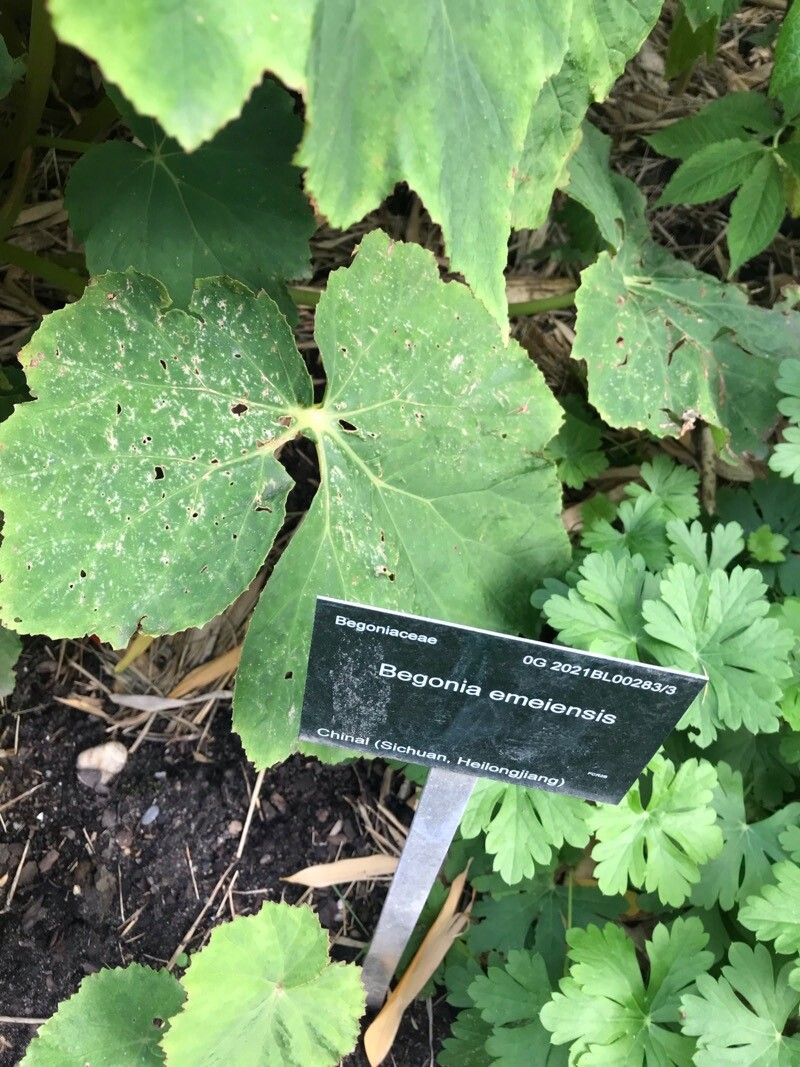
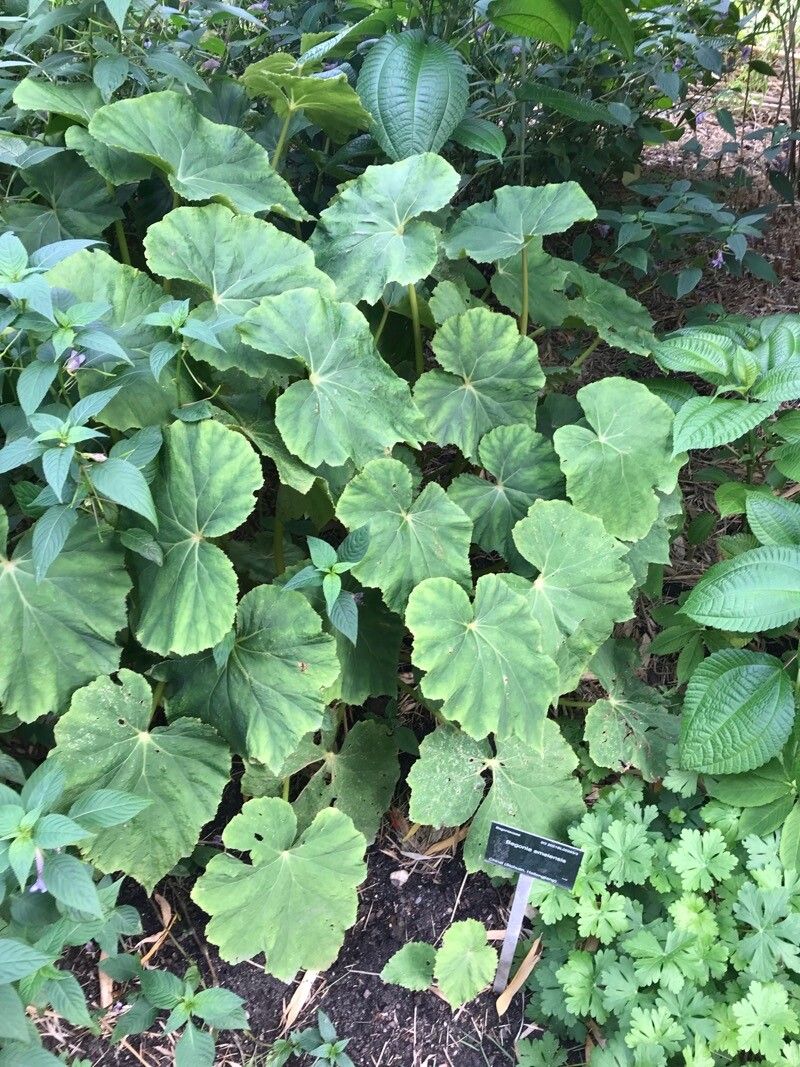
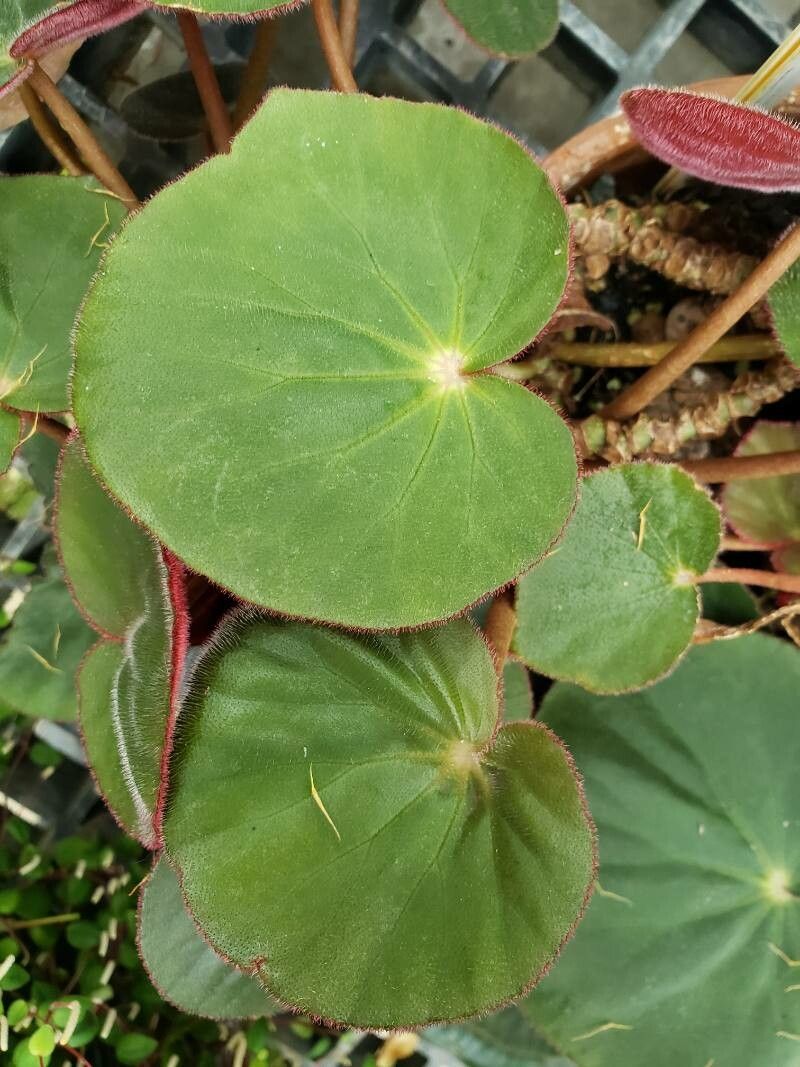
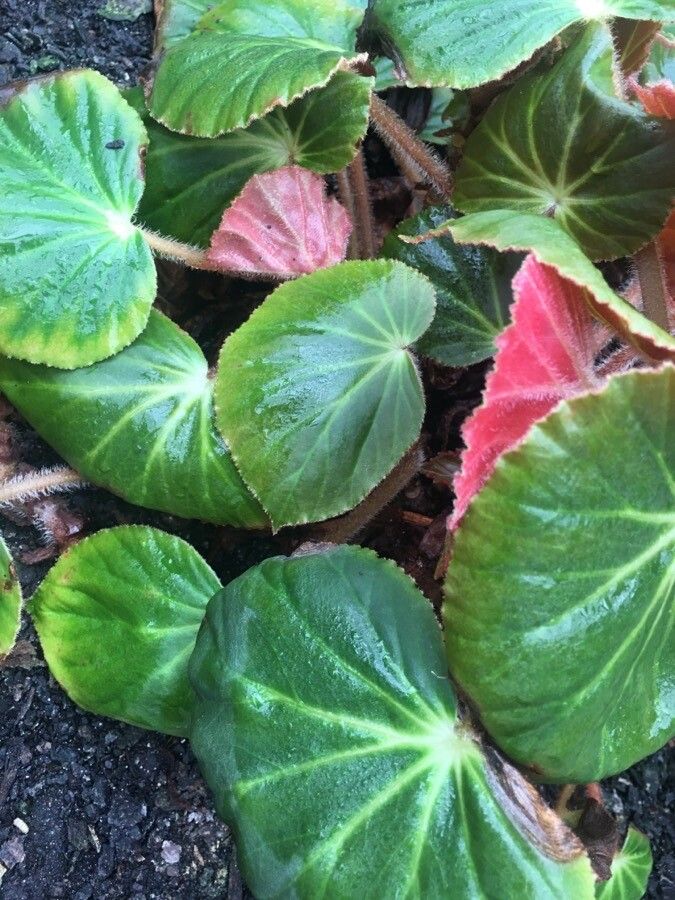
Begonia emeiensis, the Mount Emei begonia, is a species of flowering plant in the family Begoniaceae. It is native to Sichuan, apparently only to the slopes of Mount Emei, one of the Four Sacred Buddhist Mountains of China. A rhizomatous perennial that resembles Begonia dielsiana, it is usually 0.5 m (20 in) tall, and is typically found growing amongst other scrubby vegetation alongside streams at elevations from 900 to 1,000 m. The flowers are 4 cm (1.6 in) wide, and pale pink. Hardy to −10 °C, it is available from commercial suppliers.
Begonia emeiensis is fairly resistant to disease and typically does not easily contract illnesses. Nevertheless, it can be vulnerable to pests and plant diseases present in its surroundings. Those infections are generally mild. Regarding care, this plant needs moderate maintenance. Regular pruning is necessary to keep it looking tidy and to support healthy growth. Applying fertilizer can also encourage flowering. Begonia emeiensis is suitable for someone with outdoor space, such as a garden or patio, and does not require extensive care experience. When grown indoors, it may need more attention.
How to keep Begonia Emeiensis.
Light
Begonia emeiensis grows naturally in habitats like forest understories or rocky sites, where it is exposed to natural shade. It prefers partial sun but can tolerate both full sun and full shade, showing its versatile and hardy nature.
Temperature
Begonia emeiensis can tolerate a wide range of temperatures, yet its distribution may still be restricted by different interactions of moisture and heat. It performs best in warm summer conditions with sufficient rainfall or irrigation. Extended periods of cloudy, rainy weather or sustained high temperatures can raise the risk of the plant dying. In winter, protecting it from cold can increase its chances of survival.
Fertilizer
One application of fertilizer in spring is generally sufficient for Begonia emeiensis, though several feedings can maximize growth. Feed every month to a month and a half. Fertilization improves leaf appearance and function, maintaining consistent color and a healthy texture. It also encourages root growth and nutrient uptake for the plant’s long-term health.
Botanical profile.
- Plant Type
- Herb
- Life Cycle
- Perennial
- Genus
- Begonia
- Family
- Begoniaceae
- Hardiness Zone
- 10-11
- Mature Height
- 30 cm to 61 cm
- Mature Spread
- 30 cm to 46 cm
- Leaf Color
- Dark Green, Olive Drab
- Leaf Type
- Deciduous
- Flower Size
- 2.03 cm to 3.05 cm
- Bloom Time
- Summer, Early fall, Mid fall
- Planting Time
- Spring, Summer, Autumn
- Harvest Time
- Late summer, Fall, Early winter
- Native Area
- China