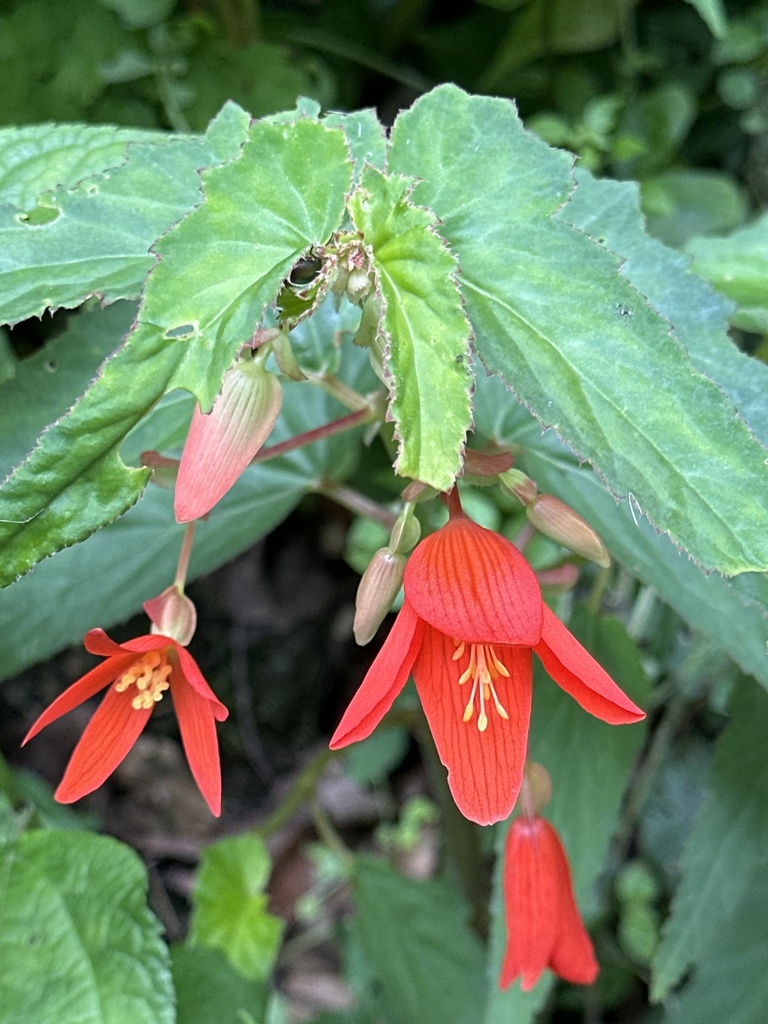
Begonia boliviensis, commonly known as the Bolivian begonia, is a perennial flowering plant native to Bolivia and Argentina. It belongs to the Begoniaceae family. The plant features attractive, bright green, glossy leaves that are heart-shaped and often tinged with red or bronze on the undersides.
The Bolivian begonia produces clusters of pendulous flowers that bloom in shades of red, orange, pink, or white. These flowers have long tubular petals with frilly edges and appear abundantly throughout the summer months.
Begonia boliviensis thrives in partial shade to full sun and prefers well-drained soil. It can be grown as either an annual or a perennial, depending on the growing conditions. The plant requires regular watering but should not be overwatered to prevent root rot.
Due to its trailing habit, the Bolivian begonia is an excellent choice for hanging baskets or containers, making it perfect for cascading over edges. It also makes a great addition to garden beds, serving as a ground cover because of its spreading nature.
Overall, Begonia boliviensis is an attractive flowering plant that adds color and interest wherever it is planted. Its relatively easy care makes it ideal for novice gardeners looking for something both easy and beautiful for their gardens.
The Bolivian begonia has strong disease resistance and is generally not prone to illness. However, it can be affected by pests and diseases present in its surroundings. These infections are typically mild. In terms of care, this plant needs moderate maintenance. It should be pruned regularly to maintain an attractive appearance and healthy growth. Fertilizing can also help encourage flowering. The Bolivian begonia is suitable for anyone with outdoor space, such as a garden or patio, and does not require extensive care experience. It may need more attention when grown indoors.
How to keep Begonia Boliviensis.
Light
Bolivian begonia grows best in full sun, though it can tolerate partial light. Native to environments with plentiful sunlight, it thrives under those conditions. Insufficient or excessive light can hinder its growth or provoke stress.
Water
The Bolivian begonia flourishes in high humidity and needs consistent moisture, with weekly watering being ideal. Although it can tolerate moderate drought, the plant thrives with stable hydration. It is best grown indoors, where it requires well-draining soil to prevent waterlogging while still retaining sufficient moisture.
Humidity
This plant will thrive in moderate humidity, which is probably the level in your home. However, misting it a few times a week can be very beneficial. Make sure the room has good ventilation.
Temperature
Bolivian begonia is native to cooler climates and flourishes at temperatures of 68 to 100 °F (20 to 38 ℃). At higher temperatures it should be given more water and shade, while at lower temperatures it prefers less water and increased sunlight.
Fertilizer
Proper fertilization is essential for a Bolivian begonia's health and appearance. Fertilize Bolivian begonia during the summer, repeating the treatment monthly throughout the season. Nutrients power growth and preserve the plant's parts. Fertilizing improves the Bolivian begonia's flowering, ensuring it produces its best blooms.
Pruning
The Bolivian begonia is known for its cascading blooms and vibrant foliage. To promote bushier growth and more abundant flowering, it's best to prune the plant from early to late spring. Regular pruning not only helps maintain a compact shape but also improves air circulation and reduces the risk of disease. Make sure to clean your tools to prevent any stress on the plant. With proper care, you can ensure vigorous growth and an extended blooming period.
Pot & Repot
To promote healthy growth, repot your Bolivian begonia every 2-3 years during the spring into a larger container. After repotting, provide the plant with bright, indirect light and be careful not to overwater it. Avoid using compact pots, as they can constrict the roots and hinder vibrant flowering.
Botanical profile.
- Plant Type
- Herb
- Life Cycle
- Perennial
- Genus
- Begonia
- Family
- Begoniaceae
- Hardiness Zone
- 9-11
- Mature Height
- 61 cm
- Mature Spread
- 61 cm to 91 cm
- Leaf Color
- Green
- Leaf Type
- Semi-evergreen
- Flower Color
- Red, Orange
- Flower Size
- 5.08 cm to 7.62 cm
- Bloom Time
- Late spring, Summer
- Planting Time
- Spring
- Harvest Time
- Summer, Early fall
- Native Area
- Bolivia
Other names.
Reader questions.
What should I do if I give my Bolivian begonia too much or too little water?
Observing the plant can help determine if there are watering issues. Overwatering can lead to yellow leaves with yellow-brown patches at the tips, as well as severe drooping and curling due to root rot. Bolivian begonias planted indoors are particularly susceptible to overwatering, so it's important to stop watering once signs of overwatering occur and allow the soil to air out for a few days. If root rot is present, the plant should be removed from the pot or ground, roots washed off, dead roots removed, and new soil added. Underwatering is also a concern, as the plant is sensitive to drought conditions. Signs include curled and lifeless leaves, gradual yellowing from the bottom, and browning edges. Increasing the frequency of watering and adjusting humidity levels or sunlight exposure can address underwatering issues.
Why should I use plant food on my Bolivian begonia?
Fertilizer and other soil nutrients are like fuel for your Bolivian begonia. They are used by the plant to grow and stay healthy. All plants use nutrients in the soil to make new plant material and maintain their existing parts. For the Bolivian begonia specifically, fertilization is important for the plant to produce its most beautiful flowers. Since the flowers are what make this plant attractive, most gardeners want to make sure they look their best. Fertilization is one of the most effective ways to help your Bolivian begonia produce its most impressive blooms.
What are the sunlight requirements for Bolivian begonias?
Bolivian begonias flourish best in full sun exposure, defined as above 6 hours of direct sunlight daily, but they can also thrive under partial sun, which means about 3-6 hours of sunlight. Originating from regions with abundant solar radiation, these plants show optimal health and growth when exposed to ample sunlight. However, both inadequate and excessive light can lead to developmental issues or stress for the plants. It's crucial to observe how sunlight moves through your garden to find spots that offer the right balance of light and shade, ensuring the plants' well-being.
What is the ideal temperature range for Bolivian begonia?
Bolivian begonia thrives in a temperature range of 68 to 100 °F (20 to 38 °C). It is indigenous to cooler climates and loves heat, but it is crucial to adjust care based on temperature changes. During higher temperatures, it requires more water and shade, while in cooler temperatures, it does well with less water and more sunlight. To avoid damage from cold, it's advisable to keep the plant indoors during autumn and winter near a bright window, avoiding direct contact with heaters to maintain temperatures above 20°C, as temperatures nearing 0°C can harm the plant.
How often do I need to water my Bolivian begonia plant?
To properly water your Bolivian begonia, consider the following factors
When should I fertilize my Bolivian begonia for the best results?
The Bolivian begonia undergoes two main phases every year. The first phase, called the dormant phase, occurs during winter, where the plant experiences minimal new growth. The second phase, known as the active growth phase, takes place in spring and fall, when the plant requires the most fertilization. It's advisable to start fertilizing your Bolivian begonia in the spring, repeating the process once a month until the end of summer. As fall approaches, you can gradually decrease the frequency of fertilization.
How can artificial lighting be used for Bolivian begonias?
Indoor Bolivian begonias require adequate lighting for optimal growth, especially when natural sunlight is insufficient, like in winter or less sunny areas. Artificial lights, such as LEDs, can be customized to provide necessary wavelengths, supporting better health and faster growth. Full sun plants need 30-50W/sq ft, partial sun plants 20-30W/sq ft, and full shade plants 10-20W/sq ft of artificial light. The light source should be placed 12-36 inches above the plant to mimic natural sunlight, and most plants need 8-12 hours of light per day.
How should I care for my Bolivian begonia in low temperatures?
Bolivian begonia is sensitive to low temperatures and thrives when the temperature remains above 20°C. It is not tolerant of temperatures below 0°C. Exposure to temperatures below -5°C may cause the leaves to lighten in color, and frost can turn them brown or black, leading to wilting and drooping. If frost damage occurs, trim off the damaged parts and move the plant to a warmer indoor setting. Placing it near a south-facing window ensures ample sunlight, but make sure it's not too close to heaters or air conditioning vents to prevent air dryness.
How should I water my Bolivian begonia correctly?
Here are some easier-to-follow instructions for watering your Bolivian begonia: 1. If you have your plant in a small pot indoors, you can bring it to the kitchen sink. Hold the pot in your hands and use the faucet to water it. Stop once you see water running through the drainage holes. Avoid doing this during winter or in cold climates to protect the roots from the cold. 2. If your tap water contains a lot of fluorine, chlorine, or salts, it's best to use rainwater or lake water instead. 3. Bolivian begonias do well with overhead watering or watering directly into the soil. You can use a watering can, hose, or any other tool you prefer to water them. 4. If your Bolivian begonias are planted in the ground and there hasn't been enough rain, aim the hose at the root system and let the water flow for more than 10 minutes to ensure thorough watering. 5. Be mindful of the water you use. Bolivian begonias prefer soft, acidic water. If you have hard water, you can use a home water filter to remove minerals and salts. Letting tap water sit for 24 hours can also help chemicals dissipate. Filtered water or rainwater with a pH of 6.5 is ideal for these plants.
When is it not a good idea to fertilize my Bolivian begonia?
To ensure healthy growth for your Bolivian begonia without risking root burn, it's important to consider the plant's active growth period during spring and summer, when it requires additional nutrients. However, in the fall and winter, when the plant enters its dormancy stage, it is advisable to discontinue fertilizing.
What symptoms indicate a Bolivian begonia is receiving inadequate light?
Symptoms of inadequate light for Bolivian begonias include smaller new leaves, leggy or sparse growth, faster leaf drop, halted or no new growth, and lighter-colored or yellowing leaves, the latter indicating chlorosis. Furthermore, excessive sunlight can lead to sunscald, leaf curling, wilting from increased transpiration, and leaf scorching, evidenced by brown, dry, crispy leaf edges. These symptoms point to either excessive or insufficient light, negatively impacting the plant’s health.
What measures should I take for Bolivian begonia in high temperatures?
During the summer, ensure that Bolivian begonia is kept below 38°C to prevent heat stress. Should temperatures exceed 43°C, the plant's leaves may lighten, making it more prone to sunburn. To mitigate damage, trim away any sunburned or dried parts of the plant. Relocate the plant to an area with shade during the intense midday and afternoon sun. Additionally, watering the plant in the morning and evening can help keep the soil adequately moist and support the plant's health in high temperatures.