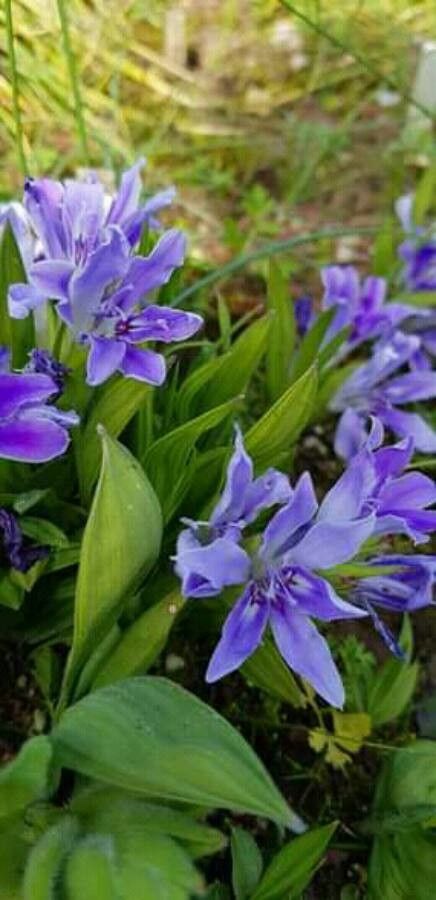
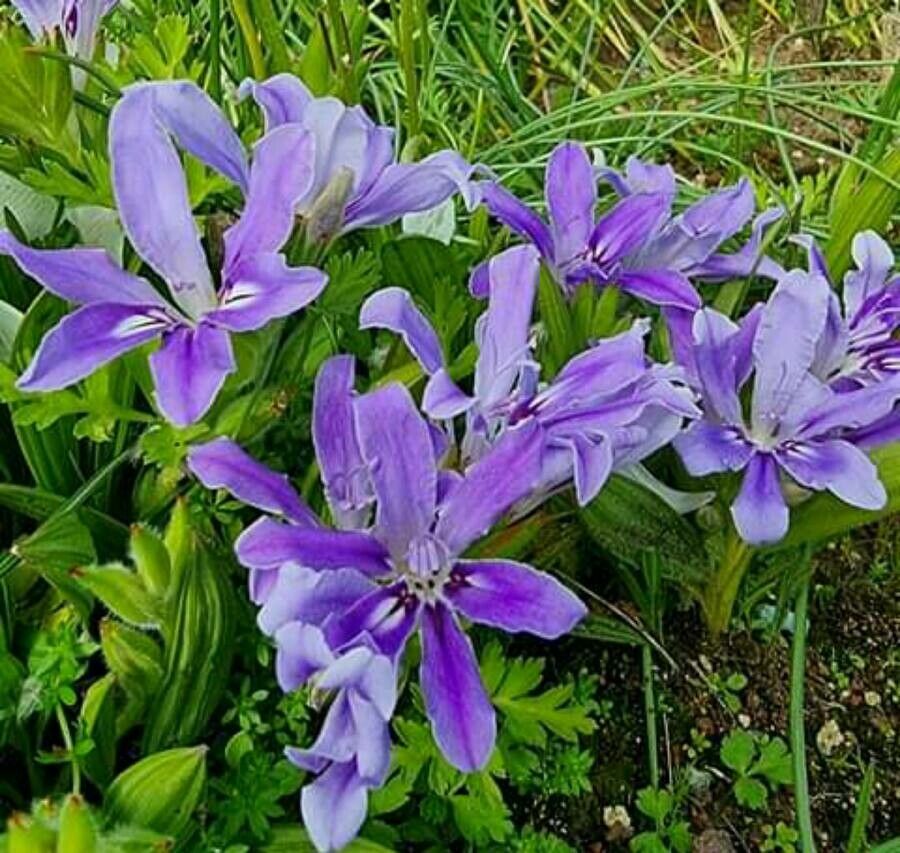
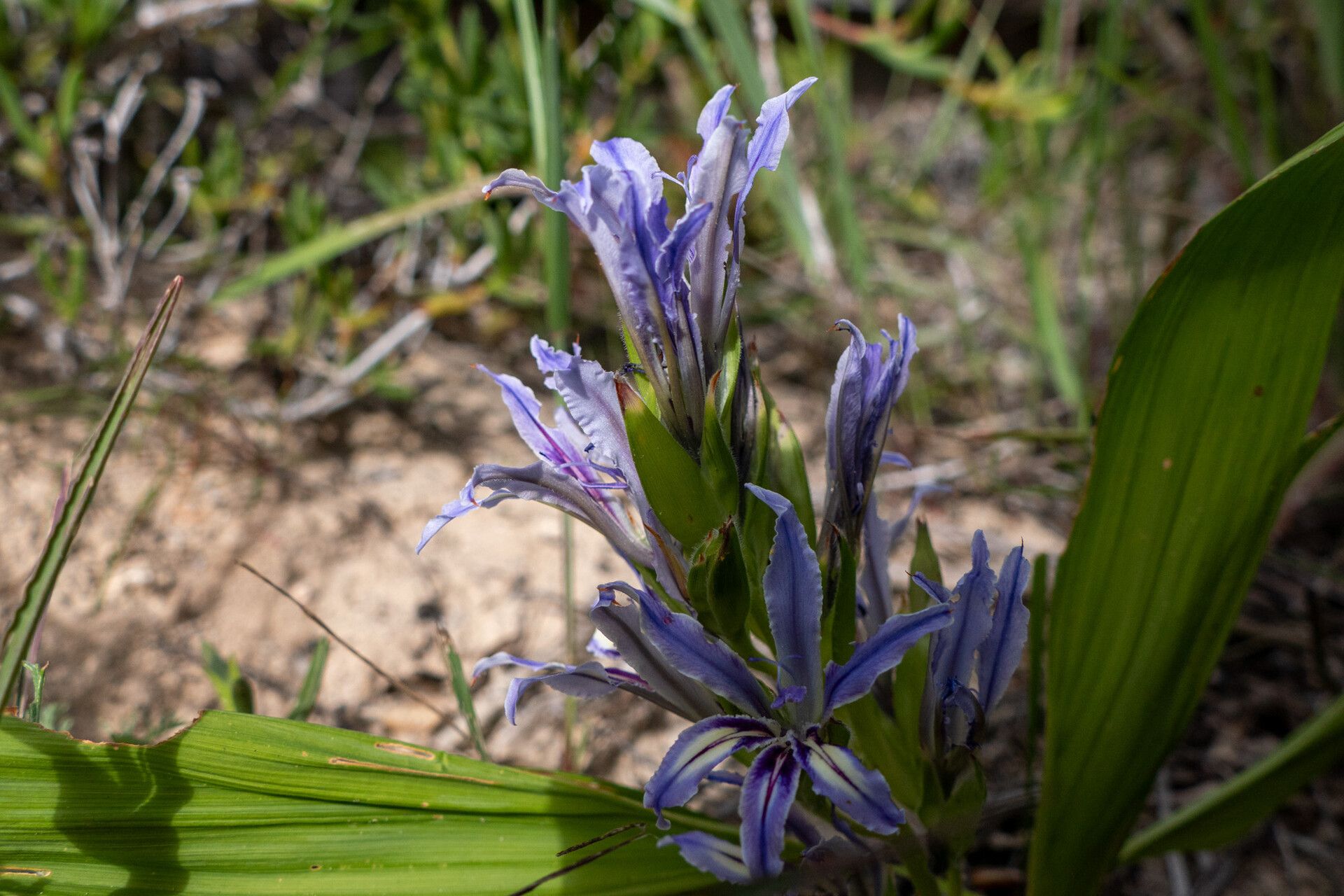
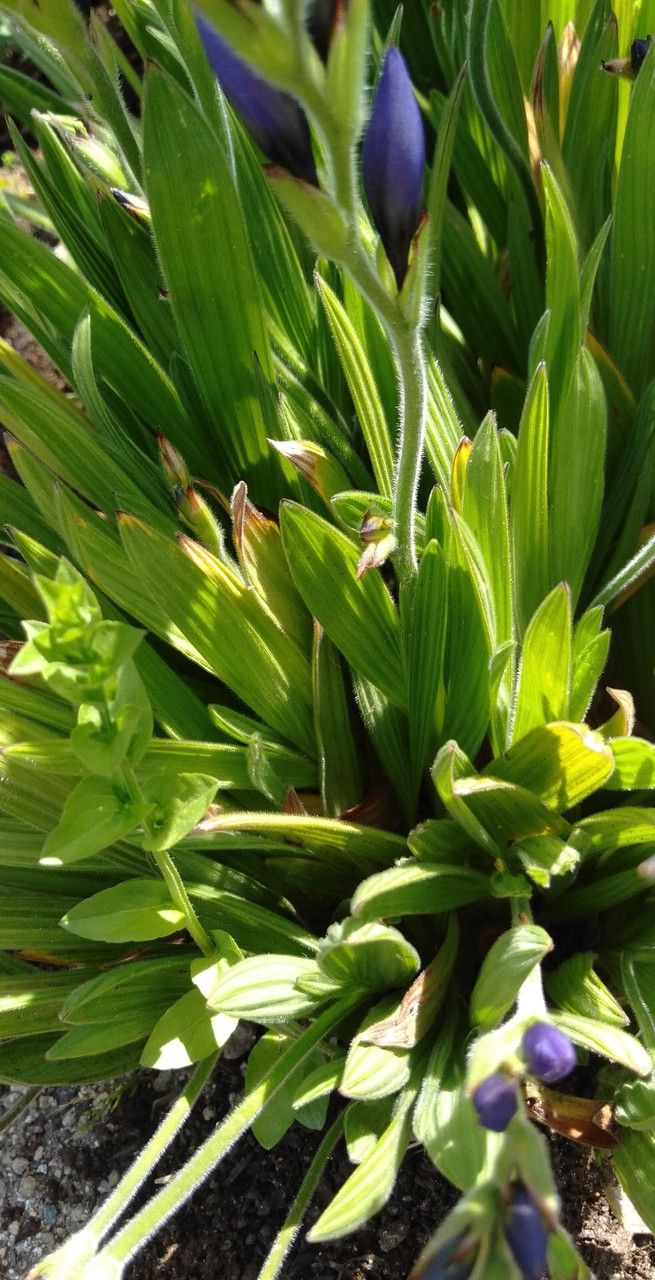
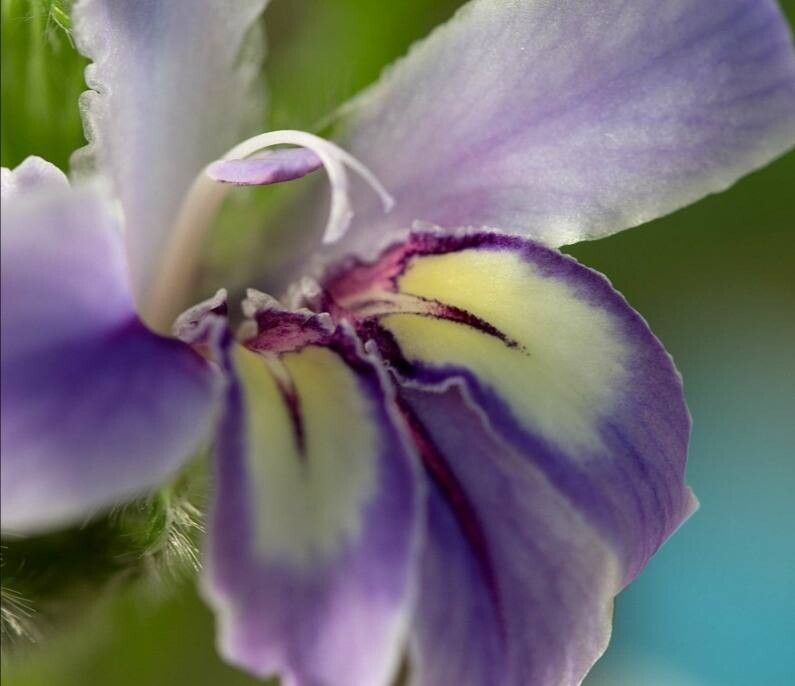
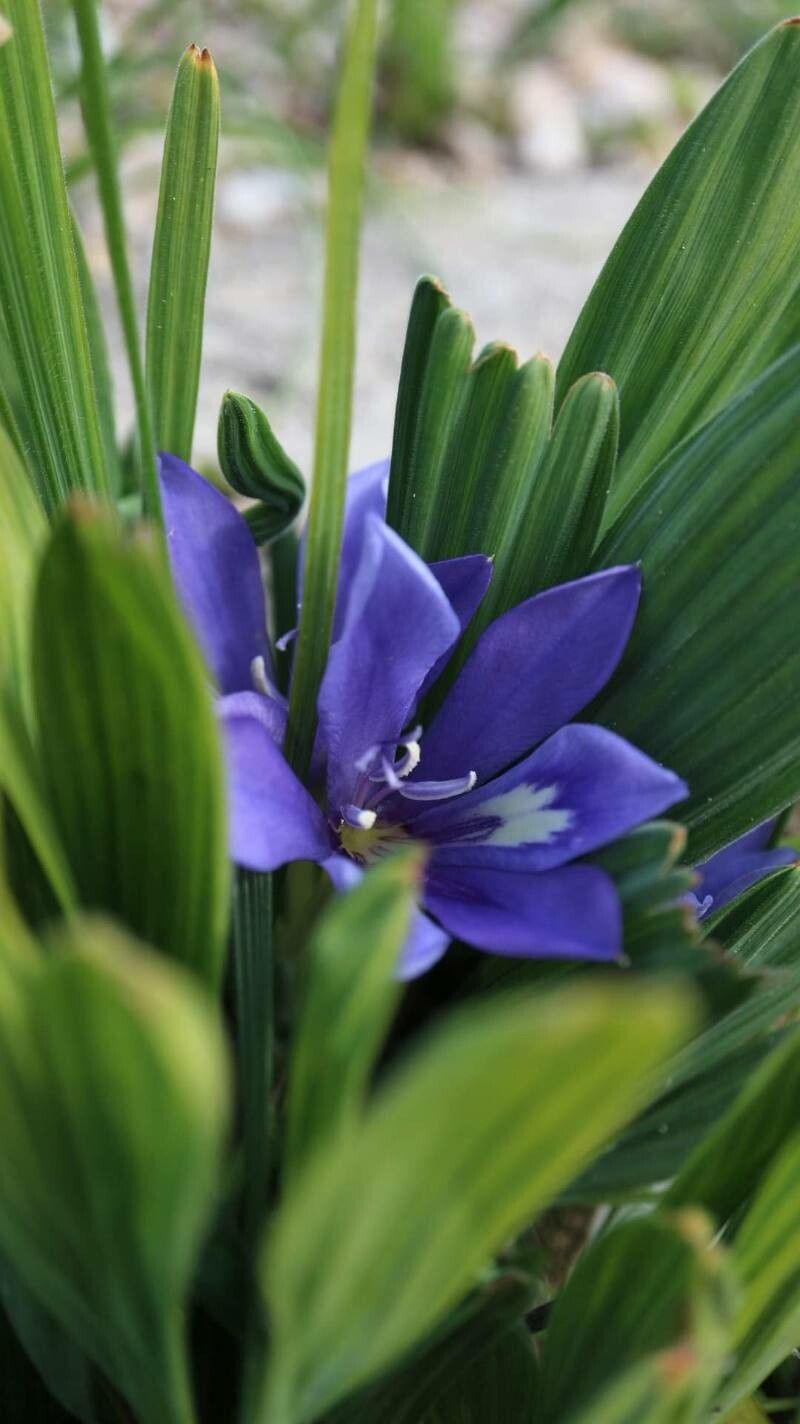
Babiana nana is a species of geophyte of 6–15 cm (2.4–5.9 in) high that is assigned to the family Iridaceae. It has leaves that consist of a sheath and a blade that are at an angle with each other. The leaf blades are oval to almost line-shaped and have a left and right surface, rather than an upper and lower surface. The leaf blades are moderately pleated and covered in dense, soft hairs. The inflorescence contains two to six blue to violet or pale pink flowers adorned with white markings on the lower lip, and with three stamens crowding under the upper lip. Flowering occurs from late August to the end of September. The flowers emit a smell reminiscent of roses or violets.
Late Bobbejaantjie is fairly resistant to disease and usually does not suffer from illnesses. That said, it can be vulnerable to pests and diseases present in its surroundings, though these issues are typically mild. As for care, this plant requires moderate maintenance. It should be pruned regularly to preserve a neat appearance and support healthy growth. Fertilizing can also encourage flowering. Late Bobbejaantjie is well suited to anyone with outdoor space, such as a garden or patio, and does not demand extensive gardening experience. It may need increased care if grown indoors.
How to keep Babiana Nana.
Light
Late Bobbejaantjie is a sun-loving, perennial herbaceous plant that comes from open habitats and commonly grows in meadows and grasslands. It prefers full sun but can also tolerate partial sun.
Water
Babiana nana thrives in environments that experience alternating wet and dry periods, which is typical for bulbous species. It requires moderate moisture, so water it weekly. Be sure to adjust the watering schedule during periods of seasonal rain to ensure optimal growth, particularly when it is grown outdoors.
Temperature
Late Bobbejaantjie can adapt to a wide range of temperature conditions, but its distribution may still be limited by different combinations of water and heat. It does best in warm summer climates with adequate rainfall or watering. Extended periods of cloudy, rainy weather, as well as prolonged high temperatures, can raise the likelihood of Late Bobbejaantjie dying. During winter, proper protection from cold can increase the plant's survival rate.
Fertilizer
For Late Bobbejaantjie, the primary time to apply fertilizer is in early spring when the flowers are forming. The proper fertilizer promotes better blooms and helps Late Bobbejaantjie produce attractive flowers. Fertilizing in early spring ensures strong flowers throughout the season and supplies energy for dormant growth phases.
Pruning
To ensure the optimal growth of Babiana nana, prune during early to late spring. Remove any dead or diseased stems and trim back overgrown areas to promote healthy growth and enhance flowering. This also helps maintain a compact shape. Careful pruning directs energy toward producing robust blooms and lush foliage.
Botanical profile.
- Plant Type
- Herb
- Life Cycle
- Perennial
- Genus
- Babiana
- Family
- Iridaceae
- Hardiness Zone
- 8-10
- Mature Height
- 61 cm
- Mature Spread
- 10 cm
- Leaf Color
- Green
- Leaf Type
- Semi-evergreen
- Flower Color
- Pink
- Flower Size
- 3.05 cm to 4.06 cm
- Bloom Time
- Early spring, Mid spring
- Planting Time
- Spring, Summer
- Harvest Time
- Late spring, Early summer