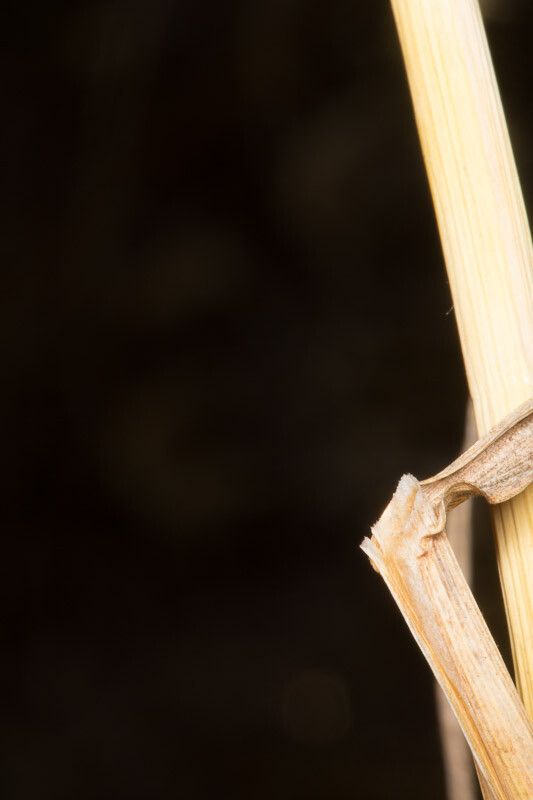
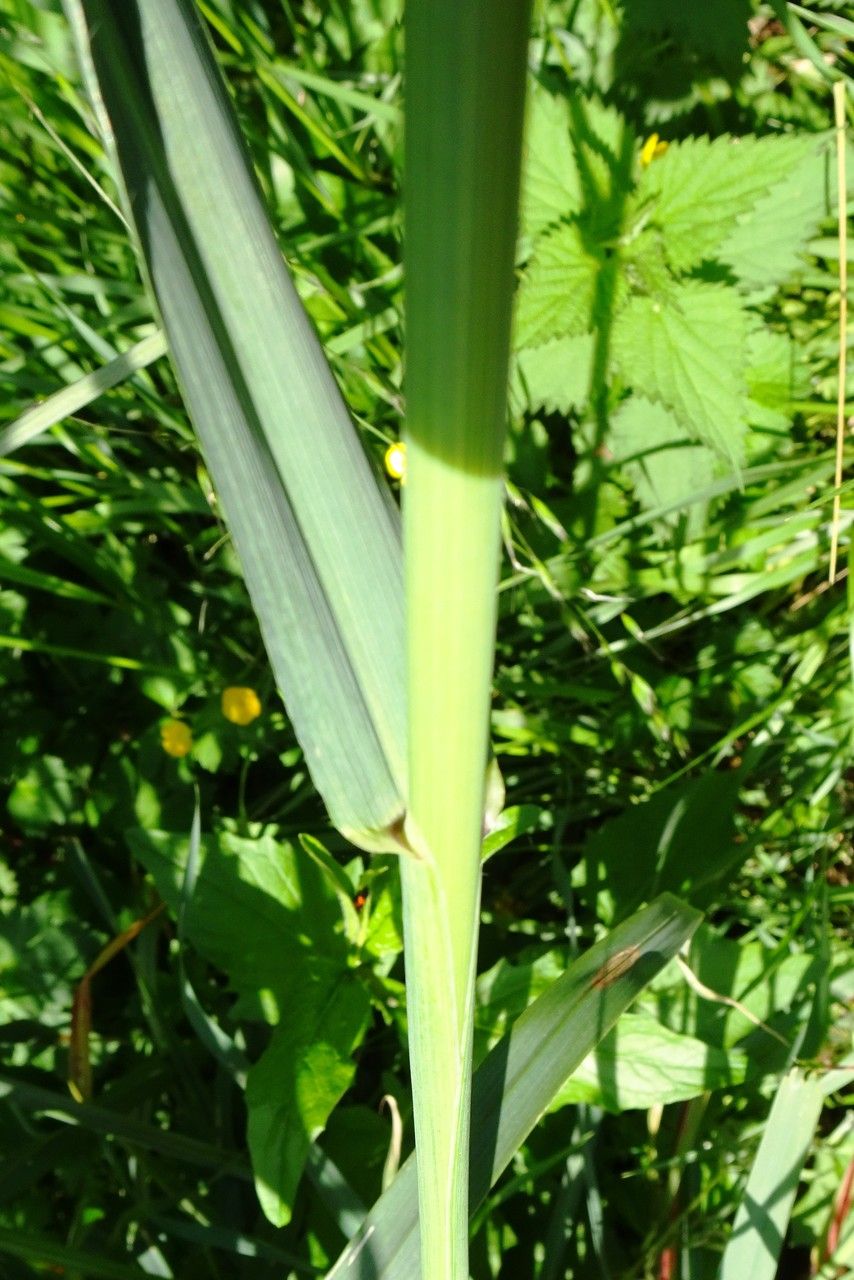
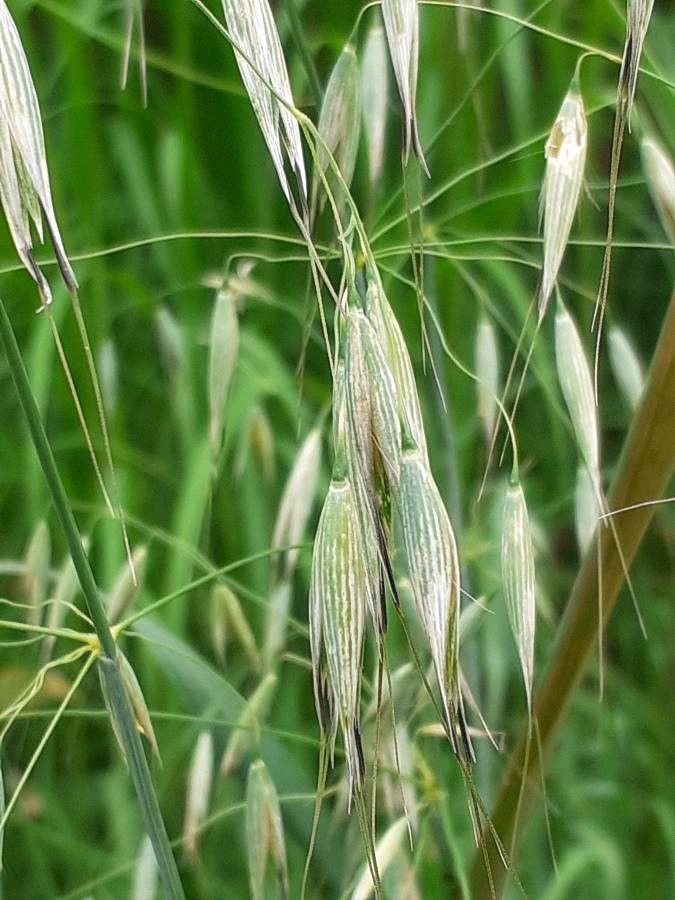
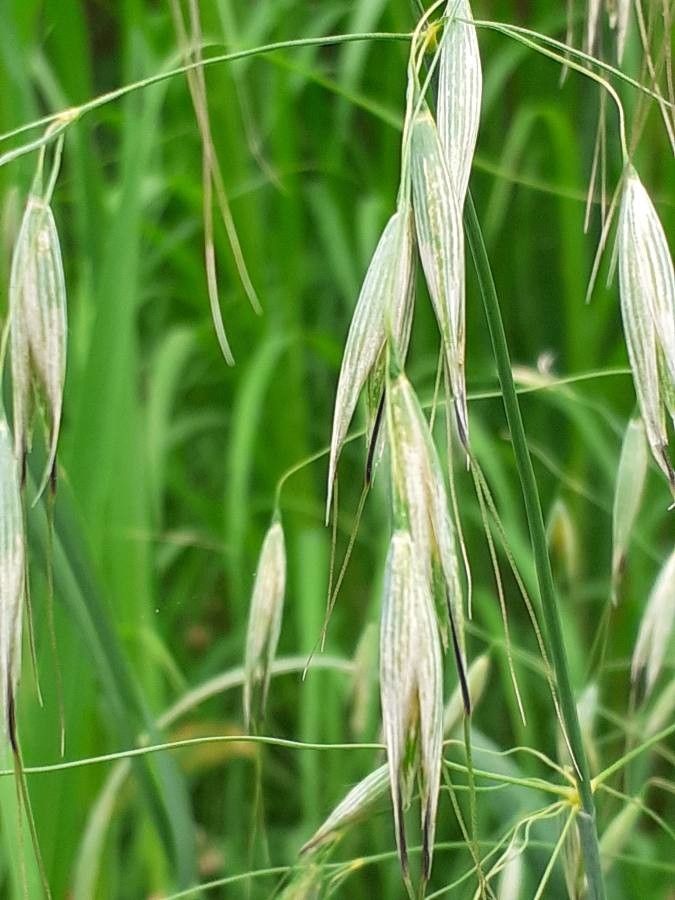
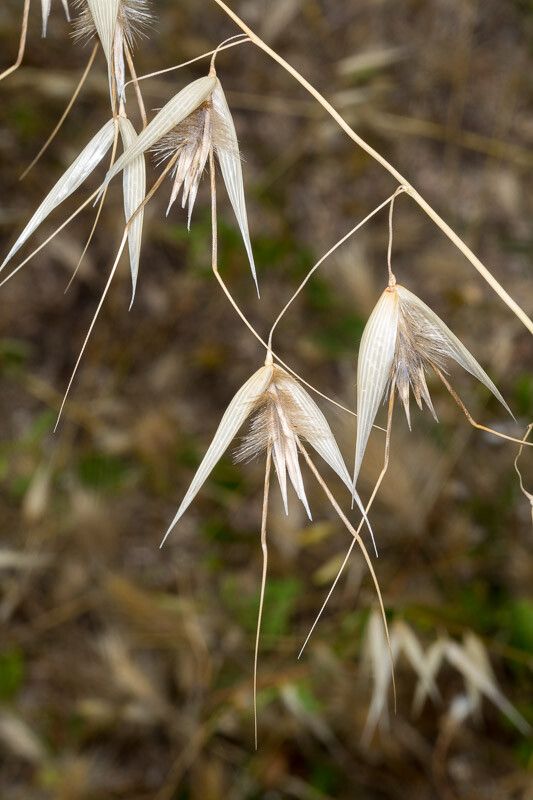
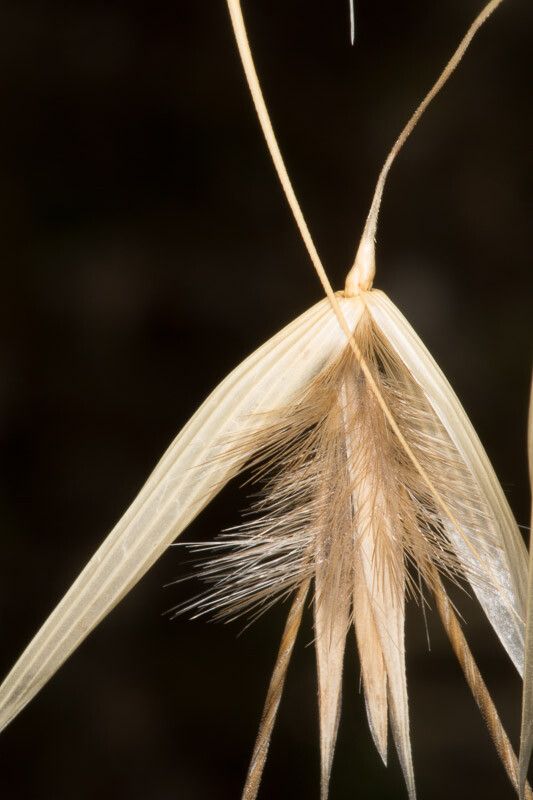
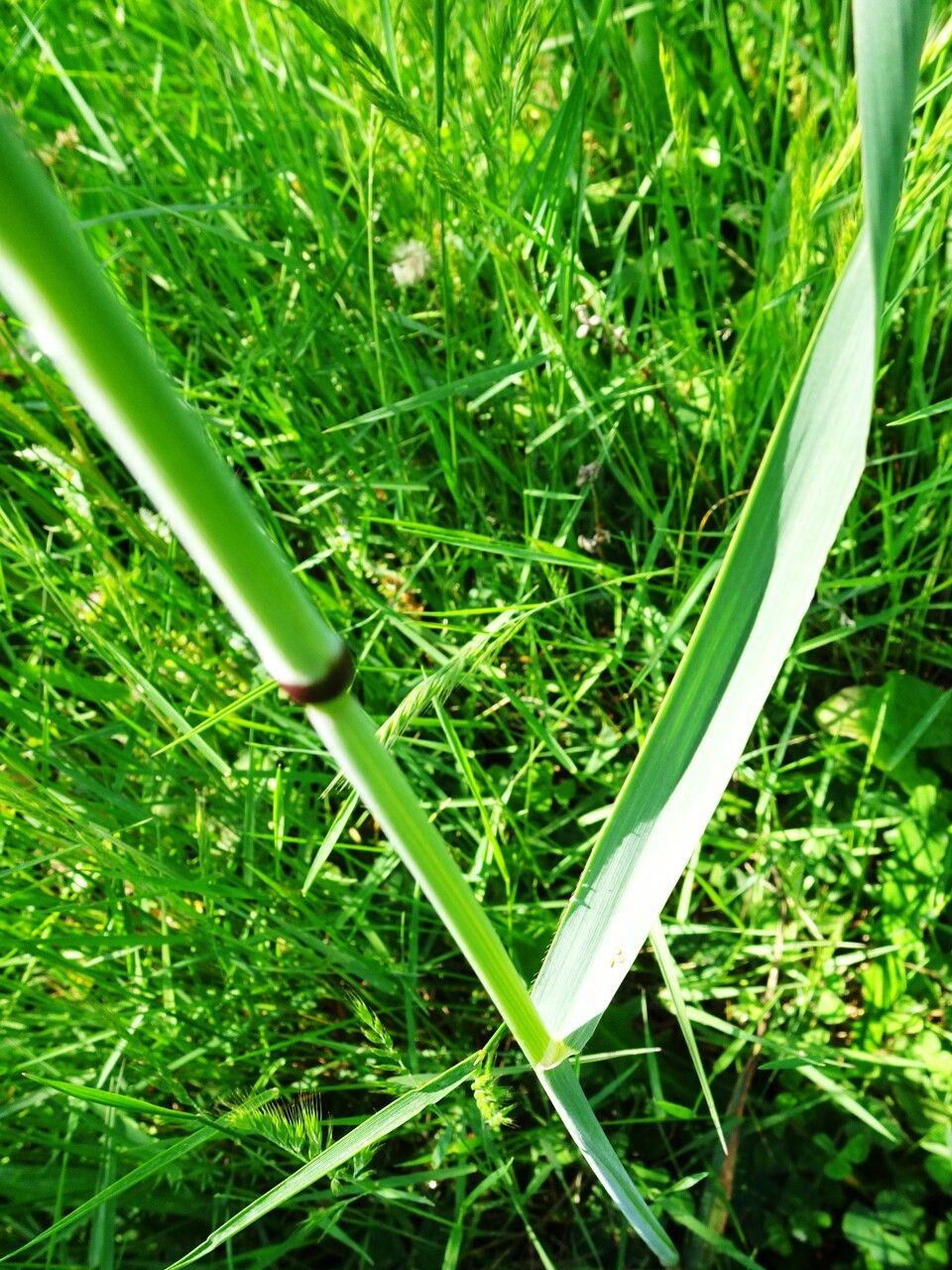
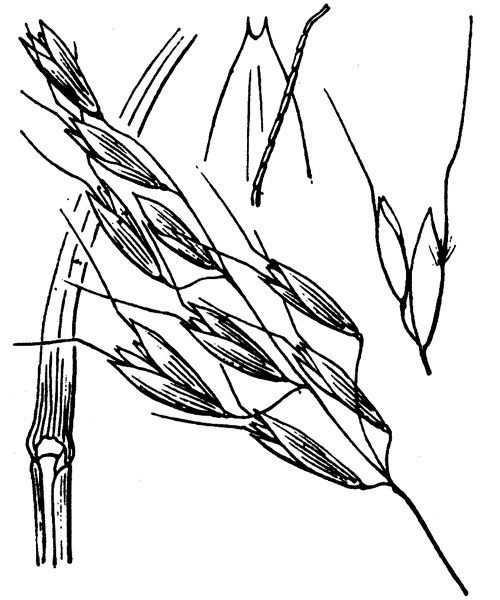
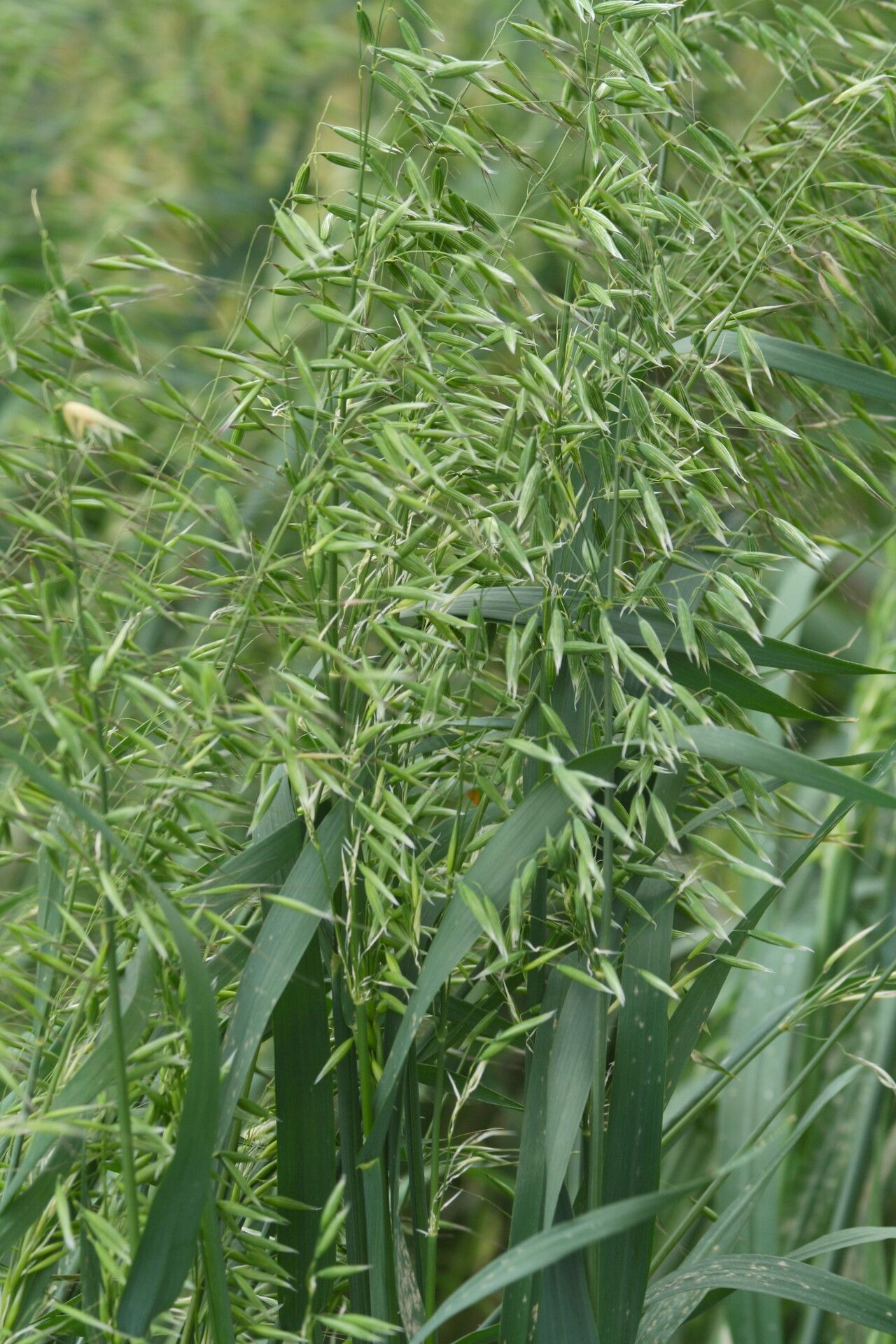
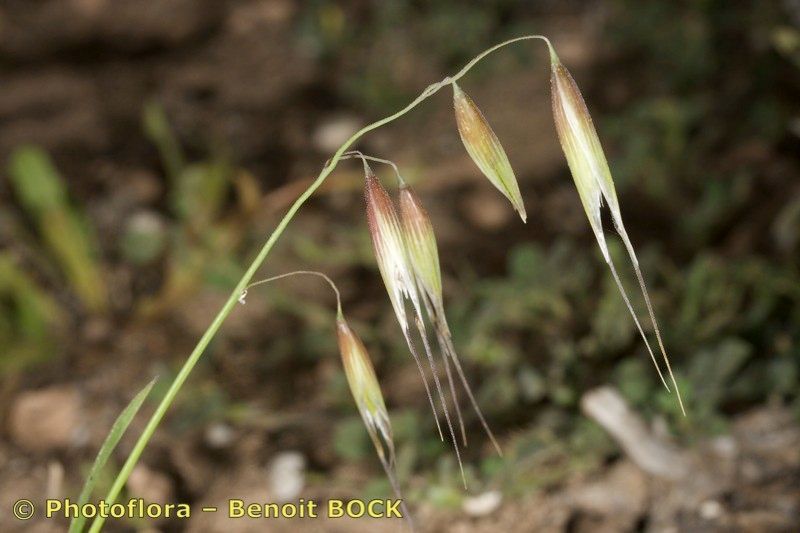
Avena fatua is a species of grass in the oat genus. It is known as the common wild oat. This oat is native to Eurasia but it has been introduced to most of the other temperate regions of the world. It is naturalized in some areas and considered a noxious weed in others.Avena fatua is a typical oat in appearance, a green grass with hollow, erect stems 1 to 4 feet (30–120 cm) tall bearing nodding panicles of spikelets. The long dark green leaves are up to a centimeter wide and rough due to small hairs. The seedlings are also hairy. The seed kernel is thinner, longer, darker and hairy when compared with the seed of the common cultivated oat (Avena sativa). This species and other wild oats can become troublesome in prairie agriculture when it invades and lowers the quality of a field crop, or competes for resources with the crop plants. It takes very few wild oat plants to cause a significant reduction in the yield of a wheat or cultivated oat field, even though the seeds are a type of oat.
Wild oat has strong disease resistance and is generally not prone to illnesses. However, it can be vulnerable to pests and diseases present in its environment. These infections are typically mild. In terms of care, this plant requires moderate maintenance. It should be pruned regularly to maintain a neat appearance and healthy growth. Fertilizing can also help encourage flowering. Wild oat is suitable for anyone with outdoor space, such as a garden or patio, and does not demand extensive care experience. It may need more attention when grown indoors.
How to keep Avena Fatua.
Light
Wild oat does best with abundant sunlight, preferring areas where the sun's rays are unobstructed. This lets the plant grow well through its various stages. Excessive or insufficient light can be harmful. Its original habitat, not specified by location, received plenty of sun.
Water
Wild oats thrive in temperate regions and have moderate water requirements, needing to be watered weekly. As an annual grass, they grow best outdoors during their growing season. Adequate moisture is crucial for their germination and early development.
Temperature
Wild oat originates from temperate regions and prefers a warm setting, growing best between 68 and 95 °F (20 and 35 °C). You should adjust indoor temperatures to maintain this range throughout the different seasons.
Fertilizer
For optimal development, Wild oat needs three fertilizer applications: one before planting, one about one month after seedlings emerge, and a final one 1 to 1.5 months after the second. Some Wild oat varieties also benefit from extra fertilizer at planting to promote rapid growth.
Botanical profile.
- Plant Type
- Herb
- Life Cycle
- Annual
- Genus
- Avena
- Family
- Poaceae
- Hardiness Zone
- 4
- Mature Height
- 0.3 m to 1.22 m
- Mature Spread
- 30 cm to 61 cm
- Leaf Color
- Light Green, Yellow Green
- Leaf Type
- Deciduous
- Flower Color
- Yellow, Green, Brown
- Flower Size
- 0.25 cm to 0.51 cm
- Bloom Time
- Late spring, Early summer
- Planting Time
- Spring
- Harvest Time
- Mid summer
Other names.
Reader questions.
How should I water my Wild oat plant?
There are various ways to water Wild oat, including using a garden hose with a spray nozzle or a watering can. Thankfully, this plant is not too particular about its water source and can thrive with rainwater, tap water, or filtered water. However, it is generally recommended to avoid watering Wild oat from overhead, as this can harm the leaves and flowers and even cause disease. Instead, a drip irrigation system is often the most effective watering method for this plant. This system ensures that water is applied evenly and directly to the soil. If you have a container-grown Wild oat, you can use a cup, watering can, or tap to water it, making sure to water the soil directly.
What are the sunlight requirements for Wild Oat?
Wild Oat thrives best in conditions that offer generous exposure to the sun, benefiting from regions where sunlight penetrates without obstruction. It requires full sun, defined as over 6 hours of sunlight daily, to support its growth across various stages. However, partial sun, or about 3-6 hours of sunlight, can also suffice under certain circumstances. It's essential to observe how sunlight moves throughout your garden to identify areas that ensure an optimal balance of light and shade, aligning with the plant's native habitat characteristics, which is rich in sunlight.
What is the ideal temperature for wild oat to thrive?
Wild oat, scientifically known as Avena fatua, thrives in temperate regions and prefers a cosy environment. The ideal temperature range for its growth is between 68 to 95 °F (20 to 35 °C). To ensure the health and flourishing of wild oat, it is essential to adjust room temperature accordingly throughout the different seasons to replicate this temperature range.
What should I do if I give my Wild oat too much or too little water?
The solution for underwatering Wild oat is straightforward: when you notice your plant needs more moisture, water it more regularly. On the other hand, overwatering can be a more serious problem, especially if you don't catch it early. When a Wild oat is overwatered, it becomes vulnerable to diseases that can cause it to decline and die. To prevent this, it's important to choose a suitable location for growth, one that gets ample sunlight to dry out the soil and has good drainage to prevent water from collecting and saturating the soil. If you have overwatered a potted Wild oat, you may need to move it to a new pot. The previous container may not have had adequate drainage or enough holes. When repotting the overwatered plant, use loose soil and select a pot that drains efficiently.
What are the signs of insufficient or excessive sunlight for Wild Oat?
When cultivated with inadequate light, Wild Oat may exhibit symptoms such as smaller new leaves, leggy or sparse growth, faster leaf drop, halted growth, and paler new leaves indicating light deficiency. Conversely, excessive sunlight can cause chlorosis (loss of green color and yellowing of leaves), sunscald (pale, bleached areas on leaves or stems), leaf curling as a defense against sunlight, wilting due to increased water loss, and leaf scorching characterized by brown, dry edges on leaves. These symptoms highlight the plant's struggle with improper sunlight exposure.
Does wild oat require any special care during winter?
Wild oat is quite cold-tolerant and does not require additional frost protection measures during the winter months. However, to prepare it for winter, it is advisable to water the plant generously before the first freeze in autumn. This practice ensures the soil remains moist and enters a frozen state properly, which helps prevent drought and water scarcity for the plant during winter and early spring.
How often do I need to water my Wild oat?
Wild oat requires regular watering throughout the growing season. In spring, you should water the plant once a week. As the season progresses and temperatures rise, you may need to water two to three times a week. However, exceeding this rate can harm the plant. It's important to keep the soil moist, but not wet, regardless of how often you water. Watering a Wild oat plant in a pot is slightly different. Generally, you'll need to water more frequently for potted plants as the soil can heat up and dry out faster. So, in most cases, plan to water a container-grown Wild oat a few times per week, compared to just once per week for a plant in the ground.
How can artificial lighting be used for growing Wild Oat indoors?
For indoor growth, especially when natural sunlight is insufficient, artificial lighting becomes crucial for Wild Oat. Selecting the appropriate type of artificial light, like LED lights, is essential, as they can offer specific wavelengths needed by the plants. Full sun plants require 30-50W/sq ft, partial sun plants need 20-30W/sq ft, and full shade plants need 10-20W/sq ft of artificial light. The light source should be placed 12-36 inches above the plant to mimic natural sunlight, and the duration should approximate the plant's natural daylight hours, usually 8-12 hours per day.
What should I do if the temperature drops below -25°C?
Wild oat can withstand extremely cold temperatures, but it is crucial to maintain the winter temperature above -25°C. Should the temperature fall below this threshold, the plant may not show immediate changes during winter, but you might notice a decrease in sprouting or no sprouting at all come springtime. In such cases, it is recommended to remove any parts of the wild oat that have failed to sprout in spring.
How much water does my Wild oat plant require?
There are a few ways to determine how much water to give your Wild oat. Some gardeners rely on feeling the soil to gauge moisture. They suggest watering until the first six inches of soil feel moist. Another approach is to use a specific measurement. Generally, about two gallons of water per week should suffice, depending on temperature and soil dryness. However, following strict guidelines can lead to overwatering if your plant needs less. When growing Wild oat in a container, a different method is needed. You should water enough to moisten all dry soil layers. You can test this by sticking your finger in the soil or by watering until excess water trickles out of the drainage holes.
What steps can be taken to remedy Wild Oat's growth issues related to sunlight exposure?
To address sunlight exposure issues for Wild Oat, gradual adaptation to more suitable light conditions is essential. For indoor plants, move them weekly to sunnier spots until they achieve at least 6 hours of direct sunlight, or use artificial lighting, like desk or professional grow lights, for at least 8 hours daily. Outdoors, transition plants to better sunlight locations gradually to prevent sunburn. Reducing obstructions, like pruning trees, or transplanting to a sunnier location during dormancy, can also improve sunlight access. Note that parts of the plant already damaged by inadequate light may not recover, but new growth will be healthy with proper light adjustment.
How does wild oat react to high temperatures, and what measures should be taken?
Wild oat does not tolerate high temperatures well. Growth can halt, and the plant becomes more susceptible to rot if the temperature exceeds 35°C. To protect wild oat in such conditions, you should trim away any sunburned or dried-up parts and move the plant to a location with shade, especially from the midday and afternoon sun. Utilizing a shade cloth can also be effective. Additionally, watering the plant in the morning and evening can help keep the soil moist and further protect the plant from the adverse effects of high temperatures.