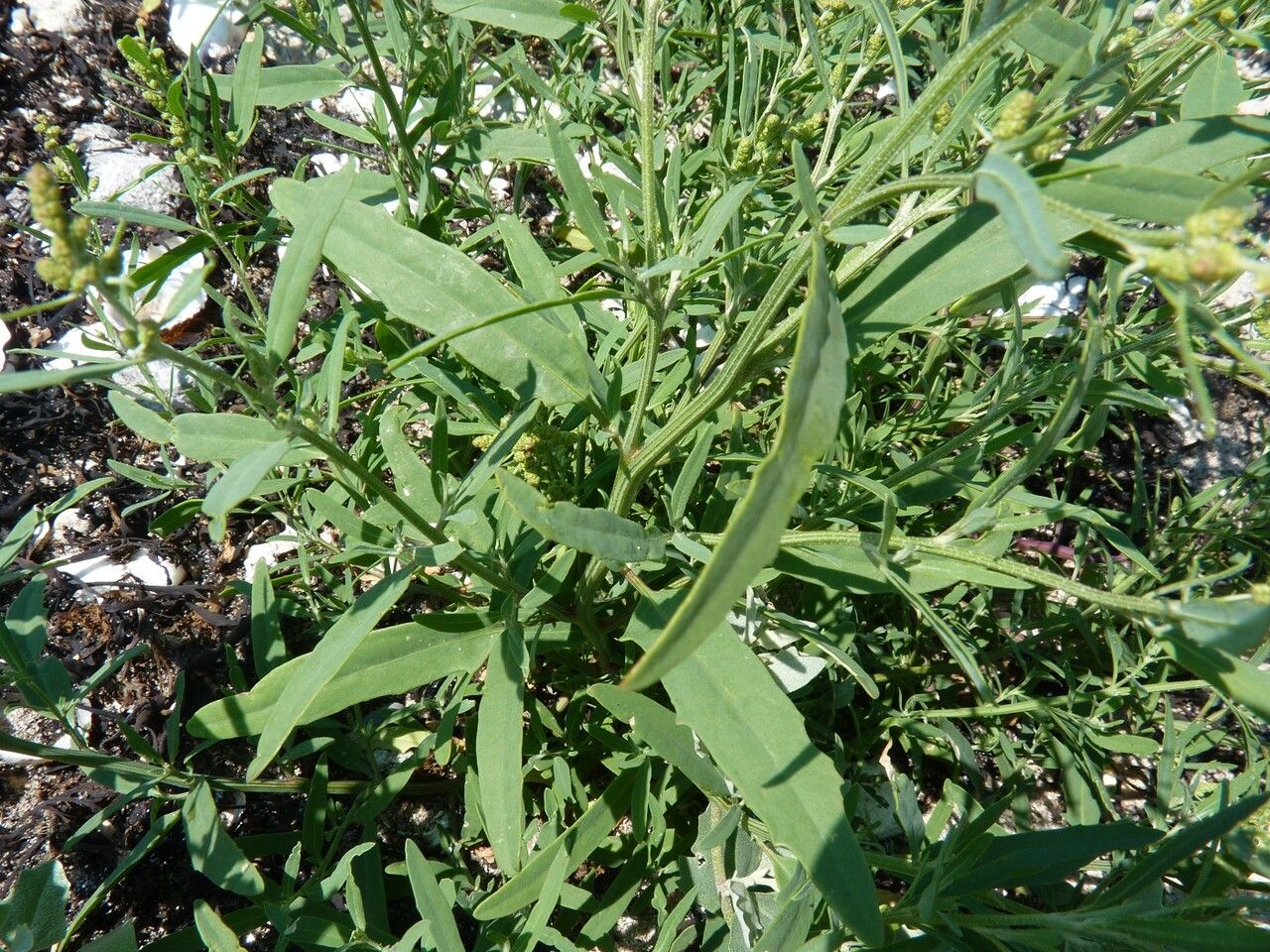
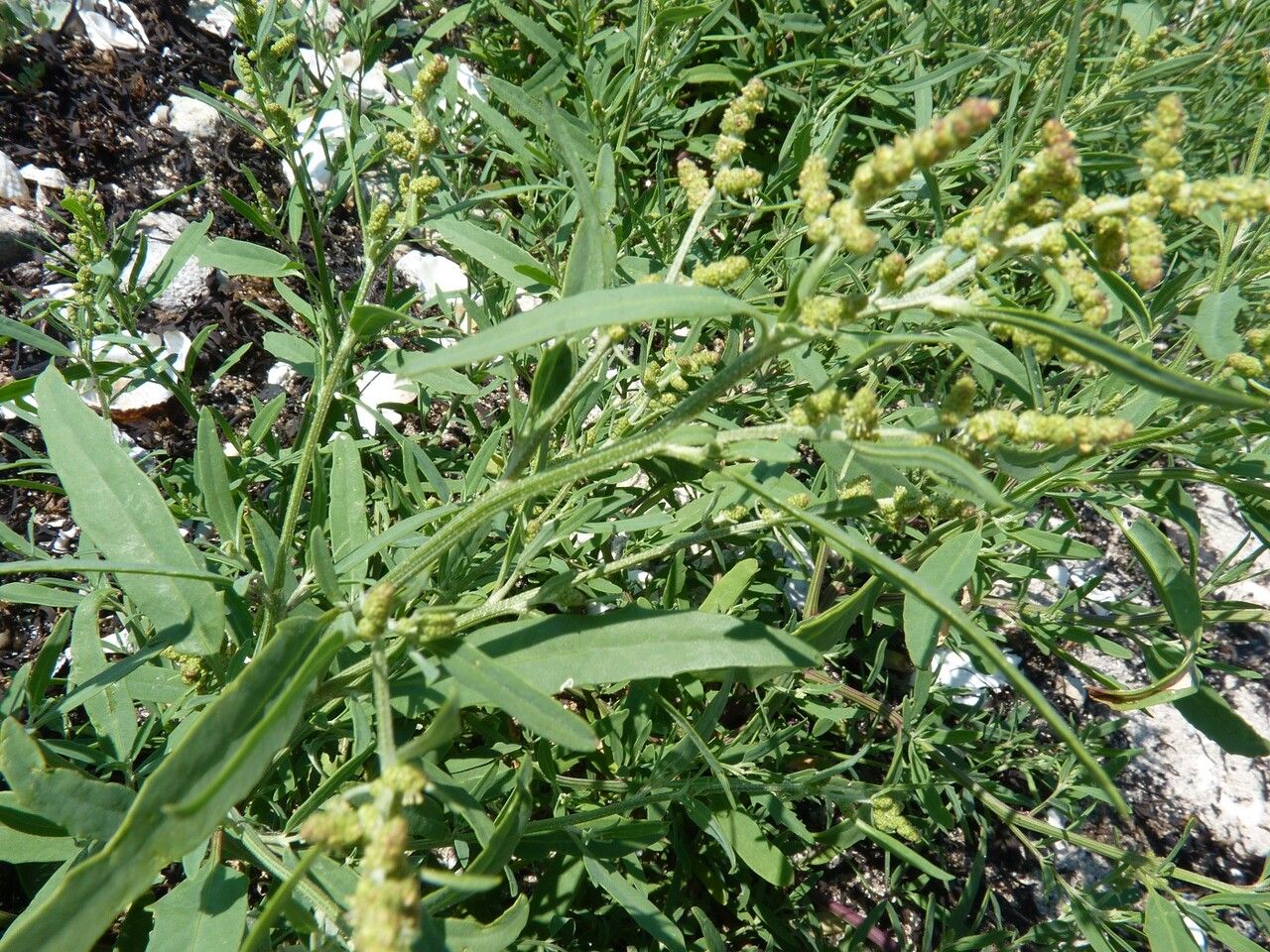
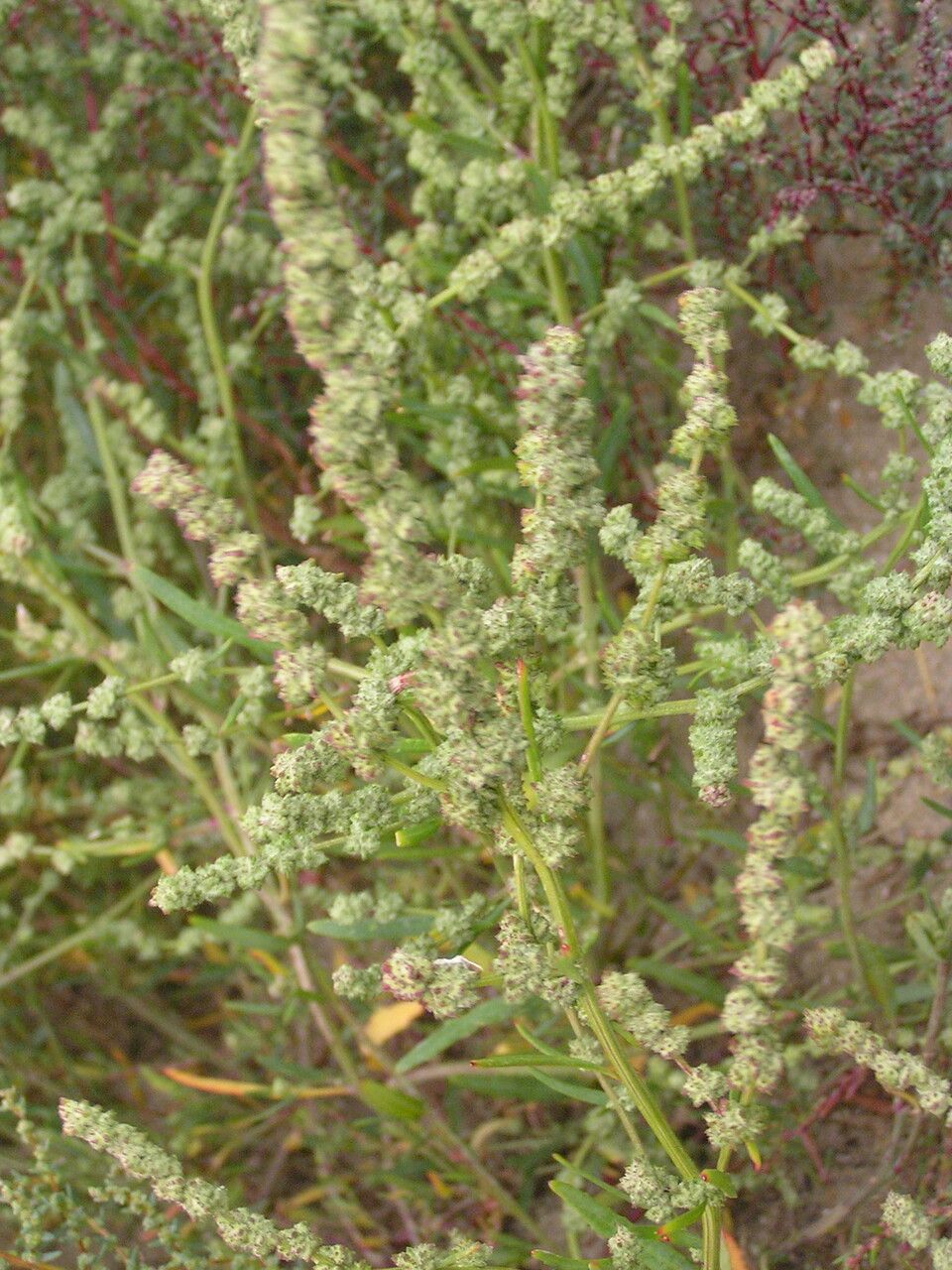
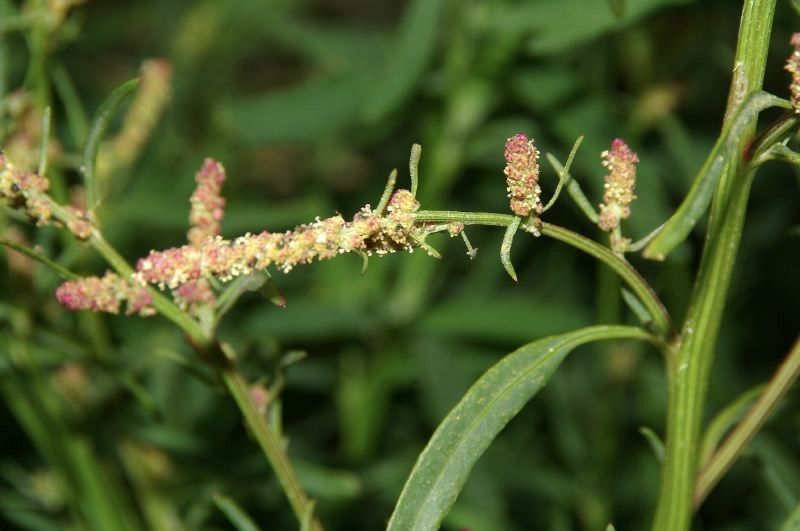
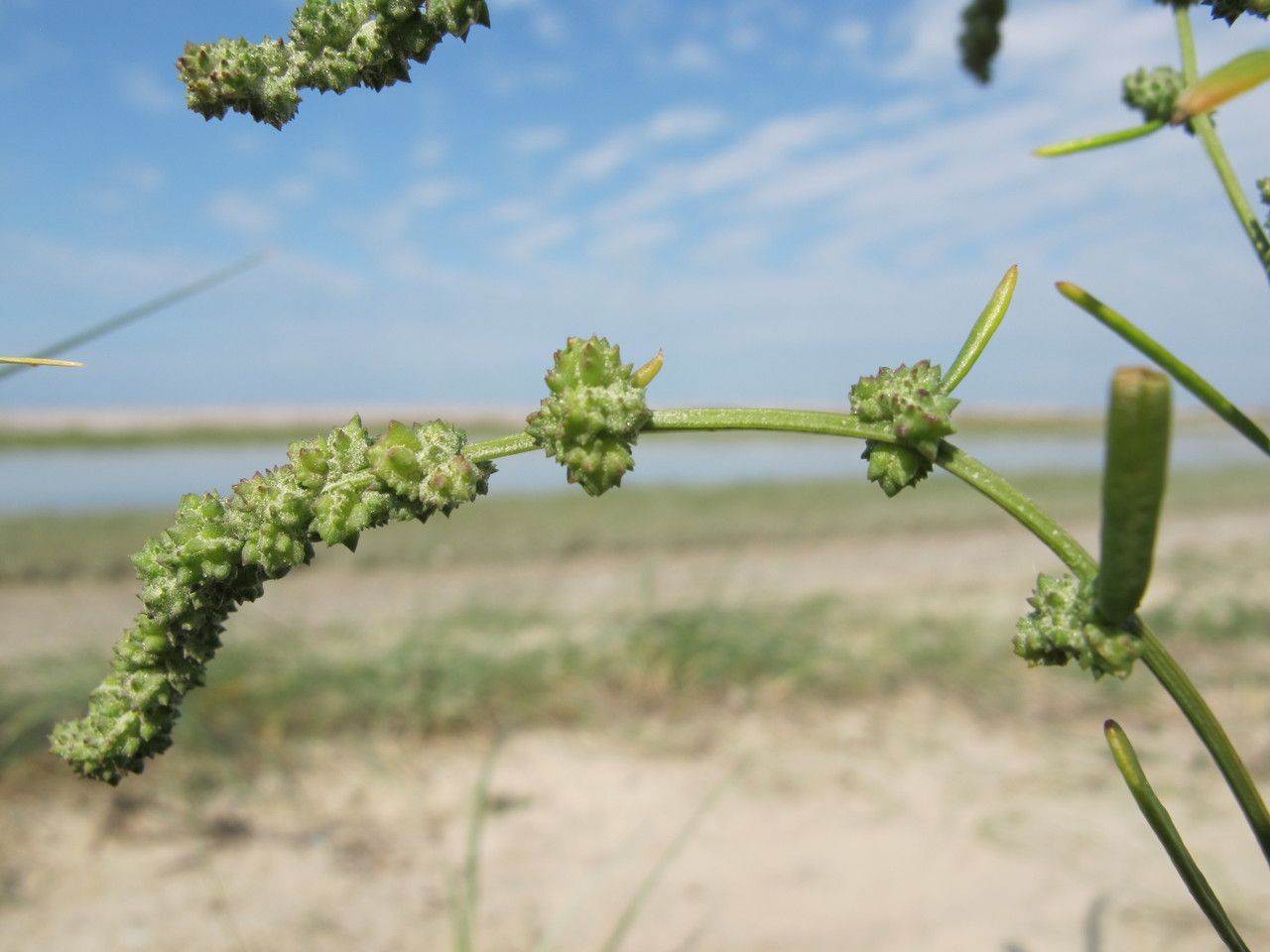
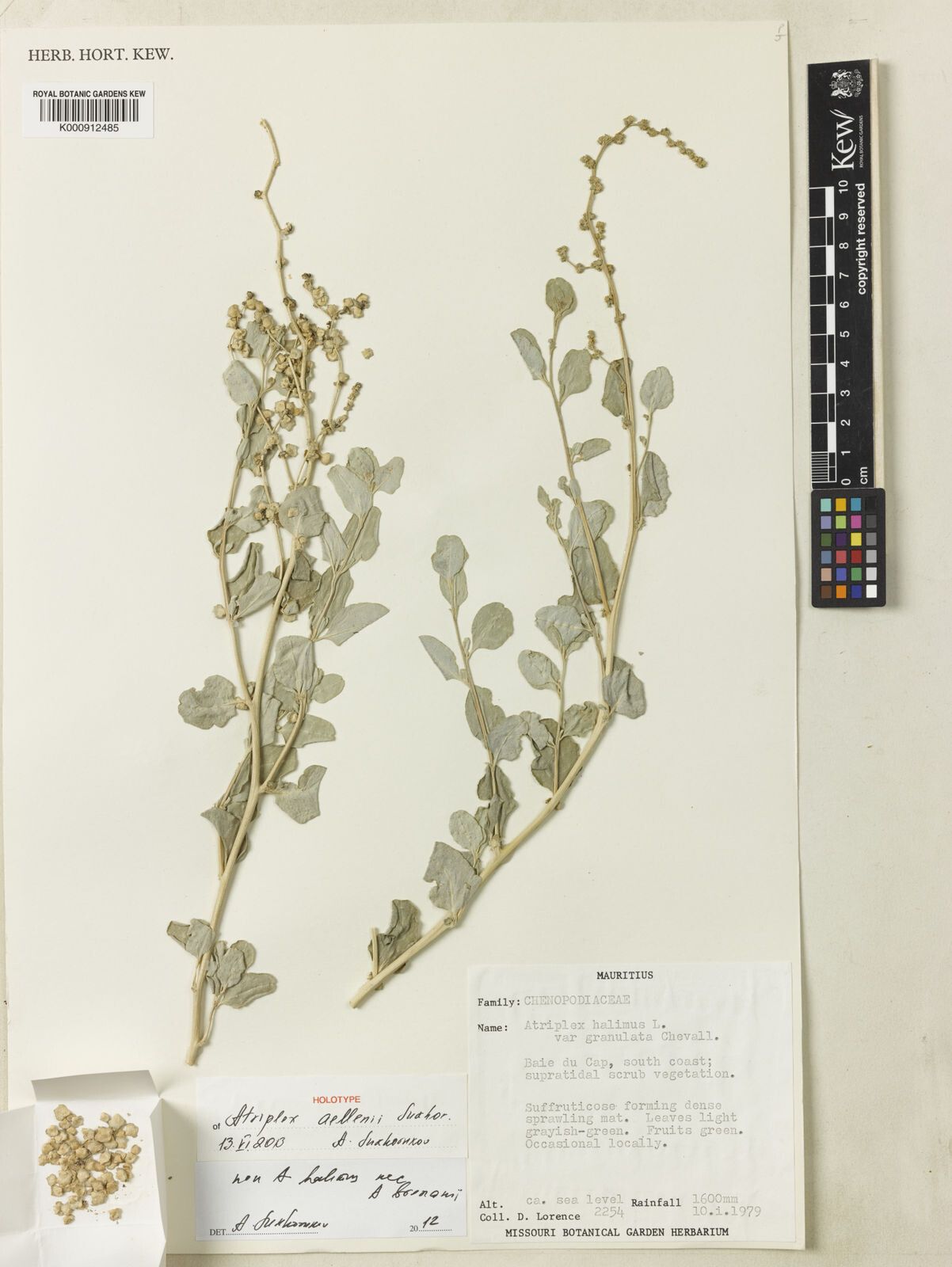
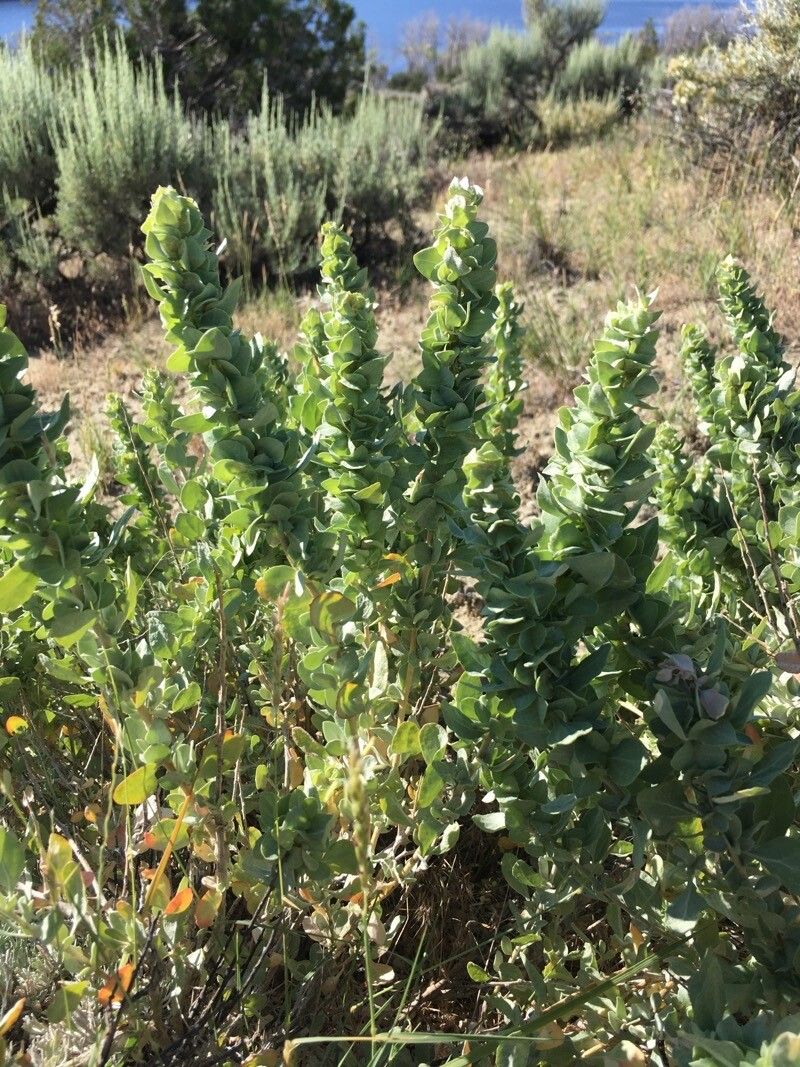
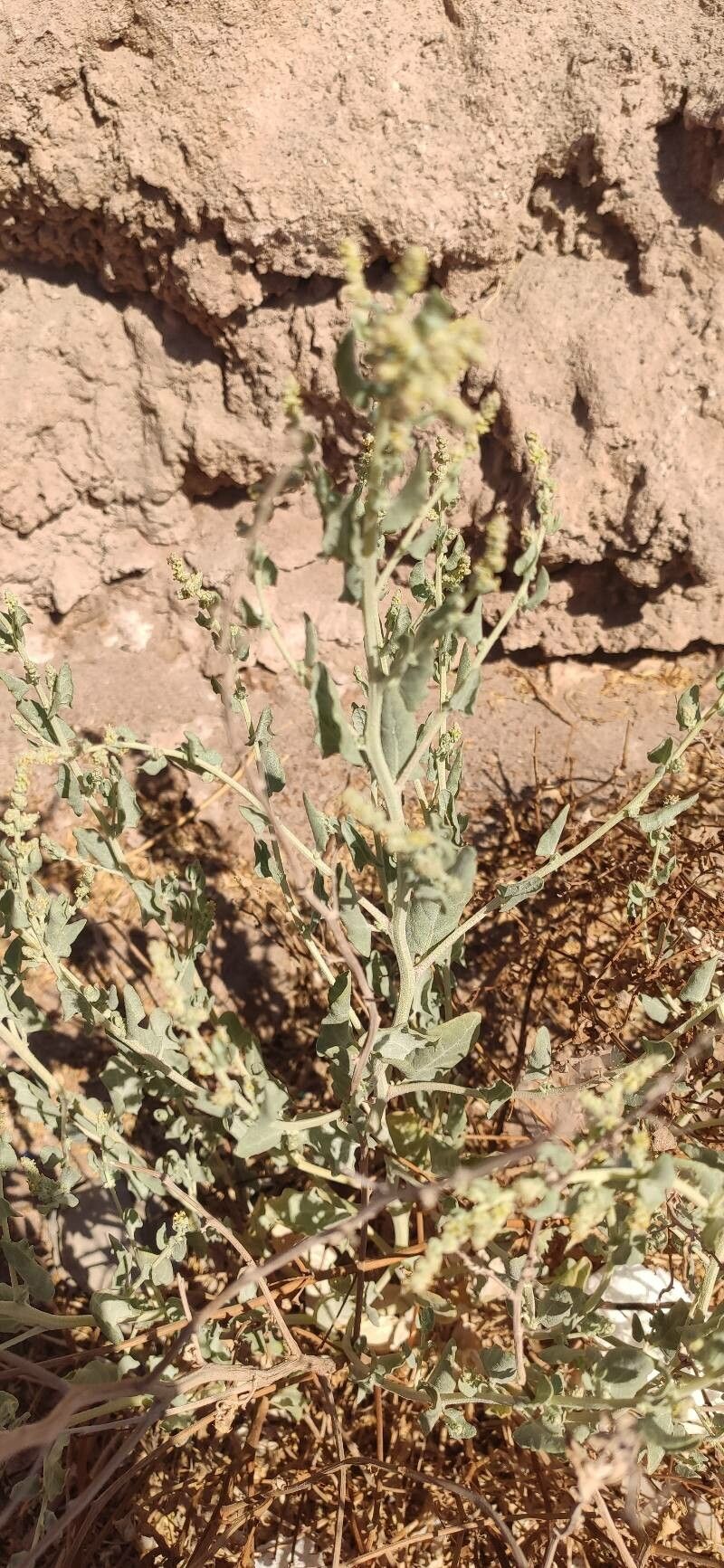
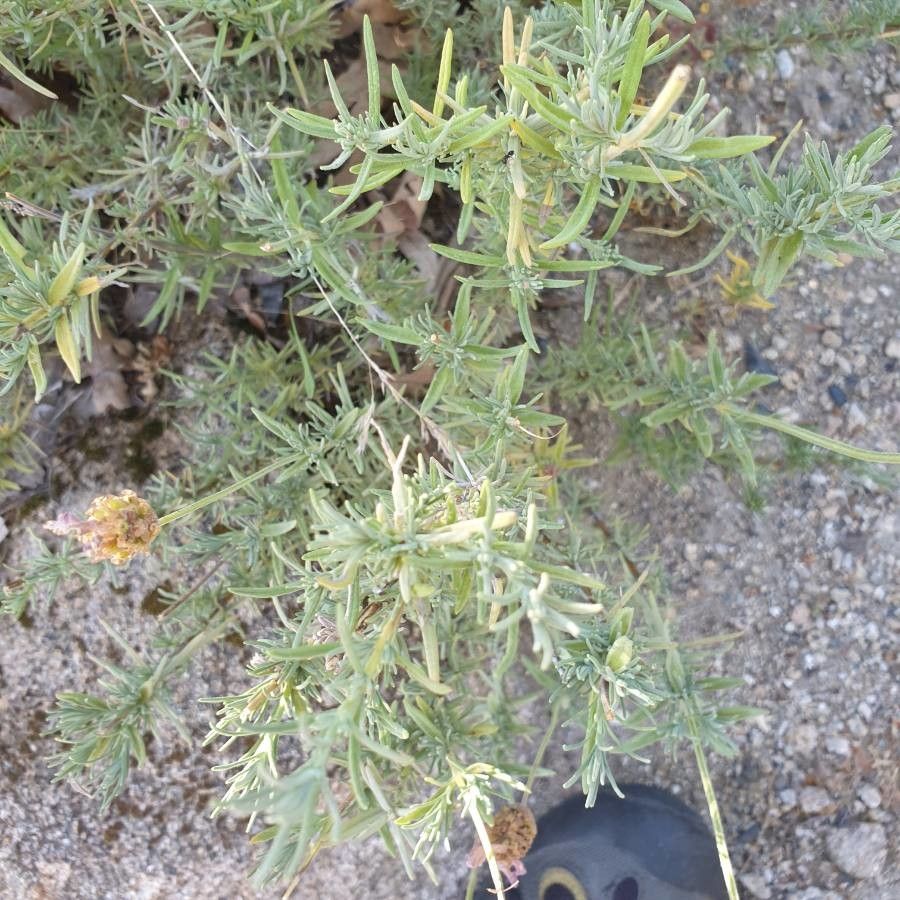
Atriplex littoralis, commonly known as the beach saltbush, is a perennial shrub belonging to the family Amaranthaceae. Native to the coastal regions of California and Baja California, it thrives in sandy soils near beaches, dunes, and salt marshes.
This plant has a dense, branching habit with gray-green, succulent leaves. The leaves are triangular or diamond-shaped with toothed margins and can grow up to 5 cm long. Small greenish flowers bloom from late spring through summer.
Atriplex littoralis is crucial for coastal ecosystems, as it helps stabilize sand dunes by trapping sand particles with its dense root system. It also provides habitat for various wildlife species, such as birds and insects.
Traditionally, Native American tribes have used the beach saltbush for medicinal purposes, including treating skin irritations, sore throats, and stomach ailments.
Overall, Atriplex littoralis is a hardy shrub that plays a vital role in maintaining the ecological balance of coastal regions while also offering medicinal benefits to humans.
Narrow-leaved saltbush has strong disease resistance and is generally not susceptible to illnesses. Nevertheless, it can be affected by pests and diseases present in its environment. Such infections are typically mild. Regarding care, this plant needs moderate maintenance. It should be pruned regularly to preserve a good appearance and support healthy growth. Applying fertilizer can also encourage flowering. Narrow-leaved saltbush is appropriate for anyone with outdoor space, like a garden or patio, and does not demand extensive care experience. It may require extra attention when cultivated indoors.
How to keep Atriplex Littoralis.
Light
Narrow-leaved saltbush comes from bright, open habitats and does best in full sun. It will tolerate some partial shade but prefers direct sunlight for optimal growth. This plant, which can be annual or biennial, is noted for its sun-loving habit.
Water
The Narrow-leaved Saltbush thrives in saline coastal environments and prefers consistent moisture, needing weekly watering. Its resilience to salty conditions makes it an ideal low-maintenance option for indoor settings, where it can serve as an attractive conversation piece. Additionally, this plant helps gardeners strategically manage soil salinity issues.
Temperature
Narrow-leaved saltbush can tolerate a wide range of temperatures, though its distribution may still be restricted by different combinations of moisture and heat. It does best in warm summer conditions with sufficient rainfall or watering. Extended periods of cloudy, rainy weather, as well as prolonged high temperatures, increase the chance of Narrow-leaved saltbush dying. In winter, adequate protection from the cold can boost the plant’s survival rate.
Fertilizer
Narrow-leaved saltbush benefits from regular, low-strength fertilizer applications to encourage healthy leaf development. Fertilize Narrow-leaved saltbush about once a month during the summer. Nitrogen is essential for foliage, so supplying nitrogen-rich sources helps the plant thrive.
Pruning
The narrow-leaved saltbush is characterized by its slender, salt-tolerant leaves. For optimal health and shape, prune it from early to late spring by removing any dead branches. Light pruning promotes growth and improves air circulation while minimizing stress on the plant. With regular care, the narrow-leaved saltbush will maintain its form and thrive for years in coastal or salt-affected gardens.
Botanical profile.
- Plant Type
- Herb
- Life Cycle
- Annual, Perennial
- Genus
- Atriplex
- Family
- Amaranthaceae
- Hardiness Zone
- 6-9
- Mature Height
- 40 cm to 91 cm
- Mature Spread
- 30 cm to 61 cm
- Leaf Color
- Green, Blue
- Leaf Type
- Evergreen
- Flower Color
- Yellow, Green
- Flower Size
- 20.32 cm
- Bloom Time
- Mid summer, Late summer, Early fall
- Planting Time
- Spring
- Harvest Time
- Fall
- Native Area
- Egypt, Sweden, Austria, Slovakia, Montenegro, Croatia, Morocco, Belarus, Russia, Germany, Estonia, Romania, Latvia, Belgium, Netherlands, France, Poland, Greece, Ukraine, Lithuania, Norway, Syria, Italy, Spain, Denmark, Japan, Finland, Ireland, United Kingdom, Hungary, Algeria, Turkmenistan
Other names.
Reader questions.
How should I water my Narrow-leaved saltbush?
To water Narrow-leaved saltbush, you have various options including using a garden hose with a spray nozzle or a watering can. It doesn't really matter how you water this plant, as it can survive on rainwater, tap water, or filtered water. However, it is best to avoid watering from above as it could damage the leaves and flowers and may even cause disease. Using a drip irrigation system is often the best method as it applies water evenly and directly to the soil. If you have a Narrow-leaved saltbush in a container, the same principles apply, but you can use a cup, watering can, or tap water to directly water the soil.
What type of sunlight conditions are required for Narrow-leaved saltbush?
Narrow-leaved saltbush thrives in bright, open environments and requires full sun, meaning it needs above 6 hours of direct sunlight daily for optimal growth. It can also tolerate partial sun, which refers to about 3-6 hours of sunlight each day. It's essential to observe how sunlight moves through your garden to ensure you choose spots that provide a perfect balance of light and shade, catering to the happiness of your plants.
What do I do if I give my Narrow-leaved saltbush too much or too little water?
To prevent underwatering of Narrow-leaved saltbush, it is important to water it regularly when you notice it lacks moisture. However, overwatering can be a more serious issue, as it can cause diseases and lead to the plant's decline and death. To avoid this, choose a well-suited location for your plant that receives ample sunlight to help dry the soil and has good drainage to prevent water accumulation. If you have overwatered a potted Narrow-leaved saltbush, consider repotting it in a container with proper drainage and loose soil.
Can Narrow-leaved saltbush grow indoors with artificial lighting?
Yes, Narrow-leaved saltbush can grow indoors with the aid of artificial lighting, which is especially beneficial in settings where natural sunlight is insufficient, such as during winter or in less sunny spaces. Artificial lighting, like LED lights, can be customized to provide specific wavelengths needed by plants. For plants that require full sun, 30-50W/sq ft of artificial light is recommended, for partial sun plants, 20-30W/sq ft, and for full shade plants, 10-20W/sq ft. Ensure the light source is 12-36 inches above the plant and provide 8-12 hours of light per day to mimic natural sunlight conditions.
How often do I need to water my Narrow-leaved saltbush?
To ensure the health of your Narrow-leaved saltbush, it is important to water it regularly during the growing season. In spring, watering once per week is sufficient. However, as the season progresses and temperatures rise, you may need to increase the frequency to two or three times per week. It is important not to exceed this rate as it can harm the plant. It is also crucial to maintain moist, but not wet, soil for the Narrow-leaved saltbush. When watering a potted Narrow-leaved saltbush, it is necessary to water more frequently as the soil in the pot can dry out faster than in-ground soil. Generally, watering a container-grown Narrow-leaved saltbush a few times per week is advisable, compared to just once per week for a plant in the ground.
What symptoms indicate light deficiency in Narrow-leaved saltbush?
Symptoms of light deficiency in Narrow-leaved saltbush include smaller new leaves than the preceding ones, leggy or sparse growth with longer spaces between leaves or stems, early leaf drop, delayed or halted new leaf production, pale or irregularly colored leaves indicating insufficient chlorophyll, and chlorosis or yellowing of leaves. These symptoms indicate that the plant isn't receiving adequate sunlight, essential for its growth and health.
How much water does my Narrow-leaved saltbush require?
Determining how much water to give to your Narrow-leaved saltbush can be done in a few different ways. One method involves checking the moisture level of the soil and watering until the top six inches feel moist. Another approach is to use a specific measurement, such as two gallons per week, adjusted based on temperature and soil dryness. However, be cautious not to overwater if your plant needs less moisture. When growing the Narrow-leaved saltbush in a container, it is important to ensure that all layers of dry soil are adequately moistened. This can be tested by feeling the soil with your finger or observing a slight trickle of water from the pot's drainage holes.
What are the symptoms of excessive sunlight exposure in Narrow-leaved saltbush?
Symptoms of excessive sunlight exposure in Narrow-leaved saltbush include sunscald, which appears as pale or necrotic areas on plant tissue; leaf curling or twisting as a defense mechanism to minimize water loss; wilting due to increased transpiration and difficulty in maintaining hydration; and leaf scorching characterized by brown, dry, and crispy leaf edges. These symptoms suggest the plant is receiving more sunlight than it can healthily tolerate.
How can I know if I'm giving enough water to my Narrow-leaved saltbush?
It can be challenging to properly water your Narrow-leaved saltbush. These plants have deep roots and require weekly watering, but they are also prone to root rot and browning if overwatered. Underwatering is less of a concern as these plants can tolerate drought, but if left without water for too long, they may wilt and develop dry leaves.
How can you manage light conditions for Narrow-leaved saltbush to ensure optimal growth?
To manage light conditions for optimal growth of Narrow-leaved saltbush, gradually move plants to sunnier locations each week to provide at least 6 hours of direct sunlight daily. Use a south-facing window and keep curtains open during the day for indoor plants. Consider artificial lighting if moving the plant isn't feasible, keeping lights on for at least 8 hours daily. For outdoor plants, ensure a gradual transition to avoid sunburn. If obstructions block sunlight, prune trees or move smaller plants during their dormant period to locations with ample sunlight and good drainage.
How do I water my Narrow-leaved saltbush throughout the year?
As the seasons change, you will need to adjust the watering schedule for your Narrow-leaved saltbush. In spring, watering about once per week should be sufficient. However, as summer approaches and the weather gets hotter, your Narrow-leaved saltbush will require more frequent watering, possibly up to three times per week. This is especially important for saltbush in containers, as the soil tends to dry out faster in warmer weather. In autumn, as the temperature decreases and the sun becomes less intense, your saltbush may need slightly less water, especially if it is still flowering.
How should I water my Narrow-leaved saltbush at different times when it is growing?
Throughout the year, narrow-leaved saltbush goes through various growth stages, with each stage requiring different amounts of water. Starting with a seed, it is important to provide ample water during germination, even more than the plant will require later on. This means watering frequently to maintain consistent soil moisture. As the seedling grows above the soil after a few weeks, it will need slightly less water compared to the germination phase. Once the plant reaches maturity, a regular watering frequency of about once a week is sufficient. During flower development, it may be necessary to provide slightly more water to support the process.