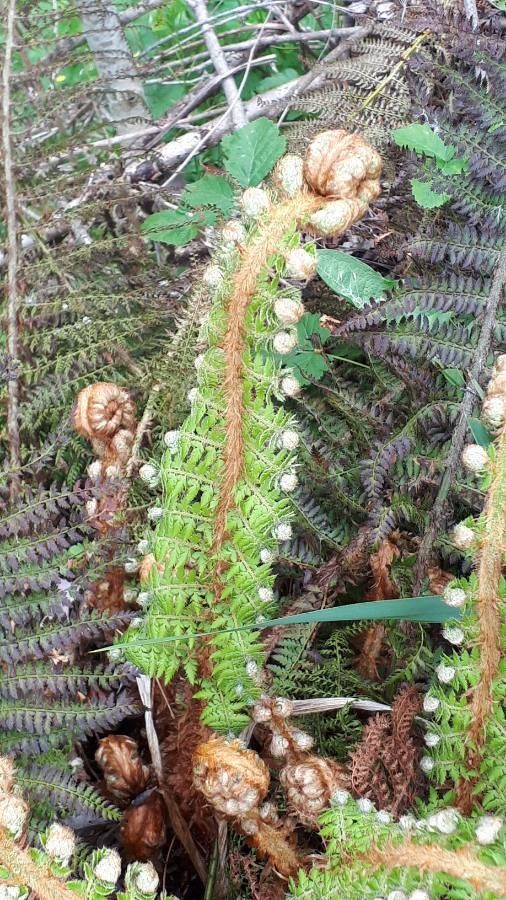
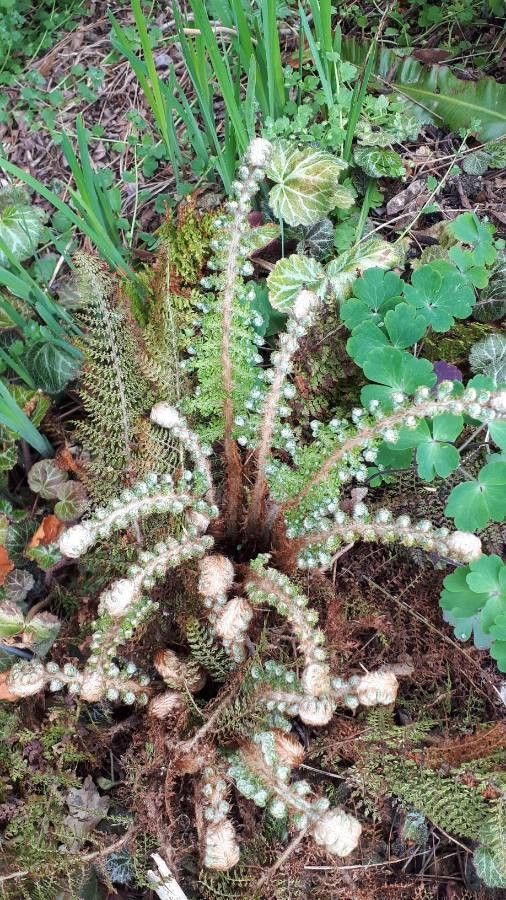
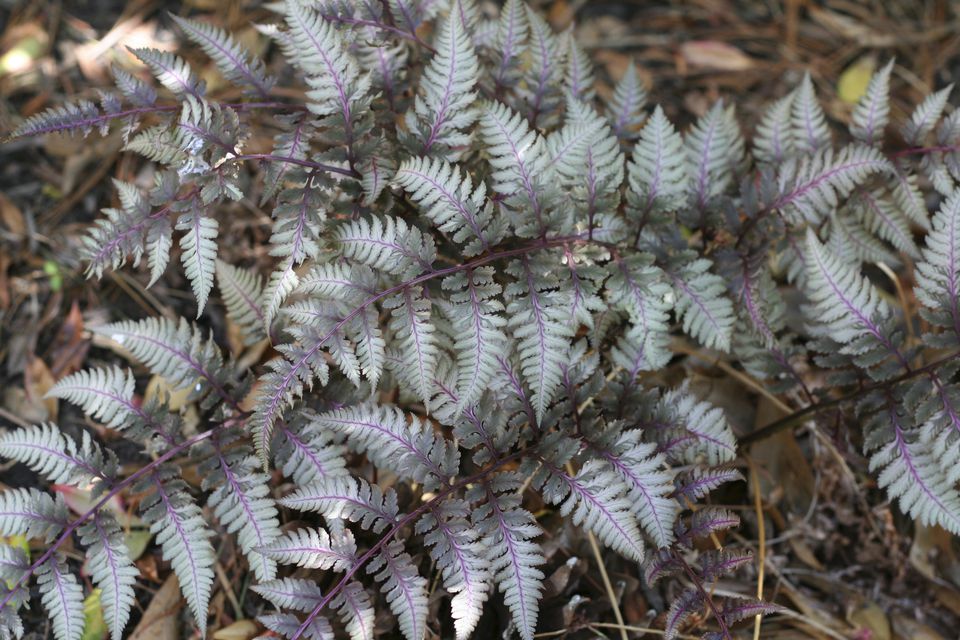
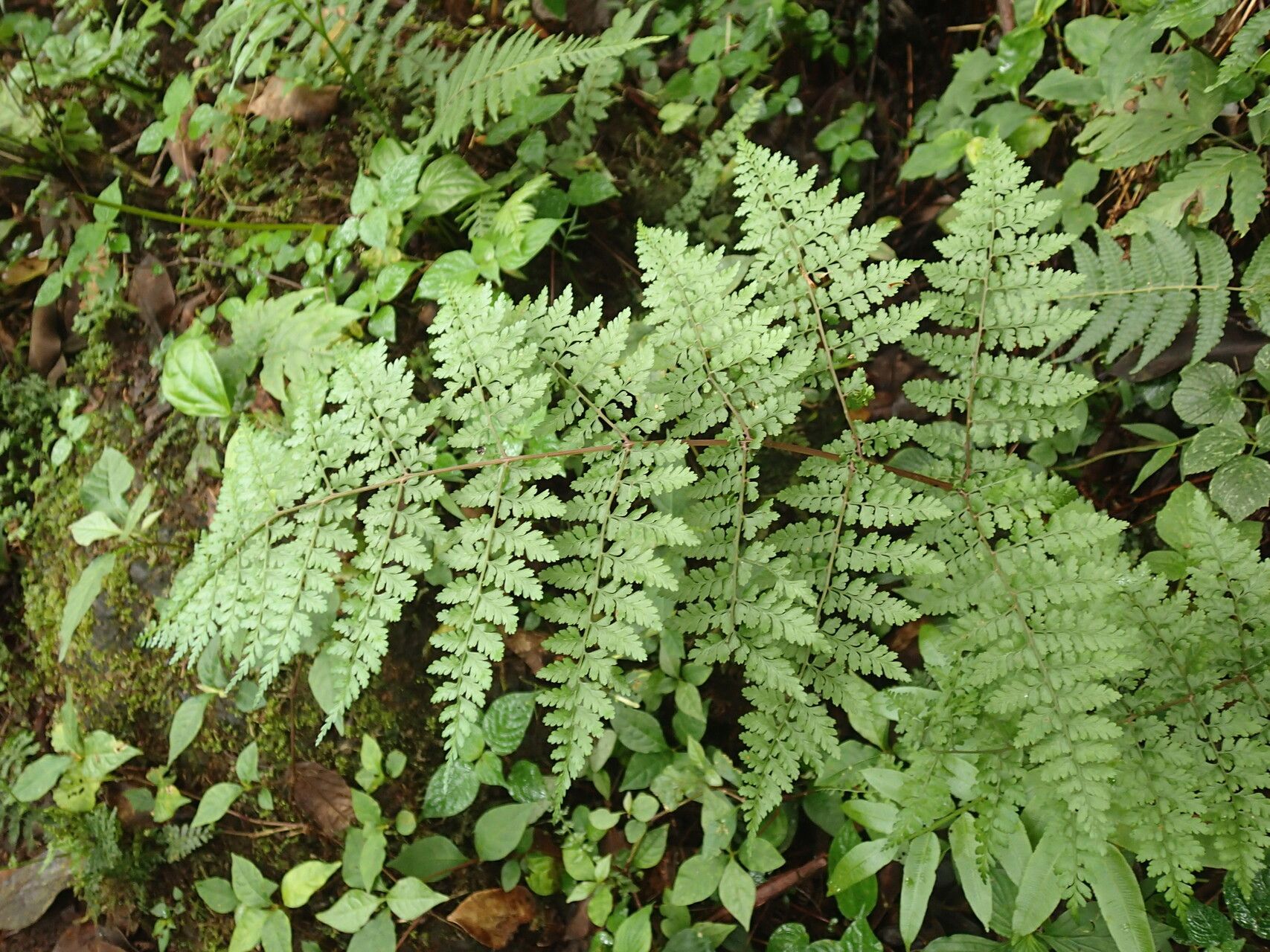
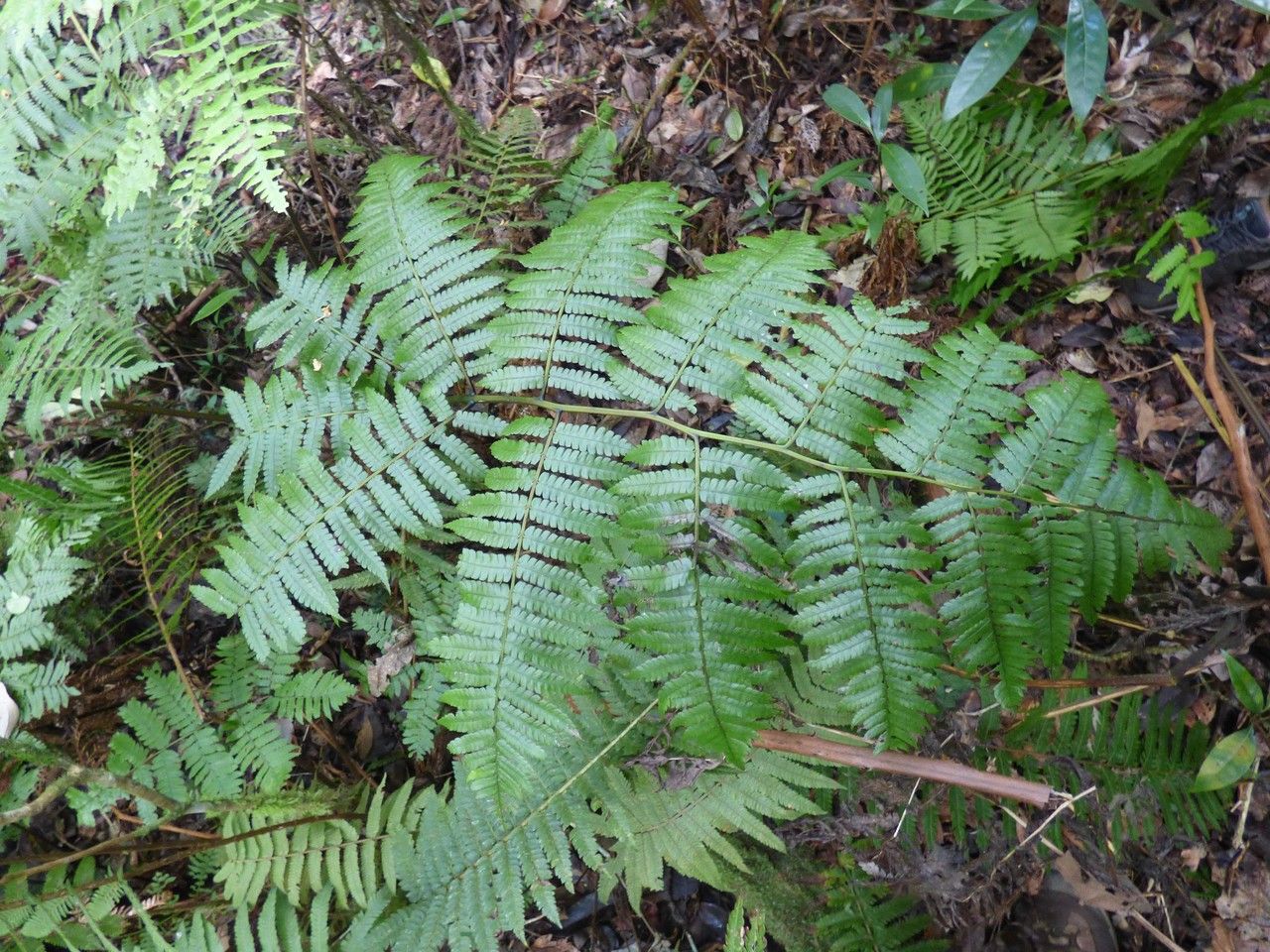
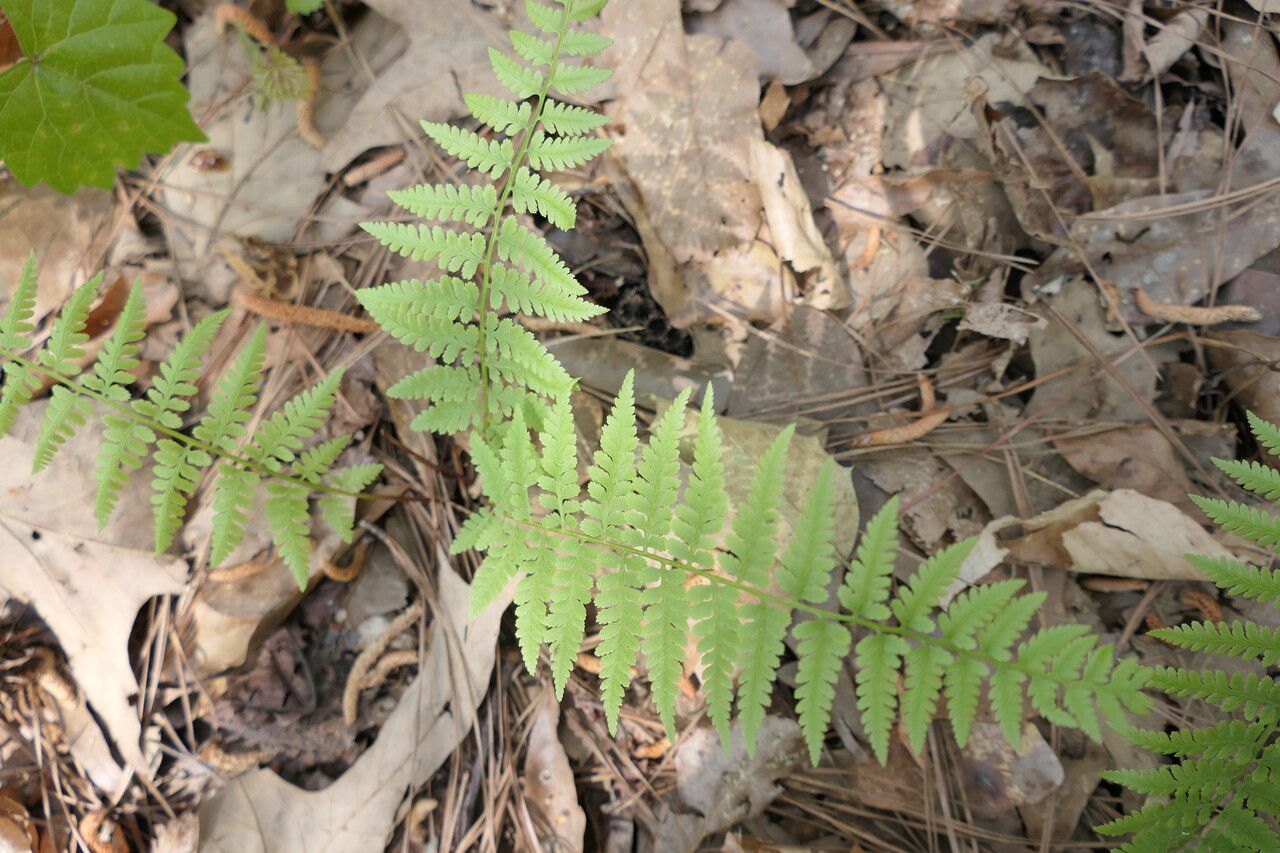
Athyrium niponicum, commonly known as the Japanese painted fern, is a deciduous fern species native to Japan, Korea, and China. This plant is popular for its ornamental value, boasting attractive foliage and requiring minimal maintenance. The fronds are delicate and feathery, displaying a striking silvery-grey color that transitions to green nearer the center. These fronds can grow up to 18 inches in length and are arranged in an arching manner, lending the plant an elegant appearance.
Japanese painted ferns thrive in moist, well-drained soil and partial shade or filtered sunlight. While they can tolerate full shade, they may not grow as vigorously or display as vibrant foliage coloration. Hardy by nature, these ferns can endure winter temperatures as low as -30°F (-34°C) if planted in well-draining soil.
Athyrium niponicum is frequently used in landscaping for borders, rock gardens, woodland gardens, or containers due to its compact size, growing up to 18 inches tall, and its attractive appearance throughout the growing season, from spring through fall. It also pairs well with other shade-loving plants such as hostas and heucheras.
Overall, Athyrium niponicum is an excellent choice for gardeners seeking a low-maintenance ornamental plant that adds texture and color variation to their landscape design, particularly in partial shade conditions.
Japanese painted fern typically shows good resistance to disease and attracts relatively few insect pests. Its care is regarded as challenging because it requires a consistently moist environment and frequent watering. However, the roots can rot if the plant is overwatered or kept in poorly ventilated conditions. The plant is best suited for people with some growing experience, although most people can keep it alive for a limited period. Still, it may struggle to thrive and its leaves can dry out and become less healthy over time.
How to keep Athyrium Niponicum.
Light
The Japanese painted fern grows best in spots with moderate sunlight, though it can remain healthy in shadier areas, demonstrating its adaptability. Excessive sun causes leaf scorching, indicating sunburn. Native to light-dappled forest floors, it uniquely adapts to less sunny environments.
Water
Keep the soil moist (but not wet). If not, the pushing of the leaves will occur during the summer heat.
Humidity
This plant needs special care because it loves high humidity levels of 60-80% or more. The best way to achieve this is by placing a humidifier near the plant. Daily misting is also essential! Make sure the room has good ventilation.
Temperature
The Japanese painted fern does best at temperatures from 41 to 95 ℉ (5 to 35 ℃). In its native habitat, it flourishes in cool to moderate conditions. For best results, it is recommended to adjust temperatures by season. In winter, maintain around 50 to 59 ℉ (10 to 15 ℃), while in summer it can tolerate temperatures up to 86 ℉ (30 ℃).
Pruning
Pruning is not necessary to help these ferns grow. Cutting dead or sick leaves is a good decision during the active growing season. Feel free to prune the fern into your desired shape.
Pot & Repot
When repotting a Japanese painted fern, select a pot 1–2 inches (2.5–5.0 cm) larger with ample drainage. Use a well-draining potting mix. Repot in spring or fall, making sure the root ball sits slightly below the rim of the flower pot. Water thoroughly after repotting and place in a warm spot with indirect sunlight.
Toxicity
The Japanese painted fern has no reported toxic effects on humans or animals, making them a safe and beautiful houseplant option for any household.
Further reading →
The toxicity and danger assessments provided are for reference only. We do not assure their accuracy, so it's crucial not to depend on them. Seek professional advice when necessary for accurate guidance.
Botanical profile.
- Plant Type
- Fern
- Life Cycle
- Perennial
- Genus
- Athyrium
- Family
- Aspleniaceae
- Hardiness Zone
- 4-9
- Mature Height
- 30 cm to 61 cm
- Mature Spread
- 61 cm to 76 cm
- Leaf Color
- Green, Blue, Silver, Purple
- Leaf Type
- Deciduous
- Planting Time
- Spring, Summer
- Native Area
- India, Vietnam, Myanmar, Japan, Koppen, South Korea, China
Other names.