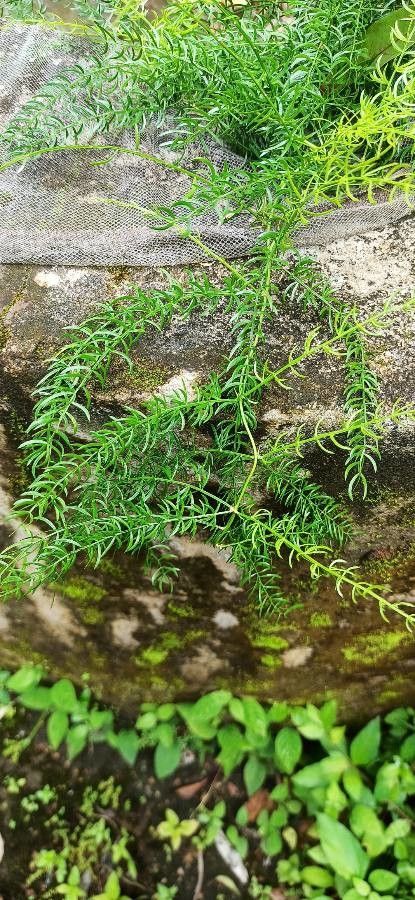
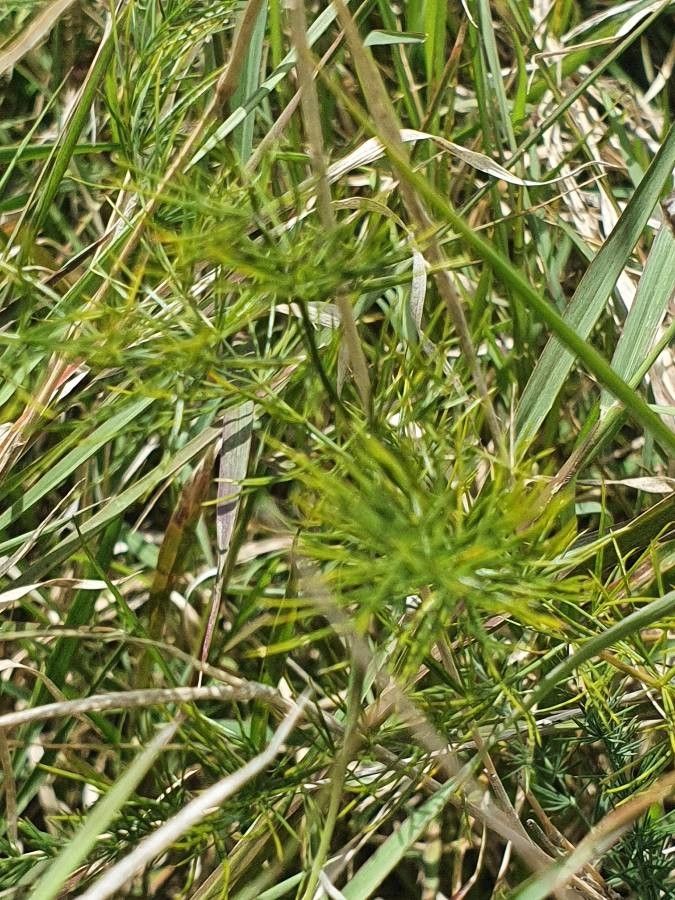
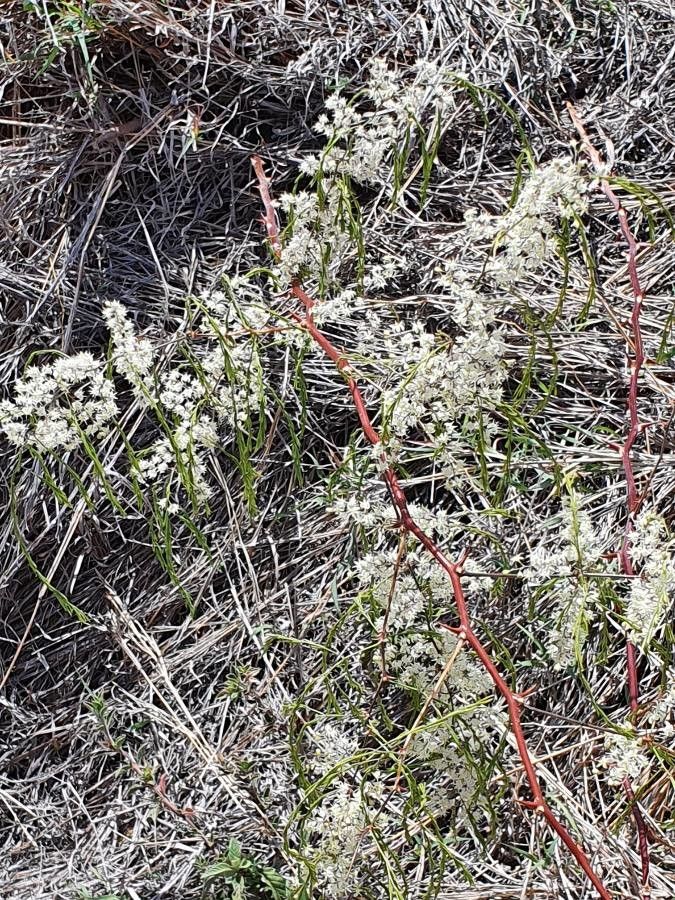
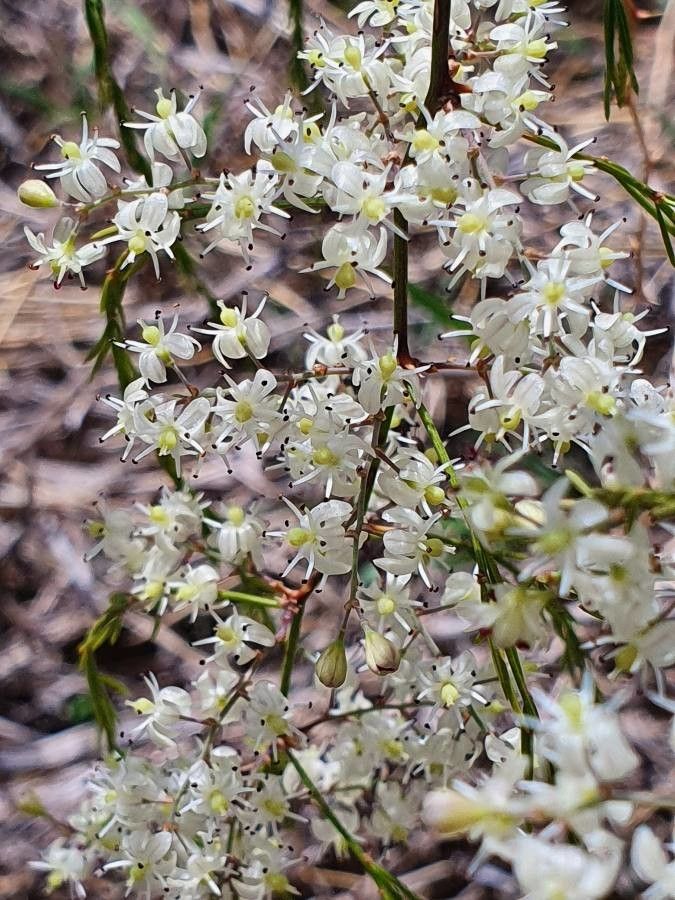
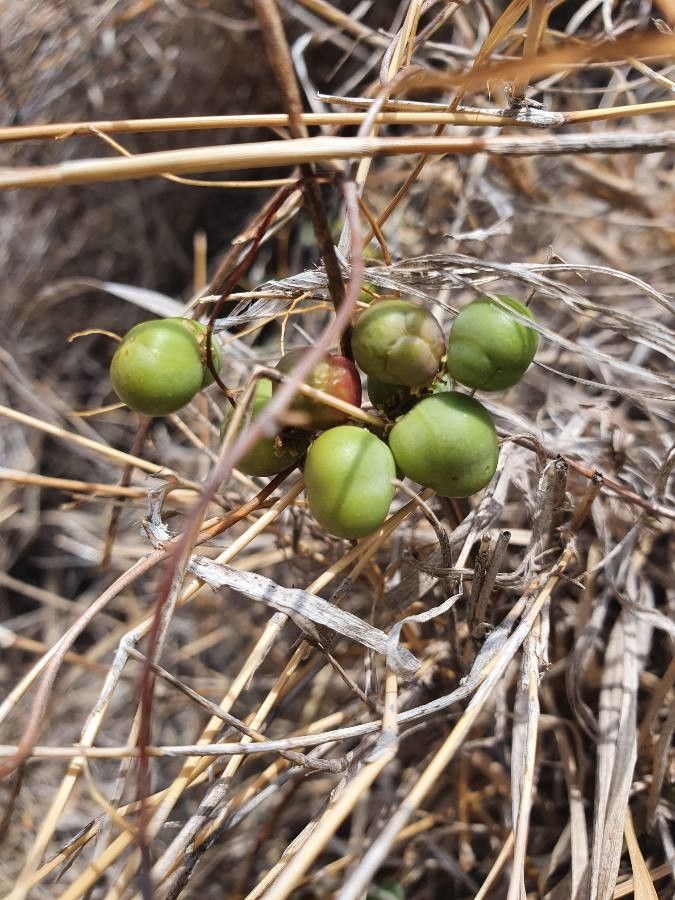
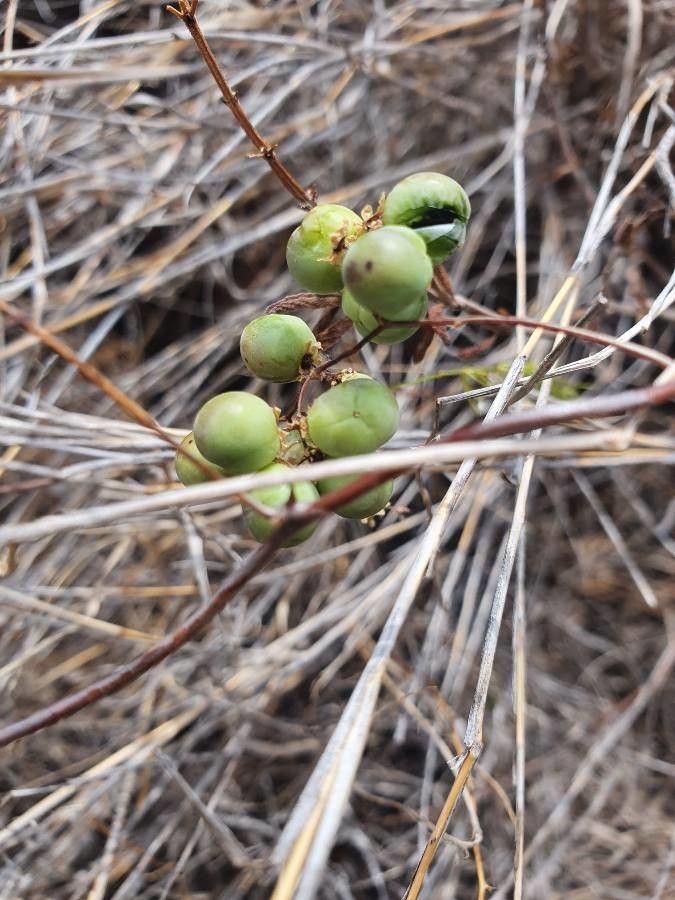
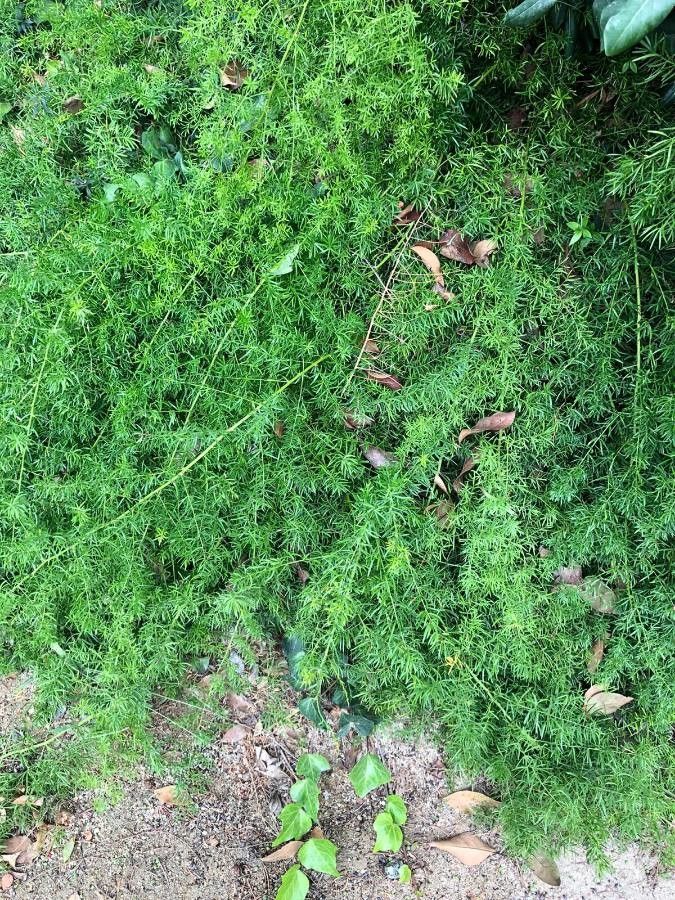
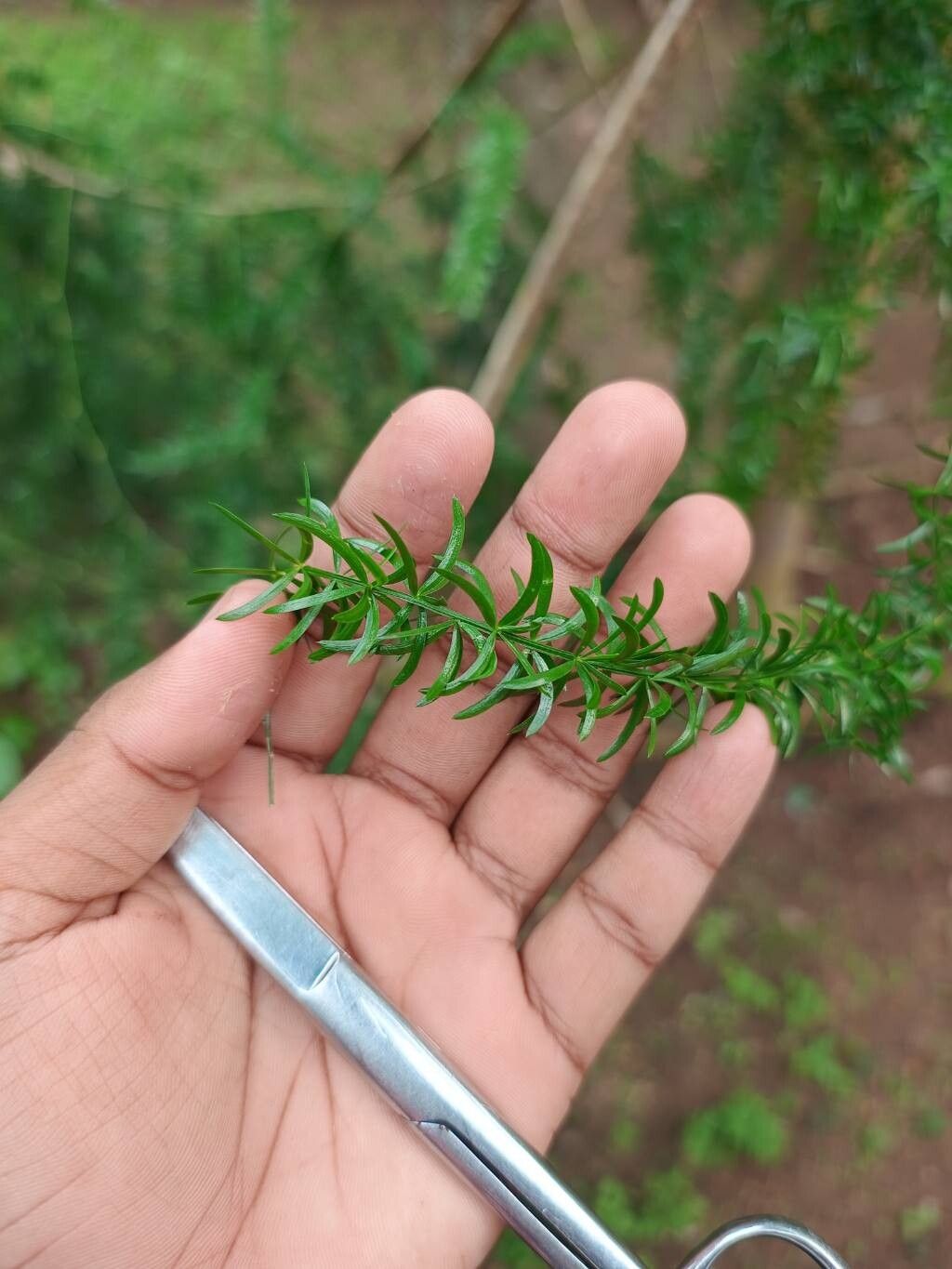
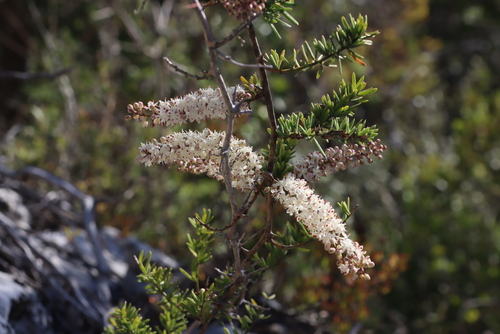
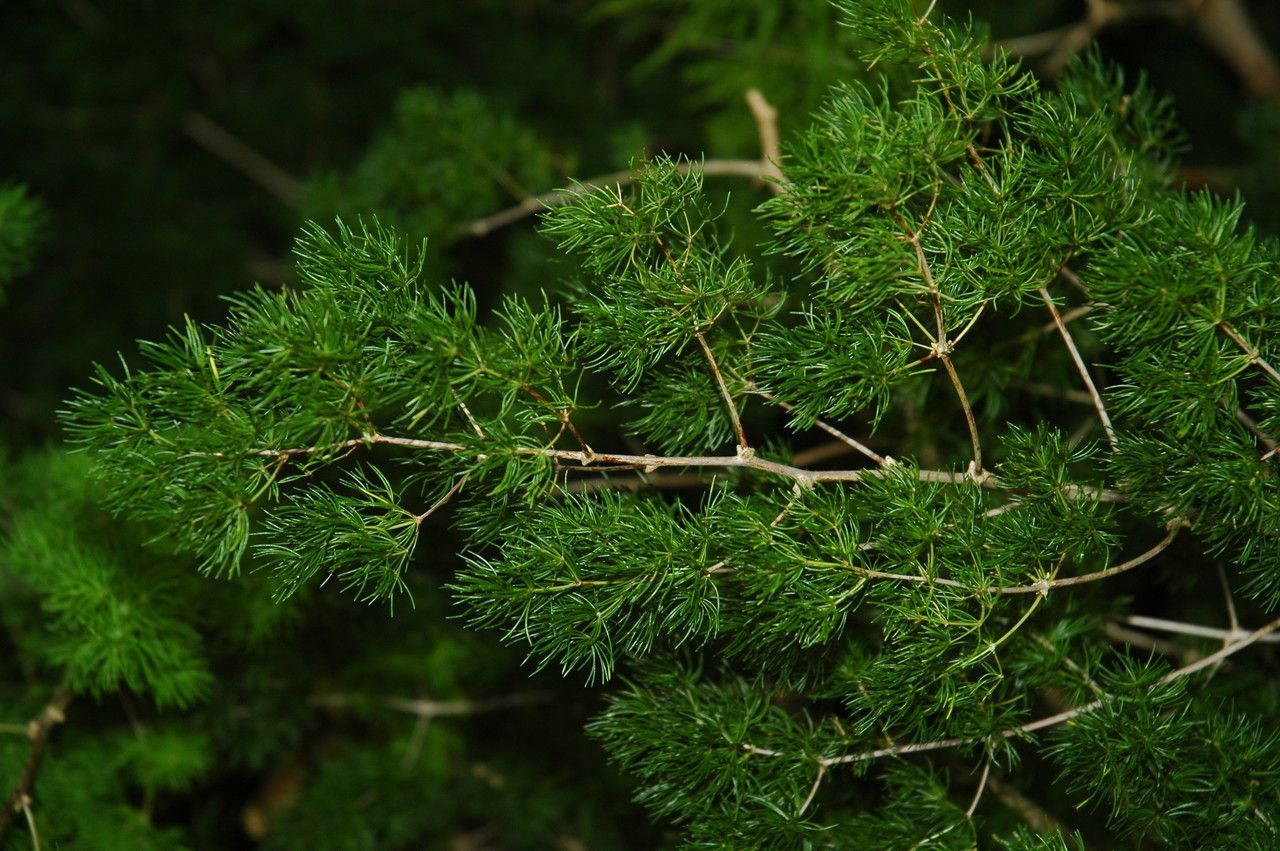
Asparagus racemosus (satavar, shatavari, or shatamull, shatawari) is a species of asparagus common throughout India and the Himalayas. and northern Australia. It grows 1–2 m (3 ft 3 in – 6 ft 7 in) tall and prefers to take root in gravelly, rocky soils high up in piedmont plains, at 1,300–1,400 m (4,300–4,600 ft) elevation. It was botanically described in 1799. Because of its multiple uses, the demand for Asparagus racemosus is constantly on the rise. Due to destructive harvesting, combined with habitat destruction, and deforestation, the plant is now considered "endangered" in its natural habitat.
Racemose asparagus is fairly disease-resistant and usually not susceptible to illnesses. Still, it can be affected by pests and diseases present in its environment, though these problems are generally mild. Regarding care, this plant needs moderate maintenance. Regular pruning is required to keep a neat appearance and support healthy growth. Fertilizing can also encourage flowering. Racemose asparagus is suitable for anyone with outdoor space, such as a garden or patio, and does not demand extensive care experience. It may need more attention when kept indoors.
How to keep Asparagus Racemosus.
Light
Racemose asparagus occurs naturally in habitats like forest understories and rocky sites, where it grows under natural shade. It prefers partial sun but can adapt to full sun or full shade, showing how versatile and hardy it is.
Water
Racemose asparagus, a plant native to Asia, thrives in moist environments and requires consistent watering without becoming waterlogged. To support its growth, it should be watered weekly. As an evergreen plant, it also benefits from managing indoor humidity to maintain its vitality throughout the year.
Temperature
Racemose asparagus comes from tropical areas, where the climate is generally warm and humid. As a result, it is well adapted to high temperatures and humidity. It does not tolerate sudden temperature changes and prefers a stable thermal environment, so avoiding temperature fluctuations indoors is important. It usually cannot endure cold and requires higher temperatures for growth. If the surrounding temperature falls too low, the plant may stop growing or even die.
Fertilizer
Appropriate fertilization is vital for the health and appearance of Racemose asparagus. Fertilize Racemose asparagus during summer, repeating the treatment monthly throughout summer. Nutrients fuel growth and sustain the plant's parts. Fertilization improves Racemose asparagus's flower display, ensuring the best blooms.
Pruning
Racemose asparagus features delicate foliage and grows in a clumping manner. To maintain its health, prune it in early spring by removing any dead or damaged stems. Regular trimming improves air circulation and light exposure, which helps reduce pests. Consistent pruning also keeps racemose asparagus strong and visually appealing. Remember to always use sterilized tools to prevent the spread of pathogens.
Botanical profile.
- Plant Type
- Herb
- Life Cycle
- Perennial
- Genus
- Asparagus
- Family
- Asparagaceae
- Hardiness Zone
- 9-11
- Mature Height
- 0.91 m to 2.13 m
- Mature Spread
- 49 cm to 91 cm
- Leaf Color
- Green
- Leaf Type
- Semi-evergreen
- Flower Color
- White
- Flower Size
- 0.20 cm to 0.25 cm
- Bloom Time
- Summer
- Planting Time
- Spring
- Harvest Time
- Late summer, Early fall, Mid fall
- Native Area
- Sri Lanka, Somalia, India, Malaysia, Angola, Namibia, Madagascar, Rwanda, Pakistan, Eritrea, Nigeria, Yemen, Kenya, Guinea-Bissau, Tanzania, Sierra Leone, Indonesia, Cambodia, Equatorial Guinea, Mozambique, Oman, Ghana, Ethiopia, Botswana, Central African Republic, Nepal, South Africa, Sudan, Bangladesh, China, Vietnam, Myanmar, Togo, Bhutan, Côte d'Ivoire, Eswatini, Iran, Thailand
Other names.
Reader questions.
What are the sunlight requirements for Racemose asparagus?
Racemose asparagus (Asparagus racemosus) flourishes under specific sunlight conditions. It requires partial sun, which means it should receive about 3-6 hours of sunlight daily. Additionally, it can tolerate full shade, where it gets less than 3 hours of sunlight. It's important to observe the movement of sunlight through your garden throughout the day to find spots that offer an ideal balance of light and shade, ensuring the plant's wellbeing.
What is Racemose asparagus?
Racemose asparagus, scientifically known as Asparagus racemosus, is a plant species with no additional information provided on its essentials or symptoms. This entry focuses on its botanical identification rather than its uses, care, or health implications.