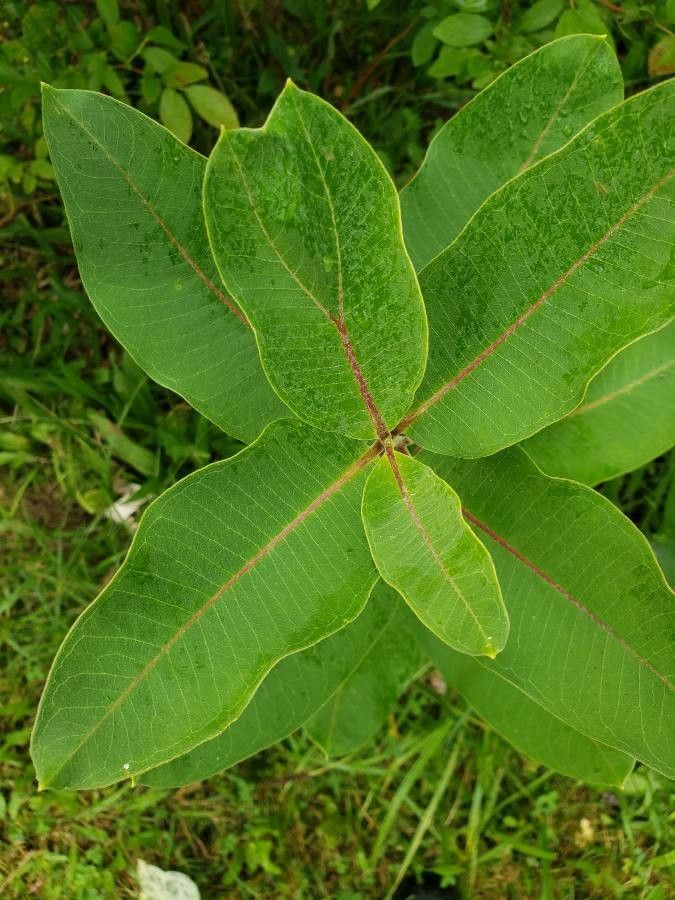
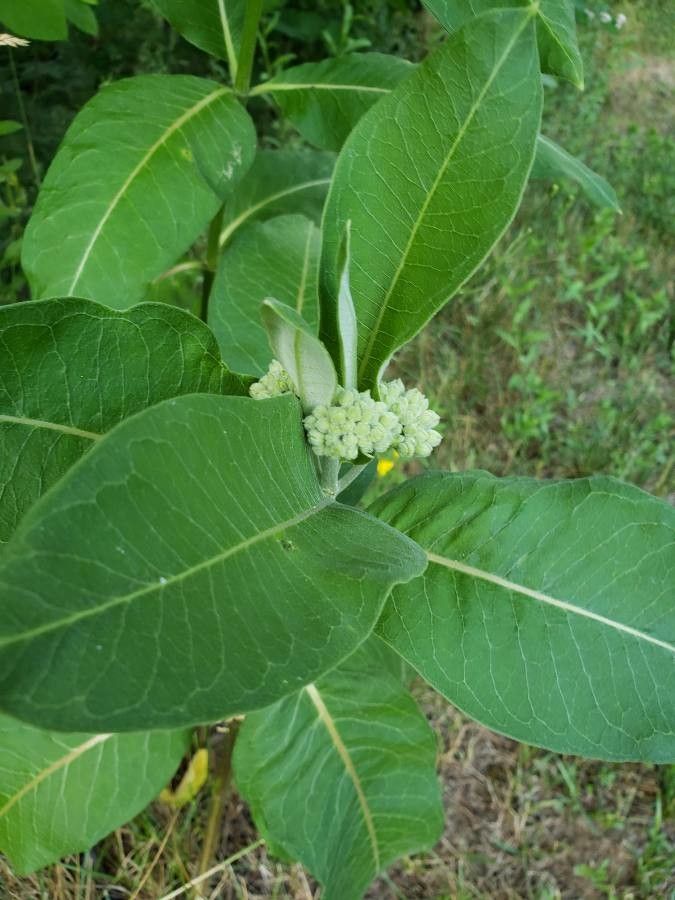
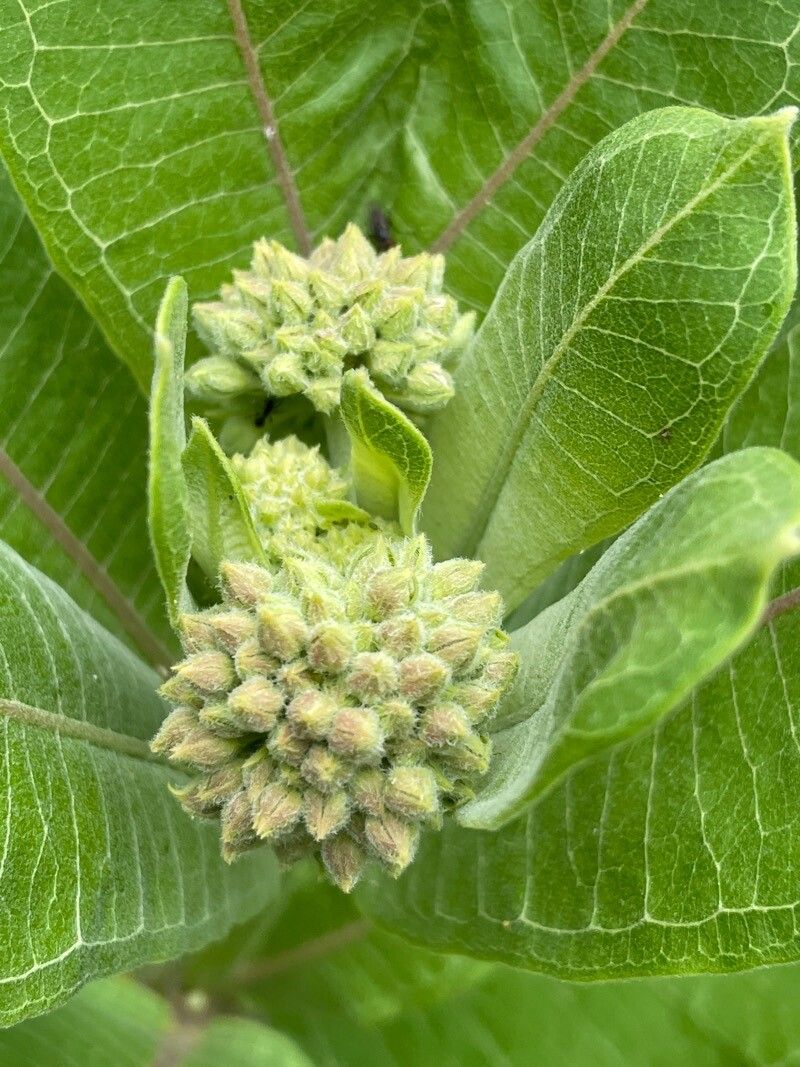
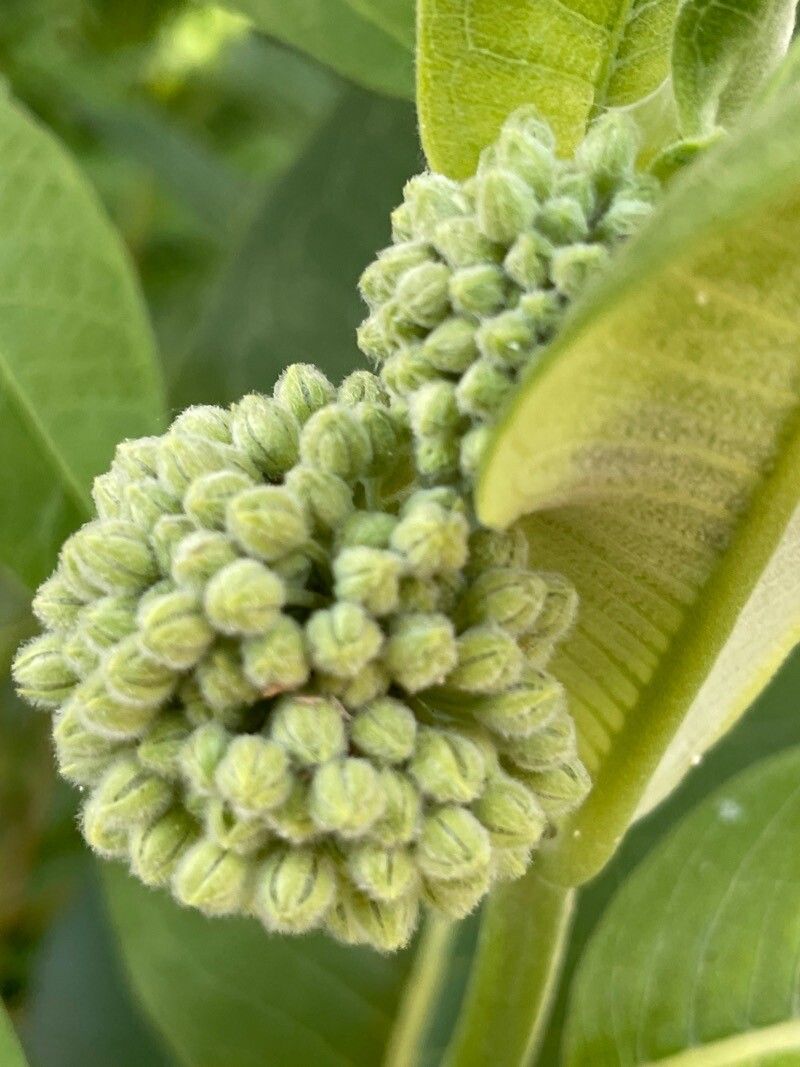
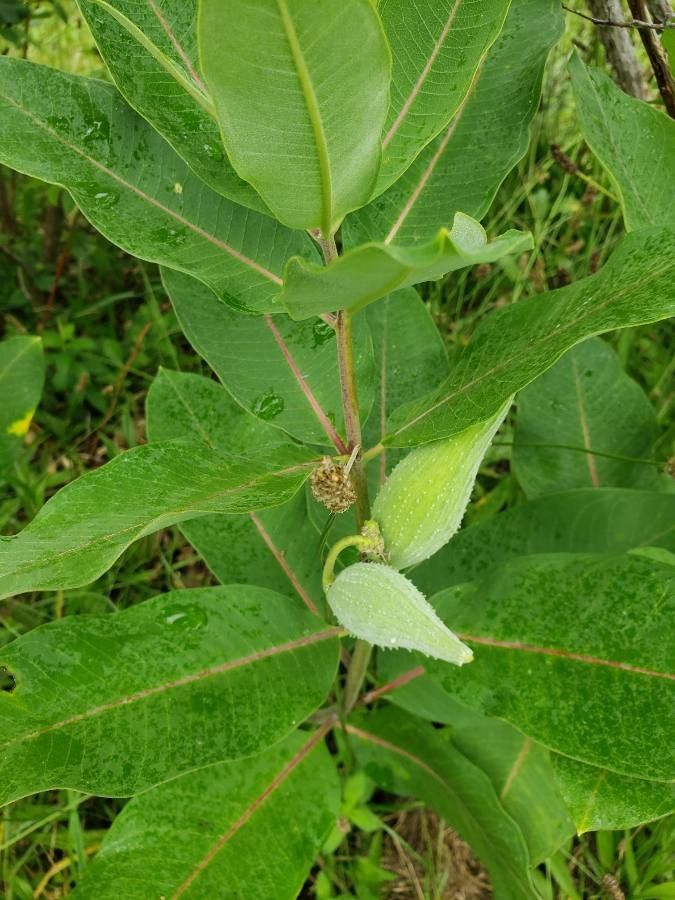
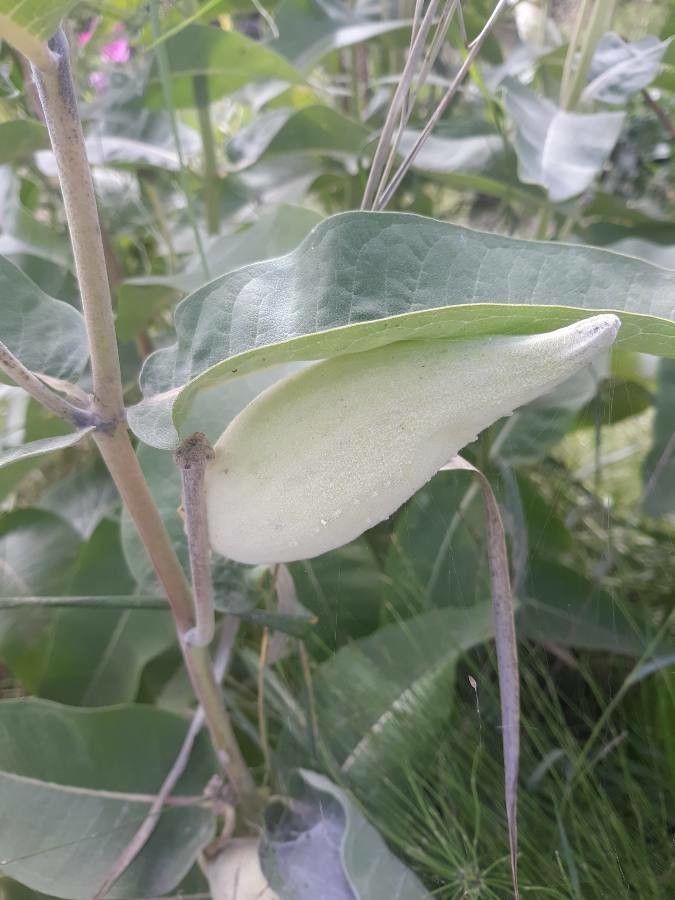
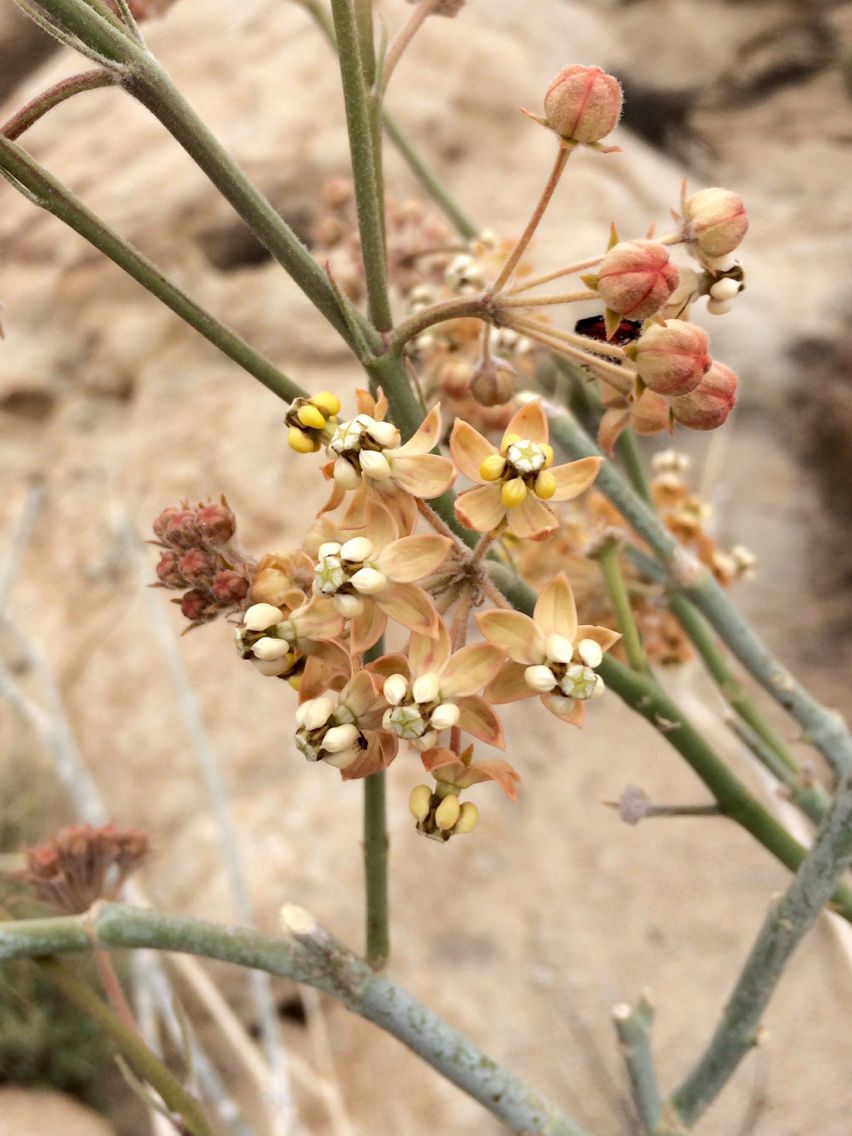
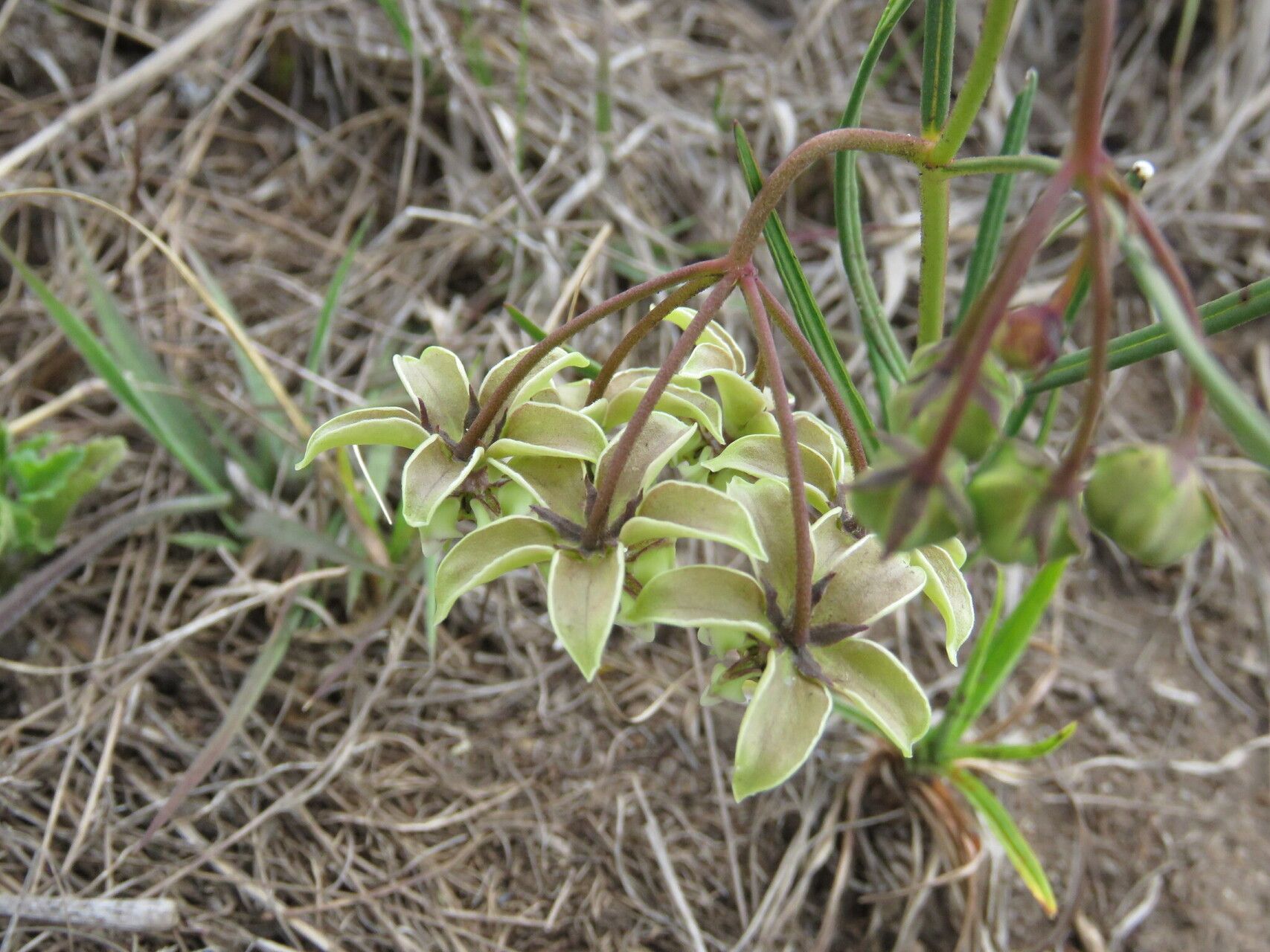
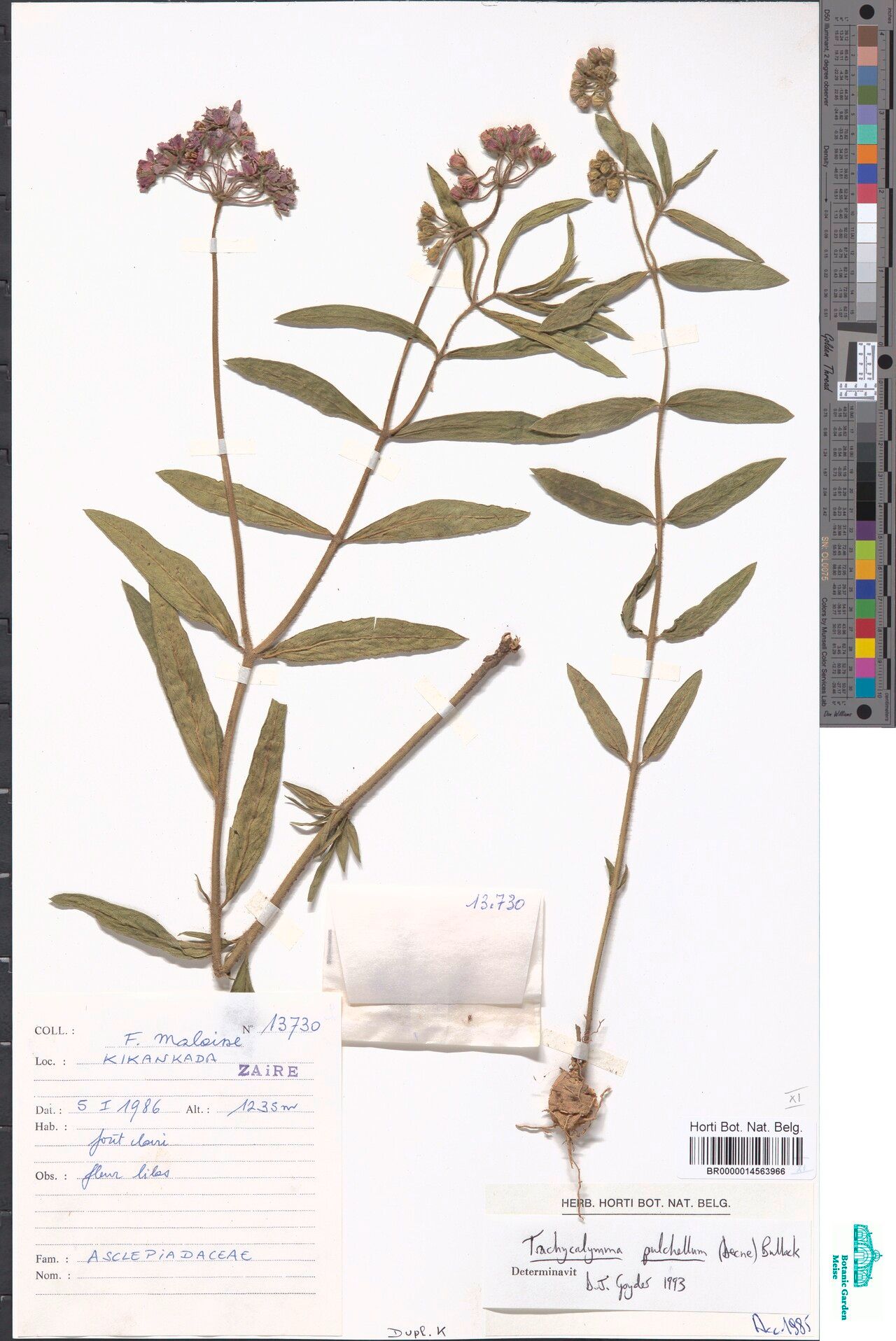
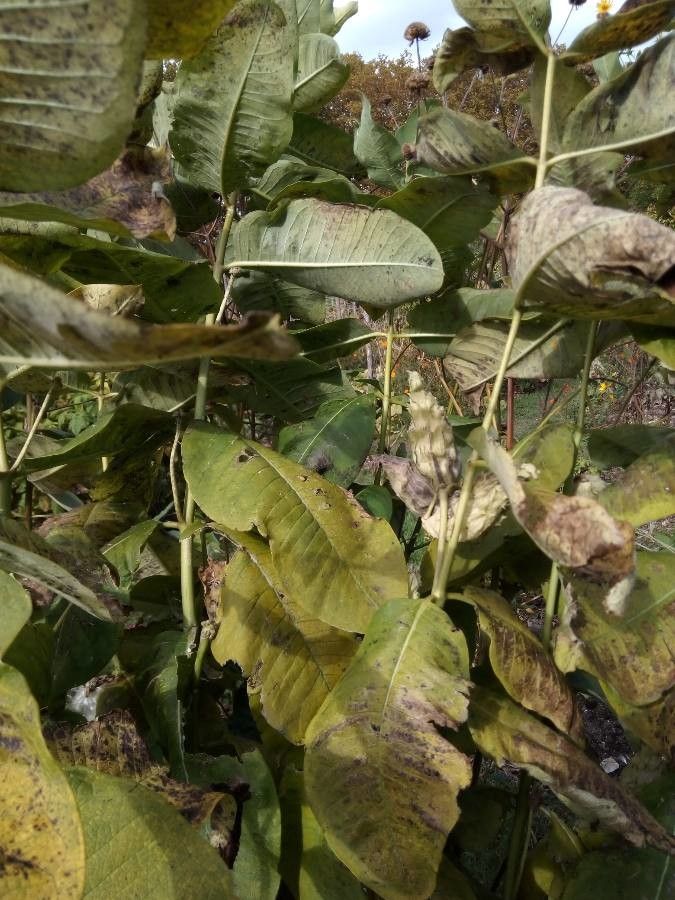
Asclepias viridiflora, is commonly known as green comet milkweed, green-flower milkweed, and green milkweed. It is a widely distributed species of milkweed (Asclepias), known from much of the eastern and central United States from Connecticut to Georgia to Arizona to Montana, as well as southern Canada. The Latin specific epithet viridiflora means green-flowered.Asclepias viridiflora is an erect to ascending herb up to 50 cm tall, with distinctive greenish-white flowers. The pods lack the warts and tubercules common on other species of Asclepias. It grows in moist to dry shaded roadsides, fields, and prairies.
Cotton milk plant has moderate resistance to disease but can be prone to issues like leaf spot. Its vulnerability to insect pests depends on the variety, though most varieties have relatively low pest resistance. In terms of care, the Cotton milk plant requires regular watering and fertilization, along with frequent pruning of yellowing leaves. It is important to treat pests and diseases as they arise and to harvest the plant in a timely way. The Cotton milk plant is suitable for people who can commit some time and energy to routine care.
How to keep Asclepias Viridiflora.
Light
The cotton milk plant needs ample sunlight and does best in places where it can receive plenty of warmth and light each day. It can tolerate stretches of weaker sun, but growth may be less vigorous. Excessive shade or too little light will hinder its growth, while overly intense sun can cause damage. Since it comes from habitats with abundant sunlight, imitating that environment is important for healthy growth.
Water
Green comet milkweed, which originates from areas with moderate moisture, thrives in well-balanced conditions. It benefits from weekly watering and is quite resilient to fluctuations in moisture levels. This plant is well adapted to seasonal rainfall, making it ideal for temperate climates where it aligns naturally with the growing seasons in outdoor gardens.
Temperature
The cotton milk plant is native to areas with temperatures between 68 and 100 °F (20 to 38 °C). It does best within this temperature band. During cooler seasons, consider providing a heated space or moving it indoors to preserve optimal growth.
Fertilizer
For Cotton milk plant, choose natural, organic materials like compost, grass clippings, or manure. A slow-release granular fertilizer or a commercial fertilizer may be applied sparingly. Incorporate the organic fertilizer into the soil before planting. Usually, one to two fertilizer applications per growing season are enough to yield a bountiful harvest.
Pruning
Pruning green comet milkweed from early to late spring helps boost its growth and flowering potential. To do this, remove any dead or damaged stems and make your cuts just above a node to encourage new shoots. This practice enhances airflow, reduces the risk of disease, and results in a healthier, more vibrant display.
Botanical profile.
- Plant Type
- Vine
- Life Cycle
- Perennial
- Genus
- Asclepias
- Family
- Apocynaceae
- Hardiness Zone
- 9-11
- Mature Height
- 4.57 m to 7.62 m
- Mature Spread
- 2.13 m to 3.96 m
- Leaf Color
- Dark Green, Forest Green
- Leaf Type
- Evergreen
- Flower Color
- White
- Flower Size
- 2.54 cm
- Bloom Time
- Summer
- Planting Time
- Spring, Summer, Autumn
- Harvest Time
- Late summer, Early fall, Mid fall
Other names.
Reader questions.
How should I water my Green comet milkweed?
To properly water the Green comet milkweed, it's important to follow a few guidelines. First, use filtered water at room temperature. Tap water may contain harmful particles that can negatively impact the plant's health. The reason for using room temperature water is that the Green comet milkweed thrives in warm environments, so cold water can be a shock to its system. Next, avoid watering the plant from above. Instead, focus on applying the filtered room temperature water directly to the soil until it is completely soaked. This method allows for better absorption and prevents foliage complications. Soaking the soil is especially beneficial for the Green comet milkweed. It helps to moisturize the roots, promoting their spread through the soil and enabling them to collect essential nutrients for the plant's growth and development.
What are the sunlight requirements for Green Comet Milkweed?
Green Comet Milkweed thrives in environments with abundant sunlight but can also sustain growth in moderately sunny conditions. It requires 'Full sun' with over 6 hours of sunlight for optimal growth, or 'Partial sun' with about 3-6 hours of sunlight. Insufficient sunlight can lead to stunted growth and poor bloom production, while too much sunlight may cause the foliage to burn. It's crucial to observe the movement of sunlight in your garden to select the ideal spots that offer a perfect balance of light and shade.
What temperatures can Green comet milkweed tolerate?
Green comet milkweed is native to a temperature range of 41 to 95°F (5 to 35°C), thriving best in warmer conditions between 50 and 90°F (10 to 32°C). Although it prefers warmer weather, it is resilient and can adapt to cooler conditions. Special frost protection is generally not needed since it has strong cold resistance, but if temperatures are expected to drop below -30°C, it's crucial to provide cold protection by covering the plant with materials like soil or straw. Additionally, watering the plant abundantly before the first freeze in autumn to keep the soil moist is recommended to help prevent drought during winter and early spring.
What should I do if I give too much or too little water to my Green comet milkweed?
Overwatering can be harmful to your Green comet milkweed, causing wilting, yellowing, and potential diseases like root rot, mold, and mildew. Underwatering is less common due to the plant's drought tolerance, but it can make the leaves brittle and brown. It's important to recognize signs of overwatering early and reduce watering immediately. If the soil doesn't drain well, replace it with a loose, well-draining potting mix. If underwatering is the issue, simply increase watering until the signs improve.
What artificial lighting options are available for Green Comet Milkweed?
For indoor Green Comet Milkweed plants, when natural sunlight is insufficient, artificial lighting can serve as a vital solution to promote optimal growth. LED lights are recommended because they can be customized to provide the specific wavelengths needed by the plants. Full sun plants require 30-50W/sq ft, partial sun plants need 20-30W/sq ft, and full shade plants should have 10-20W/sq ft of artificial light. The light source should be placed 12-36 inches above the plant, and the duration of light exposure should mimic natural daylight hours, usually between 8-12 hours per day.
How does low temperature affect Green comet milkweed, and what are the solutions?
Green comet milkweed is cold-tolerant and performs best when temperatures stay above 5°C. In winters, it's advised to keep the temperature above -25°C. At temperatures falling below -30°C, the plant may not show immediate distress, but it could lead to decreased sprouting or failure to sprout in spring. The solution for such damage is to remove any parts of the plant that have failed to sprout in spring, allowing for healthy regrowth.
How often should I water my Green comet milkweed plant?
If your Green comet milkweed plant is in a pot, the best way to determine if it needs water is by checking the soil with your finger. If the top two to three inches of soil are dry, it's time to water it. For those growing the Green comet milkweed outdoors in the ground, you can also use the same method to test the soil. When the top few inches of soil have dried out, it's time to water. Generally, during spring and early fall, you may need to water this plant once a week using this method. However, in extremely hot weather, you may need to increase watering to twice or more per week. It's worth noting that mature, well-established Green comet milkweed plants can handle drought quite well.
What are the symptoms of inadequate lighting for Green Comet Milkweed?
Symptoms of inadequate lighting in Green Comet Milkweed include: smaller new leaves, leggy or sparse growth, faster leaf drop, slower or no new growth, lighter-colored new leaves revealing a lack of chlorophyll, chlorosis (leaves turning yellow due to chlorophyll breakdown from excessive sunlight), sunscald (damage from intense sunlight exposure), leaf curling (a defense mechanism to reduce surface area exposed to sunlight), wilting (loss of turgor pressure causing droopiness), and leaf scorching (brown, dry, and crispy leaf edges or patches due to excessive sunlight). These symptoms highlight the importance of providing sufficient sunlight for healthy plant growth.
What should I do if Green comet milkweed is exposed to high temperatures?
During summer, it's crucial to ensure that Green comet milkweed's temperature remains below 35°C. Exposure to temperatures above 38°C can cause the plant's leaves to lighten in color, curl, become susceptible to sunburn, and, in severe cases, result in the entire plant wilting and drying. To mitigate these issues, trim away the sunburned and dried-up parts of the plant. Relocate the plant to a shaded area during the midday and afternoon sun or use a shade cloth for protection. Also, watering the plant in the morning and the evening will help keep the soil moist and support the plant's needs during high temperatures.
How much water does my Green comet milkweed plant need?
To ensure your Green comet milkweed is properly watered, don't hesitate to give it a generous amount of water. When the top two to three inches of soil are dry, it's time for a thorough watering. Make sure the water completely soaks the soil, enough to cause excess water to drain through the pot's drainage holes. If you don't see any excess water draining, you may have underwatered the plant. However, be cautious not to let water accumulate in the soil, as this can harm the plant. It's also important to avoid poorly draining soils, which can be harmful to the plant's health. If the plant is outdoors, one inch of rain per week should be sufficient.
How can you optimize sunlight exposure for Green Comet Milkweed?
To optimize sunlight exposure for Green Comet Milkweed, both indoor and outdoor approaches can be taken. Indoors, gradually move your plant to a sunnier spot each week, aiming for at least 6 hours of direct sunlight daily. Using a south-facing window and keeping curtains open during the day can maximize sunlight exposure. Consider using artificial light for additional support if needed, keeping lamps on for at least 8 hours daily. Outdoors, similarly, gradually move plants to sunnier locations each week to avoid sunburn. If trees or other obstructions block sunlight, pruning or transplanting may be necessary to ensure ample sunlight reaches your plants. It's essential to manage these changes gradually to prevent stress and damage to the plants.
How should I water my Green comet milkweed as it grows?
The water requirements of the Green comet milkweed can vary depending on its growth stages. In the early years or right after transplanting, it will need more water. During these stages, the plant focuses on developing new roots to support future growth, so slightly more moisture is necessary. As the plant matures, it will require less water. However, during the bloom period, when the flowers are developing, additional water may be needed to ensure optimal moisture levels.