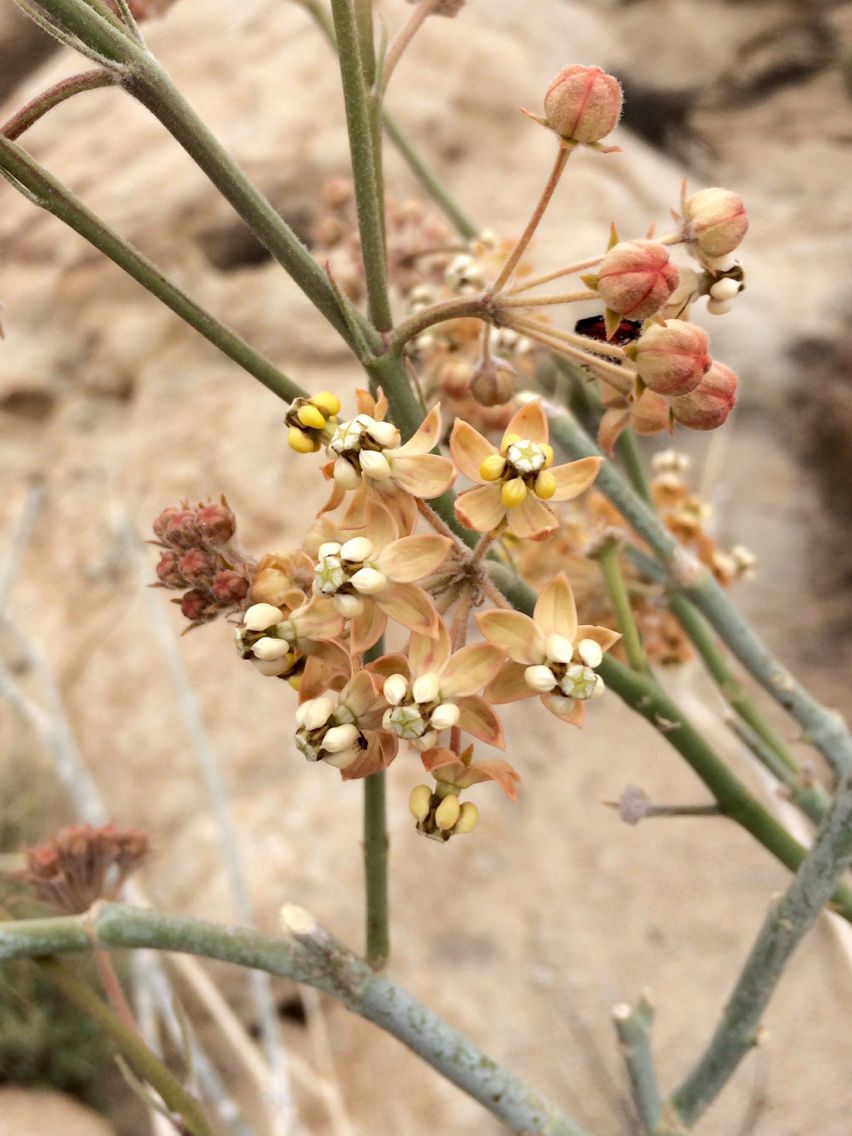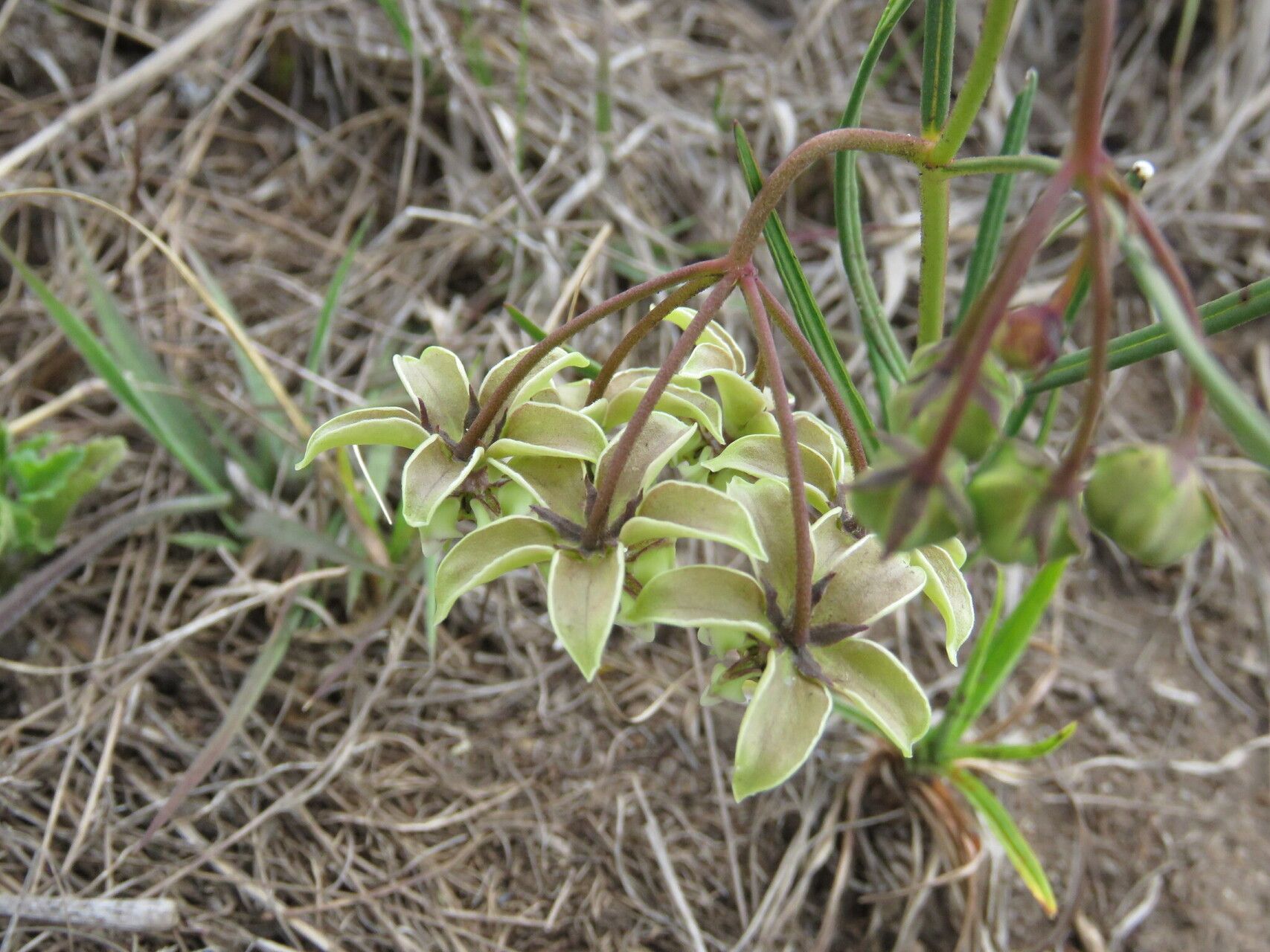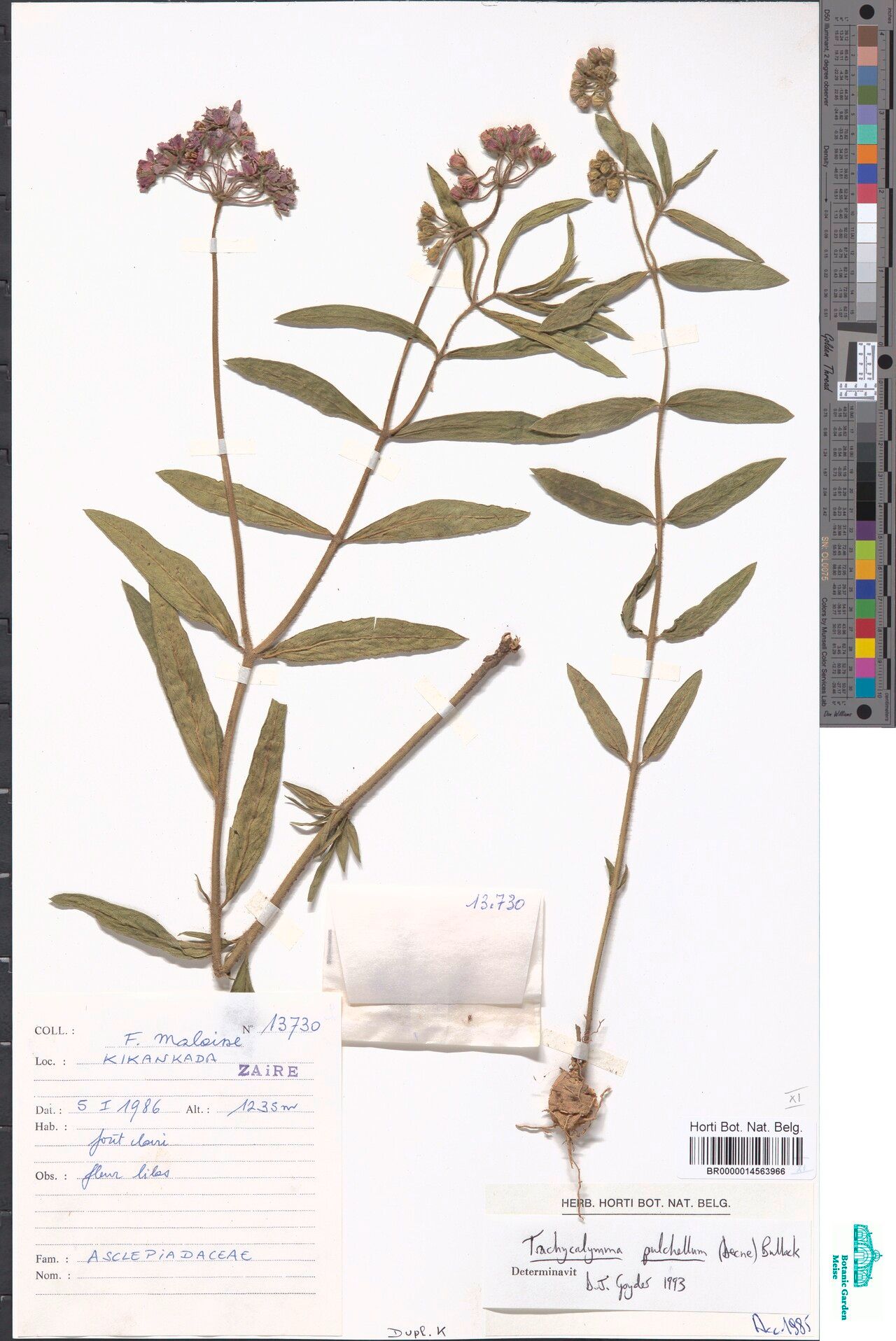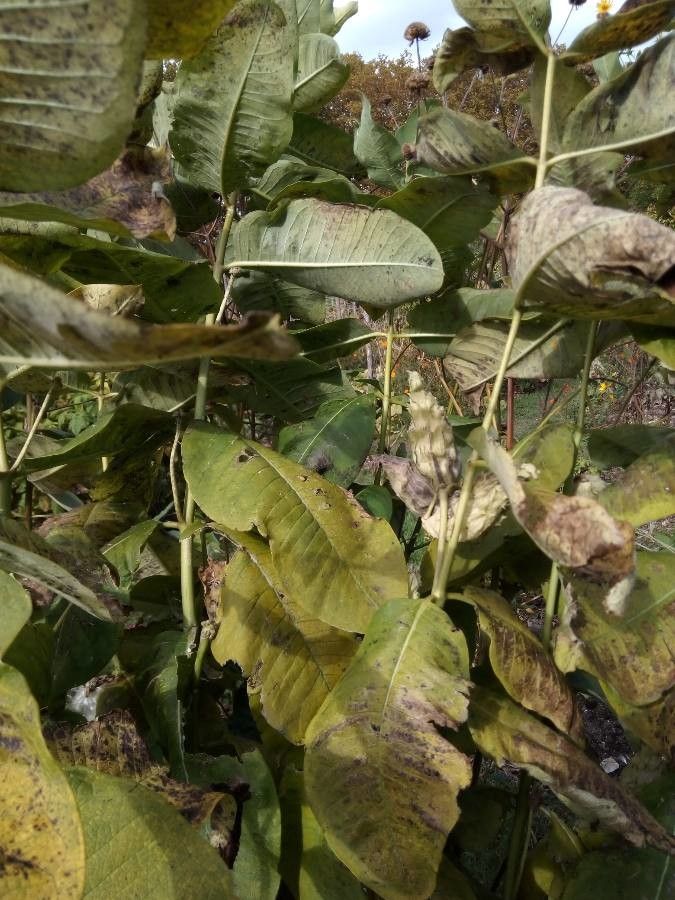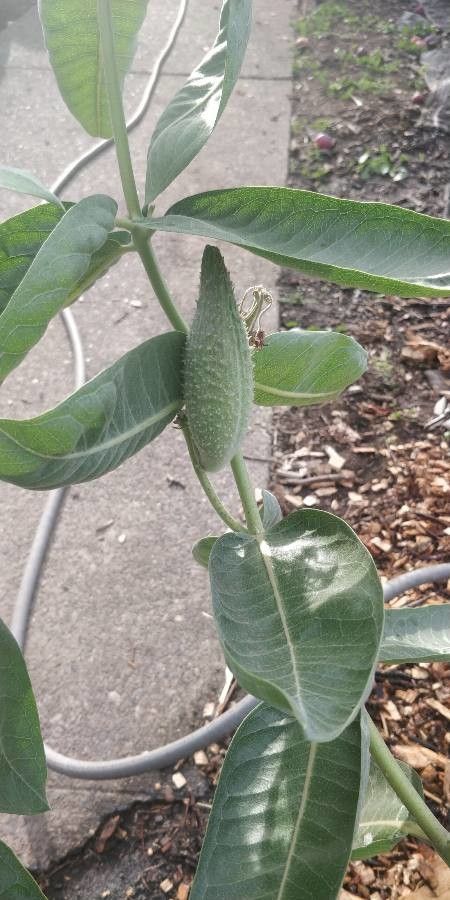
Asclepias vestita is a species of milkweed known by the common name woolly milkweed. It is endemic to California, where it grows in many habitats across the state, from mountains to desert to valley. This is a robust perennial herb growing mostly upright or slightly bending. The thick leaves are oval to narrowly lance-shaped. The stem and leaves often have a coat of light-colored hairs, sometimes thick and woolly. The inflorescence is an umbel-shaped array to a spherical cluster of yellowish flowers. The flowers may be tinted with brown or purple. The fruit is a large yellowish follicle containing many silky-haired seeds.
Parish's woolly milkweed has strong resistance to disease and generally is not prone to illnesses. However, it can be vulnerable to pests and diseases present in its environment. Such infections are usually mild. This plant requires moderate care. Regular pruning is needed to maintain a neat appearance and support healthy growth. Fertilizing can also help encourage flowering. Parish's woolly milkweed is appropriate for anyone with outdoor space, such as a garden or patio, and does not demand extensive plant-care experience. It may need more attention when grown indoors.
How to keep Asclepias Vestita.
Light
Parish's woolly milkweed is a perennial herbaceous plant that favors sunny sites and originates from open habitats, commonly occurring in meadows and grasslands. It prefers full sun but can tolerate partial sun.
Water
Parish's woolly milkweed is native to arid regions and is well-adapted to environments with low moisture. It is highly drought-tolerant and thrives with minimal weekly watering, efficiently managing its water needs. This makes it ideal for xeric landscapes and water-conscious gardens, as it can make good use of infrequent rainfalls.
Temperature
Parish's woolly milkweed can tolerate a wide span of temperatures, but its distribution may still be restricted by various combinations of moisture and heat. It performs best in warm summer conditions with sufficient rainfall or watering. Extended stretches of cloudy, rainy weather, as well as sustained high temperatures, raise the risk of Parish's woolly milkweed dying. In winter, shielding the plant from cold can increase its chances of survival.
Fertilizer
For Parish's woolly milkweed, the primary time to apply fertilizer is in early spring when the flowers are beginning to form. The proper fertilizer boosts better blooms and helps Parish's woolly milkweed produce attractive flowers. Fertilizing in early spring ensures strong flowering during the season and supplies energy for dormant growth phases.
Pruning
Parish's woolly milkweed has fuzzy, gray-green leaves and clusters of white flowers. To maintain its health, prune the plant from early to late spring to remove weak growth. This helps improve air circulation and reduces the risk of pests. Light shaping is recommended, as severe pruning can hinder growth. Following these practices will promote healthy blooming and overall vitality.
Botanical profile.
- Plant Type
- Herb
- Life Cycle
- Perennial
- Genus
- Asclepias
- Family
- Apocynaceae
- Hardiness Zone
- 7-10
- Mature Height
- 30 cm to 91 cm
- Mature Spread
- 30 cm to 46 cm
- Leaf Color
- Green, Gray
- Leaf Type
- Deciduous
- Flower Color
- White, Cream
- Flower Size
- 1.02 cm to 1.52 cm
- Bloom Time
- Late spring, Early summer, Mid summer
- Planting Time
- Spring
- Harvest Time
- Late summer, Early fall, Mid fall
Other names.
Reader questions.
What are the sunlight requirements for Parish's woolly milkweed?
Parish's woolly milkweed, scientifically known as Asclepias vestita, thrives in environments with specific sun exposure. It requires 'full sun' conditions, meaning it should receive above 6 hours of sunlight daily. Alternatively, it can grow in 'partial sun' conditions, where it gets about 3-6 hours of sunlight each day. It is important to monitor the sunlight patterns in your garden carefully. Ensuring the right balance between light and shade is crucial for the optimal growth and happiness of your plants.