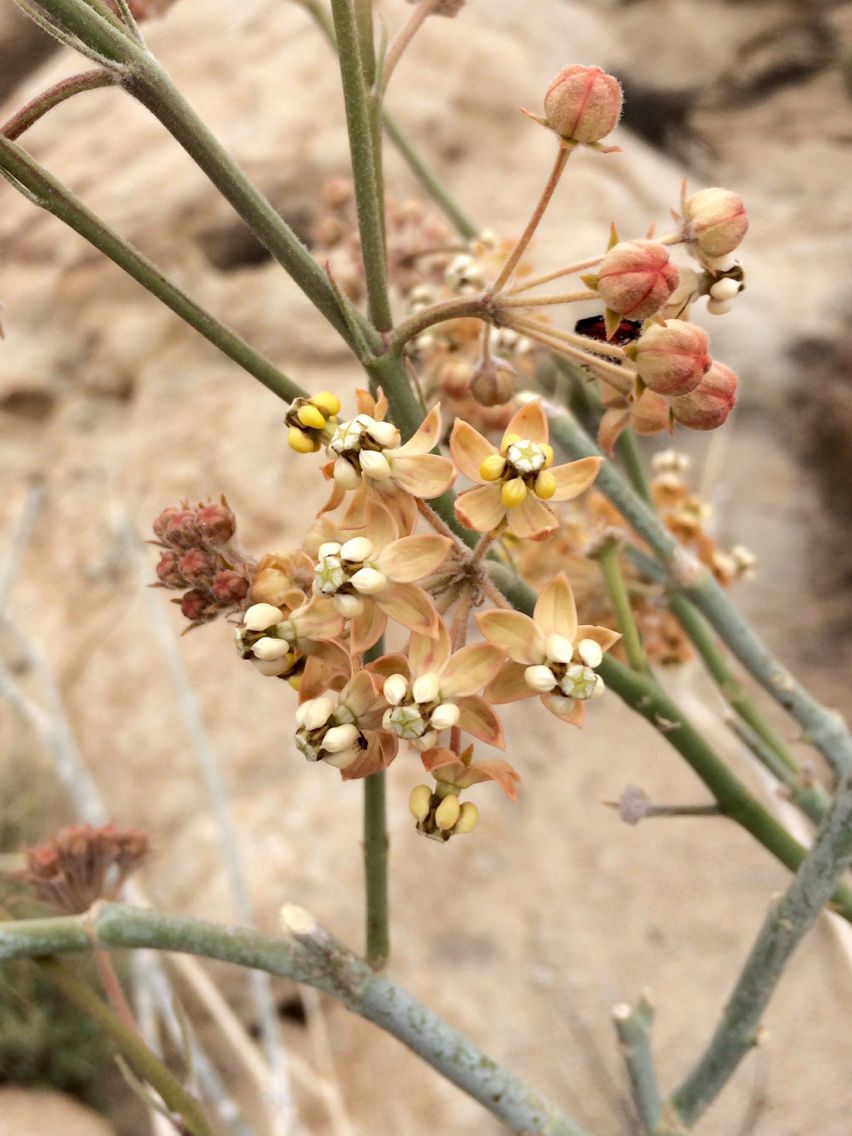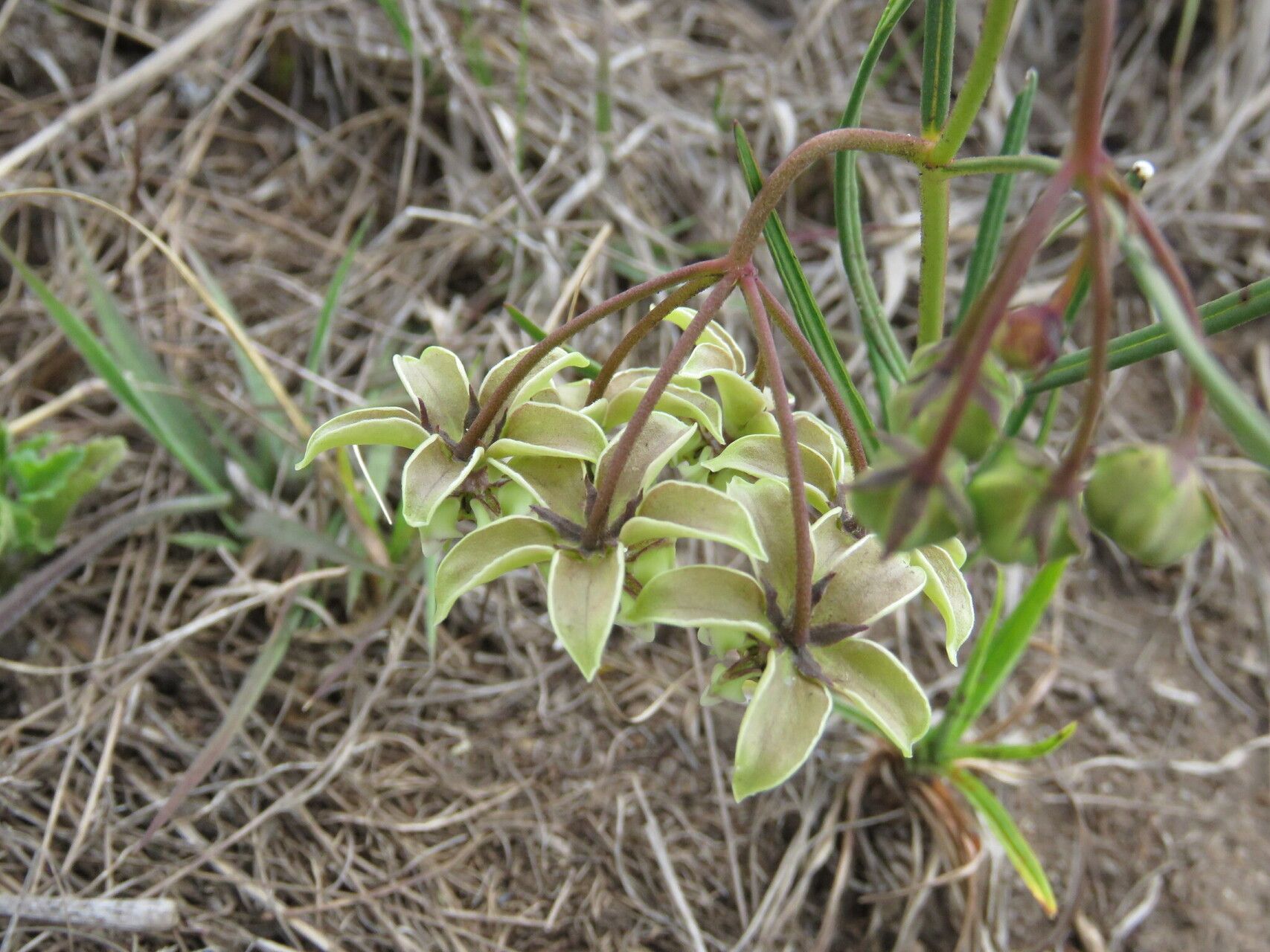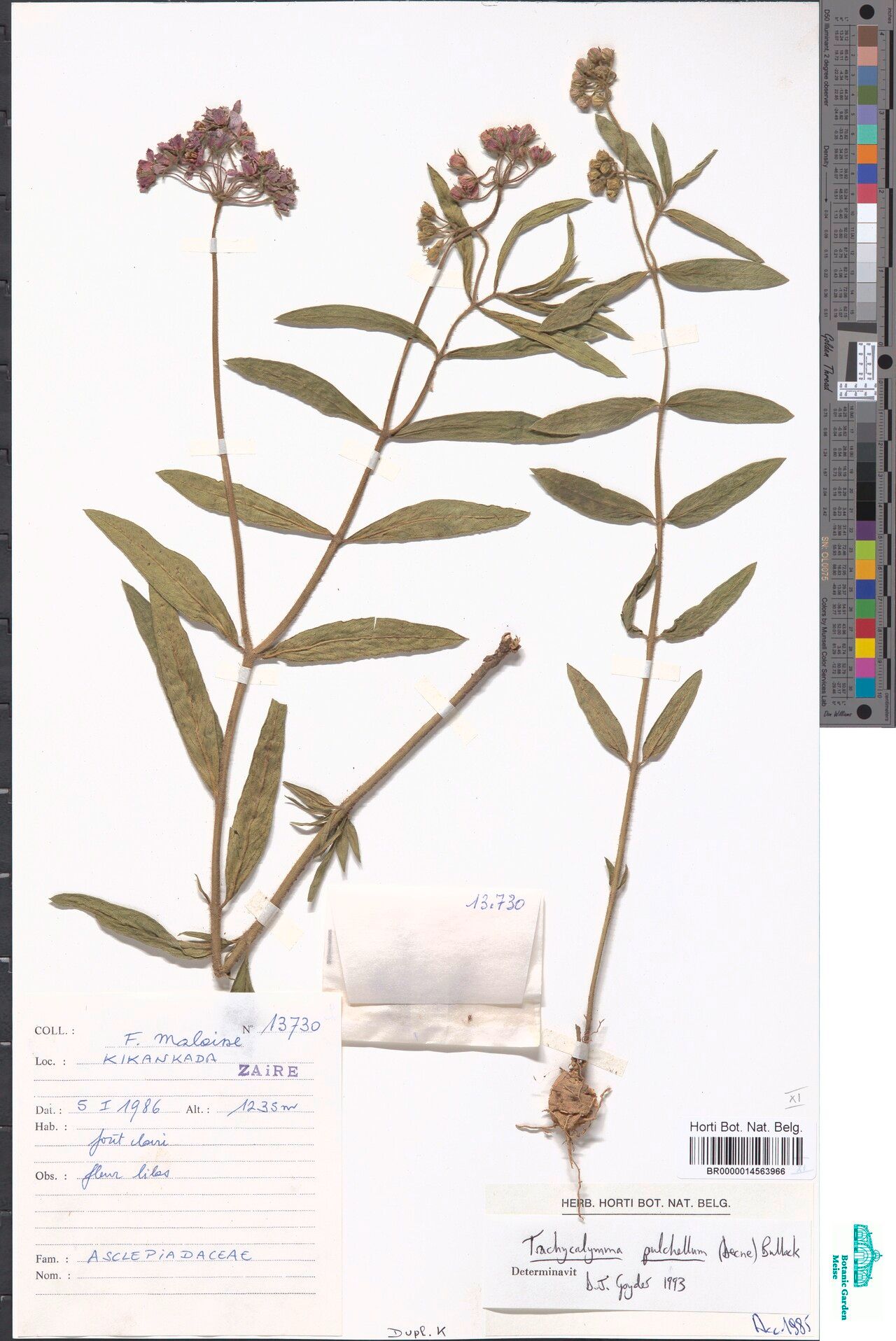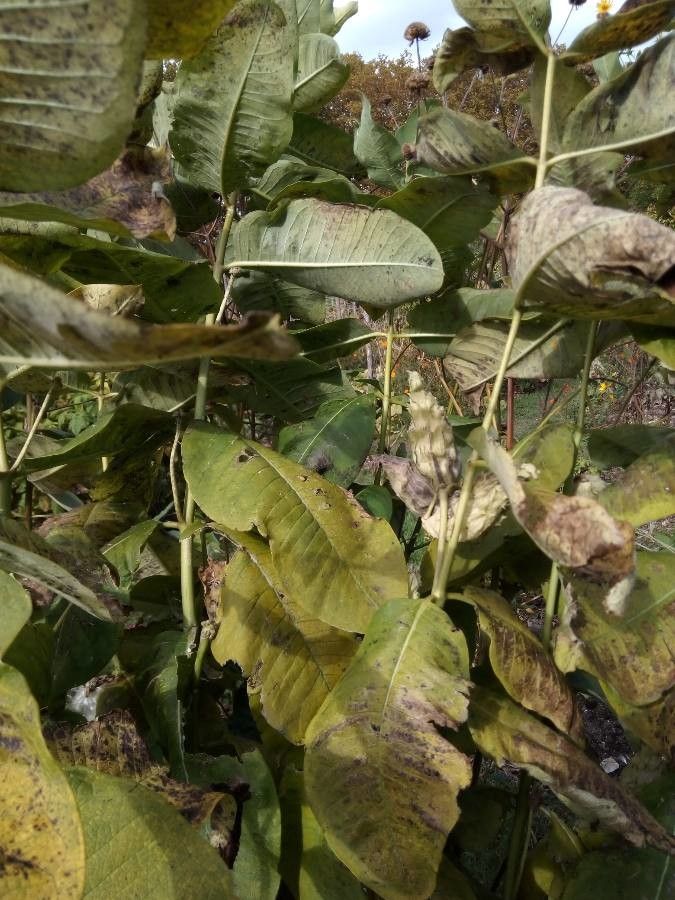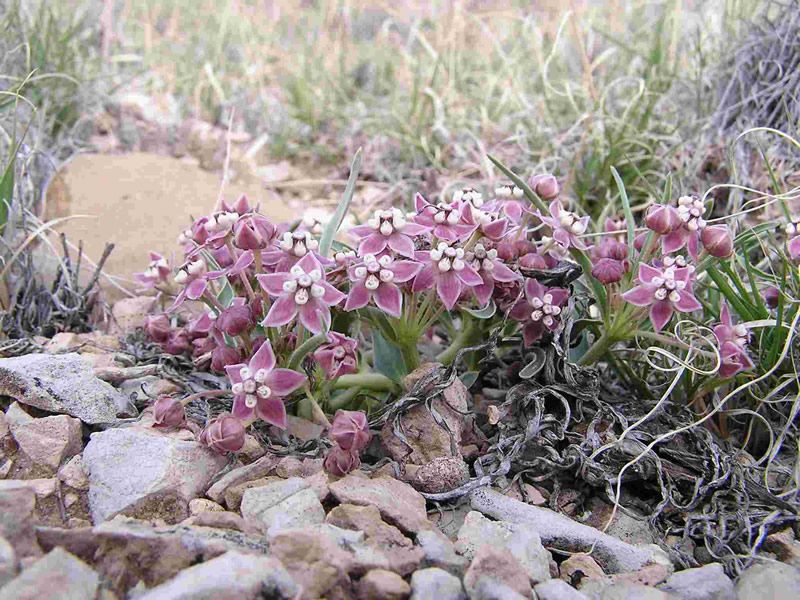
Asclepias uncialis is a species of flowering plant in the dogbane family known by the common name wheel milkweed. It is native to the western United States. Two subspecies are sometimes described, with ssp. ruthiae containing three plants which are sometimes described as separate species, Asclepias ruthiae, A. eastwoodiana, and A. sanjuanensis.This species is a small perennial herb with stems just a few inches long. Like most other milkweeds, the stems contain a milky sap. There are two different leaf types. The lower leaves are lance-shaped to oval, and the upper leaves are narrower. Flowers occur at the ends of the stems in clusters of up to 12. They are pinkish purple in color. The fruit is a follicle containing seeds which each have a tuft of silky hairs up to an inch long. The plant may be considered "semi-rhizomatous", as what appear to be separate individuals may actually be connected underground by the root crown, which may be up to a foot deep in the soil.This plant is less common than it was 100 to 150 years ago. It was collected in greater numbers then and appears to have had a larger distribution. There are many historical occurrences that are gone today. There are about 20 occurrences known today.This plant occurs along the edge of the southern Rocky Mountains in what may be considered the western Great Plains. This distribution generally excludes what is sometimes called ssp. ruthiae, which has a distribution extending west to Nevada. The habitat is mostly shortgrass prairie. The amount of available habitat has declined over the years due to its conversion to agricultural purposes, including rangeland. The land is dominated by grasses, particularly Bouteloua species. Other species include Buchloë dactyloides, Hesperostipa comata, Koeleria macrantha, Pascopyrum smithii, Aristida purpurea, and Sporobolus cryptandrus. There are also shrubs such as the sagebrush Artemisia tridentata. The plant may also be found in grass-dominated parts of pinyon-juniper woodland habitat and other open woodlands. The plants may grow at the bases of large features such as mesas, but they do not occur on rock outcrops or disturbed habitat such as dunes. It is not restricted to any particular soil type.There are several threats to the species. One is an unknown threat probably related to the plant's biology that is evidenced by its absence in large stretches of appropriate habitat and its absence from an assemblage of surviving native plants. It may have low rates of sexual reproduction.
Wheel milkweed generally has strong resistance to disease and is not highly susceptible to illnesses. Still, it can be affected by pests and diseases present in its environment. Such infections are typically mild. Regarding care, this plant needs a moderate level of attention. Regular pruning is necessary to preserve an attractive appearance and encourage healthy growth. Applying fertilizer can also aid in enhancing flowering. Wheel milkweed is well suited for people who have outdoor areas like a garden or patio and does not demand extensive gardening experience. If kept indoors, it may need more intensive care.
How to keep Asclepias Uncialis.
Water
Water the milkweed only when the soil is dry. During the dry fall and winter months, mist the plants to increase humidity and encourage healthier growth.
Fertilizer
Usually one fertilizer application in spring is enough for Wheel milkweed, though repeated feedings can boost growth. Apply fertilizer about once a month to once every month and a half. Fertilizing improves the leaves' appearance and function, encouraging even color and a healthy texture. It also promotes root development and nutrient uptake for the plant's long-term health.
Pruning
To promote healthy growth, it is best to prune wheel milkweed in early spring. Begin by removing any dead or damaged stems. To maintain the plant's shape and encourage new shoots, limit your cuts to no more than one-third of the older growth. Regular pruning will prevent overgrowth and enhance the plant's flowering potential, resulting in a vibrant display each season.
Botanical profile.
- Plant Type
- Herb
- Life Cycle
- Perennial
- Genus
- Asclepias
- Family
- Apocynaceae
- Hardiness Zone
- 6-10
Other names.
Reader questions.
What are the sunlight requirements for Wheel milkweed (Asclepias uncialis)?
Wheel milkweed (Asclepias uncialis) thrives in conditions where it can receive different amounts of sunlight throughout the day. For optimal growth, it needs full sun, which is above 6 hours of sunlight daily, or partial sun, about 3-6 hours of sunlight each day. It's important to observe the patterns of sunlight movement in your garden to ensure you choose locations that provide the right balance of light and shade. This consideration will ensure the health and happiness of your Wheel milkweed plants.