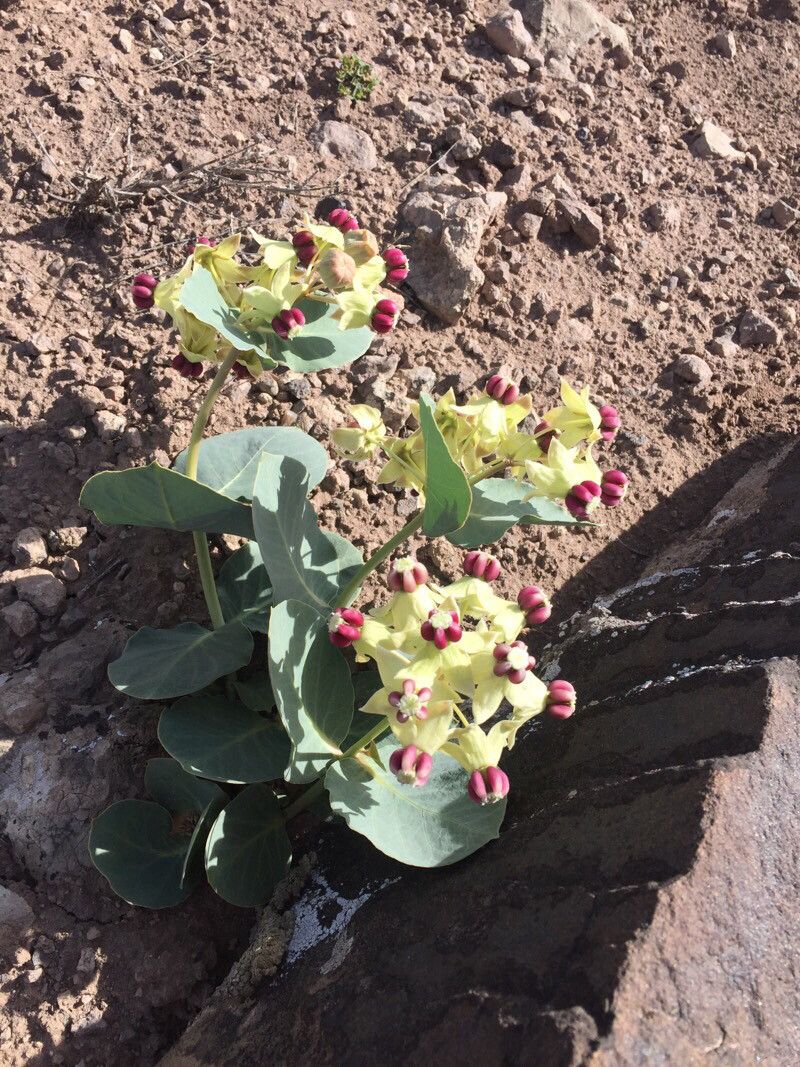
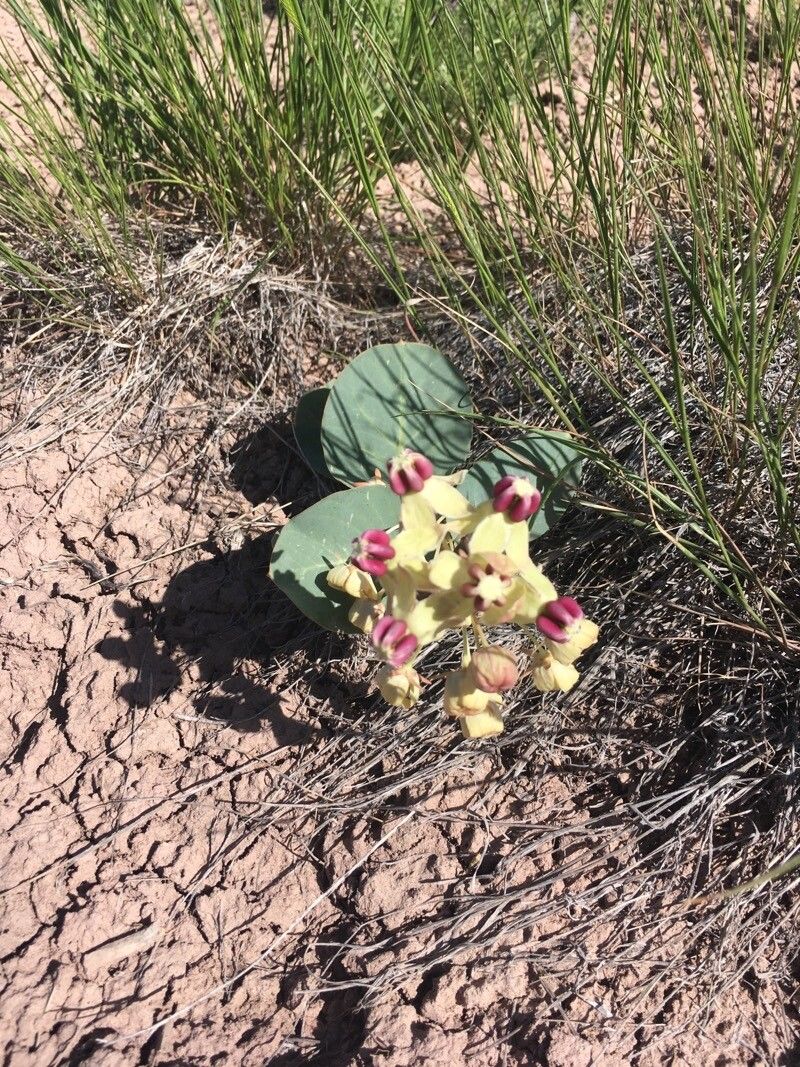
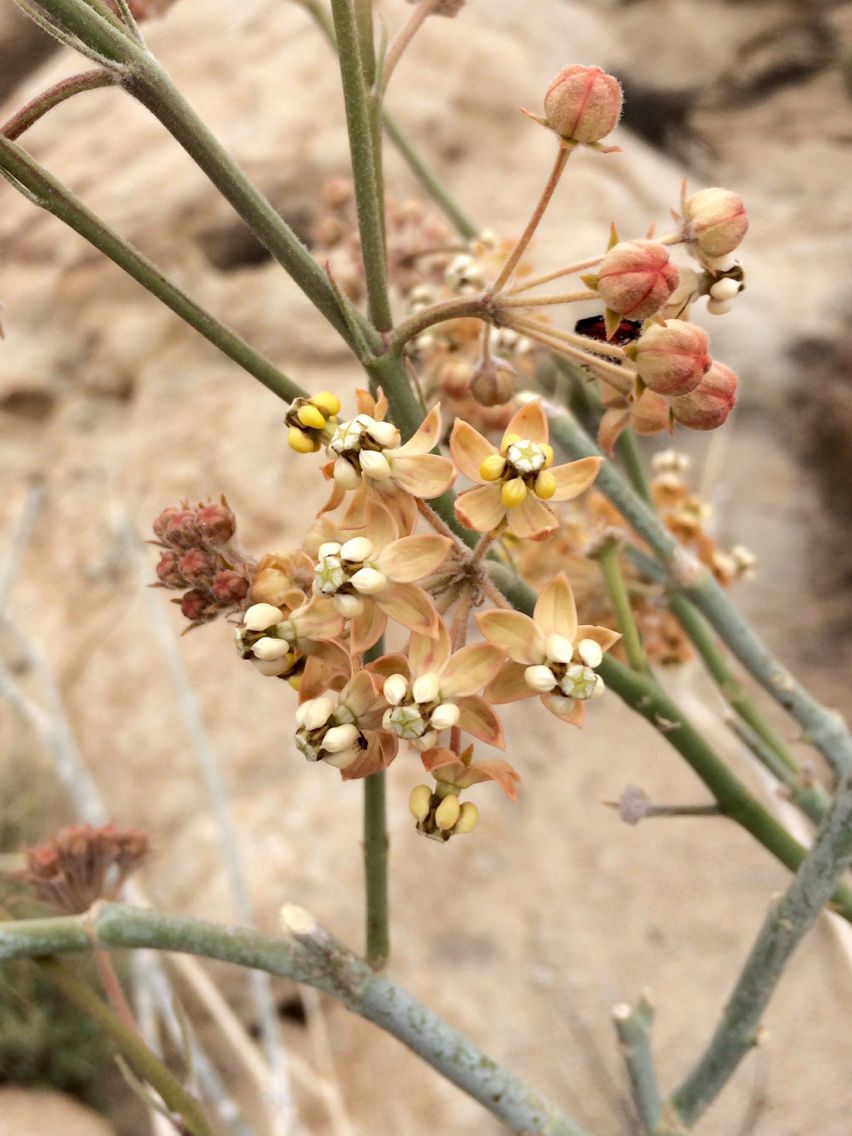
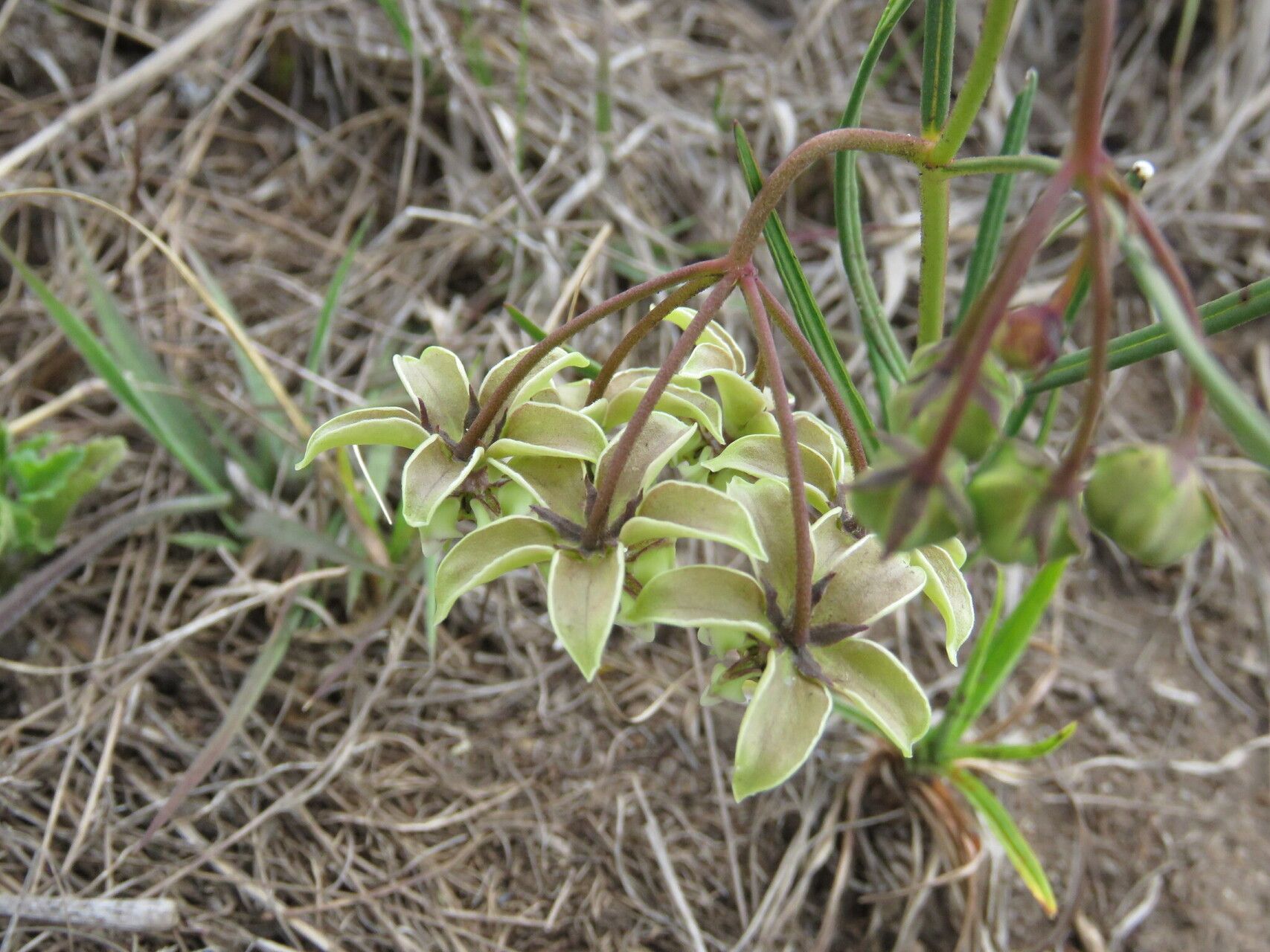
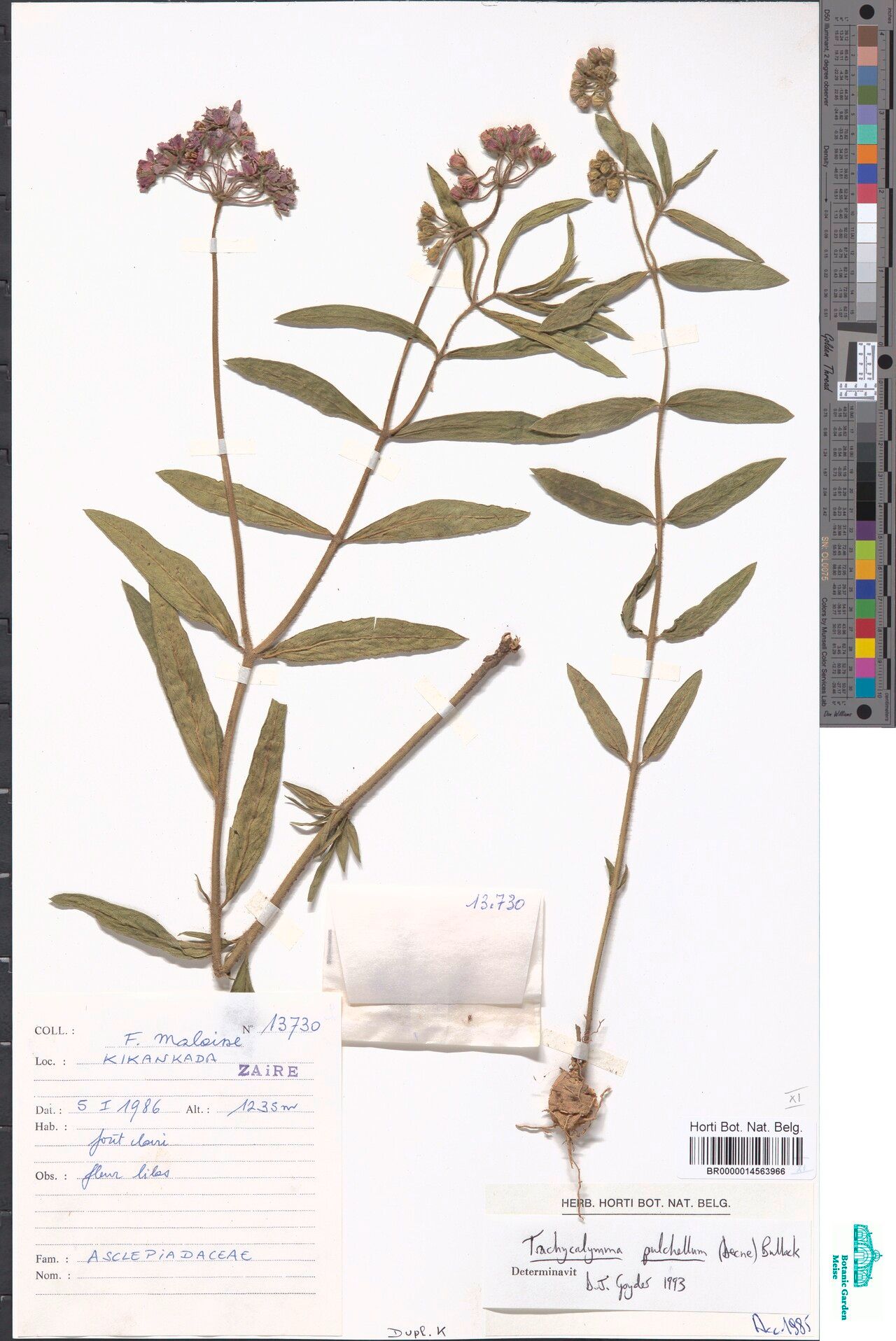
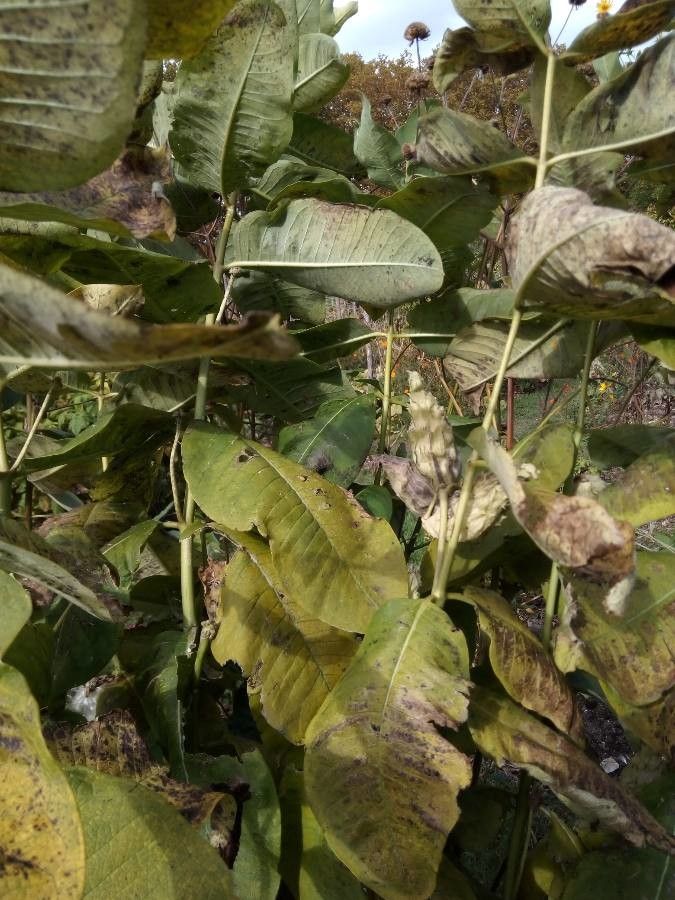
Asclepias cryptoceras is a species of milkweed known by the common names jewel milkweed, pallid milkweed, Humboldt Mountains milkweed, and cow-cabbage. It is native to the Great Basin of western North America, where it grows in many types of habitat, especially dry areas. This is a perennial herb growing low against the ground or drooping. It arises from a fleshy, woody rhizome-like root. The thick leaves are round to heart-shaped and arranged oppositely on the short stem. The inflorescence is a cluster of small flowers with centers of bright to dull pink hoods surrounded by pale-colored reflexed corollas. The fruit is a follicle held erect on a small stalk. The Northern Paiute used the plant as a medicinal remedy, preparing the roots for headache and sores, and the latex for ringworm.
Pallid milkweed shows good disease resistance and typically does not suffer from illnesses. However, it can be affected by pests and diseases found in its surroundings. These problems are generally not serious. For care, the plant requires a moderate level of attention. It should be pruned regularly to maintain a neat appearance and healthy growth. Fertilizing can also encourage flowering. Pallid milkweed is suitable for anyone with outdoor space, such as a garden or patio, and does not require extensive experience in plant care. It may need extra attention if grown indoors.
How to keep Asclepias Cryptoceras.
Water
Water pallid milkweed only when the soil becomes dry. During dry fall and winter conditions, mist the plants to increase humidity, which helps support their overall growth.
Fertilizer
Typically, a single fertilizer application in spring is enough for Pallid milkweed, though periodic feedings can enhance growth. Apply once every one to one-and-a-half months. Fertilization improves the leaves' appearance and function, helping maintain even color and a healthy texture. It also promotes root development and nutrient uptake for lasting plant health.
Pruning
Pallid milkweed features pale yellow to greenish flowers and thrives in dry, well-drained soils. To encourage healthy growth and flowering, remove dead or damaged stems by pruning in early spring. While minimal pruning is needed to maintain the plant's natural shape, regular pruning can boost vigor and provide support for pollinators.
Botanical profile.
- Plant Type
- Herb
- Life Cycle
- Perennial
- Genus
- Asclepias
- Family
- Apocynaceae
- Hardiness Zone
- 6-10
- Mature Height
- 30 cm to 91 cm
Other names.
Reader questions.
What are the sunlight requirements for Pallid milkweed?
Pallid milkweed, botanically known as Asclepias cryptoceras, thrives in conditions where it can receive varying amounts of sunlight throughout the day. It requires full sun, which is defined as having more than 6 hours of sunlight daily, to flourish optimally. However, it can also grow in partial sun, receiving about 3-6 hours of sunlight. It is essential to observe how sunlight moves through your garden, selecting locations that offer a suitable balance of light and shade to ensure the wellbeing of your plants.
What is Pallid Milkweed?
Pallid milkweed, known botanically as Asclepias cryptoceras, is a species of plant. Unfortunately, there is no additional information provided about its essentials or symptoms.