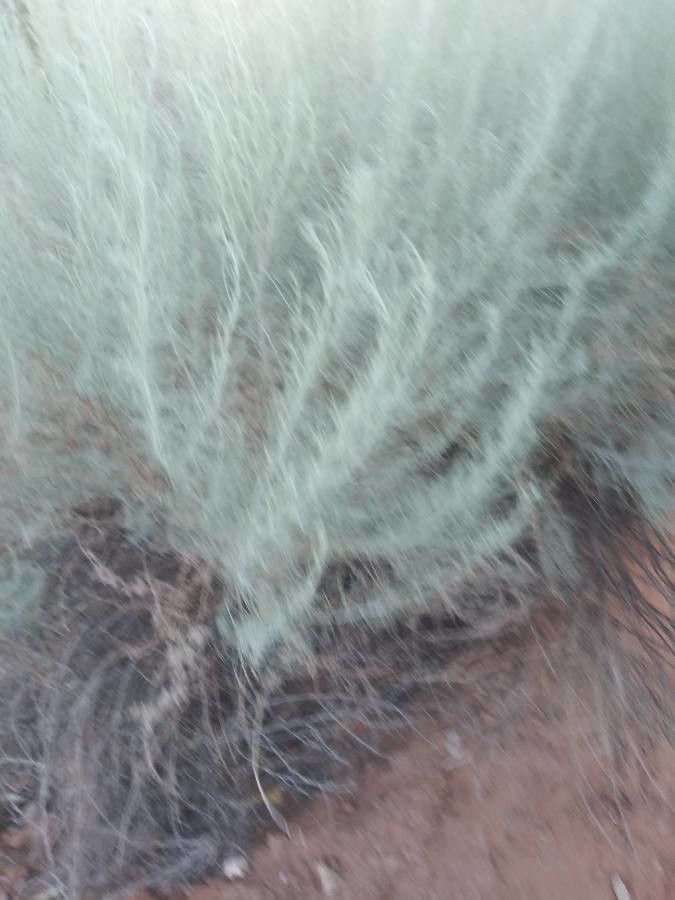
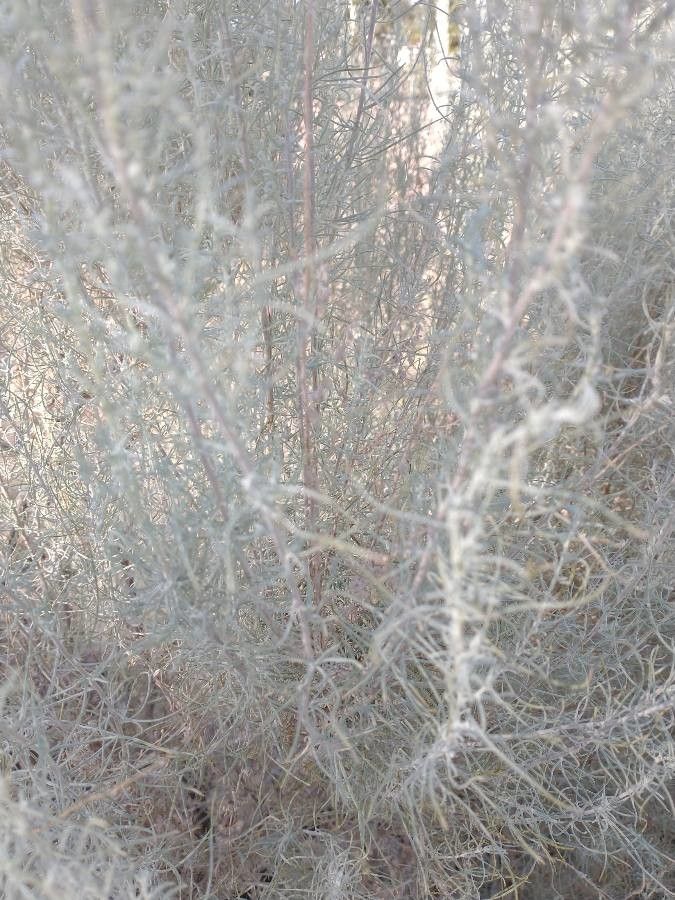
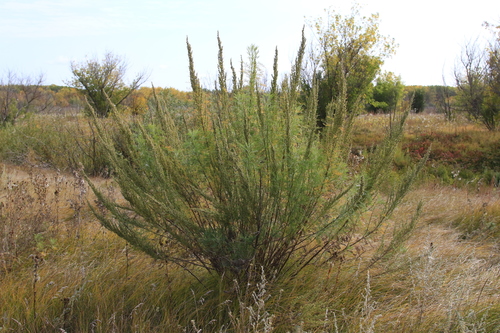
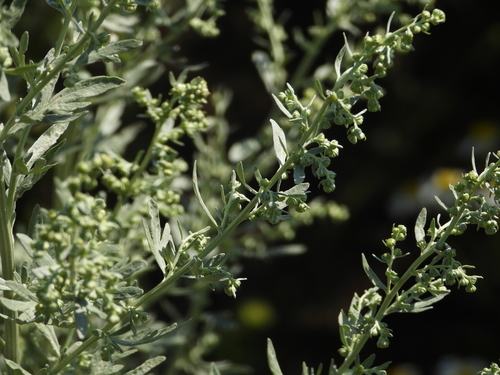
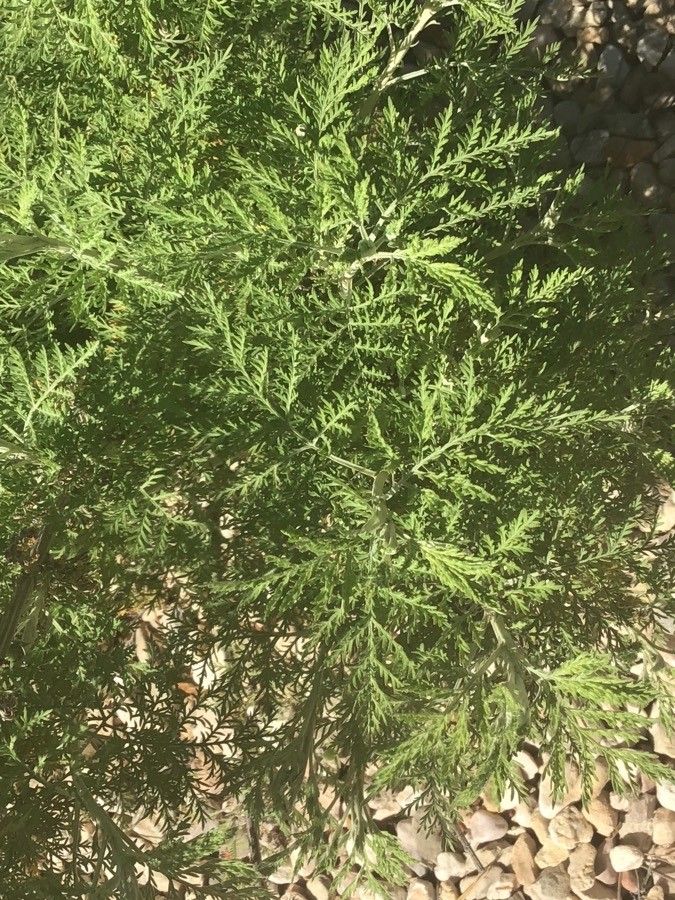
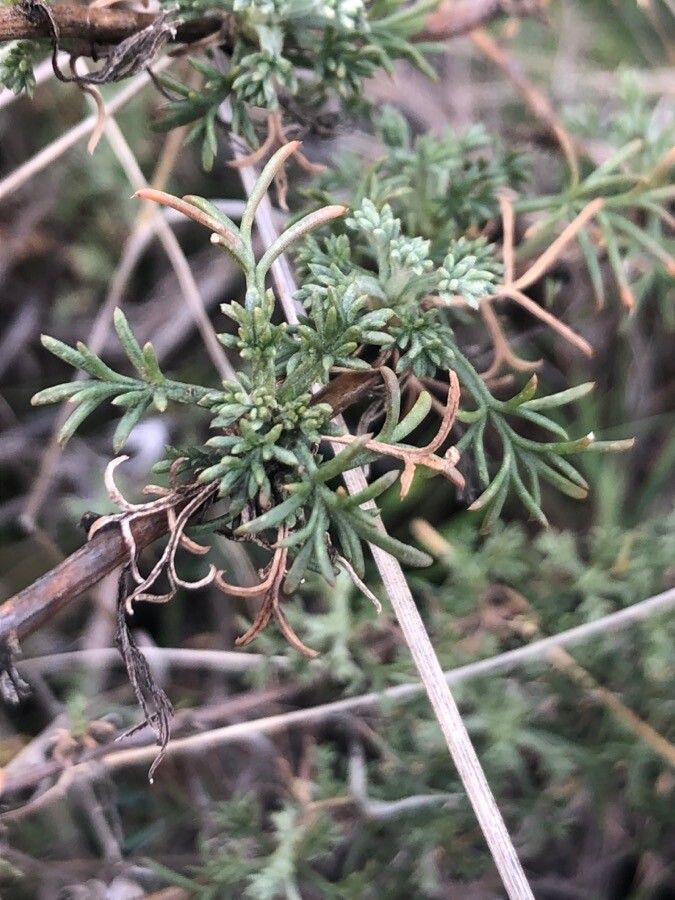
Artemisia filifolia, commonly known as sand sagebrush, is a small shrub native to the western United States. It typically grows to a height of 1 to 3 feet and features narrow, silver-gray leaves covered in fine hairs. The plant produces small yellow flowers during the summer and early fall.
Sand sagebrush is well adapted to arid environments and thrives in sandy soils throughout the Great Plains region of North America, contributing significantly to stabilizing sand dunes and preventing erosion.
For centuries, Native American tribes have utilized this plant for medicinal purposes. They traditionally applied its leaves as a poultice for treating wounds, and brewed tea from the leaves to alleviate colds and other respiratory ailments.
In modern times, Artemisia filifolia is also appreciated for its ornamental qualities. Its silvery foliage makes it a striking addition to xeriscapes and other low-water landscaping projects.
Overall, Artemisia filifolia is a hardy plant with numerous practical applications, playing a significant role in both traditional medicine and contemporary landscaping practices.
Sand sagebrush is resistant to disease and, in general, does not tend to develop illnesses. As for upkeep, the plant is fairly low maintenance. Planted outdoors, it needs only occasional watering, and larger specimens typically do not need pruning. Smaller specimens should be pruned after they finish blooming. Sand sagebrusht is appropriate for anyone with an outdoor area, like a garden or a deck, and does not demand extensive gardening experience.
How to keep Artemisia Filifolia.
Light
Sand sagebrush is native to open habitats, such as sunny meadows and forest margins, which receive abundant light. It flourishes in Full Sun but can also tolerate Partial Sun, adapting well to a range of sunlight conditions.
Water
Sand sagebrush is well-suited for arid regions and is highly tolerant of drought conditions. To keep it healthy, it requires weekly watering, but it's important to avoid over-saturating the soil. Because it thrives in dry climates, sand sagebrush is an ideal choice for xeriscaping and can survive with very little rainfall.
Temperature
Sand sagebrush is highly adaptable to a wide range of climates, from blistering summers to frigid winters. Still, it has a preferred temperature range for healthy growth. Excessively high temperatures can subject the plant to heat and humidity stress, potentially killing it. In areas where temperatures near the lower threshold of its cold tolerance, providing insulation is necessary to protect the plant.
Fertilizer
To encourage healthy growth, fertilize your Sand sagebrush in early spring. Consistent fertilization boosts overall health, leading to robust growth, better tolerance of harsh conditions, and enhanced resistance to pests and diseases. Follow a set fertilization routine for your Sand sagebrush to keep the foliage vibrant with rich color and a full, lush appearance.
Pruning
Sand sagebrush has fragrant leaves and thrives in dry environments. To maintain its health and appearance, prune up to one-third of the plant in early spring. This will help remove dead branches and thin crowded areas, promoting denser foliage and preventing legginess.
Botanical profile.
- Plant Type
- Shrub
- Life Cycle
- Perennial
- Genus
- Artemisia
- Family
- Asteraceae
- Hardiness Zone
- 4-9
- Mature Height
- 0.91 m to 1.83 m
- Mature Spread
- 49 cm to 91 cm
- Leaf Color
- Silver, Gray
- Leaf Type
- Deciduous
- Flower Color
- Yellow
- Flower Size
- 0.20 cm to 0.25 cm
- Bloom Time
- Mid summer, Late summer, Early fall
- Planting Time
- Summer
- Harvest Time
- Early fall, Mid fall
- Native Area
- Mexico
Other names.
Reader questions.
How much sunlight does Sand sagebrush (Artemisia filifolia) require?
Sand sagebrush (Artemisia filifolia) thrives in environments that provide the right balance of light and shade, necessitating careful observation of how sunlight moves through your garden. For optimal growth, it requires 'Full sun' conditions, meaning the plant should receive above 6 hours of sunlight daily. However, it can also tolerate 'Partial sun' conditions, which entail receiving about 3-6 hours of sunlight per day. It's essential to select planting spots in your garden that meet these requirements to ensure the happiness and health of your Sand sagebrush.
What is the botanical name for Sand sagebrush?
The botanical name for Sand sagebrush is Artemisia filifolia. This plant is recognized by its distinctive botanical classification and naming. Understanding its scientific name is important for research and recognizing the specific characteristics that differentiate it from other species.