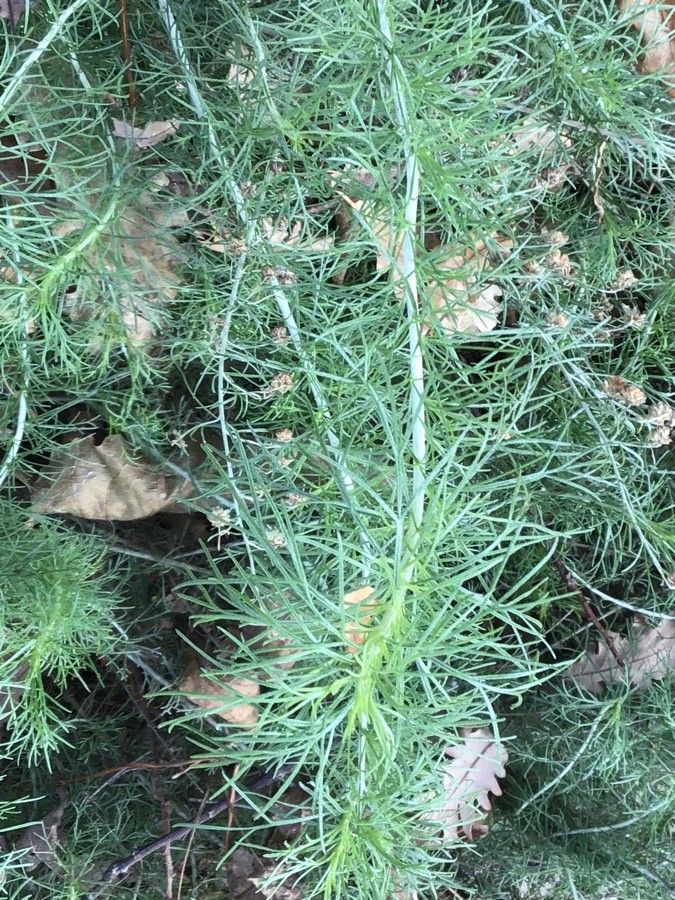
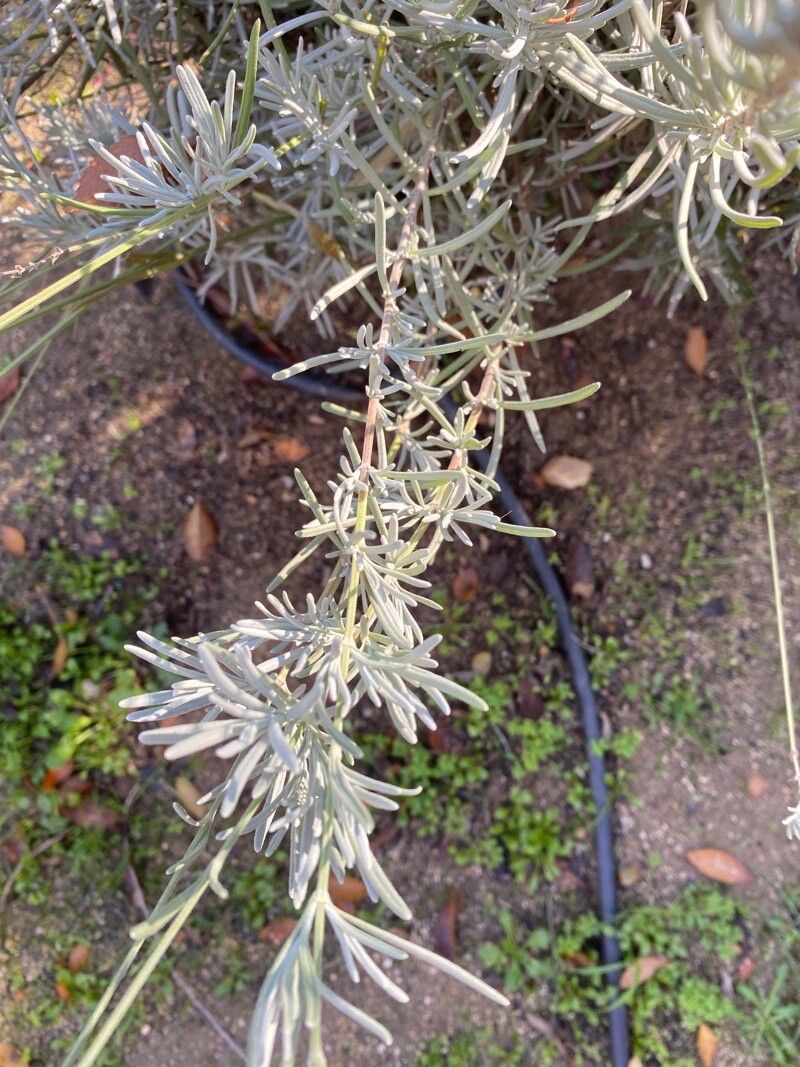
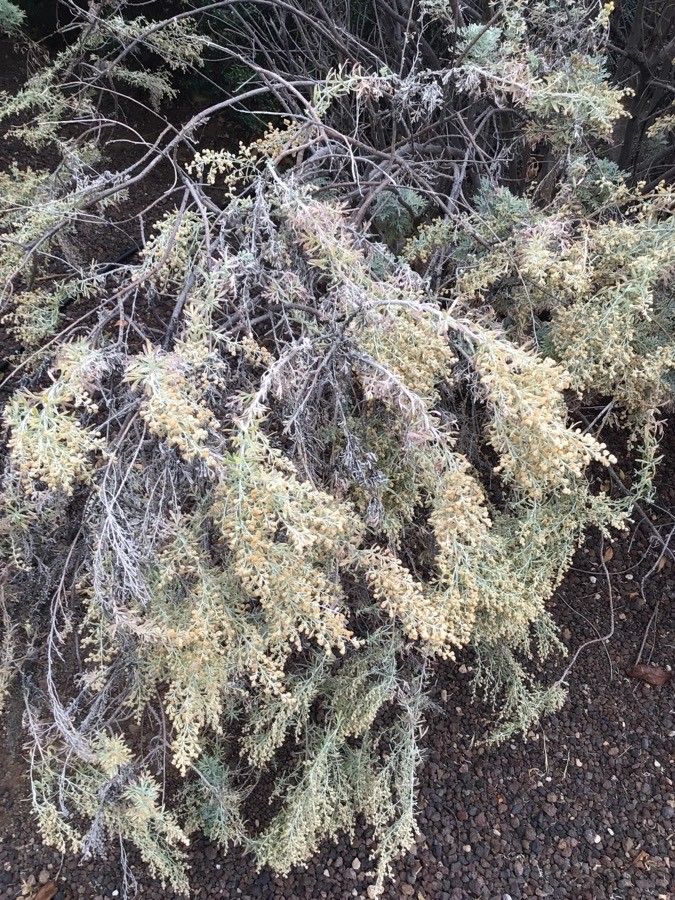
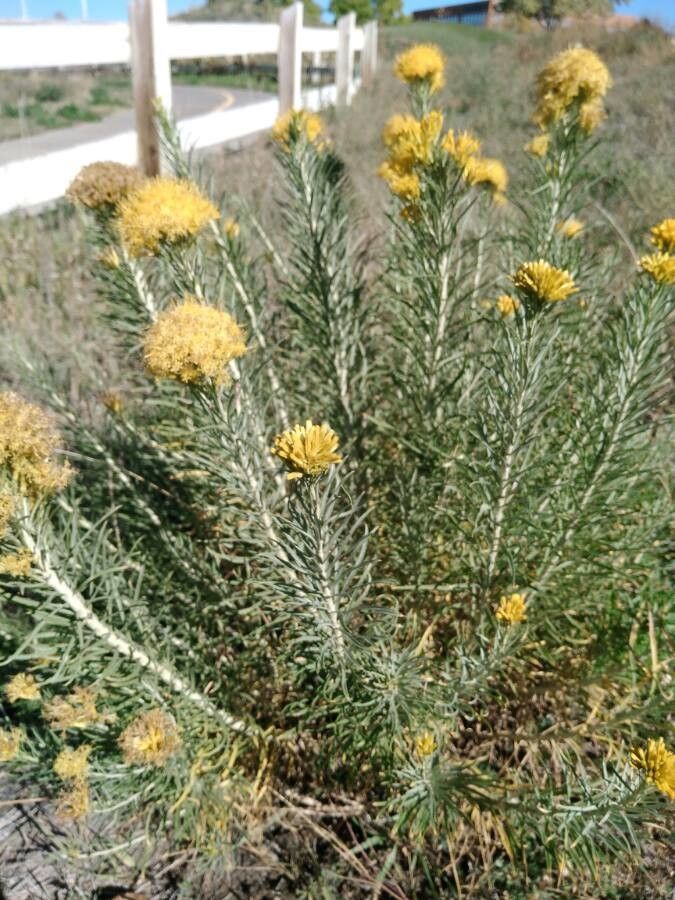
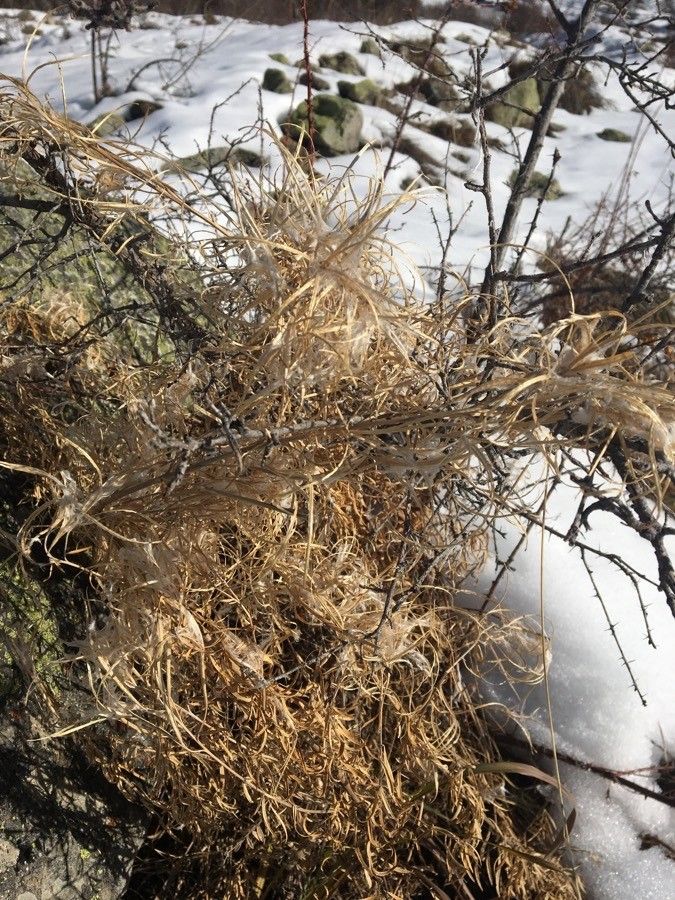
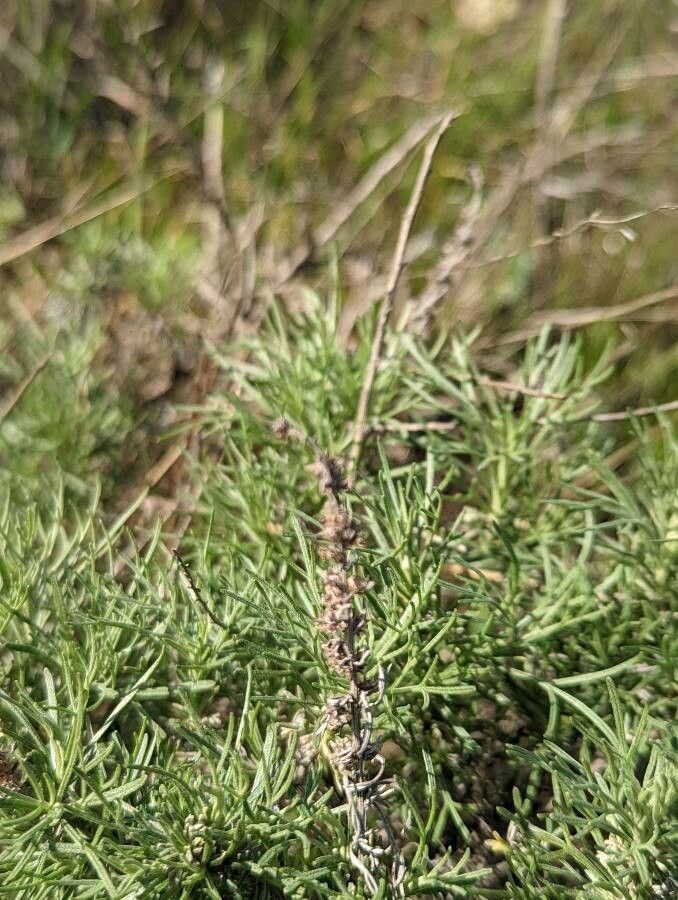
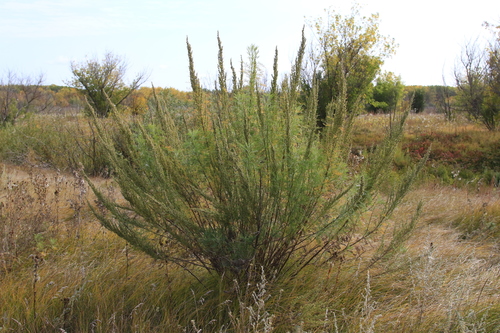
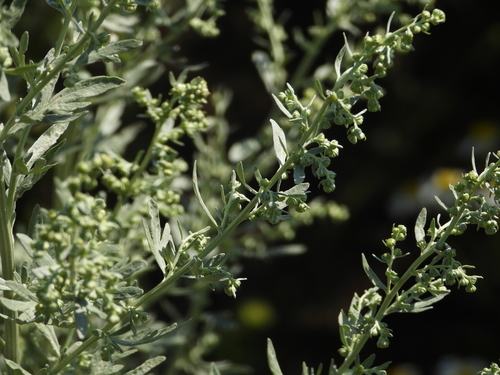
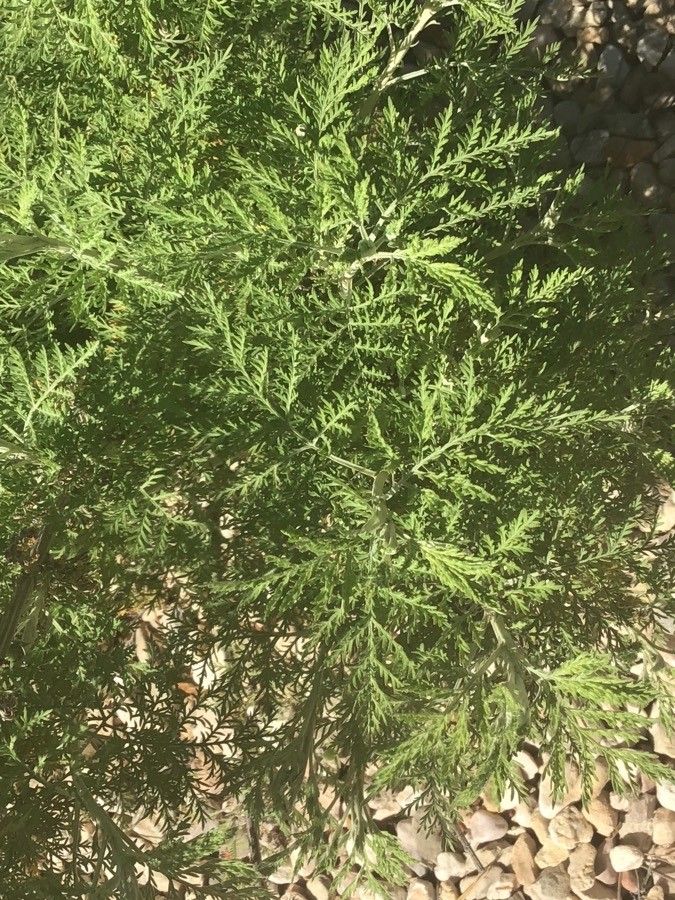
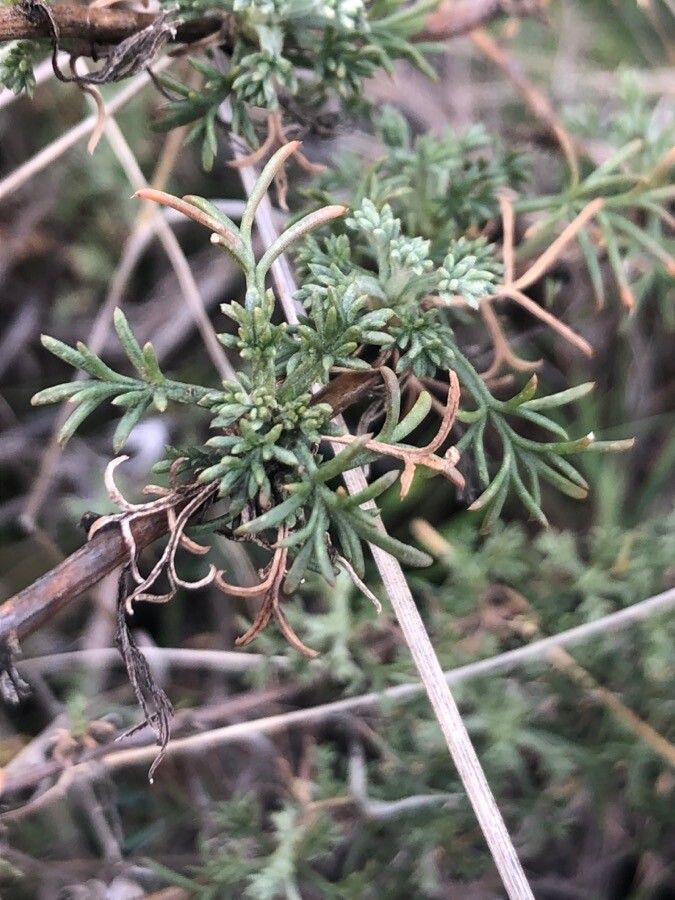
Artemisia californica, commonly known as California sagebrush, is a perennial shrub native to the western United States. It typically grows to a height of 3 to 6 feet and features highly aromatic, silvery-gray leaves. In the fall and winter months, the plant produces small yellow flowers. California sagebrush plays a crucial role in its native ecosystem by providing food and shelter for various wildlife species, including birds, insects, and small mammals. It also has traditional medicinal uses among indigenous peoples. The plant thrives in well-drained soils with full sun or partial shade and can withstand drought conditions once established. It is frequently used in landscaping for its attractive foliage and is also valuable for erosion control and habitat restoration projects. Despite its many benefits, California sagebrush can cause allergic reactions in some individuals due to its volatile oils. Therefore, caution is advised when introducing this plant outside its natural range to prevent potential invasive behavior.
California sagebrush is fairly resistant to disease and generally does not suffer from them. However, it can be vulnerable to pests and diseases present in its environment. These problems are typically mild. Regarding care, this plant needs moderate maintenance. It should be pruned regularly to preserve a neat appearance and support healthy growth. Fertilizing can also aid in encouraging flowering. California sagebrush is well suited for anyone with an outdoor area, such as a garden or patio, and does not require extensive gardening experience. It may need additional care when grown indoors.
How to keep Artemisia Californica.
Light
California sagebrush does well in places with abundant sunlight, yet it also tolerates areas that receive only moderate sun. Sunlight is important for its healthy growth. This hardy plant comes from habitats with plentiful sun. Too much or too little sun can impede its growth, indicating its adaptation to a balanced amount of sun exposure.
Water
California sagebrush thrives in dry, coastal scrub environments and is known for its remarkable drought tolerance. It prefers drier conditions and typically requires watering just once every one to two weeks. This plant is adapted to make use of moisture from coastal fogs and grows best in well-draining soils. Due to its resilience and adaptability, California sagebrush is ideally suited for outdoor growth.
Temperature
For optimal growth, the California sagebrush prefers temperatures between 59℉ and 95℉ (15℃ to 35℃). In its native habitat, the plant is found in areas with mild coastal climates. During the hot summer months, the plant can benefit from light afternoon shade or supplemental watering to help it adjust to high temperatures.
Fertilizer
Typically one fertilizer application in spring suffices for California sagebrush, but repeated feedings can promote maximum growth. Feed every four to six weeks. Fertilization improves leaf appearance and function, helping maintain even color and a healthy texture. It also encourages root development and better nutrient uptake for long-term plant health.
Pruning
To keep California sagebrush healthy and vibrant, it is beneficial to prune it regularly, ideally from early to late spring. This involves removing any dead or overgrown branches. During the growing season, light pruning encourages bushier growth. However, it is important to avoid heavy pruning in the summer, as this can stress the plant. Making clean cuts is crucial for improving both its appearance and overall vigor.
Pot & Repot
When repotting California sagebrush, select a container 1–2 inches (2.5–5.1 cm) larger with good drainage. Use a well-draining potting mix. Repot in spring or fall, making sure the root ball sits slightly below the rim of the flower pot. Water thoroughly after repotting and place in a warm spot with indirect sunlight.
Botanical profile.
- Plant Type
- Herb, Shrub
- Life Cycle
- Perennial
- Genus
- Artemisia
- Family
- Asteraceae
- Hardiness Zone
- 7-9
- Mature Height
- 1.83 m
- Mature Spread
- 1.83 m
- Leaf Color
- Green
- Leaf Type
- Evergreen
- Flower Color
- Tan
- Flower Size
- 0.20 cm to 0.25 cm
- Bloom Time
- Mid summer, Late summer
- Planting Time
- Spring
- Harvest Time
- Fall, Winter
- Native Area
- Mexico
Other names.
Reader questions.
What should I do if I give my California sagebrush too much or too little water?
Overwatering is a more common issue for California sagebrush and can cause wilting, yellowing, and diseases like root rot, mold, and mildew. Underwatering is less common but can make the leaves brittle and brown. It's important to spot the signs of overwatering early to prevent irreversible damage. If you notice overwatering symptoms, reduce watering and check the soil's drainage. If underwatering is the problem, simply water more regularly until the signs improve.
Why should I add fertilizer to my California sagebrush?
To keep your California sagebrush looking great and functioning properly, proper fertilization is key. Fertilization has a big impact on the leaves, helping them maintain consistent color and a healthy texture. But it doesn't stop there - fertilization also works below the surface, aiding in the growth of new roots and maintaining the existing ones. This not only keeps your plant healthy now, but also improves its ability to absorb nutrients from the soil in the future.
What are the sunlight requirements for California sagebrush?
California sagebrush requires locations with abundant sunlight but also does well in areas with moderate sun exposure. Full sun conditions mean the plant should receive above 6 hours of sunlight, while partial sun refers to about 3-6 hours of sunlight daily. It's essential to observe the movement of sunlight through your garden to ensure plants are placed in spots that offer a balance of light and shade, suitable for their growth needs. This practice is crucial for the plant's happiness and healthy development.
What are the optimal growth temperatures for California sagebrush?
The California sagebrush plant thrives best within a temperature range of 59°F to 95°F (15°C to 35°C). This temperature range is optimal for its growth, particularly in its native mild coastal climate. To cope with hot summer temperatures, the plant may require light afternoon shade or additional watering.
How frequently should I water my California sagebrush?
If your California sagebrush is planted in a pot, the most accurate way to determine if it needs water is by checking the soil. Simply stick your finger into the soil and if the first two to three inches are dry, it's time to water it. If you're growing your California sagebrush outdoors in the ground, you can use the same method. When the top few inches of soil have dried out, it is time to water the plant. Usually, this means watering once a week during spring and early fall. However, during extremely hot weather, you may need to water the plant twice a week or more. Despite this, it's worth mentioning that mature and well-established California sagebrush can tolerate dry conditions quite well.
When should I put fertilizer on my California sagebrush?
If you grow California sagebrush outdoors, it will start growing new leaves in early spring. This is when you should start fertilizing it. Usually, one application of fertilizer in the spring is enough for the sagebrush to grow well. However, if you want it to grow even more, you can feed it multiple times throughout the spring and early summer. In this case, you can fertilize it about once every month to a month and a half.
How does artificial lighting support plant growth, and what are the guidelines for using it?
Indoor plants, including California sagebrush when grown inside, require adequate lighting for optimal growth, especially when natural sunlight is scarce, such as in winter or less sunny spaces. Artificial lighting, such as LED lights, can be an essential solution, providing the specific wavelengths needed by plants. The guidelines include choosing the right type of artificial light, with full sun plants needing 30-50W/sq ft, partial sun plants requiring 20-30W/sq ft, and full shade plants needing 10-20W/sq ft. The light source should be placed 12-36 inches above the plant, mimicking natural sunlight, and the duration should replicate natural daylight hours, which is typically 8-12 hours per day for most plant species.
How does California sagebrush handle cold weather?
California sagebrush exhibits strong cold resistance and usually doesn't need special frost protection measures during winter. However, if temperatures are expected to fall below -15°C, protective steps should be taken, such as covering the plant with soil or straw. It's also advisable to water the plant thoroughly before the first freeze in autumn to keep the soil moist, which helps prevent drought and water scarcity during winter and early spring.
How much water does my California sagebrush require?
When you need to water your California sagebrush, don't be afraid to give it a lot of water. Make sure the top two to three inches of soil are dry, and then give the plant a long, thorough watering. You want to wet the entire soil, so add enough water for it to flow out of the pot's drainage holes. If you don't see water coming out, you may not have watered enough. However, make sure the soil doesn't become waterlogged, as this can harm the plant. If no water is draining, it could mean the soil doesn't drain well, which is bad for the plant's health. If the sagebrush is outside, one inch of rain per week should be enough.
When is it best to not put fertilizer on my California sagebrush?
During late fall and winter, your California sagebrush goes through a dormant phase and stops producing new growth. It is important to avoid fertilizing it during this time. If you choose to fertilize your California sagebrush multiple times during spring and summer, you should start reducing the amount of fertilizer as summer approaches since the growth rate of the sagebrush will slow down. In general, it is not recommended to fertilize your California sagebrush during extremely hot weather or when the soil is excessively dry as it can cause stress and premature death of the plant.
What are the symptoms of inadequate lighting for California sagebrush?
When California sagebrush is grown in conditions with insufficient lighting, several symptoms may appear. These include the growth of smaller new leaves, leggy or sparse growth with longer spaces between leaves or stems, faster leaf drop, deceleration or halting of new growth, paler new leaves indicating a lack of chlorophyll and essential nutrients, chlorosis or the yellowing of leaves due to the breakdown of chlorophyll, sunscald characterized by pale, bleached, or necrotic areas on leaves or stems from intense sunlight exposure, leaf curling as a defense mechanism against excessive sunlight, wilting due to loss of turgor pressure and increased water loss, and leaf scorching which appears as brown, dry, and crispy leaf edges from too much sunlight.
What should I do if my California sagebrush experiences temperatures below -15°C?
If the temperature drops below -15°C, California sagebrush might not show immediate changes, but its ability to sprout in spring could decrease or even be inhibited. In such situations, it is recommended to remove any parts of the plant that fail to sprout come springtime.