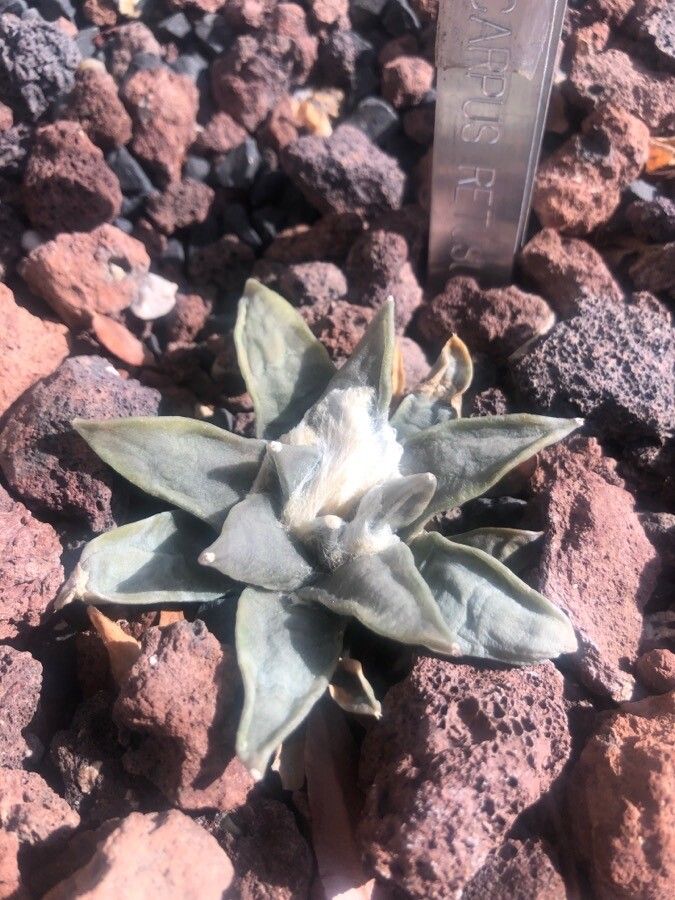
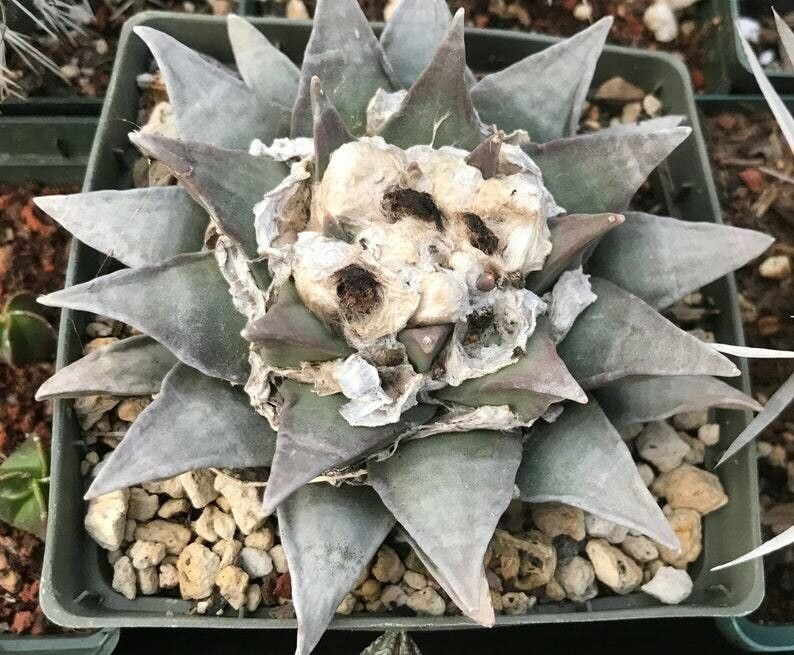
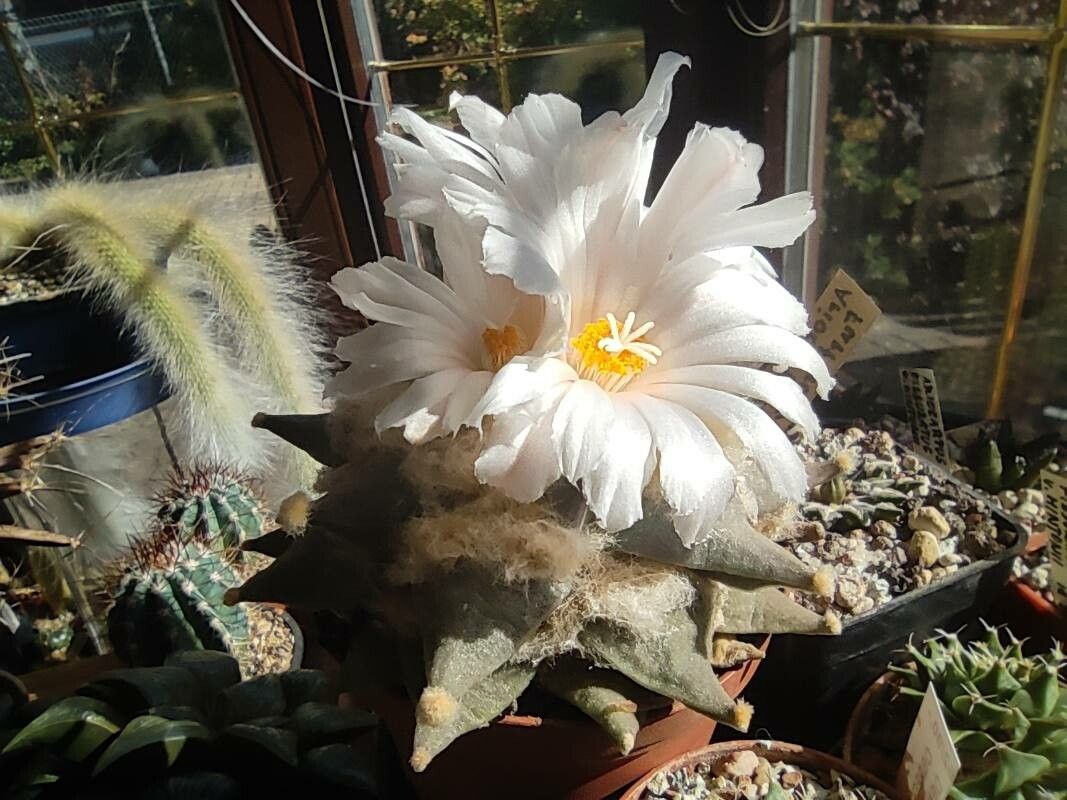
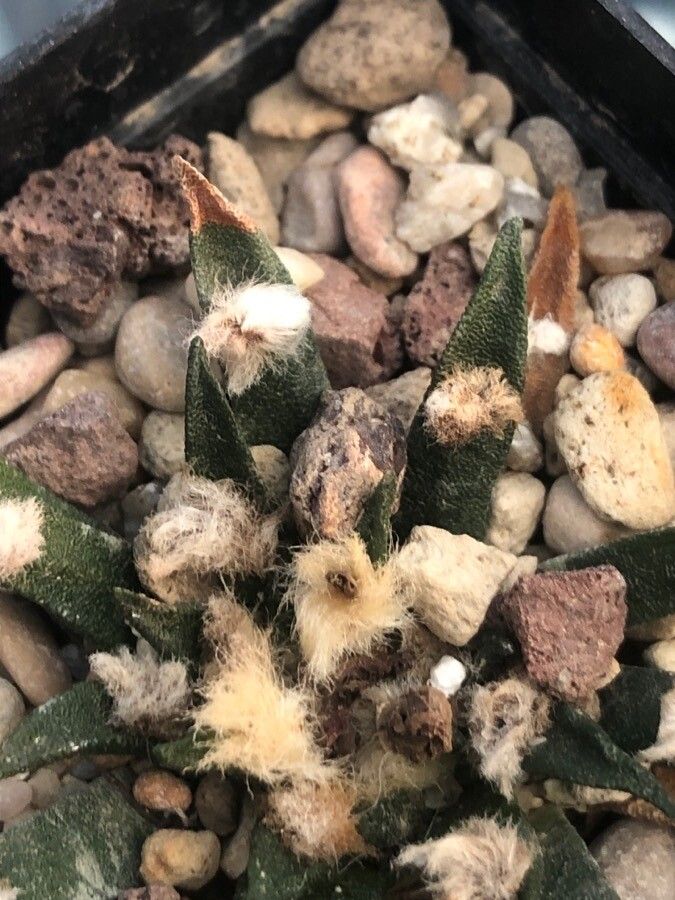
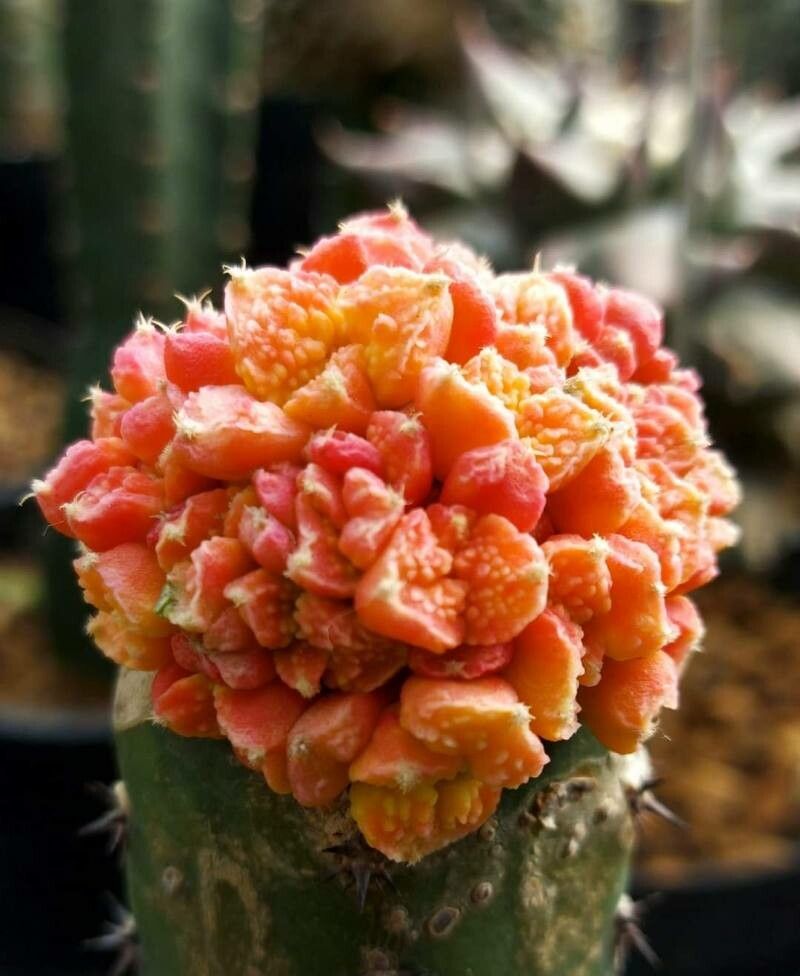
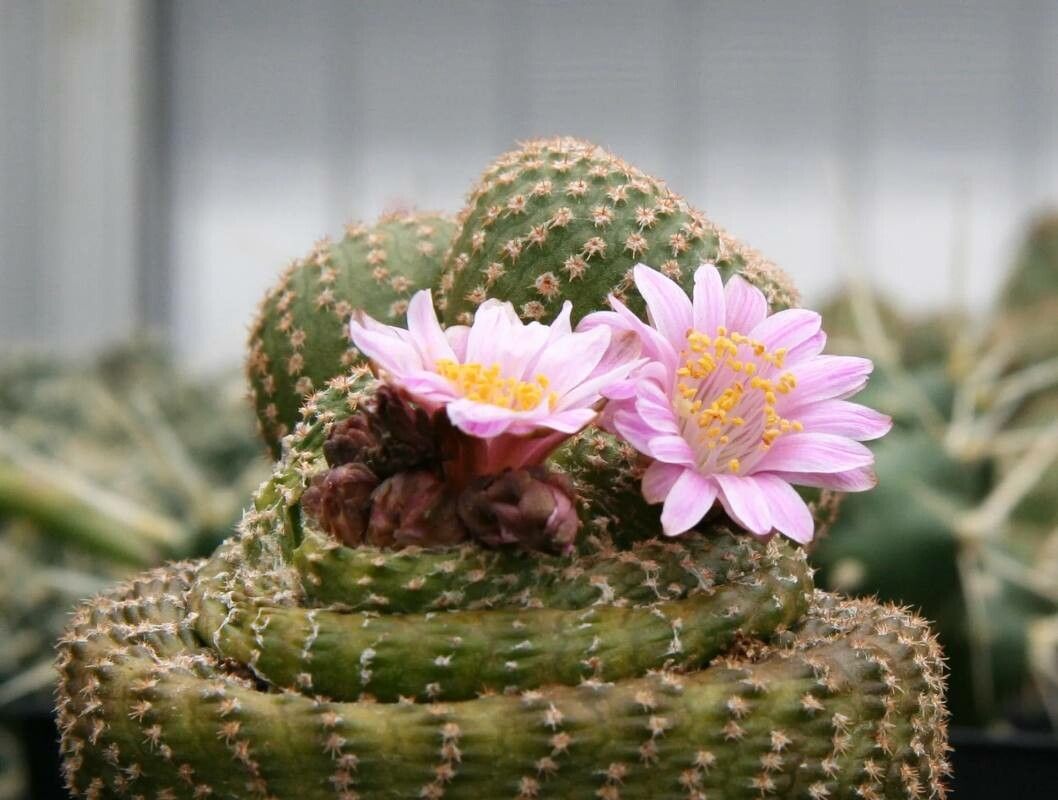
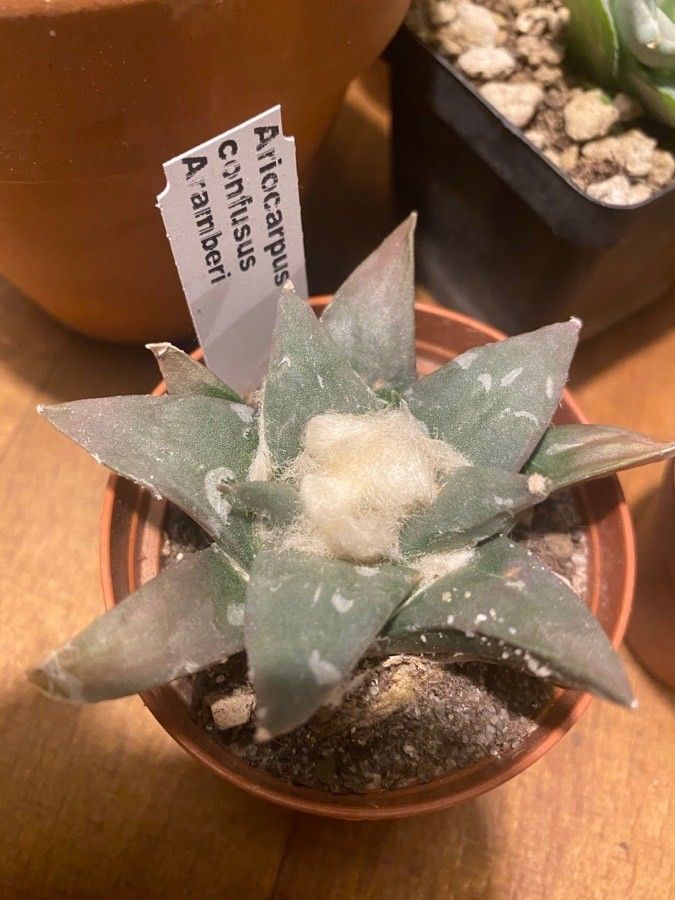
Ariocarpus retusus is a species of cactus, from the genus Ariocarpus, found mainly in Mexico. It is one of the largest and fastest-growing species in this genus known for a slow rate of growth. Despite its slow growth, often taking ten years to reach flowering age, the retusus is a desirable cactus for cultivation, having attractive flowers and an unusual form for a cactus. It is also one of the most easily cultivated species in the genus.
Seven stars exhibits good resistance to disease and tolerates routine care without becoming ill easily. It can, however, be vulnerable to mealybugs; these pests may cause some damage but are generally not a severe threat. In terms of care, Seven stars is drought-tolerant and does not need frequent watering. It can endure long stretches without water and requires little fertilizer. That said, if lighting is poor and it is overwatered, it is highly prone to root rot. Overall, Seven stars is appropriate for people who prefer to spend less time on plant care, though it remains important to know and meet its basic needs. It is especially suited to those who are away for extended periods and may forget to water their plants regularly.
How to keep Ariocarpus Retusus.
Light
The seven stars enjoys abundant sunlight all day and does best under an open sky. It can tolerate sparse sun but its growth may be limited. Provide shade during the most intense sunlight periods, as overexposure can cause damage. In its natural habitat it grows in places with plentiful sun, which is essential to its health.
Water
Adapted to arid conditions, the seven stars plant is drought-tolerant and efficiently stores water. It requires infrequent watering, about once every four weeks, and needs well-draining soil. Thriving in full sunlight outdoors, this evergreen plant conserves water through its thick, fleshy leaves during hot weather.
Temperature
Native to climates where temperatures fall between 68 and 100 °F (20 and 38 ℃), seven stars does best under those same conditions. Across seasons, slight adjustments may be needed to keep temperatures within this range, especially in regions prone to extreme heat or cold.
Fertilizer
Seven stars need only light fertilizer applications once or twice a year during the growing season. Do not fertilize in winter or in summer while the plant is dormant. Cut back on fertilizer for plants that have been repotted, and wait a couple of months after repotting before applying any. Fertilizing supports healthy growth and promotes blooms.
Pruning
Seven Stars requires minimal pruning. To maintain optimal health, remove withered flowers and branches so that the plant can direct nutrients toward healthy growth.
Pot & Repot
Repot Seven stars in spring or summer, selecting a pot slightly larger than the current one that provides good drainage. Use a sandy or gritty cactus mix that drains well. Handle the plant gently to avoid its spines. Let the cactus dry out before repotting to help prevent root rot. After repotting, wait one week before watering so the roots can heal.
Botanical profile.
- Plant Type
- Succulent
- Life Cycle
- Perennial
- Genus
- Ariocarpus
- Family
- Cactaceae
- Hardiness Zone
- 9-11
- Mature Height
- 30 cm to 25 cm
- Mature Spread
- 40 cm to 30 cm
- Leaf Color
- Gray, Dark Gray
- Leaf Type
- Semi-evergreen
- Flower Color
- White, Pink
- Flower Size
- 2.54 cm to 5.08 cm
- Bloom Time
- Late summer, Early fall, Mid fall
- Planting Time
- Spring
- Harvest Time
- Mid fall, Late fall, Early winter
- Native Area
- Mexico
Other names.
Reader questions.
What are the sunlight requirements for Seven Stars (Ariocarpus retusus)?
Seven Stars requires abundant exposure to sunlight throughout the day for optimal growth, thriving best under an open sky. It can tolerate some shade, but with limited growth. To prevent damage, it's important to provide shading during the most intense periods of sunlight. Observing how sunlight moves through your garden helps in selecting spots that ensure a balance of light and shade for your plants, optimizing their health. Full sun means above 6 hours of sunlight while partial sun refers to about 3-6 hours of sunlight.
What is the optimal temperature range for Seven Stars growth?
Seven Stars, scientifically known as Ariocarpus retusus, thrives in environments with temperatures between 68 to 100°F (20 to 38°C). To ensure optimal growth, it's necessary to maintain this temperature range throughout the different seasons, making slight adjustments as needed in response to extreme heat or cold. During winter, the plant gradually stops growing and enters a dormant state, necessitating its move indoors for cultivation in regions where outdoor temperatures drop below 0°C. Choosing a location near a south-facing window can provide adequate sunlight, and if necessary, supplemental lighting can be used to make up for insufficient natural light. Watering practices should also be adjusted based on temperature; as growth slows below 20°C, watering should be reduced or stopped to prevent root rot.
How can artificial lighting be used for Seven Stars when natural sunlight is insufficient?
When natural sunlight is insufficient, particularly in winter or less sunny spaces, artificial lighting is crucial for the growth of indoor plants like Seven Stars. Choose the right type of artificial light, such as LED lights, which can be customized to provide specific wavelengths needed by your plants. For full sun plants, 30-50W/sq ft of artificial light is needed, partial sun plants require 20-30W/sq ft, and full shade plants need 10-20W/sq ft. The light source should be placed 12-36 inches above the plant to mimic natural sunlight, and most plants need 8-12 hours of light per day.
How should Seven Stars be cared for during low temperatures?
Seven Stars is not tolerant of low temperatures and grows best above 20°C, requiring special care during winter to ensure it remains above 0°C. Exposure to temperatures below -5°C may result in the plant becoming weak, wilting, and susceptible to root rot. In the event of mild frost damage, symptoms may not appear immediately but can lead to gradual withering after a week. To address frost damage, it's advised to trim off frostbitten areas and inspect the roots for rot, removing any rotted parts. Propagating through cuttings can help regenerate the plant. Moving the plant indoors to a warm environment and placing it near a south-facing window will ensure it receives ample sunlight. Supplemental lighting can be utilized if natural light is insufficient.
What symptoms indicate light deficiency in Seven Stars?
Symptoms of light deficiency in Seven Stars include small leaves, leggy or sparse growth, faster leaf drop, slower or no new growth, lighter-colored new leaves, chlorosis, sunscald, leaf curling, wilting, and leaf scorching. These symptoms suggest the plants are not receiving adequate light, impacting their growth and health adversely.
What are the symptoms and solutions for Seven Stars at high temperatures?
During summer, it's crucial to keep Seven Stars below 38°C as temperatures exceeding 43°C halt its growth and lead to water loss, wilting, and an increased risk of sunburn. To manage high-temperature stress, it's necessary to remove sunburned and rotten parts of the plant. Providing shade from the afternoon sunlight until recovery and growth resume is essential. Additionally, for plants suffering from root rot under these conditions, watering should be ceased until new roots develop, indicating recovery.
What solutions can alleviate light deficiency symptoms in Seven Stars?
To combat light deficiency in Seven Stars, gradually move your plants to locations with at least 6 hours of direct sunlight daily. For indoor plants, consider using a south-facing window or artificial lights such as desk, ceiling lamps, or professional grow lights for a minimum of 8 hours daily. Outdoors, adapt plants slowly to sunnier spots to avoid sunburn. If obstruction by trees is an issue, prune to allow more sunlight through. For ground plants, transplantation during the dormant period can help move them to better-lit locations. Note that parts of the plant previously damaged by insufficient light may not recover, but new growth will be healthy with improved light conditions.