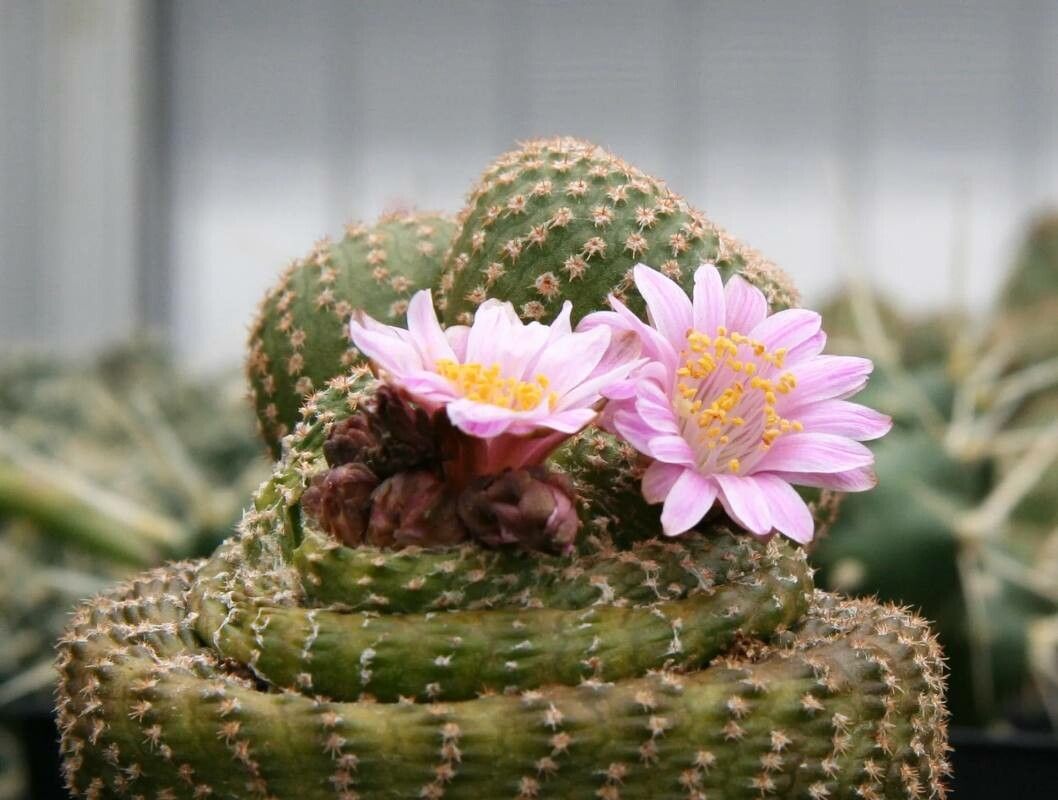
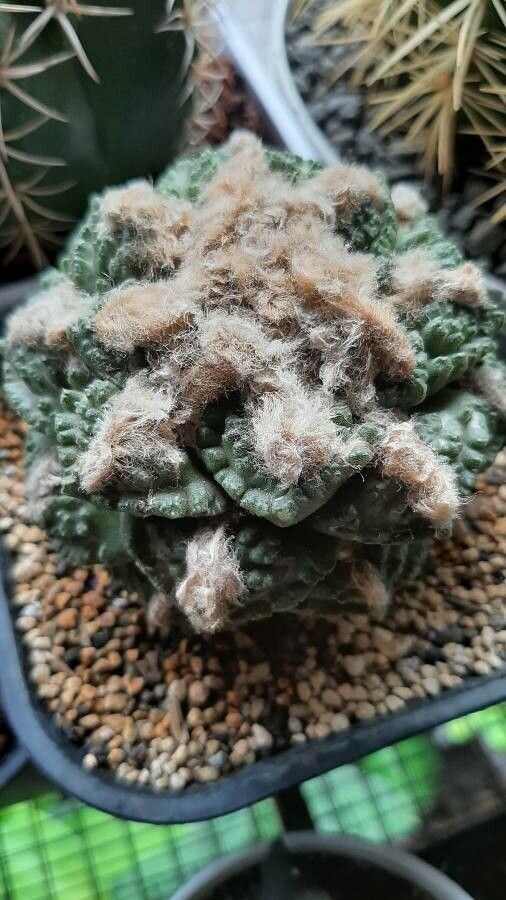
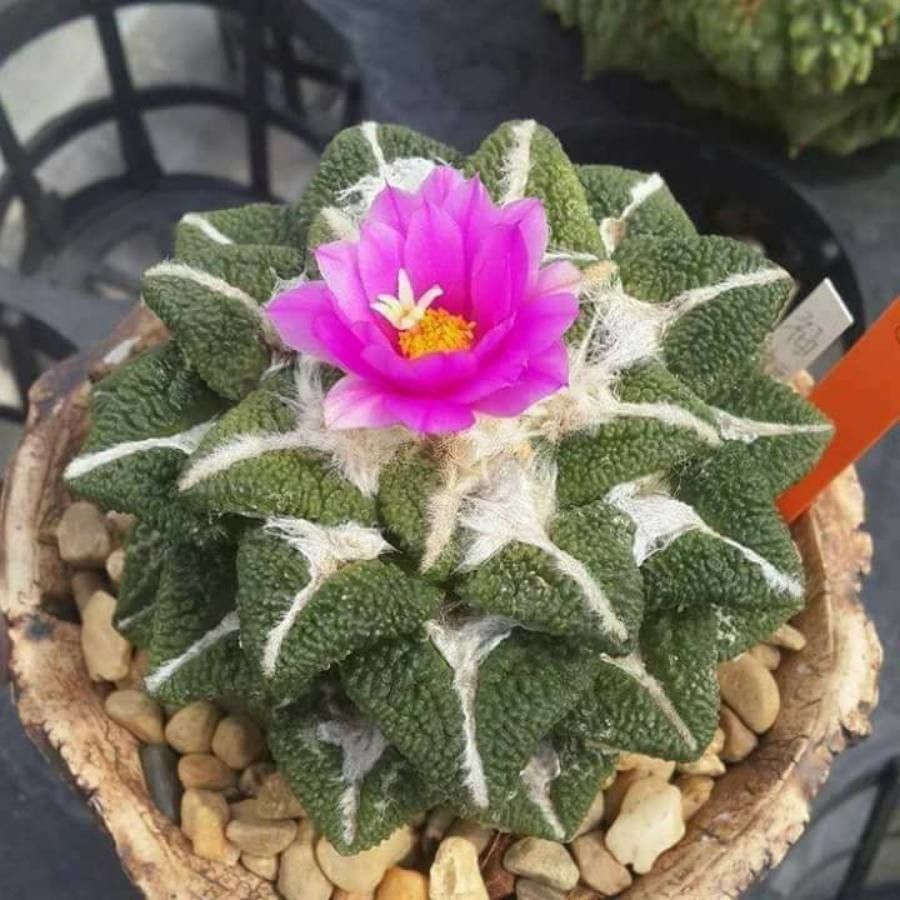
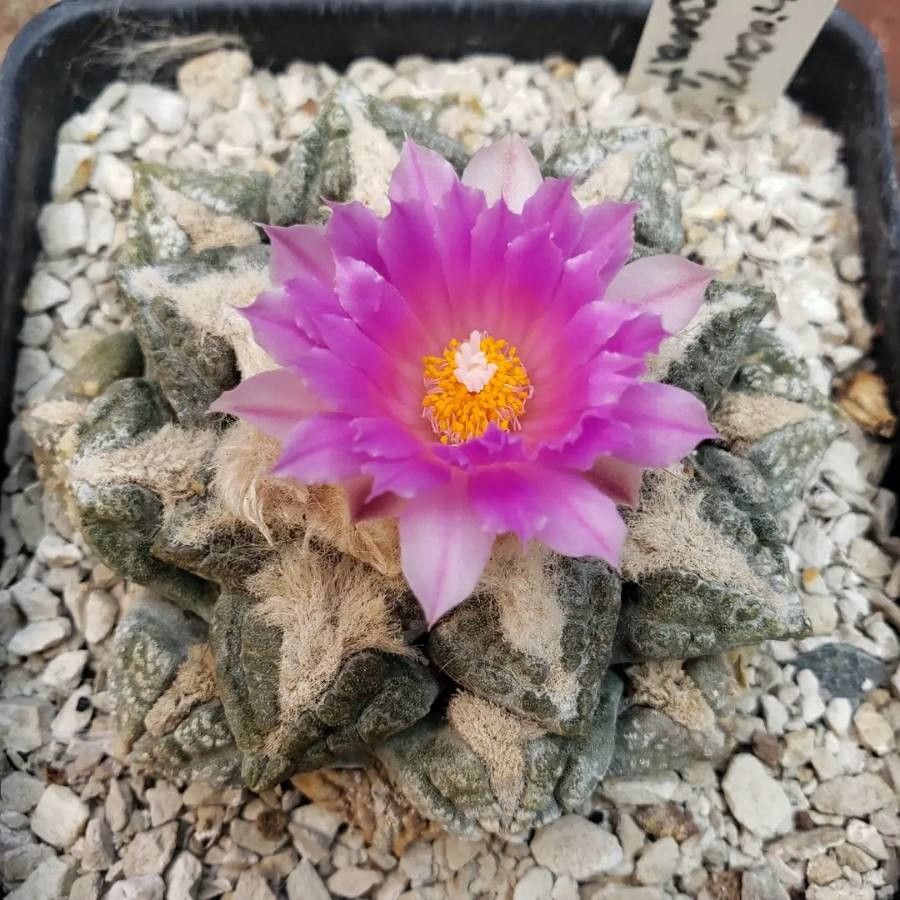
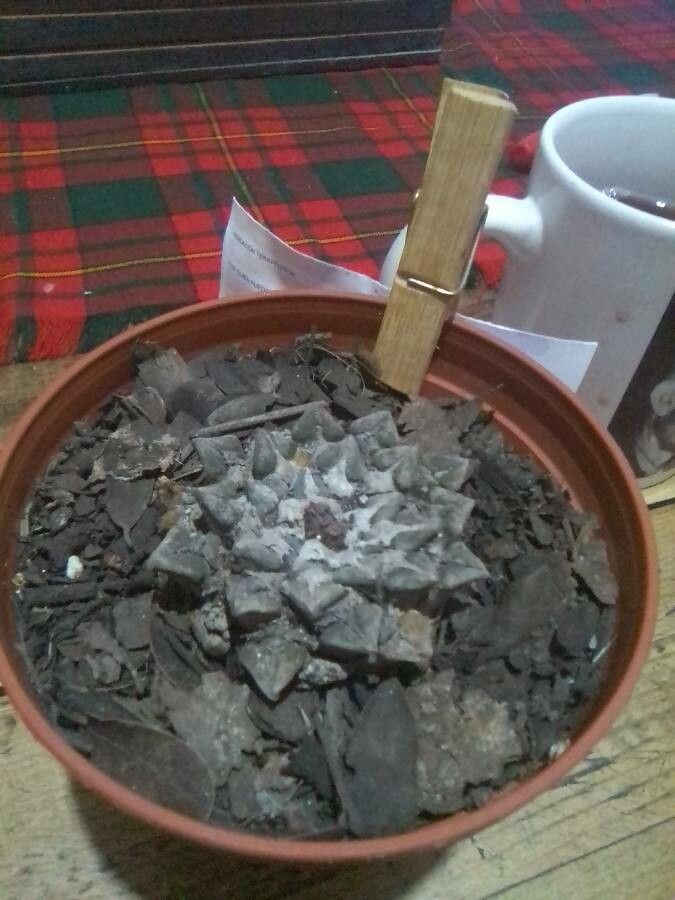
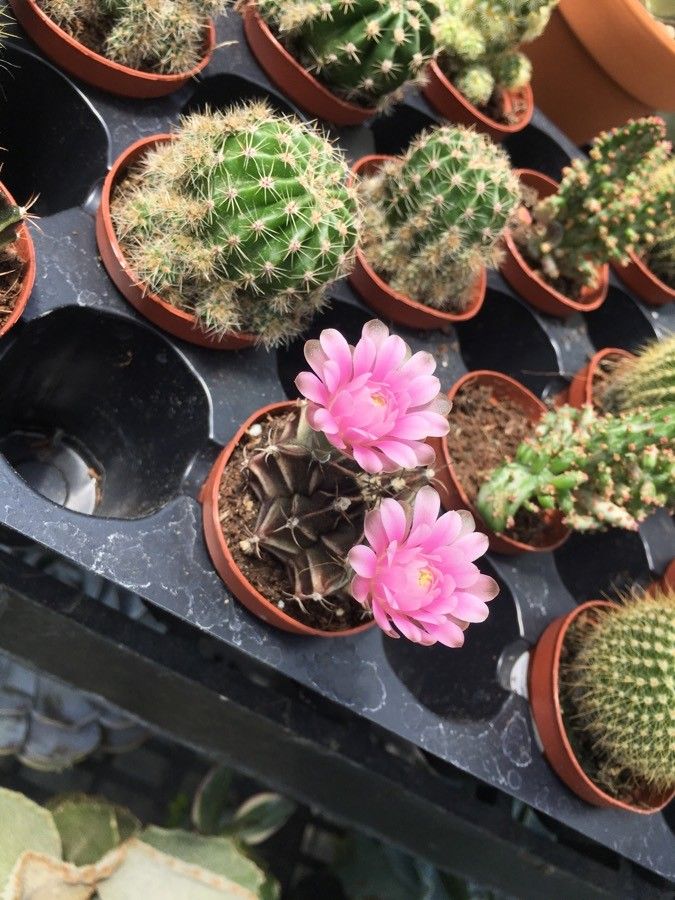
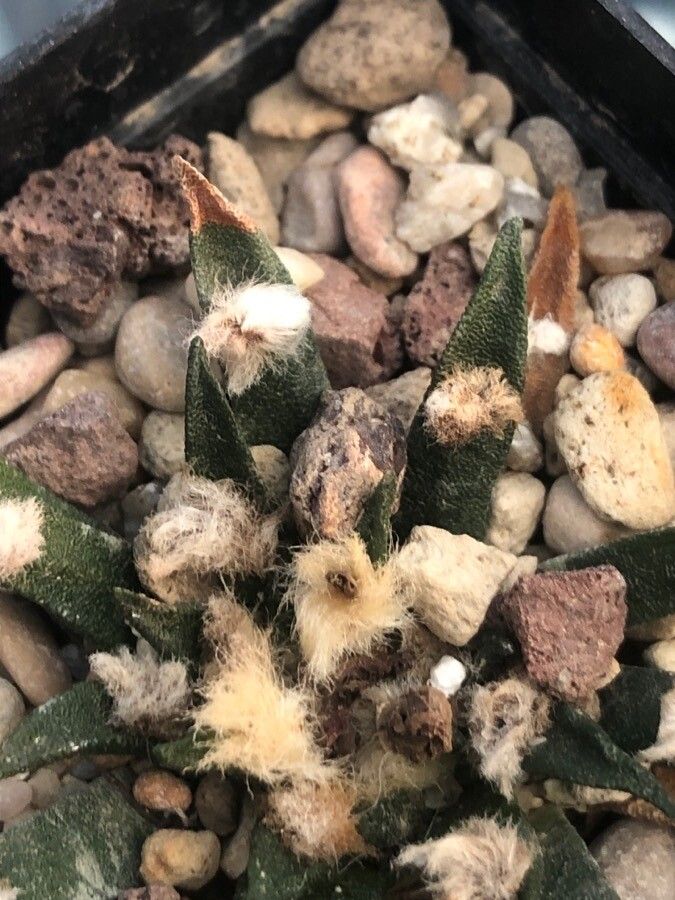
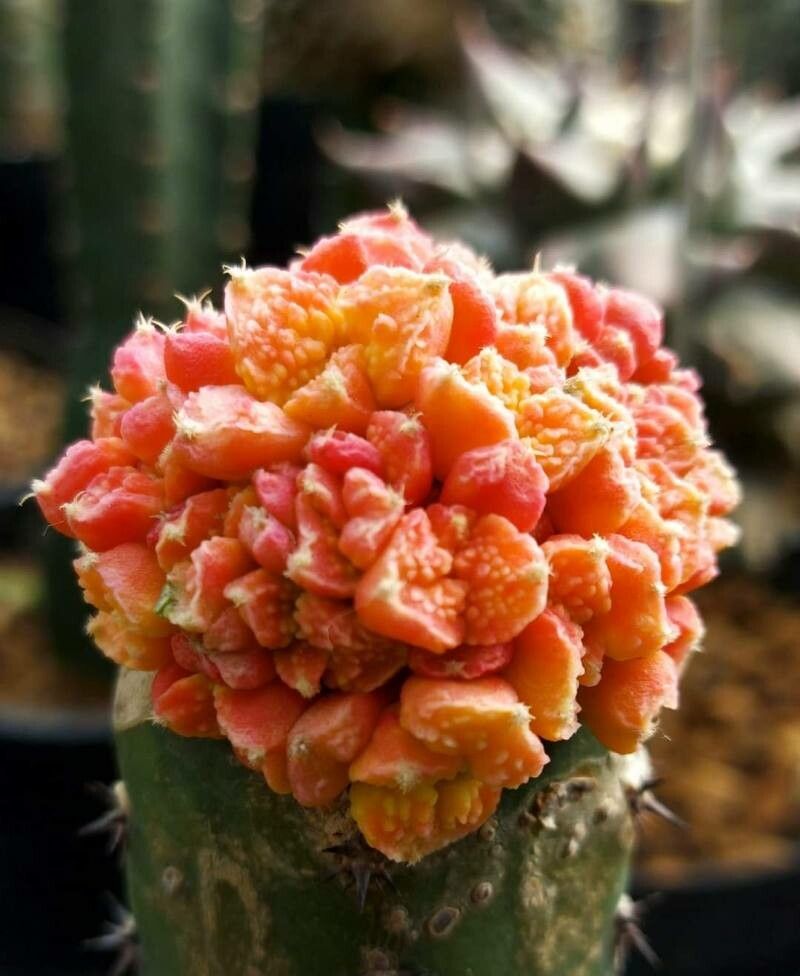
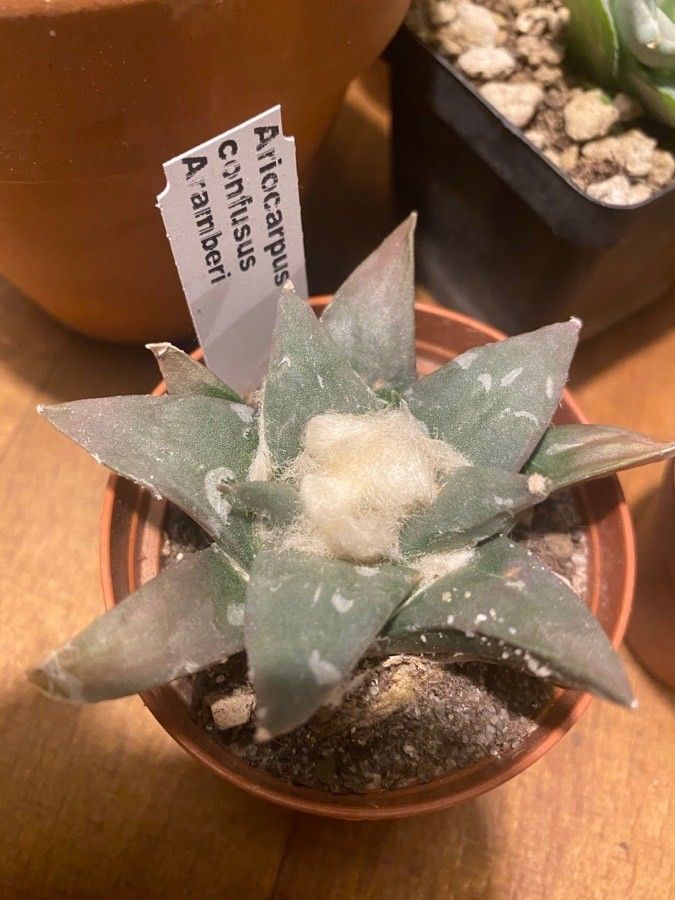
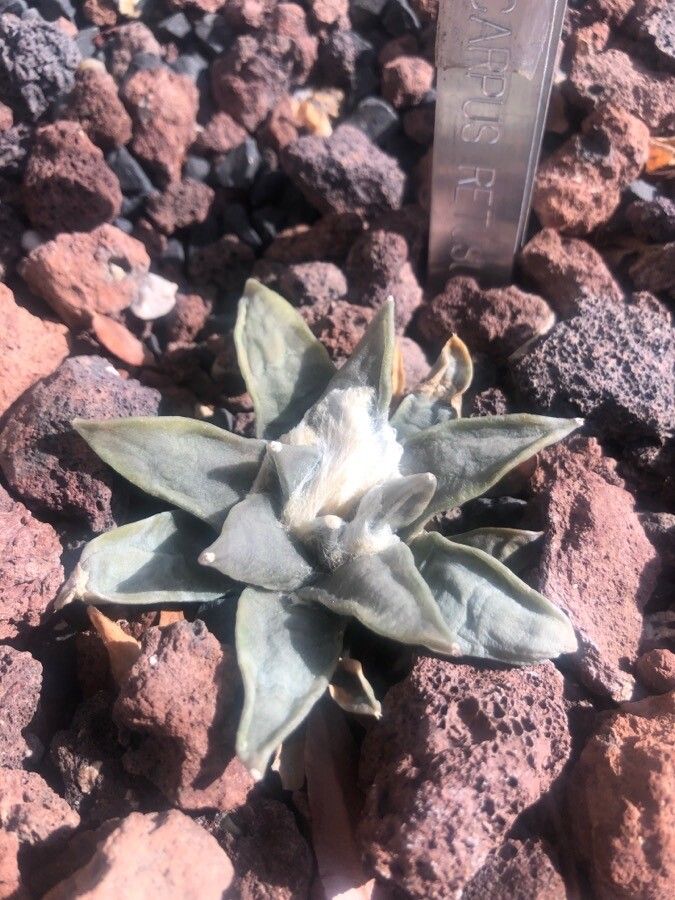
Ariocarpus fissuratus, commonly known as the Living Rock Cactus, is a small, slow-growing cactus native to the Chihuahuan Desert in Mexico. It is highly sought after by cacti enthusiasts due to its unique appearance and rarity in cultivation. The plant features a distinctive flattened, disc-like body that can grow up to 10 cm in diameter, with deep fissures on its surface that resemble cracked rock or stone. This fascinating cactus produces small pink or white flowers that bloom from late spring through early summer. These flowers are followed by small fruit capsules containing numerous tiny seeds. Ariocarpus fissuratus is well-adapted to survive in harsh desert conditions, tolerating extreme heat and drought. It prefers well-draining soil with low organic content and requires minimal watering during its growing season, which spans from spring through fall. Due to over-collection from their natural habitat, the populations of Ariocarpus fissuratus have significantly declined in recent years, rendering it a highly endangered species. Thus, it is crucial for growers to practice responsible cultivation methods, such as propagation by seed, rather than collecting plants from their natural habitat. Overall, Ariocarpus fissuratus is a captivating addition to any cacti enthusiast's collection. Its unique appearance and the challenges involved in successfully growing this rare desert gem make it all the more intriguing.
Chautle livingrock possesses strong resistance to disease and tolerates normal care conditions without becoming ill easily. That said, it can be vulnerable to mealybugs; these pests may cause some damage but are generally not a serious threat. In terms of care, Chautle livingrock is drought-tolerant and does not need frequent watering. It can withstand long periods without water and requires little fertilizer. However, if lighting is poor and it is overwatered, it is highly prone to root rot. Overall, Chautle livingrock is suitable for people who prefer to spend less time on plant care, but it is important to know and meet its basic needs. It is particularly well suited to those who are often away for extended periods and may forget to water regularly.
How to keep Ariocarpus Fissuratus.
Light
Chautle livingrock does best when given maximum light throughout the day. Too little light can result in poor plant health, while excessive exposure, which this plant tolerates well, is not a problem. In its natural habitat it experiences high light intensity, especially during the plant's active growth phase.
Water
Chautle livingrock is extremely drought-tolerant, needing water just once every four weeks. It thrives in dry environments, which helps prevent root rot, making it well-suited for rock gardens. Its growth is influenced by regional rainfall patterns, particularly in areas with distinct wet and dry seasons.
Temperature
Chautle livingrock originates from habitats where temperatures range from 68 to 105.8°F (20 to 41℃). It grows most successfully in these warm conditions. Ensuring optimal growth requires seasonal temperature adjustments that replicate its natural environment.
Fertilizer
For Chautle livingrock, light applications of fertilizer once or twice a year during the growing season are adequate. Avoid fertilizing in winter and in summer when it is dormant. Reduce fertilizer for repotted plants and wait a couple of months after repotting before applying fertilizer. Fertilizing promotes healthy growth and encourages blooms.
Pruning
The Chautle living rock requires minimal pruning. To encourage healthy growth, simply remove any withered flowers and branches regularly. This helps the plant direct its nutrients where they are most needed.
Pot & Repot
Repot Chautle livingrock in spring or summer, picking a pot slightly larger than the current one that provides good drainage. Use a well-draining, sandy or gritty cactus mix. Handle the plant carefully to avoid its spines. Let the cactus dry out before repotting to help prevent root rot. After repotting, wait one week before watering so the roots can heal.
Botanical profile.
- Plant Type
- Succulent
- Life Cycle
- Perennial
- Genus
- Ariocarpus
- Family
- Cactaceae
- Hardiness Zone
- 10-13
- Mature Height
- 15 cm
- Mature Spread
- 5 cm to 20 cm
- Leaf Color
- Green, Blue
- Leaf Type
- Semi-evergreen
- Flower Color
- Pink, White
- Flower Size
- 2.03 cm to 4.06 cm
- Bloom Time
- Late summer, Early fall, Mid fall
- Planting Time
- Spring, Autumn
- Harvest Time
- Mid fall, Late fall, Early winter
Other names.
Reader questions.
What should I do if I give too much or too little water to my Chautle livingrock?
Chautle livingrock and other succulents can withstand long periods without water, so it's rare to find an underwatered plant. However, if you forget to water your Chautle livingrock for a month or more, it will likely appear thirsty or show signs of damage. An underwatered Chautle livingrock will look lacklustre and wrinkled, with some plants even drying up completely or turning brown and crispy. The soil will also be completely dried out. To remedy this, it's important to give the plant plenty of water, submerging the pot in water for 5-10 minutes and ensuring the soil feels moist on the surface. Overwatering is dangerous for Chautle livingrock and can lead to root rot, which prevents the roots from absorbing nutrients and water from the soil. Root rot occurs when fungi and bacteria thrive in wet conditions and feed on the roots. Symptoms of overwatering include yellow, swollen, and translucent organs, which may burst open from being over-saturated. If unaddressed, the plant may turn brown or black and its leaves may fall off easily. To address overwatering, change the growing conditions by providing more air ventilation and adjusting the watering frequency. Saving an overwatered Chautle livingrock can be challenging, but catching it early is key. If the roots are rotten, the entire plant may die. To address this, remove the plant from its pot and gently clean the wet soil from the roots with room-temperature water. This will help remove any lurking fungus and provide a better understanding of the root's health. Dark brown or black, soft, mushy, or slimy roots indicate root rot. If most of the roots are affected, it may be impossible to save the plant. In such cases, it's best to propagate a new Chautle livingrock using a healthy stem. However, if only a portion of the roots are affected, there is a chance of saving the plant. Remove unhealthy roots using sterilized cutting tools, dip the remaining healthy roots in a fungicide, and repot the plant in fresh, well-draining soil. While this method may not always succeed, in most cases the succulent will recover and produce new growth in the next growing season.
Why do I have to put fertilizer on my Chautle livingrock?
When fertilizing Chautle livingrock, it adds nutrients to the growing medium. Although it stores water and nutrients, applying plant food during the growing season promotes healthy growth. Fertilizing can also prompt mature specimens to produce blooms in the growing season.
What are the sunlight requirements for Chautle livingrock?
Chautle livingrock, known botanically as Ariocarpus fissuratus, requires full sun, meaning it should receive above 6 hours of sunlight daily to thrive best. It's important to observe the movement of sunlight through your garden to find spots that offer a good balance of light and shade, ensuring the plant's wellbeing. In its natural habitat, this plant is accustomed to high light intensity, which is crucial for its active growth phase. Therefore, choosing the right location or providing supplemental lighting indoors is crucial for the health of Chautle livingrock.
What is the native temperature range for Chautle livingrock?
Chautle livingrock, known botanically as Ariocarpus fissuratus, thrives in native environments with a temperature range of 68 to 105.8°F (20 to 41°C). It prefers these warm conditions for optimal growth. During winter, the plant enters a dormant state and should be kept above 5°C. To ensure the plant continues to thrive, it is recommended to mirror seasonal temperature adjustments similar to its natural habitat.
How frequently do I need to water my Chautle livingrock?
Determining how often to water Chautle livingrock does not have a strict rule. The easiest way to decide is by checking the soil and only watering when it is completely dry. You can either use your finger or a moisture meter to check the moisture level below the surface. If you have planted it in a deep pot, you can use a stick or chopstick to check. If the soil is slightly moist, it is best to wait a few days and check again. In general, during summer, most people need to water Chautle livingrock every two weeks, while in winter, it is sufficient to water it once a month. However, there are various factors to consider that can affect the frequency of watering. The following section provides some helpful considerations to determine how often to water.
When should I fertilizer my Chautle livingrock?
Chautle livingrock plants only need a small amount of fertilizer during the growing season. It is recommended to fertilize them 1-2 times a year, specifically in the spring and autumn. Avoid fertilizing them in winter and summer when they are dormant. Take caution with repotted plants and use less fertilizer. It's best to wait a few months after repotting before applying any fertilizer.
What should I do if natural light is not sufficient?
When natural sunlight is insufficient, especially for indoor plants during winter or in less sunny spaces, artificial lighting serves as a practical solution. It promotes healthier and faster growth by compensating for the lack of sunlight. LED lights are recommended because they can be tailored to provide the specific wavelengths needed by your plants. For full sun plants like Chautle livingrock, 30-50W/sq ft of artificial light is ideal. The artificial light source should be placed 12-36 inches above the plant, mimicking natural sunlight as closely as possible, and be kept on for 8-12 hours a day to replicate the natural daylight hours required by the plant.
How should I care for Chautle livingrock during colder months?
During colder months when outdoor temperatures drop below 5°C, Chautle livingrock should be moved indoors to prevent it from stopping its growth. A south-facing window is ideal for providing ample sunlight. If natural light is inadequate, supplemental lighting is recommended. It’s important to reduce or stop watering when the temperature falls below 20°C to prevent root rot. In conditions where outdoor cultivation is preferred, halting watering completely during low temperatures is advised. Additionally, using a temporary greenhouse or materials like plastic film or fabric to insulate the plant can offer extra protection against cold.
What do I need to think about when watering my Chautle livingrock?
There are several factors that affect how to water your Chautle livingrock, including the container size, soil type, temperature, and humidity. The container and soil you use determine how often and how much water to use. Ensure the container has enough drainage holes for excess water to escape. A small container holds less moisture, requiring more frequent watering, while a larger pot stays wet longer and needs less watering. Avoid using an oversized pot, as this can lead to overwatering. When repotting, move to a container only one size larger than the current one. Shallow containers are better since Chautle livingrock has shallow root systems. In terms of seasons, Chautle livingrock needs less frequent watering in winter and more frequent watering during the active growing seasons of spring and autumn. In winter, growth slows down and less energy and water are needed. The soil retains moisture for a longer time due to reduced evaporation in cooler air. The general climate of your location also affects watering needs. Humid areas with abundant rain require less watering compared to dry, arid climates. Keep in mind that conditions can vary even within the same location due to seasons and indoor heating or air conditioning. If planted in the ground, Chautle livingrock usually doesn't need extra water beyond natural precipitation and dew after establishing its root system. However, during extended dry periods, occasional watering may be necessary. In areas where Chautle livingrock can only be grown in a container, it can be moved outside in suitable spring and summer temperatures and brought indoors when temperatures start to drop. Potted Chautle livingrock kept outside generally requires more watering compared to indoor plants due to increased sun exposure, even on a shaded porch.
When is the best time to not add fertilizer to my Chautle livingrock?
Chautle livingrock, like other plants, goes through a period of dormancy when you should avoid using fertilizer. This happens during both summer and winter, when the plant stops growing. It's also recommended to refrain from fertilizing for the first few months after repotting in the spring.
What are the symptoms of light deficiency in Chautle livingrock?
When Chautle livingrock does not receive adequate light, several symptoms can manifest, indicating light deficiency. These symptoms include smaller new leaves, leggy or sparse growth, faster leaf drop, slower or halted growth, lighter-colored new leaves, and specific conditions like chlorosis, sunscald, leaf curling, wilting, and leaf scorching. These symptoms arise from the plant's inability to perform photosynthesis effectively under suboptimal lighting conditions, adversely impacting its health and appearance.
What should I do if Chautle livingrock is damaged by low temperatures?
If Chautle livingrock suffers from low temperature damage, indicated by a weakened plant, wilting, or root rot, especially when temperatures fall below 1°C, you should immediately trim off the frostbitten areas. Check for and remove any rotted roots, then propagate the plant through cuttings if necessary. Moving the plant to a warm indoor environment and placing it near a south-facing window for sunlight is crucial. Use supplemental lighting if the natural light isn't sufficient for the plant's recovery and growth.