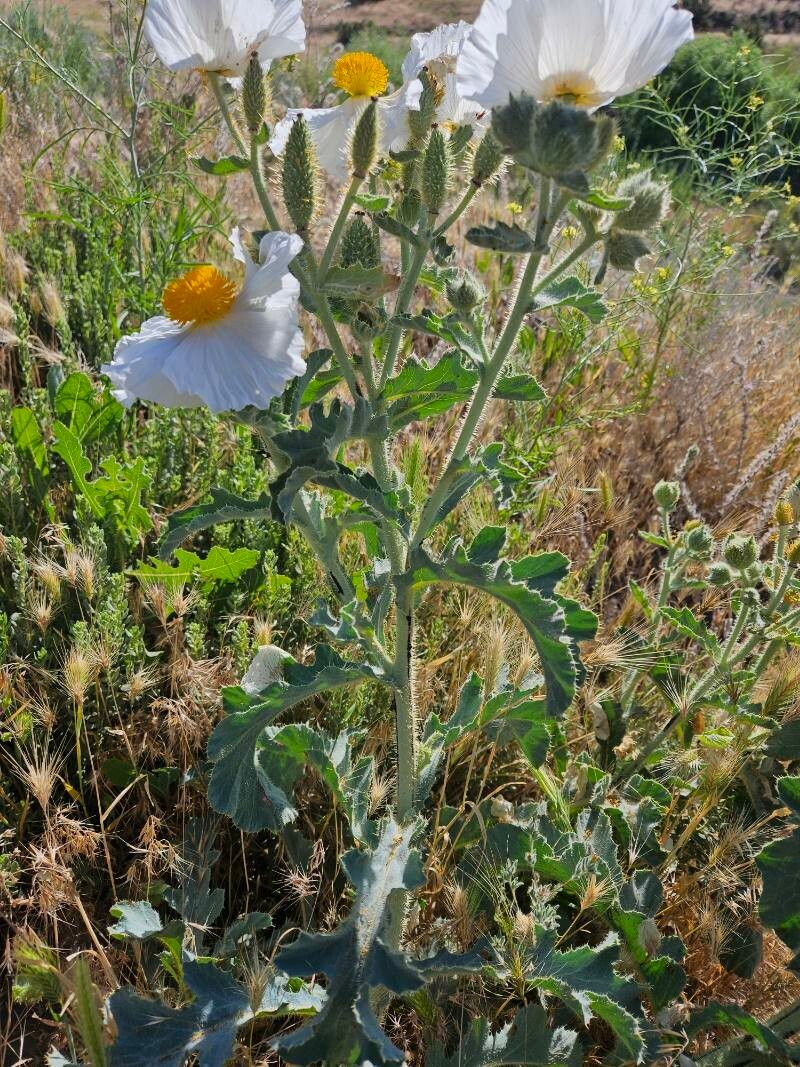
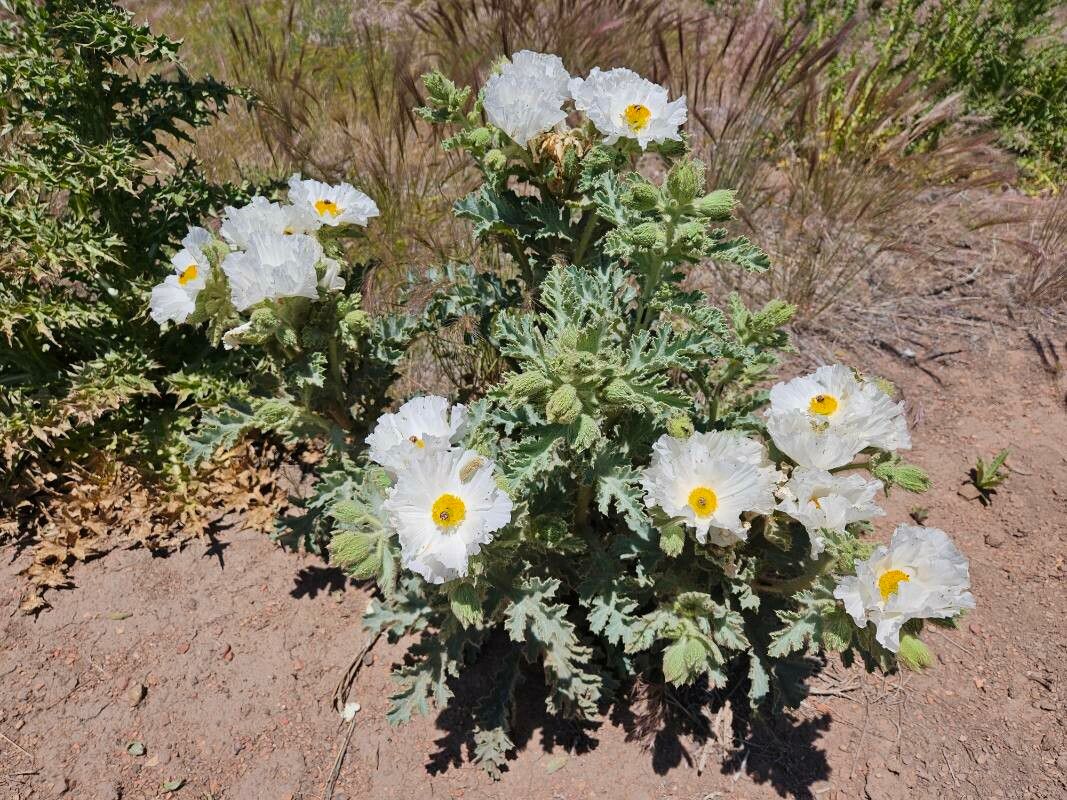
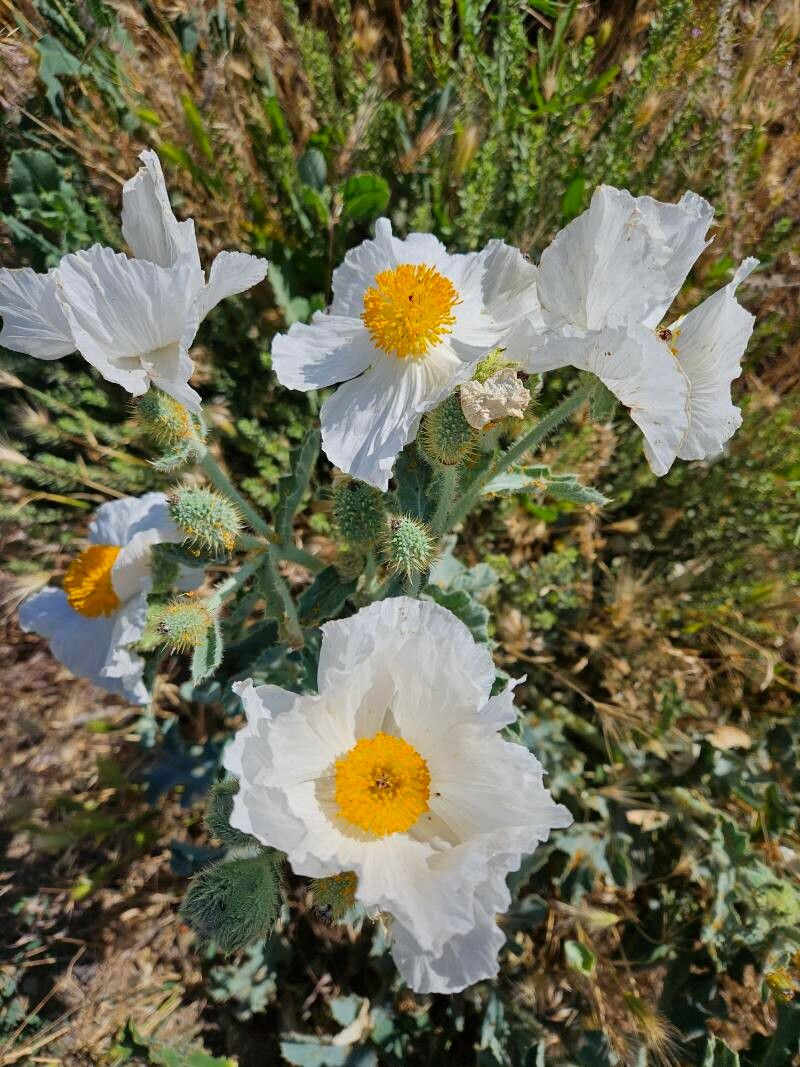
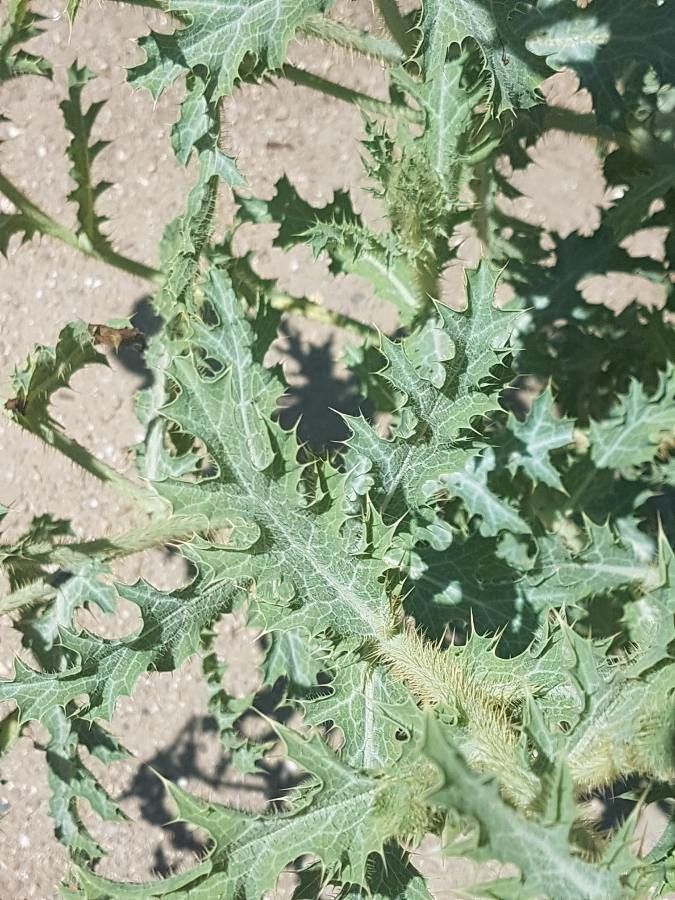
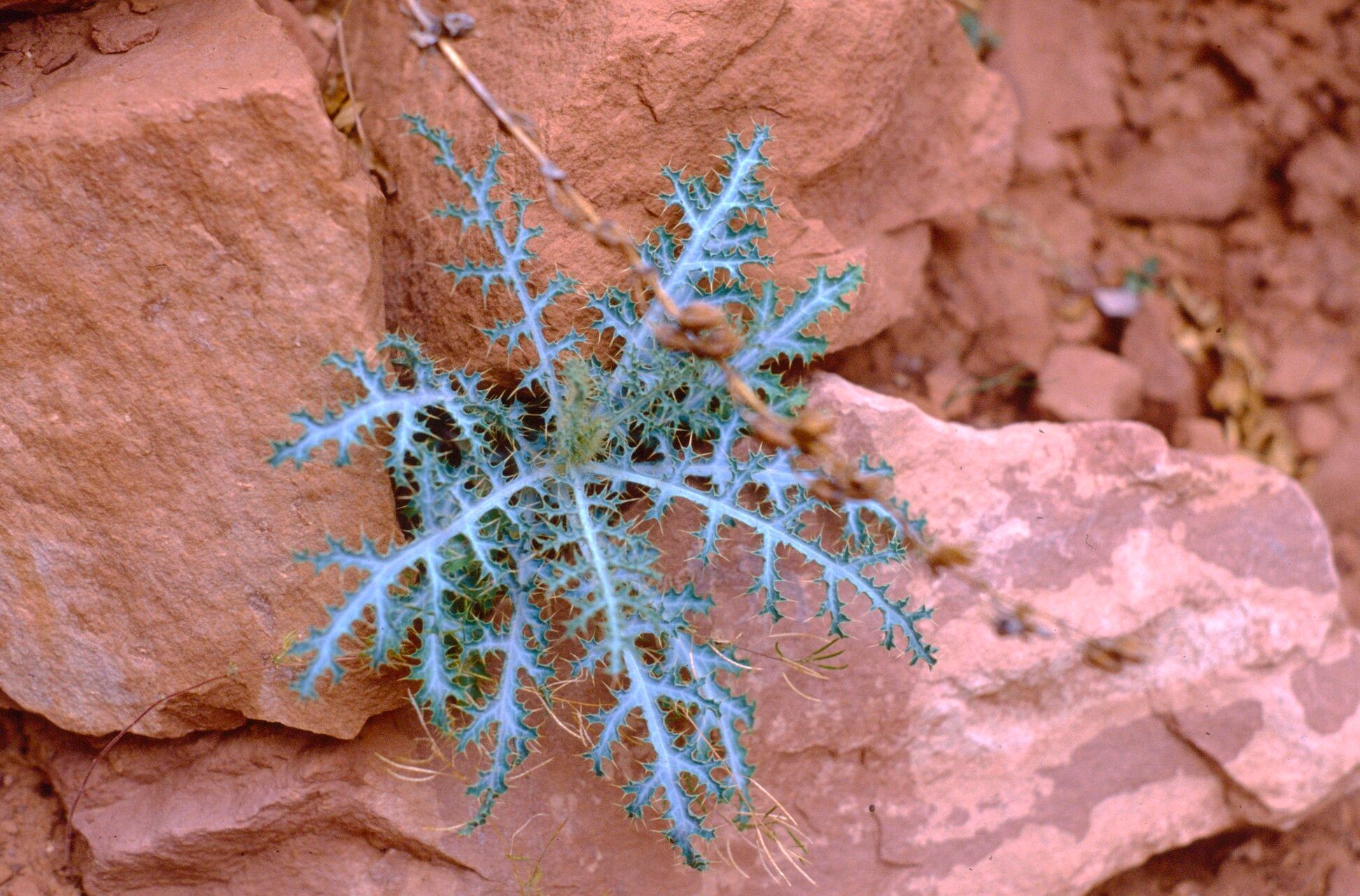
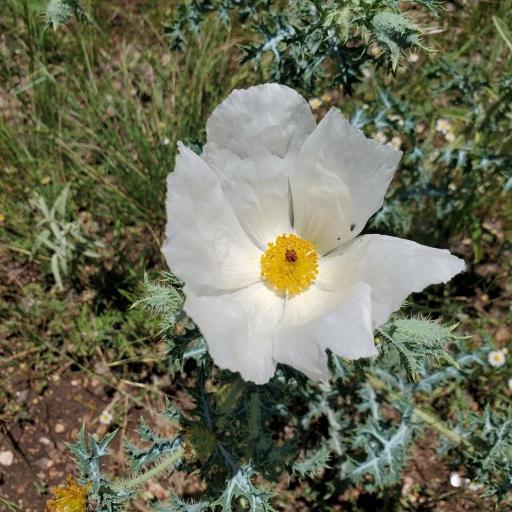
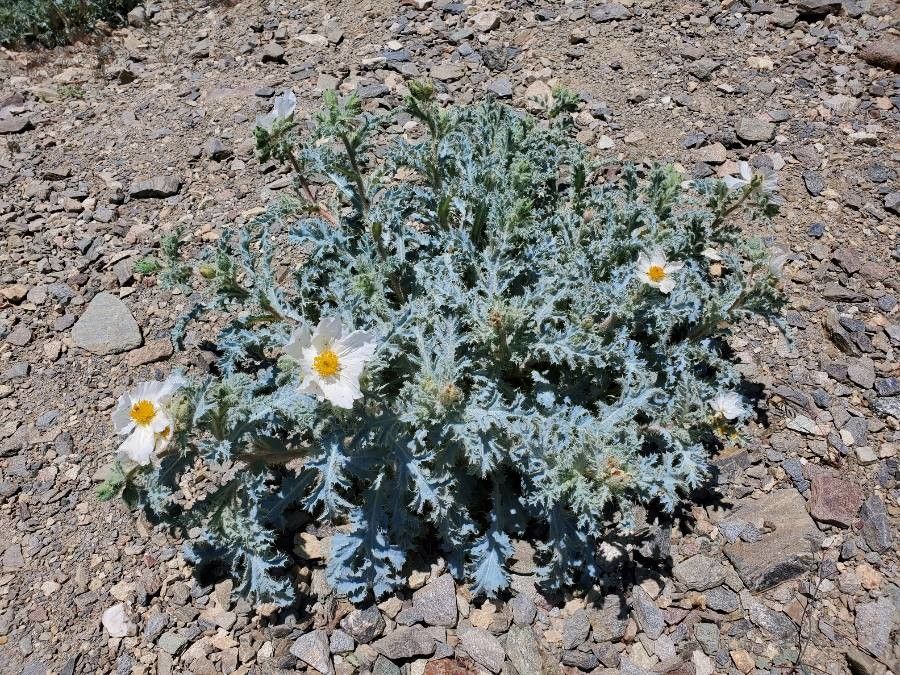
Argemone munita is a species of prickly poppy known by the common names flatbud prickly poppy and chicalote. "Munita" means "armed", in reference to the many long prickles. This flower is native to California, where it is widespread throughout the western part of the state and its eastern deserts, on slopes to 10,000 feet, and along roadsides. Its range also extends into Baja California, Arizona, and Nevada.
Chicalote is fairly resistant to disease and generally not prone to illness. However, it can be affected by pests and diseases present in its environment. These problems are usually mild. In terms of care, this plant requires moderate maintenance. It should be pruned regularly to preserve a neat appearance and support healthy growth. Fertilizing can also help encourage flowering. Chicalote is suitable for anyone with an outdoor area, such as a garden or patio, and does not demand extensive gardening experience. It may need more attention when grown indoors.
How to keep Argemone Munita.
Light
Chicalote needs a large amount of light to grow optimally. In its native habitat it is found in areas with high light intensity. Too little light can impede its growth, while too much can cause drying out or scorching.
Water
Chicalote, a plant native to arid regions, is highly drought-tolerant and conserves water efficiently, needing only weekly watering. It thrives in full sunlight, and its growth cycle is closely tied to the availability of water. The plant often blooms abundantly after the rare rainfall events in its natural habitat.
Temperature
Chicalote is usually found in environments that maintain temperatures ranging from 68 to 95 °F (20 to 35 ℃). This plant does well in temperate climates but can adapt to seasonal changes. Adjustments may be required in extreme cold.
Fertilizer
The best time to fertilize a Chicalote is in early spring, as it comes out of dormancy and begins active growth. Fertilizing supplies essential nutrients for healthy development. Although Chicalote needs relatively little fertilizer, applying it once a year can improve its survival and encourage better, longer-lasting flowers.
Botanical profile.
- Plant Type
- Herb
- Life Cycle
- Perennial, Annual
- Genus
- Argemone
- Family
- Papaveraceae
- Hardiness Zone
- 5-6
- Mature Height
- 52 cm to 91 cm
- Mature Spread
- 61 cm
- Leaf Color
- Green Yellow, Light Green
- Leaf Type
- Deciduous
- Flower Color
- White
- Flower Size
- 5.08 cm to 10.16 cm
- Bloom Time
- Mid spring, Late spring, Early summer
- Planting Time
- Spring, Summer
- Harvest Time
- Summer
Other names.