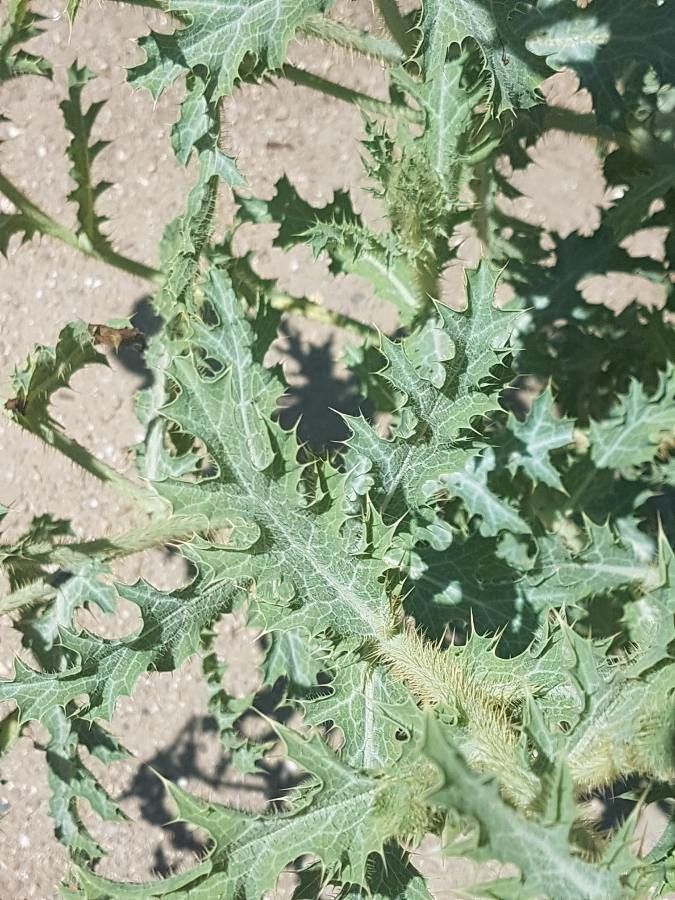
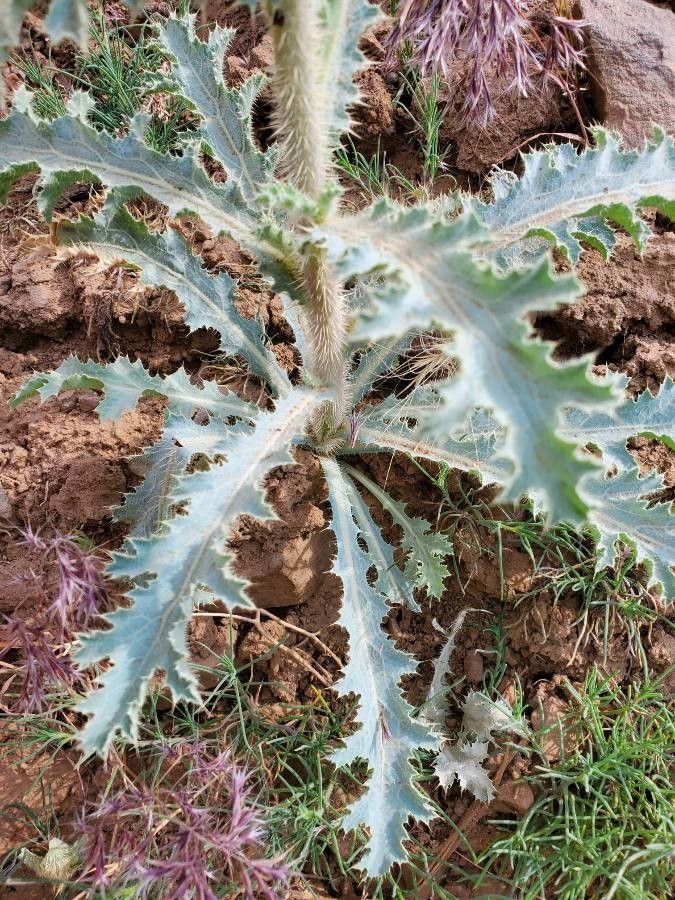
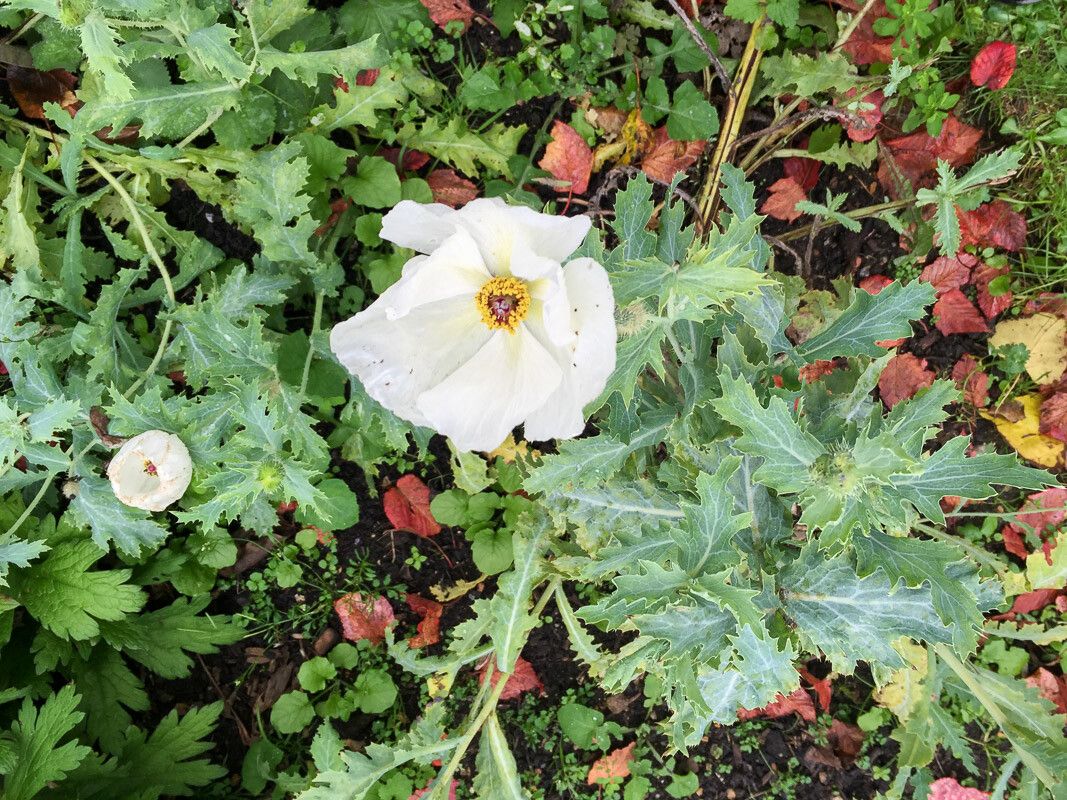
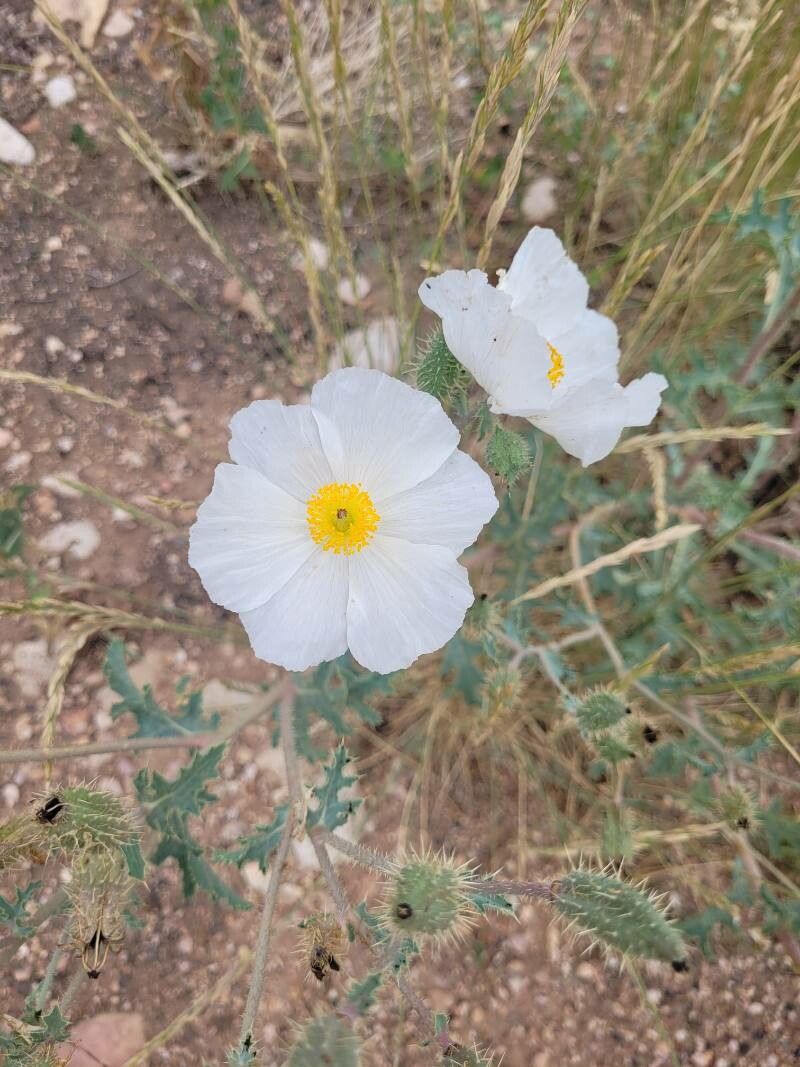
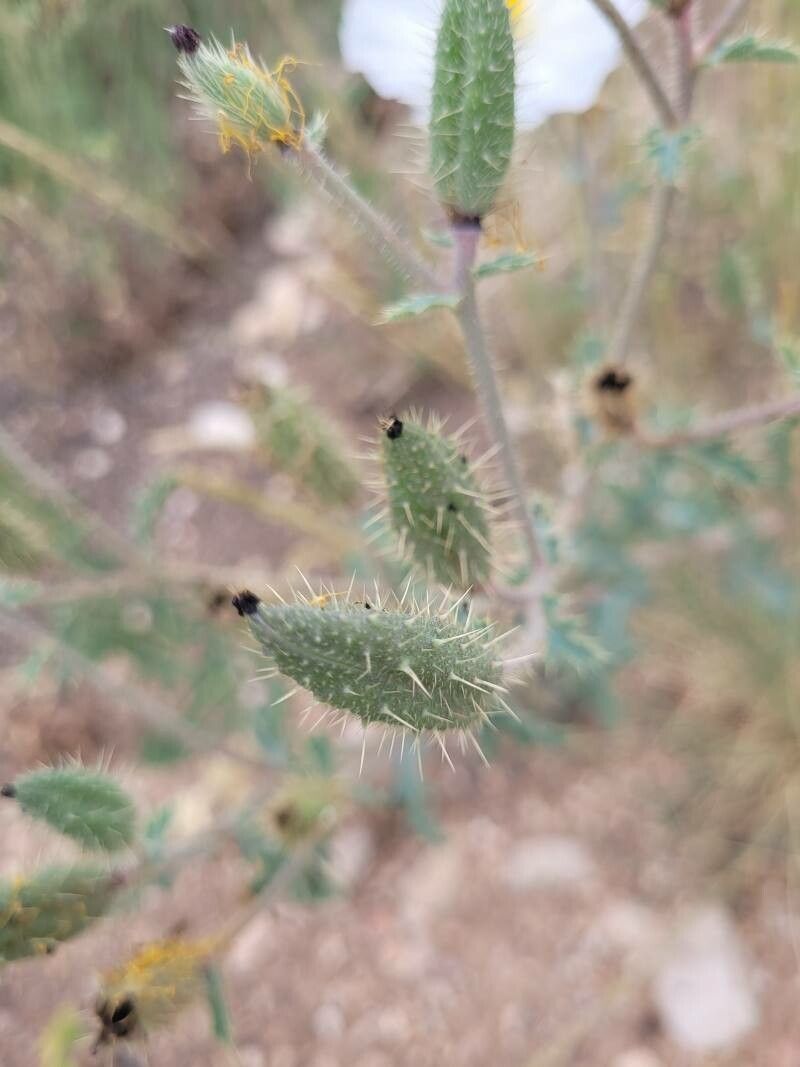
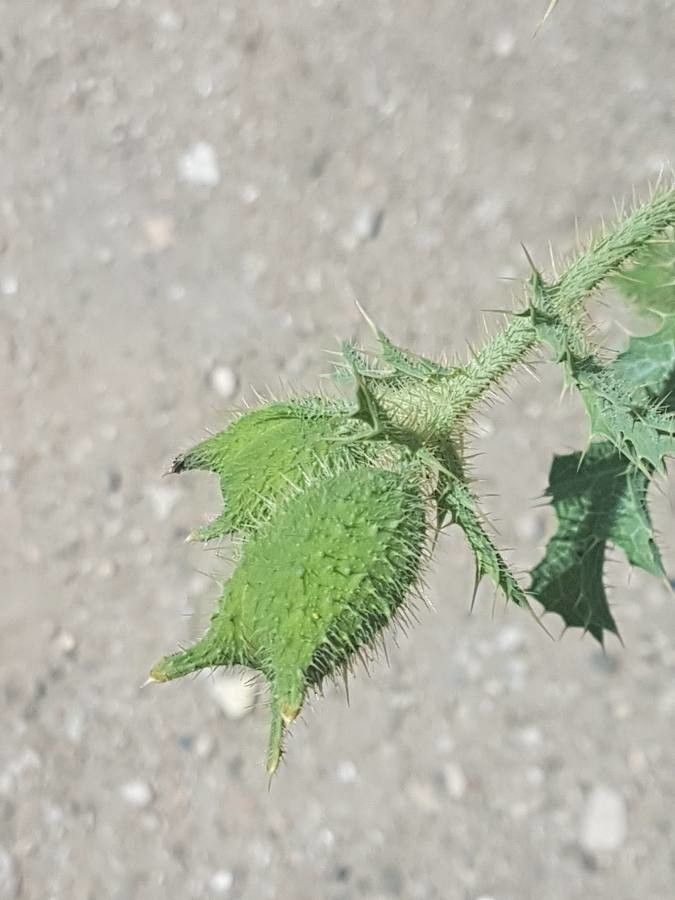
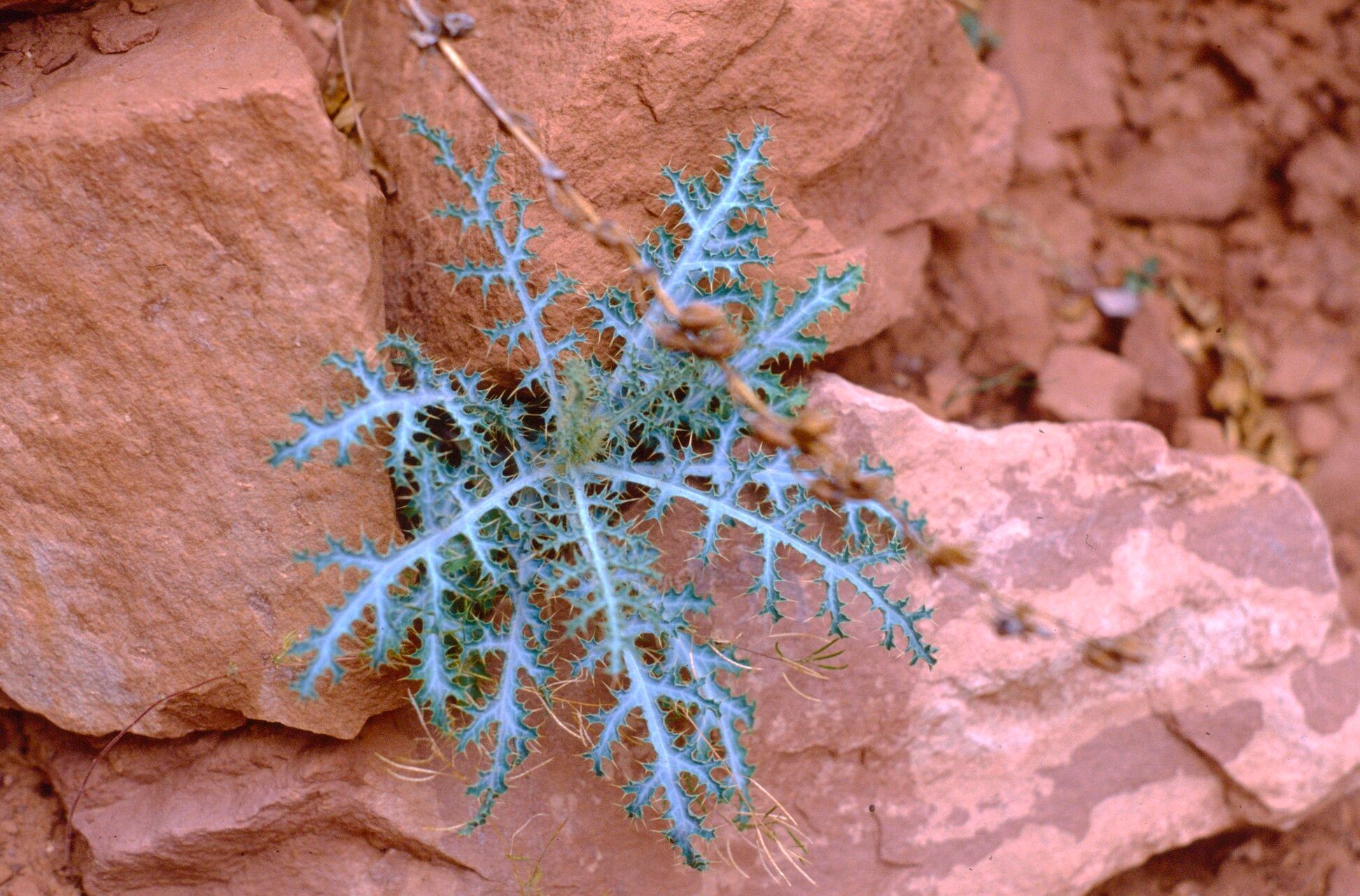
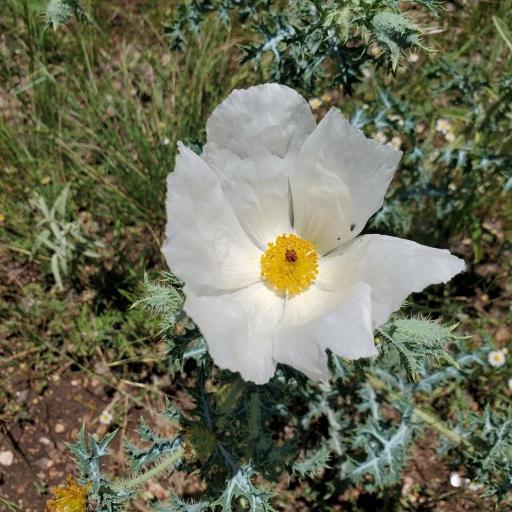
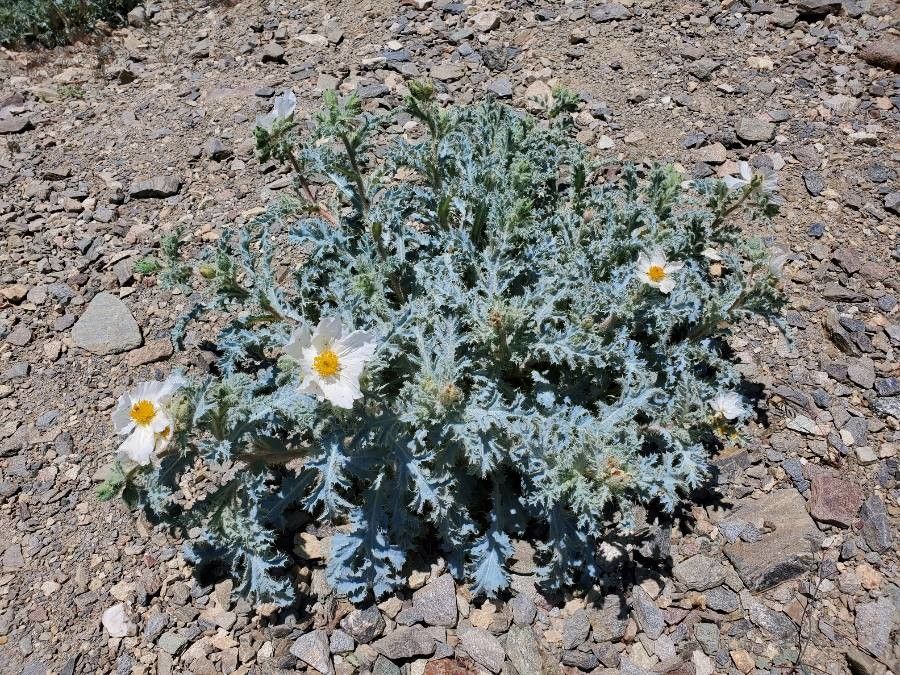
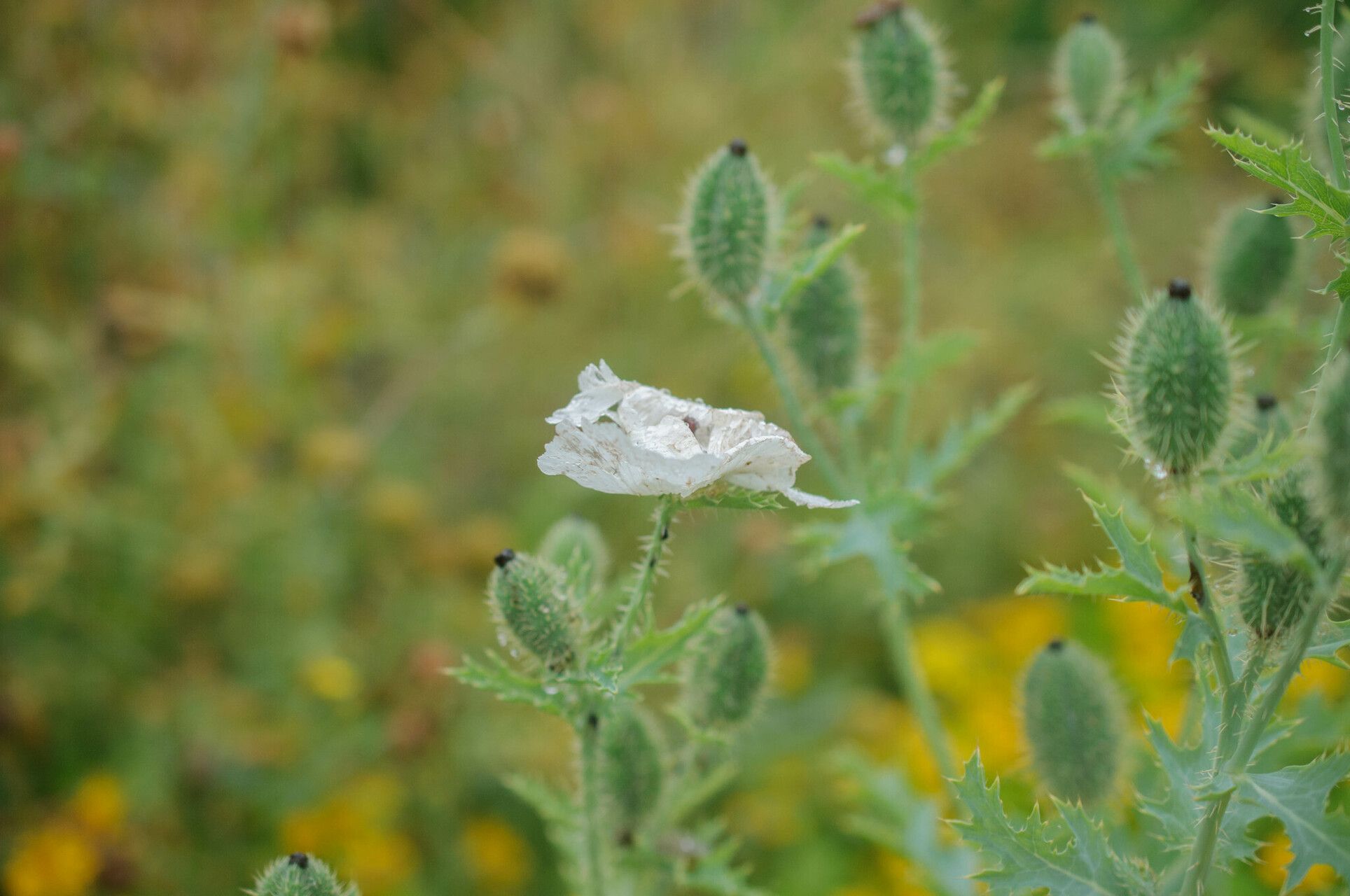
Argemone albiflora, commonly known as the white prickly poppy, is a flowering plant species that belongs to the Papaveraceae family. It is native to the southwestern United States and northern Mexico. The plant typically grows to a height of 1 to 3 feet and features a prickly stem with grayish-green, lobed leaves. The flowers are white with yellow centers and have four petals that bloom from March through June.
White prickly poppy thrives in dry, rocky soils found in open areas such as deserts, grasslands, and disturbed sites like roadsides or abandoned fields. The plant is drought-tolerant but can also adapt to regions with occasional rainfall.
Native Americans have used this plant for its medicinal properties, particularly for its analgesic effects. However, caution is advised when handling or using Argemone albiflora because it contains toxic alkaloids that can cause harmful effects if ingested.
In summary, Argemone albiflora is notable for its distinctive appearance and traditional medicinal uses but must be handled carefully due to its potential toxicity.
Botanical profile.
- Plant Type
- Herb
- Life Cycle
- Annual, Biennial
- Genus
- Argemone
- Family
- Papaveraceae
- Hardiness Zone
- 7
- Mature Height
- 1.22 m
- Mature Spread
- 30 cm to 61 cm
- Leaf Color
- Green
- Leaf Type
- Semi-evergreen
- Flower Color
- White
- Flower Size
- 7.62 cm to 10.16 cm
- Bloom Time
- Late spring, Early summer, Mid summer
- Planting Time
- Spring
- Harvest Time
- Early summer, Mid summer
Other names.