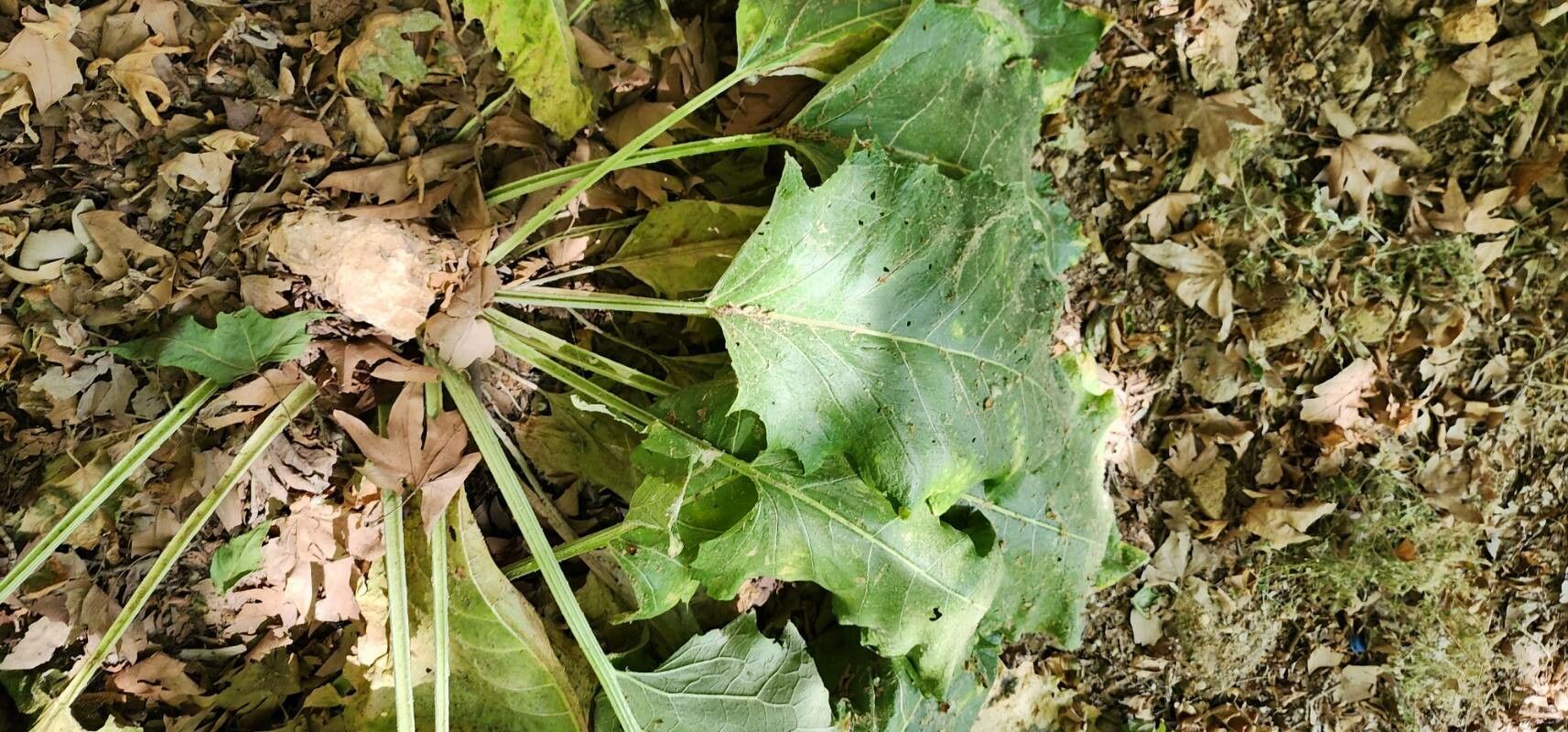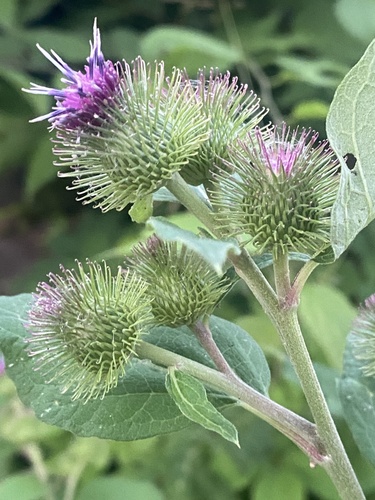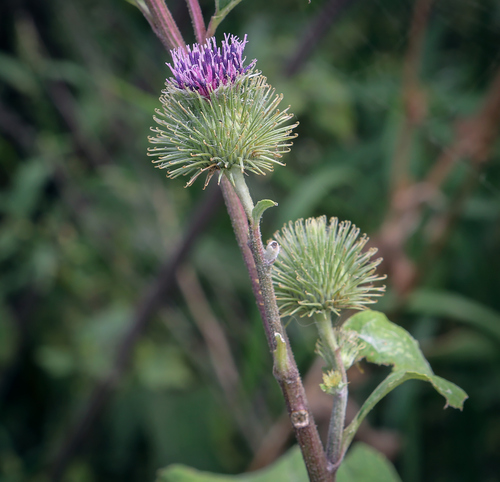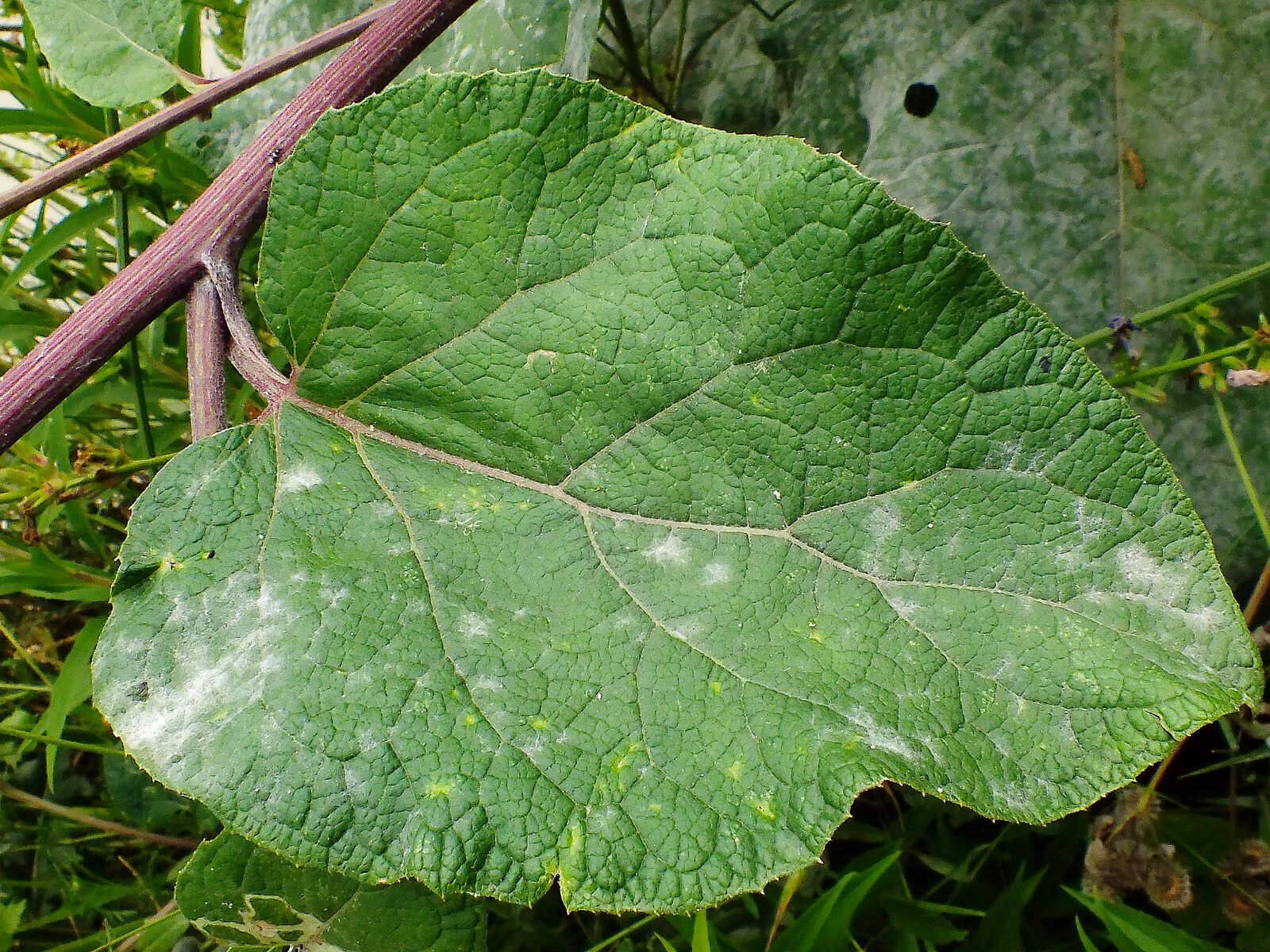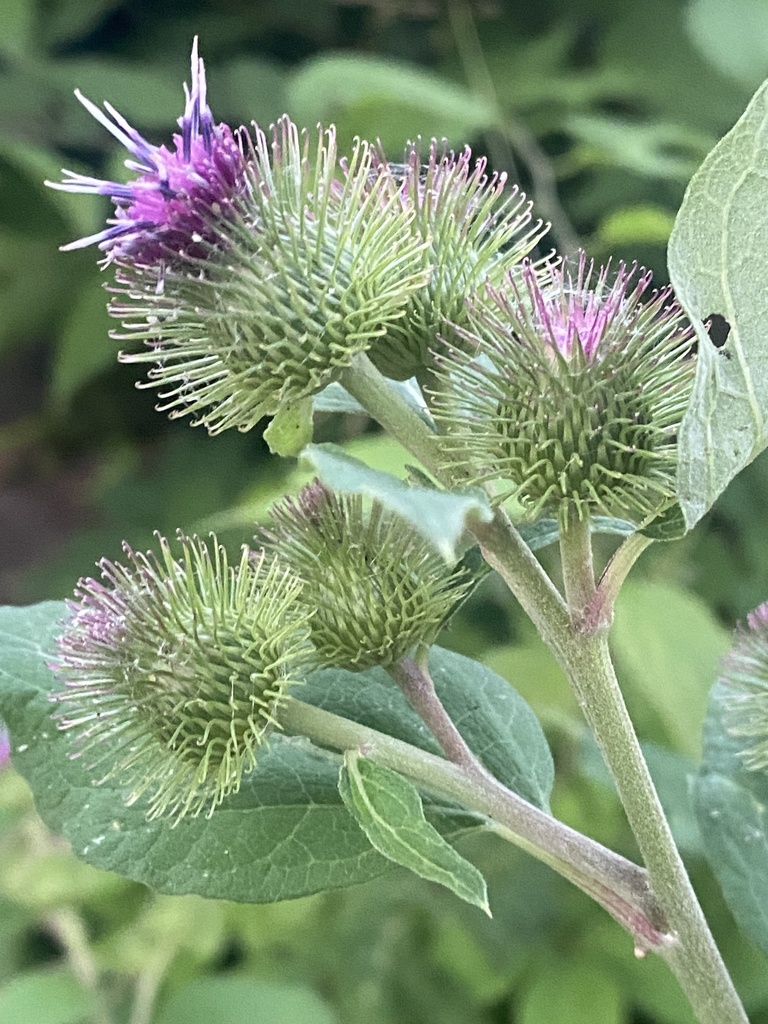
Arctium lappa, commonly known as burdock, is a biennial plant that belongs to the Asteraceae family. Native to Europe and Asia, it has been naturalized in many parts of the world. The plant can grow up to 6 feet tall and features large, heart-shaped leaves covered with fine hairs.
In the summer, burdock produces purple flowers, which are followed by burrs that cling to clothing or animal fur for seed dispersal. The plant’s root is long and fleshy, with a brownish-black exterior.
For centuries, the root of Arctium lappa has been used in traditional medicine as a diuretic, blood purifier, and digestive aid. It contains compounds such as inulin, mucilage, tannins, and volatile oils, which possess anti-inflammatory properties.
In addition to its medicinal applications, Arctium lappa also has culinary uses. Its young leaves can be eaten raw or cooked like spinach, while its roots can be boiled or roasted like vegetables.
Overall, Arctium lappa is a fascinating plant with numerous health benefits, making it an important component of traditional medical practices worldwide.
Arctium lappaceum has strong disease resistance and is usually not susceptible to illnesses. However, it can be vulnerable to pests and diseases present in its environment, though these infections are generally mild. For care, this plant needs a moderate amount of attention. It should be pruned regularly to keep a pleasing appearance and support healthy growth. Fertilizing can also help encourage flowering. Arctium lappaceum is appropriate for anyone with outdoor space, such as a garden or patio, and does not require extensive experience in plant care. It may demand more attention when grown indoors.
How to keep Arctium Lappa.
Light
Arctium lappaceum grows best with a plentiful supply of sunlight. It can also tolerate somewhat filtered sun. Excessive shade may hinder its healthy development. This trait is part of Arctium lappaceum's natural habitat and reflects its strong resilience to sunlight.
Water
Depending on your location, Burdock will typically not require additional watering. Water received during rainfall is generally sufficient for this plant. This plant grows well with about one inch of water every two weeks.
Temperature
Arctium lappaceum can tolerate a wide range of temperatures, but its distribution may still be restricted by different combinations of moisture and heat. It grows best in warm summer conditions with sufficient rainfall or watering. Extended periods of cloudy, rainy weather, as well as prolonged high temperatures, can increase the likelihood of Arctium lappaceum dying. In winter, adequate protection from cold can raise the plant's survival rate.
Fertilizer
The best time to fertilize an Arctium lappaceum is in early spring, as it comes out of dormancy and begins active growth. Fertilizing supplies essential nutrients for healthy development. Although Arctium lappaceum has fairly low fertilizer needs, applying fertilizer annually can improve its survival and encourage better, longer-lasting flowers.
Toxicity
Burdock is not thought to be toxic.
Further reading →
The toxicity and danger assessments provided are for reference only. We do not assure their accuracy, so it's crucial not to depend on them. Seek professional advice when necessary for accurate guidance.
Botanical profile.
- Plant Type
- Herb
- Life Cycle
- Perennial
- Genus
- Arctium
- Family
- Asteraceae
- Hardiness Zone
- 3-9
- Mature Height
- 3.05 m
- Mature Spread
- 91 cm
- Leaf Color
- Green, Dark Green
- Leaf Type
- Deciduous
- Flower Color
- Pink
- Flower Size
- 2.54 cm to 7.62 cm
- Bloom Time
- Early summer, Mid summer
- Planting Time
- Spring, Autumn
- Harvest Time
- Mid summer
- Native Area
- Uzbekistan, Tajikistan, Kazakhstan, Kyrgyzstan