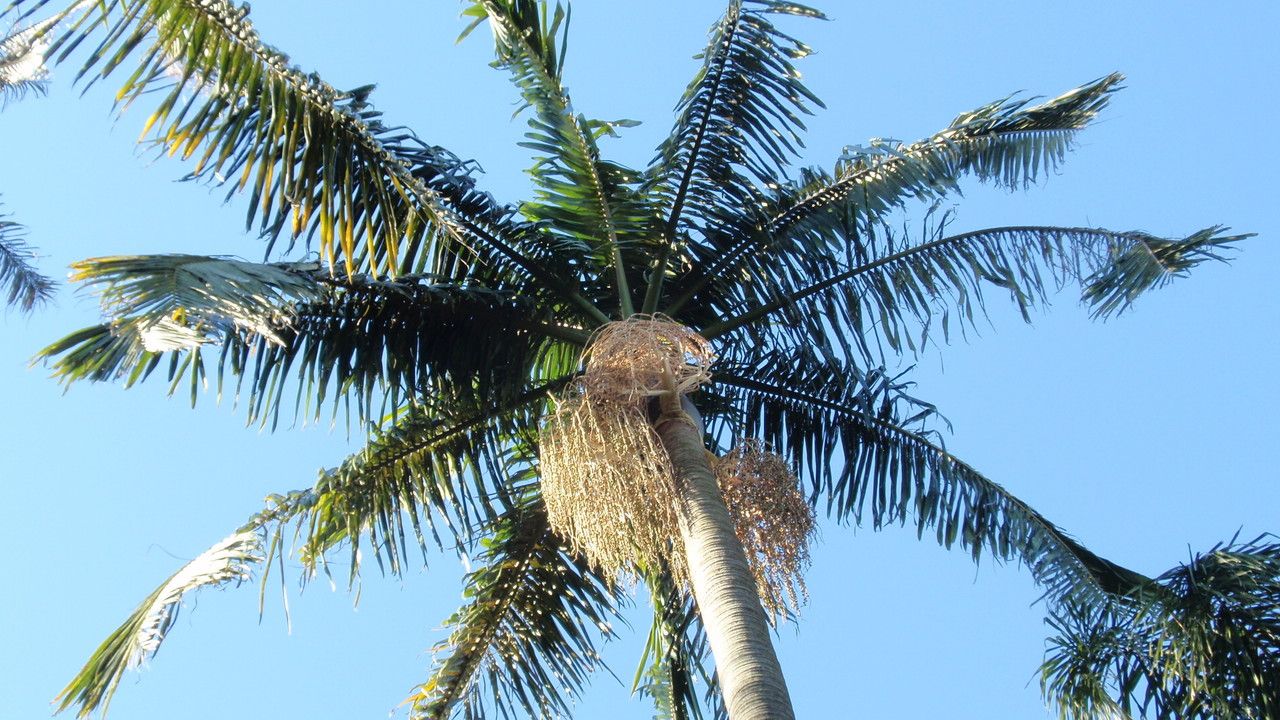
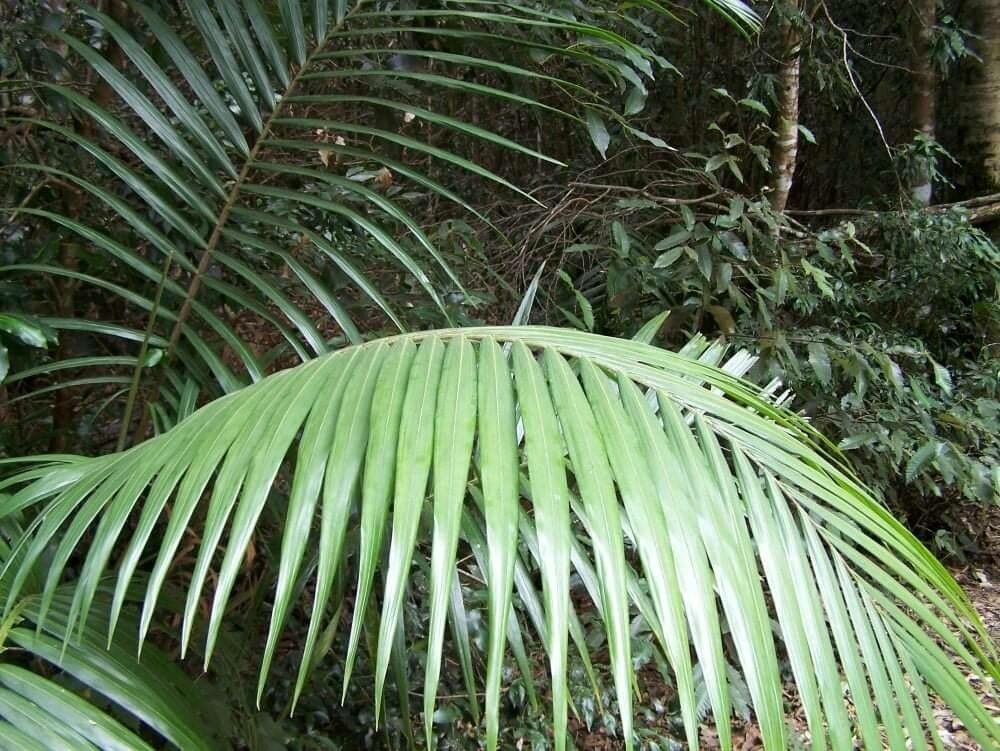
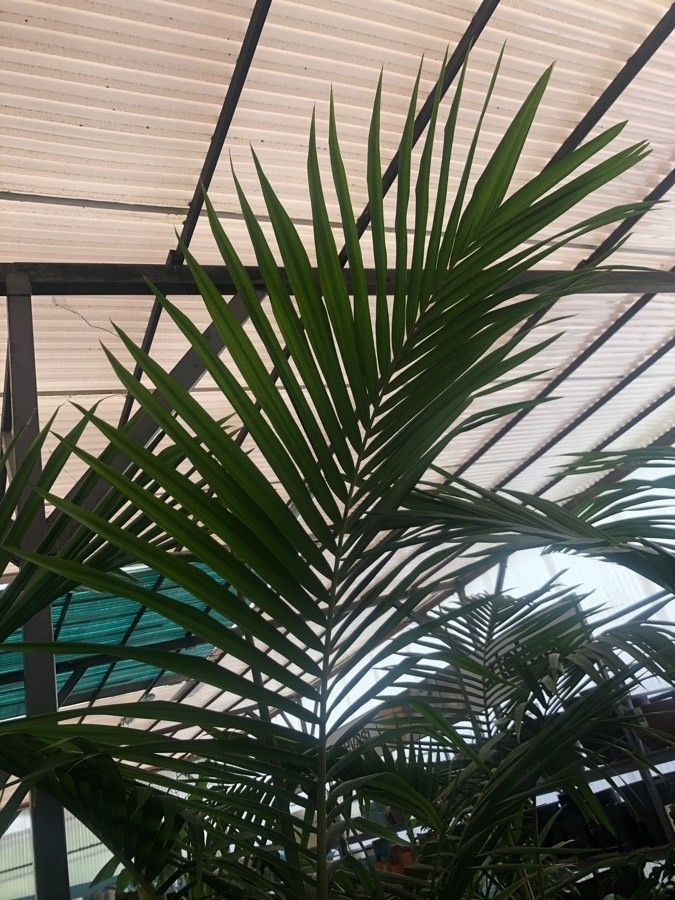
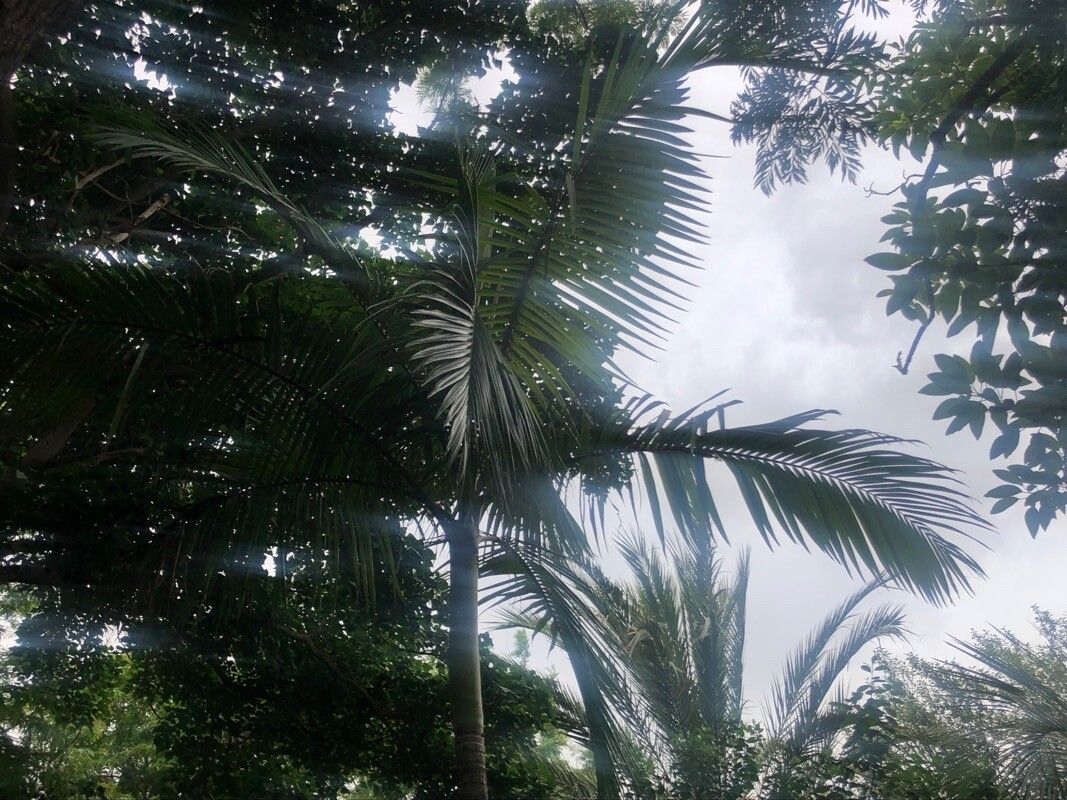
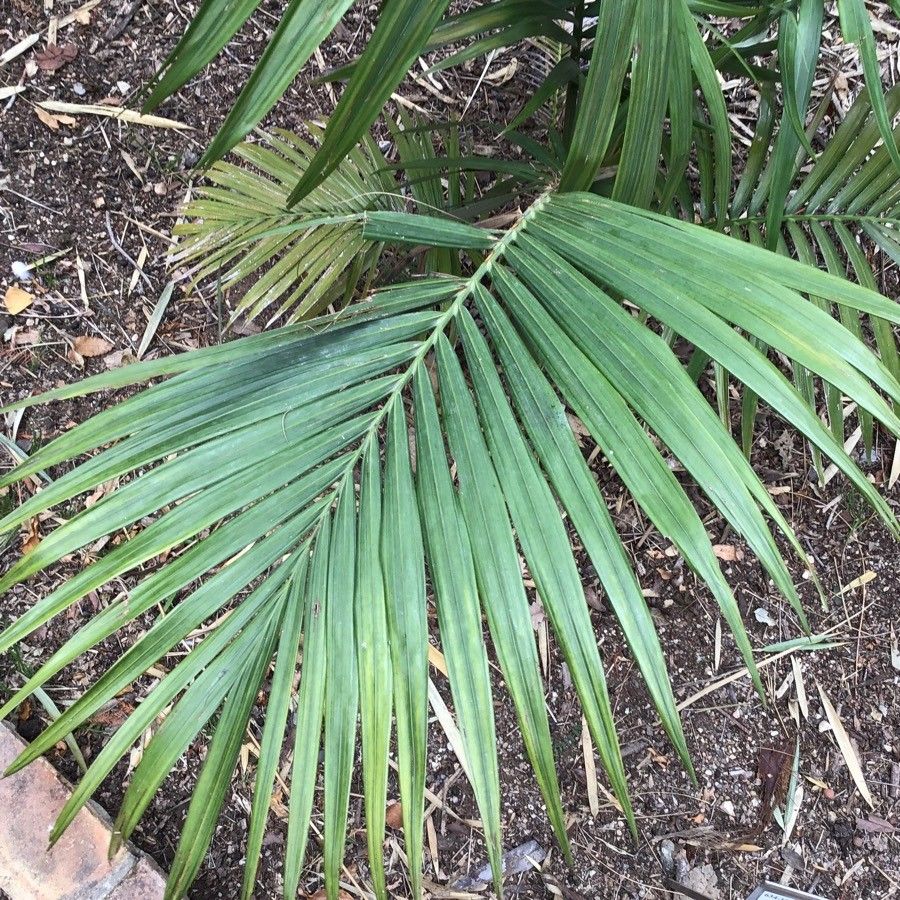
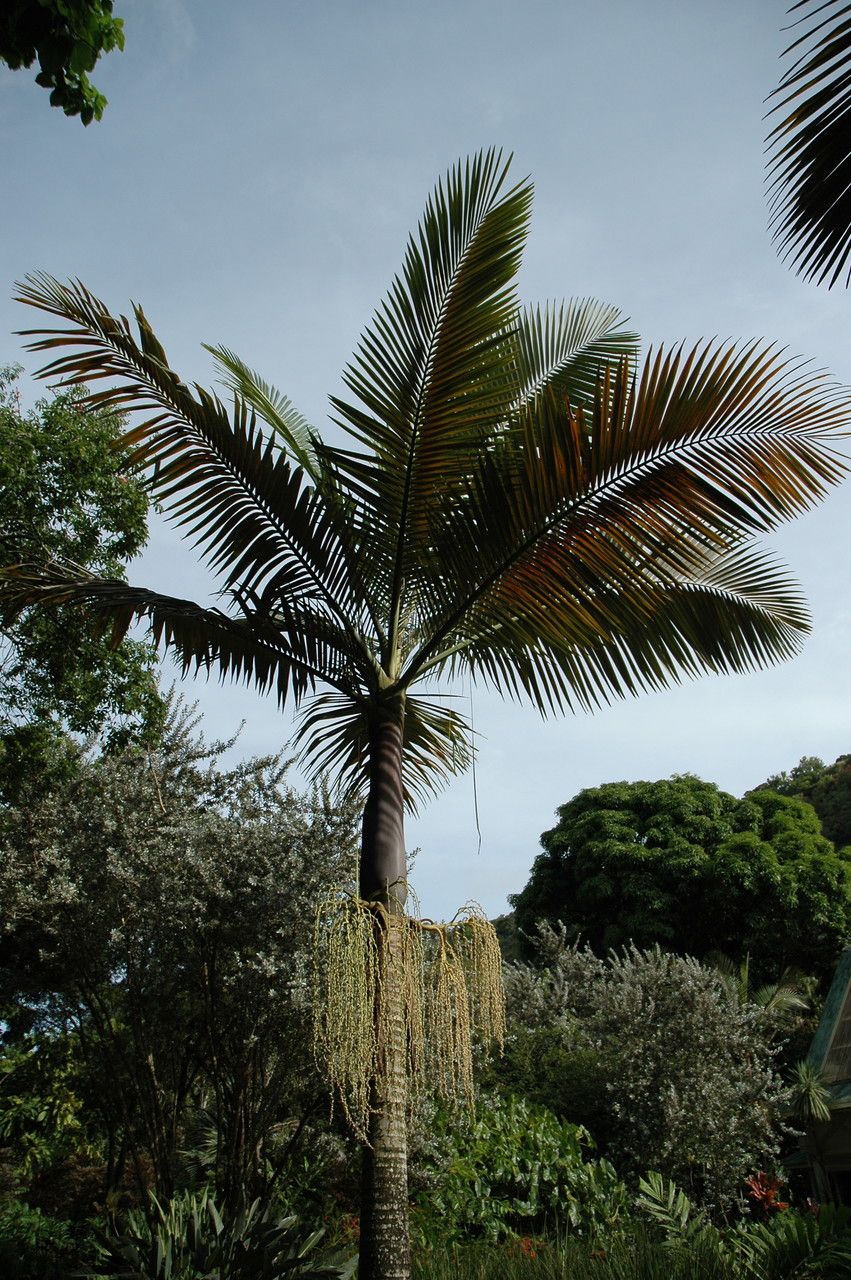
Archontophoenix cunninghamiana, commonly known as the Bangalow palm, is a tall and graceful palm tree native to the eastern coast of Australia. It is a popular ornamental plant due to its attractive appearance and adaptability to various climates. The Bangalow palm can reach heights of up to 20 meters, with a slender trunk adorned by old leaf bases. Its pinnate leaves, composed of multiple leaflets, give the tree an elegant and feathery look.
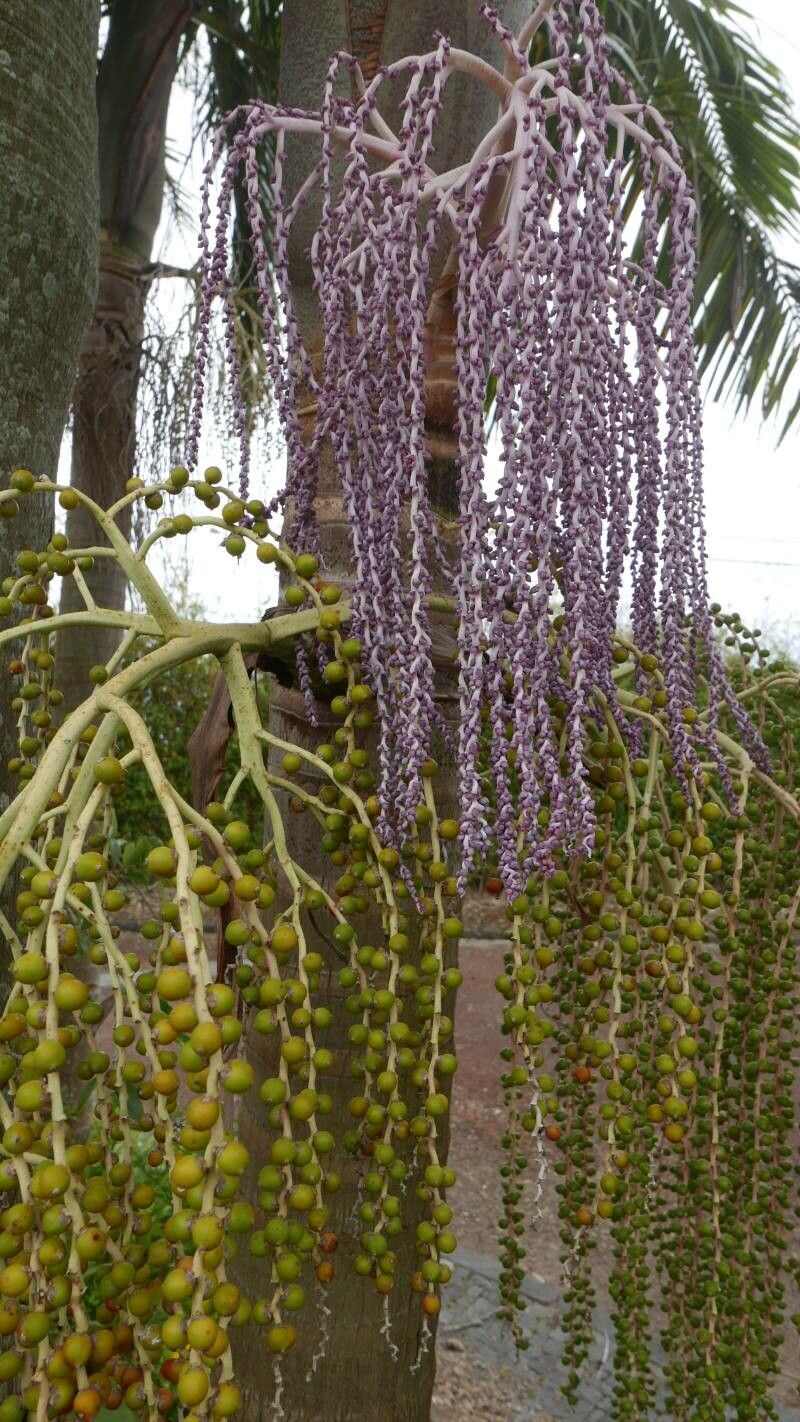
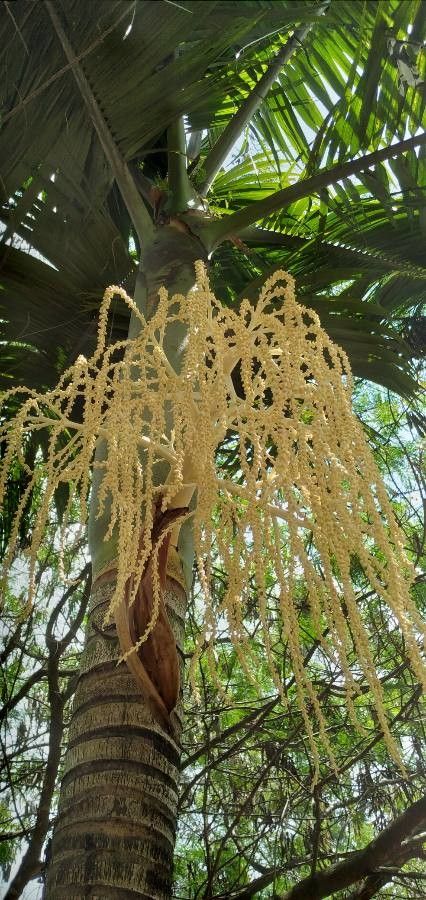
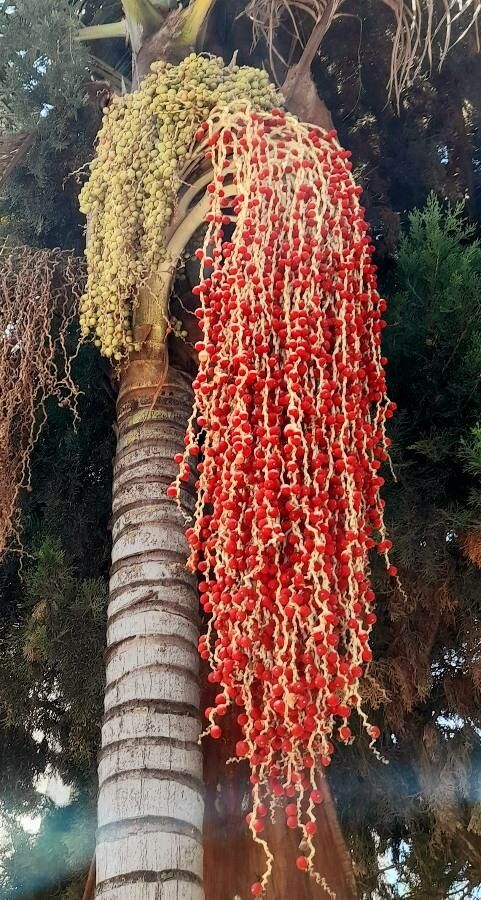
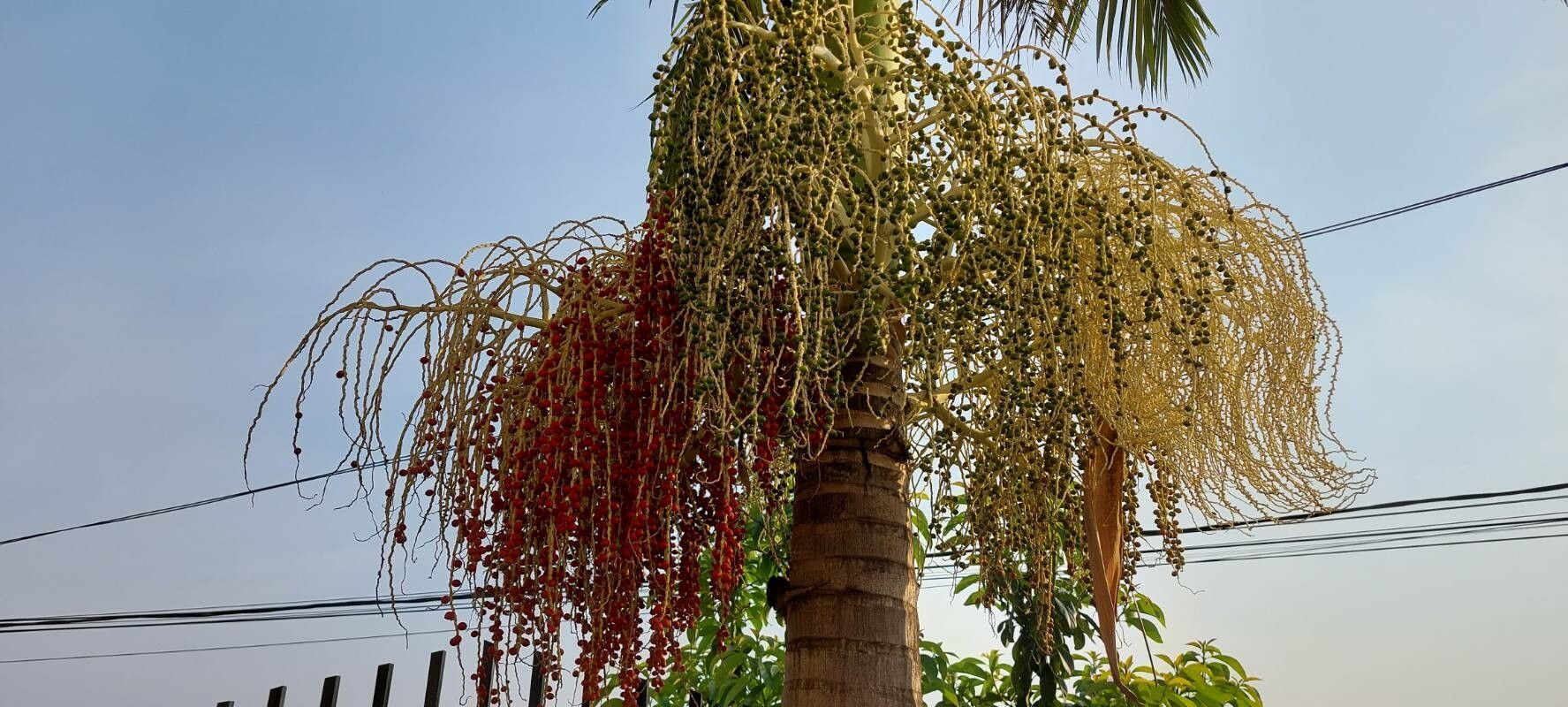
The Bangalow palm produces small, white flowers that grow in clusters on long stalks. These flowers eventually develop into small red or purple fruits that, while edible, are not commonly consumed by humans due to their bitter taste.
This plant thrives in well-drained soil and partial shade but can also tolerate full sun exposure. Once established, it is relatively drought-tolerant, though it benefits from regular watering during dry periods.
Overall, Archontophoenix cunninghamiana is an attractive, low-maintenance plant suitable for both indoor and outdoor cultivation in tropical or subtropical regions around the world.
King palm has strong disease resistance and is typically not susceptible to illnesses. In terms of care, this plant is fairly low-maintenance. Planted outdoors, it needs minimal watering, and larger specimens usually do not need pruning. Smaller plants, however, should be pruned after they have finished blooming. King palm is suitable for anyone with outdoor space, such as a garden or deck, and does not require a great deal of care experience.
How to keep Archontophoenix Cunninghamiana.
Light
King palm performs best in sites with plentiful but filtered sunlight, and it can also tolerate full-sun conditions. Because it comes from environments with those light patterns, this characteristic supports essential growth and flowering. However, constant intense exposure can be damaging, while too little light limits its growth.
Water
The King Palm, native to the humid rainforests of Australia, thrives in moist conditions and can tolerate moderate drought. Water it every one to two weeks, ensuring that the soil dries out slightly between waterings. It prefers bright light and is usually grown outdoors, where it benefits from mulching to maintain soil moisture.
Temperature
Native to temperate areas, the king palm does best in warm temperatures, preferring a range of 68 to 100 °F (20 to 38 ℃). As seasons change, it may require small adjustments to its surroundings to replicate the warm conditions of its native habitat.
Fertilizer
The ideal time to fertilize a King palm is in early spring, when it comes out of dormancy. This encourages overall growth and supports flower development. Fertilizing improves the foliage, stems, and branches, while encouraging flowers that are large, vibrant, and long-lasting. It helps move nutrients from the roots to the flowers and enhances the plant’s health and resistance to disease.
Pruning
To maintain the health of a king palm, it is important to prune it carefully in early spring. Remove any dead fronds during this time to encourage healthy growth. Be cautious not to over-prune, as this can stress the plant. Regularly removing fruit stalks can also promote better growth. Proper pruning techniques improve airflow and light penetration, which reduces the risk of disease. Always use sterilized tools to prevent infection.
Pot & Repot
To promote rapid growth in a king palm, repot it every 1-2 years during the warmer months. Choose a slightly larger pot to allow for root expansion and to encourage vertical growth. Use well-draining soil, increase humidity, and shield the plant from cold drafts after repotting to support its recovery.
Botanical profile.
- Plant Type
- Tree
- Life Cycle
- Perennial
- Genus
- Archontophoenix
- Family
- Arecaceae
- Hardiness Zone
- 9-11
- Mature Height
- 20.12 m
- Mature Spread
- 3.05 m to 4.57 m
- Leaf Color
- Green
- Leaf Type
- Evergreen
- Flower Color
- Pink, White
- Flower Size
- 2.54 cm
- Bloom Time
- Summer, Early fall, Mid fall
- Planting Time
- Spring, Summer, Autumn
- Harvest Time
- Fall, Early winter, Mid winter
- Native Area
- Australia
Other names.
Reader questions.
How should I water my King palm tree?
Watering your King palm is quite flexible, as it isn't too particular about the watering tool you use. Whether it's a watering can, a hose, or even a cup, any common watering tool will do the job. The key is to water the plant by directly applying the water to the soil. Make sure to evenly moisten all areas of the soil to ensure all parts of the root system receive the necessary water. It's advisable to use filtered water instead of tap water, as tap water may contain harmful particles. Additionally, using water at or slightly above room temperature is recommended, as extremely cold or hot water can be a bit startling for the King palm. Nonetheless, the King palm typically reacts positively to any type of water it receives.
Why do I have to put fertilizer on my King palm?
King palm requires regular fertilization primarily because its showy leaves demand significant energy for production and maintenance. However, not only must the palm allocate enough energy for leaf upkeep, but it must also find sufficient energy to support the growth of its stems, branches, roots, and other vital structures. Neglecting fertilization can lead to two likely outcomes. Firstly, the leaves may lose their natural color and texture, appearing generally unhealthy, which greatly diminishes its ornamental appeal. Secondly, the palm's overall growth may slow down or result in weak growth that is prone to breakage.
What are the sunlight requirements for King Palm?
King Palm (Archontophoenix cunninghamiana) thrives in areas with abundant yet filtered sunlight, adaptable to full sun exposure across the sky. This adaptability is rooted in its originating habitats, which ensures vital growth and flowering stages. Yet, care should be taken as continuous, relentless exposure may be harmful, and insufficient light may impede growth. In terms of sunlight, 'Partial sun' is about 3-6 hours of sunlight, whereas 'Full sun' is defined as receiving above 6 hours of sunlight. It's beneficial to observe how sunlight moves through your garden to select optimal spots that strike a balance between light and shade to keep your plants healthy.
What are the ideal temperature conditions for growing King Palm?
King Palm, known botanically as Archontophoenix cunninghamiana, originates from temperate regions and thrives in higher temperatures. It prefers a temperature range between 68 to 100 °F (20 to 38 °C). With the changing seasons, the plant may require adjustments in its environment to stay warm, especially since it is highly sensitive to cold temperatures. During autumn, it's advisable to move King Palms grown outdoors indoors, placing them near a bright window—but not too close to heaters—to maintain a temperature above 20°C. Keeping the temperature above this threshold during winter is crucial for the plant's health, as temperatures nearing 0°C could harm it.
What should I do if I give my King palm plant too much or too little water?
For newly planted outdoor plants or plant seedlings, it's important to keep watering them consistently for a few months. Once the roots are established, King palms can usually rely on rainfall. However, when potted, overwatering becomes a common issue. If you accidentally overwater your King palm, take immediate action by stopping the watering and inspecting the roots. If there is no root rot, you can return the plant to its pot. If there is root rot, trim the affected roots and consider using a fungicide. Repot the King palm in well-draining soil. On the other hand, underwatering is easily fixed by increasing the frequency of watering. When you notice drooping or drying leaves, water the plant promptly.
When should I put fertilizer on my King palm?
To ensure the health of your King palm, occasional feedings are beneficial. Therefore, it is not necessary to establish a strict feeding schedule when initially planting this type of plant. A simple and effective method to fertilize your King palm is to apply fertilizer while watering it periodically. Additionally, it requires a generous amount of water during the growing season. Feeding the plant every two to three weeks is recommended, especially when it is producing new growth.
How can artificial lighting support the growth of indoor King Palms?
Indoor King Palms require adequate lighting for optimal growth, especially when natural sunlight is insufficient, such as in winter or less sunny spaces. Artificial lighting emerges as a vital solution in these situations, promoting faster, healthier growth. LED lights are popular for indoor plant lighting as they can provide specific wavelengths needed by the plants. For effective use, full sun plants require 30-50W/sq ft, partial sun plants need 20-30W/sq ft, and full shade plants require 10-20W/sq ft of artificial light. The light source should be placed 12-36 inches above the plant to mimic natural sunlight, and the duration should mimic natural daylight hours, typically 8-12 hours per day.
How do you care for a King Palm when temperatures fall below its preferred range?
In conditions where temperatures drop below the King Palm's preferred warmth, especially below 20°C during winter, it's vital to enact measures to protect the plant. If temperatures fall below -5°C, the palm's leaves might lighten in color and, after frost damage, turn brown or black with symptoms such as wilting and drooping. Caring for a King Palm under low-temperature stress involves trimming off frost-damaged parts and moving the plant to a warm indoor environment promptly. It's best to place the palm near a south-facing window for ample sunlight while avoiding placing it near heaters or air conditioners to prevent air dryness.
How frequently should I give water to my King palm?
Most outdoor plants can grow naturally with rainfall. If your area doesn't get much rain, give your plants adequate watering every 2 weeks in the spring and fall. In summer, water more frequently. In winter, when growth is slower and plants need less water, water sparingly or not at all. Young or newly planted King palms need more frequent watering to establish and grow. For potted plants, you have two options to determine watering frequency. You can set a regular watering schedule, but this may not always work since it doesn't consider the specific conditions of your King palm's environment. Alternatively, you can check the soil moisture before watering. Wait until the top 2 to 4 inches of soil have completely dried out before watering again.
When is the best time to not fertilize my King palm?
For most of the year, you can follow a regular fertilization schedule for your King palm. This includes the spring, summer, and early fall when the plant is actively growing. However, during the winter, it's important to avoid fertilizing the plant. During this time, the King palm enters a dormant growth phase where there is little to no new growth. This means that the plant requires less energy overall, so fertilization is unnecessary.
What are the symptoms of light deficiency or excess in King Palms?
King Palms may exhibit several symptoms under inadequate light exposure or excessive sunlight. Symptoms of light deficiency include smaller new leaves, leggy or sparse growth, faster leaf drop, slower or no new growth, and lighter-colored new leaves, indicating a lack of chlorophyll and essential nutrients. On the other hand, excessive sunlight can cause chlorosis (leaves turning yellow), sunscald (pale or necrotic areas on plant tissue), leaf curling (a defense mechanism to reduce surface area exposed to sunlight), wilting (loss of turgor pressure), and leaf scorching (brown, dry edges on leaves). These conditions affect the plant's ability to photosynthesize and its overall health.
What steps should be taken if a King Palm experiences high temperatures?
King Palm should ideally be kept below 38°C to avoid heat stress. In instances where the temperature exceeds 43°C, causing the leaves to lighten and the plant to be at risk of sunburn, specific care steps must be followed. These include trimming the sunburned and dried parts of the plant and relocating it to a shadier spot to avoid midday and afternoon sun. Additionally, to combat the effects of high temperatures, watering the plant during cooler times of the day, such as morning and evening, helps keep the soil adequately moist.